Paragraphs

Even before the covid-19 pandemic, virtual consultations (also called telemedicine consultations) were on the rise, with many healthcare systems advocating a digital-first approach. At the start of the pandemic, many GPs and specialists turned to video consultations to reduce patient flow through healthcare facilities and limit infectious exposures. Video and telephone consultations also enable clinicians who are well but have to self-isolate, or who fall into high risk groups and require shielding, to continue providing medical care. The scope for video consultations for long term conditions is wide and includes management of diabetes, hypertension, asthma, stroke, psychiatric illnesses, cancers, and chronic pain. Video consultations can also be used for triage and management of a wide range of acute conditions, including, for example, emergency eye care triage. This practice pointer summarises the evidence on the use of video consultations in healthcare and offers practical recommendations for video consulting in primary care and outpatient settings.

All Publications button
1
Publication Type
Journal Articles
Publication Date
Journal Publisher
The British Medical Journal
Authors
C. Jason Wang
Number
2020
Authors
Julien de Troullioud de Lanversin
News Type
Commentary
Date
Paragraphs

This is not the first time that the world has faced the outbreak of a coronavirus which originated in China.

But the consequences have been very different this time around.

Read the rest at The Bulletin of Atomic Scientists

Hero Image
Great Wall of China JLB1988/Pixabay
All News button
1
Subtitle

Seventeen years ago, an outbreak of SARS—a disease caused by the coronavirus SARS-CoV-1—emerged in China. Back then, a fruitful partnership emerged between the United States and China, that contributed to the successful control of the outbreak and nurtured the careers of young Chinese virologists and epidemiologists.

-

This event is part of the Asia Health Policy Program (AHPP) 2020-21 Colloquium series "Health, medicine, and longevity: Exploring public and private roles"

A collaborating network of researchers summarize preliminary results from recent harmonized surveys on the impact of COVID-19 on individuals living with diabetes and hypertension, focusing on their access to medication and other care, loss of household income, (non)adherence to treatment, and worsening of symptoms. Researchers from China, India, Korea, and Thailand discuss empirical results from data gathered in the last few months. Understanding to what extent lapses in medication or other treatment have occurred, and whether telehealth or other options are associated with better outcomes, may enable locally tailored, evidence-based policy responses to help mitigate impacts on future morbidity and mortality.

Speakers
Nikhil Tandon, All India Institute of Medical Sciences
Kavita Singh, Public Health Foundation of India
Lijing Yan, Duke Kunshan University
Jianchao Quan, University of Hongkong
Daejung Kim, Korea Institute for Health and Social Affairs
Piya Hanvoravongchai, Chulalongkorn University
Wasin Laohavinij, Chulalongkorn University

Via Zoom Webinar.
Register: https://bit.ly/2H6oAhV

Nikhil Tandon All India Institute of Medical Sciences
Kavita Singh Public Health Foundation of India
Lijing Yan Duke Kunshan University
Daejung Kim Korea Institute for Health and Social Affairs
Piya Hanvoravongchai Chulalongkorn University
Shorenstein APARCStanford UniversityEncina Hall E301Stanford, CA 94305-6055
0
Visiting Scholar, 2019-20
wasin_laohavinij.jpg Ph.D.

Wasin Laohavinij joined the Walter H. Shorenstein Asia-Pacific Research Center (Shorenstein APARC) as visiting scholar with the Asia Health Policy Program for the fall quarter of 2019 from King Chulalongkorn Memorial Hospital and Chulalongkorn University, where he serves as physician and teaching assistant respectively. His research focuses on diabetes care and health service systems in Thailand.  Dr. Laohavinij received his doctorate of medicine from Chulalongkorn University in 2017.

Chulalongkorn University
Jianchao Quan University of Hong Kong
Seminars
-

This event is held virtually via Zoom. Please register for the webinar via the below link.

Registration Link: https://bit.ly/2SS6DpY


This event is co-sponsored by the Shorenstein APARC Japan Program and China Program.

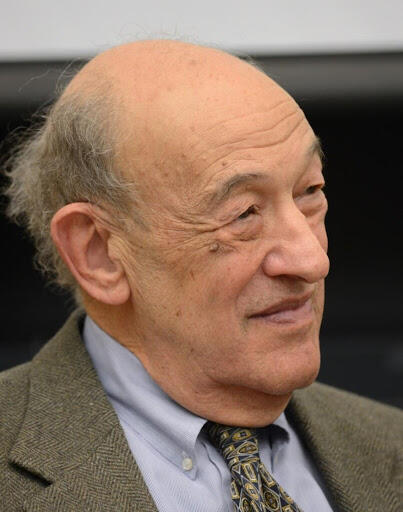
Japan's economic challenge to the United States in the 1980s aroused more concern in the United States than people now realize. Japan took some very effective steps to stop it. China's challenge plays out across the economic, military, technological, and global influence spheres. China has not yet taken steps to stop it and the tensions are increasingly serious and show no signs of diminishing. Japan has also found better ways to reduce tensions with China than has the United States. While the circumstances are different between the 1980s and today, Japan’s dealings with the United States in the 1980s might offer some lessons for China today. Dr. Ezra Vogel, Professor Emeritus at Harvard University, will discuss these topics and more during this webinar. The event will conclude with an audience Q&A moderated by Japan Program Director Kiyoteru Tsutsui and China Program Director Jean Oi.

SPEAKER

Image
Portrait of Dr. Ezra Vogel, Professor Emeritus at Harvard University

Professor Ezra F. Vogel is Professor Emeritus at Harvard University. Vogel received his PhD at Harvard in 1958 in Sociology in the Department of Social Relations and was a professor at Harvard from 1967-2000. In 1973, he succeeded John Fairbank to become the second Director of Harvard's East Asian Research Center. At Harvard, he served as director of the US-Japan Program, director of the Fairbank Center, and as the founding director of the Asia Center. From fall 1993 to fall 1995, Vogel was the National Intelligence Officer for East Asia at the National Intelligence Council in Washington. His book Japan As Number One (1979), in Japanese translation, became a best seller in Japan, and his book Deng Xiaoping and the Transformation of China (2011), in Chinese translation, became a best seller in China. He lectures frequently in Asia, in both Chinese and Japanese. He has received numerous honors, including eleven honorary degrees.

Via Zoom Webinar.

Registration Link: https://bit.ly/2SS6DpY

Ezra Vogel, Professor Emeritus <br>Harvard University</br>
Seminars
Paragraphs

THE EMERGENCE OF A DIGITAL SPHERE where public debate takes place raises profound questions about the connection between online information and polarization, echo chambers, and filter bubbles. Does the information ecosystem created by social media companies support the conditions necessary for a healthy democracy? Is it different from other media? These are particularly urgent questions as the United States approaches a contentious 2020 election during the COVID-19 pandemic.

The influence of technology and AI-curated information on America’s democratic process is being examined in the eight-week Stanford University course, “Technology and the 2020 Election: How Silicon Valley Technologies Affect Elections and Shape Democracy.” This issue brief focuses on the class session on “Echo Chambers, Filter Bubbles, and Polarization,” with guest experts Joan Donovan and Joshua Tucker.

All Publications button
1
Publication Type
Policy Briefs
Publication Date
Authors
Marietje Schaake
Rob Reich
-

This event is part of the Asia Health Policy Program (AHPP) 2020-21 Colloquium series "Health, medicine, and longevity: Exploring public and private roles"

Over the last decade, India has rapidly expanded government health insurance programs that entitle low-income households to free hospital care.  In a major policy shift away from direct public provision of healthcare, these programs contract private hospitals for service delivery. This constitutes a sizeable public subsidy delivered through private agents, but there is relatively little evidence on how private hospitals perform. Using a unique dataset on 6 million insurance claims and 15,000 patient surveys, this talk will present several key insights on the behavior of private hospitals within a large government insurance program. 1) Private hospitals manipulate coding to increase their revenues at the government's expense. 2) They also charge patients out-of-pocket for care that is supposed to be free under program rules. 3) When the government increases hospital reimbursement rates, patient charges decrease substantially. 4) However, hospitals capture approximately half the increased subsidy and this is driven by less competitive markets. The results demonstrate that hospital reimbursement rates are a key policy lever shaping hospital behavior with implications for program outcomes. Improving program performance requires a combination of stronger hospital monitoring and attention to reimbursement rates; focusing on one without the other may reduce the efficiency of public spending or worsen patient welfare. Lastly, market structure, a factor rarely taken into consideration in health policy in India, may play a role in the extent to which public subsidies benefit patients.

https://aparc.fsi.stanford.edu/asiahealthpolicy/news/postdoctoral-spotlight-radhika-jain

Image
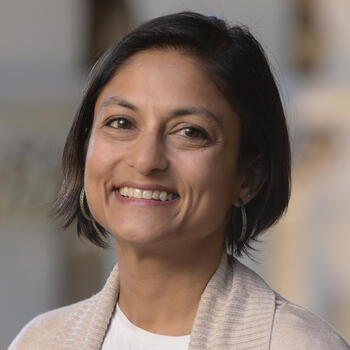
Radhika Jain 4X4 022521
Radhika Jain is the Asia Health Policy Postdoctoral Fellow for 2019-2022 at the Walter H. Shorenstein Asia-Pacific Research Center (Shorenstein APARC).  Her research focuses on health care markets, the effectiveness of public health policy, and gender disparities in health.

She completed her doctorate in the Department of Global Health at Harvard University in 2019.  Her dissertation examined the extent to which government subsidies for health care under insurance are captured by private hospitals instead of being passed through to patients, and whether accountability measures can help patients claim their entitlements. Dr. Jain's research has been supported by grants from the Weiss Family Fund and the Jameel Poverty Action Lab (JPAL). She has worked on impact evaluations of health programs in India and on the implementation of HIV programs across several countries in sub-Saharan Africa. She also held a doctoral fellowship at the Center for Global Development.

At Shorenstein APARC, Radhika is starting new work on understanding the factors that contribute to poor female health outcomes and interventions to increase the effectiveness of public health insurance.

Via Zoom Webinar.
Register: https://bit.ly/37218gJ

2019-2022 Asia Health Policy Postdoctoral Fellow
Seminars
-

This event is open to Stanford undergraduate students only. 

Image
CDDRL Flyer 2021

The Center on Democracy, Development, and the Rule of Law (CDDRL) will be accepting applications from eligible juniors on who are interested in writing their senior thesis on a subject touching upon democracy, economic development, and rule of law (DDRL) from any university department.  The application period opens on January 11, 2021 and runs through February 12, 2021.   CDDRL faculty and current honors students will be present to discuss the program and answer any questions.

For more information on the Fisher Family CDDRL Honors Program, please click here.

**Please note all CDDRL events are scheduled using the Pacific Time Zone

 Online, via Zoom: REGISTER

CDDRL
Encina Hall, C152
616 Jane Stanford Way
Stanford, CA 94305-6055

(650) 725-2705 (650) 724-2996
0
Senior Fellow at the Freeman Spogli Institute for International Studies
Professor, by courtesy, of Political Science
Stedman_Steve.jpg PhD

Stephen Stedman is a Senior Fellow at the Freeman Spogli Institute for International Studies (FSI) and the Center on Democracy, Development and the Rule of Law (CDDRL), an affiliated faculty member at CISAC, and professor of political science (by courtesy) at Stanford University. He is director of CDDRL's Fisher Family Honors Program in Democracy, Development and Rule of Law, and will be faculty director of the Program on International Relations in the School of Humanities and Sciences effective Fall 2025.

In 2011-12 Professor Stedman served as the Director for the Global Commission on Elections, Democracy, and Security, a body of eminent persons tasked with developing recommendations on promoting and protecting the integrity of elections and international electoral assistance. The Commission is a joint project of the Kofi Annan Foundation and International IDEA, an intergovernmental organization that works on international democracy and electoral assistance.

In 2003-04 Professor Stedman was Research Director of the United Nations High-level Panel on Threats, Challenges and Change and was a principal drafter of the Panel’s report, A More Secure World: Our Shared Responsibility.

In 2005 he served as Assistant Secretary-General and Special Advisor to the Secretary- General of the United Nations, with responsibility for working with governments to adopt the Panel’s recommendations for strengthening collective security and for implementing changes within the United Nations Secretariat, including the creation of a Peacebuilding Support Office, a Counter Terrorism Task Force, and a Policy Committee to act as a cabinet to the Secretary-General.

His most recent book, with Bruce Jones and Carlos Pascual, is Power and Responsibility: Creating International Order in an Era of Transnational Threats (Washington DC: Brookings Institution, 2009).

Director, Fisher Family Honors Program in Democracy, Development and Rule of Law
Director, Program in International Relations
Affiliated faculty at the Center for International Security and Cooperation
Date Label
Deputy Director, CDDRL

Encina Hall, C150
616 Jane Stanford Way
Stanford, CA 94305

0
Center Fellow, Freeman Spogli Institute for International Studies
didi_kuo_2023.jpg

Didi Kuo is a Center Fellow at the Freeman Spogli Institute for International Studies (FSI) at Stanford University. She is a scholar of comparative politics with a focus on democratization, corruption and clientelism, political parties and institutions, and political reform. She is the author of The Great Retreat: How Political Parties Should Behave and Why They Don’t (Oxford University Press) and Clientelism, Capitalism, and Democracy: the rise of programmatic politics in the United States and Britain (Cambridge University Press, 2018).

She has been at Stanford since 2013 as the manager of the Program on American Democracy in Comparative Perspective and is co-director of the Fisher Family Honors Program at CDDRL. She was an Eric and Wendy Schmidt Fellow at New America and is a non-resident fellow with the Carnegie Endowment for International Peace. She received a PhD in political science from Harvard University, an MSc in Economic and Social History from Oxford University, where she studied as a Marshall Scholar, and a BA from Emory University.

Date Label
Associate Director for Research, CDDRL
Authors
Siegfried S. Hecker
News Type
News
Date
Paragraphs

US President Donald Trump missed a "golden" chance to end North Korea's nuclear program by walking out of his Hanoi summit with Kim Jong-un empty-handed when the North Korean leader had, in effect, offered to give up a key nuclear facility, a US nuclear scientist claimed.

Read the rest at  The Korea Herald

Hero Image
man smiling
All News button
1
Subtitle

President Donald Trump missed a "golden" chance to end North Korea's nuclear program by walking out of his Hanoi summit with Kim Jong-un empty-handed when the North Korean leader had, in effect, offered to give up a key nuclear facility, CISAC Senior Fellow Siegfried Hecker said.

-

This is a virtual event. Please click here to register and generate a link to the talk. 
The link will be unique to you; please save it and do not share with others.


Note: This event is off-the-record and will not be recorded for future viewing.
By registering for this webinar, attendees agree to refrain from recording, citing, attributing, or otherwise sharing content from this event.

This event is Co-Sponsored by the Center for South Asia (CSA)

How are India and the United States responding to the growing political and military power of China in the Indian Ocean region? India has traditionally sought to maintain strategic preeminence in the region and sees its influence as being increasingly contested. The United States sees the region as an integral part of the wider “Indo-Pacific,” defined by intensifying strategic competition with China. Military planners at U.S. Indo-Pacific Command are refining their strategy in the region, including their approach to mitigating security risks and deepening the U.S. Major Defense Partnership with India, alongside other allies and partners. In this off-the-record webinar, the Command’s senior policy advisor and two leading experts on the Indian Ocean will share their assessments of the key strategic challenges facing India and the United States in the region.

Speakers:

Image
David Brewster
David Brewster is a Senior Research Fellow at the National Security College at the Australian National University, where he focuses on security in India and the Indian Ocean region, and Indo-Pacific maritime affairs. His books include India as an Asia Pacific Power, about India’s strategic role in the Asia Pacific, India’s Ocean: the Story of India’s Bid for Regional Leadership, which examines India’s strategic ambitions in the Indian Ocean, and the edited volume, India and China at Sea: Competition for Naval Dominance in the Indian Ocean. He is the author of several reports, including The Second Sea, which examines Australia’s role in the Indian Ocean proposes a new roadmap for Australia’s strategic engagement in that region. Brewster holds a PhD from the Australian National University.
 

Image
Shezi Khan
Shehzi Khan is the Senior Policy Advisor in the Strategic Planning and Policy Directorate at Indo-Pacific Command, supporting senior leadership on key regional policy initiatives.  Ms. Khan served on the Secretary of State’s Policy Planning Staff, as Executive Officer to the Principal Deputy Director of National Intelligence, and as senior South Asia analyst at the State Department.  Ms. Khan briefed the President of the United States in 2013.  She has been posted in Pakistan, China, and New Zealand and also lived and worked in India, Egypt, and France. Ms. Khan speaks five foreign languages and holds an MBA in International Finance and an MA in International Relations.  She is a recipient of the National Intelligence Superior Service Medal and was named State Department’s Analyst of the Year in 2014.

Image
Nilanthi Samaranayake
Nilanthi Samaranayake directs the Strategy and Policy Analysis Program at CNA. She has led several studies on Indian Ocean and South Asia security. Recently Samaranayake has worked on U.S.-India naval cooperation, water resource competition in the Brahmaputra River basin, and Sri Lankan foreign policy. She also has conducted research on the navies of Bangladesh and Pakistan, the Maldives Coast Guard, security threats in the Bay of Bengal, and relations between smaller South Asian countries and China, India and the United States. Prior to joining CNA, Samaranayake held positions at the National Bureau of Asian Research and the Pew Research Center. Samaranayake holds an M.Sc. in International Relations from the London School of Economics and Political Science and a B.A. in International Studies from American University.


Image
Arzan Tarapore
Arzan Tarapore (Moderator) is the South Asia research scholar at the Shorenstein Asia-Pacific Research Center at Stanford University, where he leads the newly-restarted South Asia research initiative. He is also a senior nonresident fellow at the National Bureau of Asian Research. Tarapore’s research focuses on Indian military strategy and contemporary Indo-Pacific security issues. This includes a forthcoming paper on “Building Strategic Leverage in the Indian Ocean Region.” He previously held research positions at the RAND Corporation, the Observer Research Foundation, and the East-West Center in Washington. Prior to his scholarly career, he served as an analyst in the Australian Defence Department. Tarapore holds a PhD in war studies from King’s College London.


Via Zoom Webinar
Register at:  https://bit.ly/34xYmgu

David Brewster <br><i>Senior Research Fellow at National Security College, Australian National University</i><br><br>
Shehzi Khan <br><i>Senior Policy Advisor in the Strategic Planning and Policy Directorate, Indo-Pacific Command</i><br><br>
Nilanthi Samaranayake <br><i>Director of Strategy and Policy Analysis Program, CNA</i><br><br>
Arzan Tarapore - Moderator <br><i>South Asia Research Scholar, Stanford University</i><br><br>
Seminars
Subscribe to Asia-Pacific