-

Co-sponsored by the Japan Program and the Southeast Asia Program

When Yoshihide Suga recently took over as prime minister of Japan, he tellingly focused his first trip abroad on Southeast Asia. The region has long been crucial to Japan’s foreign policy, and Japan has long been a key external partner to ASEAN and its constitutive states and societies. Japan’s engagement in Southeast Asia has become even more important in the era of the “Free and Open Indo-Pacific,” as the region confronts new economic, political and security challenges against the backdrop of waxing Sino-American rivalry and now a global pandemic. This webinar will examine Japan’s role in Southeast Asia in the recent past and the going forward. Drawing on the findings of a collaborative research project involving scholars from Southeast Asia, Japan, and North America – to be published as an edited volume from the University of Michigan Press – the panel will discuss Japan’s engagement in key areas such as infrastructure investment, maritime security assistance, and multilateral diplomacy, as well as Southeast Asian responses to its initiatives. They will also discuss the important roles played by non-state actors in mediating Japanese ties to Southeast Asia, and review key elements of continuity and change likely to extend into the Suga administration and beyond.   

Panelists

Image
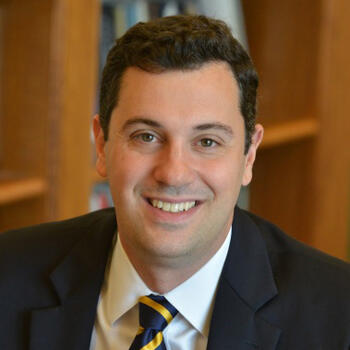
John D Ciociari 120820 crop 4X4
John Ciorciari is Associate Professor and Director of the Weiser Diplomacy Center and International Policy Center at the Gerald R. Ford School of Public Policy, University of Michigan. He is the author of Sovereignty Sharing in Fragile States (Stanford University Press, forthcoming 2021), The Limits of Alignment: Southeast Asia and the Great Powers since 1975 (Georgetown University Press, 2010), co-author of Hybrid Justice: The Extraordinary Chambers in the Courts of Cambodia (University of Michigan Press, 2014), and co-editor of The Courteous Power: Japan and Southeast Asia in the Indo-Pacific Era (University of Michigan Press, forthcoming 2021).

 

Image
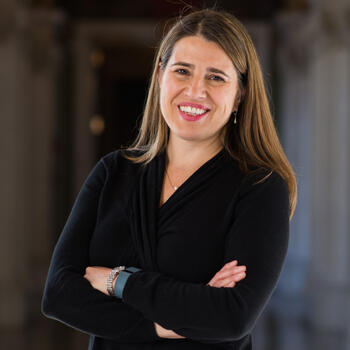
chanlett-avery-emma-120820_crop_4x4
Emma Chanlett-Avery is a Specialist in Asian Affairs at the Congressional Research Service. She focuses on U.S. relations with Japan, the Korean Peninsula, Thailand, and Singapore. Ms. Chanlett-Avery joined CRS in 2003 through the Presidential Management Fellowship, with rotations in the State Department on the Korea Desk and at the Joint U.S. Military Advisory Group in Bangkok, Thailand. She also worked in the Office of Policy Planning as a Harold Rosenthal Fellow. She is a member of the Mansfield Foundation U.S. – Japan Network for the Future, Vice-Chair of the Board of Trustees of the Japan America Society of Washington, and the 2016 recipient of the Kato Prize. Ms. Chanlett-Avery received an MA in international security policy from the School of International and Public Affairs at Columbia University and her BA in Russian studies from Amherst College.

Image
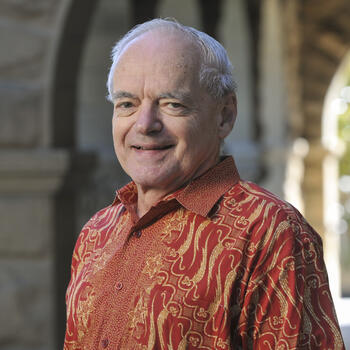
don emmerson 2
Donald K. Emmerson heads the Southeast Asia Program at Stanford University where he is also a faculty affiliate of the Center on Democracy, Development, and the Rule of Law and the Abbasi Program in Islamic Studies.  His new book is The Deer and the Dragon: Southeast Asia and China in the 21st Century (ed., August 2020).  Other recent publications include “Biden in Asia: America Together?,” East Asia Forum, 8 November 2020; “Donald Emmerson on Southeast Asia’s Approach to China” (interview, The Diplomat, Aug. 2020); “‘No Sole Control’ in the South China Sea,” Asia Policy (2019); ASEAN @ 50, Southeast Asia @ Risk: What Should Be Done? (ed., 2018); and “ASEAN Between China and America: Is It Time to Try Horsing the Cow?,” Trans-Regional and -National Studies of Southeast Asia (2017).  He has traveled and lectured widely in Southeast Asia, most recently in Singapore, Thailand, and Vietnam (Dec. 2019). Indonesia figured prominently in earlier fieldwork and writing. Before moving to Stanford in 1999, he taught political science at the University of Wisconsin-Madison.  He has held visiting positions at the Institute for Advanced Studies and the Australian National University, among other institutions.  His doctorate in political science is from Yale. 

Moderator

Image
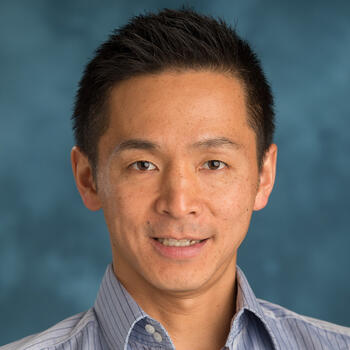
Kiyoteru Tsutsui 120820 crop 4X4
Kiyoteru Tsutsui is Henri H. and Tomoye Takahashi Professor and Senior Fellow in Japanese Studies at the Walter H. Shorenstein Asia-Pacific Research Center at Stanford University, where he is also Director of the Japan Program, a Senior Fellow of the Freeman Spogli Institute for International Studies, and a Professor of Sociology. He is the author of Rights Make Might: Global Human Rights and Minority Social Movements in Japan (Oxford University Press, 2018), co-editor of Corporate Responsibility in a Globalizing World (Oxford University Press, 2016) and co-editor of The Courteous Power: Japan and Southeast Asia in the Indo-Pacific Era (University of Michigan Press, forthcoming 2021). 

Via Zoom Webinar.
Register: https://bit.ly/2HnCz3u

John Ciorciari Associate Professor and Director of the Weiser Diplomacy Center and International Policy Center, the Gerald R. Ford School of Public Policy, University of Michigan
Emma Chanlett-Avery Specialist in Asian Affairs, the Congressional Research Service
0
Senior Fellow Emeritus at the Freeman Spogli Institute for International Studies
Affiliated Faculty, CDDRL
Affiliated Scholar, Abbasi Program in Islamic Studies
aparc_dke.jpg PhD

At Stanford, in addition to his work for the Southeast Asia Program and his affiliations with CDDRL and the Abbasi Program in Islamic Studies, Donald Emmerson has taught courses on Southeast Asia in East Asian Studies, International Policy Studies, and Political Science. He is active as an analyst of current policy issues involving Asia. In 2010 the National Bureau of Asian Research and the Woodrow Wilson International Center for Scholars awarded him a two-year Research Associateship given to “top scholars from across the United States” who “have successfully bridged the gap between the academy and policy.”

Emmerson’s research interests include Southeast Asia-China-US relations, the South China Sea, and the future of ASEAN. His publications, authored or edited, span more than a dozen books and monographs and some 200 articles, chapters, and shorter pieces.  Recent writings include The Deer and the Dragon: Southeast Asia and China in the 21st Century (ed., 2020); “‘No Sole Control’ in the South China Sea,” in Asia Policy  (2019); ASEAN @ 50, Southeast Asia @ Risk: What Should Be Done? (ed., 2018); “Singapore and Goliath?,” in Journal of Democracy (2018); “Mapping ASEAN’s Futures,” in Contemporary Southeast Asia (2017); and “ASEAN Between China and America: Is It Time to Try Horsing the Cow?,” in Trans-Regional and –National Studies of Southeast Asia (2017).

Earlier work includes “Sunnylands or Rancho Mirage? ASEAN and the South China Sea,” in YaleGlobal (2016); “The Spectrum of Comparisons: A Discussion,” in Pacific Affairs (2014); “Facts, Minds, and Formats: Scholarship and Political Change in Indonesia” in Indonesian Studies: The State of the Field (2013); “Is Indonesia Rising? It Depends” in Indonesia Rising (2012); “Southeast Asia: Minding the Gap between Democracy and Governance,” in Journal of Democracy (April 2012); “The Problem and Promise of Focality in World Affairs,” in Strategic Review (August 2011); An American Place at an Asian Table? Regionalism and Its Reasons (2011); Asian Regionalism and US Policy: The Case for Creative Adaptation (2010); “The Useful Diversity of ‘Islamism’” and “Islamism: Pros, Cons, and Contexts” in Islamism: Conflicting Perspectives on Political Islam (2009); “Crisis and Consensus: America and ASEAN in a New Global Context” in Refreshing U.S.-Thai Relations (2009); and Hard Choices: Security, Democracy, and Regionalism in Southeast Asia (edited, 2008).

Prior to moving to Stanford in 1999, Emmerson was a professor of political science at the University of Wisconsin-Madison, where he won a campus-wide teaching award. That same year he helped monitor voting in Indonesia and East Timor for the National Democratic Institute and the Carter Center. In the course of his career, he has taken part in numerous policy-related working groups focused on topics related to Southeast Asia; has testified before House and Senate committees on Asian affairs; and been a regular at gatherings such as the Asia Pacific Roundtable (Kuala Lumpur), the Bali Democracy Forum (Nusa Dua), and the Shangri-La Dialogue (Singapore). Places where he has held various visiting fellowships, including the Institute for Advanced Study and the Woodrow Wilson International Center for Scholars. 


Emmerson has a Ph.D. in political science from Yale and a BA in international affairs from Princeton. He is fluent in Indonesian, was fluent in French, and has lectured and written in both languages. He has lesser competence in Dutch, Javanese, and Russian. A former slam poet in English, he enjoys the spoken word and reads occasionally under a nom de plume with the Not Yet Dead Poets Society in Redwood City, CA. He and his wife Carolyn met in high school in Lebanon. They have two children. He was born in Tokyo, the son of U.S. Foreign Service Officer John K. Emmerson, who wrote the Japanese Thread among other books.

Selected Multimedia

Date Label
Director, the Southeast Asia Program, Stanford University

Shorenstein APARC
Encina Hall
616 Jane Stanford way
Stanford, CA 94305-6055

(650) 723-2408
0
Senior Fellow at the Freeman Spogli Institute for International Studies
Professor of Sociology
Henri H. and Tomoye Takahashi Professor and Senior Fellow in Japanese Studies at the Shorenstein Asia-Pacific Research Center
Kiyo Tsutsui1_0.jpg PhD

Kiyoteru Tsutsui is the Henri H. and Tomoye Takahashi Professor and Senior Fellow in Japanese Studies at the Walter H. Shorenstein Asia-Pacific Research Center (APARC), the director of APARC and of the Japan Program at APARC, co-director of the Southeast Asia Program at APARC, executive director of the Inter-University Center for Japanese Language Studies, co-director of the Center for Human Rights and International Justice, senior fellow at the Freeman Spogli Institute for International Studies, and professor of sociology, all at Stanford University.

Prior to his appointment at Stanford in July 2020, Tsutsui was professor of sociology, director of the Center for Japanese Studies, and director of the Donia Human Rights Center at the University of Michigan, Ann Arbor.

Tsutsui’s research interests lie in political/comparative sociology, social movements, globalization, human rights, and Japanese society. More specifically, he has conducted (1) cross-national quantitative analyses on how human rights ideas and instruments have expanded globally and impacted local politics and (2) qualitative case studies of the impact of global human rights on Japanese politics. His current projects examine (a) changing conceptions of nationhood and minority rights in national constitutions and in practice, (b) populism and the future of democracy, (c) experimental surveys on public understanding about human rights, (d) campus policies and practices around human rights, (e) global expansion of corporate social responsibility and its impact on corporate behavior, and (f) Japan’s public diplomacy and perceptions about Japan in the world.

His research on the globalization of human rights and its impact on local politics has appeared in American Sociological Review, American Journal of Sociology, Social Forces, Social Problems, Journal of Peace Research, Journal of Conflict Resolution, and other social science journals. His book publications include Rights Make Might: Global Human Rights and Minority Social Movements in Japan (Oxford University Press 2018), and two co-edited volumes Corporate Social Responsibility in a Globalizing World (with Alwyn Lim, Cambridge University Press 2015) and The Courteous Power: Japan and Southeast Asia in the Indo-Pacific Era (with John Ciorciari, University of Michigan Press forthcoming). He has been a recipient of National Endowment for the Humanities Fellowship, National Science Foundation grants, the SSRC/CGP Abe Fellowship, Stanford Japan Studies Postdoctoral Fellowship, and other grants as well as awards from American Sociological Association sections on Global and Transnational Sociology (2010, 2013, 2019), Human Rights (2017, 2019), Asia and Asian America (2018, 2019), Collective Behavior and Social Movements (2018), and Political Sociology (2019). 

Tsutsui received his bachelor’s and master’s degrees from Kyoto University and earned an additional master’s degree and Ph.D. from Stanford’s sociology department in 2002.

Director, Shorenstein Asia-Pacific Research Center (APARC)
Director, Japan Program at Shorenstein APARC
Co-Director, Southeast Asia Program at Shorenstein APARC
Executive Director, Inter-University Center for Japanese Language Studies
Co-Director, Center for Human Rights and International Justice
CV
Date Label
Director, the Japan Program, Stanford University
Seminars
Paragraphs

The internet economy has produced digital platforms of enormous economic and social significance. These platforms—specifically, Google, Facebook, Amazon, Twitter, and Apple—now play central roles in how millions of Americans obtain information, spend their money, communicate with fellow citizens, and earn their livelihoods. Their reach is also felt globally, extending to many countries around the world. They have amassed the economic, social, and political influence that very few private entities have ever obtained previously. Accordingly, they demand careful consideration from American policymakers, who should soberly assess whether the nation’s current laws and regulatory institutions are adequately equipped to protect Americans against potential abuses by platform companies.

The Program on Democracy and the Internet at Stanford University convened a working group in January 2020 to consider the scale, scope, and power exhibited by the digital platforms, study the potential harms they cause, and, if appropriate, recommend remedial policies. The group included a diverse and interdisciplinary group of scholars, some of whom had spent many years dealing with antitrust and technology issues.

All Publications button
1
Publication Type
White Papers
Publication Date
Authors
Francis Fukuyama
Ashish Goel
Marietje Schaake
Age Range
Secondary - Community College
Paragraphs

ANTITRUST AND PRIVACY CONCERNS are two of the most high-profile topics on the tech policy agenda. Checks and balances to counteract the power of companies such as Google, Amazon, and Facebook are under consideration in Congress, though a polarized political environment is a hindrance. But a domestic approach to tech policy will be insufficient, as the users of the large American tech companies are predominantly outside the United States. We need to point the way toward a transnational policy effort that puts democratic principles and basic human rights above the commercial interests of these private companies.

These issues are central to the eight-week Stanford University course, “Technology and the 2020 Election: How Silicon Valley Technologies Affect Elections and Shape Democracy.” The joint class for Stanford students and Stanford’s Continuing Studies Community enrolls a cross-generational population of more than 400 students from around the world.

All Publications button
1
Publication Type
White Papers
Publication Date
Authors
Marietje Schaake
Rob Reich
-

This workshop is designed to develop skills that participants can use to write public policy case studies and to develop a case library that can be used in teaching programs. The workshop will be offered online, both synchronously and asynchronously.     

The first sessions will involve an introduction to participant-centered learning and case study writing, as well as a full discussion of a selected case. The workshop will involve "how to" lessons on each stage in the case writing process, interspersed with group activities and discussions. We will discuss several existing cases, combined with a “post-mortem” of what worked and what did not.  

We will address issues such as how to refine a case topic and learning objectives, how to prepare for case study research, how to collect qualitative data through interviews, what material should be included and what should be left out of case studies, and how to build participant engagement into the way a case is written.

Workshop Agenda
Download pdf

Online

Via Zoom

Workshops
Paragraphs

POPULAR CULTURE HAS ENVISIONED SOCIETIES of intelligent machines for generations, with Alan Turing notably foreseeing the need for a test to distinguish machines from humans in 1950. Now, advances in artificial intelligence that promise to make creating convincing fake multimedia content like video, images, or audio relatively easy for many. Unfortunately, this will include sophisticated bots with supercharged self-improvement abilities that are capable of generating more dynamic fakes than anything seen before.

In our paper “How Relevant is the Turing Test in the Age of Sophisbots,” we argue that society is on the brink of an AI-driven technology that can simulate many of the most important hallmarks of human behavior. As the variety and scale of these so called “deepfakes” expands, they will likely be able to simulate human behavior so effectively and they will operate in such a dynamic manner that they will increasingly pass Turing’s test. 

All Publications button
1
Publication Type
Policy Briefs
Publication Date
Authors
Andrew Grotto
News Type
Commentary
Date
Paragraphs

FSI Center Fellow at APARC Oriana Skylar Mastro joins NPR's Weekend Edition host Scott Simon to discuss the rising tensions between China and Taiwan and how the United States should respond.

Listen to the complete interview below. This conversation originally appeared on NPR's website.

Read More

Logo of the Observer Research Foundation's 'Armchair Strategist' podcast with portraits of Oriana Skylar Mastro and Arzan Tarapore
Commentary

Assessing the Conventional Military Balance Between India and China

Oriana Skylar Mastro and Arzan Tarapore join the Observer Research Foundation’s ‘Armchair Strategist’ podcast to discuss how the Indian and Chinese militaries stack up as tensions between the two Asian neighbors continue to heat up.
Assessing the Conventional Military Balance Between India and China
Chinese President Xi Jinping (R) talks with India's Prime Minister Manmohan Singh (L) during a meeting at the Diaoyutai State Guesthouse in 2013.
Commentary

China-India: Talk is Cheap, But Never Free

Nations often hesitate to negotiate with opponents during conflict. But Oriana Skylar Mastro urges that this is precisely what India and China need to do in order to curb the potential for a protracted, costly war with devastating geopolitical implications.
China-India: Talk is Cheap, But Never Free
Portrait of Oriana Skylar Mastro and a 3D cover of her book, 'The Costs of Conversation: Obstacles to Peace Talks in Wartime'
News

FSI Center Fellow Wins Best Book in Security Studies Award

The American Political Science Association recognizes Oriana Skylar Mastro for her work on military strategy and mediation.
FSI Center Fellow Wins Best Book in Security Studies Award
Hero Image
NPR's audio streaming logo next to a portrait of Oriana Skylar Mastro.
All News button
1
Subtitle

"The current threat is that the CCP is running out of patience, and their military is becoming more and more capable. So for the first time in its history, there's the option of taking Taiwan by force," Mastro tells NPR's Weekend Edition host Scott Simon.

Authors
Graham Webster
News Type
Q&As
Date
Paragraphs

Graham Webster leads the DigiChina Project, which translates and explains Chinese technology policy for an English-language audience so that debates and decisions regarding cyber policy are factual and based on primary sources of information.  

Housed within Stanford’s Program on Geopolitics, Technology, and Governance (GTG) and in partnership with New America, DigiChina and its community of experts have already published more than 80 translations and analyses of public policy documents, laws, regulations and political speeches and are creating an open-access knowledge base for policy-makers, academics, and members of the tech industry who need insight into the choices China makes regarding technology.

Q. Why is this work important?

A lot of tech is produced in China so it’s important to understand their policies. And in Washington, D.C., you hear a lot of people say, “Well, you can’t know what China’s doing on tech policy. It’s all a secret.” But while China’s political system is often opaque, if you happen to read Chinese, there’s a lot that’s publicly available and can explain what the Chinese government is thinking and planning.

With our network of experts, DigiChina works at the intersection of two policy challenges. One is how do we deal with high technology, and the questions around economic competitiveness, personal autonomy and the security risks that our dependence on tech creates.

The other challenge is, from a US government, business or values perspective, what needs to be done about the increased prominence and power of the Chinese government and its economic, technological and military capabilities.

These questions cut across tech sectors from IT infrastructure to data-driven automation, and cutting-edge developments in quantum technology, biotech, and other fields of research.

Q: How was DigiChina started?

A number of us were working at different organizations, think tanks, consultancies and universities and we all had an interest in explaining the laws and the bureaucratic language to others who aren’t Chinese policy specialists or don’t have the language skills.  

We started working informally at first and then reached out to New America, which is an innovative type of think tank combining research, innovation, and policy thinking on challenges arising during this time of rapid technological and social change. Under the New America umbrella, and through partnerships with the Leiden Asia Centre, a leading European research center based at the University of Leiden, and the Ethics and Governance of Artificial Intelligence Initiative at Harvard and MIT, we were able to build out the program and increase the number of experts in our network.

Q: Who is involved in DigiChina and what types of expertise do you and others bring to the project?

More than 40 people have contributed to DigiChina publications so far, and it’s a pretty diverse group. There are professors and think tank scholars, students and early-career professionals, and experienced government and industry analysts. Everyone has a different part of the picture they can contribute, and we reach out to other experts both in China and around the world when we need more context.

As for me, I was working at Yale Law School’s China Center when I was roped into what would become DigiChina and had spent several years in Beijing and New Haven working more generally on US-China relations and Track 2 dialogues, where experts and former officials from the two countries meet to take on tough problems. As a journalist and graduate student, I had long studied technology and politics in China, and I took on a coordinating role with DigiChina as I turned back to that pursuit full time.

Stanford is an ideal home because the university is a powerhouse in Chinese studies and an epicenter of global digital development.
Graham Webster
Editor in Chief, DigiChina Project

Q. Are there other organizations involved as well?

We have a strong tie to the Leiden Asia Centre at the University of Leiden in the Netherlands, where one of DigiChina’s cofounders, Rogier Creemers, is a professor, and where staff and student researchers have contributed to existing and forthcoming work. We coordinate with a number of other groups on translations, and the project benefits greatly from the time and knowledge contributed by employees of various institutions. I hope that network will increasingly be a resource for contributors and their colleagues.

The project is currently supported by the Ford Foundation, which works to strengthen democratic values, promote international cooperation and advance human achievement around the world. A generous grant from Ford will keep the lights on for two years, giving us the ability to build our open-access resource and, with further fundraising, the potential to bring on more in-house editorial and research staff.

We hope researchers and policy thinkers, regardless of their approaches or ideologies, can use our translations to engage with the real and messy evolution of Chinese tech policy.
Graham Webster
Editor in Chief, DigiChina Project

Q. Do you have plans to grow the project?

We are working to build an accessible online database so researchers and scholars can review primary source documents in both the original Chinese and in English. And we are working toward a knowledge base with background entries on key institutions, legal concepts, and phrases so that a broader audience can situate things like Chinese legal language in their actual context. Providing access to this information is especially important now and in the near future, whether we have a second Trump Administration or a Biden Administration in the United States.

On any number of policy challenges, effective measures are going to depend on going beyond caricatures like an “AI arms race,” “cyber authoritarianism,” or “decoupling,” which provide useful frameworks for debate but can tend to prejudge the outcomes of a huge number of developments. We hope researchers and policy thinkers, regardless of their approaches or ideologies, can use this work to engage with the real and messy evolution of Chinese tech policy.

Hero Image
Graham Webster Q&A
All News button
1
Subtitle

Webster explains how DigiChina makes Chinese tech policy accessible for English speakers

Authors
News Type
Blogs
Date
Paragraphs

The Stanford e-Japan Program provided me with the opportunity to take insightful lectures by front runners in various fields (for example, ambassadors, lawyers, and university professors), and to participate in absolutely riveting virtual classrooms, during which we could confer and raise questions about issues pertaining to the lectures.

Not only was it an intellectually enriching program providing extensive knowledge about the United States, I believe it was one of the turning points in my life.
Hikaru Suzuki

It was my gateway to cross-cultural understanding and international studies, and it was the key to finding my passion, as I realized that law and business were my specific areas of interests. The program pushed me to seek further education in those fields and learn more intensively.

In high school, I conducted comparative research between India and Pakistan, analyzing honor killing court cases dating back to the late 19th century, judicial systems, etc. I realized how law can reinforce social norms by signaling approval and dissent through legal decisions, and how a revision of judicial systems can have massive social impact. I decided to major in Japanese law to gain knowledge and insight into these legal regimes domestically, and to pursue my dream of addressing social injustice.

Studying law at the University of Tokyo was both rewarding and invigorating. I had chances to engage in frank discussions with professors about civil procedures and criminal law, scrutinize documents, participate in seminars, and write a research paper about criminal prosecutions for defamation in Japan. Whilst taking classes, I also had internship opportunities to see how law was put into practice at a number of domestic and international law firms, and these experiences greatly assisted in developing my practical and theoretical expertise in law.

At the same time, having an interest in business, I launched a project with university peers to tackle food insecurity in Asia with the ultimate aim of reducing social injustice through social entrepreneurship. The idea was to produce an environmentally sustainable source of animal feed and provide a new source of income for the local population. We presented this plan and placed in the top six in the Asian Regional Hult Prize competition—one of the world’s largest international social entrepreneurship competitions for students—and took our project further.

Stanford e-Japan was much more than a virtual classroom, as it introduced me to so many caring and enthusiastic educators who encouraged me to go beyond my limits, and it equipped me with the skills that are essential for learning, such as problem-solving, research, and communication skills. With these skills and personal ties, I intend to keep challenging myself and carrying on my lifelong journey of learning.

Read More

Male student with a backpack
Blogs

Stanford e-Japan: A Gate for Learning about the United States and a Mirror for Reflection on Japan

The following reflection is a guest post written by Shintaro Aoi, an alumnus of the Stanford e-Japan Program.
Stanford e-Japan: A Gate for Learning about the United States and a Mirror for Reflection on Japan
ejapanphoto
Blogs

The Future to Be Inherited

The following reflection is a guest post written by Haruki Kitagawa, a 2015 alum and honoree of the Stanford e-Japan Program.
The Future to Be Inherited
Japanese scholar and Ambassador Armacost chatting in a conference room
News

Four Stanford e-Japan Alumni Awarded Yanai Tadashi Foundation Scholarships

In 2015, SPICE launched the inaugural online course, Stanford e-Japan, for high school students in Japan.
Four Stanford e-Japan Alumni Awarded Yanai Tadashi Foundation Scholarships
Hero Image
female student standing in front of Akamon in Japan
Hikaru Suzuki at Akamon, University of Tokyo; photo courtesy Hikaru Suzuki
All News button
1
Subtitle

The following reflection is a guest post written by Hikaru Suzuki, a 2015 alumna and honoree of the Stanford e-Japan Program, which is currently accepting applications for Spring 2021.

Authors
News Type
News
Date
Paragraphs

On September 29, the APARC China Program hosted Thomas Fingar and Stephen Stedman for the program “Rebuilding International Institutions.” The program, which was moderated by China Program Director Jean Oi, examined the future of international institutions such as the United Nations (UN), World Trade Organization (WTO), and World Health Organization (WHO) in our evolving global political landscape. While Fingar and Stedman acknowledged that such institutions facilitated attainment of unprecedented peace and prosperity after WWII, they also asked difficult questions: Are these institutions still adequate? And if not, how will we change them?

Shorenstein APARC Fellow Thomas Fingar kicked off the session by asking whether or not US-China tensions would impede cooperation on major global challenges, or if those challenges were so serious as to render such rivalries immaterial. Perhaps the most obvious example of such a crisis is the current COVID-19 pandemic. The efforts to curb the virus’ spread not only by individual countries, but also by international organizations like the WHO, have proven largely inadequate. According to Fingar, our existing institutions need to be reformed or supplemented to deal with these types of threats. However, such an overhaul of our international systems will be difficult, he says.

How, then, will we go about such a massive project? Stephen Stedman, Deputy Director at Stanford’s Center on Democracy, Development, and the Rule of Law (CDDRL), responded by explaining that the current failure of international cooperation makes such undertakings tough. Globalization has been a double-edged sword: On one hand, more contact, perhaps inherently, leads to increased tension. The resurgence of traditional notions of sovereignty in 2010, kickstarted by the opposition of countries like Russia and China to what was seen as UN overreaching, has led to a reduction of international cooperation overall. On the other hand, Fingar posits that our interconnectedness may force us toward cooperation despite rivalries as we face more and more transnational threats. International institutions create rules to organize and manage our many interconnected relationships so that we can deal with our problems effectively and reduce friction.

Stedman also pointed to the upcoming US elections and the major impact their outcome will have on how these problems are addressed—or not. In the last four year, the United States has pulled back significantly from international institutions and agreements, leaving a gap that China has started to fill. Furthermore, despite the US’s retreat from international responsibility, the country still remains a critical actor in global initiatives. China’s embrace of a global leadership role is not inherently negative, but its future relationship with the US will need to be “managed in a way that you get greater cooperation and not just paralysis.” Stedman says that it is likely that progress will need to be made on a bilateral front in order to have productive conversations about international issues with China.

Concluding on an optimistic note, Fingar voiced his hope that the current tensions and negative perceptions between rivals might ultimately “be mitigated by success in dealing with a common problem,” because “experience does shape perceptions.”

A video recording of this program is available upon request. Please contact Callista Wells, China Program Coordinator at cvwells@stanford.edu with any inquiries.

Read More

View of building roof in the Forbidden City complex and the Beijing skyline in the background
News

New Fellowship on China Policy Seeks to Strengthen U.S.-China Relations

Stanford University’s Shorenstein Asia-Pacific Center invites applications for the inaugural 2021-22 China Policy Fellowship from experts with research experience on issues vital to the U.S. China policy agenda and influence in the policymaking process.
New Fellowship on China Policy Seeks to Strengthen U.S.-China Relations
Cover of the book Fateful Decisions: Choices That Will Shape China's Future
News

Thomas Fingar and Jean Oi Analyze the Choices and Challenges Facing China’s Leaders

Fingar and Oi joined the National Committee on U.S.-China Relations to discuss their edited volume, ‘Fateful Decisions: Choices that Will Shape China’s Future.’
Thomas Fingar and Jean Oi Analyze the Choices and Challenges Facing China’s Leaders
Hero Image
Photograph of the UN building in Geneva, Switzerland Image by Mat Reding on Unsplash
All News button
1
Subtitle

Fingar and Stedman spoke as part of the APARC program “Rebuilding International Institutions,” which examined the future of international institutions such as the United Nations (UN), World Trade Organization (WTO), and World Health Organization (WHO) in our evolving global political landscape.

Date Label
-
This workshop is designed to develop skills that participants can use to write public policy case studies and to develop a case library that can be used in teaching programs. We will discuss several existing cases, combined with a “post-mortem” of what worked and what did not. We will address issues such as how to refine a case topic and learning objectives, how to prepare for case study research, how to collect qualitative data through interviews, what material should be included and what should be left out of case studies, and how to build participant engagement into the way a case is written. A key element of the workshop is that participants will work to develop their own case study. The workshop faculty will provide coaching and feedback that will progress throughout the workshop. During the five-week period between the two three-day blocks, participants will be expected to meet in their case-writing groups and develop outlines of their case studies. At the end of the workshop, participants will have an opportunity to present preliminary versions of their cases and get feedback from the entire group.
Workshop Agenda
Download pdf

Online Via Zoom

Subscribe to Asia-Pacific