-

This event is part of the Asia Health Policy Program (AHPP) 2020-21 Colloquium series "Health, medicine, and longevity: Exploring public and private roles"

Non-state actors contribute to health systems in many ways that are vital for health and well-being, especially for those most vulnerable. We will hear from three distinguished speakers on non-government organizations and public-private collaborations in Asia: Dr. Karki, Executive Director of PHASE Nepal; Mr. Choub, Executive Director of KHANA, Cambodia; and Dr. Huntington of Johnson & Johnson, Singapore, prefaced by video interviews of many others. They will share about the trade-offs in contracting for health services in Asia and beyond, from the conceptual foundations to the daily reality of practitioners, and what COVID-19 has taught about “building back better” in the future.

Speakers:

Image
Jiban Karki 4X4
Dr Jiban Karki is a development professional with a PhD in Public Health, a master’s degree in Rural Development and bachelor’s degrees in Civil Engineering and Business Administration. He has over 20 years of experience in leading development organizations and managing projects in Nepal and over 9 years of experience in academic research in South Asia. He is currently working with the University of Sheffield. He also leads PHASE Nepal, an NGO he founded in 2006 in Nepal which works with multiple partners at the grassroot level in the health, education and livelihoods improvement sector where other organizations rarely go because of the remoteness of the areas.  His research interests range from community led primary health care to provision of Assistive Technology to Person with Disabilities. 


Image
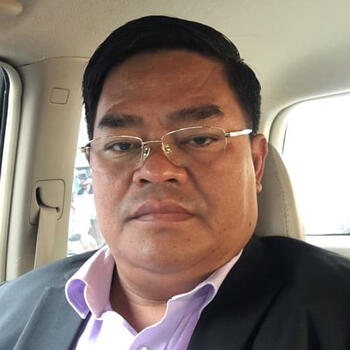
Sok Chamreun Choub 4X4
Mr. Sok Chamreun Choub is the Executive Director of the Khmer HIV/AIDS NGO Alliance (KHANA) in the Kingdom of Cambodia, which focuses on prevention and treatment for HIV/AIDS, Tuberculosis, sexual reproductive health, other non-communicable diseases, as well as promoting human rights and health coverage for vulnerable populations in Cambodia. Chamreun’s professional background is in social science, but he has been devoted to public health work for 27 years in government, the UN and NGOs—more than two decades with KHANA, but also in many other roles. For example, he currently also serves as the Chief of Party for the five-year USAID-funded Community Mobilization Initiative to End TB (COMMIT); the Chair of the Steering Committee of the Health Action Coordinating Committee for the Cooperation Committee for Cambodia; Vice-Chair Civil Society Representative for The Global Fund Country Coordination Committee for Cambodia; Co-Chair of the Activists Coalition on TB for Asia and the Pacific; and the Developing Country NGOs Representative of the Stop TB Partnership Board.  

Image
Dale Huntington 4X4
Dr. Dale Huntington is currently Senior Director, Health Care Systems for Emerging Markets with Johnson and Johnson, based in Singapore where he serves as the primary Global Health Policy lead in Asia and the Pacific. In this role, he is responsible for developing and implementing a strategy to advance Johnson & Johnson’s Enterprise objectives and Government Affairs & Policy platform priorities – with a particular focus on shaping healthcare systems to expand access to quality healthcare in key emerging markets. Prior to joining Johnson and Johnson he was with the WHO, working as the Director of the Asia Pacific Observatory on Health Policy and Systems, based in the WHO Western Pacific Regional Office, Manila, and as a Scientist with the Department of Reproductive Health and Research in Geneva. Before joining WHO he was a Senior Health Specialist at the World Bank – focused on South and East Asia. He holds a Doctorate in Science degree from the Johns Hopkins University School of Hygiene and Public Health, specializing in health services research and evaluation. He has lived and worked in developing countries for over 25 years. He has an extensive publication record and is proficient in French.

Via Zoom Webinar.
Register: https://bit.ly/2KcO6DW

Jiban Karki Executive Director of PHASE Nepal, and Global Challenge Fellow at University of Sheffield
Sok Chamreun Choub Executive Director of KHANA, Phnom Penh, Cambodia
Dale Huntington Senior Director of Health Care Systems for Emerging Markets, Johnson & Johnson, Singapore
Seminars
Authors
Oriana Skylar Mastro
News Type
Commentary
Date
Paragraphs

This op-ed by Oriana Skylar Mastro and Zack Cooper originally appeared in Australian Financial Review.


Australia’s trials are not the first time Beijing has used economic coercion against another country.

It has become so common that we are becoming desensitised to it. Some notable examples include Beijing’s limitations on rare earth exports to Japan in 2010, Norwegian fish exports in 2010, Philippine tropic fruit exports in 2012, Vietnam’s tourist industry in 2014, Mongolian commodities trade in 2016, and South Korean businesses in 2017. In each case, Beijing sought to achieve a political objective by imposing economic penalties.

This case is different. Beijing has typically been ambiguous about the purpose or nature of its coercive economic statecraft. Despite evidence otherwise, it blamed the Japanese ban on meeting a yearly quota, the Philippine ban on pesticide exposure, the tourism drop to Vietnam on changing Chinese preferences, and the closure of South Korean stores on fire code violations. In Australia’s case, though, Beijing is doing away with these pretenses.

[Sign up for APARC's newsletters to get the latest commentary from our scholars.]

China has not been shy this time about connecting its punitive actions to its unhappiness with Australian policies. The Chinese foreign ministry has listed a “series of wrong moves” by Australia for the disruption in relations. Beijing’s embassy in Canberra then gave a list of 14 “mistakes” to the Australian press.

These grievances include Australia’s foreign interference legislation, foreign investment reviews, funding for Australian think tanks, and unfriendly media reporting. Some of these criticisms are particularly ironic coming from Beijing, which often objects to foreign interference in other countries’ domestic affairs.

A core component of China’s strategy is a disinformation and propaganda effort designed to paint its moves as merely defensive, a proportionate and legitimate response to actions taken by the other side.

Australia has done nothing ‘wrong’


Let’s be clear: Australia has done nothing “wrong” in promoting and protecting its democratic institutions at home. It should not censor its media, obstruct analysis by outside experts, or shy away from safeguarding its democratic processes.

This time, the current trade restrictions are about more than making an example of Australia or showing smaller powers that they’ll pay if they have something to say about how the Chinese Communist Party governs at home. Beijing’s aims have taken on new proportions. Party leaders are now willing to punish democracies simply for upholding basic democratic principles within their own countries.

The message is clear: curtail some of your democratic principles or pay the price.

The US needs to work with like-minded states around the world to address this new threat. Free countries need to speak out together in Australia’s defence. If democracies do not hang together, they will hang separately. We should articulate that China’s actions are more than a violation of international law; they threaten the health of our democracies at home. Such a reframing would show Beijing that economic coercion will no longer be treated as a low-stakes tactic.

But words are not enough. We need coordinated action. US alliances are designed primarily to deter and defend against military attacks. Chinese actions make clear, however, that there are alternative methods for undermining peace, prosperity and freedom that our alliances do not adequately address. New alliance consultations to protect against economic attack would enhance our deterrence against China.

Washington should also launch a series of discussions with its allies to determine what new institutional mechanisms, commitments, and structures are needed to defend against economic attacks, not just military ones.

We should ensure the ability to take joint reciprocal action against Beijing in the economic realm, particularly to defend smaller countries. China engages in economic coercion because it is effective and relatively risk-free. But if instead like-minded countries responded together when one was attacked economically, this would go a long way in discouraging Beijing from employing such tactics.

Using all the tools of power


A critical first step is mapping dependencies on China and investigating how to limit over-dependence that open democracies to unacceptable economic vulnerability. As in the military realm, we need to enhance our resiliency against attack by avoiding over-dependence on any single import, export, or supply chain decency. This is a task that the so-called D10 (G7 plus Australia, India, and South Korea) should take up early next year.

The good news is a collective response to Chinese economic coercion will be more feasible under a Biden administration. President-elect Joe Biden and his senior advisers have articulated a preference for multilateral responses to Chinese aggression.

And while President Donald Trump relied mainly on military moves to warn and punish Beijing, Biden’s team prefers to make use of all tools of power. For these reasons, there has even been talk of rejuvenating past efforts like TPP. US allies and partners are also likely to see Biden as more reliable, making them more willing to undertake the risky venture of joining forces against Beijing.

The United States, Australia, and other allies and partners tried to welcome China into the international community. This was the right move. It has been good economically for many advanced economies, including Australia and the United States. But there is a flip side to every coin.

Australia has become too vulnerable to the whims of Beijing. And the US has few options to protect against such economic pressure. The incoming Biden administration needs to fundamentally rethink the nature of alliances so that countries like Australia have a third option the next time Beijing forces a choice between freedom and prosperity.

Read More

A warship sailing in the South China Sea and a photo of three soldiers standing guard in front of a Chinese traditional building
News

China’s South China Sea Strategy Prioritizes Deterrence Against the US, Says Stanford Expert

Analysis by FSI Center Fellow Oriana Skylar Mastro reveals that the Chinese military has taken a more active role in China’s South China Sea strategy, but not necessarily a more aggressive one.
China’s South China Sea Strategy Prioritizes Deterrence Against the US, Says Stanford Expert
Battleships patrolling in the open ocean.
Commentary

Beijing’s Line on the South China Sea: “Nothing to See Here”

China’s official denials of growing military capability in the region look a lot like gaslighting.
Beijing’s Line on the South China Sea: “Nothing to See Here”
Oriana Skylar Mastro at a conference
Q&As

Center Fellow Oriana Skylar Mastro Discusses How Her Scholarship and Military Career Impact One Another

An expert on Chinese military and security issues, Mastro also talks about how her learning style informs her teaching style.
Center Fellow Oriana Skylar Mastro Discusses How Her Scholarship and Military Career Impact One Another
Hero Image
The Australian flag flies outside the Great Hall of the People in Beijing
The Australian flag flies outside the Great Hall of the People in Beijing.
Feng Li, Getty Images
All News button
1
Subtitle

The Biden administration needs to rethink the entire nature of alliances for an era of heavy-handed economic diplomacy from Beijing says Oriana Skylar Mastro and Zack Cooper in an op-ed for the Australian Financial Review.

-

"America is back, ready to lead the world, not retreat from it,” declared President-elect Joe Biden as he unveiled his foreign policy team on November 24. Now, however, with the pillars of America’s international mission — multilateralism, alliances, and democracy – significantly frayed after four years of Trumpism, and amidst pressing global challenges from the COVID-19 pandemic to shifting geopolitics and climate change, the Biden administration faces numerous hard choices. The Asia-Pacific region in particular will remain a source of major challenges as the power competition with China looms large over the U.S. foreign policy agenda. In this online panel discussion, APARC experts will examine the challenges and opportunities for U.S. engagement and leadership in Asia, assess Asian nations’ expectations from the incoming administration, and provide recommendations to achieve American economic and security interests. APARC Director Gi-Wook Shin will moderate the conversation.

Panelists 

Image
Photo of Don Emmerson
Donald K. Emmerson, Director of APARC’s Southeast Asia Program 

At Stanford, in addition to his work for the Southeast Asia Program and his affiliations with CDDRL and the Abbasi Program in Islamic Studies, Donald Emmerson has taught courses on Southeast Asia in East Asian Studies, International Policy Studies, and Political Science. He is active as an analyst of current policy issues involving Asia. In 2010 the National Bureau of Asian Research and the Woodrow Wilson International Center for Scholars awarded him a two-year Research Associateship given to “top scholars from across the United States” who “have successfully bridged the gap between the academy and policy.”

Image
Photo of Tom Fingar
Thomas Fingar, Center Fellow, APARC 

Thomas Fingar is a Shorenstein APARC Fellow in the Freeman Spogli Institute for International Studies at Stanford University. He was the inaugural Oksenberg-Rohlen Distinguished Fellow from 2010 through 2015 and the Payne Distinguished Lecturer at Stanford in 2009.


Image
Photo of Oriana Mastro
Oriana Skylar Mastro, FSI Center Fellow at APARC 

Oriana Skylar Mastro is a Center Fellow at Stanford University’s Freeman Spogli Institute for International Studies (FSI). Within FSI, she works primarily in the Shorenstein Asia-Pacific Research Center (APARC) and the Center for International Security and Cooperation (CISAC) as well. She is also a fellow in Foreign and Defense Policy Studies at the American Enterprise Institute and an inaugural Wilson Center China Fellow.


Image
Photo of Kiyoteru Tsutsui
Kiyoteru Tsutsui, Director of APARC’s Japan Program 
Kiyoteru Tsutsui is the Henri H. and Tomoye Takahashi Professor and Senior Fellow in Japanese Studies at Shorenstein APARC, the Director of the Japan Program at APARC, a senior fellow of the Freeman Spogli Institute for International Studies, and Professor of Sociology, all at Stanford University.


Moderator

Image
Photo of Gi-Wook Shin
Gi-Wook Shin, Director of APARC and the Korea Program

Gi-Wook Shin is the director of the Walter H. Shorenstein Asia-Pacific Research Center; the William J. Perry Professor of Contemporary Korea; the founding director of the Korea Program; a senior fellow of the Freeman Spogli Institute for International Studies; and a professor of sociology, all at Stanford University. As a historical-comparative and political sociologist, his research has concentrated on social movements, nationalism, development, and international relations.

Via Zoom Webinar
Register:  https://bit.ly/39MlT1n


Donald K. Emmerson Director of APARC's Southeast Asia Program
Thomas Fingar Center Fellow, APARC
Oriana Skylar Mastro FSI Center Fellow at APARC
Gi-Wook Shin Director of APARC and the Korea Program
Kiyoteru Tsutsui Director of APARC's Japan Program
Panel Discussions
Authors
Noa Ronkin
News Type
News
Date
Paragraphs

STANFORD, CA, December 3, 2020 — The Walter H. Shorenstein Asia-Pacific Research Center (APARC), Stanford University’s hub for interdisciplinary research, education, and engagement on contemporary Asia, invites nominations for the 2021 Shorenstein Journalism Award. The award recognizes outstanding journalists who have spent their careers helping audiences around the world understand the complexities of the Asia-Pacific region. The 2021 award will honor a journalist whose work has mostly been conveyed through Asian news media. The deadline for nomination submissions is Monday, February 15, 2021.

An annual tradition since 2002, the Shorenstein Journalism Award is sponsored by APARC and carries a cash prize of US $10,000. It honors the legacy of APARC benefactor, Mr. Walter H. Shorenstein, and his twin passions for promoting excellence in journalism and understanding of Asia. Over the course of its history, the award has recognized world-class journalists who push the boundaries of coverage of the Asia-Pacific region and help advance mutual understanding between audiences in the United States and their Asian counterparts. Recent honorees include Tom Wright, Maria Ressa, Anna Fifield, Siddharth Varadarajan, Ian Johnson, and Caixin Media.

The award alternates between recipients whose work has mostly been published through Asian news media and those whose work has mostly been conveyed through American news media. The 2021 award will recognize a recipient from the former category. “Media freedom has increasingly been under attack throughout Asia, and many countries in the region are becoming dangerous places for journalists to work in,” said APARC Director Gi-Wook Shin. “It is now more crucial than ever to stand against these assaults on press freedom and support independent journalism without fear or favor.”

For the award, the Asia-Pacific region is defined broadly to include Northeast, Southeast, South, and Central Asia and Australasia. Both individual journalists with a considerable body of work and journalism organizations are eligible for the award. Nominees’ work may be in traditional forms of print or broadcast journalism and/or in new forms of multimedia journalism. The Award Selection Committee, whose members are experts in journalism and Asia research and policy, presides over the judging of nominees and is responsible for the selection of honorees.

APARC is inviting 2021 award nomination submissions from news editors, publishers, scholars, journalism associations, and entities focused on researching and interpreting the Asia-Pacific region. The Center will announce the winner by April 2021 and present the award at a public ceremony at Stanford in the autumn quarter of 2021.

Nominations are accepted electronically through Monday, February 15, 2021, at 11:59 PM PST. For information about the nomination procedures and to submit nominations please visit the award nomination entry page.

Please direct all inquiries to aparc-communications@stanford.edu.

Read More

View of building roof in the Forbidden City complex and the Beijing skyline in the background
News

New Fellowship on China Policy Seeks to Strengthen U.S.-China Relations

Stanford University’s Shorenstein Asia-Pacific Center invites applications for the inaugural 2021-22 China Policy Fellowship from experts with research experience on issues vital to the U.S. China policy agenda and influence in the policymaking process.
New Fellowship on China Policy Seeks to Strengthen U.S.-China Relations
Encina Hall
News

APARC Announces 2021-22 Postdoctoral Fellowships for Emerging Scholars in Contemporary Asia, Japan, and Korea Studies

The Center’s commitment to supporting young Asia scholars remains strong during the COVID-19 crisis.
APARC Announces 2021-22 Postdoctoral Fellowships for Emerging Scholars in Contemporary Asia, Japan, and Korea Studies
Hero Image
Stanford colonnade with text announcing open nominations for the 2021 Shorenstein Journalism Award by February 15.
All News button
1
Subtitle

Sponsored by Stanford University’s Shorenstein Asia-Pacific Research Center, the annual award recognizes outstanding journalists and journalism organizations for excellence in coverage of the Asia-Pacific region. News editors, publishers, scholars, and organizations focused on Asia research and analysis are invited to submit nominations for the 2021 award through February 15.

-

Join the REDI Task Force for the next event in the "Critical Conversations: Race and Global Affairs" series featuring a conversation about how race and racism effects Asian and Asian-American studies.

This event will examine how race has historically been an important organizing principle in understanding Asia, with critical reflections on how racism has permeated research and teaching on Asia. The panelists will engage in a dialogue between ethnic studies and area studies to learn insights from Asian American studies in enriching Asian studies. 
 

About the Speakers

Gi-Wook Shin is the director of the Walter H. Shorenstein Asia-Pacific Research Center; the William J. Perry Professor of Contemporary Korea; the founding director of the Korea Program; a senior fellow of the Freeman Spogli Institute for International Studies; and a professor of sociology, all at Stanford University. As a historical-comparative and political sociologist, his research has concentrated on social movements, nationalism, development, and international relations.

Gordon Chang is Olive Palmer Professor of Humanities, Professor of History, and the founding director of Stanford's Asian American Studies Program. He is the former director of the Center of East Asian Studies. He is interested in several different areas of history, including the historical connections between race and ethnicity in America, on the one hand, and foreign relations, on the other, and trans-Pacific relations in their diplomatic as well as their cultural and social dimensions. He has written and continues to publish in the areas of U.S. diplomacy, America-China relations, the Chinese diaspora, Asian American history, and global history. His most recent books have examined the history of Chinese railroad workers in America in the 19th century.

Sharika Thiranagama is Associate Professor of Anthropology and President of the American Institude of Sri Lankan Studies. Her research explores the intersection of political mobilization and domestic life. Her work focuses on highly fraught contexts of violence, inequality, and intense political mobilization, attempting to understand (rather than romanticize) patterns of sociality and how people actually live together, often in highly fractious and unequal ways, and, to situate these processes in specific historical formations of “privates” and “publics” in South Asia.

Eiichiro Azuma is Associate Professor of History and Asian American Studies at University of Pennsylvania.  He is author of award-winning Between Two Empires: Race, History, and Transnationalism in Japanese America (Oxford 2005), and coeditor, with Gordon Chang, of Yuji Ichioka, Before Internment: Essays in Prewar Japanese American History (Stanford 2006) and, with David Yoo, of the Oxford Handbook of Asian American History (Oxford 2016).  The first two books have been translated into Japanese.  His latest monograph, In Search of Our Frontier: Japanese America and Settler Colonialism in the Construction of Japan’s Borderless Empire (California, 2019), received the 2020 John K. Fairbank Prize in East Asian History from the American Historical Association.  Azuma served as the director of Penn’s Asian American Studies Program from 2013 through 2018. 

There will be time for a Q&A. This event will be recorded and uploaded to the REDI website. 

Register here: https://stanford.zoom.us/meeting/register/tJclc--sqjkuHdcf85To1OhVqW1if…

Director, APARC
Shorenstein APARC
Encina Hall E301
616 Jane Stanford Way
Stanford, CA 94305-6055
(650) 724-8480 (650) 723-6530
0
Senior Fellow at the Freeman Spogli Institute for International Studies
Professor of Sociology
William J. Perry Professor of Contemporary Korea
Professor, by Courtesy, of East Asian Languages & Cultures
Gi-Wook Shin_0.jpg PhD

Gi-Wook Shin is the William J. Perry Professor of Contemporary Korea in the Department of Sociology, senior fellow at the Freeman Spogli Institute for International Studies, and the founding director of the Korea Program at the Walter H. Shorenstein Asia-Pacific Research Center (APARC) since 2001, all at Stanford University. In May 2024, Shin also launched the Taiwan Program at APARC. He served as director of APARC for two decades (2005-2025). As a historical-comparative and political sociologist, his research has concentrated on social movements, nationalism, development, democracy, migration, and international relations.

In Summer 2023, Shin launched the Stanford Next Asia Policy Lab (SNAPL), which is a new research initiative committed to addressing emergent social, cultural, economic, and political challenges in Asia. Across four research themes– “Talent Flows and Development,” “Nationalism and Racism,” “U.S.-Asia Relations,” and “Democratic Crisis and Reform”–the lab brings scholars and students to produce interdisciplinary, problem-oriented, policy-relevant, and comparative studies and publications. Shin’s latest book, The Four Talent Giants, a comparative study of talent strategies of Japan, Australia, China, and India to be published by Stanford University Press in the summer of 2025, is an outcome of SNAPL.

Shin is also the author/editor of twenty-six books and numerous articles. His books include Korean Democracy in Crisis: The Threat of Illiberalism, Populism, and Polarization (2022); The North Korean Conundrum: Balancing Human Rights and Nuclear Security (2021); Superficial Korea (2017); Divergent Memories: Opinion Leaders and the Asia-Pacific War (2016); Global Talent: Skilled Labor as Social Capital in Korea (2015); Criminality, Collaboration, and Reconciliation: Europe and Asia Confronts the Memory of World War II (2014); New Challenges for Maturing Democracies in Korea and Taiwan (2014); History Textbooks and the Wars in Asia: Divided Memories (2011); South Korean Social Movements: From Democracy to Civil Society (2011); One Alliance, Two Lenses: U.S.-Korea Relations in a New Era (2010); Cross Currents: Regionalism and Nationalism in Northeast Asia (2007);  and Ethnic Nationalism in Korea: Genealogy, Politics, and Legacy (2006). Due to the wide popularity of his publications, many have been translated and distributed to Korean audiences. His articles have appeared in academic and policy journals, including American Journal of SociologyWorld DevelopmentComparative Studies in Society and HistoryPolitical Science QuarterlyJournal of Asian StudiesComparative EducationInternational SociologyNations and NationalismPacific AffairsAsian SurveyJournal of Democracy, and Foreign Affairs.

Shin is not only the recipient of numerous grants and fellowships, but also continues to actively raise funds for Korean/Asian studies at Stanford. He gives frequent lectures and seminars on topics ranging from Korean nationalism and politics to Korea's foreign relations, historical reconciliation in Northeast Asia, and talent strategies. He serves on councils and advisory boards in the United States and South Korea and promotes policy dialogue between the two allies. He regularly writes op-eds and gives interviews to the media in both Korean and English.

Before joining Stanford in 2001, Shin taught at the University of Iowa (1991-94) and the University of California, Los Angeles (1994-2001). After receiving his BA from Yonsei University in Korea, he was awarded his MA and PhD from the University of Washington in 1991.

Selected Multimedia

Director of the Korea Program and the Taiwan Program, Shorenstein Asia-Pacific Research Center
Date Label
Director Moderator APARC
Gordon Chang Professor of History Panelist Department of History
Sharika Thiranagama Associate Professor of Anthropology Panelist Department of Anthropology
Eiichiro Azuma Professor of History and Asian American Studies Panelist University of Pennsylvania Department of History and Asian American Studies
-

About this Event: In India there persists a striking gender gap in political participation. Women's political participation is important both on normative grounds of inclusion and because when women do participate, politics changes. I develop a theoretical model of political behavior arguing that women's lack of political participation is the result of the structure of women's political networks in patriarchal societies. I then evaluate the effect of expanding women's networks by leveraging a natural experiment that created as-if random variation in access to women-only credit groups. Participation in these groups had a significant and substantial impact on women's political participation - women's attendance at public meetings doubled. I provide suggestive evidence of three mechanisms underlying this effect: (1) larger networks, (2) increased capacity for collective action within networks, and (3) development of civic skills. These findings contribute to our understanding of how networks affect political behavior and underlie gendered inequalities in political participation.


Image
Soledad Prillaman
About the Speaker: Soledad Artiz Prillaman is an Assistant Professor of Political Science at Stanford University. Her research lies at the intersections of comparative political economy, development, and gender, with a focus in South Asia. Specifically, her research addresses questions such as: What are the political consequences of development and development policies, particularly for women’s political behavior? How are minorities, specifically women, democratically represented and where do inequalities in political engagement persist and how are voter demands translated into policy and governance? In answering these questions, she utilizes mixed methods, including field experiments, surveys, and in-depth qualitative fieldwork. She received her Ph.D. in Government from Harvard University in 2017 and a B.A. in Political Science and Economics from Texas A&M University in 2011.


Online, via Zoom: REGISTER

Soledad Prillaman Assistant Professor of Political Science at Stanford University
Seminars
Paragraphs

The demand for large-scale assessments in higher education, especially at an international scale, is growing. A major challenge of conducting these assessments, however, is that they require understanding and balancing the interests of multiple stakeholders (government officials, university administrators, and students) and also overcoming potential unwillingness of these stakeholders to participate. In this paper, we take the experience of the Study of Undergraduate Performance (SUPER) in conducting a large-scale international assessment as a case study. We discuss ways in which we mitigated perceived risks, built trust, and provided incentives to ensure the successful engagement of stakeholders during the study’s implementation.

All Publications button
1
Publication Type
Journal Articles
Publication Date
Journal Publisher
Journal of Higher Education Policy and Management
Authors
Prashant Loyalka
Authors
News Type
News
Date
Paragraphs

On November 10th, the APARC China Program convened an expert panel focused on the Decision of the fifth plenary session of the 19th Central Committee of the Chinese Communist Party, which took place on October 26-29.  The Fifth Plenum Decision outlines not only China’s 14th Five Year Plan (2021-2025), but also Beijing’s economic blueprint through 2035 and the “goal of fully building a modern socialist country."  The CCP leadership recently articulated its “dual circulation” policy – viz., a drastic reduction in China’s dependence on U.S. technologies and increased reliance on domestic consumption while maintaining exports and attracting foreign direct investments.  At this critical juncture when the coronavirus pandemic has shrunk global trade and tensions between the U.S. and China continue to intensify, panel members were asked to examine what the Fifth Plenum Decision might signify.  Does it mark a significant shift in Beijing’s strategic economic orientation?  What are the short- and long-term implications of the Decision for China’s economic development strategy, U.S.-China relations, as well as the world’s economic and technology ecosystems?  

Guests heard from experts James Green, Damien Ma, and Xiaomeng Lu.  James Green, Senior Research Fellow at Georgeton University's Initiative for U.S.-China Dialogue on Global Issues, has worked for over two decades on U.S.-Asia relations.  He has held several positions in government, including Minister Counselor for Trade Affairs at the U.S. Embassy in Beijing and China Director of the White House’s National Security Council.  Damien Ma is the Director and co-founder of MacroPolo, the Think Tank of the Paulson Institute, which focuses on China's economics, technology, and politics.  He is also adjunct faculty at the Kellogg School of Management at Northwestern University.  Finally, Xiaomeng Lu is a senior analyst in Eurasia Group's geo-technology practice.  She focuses on many of the most important issues related to China right now, including cybersecurity, data protection, artificial intelligence, internet governance, 5G, and trade.  The panel concluded with a discussion of audience questions. Watch:

Read More

Min Ye speaking
News

Domestic or International? The Belt and Road Initiative Is More Internally Focused Than We Think, Says Expert Min Ye

Domestic or International? The Belt and Road Initiative Is More Internally Focused Than We Think, Says Expert Min Ye
Photograph of the UN building in Geneva, Switzerland
News

Rebuilding International Institutions Will be Tough but Necessary, Say Stanford Experts Thomas Fingar and Stephen Stedman

Fingar and Stedman spoke as part of the APARC program “Rebuilding International Institutions,” which examined the future of international institutions such as the United Nations (UN), World Trade Organization (WTO), and World Health Organization (WHO) in our evolving global political landscape.
Rebuilding International Institutions Will be Tough but Necessary, Say Stanford Experts Thomas Fingar and Stephen Stedman
Hero Image
Photo of the Forbidden City entrance with Mao Zedong's portrait Markus Winkler on Unsplash
All News button
1
-

**Please note all CDDRL events are scheduled using the Pacific Time Zone

About the Event:  How can one of the world’s most free-wheeling cities transition from a vibrant global center of culture and finance into a subject of authoritarian control? As Beijing's anxious interference has grown, the “one country, two systems” model China promised Hong Kong has slowly drained away in the years since he 1997 handover. As “one country” seemed set to gobble up “two systems," the people of Hong Kong riveted the world’s attention in 2019 by defiantly demanding the autonomy, rule of law and basic freedoms they were promised. In 2020, the new National Security Law imposed by Beijing aimed to snuff out such resistance. Will the Hong Kong so deeply held in the people’s identity and the world’s imagination be lost? Professor Michael Davis, who has taught human rights and constitutional law in this city for over three decades, and has been one of its closest observers, takes us on this constitutional journey. 


Image
Michael Davis
About the Speaker:  Professor Michael C. Davis is in the Fall of 2020 a Visiting Professor in the Faculty of Law at the University of Hong Kong where he teaches core courses on international human rights. He is also currently a Global Fellow at the Woodrow Wilson International Center for Scholars in Washington DC, a Senior Research Scholar at the Weatherhead East Asia Institute at Columbia University and a Professor of Law and International Affairs at O.P. Jindal Global University in India (where he is in residence each spring).  A professor in the Law Faculty at the University of Hong Kong until late 2016, he has held a number of distinguished visiting professorships, including the J. Landis Martin Visiting Professor of Human Rights Law at Northwestern University (2005-6), the Robert and Marion Short Visiting Professor of Human Rights at the University of Notre Dame (2004-5) and the Frederick K. Cox Visiting Professor of Law at Case Western Reserve University (2000).  As a public intellectual his media writing won him a 2014 Human Rights Press Award for commentary. 


Online, via Zoom: REGISTER

Michael C.Davis Visiting Professor in the Faculty of Law at the University of Hong Kong
Seminars
-

**Please note all CDDRL events are scheduled using the Pacific Time Zone


About the Event: Following the Allied invasion of Iraq in 2003, the U.S. government and military officials revived counterinsurgency doctrine and practice—widely employed, though not invented, during the era of decolonization—in service of the nation’s ongoing War on Terror. This revival was dramatized during a widely publicized screening at the Pentagon of Gillo Pontecorvo’s classic film The Battle of Algiers (1966). What insights into (Algerian) insurgency and (French) counterinsurgency did U.S. officials hope to glean from Pontecorvo’s film? And how would these insights be mobilized, if at all, for the occupation of Iraq and other insurgent geographies? 

This talk revisits this historical moment and the questions it raises about the relationship between U.S. militarism and the uses of literature and film in the management of insurgency in Africa and Western Asia.


Image
Vaughn Rasberry
About the Speaker: Vaughn Rasberry is Associate Professor in the Department of English and Academic Director of the Center for Comparative Studies in Race and Ethnicity at Stanford. He is the author of Race and the Totalitarian Century: Geopolitics and the Black Literary Imagination (Harvard UP, 2016), winner of the Ralph Bunche Award from the American Political Science Association and an American Book Award from the Before Columbus Foundation. 


Online, via Zoom: REGISTER

Vaughn Rasberry Associate Professor in the Department of English and Academic Director of the Center for Comparative Studies in Race and Ethnicity at Stanford
Seminars
Subscribe to Asia-Pacific