0
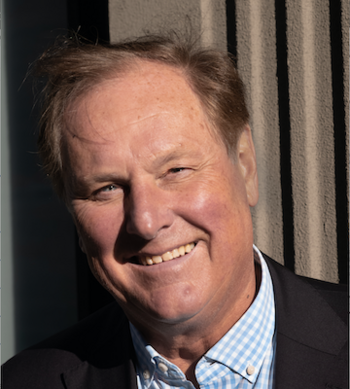
benjamin_rubin_headshot.jpg

Benjamin Rubin joined the Freeman Spogli Institute for International Studies as a member of the development team in 2021. Previously, he worked as a financial planner for Foster Klima & Company and as a professor of Roman Archaeology at Williams College in Williamstown, MA. Benjamin received his BA in English and Classics from Macalester College and a PhD from the University of Michigan, Ann Arbor, in Classical Art and Archaeology.

Associate Director of Development
Date Label
-

Image
Deen Freelon photo along with flyer for event

Join us on November 16th for “Analyzing Social Media From A User-eye View With PIEGraph” from 12 - 1 PM PT featuring Deen Freelon, associate professor at the UNC Hussman School of Journalism and Media at the University of North Carolina. This session will be moderated by Jeff Hancock, founding director of the Stanford Social Media Lab and is organized by the Cyber Policy Center’s Program on Democracy and the Internet and the William and Flora Hewlett Foundation’s Cyber Initiative. 

Quantitative social media research has traditionally been conducted from what might be called a platform-centric view, wherein researchers sample, collect, and analyzed data based on one or more topic- or user-specific keywords. Such studies have yielded many valuable insights, but they convey little about individual users’ tailored social media environments—what Professor Freelon calls the user-eye view. Studies that investigate social media from a user-eye view tend to be rare because of the expense involved and a limited number of suitable tools. This talk introduces PIEGraph, a novel system for user-eye view research that offers key advantages over existing systems. PIEGraph is lightweight, scalable, open-source, OS-independent, and collects data viewable from mobile and desktop interfaces directly from APIs. The system incorporates an extensible tagging taxonomy that allows for straightforward classification of a wide range of political, social, and cultural phenomena. The presentation will focus on how Professor Freelon’s research team is using PIEGraph to examine users’ potential levels of exposure to high- and low-quality information sources across the ideological spectrum.

Speakers:

Deen Freelon is an associate professor at the UNC Hussman School of Journalism and Media at the University of North Carolina and a principal researcher at the Center for Information, Technology, and Public Life (CITAP). His theoretical interests address how ordinary citizens use social media and other digital communication technologies for political purposes, paying particular attention to how identity characteristics (e.g. race, gender, ideology) influence these uses. Methodologically, he is interested in how computational research techniques can be used to answer some of the most fundamental questions of communication science. Freelon has worked at the forefront of political communication and computational social science for over a decade, coauthoring some of the first communication studies to apply computational methods to social media data. 

Jeff Hancock is the founding director of the Stanford Social Media Lab and is Harry and Norman Chandler Professor of Communication at Stanford University. Professor Hancock and his group work on understanding psychological and interpersonal processes in social media. The team specializes in using computational linguistics and experiments to understand how the words we use can reveal psychological and social dynamics, such as deception and trust, emotional dynamics, intimacy and relationships, and social support. Recently Professor Hancock has begun work on understanding the mental models people have about algorithms in social media, as well as working on the ethical issues associated with computational social science.

Deen Freelon
Seminars
-


Image
David Kaye event, the global spyware crisis and how to stop it

Join us November 2nd from 12 PM - 1 PM PT for “The Global Spyware Crisis and How to Stop It” featuring David Kaye, professor of law at University of California, Irvine, and moderated by Kelly Born, director of the Cyber Initiative at the William and Flora Hewlett Foundation. This seminar series is organized by the Cyber Policy Center’s Program on Democracy and the Internet and the Hewlett Foundation’s Cyber Initiative. 

The private surveillance (or spyware) industry has thrived with low levels of transparency and public scrutiny and weak controls on transfers of technology. Governments offer limited information on the use of surveillance products and regulations of private surveillance companies. Meanwhile, these tools – most famously but not exclusively the Pegasus malware of the Israeli NSO Group – are increasingly used against journalists, opposition figures, those in dissent, and others. Public reporting – particularly energized by release of the Pegasus Project reporting by the Forbidden Stories consortium in the summer of 2021 – has begun to generate increasing global concern, and yet policy and law lag far behind. This presentation will focus on a human rights-based legal and policy framework for the regulation and accountability of, as well as transparency within, the private surveillance industry.

Speaker Profile:

David Kaye is a professor of law at the University of California, Irvine, director of its International Justice Clinic, and co-director of the Center on Fair Elections and Free Speech. From 2014 – 2020 he served as the United Nations Special Rapporteur on the promotion and protection of the right to freedom of opinion and expression. Author of Speech Police: The Global Struggle to Govern the Internet (2019), he is currently Independent Chair of the Board of the Global Network Initiative and a Trustee of ARTICLE 19.


David Kaye Professor of Law, UC Irvine
-

Image
jacob helberg the wires of war event flyer showing his photo and book cover

Image
the wires of war book cover showing a dragon and an eagle fighting over a rope
On Wednesday, October 27 at 10 am Pacific Time, please join Andrew Grotto, Director of Stanford’s Program on Geopolitics, Technology and Governance, for a conversation with Jacob Helberg, senior adviser at the Stanford Program on Geopolitics, Technology and Governance and an adjunct fellow at the Center for Strategic and International Studies (CSIS) to discuss his newly released book "The Wires of War:  Technology and the Global Struggle for Power" - an urgent and groundbreaking account of the high-stakes global cyberwar brewing between Western democracies and the autocracies of China and Russia that could potentially crush democracy.

From 2016 to 2020, Jacob Helberg led Google’s global internal product policy efforts to combat disinformation and foreign interference. During this time, he found himself in the midst of what can only be described as a quickly escalating two-front technology cold war between democracy and autocracy.

On the front-end, we’re fighting to control the software—applications, news information, social media platforms, and more—of what we see on the screens of our computers, tablets, and phones, a clash which started out primarily with Russia but now increasingly includes China and Iran. Even more ominously, we’re also engaged in a hidden back-end battle—largely with China—to control the Internet’s hardware, which includes devices like cellular phones, satellites, fiber-optic cables, and 5G networks.

This tech-fueled war will shape the world’s balance of power for the coming century as autocracies exploit twenty-first-century methods to re-divide the world into twentieth century-style spheres of influence. Helberg cautions that the spoils of this fight are power over every meaningful aspect of our lives, including our economy, our infrastructure, our national security, and ultimately, our national sovereignty. Without a firm partnership with the government, Silicon Valley is unable to protect democracy from the autocrats looking to sabotage it from Beijing to Moscow and Tehran. The stakes of the ongoing cyberwar are no less than our nation’s capacity to chart its own future, the freedom of our democratic allies, and even the ability of each of us to control our own fates, Helberg says. And time is quickly running out.


Praise for “The Wires of War: Technology and the Global Struggle for Power”: 

“An analytical tour de force on the rapidly increasing challenge of techno-authoritarian nations to our national security, our economy, and our democracy.” —President Bill Clinton, 42nd President of the United States


REGISTER

-

Image
jawboning as a first amendment problem

PART OF THE FALL SEMINAR SERIES

Join us on October 19th for our weekly seminar from 12 PM - 1 PM PT featuring Genevieve Lakier, Professor of Law at University of Chicago's Law School and CPC Co-Director, Nate Persily. This series is organized by the Program on Democracy and the Internet, and the Cyber Initiative at the William and Flora Hewlett Foundation.

For years now, scholars have expressed alarm at the tendency of government officials to pressure—or “jawbone”—social media companies into taking down what the officials consider to be harmful or offensive speech, even when no law requires it. Scholars have worried, for good reason, that the practice of jawboning allows government officials to evade the stringent constraints on their power to regulate speech imposed by the First Amendment. But relatively little attention has been paid to the constitutional question of whether, or rather when, government jawboning itself violates the First Amendment. In fact, answering this question turns out to be quite difficult because of deep inconsistencies in the cases that deal with jawboning, both in the social media context and beyond. In this talk, I will explore what those inconsistencies are, why the case law is so unclear about where the line between permissible government pressure and unconstitutional governmental coercion falls, and what kind of jawboning rule might be necessary to protect free speech values in a public sphere in which both private companies and government officials possess considerable power to determine who can and cannot speak.


REGISTER


Speaker Profile:

Genevieve Lakier teaches and writes about freedom of speech and American constitutional law. Her work examines the changing meaning of freedom of speech in the United States, the role that legislatures play in safeguarding free speech values, and the fight over freedom of speech on the social media platforms.
 
Genevieve has an AB from Princeton University, a JD from New York University School of Law, and an MA and PhD in anthropology from the University of Chicago. Between 2006 and 2008, she was an Academy Scholar at the Weatherhead Center for International and Area Studies at Harvard University. After law school, she clerked for Judge Leonard B. Sand of the Southern District of New York and Judge Martha C. Daughtrey of the Sixth Circuit Court of Appeals. Before joining the faculty, Genevieve taught at the Law School as a Bigelow Fellow and Lecturer in Law. She will serve as the Senior Visiting Research Scholar at the Knight Institute at Columbia University for the 2021-2022 school year, where she will be supervising a project exploring the relationship between the First Amendment and the regulation of lies, disinformation and misinformation.


Genevieve Lakier,
Seminars
Paragraphs

More than a decade ago, the Oxford Roman Economy Project (OXREP)1 and the Cambridge economic history of the Greco-Roman world put the question of the performance of the Roman economy at the center of historical debate, prompting a flood of books and articles attempting to assess the degree of growth in the economy.2 The issue is of sufficient importance that it has figured in the narratives of economists analyzing the impact of institutional frameworks on the potential for growth.3 As the debate has continued, there has been some convergence: most historians would agree that there was some Smithian growth as evidenced by urbanization and trade, while acknowledging that production remained predominantly agricultural and based primarily on somatic energy (i.e., human and animal).4 This is, of course, a very broad framework that does not differentiate the Roman empire from other complex pre-industrial societies. The challenge is to refine the analysis in order to put content into the broad description of “modest though significant growth”5 and to offer a deeper understanding of the dynamics of the economy.

All Publications button
1
Publication Type
Journal Articles
Publication Date
Authors
Richard Saller
Paragraphs

In response to rising immigration flows and the fear of Islamic radicalization, several Western countries have enacted policies to restrict religious expression and emphasize secularism and Western values. Despite intense public debate, there is little systematic evidence on how such policies influence the behavior of the religious minorities they target. In this paper, we use rich quantitative and qualitative data to evaluate the effects of the 2004 French headscarf ban on the socioeconomic integration of French Muslim women. We find that the law reduces the secondary educational attainment of Muslim girls and affects their trajectory in the labor market and family composition in the long run. We provide evidence that the ban operates through increased perceptions of discrimination and that it strengthens both national and religious identities.

All Publications button
1
Publication Type
Journal Articles
Publication Date
Subtitle
Assessing the Effects of the French Headscarf Ban
Authors
Vicky Fouka
Paragraphs

Can leveraging family history reduce xenophobia? Building on theories of group identity, we show that a family history of forced relocation leaves an imprint on future generations and can be activated to increase sympathy toward refugees. We provide evidence from Greece and Germany, two countries that vividly felt the European refugee crisis, and that witnessed large-scale forced displacement of their own populations during the twentieth century. Combining historical and survey data with an experimental manipulation, we show that mentioning the parallels between past and present differentially increases pledged monetary donations and attitudinal measures of sympathy for refugees among respondents with forcibly displaced ancestors. This differential effect is also present among respondents without a family history of forced migration who live in places with high historical concentration of refugees. Our findings highlight the role of identity and shared experience for reducing out-group discrimination.

All Publications button
1
Publication Type
Journal Articles
Publication Date
Subtitle
Evidence from the European Refugee Crisis
Authors
Vicky Fouka
Authors
Nathaniel Persily
News Type
Commentary
Date
Paragraphs

The disclosures made by whistleblower Frances Haugen about Facebook — first to the Wall Street Journal and then to “60 Minutes” — ought to be the stuff of shareholders’ nightmares: When she left Facebook, she took with her documents showing, for example, that Facebook knew Instagram was making girls’ body-image issues worse, that internal investigators knew a Mexican drug cartel was using the platform to recruit hit men and that the company misled its own oversight board about having a separate content appeals process for a large number of influential users. (Haugen is scheduled to appear before a Congressional panel on Tuesday.)

Facebook, however, may be too big for the revelations to hurt its market position — a sign that it may be long past time for the government to step in and regulate the social media company. But in order for policymakers to effectively regulate Facebook — as well as Google, Twitter, TikTok and other Internet companies — they need to understand what is actually happening on the platforms.


Nate Persily

Nathaniel Persily

Co-director, Cyber Policy Center
FULL BIO
Hero Image
Frances Haugen 60 minutes interview
Former Facebook product manager Frances Haugen appears on “60 Minutes.” Haugen has been revealed as the source behind tens of thousands of pages of leaked internal company research. (Robert Fortunato for CBSNews/“60 Minutes") (Photo by Robert Fortunato/CBSNews/60MINUTES)
All News button
1
Subtitle

The social media company shouldn’t be able to hide information about whether and how it harms users (from the Washington Post)

Subscribe to Europe