-

About the Seminar: For centuries, the world’s dominant power has been the state that wielded the world’s dominant navy. More recently, globalization has been remade, as a sea-based trade—85% of all global trade moves by sea. As does nearly 2/3rds of the world trade in oil and gas, while 93% of all data in the world moves along undersea cables that line the ocean floor. The oceans are vital, too, to our changing climate. All of which highlights the drama of China’s return to the high seas, and its rapid maritime and naval build-up. The net result: a new arms race, centered in the Western Pacific but reaching out into the Arctic and the Indian Oceans, and pulling in Russia, India, Japan and Europe.  Bruce Jones, author of To Rule the Waves, will explore how our security, our prosperity, and our environment are being reshaped by the dynamics of sea power.

Register Now

About the Speaker: 

Image
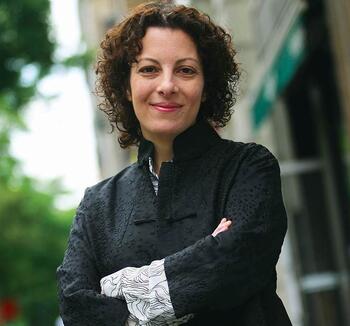
Bruce Jones Headshot

Bruce Jones is a senior fellow and director of the project on international order and strategy at the Brookings Institution. The author or co-author of several books on international order, his most recent work is “To Rule the Waves: How Control of the World’s Oceans Shapes the Fate of the Superpowers”.


Online, via Zoom.

Bruce Jones The Brookings Institution
Seminars
-

About the Seminar: Saumitra Jha and Steven Wilkinson's book project, Wars and Freedoms, makes the case that, throughout human history, external wars are common catalysts for political change at home, and they do so in large part because of their impact on the organizational capacity of the disenfranchised. It draws widely from across the social sciences and humanities: literature; history; biography; psychology; sociology; economics; and political science. The book draws upon these diverse ways of knowing to provide evidence from across time and around the world of the relevance of a simple framework for understanding which types of external wars are conducive to the emergence of broad-based freedoms, the building of states, and the shrinking of wealth inequalities on one hand, and when instead, others have led to the building of military castes, or an increased propensity for political polarization,  ethnic conflict, attempted coups, revolution and genocide on the other. In so doing, Wars and Freedoms provides a re-interpretation of the history of revolutions and political change, in order to make clear which lessons and episodes from history may be more germane for the future of democracy and freedoms in the twenty-first century.

Wars and Freedoms describes how there were historically three paths that connected organizational skills developed in external wars to the spread of democracy and democratic values: in the shadow of a crisis that threatened broad class conflict, through a more gradual process of state-building in response to ongoing external existential threats, and through the organizational efforts of committed military leaders. Of these, however, only the last, the most fragile and contingent, is still likely to emerge organically. Understanding the decline of other paths, however, can still help us understand both how political freedoms and democracy emerged, how our democracies may die, and what we may still be able to do about it.

Register Now

About the Speaker:

Image
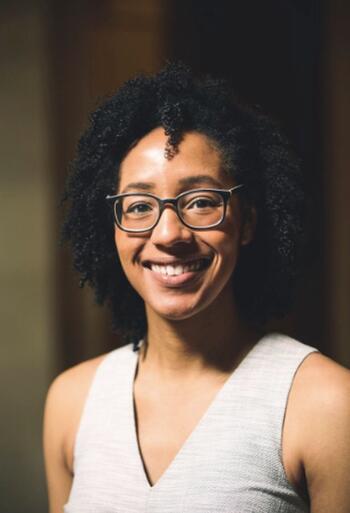
Headshot for Saumitra Jha
Saumitra Jha is Associate Professor of Political Economy at the Stanford Graduate School of Business, a Senior Fellow at the Center for Democracy, Development and the Rule of Law in Stanford's Freeman-Spogli Institute for International Affairs and convenes the Stanford Conflict and Polarization Lab. His work on the historical relationship between conflict and markets has been received the Michael Wallerstein Award for best article in political economy from the American Political Science Association, and has been published in the top journals in both Economics and Political Science, including The American Political Science Review, Econometrica, and The Quarterly Journal of Economics. His co-authored work on Heroes was awarded the Oliver Williamson Award from the Society for Institutional and Organizational Economics. Also an award-winning teacher, he has shown a particular interest in communicating the results of his research to broader audiences, in the press (such as the Indian Express and USA Today) and through online policy and social media outlets (VoxEU, VoxDev, Public Books, Broadstreet, Ideas for India, AOC), and to a range of student and practitioner audiences, including cadets at West Point, members of the US intelligence community, European Union diplomats, and entrepreneurs in Africa, India and the United States.  His work has been featured in the Economist, Financial Times and the Washington Post, among others, and he has provided commentary for television and radio news, including for the BBC, ABC and CBC.

Online, via Zoom.

Graduate School of Business 655 Knight Way Stanford, CA 94305
(650) 721 1298
0
Associate Professor of Political Economy, GSB
Associate Professor, by courtesy, of Economics and of Political Science
saumitra_jha.jpg

Along with being a Senior Fellow at the Freeman Spogli Institute for International Studies, Saumitra Jha is an associate professor of political economy at the Stanford Graduate School of Business, and convenes the Stanford Conflict and Polarization Lab. 

Jha’s research has been published in leading journals in economics and political science, including Econometrica, the Quarterly Journal of Economics, the American Political Science Review and the Journal of Development Economics, and he serves on a number of editorial boards. His research on ethnic tolerance has been recognized with the Michael Wallerstein Award for best published article in Political Economy from the American Political Science Association in 2014 and his co-authored research on heroes with the Oliver Williamson Award for best paper by the Society for Institutional and Organizational Economics in 2020. Jha was honored to receive the Teacher of the Year Award, voted by the students of the Stanford MSx Program in 2020.

Saum holds a BA from Williams College, master’s degrees in economics and mathematics from the University of Cambridge, and a PhD in economics from Stanford University. Prior to rejoining Stanford as a faculty member, he was an Academy Scholar at Harvard University. He has been a fellow of the Niehaus Center for Globalization and Governance and the Center for the Study of Democratic Politics at Princeton University, and at the Center for Advanced Study in the Behavioral Sciences at Stanford. Jha has consulted on economic and political risk issues for the United Nations/WTO, the World Bank, government agencies, and for private firms.


Senior Fellow at the Freeman Spogli Institute for International Studies
Dan C. Chung Faculty Scholar at the Freeman Spogli Institute for International Studies
Senior Fellow at the Stanford Institute for Economic Policy Research
Date Label
Associate Professor of Political Economy at the Stanford Graduate School of Business and Senior Fellow at the Center for Democracy, Development at the Rule of Law in the Freeman-Spogli Institute.
Seminars
-

About the Seminar: What are the defining traits of an autocracy? Leading works answer this question in negative terms: autocracies are non-democracies. We propose instead a substantive definition of autocracy, which we believe better captures what scholars actually mean when they invoke the term. We define autocracy as exclusive rule. Between substantive autocracy and electoral democracy, there is a residual space, of regimes that do not fit under either concept. We call these regimes “non-autocratic non-democracies” or NANDs.  A substantive understanding of autocracy has important theoretical and empirical implications. Theoretically, it ensures that claims about the population of autocratic regimes are ontologically coherent, and that we do not end up calling barely non-democratic regimes autocracies. Empirically, our measure reveals that the post-Cold War era has been even less autocratic than it is normally portrayed, and that concerns about a global turn toward "autocratization" are likely overblown.
 

Read the paper


About the Speakers:

Jason Brownlee

Image
Jason Brownlee

Jason Brownlee, a former post-doctoral fellow at CDDRL, is now a professor of Government at the University of Texas at Austin, where he researches and teaches about authoritarianism US foreign policy, and Southwest Asian politics.

Ashley Anderson

Image
ashley_anderson.jpg

Ashley Anderson is an Assistant Professor at the University of North Carolina - Chapel Hill. Her research interests are concentrated in the Middle East where she studies issues of contentious politics, political mobilization and regime change.

Killian Clarke

Image
Killian Clarke Headshot

Killian Clarke is an Assistant Professor at Georgetown University’s School of Foreign Service, where he is affiliated with the Center for Contemporary Arab Studies. His research and teaching focuses on protest, revolutions, and regime change in the Middle East.


Autocracy: A Substantive Approach
Download pdf

Online, via Zoom.

Jason Brownlee Professor, Department of Government, University of Texas at Austin
Ashley Anderson University of North Carolina, Chapel Hill
Killian Clarke Assistant Professor, Georgetown University, School of Foreign Service
Seminars
-

About the Seminar: Better regulation or regulatory policy and governance has been on the agenda of Western governments for about 20 years. The OECD regularly publishes overviews and adopts recommendations.

In Germany, the adoption of the Normenkontrollrat Act in 2006 and the subsequent establishment of the National Regulatory Control Council (NKR) as the national oversight body marked the beginning of the Better Regulation Policy. The presentation explains the working methods of the NKR as well as the highlights of its work, especially with regard to efforts to reduce unnecessary bureaucracy, to improve the preparation of draft legislation, and to digitalize and modernize the administration in Germany.

Register Now

About the Speaker:

Image
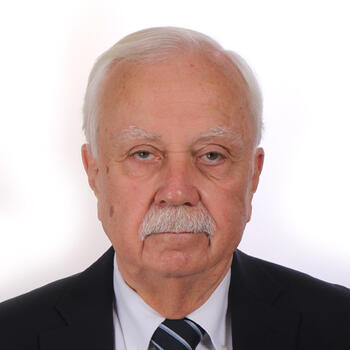
Johannes
Dr. Johannes Ludewig, Chairman of NKR 2006-2021; Chairman of German Railways and afterwards Community of European Railways, Brussels 1997-2010; State Secretary Federal Ministry of Economics (1995-1997); Economic and Financial Advisor to the German Federal Chancellor, also responsible for the economic reconstruction of East Germany after Reunification 1990; PhD 1975 (University of Hamburg); MS 1972 (Stanford).


Online, via Zoom.

Dr. Johannes Ludewig
Seminars
Paragraphs

A growing literature examines democratic backsliding, but there is little consensus on when, where, and why it occurs. Reviewing more than 100 recent articles and working papers, this research note argues that inattention to the measurement of backsliding and the underlying concept of democracy drives this disagreement. We propose three remedies. First, we outline several questions that help researchers navigate common measurement challenges. Second, we argue that conceptual confusion around backsliding is driven in large part by inconsistent definitions of democracy. We show how outlining a comprehensive concept of democracy enables researchers to better account for the diversity of instances of democratic backsliding. Our third contribution is drawing attention to a previously overlooked form of backsliding: when governments lose the effective power to govern or voters and elites increasingly disagree about truths and facts. The research note urges scholars to pay closer attention to the conceptualization and measurement of backsliding prior to empirical analysis.

All Publications button
1
Publication Type
Journal Articles
Publication Date
Subtitle

A growing literature examines democratic backsliding, but there is little consensus on when, where, and why it occurs.

Journal Publisher
Democratization
Authors
Paragraphs
Image
Desire and Imitation in International Politics
Imitating the desire of others is inherent to the struggle for power in international politics. The imitation of desire is a human trait seldom recognized in International Relations studies, let alone conceptualized. The imitation of desire that takes place among entities—as opposed to being intentionally generated by them—challenges the conventional wisdom of International Relations that assumes rational autonomous individuals. This book identifies the root of Realism, pointing out its awareness of the conflicting impact of desire and imitation in a world driven by restless comparison. It subsequently demonstrates the conceptual value of mimetic theory while proposing a template of understanding international polities, starting from assumptions of disorder and violence. This volume not only contributes to the study of conflict based on the imitation of the desire of others among international polities, but also proposes in its conceptualization that it is worth looking at studies of agency and structure, normative change, peace, and reconciliation.
All Publications button
1
Publication Type
Books
Publication Date
Authors
Book Publisher
Michigan State University Press
Paragraphs

Image
The International History Review
From the beginnings of the UN Secretariat, its Secretaries-General reached out to a wide audience, considering themselves servants of peace beyond narrow organizational tasks. The article argues that it is the Secretaries-General perception as an international civil servant which led them to endeavour a more expansive role ever since. To unfold this argument, the article, first, traces the international civil servant roots of the Secretary-General. Second, the article illustrates that the themes and rhetorical details of the Secretaries-General inaugural addresses provide a lens to detect and trace the trajectory of the Secretaries-General self-understanding as international civil servants providing the grounds to expand their role. Secretaries-General as international civil servants always embraced the ideal of serving peace, thereby seeking to gain a political role. This international civil servant trajectory illustrates that the role of the UN Secretary-General transcends historical periodization of the UN and sheds light on the evolution of the UN’s global nature and mission.

All Publications button
1
Publication Type
Journal Articles
Publication Date
Journal Publisher
The International History Review
Authors
Paragraphs

Journal of International Relations and DevelopmentThere are several considerations of the papacy’s vision of what global politics should be like. There are, however, few mappings of the papacy’s actual concept of global politics, of how it evaluates the current state of global politics, understood as global political, social, and economic trends, patterns, actors and their relationships. This article delineates Pope Francis’ conception of global politics and contextualises it within the papacy’s trajectory of participating in global politics. Attending to a particular concept, of how the pope thinks about global politics, helps to better understand and place the papacy in the study of global politics. The article shows how Francis conceptualises global politics from below, from the periphery of society and politics, which leads him to unmask global inequalities. In particular, the article illustrates that Francis contests widespread assumptions of central hierarchic interstate relations and individualism, dominating the conceptual discourse about global politics.

All Publications button
1
Publication Type
Journal Articles
Publication Date
Journal Publisher
Journal of International Relations and Development
Authors
Paragraphs

Image
European Journal of International Relations
Classical Realism represents a science of politics that is distinct from the conventional understanding of science in International Relations. The object of Realist science is the art of politics, which is the development of a sensibility based on practical knowledge to balance values and interests and to make judgments. Realism’s science and its object led to its tagging as “wisdom literature.” This article illustrates that reading Hans Morgenthau’s and Raymond Aron’s work shows how their hermeneutic form of enquiry provides insights into the character of international politics, which conventional understandings do not. Following the example of Morgenthau, the article, first, illustrates how Realism, rather than providing a theory of practice, builds on a science with the purpose to judge knowledge. Realism’s science analyzes the objective conditions of politics, theorizes them, and takes into account the requirements of political practice under contingencies and considerations of morality. The article, second, examines Aron’s take on political practice in the context of the Cold War and politics that built on knowledge without experience to judge knowledge. Morgenthau and Aron’s science helps to capture Realism’s take on politics as an art, how to explicate Realism’s epistemological foundation and value in studying international politics. Doing so, the article, third, contributes to practice theory by clarifying several aspects of Realism’s science. In particular, it shows how Realism captures the art of politics by conceptualizing practice as a form of human conduct thereby offering a more coherent notion of practice than current practice theory.

All Publications button
1
Publication Type
Journal Articles
Publication Date
Journal Publisher
European Journal of International Relations
Authors
-

Image
Sandra González-Bailón seminar flyer

Join us  Tuesday, December 7th from 12 PM - 1 PM PST for “Media Choices, Niche Behavior, and Biases in Online Information” featuring Sandra González-Bailón, Associate Professor at the Annenberg School for Communication at University of Pennsylvania. This seminar series is organized by the Cyber Policy Center’s Program on Democracy and the Internet and the William and Flora Hewlett Foundation’s Cyber Initiative.  

The quality of our democracies relies on the quality of the information that citizens consume but we still know very little about how citizens engage with the news “in the wild”. In this talk, I will discuss two papers that examine that question in different settings. The first paper analyzes the media choices of a representative panel of the U.S. population (N ~ 55,000) as they consume TV, web, and YouTube content over a period of 44 months. Less than 10% of the panelists (N ~ 5,300) view and browse news on the three platforms. This small group of news hyper-consumers is formed predominantly by older male users with higher education. We find no evidence of substitution effects in the time these users spend consuming news on each of the three platforms, but consuming news across the media landscape is a choice that only a small and unrepresentative slice of the population makes. These results help us characterize the digital equivalent of the ‘opinion leaders’ first proposed to understand the effects of mass media. The hyper-consumers we identify in our analyses create the elite of opinion leaders that have a disproportionate influence in how news content is selected, circulated, and (ultimately) algorithmically amplified. That this small group is far from representing the population at large is one of the ways in which online information may perpetuate important biases in the salience of some topics over others. The second paper analyzes news sharing in social media during one of the largest protest mobilizations in U.S. history to examine ideological asymmetries in the posting of news content. We extract the list of URLs shared during the mobilization period and we characterize those web sites in terms of their audience reach and the ideological composition of that audience. We also analyze the reliability of the sites in terms of the credibility and transparency of the information they publish. We show that there is no evidence of unreliable sources having any prominent visibility during the protest period, but we do identify asymmetries in the ideological slant of the sources shared, with a clear bias towards right-leaning domains. Our results suggest that online networks are contested spaces where the activism of progressive movements coexists with the narratives of mainstream media, which gain visibility under the same stream of information but whose reporting is not necessarily aligned with the activists’ goals.

About the speaker:

Sandra González-Bailón is an Associate Professor at the Annenberg School for Communication, and affiliated faculty at the Warren Center for Network and Data Sciences. Her research lies at the intersection of network science, computational tools, and political communication. She is the author of Decoding the Social World (MIT Press, 2017) and co-editor of The Oxford Handbook of Networked Communication (OUP, 2020). More information on her research can be found at https://sandragonzalezbailon.net/
 
Her articles have appeared in journals like PNAS, Nature, Science, Political Communication, The Journal of Communication, and Social Networks, among others. She is the author of the book Decoding the Social World (MIT Press, 2017) and co-editor of The Oxford Handbook of Networked Communication (OUP, 2020). She serves as Associate Editor for the journals Social Networks, EPJ Data Science, and The International Journal of Press/Politics, and she is a member of the Board of Reviewing Editors for Science. She leads the research group DiMeNet (/daɪmnet/) — acronym for Digital Media, Networks, and Political Communication.


Seminars
Subscribe to Europe