0
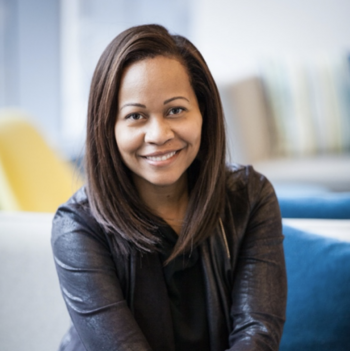
CDDRL Honors Student, 2021-22
avalonwolfeheadshot_-_nicole_avalon_wolfe.jpeg

Major: Political Science
Minor: Computer Science; Ethics and Technology 
Hometown: Fort Worth, TX
Thesis Advisor: Francis Fukuyama

Tentative Thesis Title: Examining Why Countries With Little Histories of Privacy Enact Data Privacy Laws

Future aspirations post-Stanford: I'm not sure precisely what I want to do after college, but I hope to work at the intersection of technology and law/policy.

A fun fact about yourself: I'm a vegetarian from Texas (and my hometown is actually referred to as Cowtown).

0
CDDRL Honors Student, 2021-22
michal_skreta_-_michal_skreta.jpg

Major: Economics and Political Science   
Hometown: Warsaw, Poland
Thesis Advisor: Larry Diamond

Tentative Thesis Title: Babies, Money, and Power: Estimating Causal Effects of the “Family 500+” Child Benefit Program in Poland using the Synthetic Control Method

Future aspirations post-Stanford: I hope to ultimately pursue a career at the intersection of private and public sectors with a strong international focus as well as to continue my interdisciplinary education in graduate school.

A fun fact about yourself: I once got lost on a volcano in Guatemala.

-

Image
Jim Dempsey

Congress has just passed legislation requiring owners and operators of critical infrastructure to notify the federal government following a cyber breach. The requirement, made more urgent by fears that Russia’s war with Ukraine will spill over into attacks on America's energy, financial, and other critical infrastructure, is the latest entry to the growing catalog of cybersecurity-related laws, including new state measures and proposed Securities and Exchange Commission disclosure requirements.  

Policymakers at the state and federal level continue to search for the right balance of collaboration and enforcement. This one-hour session will explore recent developments in cybersecurity law, offering both pragmatic advice on compliance and litigation strategy as well as big picture insights on the direction of U.S. cybersecurity policy. 

Image
Travis LeBlanc
Travis LeBlanc is the vice chair of the cyber/data/privacy practice at Cooley and a Senate-confirmed member of the U.S. Privacy and Civil Liberties Oversight Board. He has guided leading tech corporations through enforcement proceedings and class action lawsuits.


Image
Alicia Lowery Rosenbaum headshot
Alicia Lowery Rosenbaum is Vice President and Associate General Counsel for Cybersecurity Technology and Trust at Salesforce, where she provides strategic counsel on risk management and governance to the company's security engineering and operations teams.

Image
James X. Dempsey
Jim Dempsey is a Senior Policy Advisor for the Program on Geopolitics, Technology and Governance at Stanford’s Cyber Policy Center. He is the author of Cybersecurity Law Fundamentals, a handbook for practitioners published in 2021 by the International Association of Privacy Professionals (IAPP). 

Image
andrew grotto
Moderating the session will be Andrew J. Grotto, Director of the Program on Geopolitics, Technology, and Governance and former Senior Director for Cyber Policy at the White House in both the Obama and Trump Administrations.

Andrew Grotto
0
James X. Dempsey large headshot

Jim Dempsey is senior policy advisor to the Stanford Program on Geopolitics, Technology and Governance and a lecturer at the UC Berkeley School of Law, where he teaches a course on cybersecurity law in the LLM program. Until May 2021, Jim was Executive Director of the Berkeley Center for Law & Technology. In 2012, after Senate confirmation, he was appointed by President Barack Obama as a part-time member of the U.S. Privacy and Civil Liberties Oversight Board, an independent agency within the federal government charged with advising senior policymakers and overseeing the nation’s counterterrorism programs. He served in that position until January 2017, while also running BCLT.

From 1997 to 2014, Dempsey was at the Center for Democracy & Technology (CDT), a non-profit public policy organization focused on privacy and other issues affecting the internet, where he held a number of leadership positions. Prior to that he was deputy director of the Center for National Security Studies (1995-1997) and assistant counsel to the House Judiciary Committee (1985-1995), focusing on privacy, FBI oversight, and surveillance issues. 

Jim graduated from Yale College and Harvard Law School.

BOOKS:


ARTICLES AND PAPERS


COMMENTARY

Senior Policy Advisor, Geopolitics, Technology, and Governance at CISAC
Lecturer at the UC Berkeley School of Law
Date Label
Senior Policy Advisor Program on Geopolitics, Technology and Governance
Travis LeBlanc
Alicia Lowery Rosenbaum
-

VIDEO RECORDINGS

Read the full transcript of President Barack Obama's keynote.

PANEL I

10:00-11:30am

THE TRUST PROBLEM: What is the role of the U.S. government in facilitating consensus and reducing polarization at home?

Renée DiResta is the Research Manager at the Stanford Internet Observatory. She investigates the spread of malign narratives across social networks, and assists policymakers in understanding and responding to the problem.
renee diresta

KEYNOTE | PRESIDENT BARACK OBAMA

12:15pm

Image
President Barack Obama

President Barack Obama will deliver a keynote speech about disinformation and challenges to democracy in the digital information realm. The Obama Foundation is co-hosting the event.

PANEL II

2:00-3:30pm

DESIGNING FOR DEMOCRATIC DISCOURSE: What is the role for media and tech companies to ensure quality, access, and participation?

Marietje Schaake is international policy director at Stanford University Cyber Policy Center and international policy fellow at Stanford’s Institute for Human-Centered Artificial Intelligence.
Marietje Schaake

PANEL III

3:45-5:15pm

THE THREAT OF DIGITAL AUTHORITARIANISM: What are the most effective ways to defend open democratic systems in a global digitized world?

Eileen Donahoe is the Executive Director of the Global Digital Policy Incubator (GDPI) at Stanford University, FSI/Cyber Policy Center. She served as U.S. Ambassador to the United Nations Human Rights Council during the Obama administration.
Photo of Eileen Donahoe

The student lottery administered by FSI is now closed. Randomly selected students have been notified via email.

Eileen Donahoe
Marietje Schaake
Renee DiResta
Barack Obama
Symposiums
-

For spring quarter 2022, CISAC will be hosting hybrid events. Many events will offer limited-capacity in-person attendance for Stanford faculty, staff, fellows, visiting scholars, and students in accordance with Stanford’s health and safety guidelines, and be open to the public online via Zoom. All CISAC events are scheduled using the Pacific Time Zone. 


About the Event: Existing literature posits that the main challenge for nuclear security guarantees lies in making the promise of protection sufficiently credible. If allies do not believe their guarantor will actually come to their aid, they may seek alternate means of protection, including by investing in nuclear infrastructure. Credible security guarantees, on the other hand, are thought to reassure allies. In contrast to this approach, Dr. Sukin argues that credible nuclear guarantees can backfire. These guarantees can cause clients to fear that their guarantors will drag them into a precipitous nuclear conflict. Fears of nuclear escalation by their guarantor can drive clients to distance themselves from their alliance or seek stronger independent nuclear capabilities. Using survey experiments and case studies of U.S. alliances in East Asia and Europe, this project explores the risks of credible U.S. nuclear security guarantees.


About the Speaker: Dr. Lauren Sukin is currently a MacArthur Nuclear Security Fellow at Stanford University’s Center for International Security and Cooperation. In September 2022, she will join the Department of International Relations at the London School of Economics and Political Science as an Assistant Professor of International Relations. Dr. Sukin holds a Ph.D. (2021) and M.A. (2020) from the Department of Political Science at Stanford University. She also holds A.B.s from the Departments of Political Science and Literary Arts at Brown University (2016). Dr. Sukin’s research examines issues of international security, focusing on the role of nuclear weapons in international politics.

Virtual to Public. Only those with an active Stanford ID with access to William J Perry Conference Room in Encina Hall may attend in person. 

Lauren Sukin
Seminars
-

For spring quarter 2022, CISAC will be hosting hybrid events. Many events will offer limited-capacity in-person attendance for Stanford faculty, staff, fellows, visiting scholars, and students in accordance with Stanford’s health and safety guidelines, and be open to the public online via Zoom. All CISAC events are scheduled using the Pacific Time Zone. 

About the Event: Artificial intelligence (AI) has enormous potential for both positive and negative impact, especially as we move from current-day systems towards more capable systems in the future. However, as a society we lack an understanding of how the developers of this technology, AI researchers, perceive the benefits and risks of their work, both in today's systems and impacts in the future. In this talk, Gates will present results from over 70 interviews with AI researchers, asking questions ranging from "What do you think are the largest benefits and risks of AI?" to "If you could change your colleagues’ perception of AI, what attitudes/beliefs would you want them to have?"


About the Speaker: Dr. Vael Gates is a postdoctoral researcher at the Institute for Human-Centered Artificial Intelligence (HAI) and the Center for International Security and Cooperation (CISAC) at Stanford University. They study perceptions of AI safety, and are currently interviewing technical AI researchers to understand their views about risks from AI. They previously completed their PhD at UC Berkeley, formalizing and testing computational models of social collaboration.

Virtual

Vael Gates
Seminars
image of encina hall at stanford with blue overlay and headshots of Valerie Shen of Third Way and Aman Nair of CIS

Join us on Tuesday, March 15th from 12 PM - 1 PM PT for “Global Perspectives on Crypto-Asset Regulation” featuring Valerie Shen of Third Way, Aman Nair of the Centre for Internet and Society, in conversation with Kelly Born of the Hewlett Foundation. This weekly seminar series is jointly organized by the Cyber Policy Center’s Program on Democracy and the Internet and the Hewlett Foundation’s Cyber Initiative.

About The Seminar: 

Since the launch of Bitcoin, the world’s first cryptocurrency, just over 10 years ago, the cryptocurrency market has grown to over $2.4 trillion, tripling in value in the last year alone. In addition to its many purported benefits, cryptocurrency poses challenges to the environment, privacy, financial stability, and more. Cryptocurrencies have played an increasing role in the rise of cybercrimes, including ransomware and money laundering. In light of this the Biden Administration, European Union, Indian government, and countries around the world are actively exploring regulatory options to address these and other concerns. On March 15 join Aman Nair of India’s Centre for Internet and Society and Valerie Shen of Third Way, in conversation with Kelly Born of the Hewlett Foundation, to discuss the use cases and limitations of crypto-assets, compare relevant regulatory regimes from around the world, discuss the debate over the proper legal and regulatory framework for crypto-enabled crime, and explore how to govern crypto-assets while supporting widespread financial stability.

Speakers:

Image
Valerie Shen
Valerie Shen directs Third Way's National Security Program and Cyber Enforcement Initiative, a nonpartisan dedicated to strengthening governments’ abilities to identify, stop, and bring malicious cyber actors to justice. Third Way’s National Security program focuses on cutting edge policy ideas and to keep our country safe  against foreign adversaries in the ever-changing and developing cyber ecosystem.  Valerie served as the Chief National Security Counsel to the House Oversight and Reform Committee for Chairman Elijah E. Cummings. She oversaw all national security and homeland security matters from cyber operations and federal law enforcement, to counterterrorism, defense, and counterintelligence. Valerie was also an investigative counsel for the Select Committee on Benghazi and the Senate Homeland Security and Governmental Affairs Committee. Valerie was also a post-doctoral fellow at Georgetown University’s Center for National Security focusing on China’s social media and influence operations. Valerie earned her J.D. from Georgetown University Law Center and her bachelor's degree in Politics from Pomona College.

Image
Aman Nair
Aman Nair is a policy researcher at the Centre for Internet and Society, India (CIS). He leads the financial technologies research agenda at CIS and has been focusing on research on crypto-assets and blockchain technology. He also works on issues of data governance and access to justice. 

0
narayan_headshot_-_ashray_narayan.jpg

Ashray Narayan is an M.A. candidate in International Policy at Stanford’s Freeman Spogli Institute whose work bridges technology policy, media, and democracy. He previously managed programs at Stanford’s Center for International Security and Cooperation with Professor Andrew Grotto, led marketing and launch strategy for the Sequoia‑backed startup Rox, and held senior creative roles at Buck Mason and Bode. Earlier experiences include the U.S. Department of State’s Bureau of Economic and Business Affairs and research at UC Berkeley. Ashray earned a B.A. in Economics from USC. 

Master's in International Policy Class of 2027
Date Label

Image
Facebook's Faces event flyer on blue and red background with photo of Chinmayi Arun
Join us on Tuesday, March 1 from 12 PM - 1 PM PT for a panel discussion on “Facebook’s Faces” featuring Chinmayi Arun, Resident Fellow at the Yale Law School in conversation with Nate Persily of the Stanford Cyber Policy Center. This weekly seminar series is jointly organized by the Cyber Policy Center’s Program on Democracy and the Internet and the Hewlett Foundation’s Cyber Initiative.

About The Seminar: 

Scholarship about social media platforms discusses their relationship with states and users. It is time to expand this theorization to account for differences among states, the varying influence of different publics and the internal complexity of companies. Viewing Facebook’s relationships this way includes less influential states and publics that are otherwise obscured. It reveals that Facebook engages with states and publics through multiple, parallel regulatory conversations, further complicated by the fact that Facebook itself is not a monolith. Arun argues that Facebook has many faces – different teams working towards different goals, and engaging with different ministries, institutions, scholars and civil society organizations. Content moderation exists within this ecosystem.
 
This account of Facebook’s faces and relationships shows that less influential publics can influence the company through strategic alliances with strong publics or powerful states. It also suggests that Facebook’s carelessness with a seemingly weak state or a group, may affect its relationship with a strong public or state that cares about the outcome.

To be seen as independent and legitimate, the Oversight Board needs to show its willingness to curtail Facebook’s flexibility in its engagement with political leaders where there is a real risk of harm. This essay hopes to show that Facebook’s fear of short-term retaliation from some states should be balanced out by accounting for the long-term reputational gains with powerful publics and powerful states who may appreciate its willingness to set profit-making goals aside in favor of human flourishing.

About the Speakers:

Image
Chinmayi Arun
Chinmayi Arun is a resident fellow of the Information Society Project at Yale Law School, and an affiliate of the Berkman Klein Center of Internet & Society at Harvard University. She has served on the faculties of two of the most highly regarded law schools in India for over a decade, and was the founder Director of the Centre for Communication Governance at National Law University Delhi. She has been a Human Rights Officer with the United Nations and is a member of the United Nations Global Pulse Advisory Group on the Governance of Data and AI, and of UNESCO India’s Media Freedom Advisory Group.

Chinmayi serves on the Global Network Initiative Board, and is an expert affiliated with the Columbia Global Freedom of Expression project. She has been consultant to the Law Commission of India and member of the Indian government’s multi stakeholder advisory group for the India Internet Governance Forum in the past.

Image
Nate Persily
Nathaniel Persily is the James B. McClatchy Professor of Law at Stanford Law School, with appointments in the departments of Political Science, Communication, and FSI.  Prior to joining Stanford, Professor Persily taught at Columbia and the University of Pennsylvania Law School, and as a visiting professor at Harvard, NYU, Princeton, the University of Amsterdam, and the University of Melbourne. Professor Persily’s scholarship and legal practice focus on American election law or what is sometimes called the “law of democracy,” which addresses issues such as voting rights, political parties, campaign finance, redistricting, and election administration. He has served as a special master or court-appointed expert to craft congressional or legislative districting plans for Georgia, Maryland, Connecticut, New York, North Carolina, and Pennsylvania.  He also served as the Senior Research Director for the Presidential Commission on Election Administration. His current work, for which he has been honored as a Guggenheim Fellow, Andrew Carnegie Fellow, and a Fellow at the Center for Advanced Study in the Behavioral Sciences, examines the impact of changing technology on political communication, campaigns, and election administration.  He is codirector of the Stanford Cyber Policy Center, Stanford Program on Democracy and the Internet, and the Stanford-MIT Healthy Elections Project, which supported local election officials in taking the necessary steps during the COVID-19 pandemic to provide safe voting options for the 2020 election. He is also a member of the American Academy of Arts and Sciences, and a commissioner on the Kofi Annan Commission on Elections and Democracy in the Digital Age.

 

Seminars
-
S.T. Lee Lecture with Emmanuel Gyimah-Boadi

2022 S.T. LEE LECTURE

In the 1990s and early 2000s, most West African nations embarked on transitions to democratic governance. In the ensuing decade, the sub-region enjoyed relative peace and material progress. Unfortunately, these gains in democratization are being eroded. The lecture contends that democratic reforms at the turn of the 21st century were key drivers of the subsequent sanguine political, social, and economic conditions in the ECOWAS group; that popular attitudes in today’s West African societies are largely anti-autocratic; and that therefore the unfolding retreat from democratic governance in nations across the sub-region portends ill for their overall stability and material prosperity in the 2020s and beyond. The lecture proposes measures to arrest the democratic recession in West African nations to prevent economic decline, social unrest, and political implosion.

The S.T. Lee Lectureship is named for Seng Tee Lee, a business executive and noted philanthropist. Dr. Lee is the director of the Lee group of companies in Singapore and of the Lee Foundation.

Dr. Lee endowed the annual lectureship at the Freeman Spogli Institute for International Studies in order to raise public understanding of the complex policy issues facing the global community today and to increase support for informed international cooperation. The S.T. Lee Distinguished Lecturer is chosen for his or her international reputation as a leader in international political, economic, social, and health issues and strategic policy-making concerns.

ABOUT THE SPEAKER

Image
Gyimah-Boadi.jpg

E. Gyimah-Boadi is co-founder and board chair of Afrobarometer, the pan-African survey research network and global reference point for high-quality data on African democracy, governance, and quality of life. He is also co-founder and former executive director of the Ghana Center for Democratic Development, a leading independent democracy and good-governance think tank. A former professor in the Department of Political Science at the University of Ghana, he has also held faculty positions at several universities in the United States, including the American University’s School of International Service, as well as fellowships at Queen Mary University; the Center for Democracy, Rule of Law and Development at Stanford University; the Woodrow Wilson International Center for Scholars; and the International Forum for Democratic Studies at the National Endowment for Democracy.

A graduate of the University of California (Davis) and University of Ghana (Legon), Gyimah-Boadi is a fellow of the National Academy of Sciences (U.S.) and the Ghana Academy of Arts and Sciences. For his contributions to research and policy advocacy on democracy, accountable governance, and human rights, he has won a myriad of awards, including the Distinguished Africanist of the Year Award of the African Studies Association (2018); the Martin Luther King, Jr. Award for Peace and Social Justice (2017); and one of the Republic of Ghana’s highest honors, the Order of Volta (2008). He was named one of New African Magazine’s “100 Most Influential Africans of 2021.”

Larry Diamond
Emmanuel Gyimah-Boadi Chair, Afrobarometer Chair, Afrobarometer Chair, Afrobarometer
Lectures
Date Label
Subscribe to Sub-Saharan Africa