


Jessie Brunner
650-736-7622
0
jb_headshot_copy.jpg
MS
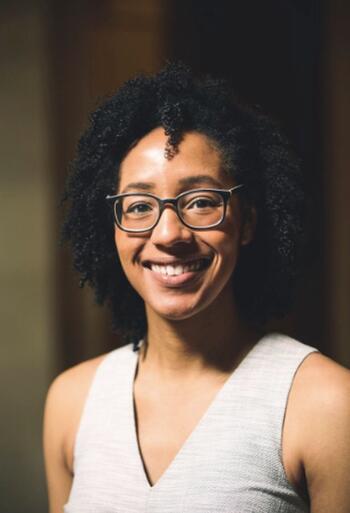
In addition to her role as Director of Strategic Partnerships for the Human Trafficking Data Lab, Jessie Brunner serves as Deputy Director of Strategy and Program Development at the Center for Human Rights and International Justice at Stanford University. In this capacity she manages the Center's main interdisciplinary collaborations and research activities, in addition to advising on overall Center strategy. Jessie currently researches issues relevant to data collection and ethical data use in the human trafficking field, with a focus on Brazil and Southeast Asia. Furthermore, in her role as co-Principal Investigator of the Re:Structure Lab, Jessie is investigating how supply chains and business models can be re-imagined to promote equitable labor standards, worker rights, and abolish forced labor. Brunner earned a MA in International Policy from Stanford University and a BA in Mass Communications and a Spanish minor from the University of California, Berkeley.
Director of Strategic Partnerships, Human Trafficking Data Lab
Deputy Director of Strategy and Program Development, Center for Human Rights and International Justice
Free Speech on Public Platforms
-
Image

Join us on Tuesday, January 18 from 12 PM - 1 PM PST for Free Speech on Public Platforms featuring Professor Jamal Greene of Columbia Law School in conversation with Daphne Keller, Director of the Program on Platform Regulation at the CPC. This weekly seminar series is jointly organized by the Cyber Policy Center’s Program on Democracy and the Internet and the Hewlett Foundation’s Cyber Initiative.
It is commonly assumed that social media companies owe their freedom to moderate solely to their status as private actors. This seminar explores the adequacy of that assumption by considering the hypothetical construct of a state-run social media platform. Jamal Greene argues that the categorical nature of First Amendment norms leave the doctrine ill-equipped to order regulation of such a platform, and that international human rights norms, while less categorical, remain immature in this space. Greene suggests that the most promising area of legal intervention would address the development of procedural rather than substantive norms.
Speaker:
Jamal Greene is the Dwight Professor of Law at Columbia Law School, where he teaches courses in constitutional law, comparative constitutional law, and the law of the political process. He is the author of How Rights Went Wrong: Why Our Obsession With Rights Is Tearing America Apart, as well as numerous articles and book chapters on constitutional law and theory. He is also a co-chair of the Oversight Board, an independent body that reviews content moderation decisions on Facebook and Instagram. He served as a law clerk to the Hon. Guido Calabresi on the U.S. Court of Appeals for the Second Circuit and for the Hon. John Paul Stevens on the U.S. Supreme Court. He earned his J.D. from Yale Law School and his A.B. from Harvard College.
Cloud Governance Challenges
-
Image

Join us for our winter seminar series starting Tuesday, January 11 from 12 PM - 1 PM PST. The first in the session is Cloud Governance Challenges and features leaders from the Carnegie Endowment’s Cloud Governance Project and Marietje Schaake of the Stanford Cyber Policy Center, in conversation with Kelly Born of the Hewlett Foundation. This weekly seminar series is jointly organized by the Cyber Policy Center’s Program on Democracy and the Internet and the Hewlett Foundation’s Cyber Initiative.
Central to the ongoing digital transformation is the growth of cloud computing, which is enabling remarkable gains in efficiency, innovation, and connectivity around the world. However, the cloud also accentuates many preexisting digital policy challenges and brings to the fore new ones. It increases the consequences of disruption resulting from cyberattacks and natural disasters, and raises the stakes associated with ensuring equitable access to the digital environment. It also creates some new challenges associated with the concentration of the cloud market in the hands of a few hyperscale providers. Left to their own devices, cloud providers lack the incentives to comprehensively address these issues, and governments’ ability to fill the gap is being challenged by the pace of the developments in the cloud technology landscape. To promote more coherent and effective governance of the cloud, concerned players must recognize the challenges, interconnections, and policy tradeoffs across issue areas. They will need to apply a combination of regulation, self-regulation, and industry standards, while balancing competing private, national, and international interests.
Speakers:
Kelly Born, Director, Cyber Initiative, William and Flora Hewlett Foundation
Ariel Eli Levite, Nonresident Senior Fellow, Carnegie Endowment for International Peace
Vishnu Kannan, Special Assistant to the President, Carnegie Endowment for International Peace
Marietje Schaake, International Policy Director, Cyber Policy Center
Solving Public Problems
-
About the Seminar: In this time of great challenges, our democracies urgently need to produce citizens who can move from demanding change to making it. But the skills for doing so are not innate, they are learned. In this talk, Beth Simone Noveck will discuss how both citizens and governments can take advantage of digital technology, data, and the collective wisdom of our communities to design and deliver powerful solutions to contemporary problems. Drawing on the latest methods from data and social sciences, including original survey data from around the world, she proposes a practical set of methods for public servants, community leaders, students, activists, and anyone who wants to be a catalyst for positive social change.
Image

In addition to Solving Public Problems, Beth is the author of Smart Citizens, Smarter State: The Technologies of Expertise and the Future of Governing (Harvard Univ Press 2015) and Wiki Government: How Technology Can Make Government Better, Democracy Stronger and Citizens More Powerful (Brookings 2009) and co-editor of The State of Play: Law, Games and Virtual Worlds (NYU Press, 2005).
Online, via Zoom.
Beth Simone Noveck
Director | The GovLab
Seminars
Wars and Freedoms
-
About the Seminar: Saumitra Jha and Steven Wilkinson's book project, Wars and Freedoms, makes the case that, throughout human history, external wars are common catalysts for political change at home, and they do so in large part because of their impact on the organizational capacity of the disenfranchised. It draws widely from across the social sciences and humanities: literature; history; biography; psychology; sociology; economics; and political science. The book draws upon these diverse ways of knowing to provide evidence from across time and around the world of the relevance of a simple framework for understanding which types of external wars are conducive to the emergence of broad-based freedoms, the building of states, and the shrinking of wealth inequalities on one hand, and when instead, others have led to the building of military castes, or an increased propensity for political polarization, ethnic conflict, attempted coups, revolution and genocide on the other. In so doing, Wars and Freedoms provides a re-interpretation of the history of revolutions and political change, in order to make clear which lessons and episodes from history may be more germane for the future of democracy and freedoms in the twenty-first century.
Wars and Freedoms describes how there were historically three paths that connected organizational skills developed in external wars to the spread of democracy and democratic values: in the shadow of a crisis that threatened broad class conflict, through a more gradual process of state-building in response to ongoing external existential threats, and through the organizational efforts of committed military leaders. Of these, however, only the last, the most fragile and contingent, is still likely to emerge organically. Understanding the decline of other paths, however, can still help us understand both how political freedoms and democracy emerged, how our democracies may die, and what we may still be able to do about it.
About the Speaker:
Image

Online, via Zoom.
Saumitra Jha
Graduate School of Business
655 Knight Way
Stanford, CA 94305
(650) 721 1298
0
saumitra@stanford.edu
Associate Professor of Political Economy, GSB
Associate Professor, by courtesy, of Economics and of Political Science
Along with being a Senior Fellow at the Freeman Spogli Institute for International Studies, Saumitra Jha is an associate professor of political economy at the Stanford Graduate School of Business, and convenes the Stanford Conflict and Polarization Lab.
Jha’s research has been published in leading journals in economics and political science, including Econometrica, the Quarterly Journal of Economics, the American Political Science Review and the Journal of Development Economics, and he serves on a number of editorial boards. His research on ethnic tolerance has been recognized with the Michael Wallerstein Award for best published article in Political Economy from the American Political Science Association in 2014 and his co-authored research on heroes with the Oliver Williamson Award for best paper by the Society for Institutional and Organizational Economics in 2020. Jha was honored to receive the Teacher of the Year Award, voted by the students of the Stanford MSx Program in 2020.
Saum holds a BA from Williams College, master’s degrees in economics and mathematics from the University of Cambridge, and a PhD in economics from Stanford University. Prior to rejoining Stanford as a faculty member, he was an Academy Scholar at Harvard University. He has been a fellow of the Niehaus Center for Globalization and Governance and the Center for the Study of Democratic Politics at Princeton University, and at the Center for Advanced Study in the Behavioral Sciences at Stanford. Jha has consulted on economic and political risk issues for the United Nations/WTO, the World Bank, government agencies, and for private firms.
Senior Fellow at the Freeman Spogli Institute for International Studies
Dan C. Chung Faculty Scholar at the Freeman Spogli Institute for International Studies
Senior Fellow at the Stanford Institute for Economic Policy Research
Hide publication sections
Off
Seminars
Autocracy: A Substantive Approach
-
About the Seminar: What are the defining traits of an autocracy? Leading works answer this question in negative terms: autocracies are non-democracies. We propose instead a substantive definition of autocracy, which we believe better captures what scholars actually mean when they invoke the term. We define autocracy as exclusive rule. Between substantive autocracy and electoral democracy, there is a residual space, of regimes that do not fit under either concept. We call these regimes “non-autocratic non-democracies” or NANDs. A substantive understanding of autocracy has important theoretical and empirical implications. Theoretically, it ensures that claims about the population of autocratic regimes are ontologically coherent, and that we do not end up calling barely non-democratic regimes autocracies. Empirically, our measure reveals that the post-Cold War era has been even less autocratic than it is normally portrayed, and that concerns about a global turn toward "autocratization" are likely overblown.
About the Speakers:
Jason Brownlee
Image

Jason Brownlee, a former post-doctoral fellow at CDDRL, is now a professor of Government at the University of Texas at Austin, where he researches and teaches about authoritarianism US foreign policy, and Southwest Asian politics.
Ashley Anderson
Image
Ashley Anderson is an Assistant Professor at the University of North Carolina - Chapel Hill. Her research interests are concentrated in the Middle East where she studies issues of contentious politics, political mobilization and regime change.
Killian Clarke
Image

Killian Clarke is an Assistant Professor at Georgetown University’s School of Foreign Service, where he is affiliated with the Center for Contemporary Arab Studies. His research and teaching focuses on protest, revolutions, and regime change in the Middle East.
Autocracy: A Substantive Approach
Download pdf
Online, via Zoom.
Jason Brownlee
Professor, Department of Government, University of Texas at Austin
Ashley Anderson
University of North Carolina, Chapel Hill
Killian Clarke
Assistant Professor, Georgetown University, School of Foreign Service
Seminars
The World House Documentary Film Festival
-
A documentary film festival featuring films speaking to Martin Luther King, Jr.'s vision of the World House
For the 2022 King Holiday, the World House Project will host a free, four-day webinar and virtual film festival, from the evening of January 14 through January 17, 2022. This virtual event will feature over 30 documentaries, musical performances, interviews, and panel discussions that speak to Dr. King's vision of the World House.
The webinar will consist of daily Zoom meetings with the World House Project director Dr. Clayborne Carson who will speak with guests and webinar registrants on a range of topics, from the history of the civil rights movement to the legacy of Martin Luther King, Jr., and the African American freedom struggles.
The films and performances cover a variety of themes, from the history of the civil rights and anti-apartheid movements to James Baldwin and Martin Luther King's global visions. A full list of featured films and short descriptions will be available shortly.
The festival is produced in partnership with the Martin Luther King Jr. Freedom Center, California Newsreel, Clarity Films, the Camera as Witness Program (Stanford Arts), the Office for Religious & Spiritual Life at Stanford, and the Kunhardt Film Foundation.
Online via Zoom. Register Now
Film Screenings
Media Choices, Niche Behavior, and Biases in Online Information
-
Image

Join us Tuesday, December 7th from 12 PM - 1 PM PST for “Media Choices, Niche Behavior, and Biases in Online Information” featuring Sandra González-Bailón, Associate Professor at the Annenberg School for Communication at University of Pennsylvania. This seminar series is organized by the Cyber Policy Center’s Program on Democracy and the Internet and the William and Flora Hewlett Foundation’s Cyber Initiative.
The quality of our democracies relies on the quality of the information that citizens consume but we still know very little about how citizens engage with the news “in the wild”. In this talk, I will discuss two papers that examine that question in different settings. The first paper analyzes the media choices of a representative panel of the U.S. population (N ~ 55,000) as they consume TV, web, and YouTube content over a period of 44 months. Less than 10% of the panelists (N ~ 5,300) view and browse news on the three platforms. This small group of news hyper-consumers is formed predominantly by older male users with higher education. We find no evidence of substitution effects in the time these users spend consuming news on each of the three platforms, but consuming news across the media landscape is a choice that only a small and unrepresentative slice of the population makes. These results help us characterize the digital equivalent of the ‘opinion leaders’ first proposed to understand the effects of mass media. The hyper-consumers we identify in our analyses create the elite of opinion leaders that have a disproportionate influence in how news content is selected, circulated, and (ultimately) algorithmically amplified. That this small group is far from representing the population at large is one of the ways in which online information may perpetuate important biases in the salience of some topics over others. The second paper analyzes news sharing in social media during one of the largest protest mobilizations in U.S. history to examine ideological asymmetries in the posting of news content. We extract the list of URLs shared during the mobilization period and we characterize those web sites in terms of their audience reach and the ideological composition of that audience. We also analyze the reliability of the sites in terms of the credibility and transparency of the information they publish. We show that there is no evidence of unreliable sources having any prominent visibility during the protest period, but we do identify asymmetries in the ideological slant of the sources shared, with a clear bias towards right-leaning domains. Our results suggest that online networks are contested spaces where the activism of progressive movements coexists with the narratives of mainstream media, which gain visibility under the same stream of information but whose reporting is not necessarily aligned with the activists’ goals.
About the speaker:
Sandra González-Bailón is an Associate Professor at the Annenberg School for Communication, and affiliated faculty at the Warren Center for Network and Data Sciences. Her research lies at the intersection of network science, computational tools, and political communication. She is the author of Decoding the Social World (MIT Press, 2017) and co-editor of The Oxford Handbook of Networked Communication (OUP, 2020). More information on her research can be found at https://sandragonzalezbailon.
Her articles have appeared in journals like PNAS, Nature, Science, Political Communication, The Journal of Communication, and Social Networks, among others. She is the author of the book Decoding the Social World (MIT Press, 2017) and co-editor of The Oxford Handbook of Networked Communication (OUP, 2020). She serves as Associate Editor for the journals Social Networks, EPJ Data Science, and The International Journal of Press/Politics, and she is a member of the Board of Reviewing Editors for Science. She leads the research group DiMeNet (/daɪmnet/) — acronym for Digital Media, Networks, and Political Communication.
Seminars
Benjamin Rubin
0
benjamin_rubin_headshot.jpg
Benjamin Rubin joined the Freeman Spogli Institute for International Studies as a member of the development team in 2021. Previously, he worked as a financial planner for Foster Klima & Company and as a professor of Roman Archaeology at Williams College in Williamstown, MA. Benjamin received his BA in English and Classics from Macalester College and a PhD from the University of Michigan, Ann Arbor, in Classical Art and Archaeology.
Associate Director of Development
Hide publication sections
Off