Nuclear Safety
-

Seminar Recording: https://youtu.be/X_0mm8UkVOc


Abstract:  In the movie WarGames, a 1980s teenager hacks into a U.S. nuclear control program, almost starting a nuclear war.  This movie has become a common illustration for the dangers of increasingly digitized nuclear arsenals and reflects what many scholars and practitioners see as the most perilous implication of the rise of cyberattacks--instability to states' nuclear command, control, and communications (NC3).  Research conducted during the Cold War suggested that even the threat of serious vulnerabilities to states' NC3 could incentivize preemptive launches of nuclear weapons.  Despite this widespread concern about the destabilizing effects of NC3 vulnerabilities, there is almost no empirical research to support these conclusions.  In order to test these theories, this paper uses an experimentally-designed war game to explore the role that vulnerabilities and exploits within a hypothetical NC3 architecture play in decisions to use nuclear weapons.  The game, which uses 4-6 players to simulate a national security cabinet, includes three treatment scenarios and one control scenario with no vulnerabilities or exploits.  Players are randomized into the scenario groups and games are played over the course of a year in seven different locations with a sample of elite players from the U.S. and other nations. Together, a longitudinal analysis of these games examines the role that culture, cognitive biases, and expertise play in the likelihood of thermonuclear cyber war with significant implications for both cyber strategy and nuclear modernization.


Speaker's Biography:

Image
jackie schneider photo
Dr. Schneider is a Hoover Fellow at the Hoover Institution and a non-resident fellow at the Naval War College’s Cyber and Innovation Policy Institute.  She researches the intersection of technology, national security, and political psychology with a special interest in cyber, unmanned technologies, and wargaming. Her work has appeared in a variety of outlets including Security Studies, Journal of Conflict Resolution, Journal of Strategic Studies, Foreign Affairs, Lawfare, War on the Rocks, Washington Post, and Bulletin of the Atomic Scientists.  She has a BA from Columbia University, a MA from Arizona State University, and a PhD from George Washington University.

Jacquelyn Schneider Non-resident Fellow Naval War College’s Cyber and Innovation Policy Institute
Authors
Siegfried S. Hecker
News Type
News
Date
Paragraphs

As we witness the increasingly detrimental effects of global climate change, the role that nuclear power could play globally to mitigate its effects continues to be debated. The series of articles featured in the Bulletin in December 2016 aired a broad spectrum of opinions, ranging in assessment of the role of nuclear power from insignificant to mandatory. In this series, we present the perspective of a new crop of nuclear professionals who collectively represent two of the world leaders in nuclear power—the United States and Russia.

These young professionals work together to exchange views and ideas as part of the U.S.-Russia Young Professionals Nuclear Forum that we created in May 2016 to encourage dialogue on critical nuclear issues of concern to both countries. As most official avenues of US-Russia cooperation on nuclear issues were being shut down in pace with the deteriorating political relations between Washington and Moscow, our objective was to turn to the younger generation, because those in it will have to live with the consequences of a world in which their countries no longer cooperate to mitigate global nuclear dangers.

In the United States, our efforts are organized within the Center for International Security and Cooperation at Stanford University, although we reach out to universities and other organizations across the country. In Russia, we were fortunate to find the Moscow Engineering Physics Institute (MEPhI), Russia’s flagship research university in nuclear engineering, to be an enthusiastic partner. Its rector, Professor Mikhail Strikhanov, has an unwavering international outlook that stresses the need for cooperation, especially in higher education and research. The young professionals are students, postdoctoral fellows, and early career professionals.

Hecker has previously written in the Bulletin about the remarkable period of post-Cold War nuclear cooperation between Russian and American nuclear weapon scientists and how the termination of that cooperation by our governments threatens our collective security. We viewed engaging young professionals from the two countries as one of the few avenues of continued cooperation. It has the potential of being particularly effective because at the forum meetings, the young Russians and Americans interact in an educational and non-adversarial environment.

The first three forum meetings focused primarily on issues of nuclear non-proliferation and countering nuclear terrorism. They featured exercises in which the young professionals worked in small groups side by side to explore solutions to vexing nuclear problems. One was a simulation conducted at Stanford in May 2018 just a few weeks before the historic Trump-Kim Singapore Summit. The other was an exercise in Moscow in October 2018 to advise their governments on a hypothetical crisis related to the US withdrawal from the Iran nuclear deal.

At the Moscow forum, we also asked the young professionals to explore what the two countries could do to promote the benefits of nuclear energy around the globe, while cooperating to mitigate the associated risks.

Preparation for the forum included online lectures by senior mentors as well as lectures and discussion sessions in Moscow by both Russian and American specialists. In the nuclear power exercise, we assigned eight key questions to 24 young professionals. We divided them into eight teams, each composed of Russian and American participants. The central question was whether or not an expansion of global nuclear power is necessary to help mitigate the danger of global climate change. Individual groups examined issues of supply and demand around the globe and some of the big challenges posed by an expansion of nuclear power—those of economics, safety and security, potential proliferation of nuclear weapons, and the disposition of nuclear waste.

The young professionals conducted research prior to the meeting, deliberated and debated within their teams during the meeting, and presented their findings to the larger group and the panel of senior mentors at the end of the exercise. During the past six months they have captured the essence of their findings in the eight articles featured in this special presentation in the Bulletin.

Their findings are generally pro-nuclear, which is not surprising considering that most of them have strong educational and research backgrounds in either nuclear technologies or nuclear security. But we found that their views were primarily driven by their serious concerns about the dangers of global climate change and the urgent need to confront these dangers.

Their articles are of interest not so much in that they break new ground in these areas, particularly since many other  established experts have tried to tackle these issues for decades. They are of interest because they represent the views of some of the younger generation of professionals working together across cultural and disciplinary divides. We were struck by the following comment in one of the papers  that reflects on the perceived urgency of the task at hand: “We are the first generation that is experiencing the dramatic effects of global climate change and likely the last that can do something about it to avoid catastrophic consequences for the Earth and its people.”

We also note that the articles uniformly reveal that the young professionals across the board firmly believe that the benefits and risks of expanding nuclear power globally must be pursued and tackled in a concerted effort of major nuclear powers (especially the United States and Russia), other developed nations, the International Atomic Energy Agency, and all stakeholders. These younger voices stated: “The most important shift necessary to facilitate [nuclear power] expansion is an increase in international cooperation and multilateralization in the form of, for example, international reactor supply contracts, multinational enrichment conglomerates, nondiscriminatory fuel banks, and international waste repositories.”

We believe the readers will find the sentiments and opinions of the young Russian and American professionals interesting and encouraging. We certainly have found them eager and able to work together effectively—a lesson that the more senior professionals and the governments need to relearn.

Editor’s note: The Young Professionals Nuclear Forum cooperation is supported by the John D. and Catherine T. MacArthur Foundation and the Carnegie Corporation of New York.


Read the articles here:


Hero Image
rsd19 023 0010a Rod Searcey
All News button
1
Authors
News Type
News
Date
Paragraphs

In early May, CISAC convened the fifth Young Professional Nuclear Forum (YPNF), a program sponsored by the Center for International Security and Cooperation at Stanford University and the Moscow Engineering and Physics Institute (MEPhI). The program brought together a lively group of young Russians and Americans working on nuclear issues over three days.

Since 2016, the forum has alternated between Moscow and Stanford.  

By 2016, US and Russian governments closed almost every door on opportunities that previously allowed experienced nuclear professionals on both sides to cooperate with each other.  Stanford Professor Siegfried Hecker saw that at least one door - that of cooperation on the university level - was still open. He started the YPNF to foster interaction between the younger generation of Russians and Americans who study, do research, or start a career in the nuclear power or nonproliferation fields.

This year’s agenda focused on two major areas: US-Russian arms control and the future of nuclear power.

The American group included a new cohort of six incoming young professionals from Los Alamos National Laboratory, UC Berkeley, Center for Arms Control and Non-Proliferation, and Vienna Center for Disarmament and Non‑Proliferation. They were joined by CISAC research staff members Gaby Levikow and Elliot Serbin and current and former fellows Chantell Murphy, Kristin Ven Bruusgaard, and Cameron Tracy. The Russian group from MEPhI brought a team of 12 young professionals most of whom are pursuing their graduate degrees in nuclear physics and engineering and software engineering, along with junior professionals in international relations and nuclear fields.  The team of experts included Professor Hecker, Dr. James Toevs, Dr. Ning Li, Ambassador Steven Pifer, Professor David Holloway, Dr. Larry Brandt, Dr. Chaim Braun, Dr. Pavel Podvig, and Dr. Mona Dreicer, —all of whom provided advice and feedback during the exercise.

Participants come from loosely defined “technical” and “policy” fields, and the forum agenda has traditionally included one nuclear-power related and one policy-focused subject. Forum activities vary between lectures, expert briefings, discussions, and table-top exercises, but the small-group work during the exercises is the core form of interaction.

By design, this agenda exposes each participant to new fields, new counterparts, some fun interactive time off - and encourages a lot of cultural learning. Forum after forum, we hear back that the group work and social time are the most exciting aspects of the forum experience. Participants noted they learned, among other things, “general ideas and thoughts of American participants and their attitudes to the present American policy, new words and abbreviations … [and] a great deal about new reactor designs and their implications for nuclear energy and security policy.”  Still more participants enjoyed “learning to collaborate in groups of Americans and Russians but also between policy and technical experts on topics of both camps,” and some “got new friends.”

Encouragingly, participants requested more interaction between the bi-annual meetings and a variety of topics in yet untapped – or suspended - areas of cooperation between Russia and the US.

New work continues to emerge from the forum. Eight short articles written by the young professionals to showcase the results of the projects from the Moscow meeting in November 2017 was published in the Bulletin of the Atomic Scientists in June 2019. The next meeting will be held in Moscow this November.


Hero Image
rsd19 023 0010a Rod Searcey
All News button
1
Authors
Rodney C. Ewing
News Type
Q&As
Date
Paragraphs

Q&A with Professor Rodney C. Ewing, Frank Stanton Professor in Nuclear Security and co-director at the Center for International Security and Cooperation (CISAC) in the Freeman Spogli Institute for International Studies (FSI). Interview with Katy Gabel Chui.

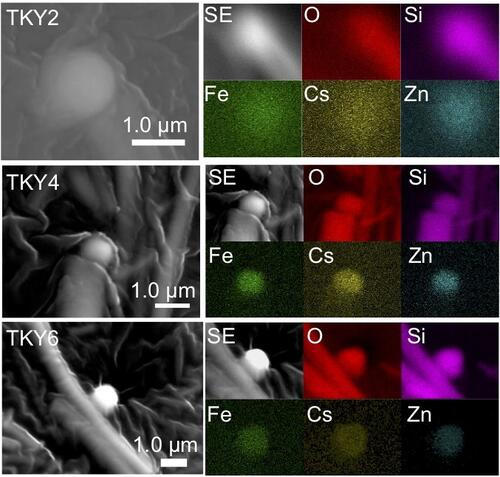
Your previous research with this team helped identify the types of radioactive particles that can become airborne and were transported away from Fukushima during the 2011 nuclear disaster.

This most recent paper goes further to show how these Cesium (Cs)-rich silica particles behave in several types of fluids, including simulated human lung fluid, concluding that the particles are fully dissolved in the latter after more than 35 years. What might that mean for human health in the Fukushima area and beyond?

The first breakthrough was the recognition that such particles, a few microns in diameter, existed, a discovery by Japanese scientists at the Meteorological Research Institute, Tsukuba, in 2013. The particles are important because they were dispersed over distances of tens of kilometers and were “carriers” of highly radioactive Cs. Our team’s previous work, led by Professor Satoshi Utsunomiya, mainly focused on the characterization of the particles and their constituents at the atomic-scale and surveyed their distribution in the area away from the Fukushima Daiichi nuclear power plants. Our earliest work from 2016 can be found online. A good summary of the history of the work on these cesium-rich microparticles was recently published in Scientific American.

This latest paper published in Chemosphere is the 6th in a series of papers on the Cs-rich microparticles. We describe the behavior of these particles when exposed to different types of fluids: ultra-pure water, artificial sea water and simulated lung fluid. The microparticles dissolve in all three fluids, reaching a long-term but a continuing, slow rate of release after just three days. Essentially, the calculated release rate of cesium depends on the rate of dissolution of the silica glass matrix and the initial size of the particles. In the simulated lung fluid, the particles are modelled to fully dissolve after more than 35 years.

What is the simulated lung fluid made of, and how does it work in simulation? How do you estimate 35 years?

The constituents of typical lung fluid were simply mixed to simulate its composition based on a recipe reported by previous studies. The lung fluid is different from the other solutions because it contains organic compounds and has a different chemistry, i.e., higher sodium and chlorine content. The estimates of residence time in the body assumes that the particles are inhaled and find their way to the pulmonary system. The calculation of residence time is based on assumptions about the size and composition of the microparticles, and we used the long-term release rate from the experiments. We assumed a spherical shape and a constant decrease in size as the leaching process continued. The rate can vary depending on the actual shape, internal texture, composition (such as occurrence of intrinsic Cs-phase inclusions), and precipitation of secondary phases that may form a “protective” coating on the cesium-rich microparticles (CsMPs). The rate of release was fastest in the simulated lung fluid.

The important result is to realize that the Cs-rich silica particles dissolve slowly in the environment and in the body. Essentially, the release extends for several decades.

How can nuclear energy experts and policy makers use this research to avoid future risk?

Understanding the form and composition of materials that host and disperse radionuclides is the first step in completing a careful dose calculation. Based on these results, the fraction of Cs contained in the silica particles will not be rapidly “flushed” through the environment or the body, but rather will be released over several decades.


Hero Image
rodewingheadshot2014
All News button
1
Authors
Gi-Wook Shin
Joyce Lee
News Type
Commentary
Date
Paragraphs

27 April 2019 marked the first anniversary of the historic Panmunjom summit between North Korean leader Kim Jong-un and South Korean leader Moon Jae-in.

The meeting jumpstarted the whirlwind of North Korea’s summit diplomacy and prompted a new wave of hope that diplomacy could be effective after years of confrontation and tensions.

But the anniversary was marked with mixed messages and dissonant attitudes — it was celebrated by the South Koreans alone. North Korea remained unresponsive to the South’s invitation to the anniversary ceremony, and North Korea’s Committee for the Peaceful Reunification of the Country openly demanded that the South explore ‘more active measures’ to improve inter-Korean ties. The inter-Korean rapprochement efforts borne out of Panmunjom are stranded by the stalemate on the nuclear track...

Read the full article on East Asia Forum

Hero Image
North Korean leader Kim Jong Un (L) and South Korean President Moon Jae-in (R) pose for photographs
PANMUNJOM, SOUTH KOREA - APRIL 27: North Korean leader Kim Jong Un (L) and South Korean President Moon Jae-in (R) pose for photographs after signing the Panmunjom Declaration for Peace, Prosperity and Unification of the Korean Peninsula during the Inter-Korean Summit at the Peace House on April 27, 2018 in Panmunjom, South Korea.
Korea Summit Press Pool/Getty Images
All News button
1
Paragraphs

The North Korean nuclear crisis presents the contemporary world’s greatest risk, not just of major war but most importantly of nuclear war. Despite its importance the crisis is being managed in a treacherous context of public ignorance and misinformation. Most Americans could not locate Korea on a map. This volume assembles the work of leading experts in the hope of dispelling the misinformation and lack of information. Every author in this volume writes from career-long study of Korea and personal experience in Korea.

Chapters include a broad-ranging Overview; Countering North Korea’s Carrot-and-Stick Strategy; Why These Negotiations with North Korea Could Work; What Makes Kim Jong Un Different?; Development Strategies Available to North Korea and Their Political Risks; The new leader, the new economic model; Can Moon Jae In hold it together domestically?; Thinking realistically about unification; China’s Policy toward North Korea; Japan’s View of Nuclear North Korea: What Could Possibly Go Wrong?; Alliance Management and Tension: Between “Fire and Fury” and Protecting Alliance Equities; The Role of Sanctions; The history & meaning of denuclearization; The vexations of verification; Could the Trump Administration achieve a breakthrough?; Missed Opportunities: Years of Suspicion, Brief Viable Trust; Hope and History.

All Publications button
1
Publication Type
Books
Publication Date
Authors
Daniel C. Sneider
-

Abstract: How do nuclear-armed states coerce their adversaries in wars with limited aims without using nuclear weapons? I develop a theory of strategic substitution to explain why states use space, cyber and conventional missile weapons instead of nuclear weapons to maximize leverage against their adversaries. I also explain how they select space, cyber, and conventional missile force postures, defined as weapons and plans for using them. Threats to use space, cyber and conventional missile weapons are more credible sources of strategic leverage against adversaries in wars that do not threaten a state’s survival. I demonstrate the plausibility of the theory using China’s cyber force posture. China developed space, cyber and conventional missile weapons to solve a common problem: giving Beijing the leverage it could not gain from its nuclear weapons in a future war over Taiwanese independence involving the United States. Using original Chinese-language written sources and interviews conducted during extensive fieldwork, I show that Chinese leaders pursued cyber weapons to maximize their strategic leverage after the United States bombed the Chinese Embassy in Belgrade in 1999. As China’s vulnerability to cyber attacks grew during the 2000s, its appetite for risk in using cyber weapons declined, resulting in a change to its military cyber force posture in 2014.

Speaker Bio: Fiona Cunningham is a Post-Doctoral Fellow at CISAC. Her research interests lie at the intersection of technology and conflict, with an empirical focus on China. She received her PhD in September 2018 from the Department of Political Science at the Massachusetts Institute of Technology (MIT), where she was a member of the Security Studies Program. Her dissertation explained China’s development of space, cyber and conventional missile force postures as substitutes for using nuclear weapons to coerce adversaries. Her research is based on extensive fieldwork, including a year-long dissertation research fellowship at the Renmin University of China, Beijing, in 2015-6. She was a Pre-Doctoral Fellow in the Cyber Security Project at the Belfer Center for Science and International Affairs at the Kennedy School of Government, Harvard University, in 2017-8. Fiona’s research has been supported by the Smith Richardson Foundation, China Confucius Studies Program, and the MIT Center for International Studies. Her research on China's nuclear strategy has been published in the quarterly journal, International Security. Fiona holds a Bachelor of Arts in Politics and International Relations from the University of New South Wales and a Bachelor of Laws from the University of Sydney, both with first-class honors. She was a research associate at the Lowy Institute for International Policy in Sydney from 2009 until 2012, where she focused on extended nuclear deterrence in East Asia and nuclear nonproliferation. Fiona speaks Mandarin Chinese and French.

Fiona Cunningham Postdoctoral Fellow CISAC, Stanford University
Seminars
Authors
Gary Mukai
News Type
News
Date
Paragraphs

On January 18, 2019, Stanford Global Studies and the Stanford Program on International and Cross-Cultural Education (SPICE) hosted a book talk by Professor Michael McFaul. McFaul served for five years in the Obama administration, first as Special Assistant to the President and Senior Director for Russian and Eurasian Affairs at the National Security Council (2009–2012), and then as U.S. Ambassador to the Russian Federation (2012–2014). He is also one of several contributing scholars to Inside the Kremlin, SPICE’s lesson plan on Soviet and Russian history. McFaul’s talk was given to approximately 30 community college and secondary school educators from the San Francisco Bay Area. Three of the educators—Nancy Willet, Phillip Tran, Don Uy-Barreta—are 2018–19 Stanford Education Partnership for Internationalizing Curriculum (EPIC) Fellows, and this article highlights their reflections.


Ambassador McFaul has described From Cold War to Hot Peace as “three books in one.” First, it is a book that explains the arc of U.S.–Russia relations since the end of the Cold War. Second, it a book that describes the “reset” in U.S.–Russia relations and its aftermath during the Obama presidency. Third, it is a book about McFaul’s life that describes how his involvement with the debate team at Bozeman High School, Montana, sparked his interest in Russia and led to his subsequent study of Russia at Stanford University, Oxford University, and in Russia itself. During his talk, he touched upon all three.

McFaul’s reflections not only provided the educators with important content on U.S.–Russia relations and insights from his youth to his ambassadorship, but also prompted the educators to consider effective teaching and pedagogical strategies. McFaul’s use of storytelling, presentation of multiple perspectives, emphasis on interdisciplinarity, and sharing of first-hand accounts gave the educators a glimpse into McFaul not only as an academic and diplomat but as a teacher.

EPIC Fellow Nancy Willet, Co-chair of the Business & Information Systems Department, College of Marin, noted, “I was most impressed with Ambassador McFaul’s engaging storytelling. His first-hand insights of his time spent studying and working in Russia challenged some of my misguided assumptions and helped expand my understanding of the complexities of U.S.–Russia relations. I grew up during the Cold War and the Ambassador disrupted some of my deep-rooted misconceptions about the former Soviet Union and further opened my mind for a more nuanced understanding.” In a follow-up communication, Willet said that she is devouring From Cold War to Hot Peace and plans to share McFaul’s scholarly insights with her law students—particularly when discussing democracy and rule of law—here and abroad.

EPIC Fellow Philip Tran, Instructor of Business, San Jose City College, remarked that “Ambassador McFaul’s talk reinforced the complicated notion of human relations and the importance of an interdisciplinary study of it—including political science, business, economics, etc. Interdisciplinarity is a key to grasping a better understanding of human relations.” He continued by noting that the biggest take-away from McFaul’s talk was that it cautioned him as a teacher to “refrain from the natural ‘knee-jerk’ reactions and to seek a deeper understanding of the situation from all sides…. Even though Ambassador McFaul is a subject matter expert on U.S.–Russian relations, he displayed humility and acceptance of ambiguity in his responses to some of the toughest questions regarding the U.S. relationship with Russia and Vladimir Putin.”

EPIC Fellow Don Uy-Barreta, Instructor of Economics, De Anza College, reflected upon the significance of sharing first-hand experiences with students. He noted that “Reading about Ambassador McFaul’s experience is very informative, but being able to ask questions and hearing it from the source is a whole different level of experience. As he was telling us about his days in Russia, it felt like I was right next to him, and it gave me goosebumps.” Uy-Barreta found inspiration in McFaul’s talk as he prepares for his presentation on global economics at the EPIC Symposium on May 18, 2019 during which the 2018–19 EPIC Fellows will present their research at Stanford.

McFaul has given numerous talks on From Cold War to Hot Peace but this was the first geared to an audience of educators. As I observed his talk, I was primarily attentive to the pedagogical strategies that he utilized to engage the educators. For me, his effective teaching made the history and insights in From Cold War to Hot Peace come alive and feel more like “four books in one.”


This book talk was made possible by a U.S. Department of Education Title VI grant that provides professional development opportunities for K–12 teachers and community college instructors. Among these opportunities is EPIC, a program that provides one-year fellowships to community college instructors. Title VI grant collaborators include Stanford Global Studies (SGS), SPICE, Lacuna Stories, and the Stanford Graduate School of Education’s Center to Support Excellence in Teaching. SGS’s Denise Geraci and SPICE’s Jonas Edman organized and facilitated the talk by Ambassador McFaul.

SPICE also offers professional development opportunities for middle school teachers and high school teachers. To stay informed of SPICE news, join our email list or follow us on Facebook and Twitter.


Hero Image
Michael McFaul speaks with teachers at an EPIC workshop, January 2019.
Jonas Edman
All News button
1
Authors
News Type
Q&As
Date
Paragraphs

Following the abrupt ending of the highly anticipated second bilateral summit between President Donald Trump and North Korean leader Kim Jong-un in Hanoi, APARC and CISAC scholars evaluate the result of the summit, its implications for regional relations in Northeast Asia, and the opportunities moving forward towards the goal of denuclearization of the Korean peninsula.

This Q&A with Noa Ronkin features Andray Abrahamian, the 2018-19 Koret Fellow in Korean Studies at APARC, whose work with the nonprofit Choson Exchange has taken him to the DPRK nearly 30 times; Siegfried S. Hecker, top nuclear security expert, former Director of the Los Alamos National Laboratory, Research Professor of Management Science and Engineering, Emeritus, and Senior Fellow at CISAC/FSI, Emeritus; and Gi-Wook Shin, Professor of Sociology, William J. Perry Professor of Contemporary Korea, Director of APARC, and founding Director of the Korea Program.

Q: What is your assessment of the summit outcome? Considering Trump's decision to end the summit early, do you support that “no deal is better than a bad deal?” Do you think the summit would have been better off with even a small deal just significant enough to keep the momentum going? 
 
Abrahamian: It's a disappointment, but we don't know yet if it is a catastrophe. I think that, ideally, once it was clear that both sides were escalating towards a grand bargain no one was ready for, the U.S. and DPRK teams could have taken a break and reconvened to attempt something less ambitious. For both sides it is better domestically to go back and be able to look tough rather than concede too much, but I do wonder why there was no intermediary position available between no deal and something too big.
 
Hecker: I am disappointed, but still optimistic. Disappointed because the opportunity to take concrete steps toward denuclearization and normalization was missed. Optimistic, because Trump and Kim did not return to the ‘fire and fury’ days of 2017. They left Hanoi on good terms. I don’t believe it was a question of bad deal or no deal. Rather, it appears the two sides were actually quite close to taking important steps, but couldn’t quite get there this time. It is not clear whether time just ran out or if President Trump’s challenge to Kim Jong-un to “go bigger” moved the goal posts at the last minute. 
 
Shin: Trump made the right move. No deal is better than a small or pointless deal that could hamper future negotiations. His decision sent a warning signal to North Korea that he wouldn’t let the country continue to set the tone and pace for the negotiations. Also, he gained more domestic political slack than the alternative would have gained him. The misfortune in Hanoi may impart a new, different kind of momentum to what is destined to be a fluctuating, arduous diplomatic process.
 
Q: So what's next? What do you expect from the US and DPRK given this new dynamic? What do you think needs to be done at the working level and at the leadership level? And what do you think will be the biggest hurdle in future negotiations? 
 
Abrahamian: Both sides carefully left future talks open through their statements after the summit. If one is searching for a positive outcome, it's that the leaders perhaps now realize that much, much more will have to be agreed upon before they meet again. This should help empower working-level talks. But time is short: a U.S. election looms next year and Donald Trump faces political challenges at home. This was a missed opportunity to consolidate a relationship-building process.
 
Hecker: The American and North Korean statements following the summit paint different pictures of the final bargaining positions, but both were positive and committed to return to the bargaining table. These differences should be surmountable at the bargaining table, but it will take time and a more concerted effort. So long as North Korea ends nuclear and missile testing, we have time to come to a proper compromise, but it must clearly involve some sanctions relief for the North Korean economy. One of the biggest hurdles on the American side is to overcome internal political divisions.
 
Shin: A return to hostility is unlikely. Both sides have refrained from escalating tension and are still committed to a diplomatic solution. The negotiations will resume. The Hanoi summit served as an opportunity for a much-needed reality check, for both sides, of the lingering divergences. The biggest hurdle continues to be how to define the terms and scope of denuclearization and the U.S. corresponding measures (simultaneous and parallel actions). Now that the discrepancies have become more apparent and starker, the working-level discussions need to agree on basic yet fundamental concepts and principles, while Trump and Kim should continue the process of trust-building; confidence and trust are a must in a top-down setting.
 
Q: Are there some roles that other key players can play, such as South Korea and China? Are there any impacts of this outcome on regional relations in Northeast Asia, such as inter-Korean and China-DPRK relations? 
 
Abrahamian: Perhaps South Korea can play a bridging role again, the way it did before the Singapore summit, when Trump "pre-emptively pulled out." In that case, President Moon's intervention helped get things back on track. It is unclear if he has the political capital with either side to make that happen again, but I suspect he will try. The collapse impacts a Kim Jong-un visit to Seoul, as now it would seem to be pressure on the US, rather than operating in space the US created. China is relatively marginalized, but happy to see no secondary sanctions threats or additional testing of missiles. Japan is perhaps the most pleased of all, given how isolated it has become on North Korea issues.
 
Hecker: The Moon Jae-in administration was hoping for a more positive outcome to allow it to promote economic cooperation with the North, which I consider to be one of the most important elements of achieving a peaceful Korean Peninsula. The Hanoi outcome may require an intensified North-South dialogue to assist the North-U.S. deliberations. I am not sure how all of this will affect China-DPRK relations. I would have preferred an outcome that allows DPRK to move closer to South Korea through some sanctions relief, than to have it depend more on China through continued maximum pressure. 
 
Shin: The outcome is clearly a major setback for South Korea, as it was anticipating progress on core issues that could jumpstart inter-Korean projects. It also became unclear whether Kim would make the planned visit to Seoul anytime soon. At the same time, this might be a perfect time for South Korea to play a meaningful role. So far, the country has been seen as advocating North Korea’s position with regards to an end-of-war declaration and to a lifting or easing of sanctions. This time around, President Moon needs to convince Chairman Kim that North Korea’s bold move toward denuclearization cannot be delayed if he wishes not to lose this rare opportunity with a U.S. president who is eager to make a “big” deal.
 
###
For more U.S.-DPRK diplomacy analysis and commentarty by APARC scholars, see our recent media coverage.
 
Hero Image
South Koreans watch TV screen reporting on the U.S. President Donald Trump press conference at Seoul Railway Station on February 28, 2019 in Seoul, South Korea
South Koreans watch TV screen reporting on the U.S. President Donald Trump press conference at Seoul Railway Station on February 28, 2019 in Seoul, South Korea.
Chung Sung-Jun/Getty Images
All News button
1
News Type
Commentary
Date
Paragraphs

What does it take to make progress on the denuclearization of the Korean Peninsula? Five FSI scholars offer their perspective.

Siegfried S. Hecker, FSI Senior Fellow Emeritus, with Elliot A. Serbin, at the Center for International Security and Cooperation (CISAC)
Looking back at 2018, we judge the first Trump-Kim summit in Singapore to have been a step in the right direction and bought time and space for diplomacy. But since the first summit, little progress has been made toward new relations and a peace regime in part because the Trump administration continues to insist on maximum pressure and sanctions until North Korea denuclearizes, in contrast with Pyongyang’s insistence on a step-by-step process requiring corresponding U.S. actions. At the same time, North Korea has not denuclearized, but it has halted key elements of what was a rapidly expanding nuclear and missile program in 2017. This halt represents an important step in the right direction as explained in our recent update on North Korea’s nuclear history, which examines the trade-offs and interplay between key components of the nuclear program. Our findings show that North Korea has been expanding its bomb fuel inventory, allowing it to potentially increase the size of its arsenal. But the end of nuclear and missile testing has reduced the overall threat posed by the North’s arsenal, significantly limiting the potential sophistication, destructive power and reach of the arsenal by impairing the North’s ambitions for hydrogen bombs and nuclear-tipped intercontinental ballistic missiles, both of which are still very much in the developmental stage. At the upcoming summit Washington should push to further reduce the threat posed by North Korea’s arsenal. A key goal is to lock in the end of nuclear and missile testing and have North Korea agree to end the production of bomb fuel in a verifiable manner. Clearly, this will require Washington to move decisively toward normalization, with some form of sanction relief.

Gi-Wook Shin, FSI Senior Fellow, Director of the Walter H. Shorenstein Asia-Pacific Research Center (APARC) and founding Director of the Korea Program
The leaders of the United States and North Korea should use the Vietnam summit as an opportunity to minimize existing ambiguities and divergences in central questions, before they can make any meaningful progress toward denuclearization and whatever measures for the progress of denuclearization. The most basic yet urgent task is to come to a shared understanding of what denuclearization would entail. The ambiguity and obscurity of the term “denuclearization” only exacerbates the skepticism about both the U.S. and North Korean commitments to denuclearization. The future of the U.S.-Republic of Korea (ROK) alliance is another critical issue that needs to be addressed, not avoided, in Hanoi. The Vietnam meeting should leave no ambiguity in its affirmation that the U.S.-ROK alliance is not to be jeopardized in the context of U.S.-DPRK (Democratic People’s Republic of Korea) rapprochement; nor is it to be used as a reward for North Korea’s denuclearization. Lastly, the Trump administration’s vision for a “more stable and peaceful, and ultimately, a more legal peace regime” in Korea will need to be explained fully to, and understood clearly by, the North Korean leadership. Whether the means used to establish this regime will be a peace treaty, a formal end to the armistice, a combination of both, or something yet unknown is an issue that needs to be discussed and agreed upon up front in order to avoid further confusions and complications. Only bold and meaningful moves that resolve these ambiguities will enable a timely, historic breakthrough on the Korean Peninsula and will add much-needed momentum to the diplomatic endeavors of all countries involved.

Yong Suk Lee, SK Center Fellow and Deputy Director of the Korea Program at Shorenstein APARC
To hypothesize about the outcomes of the second Trump-Kim summit and what lies ahead for U.S.-North Korea relations, we should reflect on how the two leaders met in the first place. One could argue that their first meeting was somewhat accidental, an artifact of Trump’s spontaneity following a period of heightened hostility between the U.S. and North Korea. The first summit between the two leaders was historic in its own right and it put on a good show. However, there hasn’t been much progress on denuclearization since then. Despite little progress the two are meeting again, and this second meeting is no accident. After their first meeting Trump and Kim must have struck a chord. In fact, Trump mentioned that the two had “fallen in love” after receiving a “beautiful” letter from Kim last October. What triggers their mutual attraction? Certainly not their distaste for nuclear weapons. The common interest that brings the two together is their desire for development – economic development in the case of Kim Jong Un and property development in the case of Donald Trump. Of the many unconventional aspects in the Trump-Kim relationship, what I find most extraordinary is Trump’s showing of a short film on North Korea’s potential for property development during their first summit meeting. It was truly an unusual diplomatic pitch. I believe that economic and property development will be on their agenda when they meet in Hanoi. There may even be a sequel to that short film. Trump and Kim may emerge with a joint property development agenda, while deferring denuclearization to be sorted out by their diplomatic teams.

Colin Kahl, FSI Senior Fellow and Co-director at CISAC
Diplomacy is essential for resolving the nuclear crisis on the Korean Peninsula, and President Trump should get credit for keeping the high-level dialogue with Kim Jong Un going. However, last year’s Singapore summit, while producing great theater, produced little of substance. North Korea has frozen its missile and nuclear testing, but its program continues to grow. In the eight months since the two leaders met in Singapore, little tangible progress has been made, and the two sides still appear very far apart on basic concepts like the meaning of “denuclearization” and the proper sequencing among nuclear steps, moves toward normalization, the signing of a peace treaty and sanctions relief. The big worry going into the summit is that it will produce either “too little” or “too much.” One fear is that President Trump will accept “too little” – that is, more diplomatic symbolism to continue the appearance of progress while North Korea takes few concrete steps to roll back its nuclear program. Another risk is that President Trump will give “too much” in exchange for North Korean actions, in particular by taking steps that weaken the alliance with South Korea or drastically downsize the U.S. military presence on the Peninsula (which Trump has never liked).

Thomas Fingar, Shorenstein APARC Fellow
The issues dividing the United States and the DPRK are so complicated and our mutual animosity so deep that resolution will take time and require extensive negotiations to build trust and deepen understanding of one another’s concerns and objectives. The most that should be expected from the Hanoi summit is agreement – and commitment – to continue the process of engagement by instructing and empowering subordinates to meet regularly, listen carefully and seek ways to both build a better relationship and to resolve specific issues in the context of transforming the relationship from one of distrust and animosity to one that identifies mutual interests and manages issues that cannot be resolved immediately.

Related: Andrew Kim on North Korea Denuclearization and U.S.-DPRK Diplomacy
Former head of the CIA’s Korea Mission Center Andrew Kim, currently the William J. Perry Visiting Scholar at APARC, provides insights into the process of diplomatic engagement with the DPRK and outlines a roadmap for achieving the U.S. goal of North Korea denuclearization.

This post is based on the Stanford News article What’s next for North Korea? Stanford scholars discuss the diplomacy of denuclearization, published February 25, 2019.

Hero Image
T-shirts with Trump and Kim for sale in Vietnam Linh Pham/Getty Images
All News button
1
Subscribe to Nuclear Safety