Civil Wars
-

Abstract: What are the effects of international intervention on the rule of law after civil war? Rule of law requires not only that state authorities abide by legal limits on their power, but also that citizens rely on state laws and institutions to adjudicate disputes. Using an original survey and list experiment in Liberia, I show that exposure to the UN Mission in Liberia (UNMIL) increased citizens’ reliance on state over non-state authorities to resolve the most serious incidents of crime and violence, and increased non-state authorities’ reliance on legal over illegal mechanisms of dispute resolution. I use multiple identification strategies to support a causal interpretation of these results, including an instrumental variables strategy that leverages plausibly exogenous variation in the distribution of UNMIL personnel induced by the killing of seven peacekeepers in neighboring Cote d’Ivoire. My results are still detectable two years later, even in communities that report no further exposure to peacekeepers. I also find that exposure to UNMIL did not mitigate and may in fact have exacerbated citizens’ perceptions of state corruption and bias in the short term, but that these apparently adverse effects dissipated over time. I conclude by discussing implications of these complex but overall beneficial effects

Speaker Bio: Rob Blair is an Assistant Professor of Political Science and International and Public Affairs at Brown University. His research focuses on international intervention and the consolidation of state authority after civil war, with an emphasis on rule of law and security institutions. He has conducted fieldwork on these and related topics in Colombia, Liberia, Uganda, and Côte d'Ivoire. He has also worked in various capacities for the the UN Office of Rule of Law and Security Institutions, the Political Instability Task Force, Freedom House, and the Small Arms Survey. He holds a B.A. from Brown, an M.Sc in Conflict Studies from Universidad de los Andes in Bogotá, Colombia, and a Ph.D in political science from Yale University. His research has been published in the American Political Science Review and other venues.

Robert Blair Carnegie Junior Faculty Fellow CISAC, Stanford University
Seminars
Authors
Beth Duff-Brown
News Type
News
Date
Paragraphs

More children die from the indirect impact of armed conflict in Africa than those killed in the crossfire and on the battlefields, according to a new study by Stanford researchers. 

The study is the first comprehensive analysis of the large and lingering effects of armed conflicts — civil wars, rebellions and interstate conflicts — on the health of noncombatants.

The numbers are sobering: 3.1 to 3.5 million infants born within 30 miles of armed conflict died from indirect consequences of battle zones between 1995 and 2005. That number jumps to 5 million deaths of children under 5 in those same conflict zones.

“The indirect effects on children are so much greater than the direct deaths from conflict,” said Stanford Health Policy's Eran Bendavid, senior author of the study published today in The Lancet.

The authors also found evidence of increased mortality risk from armed conflict as far as 60 miles away and for eight years after conflicts. Being born in the same year as a nearby armed conflict is riskiest for young infants, the authors found, with the lingering effects raising the risk of death for infants by over 30 percent.

On the entire continent, the authors wrote, the number of infant deaths related to conflict from 1995 to 2015 were more than three times the number of direct deaths from armed conflict. Further, they demonstrated a strong and stable increase of 7.7 percent in the risk of dying before age 1 among babies born within 30 miles of an armed conflict.

The authors recognize it is not surprising that African children are vulnerable to nearby armed conflict. But they show that this burden is substantially higher than previously indicated. 

“We wanted to understands the effects of war and conflict, and discovered that this was surprisingly poorly understood,” said Bendavid, an associate professor of medicine at Stanford Medicine.  “The most authoritative source, the Global Burden of Disease, only counts the direct deaths from conflict, and those estimates suggest that conflicts are a minuscule cause of death.”

Paul Wise, a professor of pediatrics at Stanford Medicine and a senior fellow at the Freeman Spogli Institute for International Studies, has long argued that lack of health care, vaccines, food, water and shelter kills more civilians than combatants from bombs and bullets. 

This study has now put data behind the theory when it comes to children.

“We hope to redefine what conflict means for civilian populations by showing how enduring and how far-reaching the destructive effects of conflict have on child health,” said Bendavid, an infectious disease physician whose co-authors include Marshall Burke, PhD, an assistant professor of earth systems science and fellow at the Center on Food Security and the Environment.

“Lack of access to key health services or to adequate nutrition are the standard explanations for stubbornly high infant mortality rates in parts of Africa,” said Burke. “But our data suggest that conflict can itself be a key driver of these outcomes, affecting health services and nutritional outcomes hundreds of kilometers away and for nearly a decade after the conflict event”. 

The results suggest efforts to reduce conflict could lead to large health benefits for children.

The Data

The authors matched data on 15,441 armed-conflict events with data on 1.99 million births and subsequent child survival across 35 African countries. Their primary conflict data came from the Uppsala Conflict Data Program Georeferenced Events Dataset, which includes detailed information about the time, location, type and intensity of conflict events from 1946 to 2016. 

The researchers also used all available data from the Demographic and Health Surveys conducted in 35 African countries from 1995 to 2015 as the primary data sources on child mortality in their analysis.

The data, they said, shows that the indirect toll of armed conflict among children is three-to-five times greater than the estimated number of direct casualties in conflict. The indirect toll is likely even higher when considering the effects on women and other vulnerable populations.

Zachary Wagner, a health economist at RAND Corporation and first author of the study, said he knows few are surprised that conflict is bad for child health.

“However, this work shows that the relationship between conflict and child mortality is stronger than previously thought and children in conflict zones remain at risk for many years after the conflict ends.” 

He notes that nearly 7 percent of child deaths in Africa are related to conflict and reiterated the grim fact that child deaths greatly outnumber direct combatant deaths.

“We hope our findings lead to enhanced efforts to reach children in conflict zones with humanitarian interventions,” Wagner said. “But we need more research that studies the reasons for why children in conflict zones have worse outcomes in order to effectively intervene.” 

Another author, Sam Heft-Neal, PhD, is a research fellow at the Center for Food Security and the Environment and in the Department of Earth Systems Science. He, Burke and Bendavid have been working together to identify the impacts of extreme climate events on infant mortality in Africa.

Hero Image
gettyimages sick baby
KYANGWALI, UGANDA - APRIL 06: A baby girl from Uganda suffering with cholera lies in a ward in the Kasonga Cholera Treatment Unit in the Kyangwali Refugee Settlement on April 6, 2018 in Kyangwali, Uganda. According to the UNHCR almost 70,000 people have arrived in Uganda from the Democratic Republic of Congo since the beginning of 2018 as they escape violence in the Ituri province. (Photo by Jack Taylor/Getty Images)
Getty Images
All News button
1
-

[[{"fid":"229629","view_mode":"crop_870xauto","fields":{"style":"height: 899px; width: 700px;","class":"media-element file-crop-epsa-crop-portret","data-delta":"1","format":"crop_870xauto","field_file_image_description[und][0][value]":"","field_file_image_alt_text[und][0][value]":false,"field_file_image_title_text[und][0][value]":false,"field_credit[und][0][value]":"","field_caption[und][0][value]":"","thumbnails":"crop_870xauto","alt":"","title":""},"type":"media","field_deltas":{"1":{"style":"height: 899px; width: 700px;","class":"media-element file-crop-epsa-crop-portret","data-delta":"1","format":"crop_870xauto","field_file_image_description[und][0][value]":"","field_file_image_alt_text[und][0][value]":false,"field_file_image_title_text[und][0][value]":false,"field_credit[und][0][value]":"","field_caption[und][0][value]":"","thumbnails":"crop_870xauto","alt":"","title":""}},"link_text":null,"attributes":{"style":"height: 899px; width: 700px;","class":"media-element file-crop-870xauto","data-delta":"1"}}]]

Seminars
Graduate School of Business 655 Knight Way Stanford, CA 94305
(650) 721 1298
0
Associate Professor of Political Economy, GSB
Associate Professor, by courtesy, of Economics and of Political Science
saumitra_jha.jpg

Along with being a Senior Fellow at the Freeman Spogli Institute for International Studies, Saumitra Jha is an associate professor of political economy at the Stanford Graduate School of Business, and convenes the Stanford Conflict and Polarization Lab. 

Jha’s research has been published in leading journals in economics and political science, including Econometrica, the Quarterly Journal of Economics, the American Political Science Review and the Journal of Development Economics, and he serves on a number of editorial boards. His research on ethnic tolerance has been recognized with the Michael Wallerstein Award for best published article in Political Economy from the American Political Science Association in 2014 and his co-authored research on heroes with the Oliver Williamson Award for best paper by the Society for Institutional and Organizational Economics in 2020. Jha was honored to receive the Teacher of the Year Award, voted by the students of the Stanford MSx Program in 2020.

Saum holds a BA from Williams College, master’s degrees in economics and mathematics from the University of Cambridge, and a PhD in economics from Stanford University. Prior to rejoining Stanford as a faculty member, he was an Academy Scholar at Harvard University. He has been a fellow of the Niehaus Center for Globalization and Governance and the Center for the Study of Democratic Politics at Princeton University, and at the Center for Advanced Study in the Behavioral Sciences at Stanford. Jha has consulted on economic and political risk issues for the United Nations/WTO, the World Bank, government agencies, and for private firms.


Senior Fellow at the Freeman Spogli Institute for International Studies
Dan C. Chung Faculty Scholar at the Freeman Spogli Institute for International Studies
Senior Fellow at the Stanford Institute for Economic Policy Research
Date Label
Authors
Beth Duff-Brown
News Type
News
Date
Paragraphs


Paul Wise watched as children ran around a playground attached to a health clinic at a displaced persons camp on the outskirts of Mosul — the northern city in Iraq once controlled by the Islamic State but now back in the hands of the Iraqi government.

The children had survived the Battle of Mosul, which had fallen to ISIS in 2014 but was retaken by the government forces and allied militias during a nine-month military campaign that ended in July. Many of the children suffer from physical and mental wounds and Wise wondered how they would recover with so little medical infrastructure.

Wise was part of a small delegation of physician-academics asked to evaluate a World Health Organization-led system to treat civilians injured in the Mosul fighting. Wise and his colleagues recently slipped into Mosul to visit field hospitals, review health care on the ground and determine whether there is a better way to distribute medical aid during armed conflict.

The visit left the Stanford Medicine professor of pediatrics and senior fellow at the Freeman Spogli Institute for International Studies with questions about health care, humanitarian ethics, and conduct of war: Are there better ways to deliver emergency medical care during the height of battle? How do relief workers maintain neutrality when embedded with government security forces? Has the system of financing humanitarian interventions — one that was essentially created during the Cold War — become dangerously outdated?

Answering these questions is the mission of a new health-and-security initiative at Stanford led by Wise, a core faculty member at Stanford Health Policy who has spent 40 years working to improve the health of children impacted by conflict. Much of his work has been in Guatemala through his Children in Crisis project, the first university-based program to address the needs of children in areas of unstable governance and civil war.

“In talking with the groups that are running these humanitarian efforts in Mosul, there was this uneasiness, this kind of disorientation with the way things are now,” said Wise. “It was a kind of recognition that humanitarian norms are changing, the health personnel and facilities are at greater risk; the financial gap between humanitarian need and humanitarian capability is growing; and the old way of financing humanitarian intervention is inadequate, archaic.”


An Interdisciplinary Approach

Wise believes academics are well suited to help resolve these humanitarian conundrums.

“So we are going to move ahead and try to bring all the players together to reconsider this global challenge. Here at Stanford, we have the capacity to draw upon remarkable resources,” he said.

The new biosecurity initiative led by Stanford Medicine physician and FSI senior fellow, David Relman, together with world-renowned political scientists, security specialists, computer scientists and health policy experts will “attempt to craft new strategies for the provision of critical services to populations affected by conflict and political stability.”

The initiative will collaborate with other institutions such as Johns Hopkins, UCSF, Harvard, and the American Academy of Arts and Sciences. It will also seek the engagement of partners committed to providing humanitarian services, including WHO, the U.N. High Commissioner for Refugees, Doctors Without Borders and the International Committee of the Red Cross.

“The voice of communities impacted by war should also be an essential element in this ambitious effort,” Wise said. “To break new ground, we’re going to have to do things differently; the health strategies need to take into consideration fundamental understanding of the political dynamics. But we have a special opportunity here at Stanford because we take an interdisciplinary approach.”

Children of War

Most of the children Wise saw will never be the same, he said, nor the humanitarian workers who risked their lives to treat them, their families, and fighters from all sides of the battle to oust the Islamic extremists from the city on the Tigris River.

“I look at these little kids with horrendous emotional trauma and PTSD, and I think to myself, it’s the collision of all these questions playing out within a 50-square-meter little playground,” he said. “It’s these broader, strategic and ethical questions that are really profound. And as a pediatrician who is dedicating the last phase of my career to these questions of security and the political dimensions — I have to engage on all of these levels. That’s not easy.”

Wise traveled with WHO officials, as well as Paul Spiegel, a physician who leads the Center for Humanitarian Health at Johns Hopkins Bloomberg School of Public Health; Adam Kushner, a trauma surgeon affiliated with Johns Hopkins; and Kent Garber, a surgical resident at UCLA and research associate at Johns Hopkins.


Image
mosul bike


Spiegel also believes academics are uniquely positioned to help assess the current system of responding to medical crises during conflict.

“I believe that we can bring objectivity and rigor to analyzing and evaluating important and innovative responses, such as the trauma response by WHO and others in Mosul,” Spiegel said. “Humanitarian organizations are often busy responding quickly to rapidly changing situations; they don’t always have the luxury of time to do what academic humanitarians can do.”

Making the two-hour drive from Erbil to Mosul in armored, bulletproof SUVs provided by the United Nations, they slipped into field hospitals to meet with Iraqi physicians and medical teams with the humanitarian agencies.

Wise, who was able to take a few photos and video on his smartphone, described the devastation on the ground, noting that not since the siege of Leningrad has a city of this size experienced such street-by-street fighting. In large parts of the city, virtually every building was bombed or bulleted. It will take years to clear the rubble and rebuild.

“It’s just a remarkable story of tragedy and resilience,” he said.

Image

Since the city was not long ago controlled by ISIS, the field hospitals are still surrounded by massive concrete barricades and tactical trucks stationed outside with mounted machine guns.

The team found that at the height of the battle for Mosul, there was tremendous pressure to treat injured civilians and discharge patients very quickly, due to the lack of medical infrastructure and personnel and the continuous wave of new injuries coming in.

“The charge for us was to evaluate the system and how well it worked, what ways could it be improved, how many lives that it saved,” Wise said. “One of the concerns, for example, was that in order to put in medical people that close to the frontline, you have to give them some kind of security. This raised issues among the humanitarians about their need for independence and neutrality, since you’re essentially embedding them with Iraqi security forces.”

Epidemiology and Ethics


“We are looking at the technical issues and the epidemiologic issues, but also dealing with the ethical issues and their implications,” he said.

They intend to write an internal report and then publish their findings in a major medical journal, to get the word out about the issue and gain support for ongoing collaborative work. They’re looking to partners like the American Academy of Arts and Sciences, which recently devoted an entire issue of its journal, Daedalus, to the factors and influences of contemporary civil war. One of the essays in that issue by Wise and his Stanford colleague, Dr. Michele Barry, who directs the Center for Innovation in Global Health, talks about the threat of a global pandemic as a potential byproduct of the 30 ongoing civil wars around the world.

“We’re trying to get the report completed quickly because the model of trauma care for civilians in Mosul is a new model and could be implemented in other combat areas, like the fighting in Syria and other places in Iraq,” Wise said.

Wise worries some see Stanford University as an insulated Silicon Valley institution in a beautiful setting and not always engaged in the real world.

“Well, this is about as engaged in the real world as you can get — this is Stanford moving and doing things out there, not just sitting around in seminar rooms. Sometimes you need to get close to the front lines to save lives,” he said.

When asked what surprised him during this trip to Mosul, Wise smiled.

“I’m sort of old and I’ve seen a lot of the world and not a lot surprises me anymore,” he said. “But it was a reminder of how desperate are the lives of millions of people — that we could do so much more. It’s a reminder of just how fragile physical security really is in this world."

Image
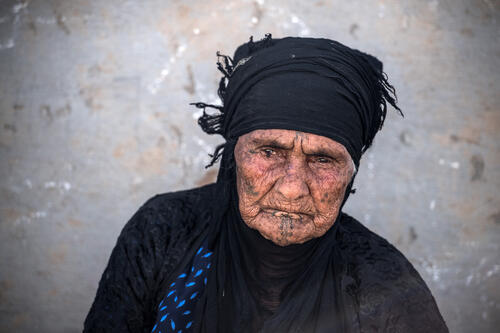
mosul old woman


Hero Image
mosul health
ERBIL, IRAQ — A Red Cross nurse from Sweden applies a dressing to a 3-year-old boy who was injured after an improvised explosive device (IED) detonated near him in Mosul on April 17, 2017.
Carl Court/Getty Images
All News button
1
Authors
Beth Duff-Brown
News Type
News
Date
Paragraphs

There are 30 civil wars underway around the globe, where civilians are dealing with death and destruction as well as public health emergencies exacerbated by the deadly march of conflict.

Yemen is battling an unprecedented cholera outbreak which has killed more than 2,150 people this year, with another 700,000 suspected cases of the water-borne disease. The government and a rival faction have been fighting for control of the country, taking 10,000 lives since 2015.

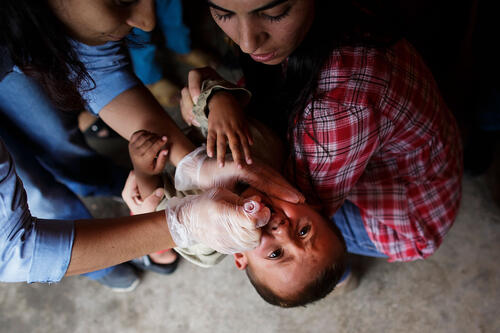
Some 17 children in Syria have been paralyzed from a confirmed polio outbreak in northeastern districts, with 48 cases reported in a country that had not had a case of polio since 1999. The cases are concentrated in areas controlled by opponents of President Bashar al-Assad.

And in the Democratic Republic of Congo — where the civil war officially ended years ago, but thousands of people still suffer from recurrent uprisings and scant infrastructure — a yellow fever outbreak was met last year with a lack of vaccines. The WHO was forced to give inoculations containing a fifth of the normal dose, providing protection for only one year.

And yet today, of the nearly 200 countries on this planet, only six nations — three rich ones and three poor ones — have taken steps to evaluate their ability to withstand a global pandemic.

“The bottom line is that despite the profound global threat of pandemics, there remains no global health mechanism to force parties to act in accordance with global health interests,” write FSI’s Paul Wise and Michele Barry in the Fall 2017 issue of Daedalus.

“There also persists inherent disincentives for countries to report an infectious outbreak early in its course,” the authors write. “The economic impact of such a report can be profound, particularly for countries heavily dependent upon tourism or international trade.”

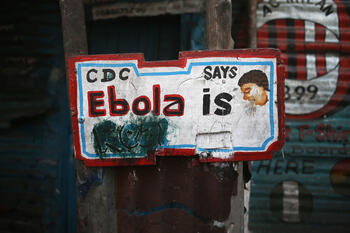
China, for example, hesitated to report the SARS outbreak in 2002 for fear of instability during political transition and embarrassment over early mishandling of the outbreak. Reporting cases of the 2013 Ebola outbreak in West Africa were slow and the virus killed some 11,300 people in Sierra Leone, Guinea and Liberia before the epidemic was declared over in January 2016.

Image
cdc ebola sign getty images

“Tragic delays in raising the alarm about the Ebola outbreak in West Africa were laid at the doorstep of the affected national authorities and the regional WHO committees, which were highly concerned about the economic and social implications of reporting an outbreak,” Wise and Barry write in the journal published by the American Academy of Arts and Sciences.

The Daedalus issue, “Civil War & Global Disorder: Threats and Opportunity,” explores the

factors and influences of contemporary civil wars. The 12 essays look at the connection of intrastate strife and transnational terrorism, the limited ambitions of intervening powers, and the many direct and indirect consequences associated with weak states and civil wars.

“Wise and Barry, both medical doctors with extensive field experience in violence-prone developing countries, analyze the relationship between epidemics and intrastate warfare,” write FSI’s Karl Eikenberry and Stephen D. Krasner in their introduction to the issue that includes eight essays by Stanford University faculty.

“Their discussion is premised on the recognition that infectious pandemics can threaten the international order, and that state collapse and civil wars may elevate the risk that pandemics will break out,” they wrote.

Eikenberry and Krasner are hosting a panel discussion about the new volume of Daedalus with FSI senior scholars, including Wise and Barry, on Oct. 23. Members of the Stanford community and the public are invited and can RSVP here. Podcasts with the authors will also be available at FSI’s World Class site over the next few weeks.

Prevention, Detection and Response

Barry and Wise believe there is significant technical capacity to ensure that local infectious outbreaks are not transformed into global pandemics. But those outbreaks require some level of organized and effective governance — and political will.

Prevention, detection, and response are the keys to controlling the risk of a pandemic. Yet it’s almost impossible for these to coincide in areas of conflict.

Prevention includes solid immunization programs and efforts to reduce the risk of animal-to-human spillover associated with exposure to rodents, monkeys and bats.

Then, early detection of an infectious outbreak with pandemic potential is crucial, through a methodical surveillance structure to collect and test samples drawn from domestic and wild animals, a capacity sorely lacking in areas of conflict and weak governance.

Image
paul

“Civil wars commonly disrupt traditional means of communication,” they write. “The Ebola virus outbreak in West Africa exposed glaring weaknesses in the global strategy to control pandemic outbreaks in areas with minimal public health capacity.”

New strategies that utilize satellite or other technology to link remote or insecure areas to surveillance are urgently needed, they said.

Then there is the response in countries where civil war not only makes it difficult, but politically treacherous.

In Syria, there had not been a case of polio reported since 1999. In 2013, health workers began to see children with the kind of paralysis that is associated with a highly contagious polio outbreak.

“However, the government and regional WHO office have been intensely criticized for their slow and uneven response,” the authors note, particularly the government’s resistance to mobilizing immunization efforts in areas sympathetic to opposition forces.

Pressure from international health organizations and neighbors in the region ultimately led to the reinstatement of vaccination campaigns throughout Syria.   

“The Syrian polio outbreak is an important reminder that health interventions, though technical in nature, can be transformed into political currency when certain conditions are met,” they write. “At the most basic level, the destruction or withholding of essential health capabilities can be used to coerce adversaries into political compliance, if not complete submission.”

Image
syria polio


Strengthening Global Oversight

The only comprehensive global framework for pandemic detection and control, the authors write, is the International Health Regulations treaty, which was signed in 2005 by 196 member-nations of the World Health Organization to work together for global health security.

The IHR imposed a deadline of 2012 for all states to have in place the necessary capacities to detect, report and respond to local infectious outbreaks. But only a few parties have reported meeting these requirements, and one-third has not even begun the process. There have also been efforts to enhance state reporting of health systems capacities through voluntary assessments of countries working through the Global Health Security Agenda consortium.

But both frameworks, Barry said in an interview, need financial and political support.

Image
michele

“I see a stronger IHR with more than words — but actual money behind it in order for it to become stronger,” said Barry, noting the Global Health Security Agenda ends in 2018 and she has been asked to sit on a NAAS task force to form its next iteration. “I’m hoping we can move the needle to put money into bio-surveillance and health security, especially in conflict areas.”

Why should Americans care?

“Pathogens know no borders,” Barry said. “And with climate change, we have tremendous movement of vectors; with globalization and billions of people routinely in flight, we have tremendous health threats traveling first class and coach.”

Twenty Countries at High Risk

Meanwhile, some 20 countries are at high risk for pandemic emergence. The two Stanford professors are urgently calling for “new approaches that better integrate the technical and political challenges inherent in preventing pandemics in areas of civil war.”

Wise and Barry note that human factors, such as the expansion of populations into previously forested areas, domesticated animal production practices, food shortages, and alterations in water usage and flows, have been the primary drivers of altered ecological relationships.

So globalization with climate change brews the perfect storm.

“There is substantial evidence that climate change is reshaping ecological interactions and vector prevalence adjacent to human populations,” they said. “Enhanced trade and air transportation have increased the risk that an outbreak will spread widely. While infectious outbreaks can be due to all forms of infectious agents, including bacteria, parasites, and fungi — viruses are of the greatest pandemic concern.”

Science suggests the greatest danger of pandemic lies in tropical and subtropical regions where human and animals are most likely to interact. Most of the estimated 400 emerging infectious diseases that have been identified since 1940 have been zoonoses, or infections that have been transmitted from animals to humans. The human immunodeficiency virus (HIV), for example, is believed to have emerged from a simian host in Central Africa.


Recent analyses have suggested that the “hotspots” for emerging infectious diseases overlap substantially with areas plagued by civil conflict and political instability. 

The U.S. Agency for International Development and the Centers for Disease Control and Prevention have been working on the Emerging Pandemic Threats Program to improve local pandemic detection and response capacities by directing resources and training to countries thought to be at high risk for pandemic. However, it is not clear that this and related programs are addressing the political dynamics at the local level that will determine the essential cooperation of local communities with any imposed global health security response.

“The unpredictability of a serious infectious outbreak, the speed with which it can disseminate, and the fears of domestic political audience can together create a powerful destabilizing force,” Wise and Barry write in their conclusion. “Current discussions regarding global health governance reform have largely been preoccupied by the performance and intricate bureaucratic interaction of global health agencies. However, what may prove far more critical may be the ability of global health governance structures to recognize and engage the complex, political realities on the ground in areas plagued by civil war.”

 

Hero Image
ebola toddler getty
A Liberian Red Cross burial team in Ebola protectant clothing collects the body of a toddler from a home in the West Point township on January 28, 2015, in Monrovia, Liberia.
John Moore/Getty Images
All News button
1
Paragraphs

As Kim Jong-un begins his sixth year as leader of the Democratic People’s Republic of Korea (DPRK), it is appropriate to shift the focus from his moves to consolidate power to the impact that the organizational and staffing changes made under his leadership have had on the operations and efficacy of the system he leads. Toward that end, Stanford’s Shorenstein Asia-Pacific Research Center and the Republic of Korea’s Institute for National Security Strategy (INSS) have prepared a joint paper utilizing the complementary resources of both institutions. This paper summarizes the findings and insights from this collaboration. We focus on personnel and organizational changes, and the economic performance of North Korea.

All Publications button
1
Publication Type
Policy Briefs
Publication Date
Journal Publisher
Shorenstein Asia-Pacific Research Center and Institute for National Security Strategy
Authors
Thomas Fingar
Yong Suk Lee
News Type
News
Date
Paragraphs

Max Fisher and Amanda Taub, in their New York Times column Interpreter from October 8, are exploring the idea that the United States of America are in a moral position to address the state of democracy in the world. CDDRL Mosbacher Director Francis Fukuyama said this began with America’s founding fathers, who “had this idea that the success of democracy in the world would depend on its success here.” Read the whole article here

Hero Image
gettyimages 613363646
Syrian pro-government soldiers patrol the Uwaija neighborhood as they advance in Aleppo's rebel-held areas, on October 8, 2016.
GEORGE OURFALIAN/AFP/Getty Images
All News button
1
-

ABSTRACT

By now, those following the news on Syria have been saturated with analysis, data, information, and misinformation on developments there since 2011. Yet we observe an increasing gravitation to mutually exclusive narratives that adorn websites and publications on the situation in Syria: (a) the narrative of pure and consistent revolution versus that of (b) external conspiracy/designs on Syria. Both narratives carry grains of truth, but are encumbered by maximalist claims and fundamental blindspots that forfeit various potentials for enduring cease-fires and/or transitions, let alone mutual understanding. This talk will address these competing narratives in the context of international escalation marked by increasing US-Russian tension and continued multi-layered conflicts on the battlefield. It closes with addressing a framework for understanding and gauging potential prospects despite conflicting declarations by all parties involved.


SPEAKER BIO

Image
unnamed
Bassam Haddad is Director of the Middle East Studies Program and Associate Professor at the School of Policy, Government, and International Affairs (SPGIA) at George Mason University. He is the author of Business Networks in Syria: The Political Economy of Authoritarian Resilience (Stanford University Press, 2011) and Co-Editor of Dawn of the Arab Uprisings: End of an Old Order? (Pluto Press, 2012). Bassam serves as Founding Editor of the Arab Studies Journal a peer-reviewed research publication and is co-producer/director of the award-winning documentary film, About Baghdad, and director of a critically acclaimed film series on Arabs and Terrorism, based on extensive field research/interviews. Bassam is Co-Founder/Editor of Jadaliyya Ezine and the Executive Director of the Arab Studies Institute, an umbrella for five organizations dealing with knowledge production on the Middle East. He serves on the Board of the Arab Council for the Social Sciences and is Executive Producer of Status Audio Journal.


*This event is supported by the Stanford Initiative for Religious and Ethnic Understanding and Coexistence


[[{"fid":"224129","view_mode":"crop_870xauto","fields":{"format":"crop_870xauto","field_file_image_description[und][0][value]":"Bassam Haddad flyer","field_file_image_alt_text[und][0][value]":"","field_file_image_title_text[und][0][value]":"","field_credit[und][0][value]":"","field_caption[und][0][value]":"","field_related_image_aspect[und][0][value]":"","thumbnails":"crop_870xauto"},"type":"media","attributes":{"width":"870","class":"media-element file-crop-870xauto"}}]]

Reuben Hills Conference Room
2nd Floor East Wing E207
Encina Hall
616 Serra Street
Stanford, California 94305

Bassam Haddad Associate Professor George Mason University
Seminars
Subscribe to Civil Wars