Civil Wars
Authors
Melissa Morgan
News Type
Commentary
Date
Paragraphs

Interstate conflicts are "roaring back," according to James Fearon. One of the preeminent thinkers in the field of international relations, Fearon joins Colin Kahl on the World Class podcast to talk about why it feels like wars are becoming more prevalent, and how more might be prevented in the future. Drawing on both his academic research and his time in government service, Fearon shares his perspective on why and how the conflicts in Ukraine and Iran are unfolding, and outlines his recommendations for preventing active conflict with China in the Indo-Pacific.

James Fearon is the Theodore and Frances Geballe Professor in the School of Humanities and Sciences and a professor of political science. He is a senior fellow at FSI, affiliated with CISAC and CDDRL. His research interests include civil and interstate war, ethnic conflict, the international spread of democracy and the evaluation of foreign aid projects promoting improved governance. Fearon was elected to the National Academy of Sciences in 2012 and the American Academy of Arts and Sciences in 2002. Some of his current research projects include work on the costs of collective and interpersonal violence, democratization and conflict in Myanmar, nuclear weapons and U.S. foreign policy, and the long-run persistence of armed conflict.

This episode's reading recommendation is, “The Personalist Global Order: When Individual Whims Drive Great Power Policy” by Seva Gunitsky and Semuhi Sinanoglu, published in the January 2026 issue of Foreign Affairs.

TRANSCRIPT:


Kahl: You're listening to World Class from the Freeman Spogli Institute for International Studies at Stanford University. I'm your host, Colin Kahl, the director of FSI.

Today we're talking to my good friend, Jim Fearon. Jim is the Theodore and Francis Geballe professor in the School of Humanities and Sciences here at Stanford. He's also a professor in the political science department and a senior fellow with us at FSI. He is inarguably one of the most influential international relations theorists and methodologists of his generation.

He's also spent some time serving in the U.S. government, and he's about to begin a term as the co-director of FSI's Center for International Security and Cooperation, or CISAC, which is one of our flagship centers. Jim's research covers an incredibly broad array of international security issues, including pathbreaking work on interstate war, conventional and nuclear deterrence, civil and ethnic conflict, the international spread of democracy, and its impact on political stability, and the evaluation of foreign aid projects.

He's even branched out to study the cost of collective and interpersonal violence, and he has a terrific new book on the topic entitled Worse Than War. As the world grapples with a new period of heightened conflict and global tension, I can't think of a better person to help us think through these challenges and help lead CISAC in examining them than Jim.

So, Jim, welcome to World Class.
  
Fearon: Thanks, Colin. Very happy to be here.

Kahl: I want to start our conversation by rolling the tape way back. Three decades ago, you published a highly influential article entitled, “Rationalist Explanations of War.” The article addresses a core puzzle in international relations. And that is, you know, because war is costly and risky, a peaceful settlement that avoids destruction should theoretically always exist and be preferred by rational actors, and yet war still occurs. These days, unfortunately, it seems to be occurring more and more often.

So I want to ask you how the insights from this foundational article might help us understand some contemporary conflicts, including those in Europe and the Middle East.

But first—a lot of our listeners are pretty nerdy, but many of them will not have read your article. Maybe you can spend a few minutes just kind of explaining to our listeners the core argument you made in this.

Fearon: You're right; it is a frighteningly long time ago now. Scary for me to think about. 1995 it came out, written pretty much in ‘93.

I guess I’d stress two things in terms of summarizing it. One, even the way you framed it as, war is costly and risky, there ought to be deals, in principle, that rationally led states would prefer to the costly lottery, the costly big gamble of going to war. That was itself a framing that was not standard at the time.

And in fact the reason I wrote the article in that form — I was an assistant professor at University of Chicago and I had a different version based on a chapter of my dissertation. And a senior colleague very generously giving me extensive comments on that draft, disagreed vigorously with that point and said, “No, no, no, no, and here's a list of cases where both sides wanted to go to war, and there were just no deals.”

And that interaction made me realize, well, actually, you know, there's maybe there's a point here that that would be worth arguing out there in the field.

And then the other thing was I wanted to ask, “What are the full set of rationalist explanations for why rational leaders wouldn't be able to find a deal better than this costly lottery?” And basically I say there's two things. There's kind of informational stories and commitment stories.

“Informational story”  means that one or both sides thinks they know something about either their capabilities or maybe their willingness to fight, which they know privately, the other side can't directly observe it. And because if you told me, like, “Don't do that or I absolutely will go to war.” I might not believe you because I know that  you have an incentive to try to get me not to do that.

And then the second thing: commitment problems.That's when even if we largely agree on the probability of winning would be 50-50 or something, and have a good sense of what the costs would be, even if we know there's deals we'd both prefer to fighting, we may believe that one or the other or both of us would not be trustworthy to enforce a deal.

An example would be Iran and cases like that where we might want to make a deal — we give you some sanctions relief, and you agree to intrusive inspections and not to pursue nuclear weapons. But how do we know they're not going cheat? We think they might have reasons to. So that's the kind of concern. Maybe there in principle is a deal, but you're worried the other side has ways of sneakily or not so sneakily reneging.

Kahl: The Iran point is is particularly relevant to my personal experience because I remember during the Biden administration, it was very difficult for us to convince Iran to get back into some version of the Obama-era Joint Comprehensive Plan of Action, because I Iran kept wanting us to credibly commit that we would not withdraw from the agreement, like Trump withdrew from Obama's agreement. And it turned out that was very difficult for us to commit to. Of course, we also had trust issues as it related to the Iranians.

But speaking of Iran, we're now past the six-month mark in the U.S. and Israeli war with Iran. We're mostly in the U.S. phase these days.

And we're now in the fifth year of the war in Ukraine. So we've got major conflicts in Europe and the Middle East.

But I was wondering if you could link back to some of those concepts that you just elucidated to help our listeners understand, for example, why Putin made the decision to launch a full-fledged invasion of Ukraine back in 2022, or why President Trump decided to attack Iran alongside Israel back in February.

Fearon: Well, you've given a couple significant challenges here on the “rationalist” part. So, one thing I absolutely was not arguing or claiming in that piece was that all wars are begun by rational choices, and that this was the way to understand why all wars happen.

My hunch is that this decision to go to war was irrational. Say you have a specific psychological bias in mind that may explain it. Psychological biases and irrationality is defined on the basis of, or with respect to, “It's not rational.” Rational is like the normative, like, okay, you ought to do this, or if you're rational, you would do this. And that's how we even can tell what would be irrational.

In order to even figure out what's a psychological bias story, you have to be starting with a clear sense of what would count as a rational story.

So that's a little background on the motivation there. I'm definitely not saying that this current U.S. war with Iran is going to be best explained by rational choices. But to your point, I do think the information and commitment story helps us understand the underlying strategic problems that the leaders are dealing with and states are dealing with and may manage or address in more or less rational ways.

So with that as like a long lead up, let's start . . . well, we’ve been talking about Iran. Let's start there.

We only have a little reporting on this now, but it seems like the president really, like, went with his gut. Even despite getting . . . the CIA allegedly told him that what Netanyahu was telling him that this can bring about regime change . . . he was allegedly told by the U.S. intelligence community, “No, we really don't think that's gonna happen.” The ability of the Iranians to shut down the Strait of Hormuz seems to have been raised.

But he decides and probably is influenced by feeling like the Venezuela operation was a huge success. Ex post, it looks like he exaggerated his prospects for success.

It doesn't seem to me like there was anything to suggest that the U.S. had any particular private information about their capabilities or anything that would give them a rational basis for having mutual optimism with respect to the Iranians. The Israelis had these rather extensive plans for internal subversion, for regime change, but it seems like the U.S. intel didn't think that was likely to succeed.

At a more underlying level though, the whole issue for years now, fifteen plus years, has been this commitment problem issue of the U.S. worrying that if the Iranians got nuclear weapons, this would have various bad effects for a balance of power in the region and possible consequences for us on that.

You were intimately involved in dealing with this commitment issue in the JCPOA talks. And as you know, one of the big criticisms of the JCPOA talks was that it's not credible. That the Iranians would be able to cheat, pursue, get out of the deal, and that the only real solution here is regime change.

And their argument one way or another, ends up succeeding, in terms of getting the U.S. president to act on it. It has not succeeded, so far, on regime change, and we'll see what happens there.

Kahl: One thing that seems to be similar about the Ukraine and Iran cases, and wonder what your impression is, but before the war, in both instances, there were diplomatic engagements.

The United States was engaged with Russia to try to convince them that the war wouldn't work out well for them, that the costs would be high, but also in conversations to see whether a broader U.S.-Russia understanding about security in Europe could be discussed to address some of the security concerns that Putin had about Ukraine and about the eastern flank of NATO.

The zone of possible agreement was pretty narrow and there were huge commitment issues. They didn't trust us; we didn't trust them. So, that resonates.

Same with Iran. We were in the midst of negotiations with them. They didn't trust us. We didn't trust them. We had pretty maximalist demands. They had pretty maximalist demands on issues like enrichment. And so the zone of possible agreement was narrow, and trust just made it difficult to to find a diplomatic solution, which means you were kind of in the zone where war could be imagined in both Ukraine and in Iran.

But what's interesting is that both Putin and Trump believed certain types of information rather than others, and basically they believed the wars would be easy. Putin thought the war in Ukraine would be over in a couple of weeks. Trump thought the war in Iran would be over in a couple of days, maybe a couple of weeks. They were getting information from different advisors, but either they were believing certain advisors or they just had very firm beliefs in their own heads about how easy this was going to be that couldn't be shaken. They just thought the wars would be easy.

So if you kind of combine the zone of possible agreement and commitment issues being pretty problematic, and then both leaders thought the wars would be easy, maybe there's some commonality between the conflicts. I don't know if that resonates with some of your views.

Fearon: It does, and I think you're right; there are some similarities there. In both cases, I think the underlying issues have to do with revisionism plus anarchy making for credible commitment problems.

One thing that the Iran case and the Ukraine case have in common [is] they’re wars of regime change, or at least, to a large extent. Putin wants to go to Kyiv, throw out the regime, establish something different or incorporate almost the entire current Ukrainian state into Russia.

When you see regime change as the primary objective, you should think “commitment problem.” This was true in the 2003 U.S.-Iraq war, where the Bush administration really wasn't that interested in cutting a deal with Saddam Hussein. They thought we had an opportunity to change the regime, make things a lot less costly, a lot better. Either he’s working on nuclear weapons now or he's going be able to soon. 9/11 gives us this great opportunity with the U.S. public to to do this.

World War II for the Allies: Churchill and Roosevelt meet in Casablanca early on, well before they have any good reason to think that they're going to be able to defeat, do a landing, and drive all the way to Berlin. But they declare at that point our goal is unconditional surrender. We just have to get rid of this regime. Why is that? Well, they don't think that any deal with Hitler would be stable. Because he's revealed enough about his preferences that he wouldn't comply.

That combines in both the Iranian and the Ukraine case with what, after the fact, look like quite overly optimistic views. In the Ukraine case, ex post we can see like, “Oh gosh, you really miscalculated.” This was not a one-week special military operation. It's five years of staggering, staggering World War I-like losses and lack of progress. So, surely he was irrational in getting that wrong.

But as I recall in the first week or so, people I heard in the Pentagon were like, “Yeah, this is going to be over. It's gonna take them like a week or two, but they're going to win.” And that was also a view that wasn’t just in the U.S. It's not just Putin who was surprised; a lot of people were surprised. There's some interesting reporting in a series of Washington Post pieces in late 2022 where they're talking to Ukrainian military and political leaders, and they were surprised to some extent. They were not a hundred percent sure, ex ante that you would see the degree of coordination, nationalist enthusiasm, support, pulling together, that they actually saw. So even they were a little bit surprised.

I do think that there's a plausible argument for mutual optimism, as we say, that some private information contributed to the sum of their beliefs about their chances of winning being greater than one. The Russians seem to really dismiss the Ukrainian’s capability and they thought that people would defect from the regime, that there wouldn't be a lot of public support, which was totally wrong.

Kahl: I think that's right. Maybe this was a byproduct of the fact that all the senior advisors to the Secretary of Defense were Army guys, and the Secretary of Defense himself was an Army guy back when the invasion happened. But when they all were all looking at the giant green map, and I say that because it was literally this huge green map that Mark Milley, the chairman of the Joint Chiefs, would roll out on the table in the Secretary's Conference room and start pointing to what the Russians were intending to do based on all the insights and intel that we had.

I think our military, again, these Army guys, basically saw a repeat of 2003 Iraq, which was that the major combat phase of the war and the regime change part of the war might be over in a couple of weeks, right? You'd have the equivalent of a thunder run to Kyiv, like we had the thunder run to Baghdad. But also like Iraq, in the aftermath of that, Ukrainian nationalism was real, resistance was real, and that you'd have a combination of basically insurgency, civil uprisings and disobedience, serious occupation problems.

Milley is talking to Gerasimov, his counterpart in Russia before the war, he's saying, “Look, you think this war is going to be over in fourteen days, but it's going to last fourteen years.”

But when Milley was saying that, he was talking about the post-war, post-regime change difficulties that we faced in Iraq. I think it was a shock about how poorly the Russians performed. It certainly was a shock on our side. And also how well the Ukrainians performed, and not the least of which because the Ukrainians didn't appear to have a plan. But I think in retrospect, they did have a plan. They just didn't share the plan with us because they didn't trust us all that much. So there were some information asymmetries.

I think the biggest one that Putin had was not just what we now see as his overconfidence in how easy it would be to change the regime, but he didn't believe us when we said we would impose a lot of costs on him: support the Ukrainians, imposing costs, sanctions, a degree of international isolation. He just didn't believe any of that stuff.

Okay. You've already mentioned that you worked at the Pentagon. We worked together in 2021, 2022. You took some leave from Stanford to serve in the Strategy Office within the Office of the Secretary of Defense.

For our listeners, the Office of the Secretary of Defense is not literally the secretary's office; it's a huge, sprawling civilian bureaucracy that supports the Secretary. And Jim worked in the strategy shop. And specifically, you had an opportunity to work on the 2022 National Defense Strategy, which is an important intellectual and framing document for the Pentagon.

It's kind of a meta document that tries to translate the national security strategy into a defense strategy that can be operationalized by the Pentagon. I believe this was your first time working in government, and I'd love you to reflect on that experience a little bit. Because obviously you've spent all this time in the ivory tower. You're hugely influential in the field of international relations.

What impact did this experience of being in the bowels of the Pentagon for a year or so . . . what impact did it have in shaping your understanding about the policy process or maybe your thinking about international security more broadly?

Fearon: Well, the opportunity for that year was largely due to you. So I have you to thank for that. And it was an amazing experience and it was a great thing to do in mid- late-career to kind of shake things up. And I learned just a massive amount. I’d say I’m still . . . in terms of lessons, too many to count. I'm still really processing it all. I'm trying to clear off a bunch of various longstanding projects so I can start thinking more systematically and trying to write about that.

The experience didn't really end up changing my views about international politics. Although I've got a lot more good anecdotes, it didn't really change the way I teach “Intro IR” that much.

But it radically . . . I just learned a ton about how U.S. foreign policy and defense policy is made inside the machine. And that's just been fascinating. And that has affected . . . when I read the newspaper or read about what's going on in the world, it definitely informs how I understand a lot of stuff that I see happening.

We talk a ton about policy makers and policy making in our academic IR world. And not just political science in general. What did I think? Well, I didn't know. Maybe you go in and like you sit around a table with a bunch of policymakers and you go like, “Hmm, what should our policy be on this question?” You know? And it'll be a little bit like a seminar, maybe?

Occasionally I saw stuff that was a little bit like that. And maybe at levels that you experience more at higher levels, maybe that happens more. But that was like not the way it works at all, right?

Instead, it's like a gazillion meetings.with people from different offices, and offices within offices, and offices within offices within offices at a gazillion levels and across different agencies talking about, “How do we align?”

It turns out policymaking is basically all about aligning things, aligning things with other things. It's about coordination. You have a notion when we're talking about policy in the newspaper journalist sense, it's very simple, right? Is the policy going to be this or that? But in actuality: what's a policy? It's not one simple thing. It's like a million things. It's a million little decisions.

And you can’t, even when you say, if you’re the Undersecretary, “I think we should do this.” Well that goes down the chain, and then what comes back are like a million, “Well we can't do that because of this, or that causes this friction, or we can't do that because of this other thing.” So that was one thing that was really striking.

It's a world of silos. Silos and silos within silos. And we talk about silos as if they're bad, but the truth is that you have to have silos. The whole system's a silo. You've got State Department and you've got Homeland Security and you've got the Defense Department and Treasury. And you need specialists in these different areas, and expertise. And someone's going to be lead on this or that policy. But at the same time, once you create all these silos, they have to coordinate. And that’s what so much of policy was about. It was about all these meetings of aligning across and within silos.

Kahl: Totally. Whether it's policy percolating from the bottom up or you're trying to implement it from the top down, the vast majority of what people in the U.S. government do is try to align and coordinate their actions. Either align it to their preferences — like their organizational preferences or their individual preferences — or align it to a policy that they think is already set, while deconflicting with everybody else.

It's basically a hot mess. It's surprising, actually, that anything gets done.

I was thinking as you were talking: probably the most famous scholar-practitioner of all time is Henry Kissinger. And Kissinger once remarked about when he was back at Harvard as an academic, he learned things. He built up all this intellectual capital. And then he went into government and he spent it all down. Implying that he didn't really build up more intellectual capital inside government, that that happened outside of government.

My sense is that Kissinger was a brilliant guy, but that he's absolutely wrong about that. Every time I've served in government, my intellectual capital went up, including in domains that I had not been exposed to before. So, I do want to ask about whether your intellectual capital changed at all on some issues you thought deeply about.

In particular, during your time at the Pentagon, was there anything that you learned about the world or how DOD conducts its planning and operations that changed your understanding of contemporary deterrence challenges? Because after all, the national defense strategy that you work so hard on in the strategy office framed as its central challenge, sustaining and strengthening deterrence vis-a-vis potential adversaries with China and Russia kind of at the top of the pile. Given that you’ve thought a lot about deterrence as an academic, you then saw how people were debating it in these endless meetings on the inside: did it shape your thinking at all?

Fearon: Well, the overarching frame of the 2022 national defense strategy was integrated deterrence. And initially I was like, what does that mean? Do we need another deterrence concept?

But the more time I spent there, the more I thought actually, you know, that's right. The U.S. and its allies and partners have an amazing set of strengths, but you need to make the whole greater than the sum of the parts. So now we're talking about silos not only within the U.S. government, but with allies and partners. There's a whole other set of very difficult coordination challenges.

It's incredibly challenging. I worked on implementation, as you know, until I left in September 2022, and I saw some stuff that happened after that, but my impression is that the agenda of integration had more successes inside the defense establishment than across agencies. And it seems like that coordinating across agencies was just really hard for all kinds of reasons.

But let me come back. You want to know about the intellectual capital. I didn't feel like I was spending down intellectual capital. I did think that, for example, in doing the national defense strategy, I was able to bring some stuff to the table conceptually from having studied and written about deterrence for quite a while.

But in terms of what I got, it goes to what we were just talking about being really struck by the scale and the organizational challenges. When you're coming from academics, or for that matter journalists, or for that matter really historians, there are all kinds of incentives to see and understand and also blinders to put things in very psychological terms.

So although I think psychology is hugely important, the experience made me think that we're over-emphasizing in a lot of ways, or we’re attributing things to psychological biases or this or that that are actually have more to do with organizational and career incentive things that are very difficult to to see from the outside.

Kahl: Yeah. I think in part that’s because it's like a nature-nurture question. Do our beliefs emerge from our experiences, in which case they are to some degree byproducts of our experience and to include it inside government.

I think your integrated deterrence point is interesting because a lot of critics of that defense said that integrated deterrence is just deterrence. Like deterrence is deterrence. In fact, you’re saying “integrated” because you want to actually slough off deterrence on other actors: the State Department or the Treasury Department, or our allies.

And I think the way that we saw it was that it was a recognition of the reality that if deterrence is either about denying the adversary the ability to achieve their objectives, or credibly being able to threaten to impose costs in excess of what they might achieve through aggression, that you had to have the entire kit available to you to do that, which meant you had to deter across the domains of warfare: land, air, sea, undersea, space, cyberspace, information, all of those.

The military kind of, I think, understood that, although implementation-wise it wasn't great at it. You had to deter across our alliances for the point that you made, that the whole had to add up to more than the sum of its parts. And that's a really hard coordination problem.

But you also had to integrate across the instruments of national power so that you're not just threatening to do things militarily, but as we've we've seen in places like Ukraine and Iran, the military instrument hits certain limits on your ability to achieve national objectives if it's not in tight coordination with diplomacy and economic carrots and sticks and other things.

The Trump administration didn't use the term “integrated deterrence” in their most recent national defense strategy. My suspicion is that people are largely thinking about deterrence in similar ways.

Fearon: An example would be in the lead up and through the whole Ukraine experience, Treasury is brought in. It does all kinds of stuff and does all kinds of analysis on the whole sanction side in terms of actions. But getting coordination to use that experience or do advanced planning on some kind of parallel contingency in the Western Pacific; that's hard to do.

Kahl: Very hard to do. But, you know, interestingly . . . we threatened Putin with all the things we ended up doing: supporting the Ukrainians, imposing sanctions, trying to isolate Russia on the world stage, which worked for about a year and a half or two. It's since kind of fallen apart.

My own view is that if Putin had known the cost that would have been imposed on him, he probably wouldn't have launched the war. We told him what many of those costs were, he just didn't believe us. My assessment of Beijing is yes, if they ever make a move on Taiwan or Japan or the Philippines, in one of these disputed areas: South China Sea, East China Sea, or the Taiwan Strait.

They will not just be calculating whether their military operations would be successful or whether they could dissuade the United States from intervening, but they'll be calculating what the impact would be on China's economy, on their regime stability, on a whole host of issues that are not entirely military and have significant economic and diplomatic elements to them. So, I think it's just only sensible to try to bundle up the various deterrence messaging so that Beijing thinks not only would they face a long hard slog if they went after Taiwan, but they'd also face sanctions or disruptions to critical supply chains or economic isolation from key economies around the world and et cetera, et cetera.

I do want to talk a little bit more about China and deterrence and get your views. You wrote a very interesting article in Foreign Affairs last year about how to think through conventional deterrence with China. So, much more in the military domain. And I wonder if the prospect of China taking action against Taiwan or another U.S. ally or partner is one of the pathways in which you could get a massive global conflagration? How should we think about deterring that?

Fearon: So, this was an article in Foreign Affairs in May or June last year with Andrew Lim, who's a very smart, experienced civil servant in OSD policy.

The basic idea is like, how do you sustain and strengthen deterrence as the 2022 NDS said, in the Western Pacific? We argue that the U.S. needs to work towards what we call the conventional triad. So, more investment in precision-guided missiles and deeper munition stocks in that area. Basically missiles, bombers, and subs. So, bombers that can be used to launch long-range cruise missiles. That's a technology called palletized munitions, as you know.

One thing we were trying to draw attention to is that there are pretty big first strike incentives. So, if you get in a tense or a crisis situation, the PLA has a real premium on preventing the U.S. forces from getting in the fight. And they built a missile complex that, if they used it successfully, very quickly could make it impossible, or very, very difficult, or could be devastating for U.S. naval assets and fixed bases in the region, which are critical for any kind of U.S. military intervention.

The U.S. knows that, wants to protect its forces. It has potentially preemption incentives itself to attack and prevent these missiles, or the command and control systems that enable them, from working. The whole article is based on this kind of analogy to the nuclear history where Albert Wohlstetter and Thomas Schelling were arguing in the 50s that the U.S. needed to posture its nuclear forces in a way to assure a second strike.

They were worrying — probably worrying too much — that the Soviets could have an incentive to just . . . what do we call it? . . . do a splendid first strike, to make it impossible or largely impossible for the U.S. to retaliate.

So, we're arguing that the situation is similar at a conventional level in the Western Pacific. So you could increase both crisis stability, lower the risk of war, and also strengthen deterrence by building an assured, secure, conventional second strike.

Kahl: The article is fantastic. People should check it out.

One of the concerns you hear out of the Pentagon these days . . . not at the very top, but through the many leaks that get into the Washington Post and the New York Times and the Wall Street Journal and other outlets . . . is just how concerned the professional military is and the combatant commands are with how depleted our long-range munitions stockpiles and also our air defense and missile defense interceptor stockpiles are, in large part because of the conflict with Iran, which has spent through a lot of those munitions.

The not so dirty little secret in the Pentagon is we had lots of war plans. But if you executed any one of them with a degree of protraction, you basically made the other war plans very difficult to execute for some period of time.

And we're we're seeing that happen in real time and we've kind of gone all in with Iran. And I think a lot of people at the Pentagon are worried that that has undermined our deterrent vis-a-vis China and and Russia, because they know how depleted we are on some of these types of munitions.

I want to pivot now to your new job, the job you have graciously agreed to take on, which is the social science co-director of CISAC, the Center for International Security and Cooperation.

For our listeners who don't know about CISAC, it's one of the oldest centers, one of the founding centers of FSI at Stanford. And it's always had, from the very beginning, a social science co-director and a science co-director. Because from the very outset, it's been a center focused on the relationship between science and technology on the one hand and international security on the other, initially focused on nuclear weapons and arms control, and now with a much broader research agenda.

So first of all, thank you for taking on the job. You're the perfect person at this time.

What types of issues do you think CISAC in particular, and maybe security studies more broadly, needs to prioritize at this particular moment in world history and as we look to the future?

Fearon: I'm excited to do it. I'm looking forward to it. It's a great opportunity, and I'm fully expecting that being a center director will be more fun than being a department chair.

Taking kind of a big picture look here: Secretary Blinken used to like to say the post-Cold War is over, right? And I think he's right about that. We're living through a really big set of changes in the international system. Probably bigger and more fundamental than the changes I lived through as a grad student with the end of the Cold War. Really quite fundamental.

This is a whole bunch of dimensions, but definitely one of the biggest ones is that interstate conflict among major powers has just come roaring back. After twenty-five years or so, where a lot of the issues of focus in international security were things like civil war, transnational terrorism, insurgency, counterinsurgency, state building, peacekeeping operations, non-proliferation. Now, none of those things have gone away; it upsets me that civil war in particular, which has actually gotten quite a bit worse, has kind of just fallen off the radar screen.

But nonetheless, good reason to be concerned about major power conflict, which has come back very much, and with it, increased risk of nuclear war. We haven't seen so much risk of this since the hot days of the Cold War. But it's come back in a technological context that's really different from the Cold War.

And I think that's where studying, thinking about, conceptualizing, framing, intervening on, like, how to think about and what to do about major power conflict in this technologically changed and rapidly changing environment is what CISAC will be focused on. And that CISAC, being at Stanford, is the place to do this: to study AI and and AI and international security implications for conflict, cyber offense, cyber defense, cyber capabilities and and and their implications.

There's something of an underreported arms race going on in space. That's another thing I'd love to get more work going on. Space capabilities have become absolutely essential enablers for military operations of not just the U.S., but perhaps especially still the U.S.

Kahl: I'm super excited about all of that. I'm not excited about the world we live in; the world seems more turbulent and violent by the day. But as it relates to CISAC: CISAC's core mission of thinking about how academia can inform questions about nuclear deterrence and nuclear stability and arms control, that's back.

The salience of nuclear weapons is arguably higher than it's been in many decades. And then there are all these emerging technology areas: cyber, AI, space, undersea, in the not too distant future, quantum. And what's interesting about it is that they are all entangled with one another. AI and cyber are highly entangled. Cyber and space are highly entangled. Cyber and undersea are highly entangled. Quantum will be highly entangled with other domains as well, and all of them are entangled with nuclear weapons, nuclear deterrence, nuclear command and control.

And so as you said, there's no place on earth to study all of these things, all of this intersectionality like CISAC. I'm super excited that you're going to take that on.

The last question I always ask our guests: so, Ezra Klein — one of my favorite podcasts — always asks his guests for three favorite books. And I'm always always impressed that non-academics, let alone academics, have time to read three books.

I have an easier question, which is: what is one article that you would recommend to our listeners to get a better understanding of contemporary international security challenges?

Fearon: So, my suggestion here is a little bit of a departure from what we've been talking about. It's not really hard on the military emerging tech, nuclear defense policy things, but more of a how to think about what's going on in the world.

I like a piece in Foreign Affairs by an IR political scientist named Seva Gunitsky and co-author Semuhi Sinanoglu. It's called “The Personalist Global Order: When Individual Whims Drive Great Power Policy.” And they make an argument that Trump and Xi Jinping to some extent, and Putin are. . . to understand how they're acting in foreign policy, it really helps to draw on this comparative politics.

People who study autocracy have a set of commonly used distinctions between types of autocracies. A personalist is in contrast to, like, a military dictator or a single party regime. Someone who governs by personal patron-client connections, often family-based, and views institutions as potential threats and tends to want to undermine them. And there's a bunch of patterns associated with personalist autocrats. There's a lot of erratic behavior.

In general, I think the IR field doesn’t pay enough attention to comparative politics, and this is a place where if you're looking to understand what's going on at the international level, it's a concept that's quite useful.

Kahl: It is a great article. And I also think where international relations can come to bear is in thinking about how these personalist systems become intertwined. The way in which Trump's network is intertwined with the networks in the Persian Gulf monarchies, for example. Great recommendation. Folks should go check it out if they haven't already.

Jim, thank you so much for joining us today.

Fearon: Thanks, Colin.

Kahl: You've been listening to World Class from the Freeman Spogli Institute for International Studies at Stanford University. If you like what you're hearing, please leave us a review and be sure to subscribe on Apple, Spotify, or wherever you get your podcasts to stay up to date on what is happening in the world, and why.

Read More

Sasha Baker and Tarun Chhabra on the World Class podcast
Commentary

Anthropic, OpenAI, and the New Frontier of Artificial Intelligence in National Security

The heads of national security policy at OpenAI and Anthropic join Colin Kahl on the World Class podcast to discuss how AI is changing national security strategies and the nature of U.S.-China competition.
Anthropic, OpenAI, and the New Frontier of Artificial Intelligence in National Security
Headshot of James D. Fearon
News

James Fearon to Co-Lead the Center for International Security and Cooperation

Fearon, a senior fellow at the Freeman Spogli Institute, will succeed Scott Sagan, who has served in the role since 2021.
James Fearon to Co-Lead the Center for International Security and Cooperation
Eyck Freymann on the World Class podcast
Commentary

Uniting America's National Powers to Prevent a War Over Taiwan

Eyck Freymann joins Colin Kahl on the World Class podcast to explain his plan to bring America's military strength, economic leverage, technological leadership, and diplomatic influence together into a single, coherent plan to curtail China's ambitions toward Taiwan.
Uniting America's National Powers to Prevent a War Over Taiwan
Hero Image
All News button
1
Subtitle

James Fearon joins Colin Kahl on the World Class podcast to discuss his theory of "Rationalist Explanations of War," how it applies to conflicts like Ukraine and Iran, and the role scholars can play in bringing academic expertise to policymaking.
Date Label
Display Hero Image Wide (1320px)
No
Paragraphs
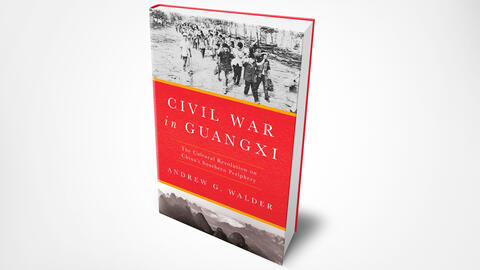
Book cover for Andrew Walder's "Civil War in Guangxi," showing a photograph of mountains and a historical image of prisoners marching.


Guangxi, a region on China's southern border with Vietnam, has a large population of ethnic minorities and a history of rebellion and intergroup conflict. In the summer of 1968, during the high tide of the Cultural Revolution, it became notorious as the site of the most severe and extensive violence observed anywhere in China during that period of upheaval. Several cities saw urban combat resembling civil war, while waves of mass killings in rural communities generated enormous death tolls. More than one hundred thousand died in a few short months.

These events have been chronicled in sensational accounts that include horrific descriptions of gruesome murders, sexual violence, and even cannibalism. Only recently have scholars tried to explain why Guangxi was so much more violent than other regions. With evidence from a vast collection of classified materials compiled during an investigation by the Chinese government in the 1980s, this book reconsiders explanations that draw parallels with ethnic cleansing in Rwanda, Bosnia, and other settings. It reveals mass killings as the byproduct of an intense top-down mobilization of rural militia against a stubborn factional insurgency, resembling brutal counterinsurgency campaigns in a variety of settings. Moving methodically through the evidence, Andrew Walder provides a groundbreaking new analysis of one of the most shocking chapters of the Cultural Revolution.


Reviews of Civil War in Guangxi


Review by Donald S. Sutton, Carnegie Mellon University 
Published in The China Quarterly, November 6, 2023

"This work is yet another vital contribution to the study of the Cultural Revolution by the sociologist Andrew Walder.... It will be essential reading for scholars of the People's Republic and an accessible source, for informed lay readers and students, on the horrors of the Cultural Revolution."

Review by Yueran Zhang, University of Maryland Global College
Published in Social Forces, March 2024

"What is unique about Civil War in Guangxi. . . is its refreshing emphasis on the geopolitical dimension of the Cultural Revolution's complex twists and turns, concretely tying the tragic unfolding of political processes in China to the war operation in Vietnam. As such, this book is not only of pivotal interest to scholars of collective mobilization, political violence, and Chinese communism, but also firmly places itself in conversation with global and transnational sociology and scholarship on the US empire in the post-war era."

Review by Eddy U, University of California, Davis
Published in International Sociology, April 2, 2024

"The book furnishes a rich, multilayered, and event-based account of politics and governance (or the lack of it) in Guangxi during the Cultural Revolution."

Review by Fei Yan, Tsinghua University 
Published in Contemporary Sociology, April 27, 2024

"Enriched with a wealth of fresh data and evidence, Walder's book substantially enhances readers' comprehension of the intricacies of political violence in modern Chinese history. It also makes a substantial and pertinent contribution to the broader dialogues encompassing political sociology and contentious politics."

Review by James J. Hudson, University of North Carolina at Pembroke
Published in Twentieth-Century China, May 2024

"Civil War in Guangxi adds yet another important chapter to the narrative history of China's Cultural Revolution decade. . . . [A] new generation of scholars and students will have access to a valuable resource in Civil War in Guangxi, one that can teach lessons on how moments of intense political unrest can unleash the most horrid of inhuman tendencies in a society."

Review by K. Lynass, University of Maryland Global College
Published in Choice, September 2024

"This is an excellent illustration of sociological study, using newer ideas of analyzing the data in such a way that contextualizes the information provided in the sources. Essential."

Review by Daniel Leese, University of Freiburg,  Germany
Published in International Review of Social History, November 5, 2024

"Walder convincingly demonstrates that it is of crucial importance to take the specific chains of events into account in order to understand both the rise of factionalism and the patterns of political violence in Guangxi. Based on this largely historical approach, in combination with state-of-the-art statistical analysis and painstaking empirical detail, Andrew Walder has been able to significantly advance our understanding of why political violence in Guangxi came to be so much more intense than in most other Chinese regions."

Review by Daniel Koss, Harvard University
Published in Pacific Affairs, March 2025

"Cutting through the complexity of events, Walder's theory identifies forces that tie together the dynamics of the Cultural Revolution throughout the province. I am not aware of other analyses about Maoist movements which connect with such precision disparate events in towns and villages to events at higher levels of the state."

Review by Yiching Wu, University of Toronto
Published in China Journal, January 2026

"Civil War in Guangxi builds on an impressive range of archival materials, official reports, and local gazetteers. It uses provincial and county annals, confidential Communist Party documents, and post–Cultural Revolution investigation reports to provide a comprehensive account of political alignments, military interventions, and mass violence. By meticulously analyzing these materials, Walder traces the trajectories of factional conflicts from political struggles to full-scale militarized conflicts. . . . Civil War in Guangxi is set to become a key reference for anyone interested in the Cultural Revolution and the political history of the PRC. The book not only reaffirms Walder’s standing as the leading authority in the field but will also be an indispensable read for anyone hoping to gain a deeper understanding of this turbulent era."

All Publications button
1
Publication Type
Books
Publication Date
Subtitle

The Cultural Revolution on China's Southern Periphery 

Authors
Andrew G. Walder
Book Publisher
Stanford University Press
Authors
News Type
News
Date
Paragraphs

We are pleased to share the publication of a new volume, Cold War Refugees: Connected Histories of Displacement and Migration across Postcolonial Asia, edited by the Korea Program's Yumi Moon, associate professor in Stanford's Department of History.

The book, now available from Stanford University Press, revisits Cold War history by examining the identities, cultures, and agendas of the many refugees forced to flee their homes across East, Southeast, and South Asia due to the great power conflict between the US and the USSR. Moon's book draws on multilingual archival sources and presents these displaced peoples as historical actors in their own right, not mere subjects of government actions. Exploring the local, regional, and global contexts of displacement through five cases —Taiwan, Vietnam, Korea, Afghanistan, and Pakistan — this volume sheds new light on understudied aspects of Cold War history.

This book is an important new contribution to our understanding of population flows on the Korean Peninsula across decades.
Paul Chang
Deputy Director, Korea Program

The book's chapters — written by Phi-Vân Nguyen, Dominic Meng-Hsuan Yang, Yumi Moon, Ijlal Muzaffar, Robert D. Crews, Sabauon Nasseri, and Aishwary Kumar — explore Vietnam's 1954 partition, refugees displaced from Zhejiang to Taiwan, North Korean refugees in South Korea from 1945–50, the Cold War legacy in Karachi, and Afghan refugees.

Purchase Cold War Refugees at www.sup.org and receive 20% off with the code MOON20.

Read More

Korean activists released from prison on August 16, 1945.
Commentary

Can the United States and Asia Commemorate the End of the Pacific War Together?

Within Asia, World War II memories and commemorations are not only different from those in the United States but also divided and contested, still shaping and affected by politics and nationalism. Only when U.S. and Asian leaders come together to mark the end of the Asia-Pacific war can they present a credible, collective vision for the peace and prosperity of this important region.
Can the United States and Asia Commemorate the End of the Pacific War Together?
Gi-Wook Shin seated in his office, speaking to the camera during an interview.
News

Sociologist Gi-Wook Shin Illuminates How Strategic Human Resource Development Helped Build Asia-Pacific Economic Giants

In his new book, The Four Talent Giants, Shin offers a new framework for understanding the rise of economic powerhouses by examining the distinct human capital development strategies used by Japan, Australia, China, and India.
Sociologist Gi-Wook Shin Illuminates How Strategic Human Resource Development Helped Build Asia-Pacific Economic Giants
Stanford Next Asia Policy Lab team members and invited discussants during a roundtable discussion in a conference room.
News

Stanford Next Asia Policy Lab Probes Political Messaging and Public Attitudes in U.S.-China Rivalry

At a recent conference, lab members presented data-driven, policy-relevant insights into rival-making in U.S.-China relations.
Stanford Next Asia Policy Lab Probes Political Messaging and Public Attitudes in U.S.-China Rivalry
Hero Image
3d cover image of the book "Cold War Refugees," showing Asian refugees walking up from a beach, with boats in the background.
All News button
1
Subtitle

The new volume, edited by Stanford historian Yumi Moon, examines the experiences of Asian populations displaced by the conflict between the United States and the Soviet Union.

Date Label

Encina Hall, C151
616 Jane Stanford Way
Stanford, CA 94305-6055

0
Associate Professor, Josef Korbel School of International Studies at the University of Denver
CDDRL Visiting Scholar, 2025-26
20250506-kaplano-487_-_oliver_kaplan.jpg

Oliver Kaplan is an Associate Professor at the Josef Korbel School of International Studies at the University of Denver. He is the author of the book, Resisting War: How Communities Protect Themselves (Cambridge University Press, 2017), which examines how civilian communities organize to protect themselves from wartime violence. He is a co-editor and contributor to the book, Speaking Science to Power: Responsible Researchers and Policymaking (Oxford University Press, 2024). Kaplan has also published articles on the conflict-related effects of land reforms and ex-combatant reintegration and recidivism. As part of his research, Kaplan has conducted fieldwork in Colombia and the Philippines.

Kaplan was a Jennings Randolph Senior Fellow at the U.S. Institute of Peace and previously a postdoctoral Research Associate at Princeton University and at Stanford University. His research has been funded by the Carnegie Corporation of New York, the International Committee of the Red Cross, the Smith Richardson Foundation, and other grants. His work has been published in The Journal of Conflict Resolution, Journal of Peace Research, Conflict Management and Peace Science, Stability, The New York Times, Foreign Affairs, Foreign Policy, CNN, and National Interest.

At the University of Denver, Kaplan is Director of the Korbel Asylum Project (KAP). He has taught M.A.-level courses on Human Rights and Foreign Policy, Peacebuilding in Civil Wars, Civilian Protection, and Human Rights Research Methods, and PhD-level courses on Social Science Research Methods. Kaplan received his Ph.D. in political science from Stanford University and completed his B.A. at UC San Diego.

Date Label
Authors
Marco Widodo
News Type
News
Date
Paragraphs

How should we think about wars in the Middle East? Past scholarship has made great strides in unpacking the region’s nuanced conflict dynamics, but the literature lacks a broader framework to examine how diverse factors interact with the international system and with each other. In a recent CDDRL Research Seminar, Marc Lynch, Professor of Political Science at George Washington University and the Director of the Project on Middle East Political Science, applies a framework of “Warscape Theory” to better understand patterns of state failures, recurrent conflict, and authoritarian rule across the region.

Three observations motivate this project. First, Middle Eastern wars are intricately interconnected. Militias, religious divisions, and refugee crises harbor no regard for borders. Second, these conflicts are long and protracted; wars may simmer down, but they never go away. The potential recurrence of direct violence remains a constant fear and expectation. Third, Middle Eastern political science has remained fairly insular, largely sticking to within region comparisons. Lynch’s warscape intervention draws inspiration from a body of anthropological research on wars in Sub-Saharan Africa, which share many similarities with wars in the Middle East. They rarely have a clear starting or ending point, they are constantly shaped by external great power interventions, and they possess a self-perpetuating dynamic that makes conflict resolution incredibly difficult to achieve.

What qualifies a region as a “warscape?” First, warscapes have protracted conflicts with periods of remission and resurgence. Second, warscape conflicts are highly transnationalized and are not contained by borders in any meaningful sense. Third, violence tends to be highly variable, both temporally and spatially. Significant intra-state differences in violence render state-level observations unhelpful; one part of the country might live in full-fledged war while another remains oblivious to the violence. Fourth, the relative strengths of belligerents are less clear than they present. Combatants possess variable motivations for participating in armed conflict, choosing to pick up and drop arms situationally. Finally, almost as a marketing tactic, groups often distinguish themselves by engaging in extreme — and sometimes performative — brutality. Beheadings, immolations, and other acts of terror simultaneously scare enemies at home and attract support from Gulf sponsors.

Why care about this new lens for studying the Middle East? This warscape framework describes a complicated reality that existing terms like “civil war” struggle to capture. It analytically repositions the state from being the central actor to only one of multiple “competing political orders” while contextualizing micro-level ethnographic observations within a broader landscape of global arms flows and international power structures. Lynch hopes scholars may leverage this lens to investigate how conflict dynamics play out differently in warscape regions compared to non-warscape regions.

Lynch’s characterization of the Middle East as a “warscape” does not suggest that war in the Middle East is inevitable. Instead, putting an end to wars in the Middle East requires a systematic understanding of how actors and structures from the individual level to the transnational level interact with one another. Warscape theory, as Lynch proposes, may enable us to better capture the full range and complexity of these interconnected conflicts.

Read More

Bryn Rosenfeld
News

The Transformative Power of Anger Under Authoritarian Repression

Cornell Assistant Professor of Political Science Bryn Rosenfeld’s work explains why ordinary citizens — those without activist ties — sometimes take extraordinary risks to stand up to authoritarian regimes.
The Transformative Power of Anger Under Authoritarian Repression
Gillian Slee presented her research in a CDDRL seminar on November 7, 2024.
News

Home But Not Free: Rule-Breaking and Withdrawal in Reentry

Previous works paint three broad challenges with the parole system: material hardship, negative social networks, and carceral governance. Gillian Slee, Gerhard Casper Postdoctoral Fellow in Rule of Law at CDDRL, proposes a crucial fourth explanation for why re-entry fails: socioemotional dynamics.
Home But Not Free: Rule-Breaking and Withdrawal in Reentry
Klaus Desmet presented his research in a CDDRL seminar on October 24, 2024.
News

Polarization in the United States Reconsidered

While many have argued that America has witnessed a shift from disagreements on redistribution to disagreements on culture, Klaus Desmet’s findings indicate otherwise.
Polarization in the United States Reconsidered
Hero Image
Marc Lynch
Marc Lynch presented his research in a CDDRL seminar on November 21, 2024. | Marco Widodo
All News button
1
Subtitle

Marc Lynch, Professor of Political Science at George Washington University and the Director of the Project on Middle East Political Science, applies a framework of “Warscape Theory” to better understand patterns of state failures, recurrent conflict, and authoritarian rule across the region.

Date Label
Authors
Michael Breger
News Type
News
Date
Paragraphs

The Korean Peninsula stands at a perilous crossroads. Recent missile tests and provocations, coupled with historical trends, paint a worrisome picture of the current state of affairs, prompting some analysts to warn of a looming conflict. The Korea Program at Shorenstein APARC recently hosted two events to analyze these escalating tensions that have sparked global concern.

On February 21, the seminar “Slow Boil: What to Expect from North Korea in 2024,” featured Victor Cha, D.S. Song-KF Chair, Professor of Government at Georgetown University, and Senior Vice President for Asia and Korea Chair at the Center for Strategic and International Studies. Cha discussed historical behavioral patterns of North Korean missile tests, military provocations, and weapons demonstrations, and what all these might mean for security on the Korean peninsula.

The following week, on March 7, at the seminar  “Is North Korea Preparing for War?,” we were joined by Robert Carlin, a non-resident scholar at the James Martin Center for Nonproliferation Studies, Middlebury Institute of International Studies at Monterey and Siegfried Hecker, a professor of practice at the James Martin Center for Nonproliferation Studies, Middlebury Institute of International Studies at Monterey, and in the Department of Nuclear Engineering at Texas A&M University. Carlin and Hecker, both formerly our colleagues at the Stanford Center for International Security and Cooperation, discussed their recent 38 North article, “Is Kim Jong Un Preparing for War?,” which posits that Pyongyang has already made the strategic decision to go to war. 

The speakers at both events delved into the various rationales behind North Korea's actions and provided contrasting viewpoints on the trajectory of the situation. While Carlin and Hecker painted a grim picture of North Korea's intentions to engage in warfare and advocated for robust security measures, Cha argued that, while 2024 will be a challenging year, established approaches such as diplomacy and deterrence will remain effective in managing relations with Pyongyang. 

Rhetorical Preparations for Conflict

Carlin and Hecker provided a grave assessment, suggesting that “Kim Jong Un has made a strategic decision to go to war,” akin to his grandfather's stance in 1950. Hecker provided historical context, indicating that despite attempts at normalization with the United States, each North Korean leader has simultaneously explored the development of its nuclear weapons arsenal and accumulation of its conventional armaments. Hecker argued, "The Korean War was never settled, it was an armistice, and so, more or less, North Korea has been preparing for war, but this is different and we are really concerned.”

Carlin noted a shift that occurred at the Workers’ Party plenum at the end of 2022, in which “Pyongyang announced new measures that demonstrated that the old policy with the U.S. was over and that they were going to move much more towards the Russians.” The plenum also marked a rhetorical shift where Kim Jong Un introduced the phrase “war preparations.” “Some people say, ‘Oh that's normal North Korean rhetoric’ — it's not normal. They had not been talking at that level to their own people about war preparations […] they talked a lot about deterrence which meant building up, but not war preparations,” said Carlin.

According to Carlin, Pyongyang has “primed the pan for a clash in the Yellow Sea […] everything we have seen in the last year suggests very strongly that this is a decision the regime has made, and that it will patiently move in this direction.”

The speakers both argued that Kim's shift stems from a perceived failure of past diplomatic endeavors and a traumatic setback at the 2019 Hanoi summit, when, as Hecker indicated, the North Koreans decided to abandon the 30-year policy of seeking normalization with the United States. “This is a more dangerous time than any time since the start of the Korean War,” Hecker warned.
 

The Demilitarized Zone
The Demilitarized Zone (Photo Credit: Michael Breger)

The Inevitable Tensions of Deterrence

In contrast, Cha’s assessment of the situation is more cautiously optimistic, anticipating a surge in North Korean provocations in 2024 but attributing it to historical patterns rather than a definitive strategic shift. According to Cha, we should  expect North Korean belligerence to increase in 2024, while dialogue looks unlikely.” He highlighted North Korea's tendency to ramp up provocations during U.S. election years, produced data on the increasing number of provocations since the 1990s, and emphasized Kim's repeated rejections of dialogue with the Biden administration.

Cha also provided four reasons why he does not expect a war with North Korea in 2024: “First, Pyongyang is not confident enough in its capability to deter U.S. and South Korean retaliation […] Second, the uptempo in U.S.-ROK and U.S.-ROK-Japan exercising […] Third, if North Korea were ready to go to war, they would not be selling all their ammunition to Russia […] and fourth, if North Korea were really ready to go to war, they would not be decoupling from South Korea.”

Cha suggested that, while war is unlikely, “coercion, particularly against South Korea, and North Korea-Russia relations are only going to grow.” He described North Korea’s transfer of armaments from Najin to Dunai in Russia to three munition storage facilities near the Ukrainian front. Cha sees a possible change in the U.S. North Korea policy approach from focusing on denuclearization to curtailing and disincentivizing this behavior.

An Uncertain Year Ahead

Whether or not the escalating tensions since the 2019 Hanoi Summit mean that Pyongyang is headed to war, its increased belligerence is a clear signal that Kim’s government has shifted its efforts. North Korea is now pursuing its security and economic agendas without any indication of attempting to normalize relations with the United States or South Korea. Furthermore, it continues to strengthen its partnership with the China-Russia bloc. The assessment of continued tensions on the Korean Peninsula is undisputed.

Ultimately, both perspectives shared by the speakers highlight the need for vigilance, strategic coordination, and innovative policy solutions to address the escalating tensions in the region.
 

Read More

Portrait of Kiyoteru Tsutsui and a silhouette of the Toyko Syline at night.
News

Decoding Japan's Pulse: Insights from the Stanford Japan Barometer

The Asahi Shimbun is publishing a series highlighting the Stanford Japan Barometer, a periodic public opinion survey co-developed by Stanford sociologist Kiyoteru Tsutsui and Dartmouth College political scientist Charles Crabtree, which unveils nuanced preferences and evolving attitudes of the Japanese public on political, economic, and social issues.
Decoding Japan's Pulse: Insights from the Stanford Japan Barometer
Gidong Kim
Q&As

Popular Political Sentiments: Understanding Nationalism and Its Varied Effects on Liberal Democracy

Korea Program Postdoctoral Fellow Gidong Kim discusses his research into nationalism and its behavioral consequences in Korea and East Asia.
Popular Political Sentiments: Understanding Nationalism and Its Varied Effects on Liberal Democracy
Gi-Wook Shin on a video screen in a TV studio speaking to a host of South Korean-based Arirang TV.
News

Video Interview: Gi-Wook Shin's 2024 Forecast for South Korea's Politics, Diplomacy, and Culture

APARC and Korea Program Director Gi-Wook Shin joined Arirang News to examine geopolitical uncertainty surrounding the Korean Peninsula in 2024, North Korea's intentions, Japan-U.S.-South Korea trilateral cooperation, Seoul-Beijing relations, tensions over Taiwan, and South Korean politics and soft power.
Video Interview: Gi-Wook Shin's 2024 Forecast for South Korea's Politics, Diplomacy, and Culture
Hero Image
Robert Carlin, Siegfried Hecker, and Victor Cha
(Left to Right) Robert Carlin, Siegfried Hecker, and Victor Cha
All News button
1
Subtitle

Amid North Korea’s increasing provocations, APARC’s Korea Program hosted three experts — Robert Carlin, Victor Cha, and Siegfried Hecker — to consider whether Pyongyang plans to go to war.

-

Time:  7:30am-8:45am  California, USA 15 February 2022 
3:30pm-4:45pm London, UK 15 February 2022
11:30pm-12:45am  Singapore, 15-16 February 2022

How does India’s civil-military relationship affect its security? Historically, civil-military relations have been characterized by an “absent dialogue,” with the military enjoying almost complete operational autonomy in planning and fighting wars. But that arrangement has produced some mixed results for Indian national security, and is coming under increasing strain in an environment of intensifying peacetime strategic competition. New Delhi recognizes the need for reform, and has made some halting progress. This webinar will examine the evolution of civil-military relations in India, the challenges with the current configuration, and the agenda for reform that will face the next Chief of Defence Staff.

Speakers: 

Image
anit_mukherjee
Anit Mukherjee is an Associate Professor at the S. Rajaratnam School of International Studies (RSIS), Nanyang Technological University, in Singapore. He is the award-winning author of The Absent Dialogue: Politicians, Bureaucrats and the Military in India, the definitive analysis of Indian civil-military relations. He is also Non-Resident Visiting Scholar at the Center for the Advanced Study of India (CASI), University of Pennsylvania, and at Centre for Social and Economic Progress (CSEP), New Delhi. Prior to his academic career, he was a Major in the Indian Army and is an alumnus of India’s National Defence Academy (NDA), Khadakwasla. Anit holds a Ph.D. from Johns Hopkins University.

Image
saawani
Saawani Raje-Byrne is a lecturer (assistant professor) in International History at the Department of War Studies, King’s College London. She is currently working on a book, based on her PhD dissertation, that presents novel theoretical analysis and detailed historical case studies of Indian civil-military relations. She previously taught at Defence Studies Department at King’s, and the Joint Services Command and Staff College at Shrivenham, and was a researcher at the Centre for Policy Research, New Delhi. She holds a PhD from King’s College London, and a BA from the University of Cambridge.

Moderated by :
Arzan Tarapore, South Asia research scholar at the Shorenstein Asia-Pacific Research Center, Stanford University

This event is co-sponsored by Center for South Asia

Via Zoom  Register at:
https://bit.ly/3HpyMMO

Seminars
-

This event is available through livestream only. Please register in advance to receive a personalized link to watch the webinar:  https://bit.ly/3tNN7wG

Myanmar Back into Darkness: 2021 Shorenstein Journalism Award Recipient Swe Win to Headline Award Panel Discussion

The military coup in February 2021 put an abrupt end to hopes of democracy and liberty in Myanmar.  With every form of free speech now brutally suppressed, one of the major victims of the coup has been the independent press. Newsrooms were raided and dozens of journalists have been arrested. Several publications, including Myanmar Now, had their operating licenses revoked and their websites blocked. Most of the staff of the news outlets targets by the junta were forced to flee to territories along the country's border areas controlled by ethnic armed organizations. From there, they continue their professional work despite the threats to their lives and logistical difficulties.  
 

Join APARC as we honor Burmese investigative journalist Swe Win, editor-in-chief of Myanmar Now and winner of the 2021 Shorenstein Journalism Award. In his award keynote address, Swe Win will speak about journalism under threat in Myanmar, what it is like to report on the crisis in the country from outside while in exile, and Myanmar’s future.

The keynote will be followed by a conversation with Swe Win and two experts: Scot Marciel, a career diplomat, former U.S. ambassador to Myanmar, and currently a visiting practitioner fellow on Southeast Asia at APARC, and Eileen Donahoe, executive director of the Global Digital Policy Incubator at Stanford.

The event will conclude with an audience Q&A session moderated by Donald K. EmmersonDirector of the Southeast Asia Program at APARC.

Follow us on Twitter and use the hashtag #SJA21 to join the conversation.

Speakers:

Image
Photo of Swe Win, winner of 2021 Shorenstein Journalism Award
Swe Win is a Burmese journalist, human rights defender, and the chief editor of Yangon-based news outlet Myanmar Now. He has survived an assassination attempt and detention by his own government. Now he leads Myanmar Now from exile and his newsroom is in hiding.

Swe Win has written extensively on human rights cases that involve physical injury or death, unlawful detention or miscarriage of justice in Myanmar. He is the recipient of the 2019 Ramon Magsaysay Award for Emergent Leadership, which is regarded as Asia's equivalent of the Nobel Prize, the 2017 European Union’s Schuman Award for Human Rights, and the 2016 Presidential Certificate of Honor for Social Service through Journalism from the Myanmar Ministry of Information for his groundbreaking investigation into years-long abuse of domestic workers at a Yangon tailor shop.

Previously, he worked as a senior reporter for the Irrawaddy Magazine and freelanced for international publications such as the New York Times. From 1998 to 2005, he spent seven years in jail for distributing anti-junta material.

Photograph: Thet Htoo for the Mekong Review - https://mekongreview.com/cause-and-karma


Image
Photo of Eileen Donahoe
Eileen Donahoe is the executive director of the Global Digital Policy Incubator (GDPI) at the Cyber Policy Center at Stanford University’s Freeman Spogli Institute for International Studies. GDPI is a global multi-stakeholder collaboration hub for development of policies that reinforce human rights and democratic values in digitized society. Areas of current research include AI and human rights, combating digital disinformation, and governance of digital platforms.

Donahoe served in the Obama administration as the first U.S. Ambassador to the UN Human Rights Council in Geneva, at a time of significant institutional reform and innovation. After leaving government, she joined Human Rights Watch as director of global affairs, where she represented the organization worldwide on human rights foreign policy, with special emphasis on digital rights, cybersecurity, and internet governance. Earlier in her career, she was a technology litigator at Fenwick & West in Silicon Valley.

She serves on the National Endowment for Democracy Board of Directors; the Transatlantic Commission on Election Integrity; the World Economic Forum Future Council on the Digital Economy; University of Essex Advisory Board on Human Rights, Big Data and Technology; NDI Designing for Democracy Advisory Board; Freedom Online Coalition Advisory Network; and Dartmouth College Board of Trustees.


Image
Photo of Scot Marciel
Scot Marciel is a career diplomat with 35 years of experience in Asia and around the world. He is currently a visiting practitioner fellow on Southeast Asia at Shorenstein APARC.

Mr. Marciel served as U.S. Ambassador to Myanmar from March 2016 through May 2020, leading a mission of 500 employees during the difficult Rohingya crisis and a challenging time for both Myanmar’s democratic transition and the United States-Myanmar relationship. Prior to serving in Myanmar, Ambassador Marciel served as Principal Deputy Assistant Secretary for East Asia and the Pacific at the State Department, where he oversaw U.S. relations with Southeast Asia.

In previous roles, he served as U.S. ambassador to Indonesia, the first U.S. ambassador for ASEAN Affairs, deputy assistant secretary of state for Southeast Asia, at U.S. missions in Turkey, Hong Kong, Vietnam, Brazil and the Philippines, and at the State Department in Washington in multiple positions.


About the Shorenstein Journalism Award:

The Shorenstein Journalism Award, which carries a cash prize of US $10,000, recognizes outstanding journalists who have spent their careers helping audiences around the world understand the complexities of the Asia-Pacific region, defined broadly to include Northeast, Southeast, South, and Central Asia and Australasia. Award recipients are veteran journalists with a distinguished body of work. News organizations are also eligible for the award.

The award is sponsored and presented by the Walter H. Shorenstein Asia-Pacific Research Center (Shorenstein APARC) at Stanford University. It honors the legacy of the Center’s benefactor, Mr. Walter H. Shorenstein, and his twin passions for promoting excellence in journalism and understanding of Asia. It also symbolizes the Center’s commitment to journalism that persistently and courageously seeks accuracy, deep reporting, and nuanced coverage in an age when attacks are regularly launched on the independent news media, on fact-based truth, and on those who tell it.

An annual tradition, the Shorenstein Journalism Award alternates between recipients whose work has mostly been conveyed through American news media and recipients whose work has mostly been conveyed through news media in one or more parts of the Asia-Pacific region. Included among the latter candidates are journalists who are from the region and work there, and who, in addition to their recognized excellence, may have helped defend and encourage free media in one or more countries in the region.

Learn more at https://aparc.fsi.stanford.edu/events/shorenstein-journalism-award.

Virtual Webinar Via Zoom

Register at: https://bit.ly/3tNN7wG

Swe Win <br><i>Editor-in-Chief, Myanmar Now; 2021 Shorenstein Journalism Award Winner </i><br><br>
Eileen Donahoe <br><i> Executive Director, Global Digital Policy Incubator, Stanford University </i><br><br>
Scot Marciel <br><i> Career Diplomat, Former U.S. Ambassador to Myanmar; Visiting Practitioner Fellow on Southeast Asia, Shorenstein APARC, Stanford University </i><br><br>
Panel Discussions

Shorenstein APARC
Stanford University
Encina Hall, Room E301
Stanford, CA 94305-6055

(650) 736-0656 (650) 723-6530
0
mike_breger.jpg

Michael (Mike) Breger joined APARC in 2021 and serves as the Center's communications manager. He collaborates with the Center's leadership to share the work and expertise of APARC faculty and researchers with a broad audience of academics, policymakers, and industry leaders across the globe. 

Michael started his career at Stanford working at Green Library, and later at the Center for Russian, East European and Eurasian Studies, serving as the event and communications coordinator. He has also worked in a variety of sales and marketing roles in Silicon Valley.

Michael holds a master's in liberal arts from Stanford University and a bachelor's in history and astronomy from the University of Virginia. A history buff and avid follower of international current events, Michael loves learning about different cultures, languages, and literatures. When he is not at work, Michael enjoys reading, painting, music, and the outdoors.

Communications Manager
Date Label

Room 212, Crown Quadrangle
559 Nathan Abbott Way
Stanford, CA 94305-8610

650.736.8771
0
Lecturer in Residence, Stanford Law School
jamie-oconnell-3-400x400.jpg

Jamie O’Connell is a Lecturer in Residence at Stanford Law School. He teaches and writes on political and legal development and has particular expertise in law and development, transitional justice, democratization, post-conflict reconstruction, and business and human rights. Until 2018, he was a Senior Fellow of the Honorable G. William and Ariadna Miller Institute for Global Challenges and the Law at the University of California, Berkeley, School of Law, as well as a Lecturer in Residence, teaching both law and undergraduate students.

O’Connell has worked on human rights and development in over a dozen countries in Africa, the Americas, Asia, and Europe, under the auspices of the United Nations, local and international non-governmental organizations, and academic institutions. He co-founded International Professional Partnerships for Sierra Leone, a non-governmental organization that worked with the government of Sierra Leone to enhance the performance of its agencies and civil servants. Earlier in his career, O’Connell studied international business as a researcher at Harvard Business School, publishing numerous case studies. He has directed the Human Rights Clinic at the University of Sierra Leone and taught as a visitor at Harvard Law School and Columbia Law School. O’Connell clerked for the Honorable James R. Browning on the U.S. Court of Appeals for the Ninth Circuit and is admitted to practice in California (inactive status) and New York. In 2016-17, he was a visiting professor and Fulbright Senior Scholar at the University of Valencia (Spain) Faculty of Law.

O’Connell’s scholarship includes “Representation, Paternalism, and Exclusion: The Divergent Impacts of the AKP’s Populism on Human Rights In Turkey” in Human Rights in a Time of Populism: Challenges and Responses (2020); “When Prosecution Is Not Enough: How the International Criminal Court Can Prevent Atrocity and Advance Accountability by Emulating Regional Human Rights Institutions” (with James L. Cavallaro, Yale Journal of International Law, 2020); “Common Interests, Closer Allies: How Democracy in Arab States Can Benefit the West” (Stanford Journal of International Law, 2012); “Empowering the Disadvantaged after Dictatorship and Conflict: Legal Empowerment, Transitions and Transitional Justice,” in Legal Empowerment: Practitioners’ Perspectives (2010); “East Timor 1999,” in The Responsibility to Protect: Moving the Campaign Forward (2007); “Gambling with the Psyche: Does Prosecuting Human Rights Violators Console Their Victims?” (Harvard International Law Journal, 2005); “Here Interest Meets Humanity: How to End the War and Support Reconstruction in Liberia, and the Case for Modest American Leadership” (Harvard Human Rights Journal, 2004); and Sierra Leone’s Truth and Reconciliation Commission and Special Court: A Citizen’s Handbook (with Paul James-Allen and Sheku B.S. Lahai, 2003).

CDDRL Affiliated Scholar
Date Label
Subscribe to Civil Wars