Albania | Colombia | Democratic Republic of Congo | Egypt | Ethiopia | Ghana | India | Kazakhstan | Kenya | Kyrgyzstan | Mongolia | Pakistan | Russia | Senegal | Tibet | Turkey | Ukraine | Venezuela
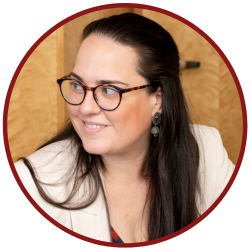
Lisjana Hila is an expert in financial sector development and economic growth, with a strong track record leading EU- and OECD-backed initiatives to improve SME access to finance across Libya, Montenegro, Uganda, and Palestine. She specializes in strengthening financial ecosystems, supporting regulatory reforms, and fostering private sector competitiveness in emerging markets. Lisjana holds an International MBA from Paris School of Business and a Master’s in Finance and Insurance from the University of Turin. She is fluent in Albanian, Italian, English, and French, with basic knowledge of Arabic.
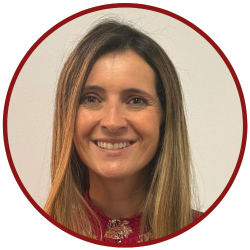
Paloma Valencia has served as a Colombian senator since 2014. One of the strongest voices opposing President Petro’s leftist government, she is frequently cited as one of Colombia’s top senators. She currently sits on the First Commission, serves as co-president of the Senate’s Peace Commission, and is vice-president of the Human Rights Commission. Valencia has authored legislation that reduces bureaucracy for small businesses, supports artisanal liquor production, and redirects mining royalties toward environmental protection. A strong advocate for state austerity, she also champions the rights of single mothers, coffee growers, and farmers. Her reform efforts span public administration, the justice system, and political institutions. She holds degrees in law, philosophy, and economics from Universidad de Los Andes and earned a Master’s in Creative Writing from NYU.
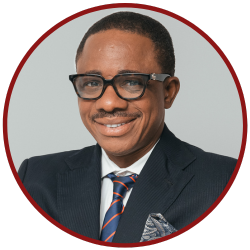
Jean Pierre Okenda is a distinguished lawyer, activist, and senior analyst in extractive industries governance. He holds a master’s degree in law and currently serves as Executive Director of Sentinel Natural Resources. A strong advocate for participatory governance and human rights in the extractive sector, Okenda has made a lasting impact through legal and policy reforms. In 2018, he played a key role in the commission responsible for reforming the Democratic Republic of Congo’s mining laws, helping to introduce provisions for equitable wealth sharing with affected communities. In recognition of his leadership in combating corruption, he was named one of the 100 most influential Africans in 2022.
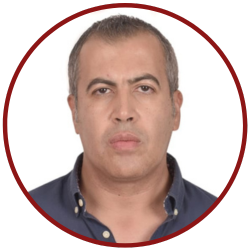
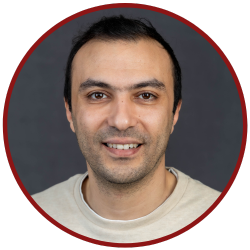
Tamer Elnahas is a political strategist and writer. With leadership roles in multiple parties, including the Egyptian Social Democratic Party and Masr El-Gedida (New Egypt), he has shaped grassroots mobilization efforts and electoral strategies. As a fierce advocate for democracy, he challenges authoritarian narratives through his widely read political analysis. Alongside his activism, Elnahas is an assistant professor and an expert in reproductive health.
Waleed Shawky is a political activist and researcher with over a decade of experience in democratic movements. He co-founded the April 6 Youth Movement, which played a key role in the 2011 Egyptian revolution, contributing to its strategic planning and digital communications. He holds a Master of Public Administration from Harvard Kennedy School and writes for MadaMasr, AlManasa, and the Journal of Democracy.
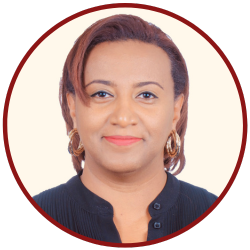
Tigist Hailu Asfawossen is a peace, security, and strategic communications expert with 20+ years of experience in peace work in Africa. She currently leads strategic communications at the Intergovernmental Authority on Development (IGAD), focusing on high-stakes diplomatic processes and translating conflict analysis into actionable insights. She led communications for IGAD’s South Sudan mediation process and numerous preventive diplomacy missions. A member of the African Union’s FEMWISE-Africa network and an international election observer, she is also a certified trainer in Conflict Prevention, Management, and Resolution (CPMR). She holds an MA in International Politics from the University of Bradford.

Bright Sowu has over 10 years’ experience in anti-corruption and good governance. He currently serves as a Principal Staff Officer at Ghana’s Office of the Special Prosecutor, focusing on research and programs. Bright has previously worked with the Ghana Anti-Corruption Coalition, the European Union, the Japanese Embassy, and the University of Ghana. He has also worked as an anti-corruption consultant with Project Expedite Justice - Sudan, the UNCAC Coalition in Vienna, and ERGO, a New York consultancy firm. Bright is a course facilitator on “Democracy and Good Governance” for the Daakye Youth Fellowship. He holds an MPhil in Development Studies from the University of Cambridge, U.K.
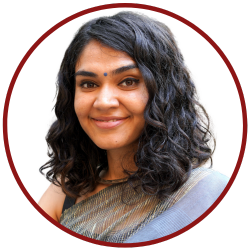
Hemakshi Meghani is the co-founder of the Indian School of Democracy (ISD), an organization dedicated to nurturing principled political leaders. She led ISD from its inception in 2018 until 2024. A World Bank Graduate Scholar, she earned her Master’s in Public Policy from the Harvard Kennedy School. Hemakshi began her career as a Teach For India fellow and later worked on education policy with Indus Action and the Boston Consulting Group. She has facilitated global leadership forums and is an Echoing Green Fellow, Acumen Foundry member, and a Dalai Lama Fellow. She is currently reimagining her work to advance inclusive democracy and increase women’s representation in politics.
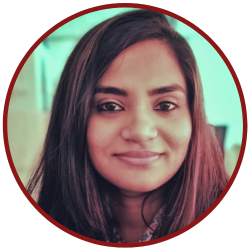
Kastaurika Saikia is a development consultant from India, with over a decade of experience driving public sector initiatives across diverse domains — urban governance, public health, livelihoods, youth skilling, and gender equity. She holds a Master’s degree in Policy and Governance studies, and specialises in public policy analysis and implementation. Based in Assam, she has engaged with government departments to strengthen service delivery and social programs. She currently leads a regional skilling and self-learning initiative for youth in Northeast India, in partnership with the Skill India Mission. Kastaurika is committed to reducing structural inequalities and advancing human development.
Mukesh Kumar is an IAS officer and currently serves as Secretary of State Planning and Development for the Government of Jharkhand. He holds degrees from Patna University, Jawaharlal Nehru University, Delhi University, and IMT Ghaziabad. He played a crucial role in ensuring peaceful elections in Maoist-affected regions, demonstrating strong skills in negotiation, persuasion, and stakeholder collaboration. His “Paint My City” campaign—praised by the Prime Minister of India in Mann Ki Baat—exemplifies his dedication to community engagement and cultural preservation. Mukesh has also mobilized 25,000 tribal women into sustainable enterprises, contributing significantly to their economic empowerment. His efforts have earned him several honors, including the Skoch Award and the Bharat Gaurav Award.

Dimash Alzhanov is a prominent political analyst and consultant. He holds an MSc in Comparative Politics (Democracy) from the London School of Economics and Political Science and possesses broad expertise in elections and democratization. Since 2014, he has served as a Political and Campaign Finance Analyst with the OSCE/ODIHR on numerous elections, including those in Moldova, Montenegro, Bulgaria, Ukraine, Georgia, Italy, and Malta. Since 2019, he has initiated and managed various projects aimed at promoting political reforms and increasing political participation in Kazakhstan. He recently published a chapter in a book about party politics in authoritarian Kazakhstan.

Caren Wakoli is the Founder and Executive Director of the Emerging Leaders Foundation (ELF-Africa), a nonprofit organization dedicated to supporting and accompanying young women and men in achieving meaningful, dignified, and impactful participation in governance, the economy, and public affairs at all levels of society. She is a consummate storyteller and believes in the power of stories to advance authentic leadership for sustainable development. With over 22 years of experience in governance, democracy, and youth development, Caren has established herself as a visionary leader in Africa and beyond. She is also a champion for well-being because she believes that well-being facilitates well-doing.

Winnie Masai is a dedicated human rights activist from Kenya with over 15 years of experience in media, human rights, and governance. As Executive Director of InformAction, she spearheads initiatives using film, community dialogue, and civic action to promote meaningful change. A founding board member of the Civic Freedoms Forum, she is committed to protecting civic space. Winnie empowers grassroots organizations through the Haki Ni Yetu Coalition and is on the board of the Midriff Hurinet. With a Master of Philosophy and a BSc. in Information Sciences from Moi University, she is passionate about fostering innovation and collaboration to inspire collective action within diverse communities.
Ernis Isamatov has a strong background in democracy, development, human rights, and the rule of law, with extensive experience in addressing governance challenges. He leads the Trial Monitoring Project, which focuses on high-level corruption and organized crime, advancing transparency and accountability. Isamatov has successfully managed initiatives across the Western Balkans and Central Asia, including roles with OSCE field missions in Skopje and Dushanbe. As a results-driven professional with excellent analytical, reporting, and communication skills, he combines global perspectives with deep local knowledge, advocating for democratic reforms.
Nagi Otgonshar currently serves as a Member of Parliament in Mongolia. He was elected from the Mongolian People’s Party, the country’s ruling social democratic party, where he previously served as International Secretary. Before entering Parliament, he served as Vice Minister of Mining and prior to that, Senior Advisor to the Chief Cabinet Secretary, Government of Mongolia. He also worked as an investment banker at Bank of America Merrill Lynch in New York and Sydney, covering the natural resources sector in the Asia-Pacific region. Nagi holds an MBA from Harvard Business School, a BA in Economics from Macalester College, and is a Young Global Leader selected by the World Economic Forum.
Dr. Sara Sarwar is a Deputy Collector of Customs and a qualified medical doctor (MBBS) who transitioned into Pakistan’s civil service to drive institutional reform and advance trade policy. With a career spanning key leadership roles in customs, she has led transformative initiatives focused on regulatory transparency, digitalization, and revenue integrity. Her work emphasizes process optimization, anti-corruption measures, and sustainable trade facilitation, earning her recognition from both the World Customs Organization and the Federal Board of Revenue. She brings a results-driven, policy-focused approach to public sector leadership and economic governance.
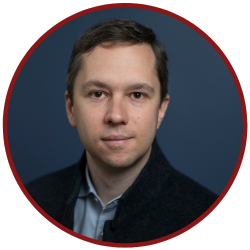
Grigory Vaypan is a Russian human rights lawyer and scholar. He is a Senior Lawyer at Memorial, Russia's oldest human rights group and co-recipient of the 2022 Nobel Peace Prize. At Memorial, Grigory carries out litigation, legal research, and legal advocacy on human rights, the rule of law, and transitional justice in Russia. He has over a decade of experience in strategic litigation before the Constitutional Court of Russia and the European Court of Human Rights. Grigory holds his first law degree from Moscow State University, an LL.M. from Harvard Law School, and a Ph.D. in International Law from Saint Petersburg State University.
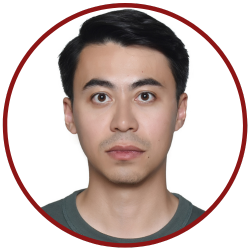
Mark Ten is the CEO of TV Rain (Dozhd), Russia’s largest independent television channel, now based in Amsterdam. He led the company’s relocation and relaunch after its closure by Russian authorities in 2022. Previously, he led, scaled, and sold Sports.ru, Russia’s leading sports media platform. He was named to Forbes Russia’s 30 Under 30. At Dozhd, he oversees editorial, business, and product strategy, focusing on digital transformation and international growth. He holds a degree in sociology and works on projects supporting independent media and innovation.
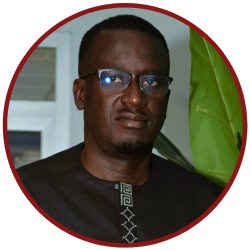
Malick Mbengue Fall is a Program Manager for the Democratic Futures in Africa Program at the Open Society Foundations, based in Dakar, Senegal. He joined OSF over a decade ago and has previously served in key roles at Open Society Africa and OSIWA, supporting initiatives that promote electoral integrity, economic justice, and human rights across the continent. Malick is a development professional with fourteen years of experience in the philanthropy sector, particularly in Africa. He holds a master’s in political science from Gaston Berger University.
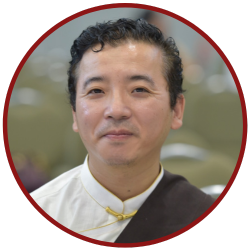
Tenzin Jigdal is a Member of the Tibetan Parliament-in-Exile, serving on both the Standing and Political Affairs Committees. With over a decade of experience in nonprofit management, he specializes in advocating for Tibet and global human rights. He has successfully led international campaigns, built strategic partnerships, and engaged with diverse stakeholders, including Tibetan civil society organizations and the Central Tibetan Administration (CTA). Driven by a passion for social change, Tenzin is dedicated to advancing the Tibetan movement through innovative outreach, capacity-building, and policy advocacy.
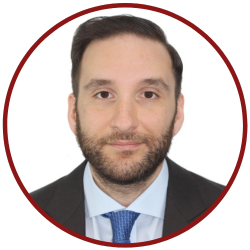
Bilal Bilici is a Member of the Turkish Parliament representing Adana. He began his political career with the IYI Party, where he served as the U.S. representative. As of August 2024, he continues his political work with the main opposition party in Turkey, the Republican People’s Party (CHP). A Boston University Economics graduate, he also holds a Master’s in Global Affairs from Bahcesehir University. He has worked at Accenture and Ernst & Young, and served as Vice President of the Turkish-Central American/Caribbean Business Council at DEIK, also sitting on its Turkish-Uzbek Council. He was elected to Parliament in 2023.

Polina Aldoshyna is a Ukrainian lawyer and civic leader with over nine years of experience in law, public administration, and nonprofit management. She currently leads the BGV Charity Fund, where she oversees social projects that support vulnerable communities. In addition, she serves as a Deputy of the Zhytomyr Regional Council, focusing on local governance and social policy. Throughout her career, Polina has managed over 60 humanitarian projects, including the establishment of psychosocial support centers and aid programs for displaced individuals and veterans.

Oleksii Movchan is a Member of the Ukrainian Parliament and Deputy Chairman of the Verkhovna Rada Committee on Economic Development, representing the “Servant of the People” faction. He chairs the subcommittee on public procurements and state property management, and is active in inter-parliamentary groups with the USA, UK, Japan, and others. Before parliament, he led projects at Prozorro.Sale. Oleksii holds degrees from Kyiv-Mohyla Academy, Ukrainian Catholic University, and Kyiv School of Economics. He has advanced key reforms in procurements, state-owned companies, and privatization to support Ukraine’s European Union integration.
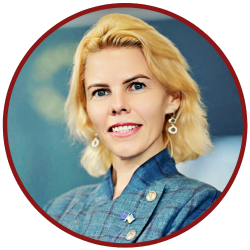
Maria Golub is a recognized expert on Ukraine’s European and Euro-Atlantic integration, with deep expertise in EU-Ukraine bilateral relations. Based in Brussels, she currently serves as a Senior Political and Policy Advisor to Ukrainian leadership, where she advocates for a just and lasting peace in Ukraine and supports the country’s advancement along the EU integration path through a decisive reform agenda. She is also actively involved in shaping Ukraine’s reconstruction strategy and is a strong proponent of the “build back better” principle, championing an ambitious revival plan for the country.
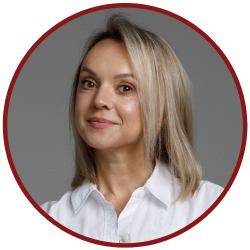
Alyona Nevmerzhytska is CEO of hromadske.ua, Ukraine’s leading independent online media platform. She began her career in 2012 at the Kyiv Post and has since focused on business development and organizational strategy. At hromadske, she has enhanced audience engagement and strengthened data-driven decision-making. Committed to building sustainable models for independent media, she ensures ethical newsroom operations and promotes democratic values. She is a graduate of the Stockholm School of Economics, an Atlantic Council Millennium Fellow, and a 2024 McCain Institute Global Leader.
*These fellows are jointly participating in CDDRL’s Strengthening Ukrainian Democracy and Development Program.
Isabella Picón Ball is a Venezuelan social activist, researcher, and consultant. She holds an undergraduate degree in Political Science from Northwestern University, an MSc in Political Communications from the London School of Economics (LSE), and is a Chevening Scholar. She actively participated in the 2017 and 2019 civil resistance campaigns against the dictatorship of Nicolas Maduro, co-founding @LaboCiudadano and helping it become an organization and activist collective that promotes nonviolent action. She is now part of Labo's board of advisors. In 2024, she and other political and social activists led the initiative Toma El Control, a campaign and platform aimed at promoting civic organizing and youth participation in the 2024 Presidential Elections.
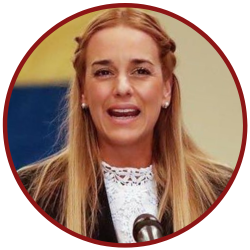
Lilian Tintori is a certified coach, human rights advocate, and founder of “Free Them,” the Political Prisoner Program of the World Liberty Congress. A Venezuelan living in exile in Spain, she supports families of political prisoners and leads international advocacy for their release. She holds degrees from Universidad Católica Andrés Bello and completed leadership training at IE Madrid. The “Free Them” program is grounded in Pathway to Freedom, a handbook she helped develop with interdisciplinary experts to equip families with tools to secure the release of their loved ones. She also coaches leaders through IESE Business School and the Human Rights Foundation, providing emotional support and enhancing mental health.