Rule of Law
Authors
Nensi Hayotsyan
News Type
News
Date
Paragraphs

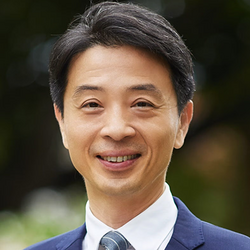
In a CDDRL research seminar held on January 8, 2026, Neil Malhotra, Professor of Political Economy at Stanford Graduate School of Business and courtesy professor of political science, presented his upcoming book Majority Opinions: The Political Consequences of an Out of Step Supreme Court, co-authored with Stephen Jessee and Maya Sen. The project examines how the Supreme Court’s alignment with public opinion shapes its legitimacy, approval, and vulnerability to reform. Malhotra emphasized that the book does not make normative claims about whether the Supreme Court should reflect public opinion but rather offers a positive political science account of how closely the Court tracks public preferences and how that distance shapes legitimacy, approval, and political response. 

As discussed by Malhotra, this project began as a result of changes in survey research methodology, shifting from face-to-face and telephone surveys to large-scale internet-based data collection. While these advances were used to study public opinion with respect to Congress and the President, there was a clear gap in applying this approach to the Supreme Court. Hence, starting in 2020, his team partnered with YouGov to conduct annual surveys each spring, prior to  Supreme Court decisions, asking respondents how they would rule on major cases scheduled for that term. Respondents were also asked to predict how they believed the Court would decide. 

To analyze these responses, Malhotra employs ideal point estimation, mapping respondents, partisan groups, and the Court itself onto a liberal-conservative scale. The data showed that the Court was closely aligned with the median voter in 2020, but its ideological position shifted to the right following the death of Ruth Bader Ginsburg and her replacement by Amy Coney Barrett. But in later years, the Court shifted back to the middle following public backlash.

As Malhotra highlighted, rather than asking about constitutional law and legal reasoning, respondents were presented with the policy consequences of cases. For example, in the Bostock case, participants were asked whether it should be legal or illegal for employees to be fired based on sexual orientation, followed by a question asking how they believed the Supreme Court would rule. The data revealed substantial variation across cases. Some issues showed clear partisan polarization, while others reflected broad agreement across parties.

The presentation then turned to public perceptions of the Court. Malhotra showed that respondents are generally poor at predicting Supreme Court outcomes, correctly guessing decisions only slightly more than half the time. This pattern is explained largely by projection, as individuals tend to assume the Court will rule in line with their own preferences. Because the Court has recently leaned conservative, this projection makes Republicans appear more accurate than Democrats.

Finally, Malhotra distinguished between approval and legitimacy, emphasizing the importance of separating the two concepts. Approval reflects short-term evaluations of the Court’s performance and is highly responsive to disagreement with Court decisions. By contrast, legitimacy deals with the public’s belief in the Court’s rightful role as an institution and proves more stable, though still negatively affected when the Court consistently differs from public opinion. As discussed, this difference matters because declining legitimacy can give political elites room to challenge compliance with Court rulings, threatening the rule of law.

Malhotra concluded by situating the project within a broader historical perspective. The book examines moments when the Supreme Court faced severe backlash and subsequently moderated its behavior, including resistance following Brown v. Board of Education. These cases illustrate how threats to enforcement and public acceptance can shape judicial decision-making over time, depicting the political consequences of a Court that moves out of step with the public.

Read More

Nate Persily presented his research in a CDDRL seminar on December 4, 2025.
News

Election Administration, 2024 to 2026: Lessons Learned and Causes for Concern

In a CDDRL research seminar, Nate Persily, the James B. McClatchy Professor of Law at Stanford Law School and Senior Fellow at the Freeman Spogli Institute, discussed revelations from the 2024 election and how the 2024 election can forecast the upcoming 2026 midterm election cycle.
Election Administration, 2024 to 2026: Lessons Learned and Causes for Concern
Kim Lane Sheppele presented her research in a REDS Seminar co-hosted by CDDRL and TEC on November 19, 2025.
News

Guarding Democracy from Within: The EU’s Struggle Against Internal Democratic Backsliding

Professor Kim Lane Scheppele offered a clear and urgent account of a growing crisis inside the European Union (EU) during a recent REDS Seminar: the erosion of democracy within some of its own member states.
Guarding Democracy from Within: The EU’s Struggle Against Internal Democratic Backsliding
Anna Paula Pellegrino presented her research in a CDDRL seminar on November 20, 2025.
News

Organizing from Within: Defining and Classifying Police-Led Armed Groups in Rio de Janeiro

Gerhard Casper Postdoctoral Fellow Ana Paula Pellegrino presented her research on police-led armed illicit groups in Brazil, exploring what distinguishes them and the conditions that enable their formation.
Organizing from Within: Defining and Classifying Police-Led Armed Groups in Rio de Janeiro
Hero Image
Neil Malhotra presented his research in a CDDRL seminar on January 8, 2026.
Neil Malhotra presented his research in a CDDRL seminar on January 8, 2026. | Nora Sulots
All News button
1
Subtitle

The GSB's Neil Malhotra examines how ideological distance from voters shapes approval, legitimacy, and political response.

Date Label
Paragraphs

This paper examines how due process reforms enable evidence manipulation. During the past two decades, most Latin American countries have radically reformed their criminal justice systems, with the aim of strengthening rights protections and curbing abuses. Focusing on Mexico, we uncover a paradox of these institutional reforms: confronted with social pressures to punish crimes, police officers and prosecutors with limited investigation capacities fabricate criminal cases that pretend to conform with stricter judicial standards. Using difference-in-differences designs with a representative prison survey and ethnographic fieldwork among criminal prosecutors, we document a decline in torture and a parallel rise in convictions grounded in fabricated evidence, most commonly planted drugs and weapons. This shift toward what we call “fabricated justice” has fueled an increase in drug trafficking convictions. This recent increase in planted evidence suggests that when rule of law reforms are implemented without corresponding investments in state capacity, they can generate new and unexpected forms of abuse.

All Publications button
1
Publication Type
Journal Articles
Publication Date
Journal Publisher
World Development
Authors
Beatriz Magaloni
Number
March 2026, 107222
Authors
Ari Chasnoff
News Type
News
Date
Hero Image
Amichai Magen, Kathryn Stoner, and Larry Diamond
Amichai Magen, Kathryn Stoner, and Larry Diamond. | Rod Searcey
All News button
1
Subtitle

Building on a successful pilot at the Freeman Spogli Institute for International Studies, the Jan Koum Israel Studies Program will deepen understanding of Israel through new classes, collaborative research, and community engagement.

Date Label
-
Flyer for the seminar "When Rule of Law Promotion Builds Authoritarianism" with headshot of the presenter, Weitseng Chen.

This event is co-sponsored by the Korea Program and Taiwan Program at Shorenstein APARC.

For decades, Taiwan and South Korea have been celebrated as proof that strengthening the rule of law can move authoritarian regimes toward democracy. This talk challenges that view by revisiting the legal histories of Taiwan, South Korea, and China. It identifies two paradigms of rule-of-law promotion: the Cold War “state-first” approach and the post–Cold War “democracy-first” approach. Different in style but similar in outcome, both shared the same flaw: foreign legal aid often reinforced authoritarianism. Taiwan and South Korea’s democratization was not evidence of legal modernization theory, but an outlier. Law is a neutral infrastructural power, and future rule-of-law promotion must be recalibrated to prevent authoritarian capture.

Speaker:

Headshot of Weitseng Chen

Weitseng Chen teaches at the National University of Singapore, specializing in comparative studies of law, politics and economic development in Asia. His published books include Regime Type and Beyond: The Transformation of Police in Asia (CUP 2023), Authoritarian Legality in Asia (CUP 2019), The Beijing Consensus? How China Has Changed the Western Ideas of Law and Economic Development (CUP 2017), Property and Trust Law in Taiwan (Kluwer 2017), and Law and Economic Miracle: Interaction Between Taiwan’s Development and Economic Laws After WWII (in Chinese, 2000). Chen was a Hewlett Fellow at Stanford’s Center for Democracy, Development, and the Rule of Law, and practiced as a lawyer at Davis Polk & Wardwell. He was also a fellow of the Institute for Advanced Study in Berlin. Chen earned his JSD from Yale Law School.

Directions and Parking > 

Philippines Conference Room (C330)
Encina Hall, 3rd Floor
616 Jane Stanford Way, Stanford, CA 94305

Weitseng Chen, Associate Professor of Law, National University of Singapore
Seminars
Date Label
Authors
Nora Sulots
News Type
News
Date
Paragraphs

The Center on Democracy, Development and the Rule of Law is pleased to invite applications from pre-doctoral students at the write-up stage and from post-doctoral scholars working in any of the four program areas of democracy, development, evaluating the efficacy of democracy promotion, and rule of law. The application cycle for the 2026-2027 academic year will be open from Monday, September 22, 2025, through Thursday, December 4, 2025.

Our goal is to provide an intellectually dynamic environment that fosters lively exchange among Center members and helps everyone to do excellent scholarship. Fellows will spend the academic year at Stanford University focusing on research and data analysis as they work to finalize and publish their dissertation research while connecting with resident faculty and research staff at CDDRL.

Pre-doctoral fellows must be enrolled currently in a doctoral program or equivalent through the time of intended residency at Stanford and must be at the dissertation write-up (post course work) phase of their doctoral program. Post-doctoral fellows must have earned their Ph.D. within 3 years of the start of the fellowship, or plan to have successfully defended their Ph.D. dissertations by July 31, 2026.

In addition to our regular call for applications, CDDRL invites applications for the Gerhard Casper Fellow in Rule of Law for 2026-27. We welcome research on any aspect of rule of law, including judicial politics, criminal justice, and the politicization of judicial institutions. We are an interdisciplinary center; candidates from any relevant field (i.e. the social sciences, law) are welcome to apply. The Gerhard Casper Fellow will be part of CDDRL’s larger cohort of pre- and postdoctoral fellows. Please apply through the CDDRL fellowship application process and indicate that you would like to be considered for the Gerhard Casper Rule of Law Fellowship.

Hero Image
Ivetta Sergeeva presents during the 2024 Global Development Postdoctoral Fellows Conference
Ivetta Sergeeva presents during the 2024 Global Development Postdoctoral Fellows Conference.
All News button
1
Subtitle

The Center on Democracy, Development and the Rule of Law welcomes applications from pre-doctoral students at the write-up stage and from post-doctoral scholars working in any of the four program areas of democracy, development, evaluating the efficacy of democracy promotion, and rule of law.

Date Label
News Type
Commentary
Date
Paragraphs

This opinion piece was first published by Project Syndicate >


STANFORD/LOS ANGELES – It is tempting to frame the Sino-American economic rivalry as a clash between engineering doers and lawyerly naysayers, as the Chinese-Canadian analyst Dan Wang does in his new book Breakneck: China’s Quest to Engineer the Future. But this is a false dichotomy, because law is a crucial feature of US capitalism.

We have heard the lawyers-versus-engineers argument before. Forty years ago, Japan’s economic rise induced similar anxieties, most famously articulated in the American sociologist Ezra Vogel’s book Japan as Number One: Lessons for America. Commentators fretted that America was mired in lawsuits while Japan’s best minds were solving problems and driving their country’s meteoric growth. Yet over the ensuing decades, the United States, with its mammoth legal industry, outperformed Japan by a wide margin.

Today’s panic about an Asian economic challenger is equally unwarranted and counterproductive. Invoking national security and the competition with China, Donald Trump’s administration is pursuing increasingly anti-capitalist and legally dubious interventions into private industry, with potentially high costs for American dynamism.

Continue reading at Project Syndicate >

Read More

Stanford Next Asia Policy Lab team members and invited discussants during a roundtable discussion in a conference room.
News

Stanford Next Asia Policy Lab Probes Political Messaging and Public Attitudes in U.S.-China Rivalry

At a recent conference, lab members presented data-driven, policy-relevant insights into rival-making in U.S.-China relations.
Stanford Next Asia Policy Lab Probes Political Messaging and Public Attitudes in U.S.-China Rivalry
Colonade at Stanford Main Quad with text: call for applications for APARC's 2026-28 fellowships.
News

Applications Open for 2026-2028 Fellowships at Stanford's Asia-Pacific Research Center

The center offers multiple fellowships in Asian studies to begin in fall quarter 2026. These include a postdoctoral fellowship on political, economic, or social change in the Asia-Pacific region, postdoctoral fellowships focused on Asia health policy and contemporary Japan, postdoctoral fellowships and visiting fellow positions with the Stanford Next Asia Policy Lab, and a visiting fellow position on contemporary Taiwan.
Applications Open for 2026-2028 Fellowships at Stanford's Asia-Pacific Research Center
Hero Image
U.S. President Donald Trump (L) listens as Nvidia CEO Jensen Huang speaks in the Cross Hall of the White House during an event on "Investing in America" on April 30, 2025 in Washington, DC.
U.S. President Donald Trump (L) listens as Nvidia CEO Jensen Huang speaks in the Cross Hall of the White House during an event on "Investing in America" on April 30, 2025, in Washington, DC. | Andrew Harnik via Getty Images
All News button
1
Subtitle

Invoking national security and the economic rivalry with China, the Trump administration is pursuing legally dubious interventions and control of private industry, with potentially high costs for US dynamism. Like the panic over Japan's rise in the 1980s, the administration's response is unwarranted and counterproductive.

Date Label
Authors
Nora Sulots
News Type
News
Date
Paragraphs

In 2025, the Center on Democracy, Development and the Rule of Law (CDDRL) celebrated the 20th year of its Fisher Family Summer Fellows on Democracy and Development Program. This summer, 27 democracy leaders from across the developing world convened at Stanford for an intensive three-week training focused on democracy, good governance, and rule of law reform. Chosen from a highly competitive applicant pool, the fellows represent a diverse range of professional backgrounds and geographical regions, spanning civil society, public service, social enterprise, media, and technology. Launched in 2005, the program was previously known as the Draper Hills Summer Fellows Program. It was renamed in 2023 in recognition of a gift from the Fisher family — Sakurako (Sako), ‘82, and William (Bill), MBA ‘84 — that endowed the program and secured its future.

Fellows were instructed by a leading Stanford faculty team composed of FSI Director and former U.S. Ambassador to Russia Michael McFaul; CDDRL Mosbacher Director Kathryn Stoner; Olivier Nomellini Senior Fellow Francis Fukuyama; Senior Fellow in Global Democracy Larry Diamond; and Erik Jensen, Lecturer in Law at Stanford Law School on new institutional models and frameworks to enhance their ability to promote good governance, accountable politics, and find new ways to achieve economic development in their home countries.

Esteemed guest lectures were also presented by individuals from the greater FSI and Stanford communities, as well as by Damon Wilson, President of the National Endowment for Democracy; Joshua Achiam, Head of Mission Alignment at OpenAI; Austin Mejia, Product Manager and Head of AI for Wearables at Google and a founding member of the AI for Developing Countries Forum, which advocates for equitable AI development globally; and various speakers from the Bay Area Council Economic Institute, the leading think tank focused on the most critical economic and policy issues facing the nine-county Bay Area region.

During the program, the fellows delivered "TED"-style talks during our Fellow Spotlight Series, sharing personal stories about the struggles in their home countries, stories of their fight for justice, equality, and democracy, and stories of optimism and endurance. You can watch their talks in the playlist below:

Read More

FFSF Class of 2025 with 20th Anniversary logo
News

Announcing the 20th Anniversary Cohort of the Fisher Family Summer Fellows on Democracy and Development Program

In July 2025, the Center on Democracy, Development and the Rule of Law will welcome a diverse cohort of 27 experienced practitioners from 18 countries who are working to advance democratic practices and economic and legal reform in contexts where freedom, human development, and good governance are fragile or at risk.
Announcing the 20th Anniversary Cohort of the Fisher Family Summer Fellows on Democracy and Development Program
Lilian Tintori, Waleed Shawky, and Gulika Reddy
News

Confronting Repression: Strategies for Supporting Political Prisoners

A panel discussion featuring 2025 Fisher Family Summer Fellows Lilian Tintori and Waleed Shawky, along with Gulika Reddy, Director of the International Human Rights and Conflict Resolution Clinic at Stanford Law School, explored the human cost of political imprisonment, the barriers advocates face, and the strategies available to combat them.
Confronting Repression: Strategies for Supporting Political Prisoners
2025 Strengthening Ukrainian Democracy and Development fellows
News

Ukrainian Leaders Advance Postwar Recovery Through Stanford Fellowship

Meet the four fellows participating in CDDRL’s Strengthening Democracy and Development Program and learn how they are forging solutions to help Ukraine rise stronger from the challenges of war.
Ukrainian Leaders Advance Postwar Recovery Through Stanford Fellowship
Hero Image
2025 Fisher Family Summer Fellows
2025 Fisher Family Summer Fellows | Rod Searcey
All News button
1
Subtitle

The Fellow Spotlight Series is an inspiring and moving series of "TED"-style talks given by each of our 2025 Fisher Family Summer Fellows to share their backstories and discuss their work.

Date Label
0
CDDRL Honors Student, 2025-26
ggp_-_garry_piepenbrock.jpeg

Major: Economics & Political Science
Minor: Mathematics
Hometown: Boston, Massachusetts & Oxford, UK
Thesis Advisor: Larry Diamond & Javier Mejia

Tentative Thesis Title: Toward a Theory of the Evolution of the Global Political Economy: Varieties of Democracy, Development and Law

Future aspirations post-Stanford: I would like to undertake a joint JD/PhD in political economy and to work in the academy, public, and private sectors.

A fun fact about yourself: I was the youngest person in UK history to litigate on behalf of the disabled in the High Court, Court of Appeal and Employment Tribunal, where I cross-examined a dozen senior leaders of a $500 million organization in a 40-day trial for an ongoing four-year, multi-million dollar lawsuit, in which I have been acting on a pro bono basis.

Date Label
0
CDDRL Honors Student, 2025-26
img_5464_-_anagali_malloy_duncan.jpeg

Major: Comparative Studies in Race and Ethnicity
Minor: Political Science
Hometown: Stilwell, Cherokee Reservation
Thesis Advisor: Michael Wilcox

Tentative Thesis Title: Flames of Unity; Two Governments One People: Tracing ᎠᏂᎩᏚᏩᎩ Relocation and Reunification in Oklahoma: Economic, Political, and Social Transformations

Future aspirations post-Stanford: After Stanford, I hope to serve my community in whatever capacity they need. I plan to continue my education to deepen my understanding of law and public policy, equipping myself to advocate for my community in both political and legal spaces. Above all, I am committed to centering Indigenous voices in academia, politics, and popular culture, ensuring our perspectives shape the conversations that impact our future.

A fun fact about yourself: A fun fact about me is that in 2021, I retraced my community’s forced removal from North Carolina to Oklahoma on the 1,000-mile Remember the Removal bike ride, which took a month to complete. Along the route, I advocated for an honest retelling of our history — moving beyond sugar-coated narratives to recenter the truth about the Trail of Tears. I continue to support new cohorts in their training and hope to take part in the ride again someday.

Date Label
Subscribe to Rule of Law