Rule of Law
Authors
News Type
News
Date
Paragraphs

Appeared in Stanford Report, August 29, 2014

A worrying spike in anti-Semitism in Europe is a stark reminder that prejudice against Jewish people is still a reality there today, say Stanford scholars. Anti-capitalism has been a particular source of anti-Semitism, according to Professor Russell Berman.

European leaders need to speak out more strongly against the escalation of anti-Semitism, a Stanford professor says.

"They should be willing to enforce the law," said Russell Berman, a Stanford professor of German studies and of comparative literature who is affiliated with the Europe Center on campus.

In recent weeks, slogans invoking anti-Semitism have been heard during European protests against the Palestinian deaths in the Palestinian-Israeli conflict. In France and Germany, synagogues and Jewish community centers have been firebombed. In Britain, a rabbi was attacked near a Jewish boarding school.

"Protesters who storm synagogues should be arrested and prosecuted. Too often police have shown a blind eye when political protests have transformed into anti-Semitic mob actions," said Berman, the Walter A. Haas Professor in the Humanities and a senior fellow at the Hoover Institution and the Freeman Spogli Institute for International Studies.

He said that European societies in the long run have to find a way to grapple with their failed immigration policies and achieve more effective integration, he said. This includes more efficiently integrating immigrants into the cultural expectations of their new societies.

"Post–World War II Europe had as a core value a rejection of the anti-Semitism that led to the Holocaust. Europeans have to develop a pedagogy that can pass that value on to the new members of their communities," said Berman.

Roots of hatred

The recent eruption of anti-Semitism in Europe has multiple causes, according to Berman. The continent's lagging economy, the influx of immigrants from Muslim countries and the ongoing Israeli and Palestinian conflict are large factors.

And as last year's European parliament elections revealed, right-wing extremism has grown across Europe, he said.

"The far right is historically a home of anti-Semitism wrapped in nationalism and xenophobia. Some of this development can be attributed to the ongoing economic crisis, but some is certainly also a reaction against what is sometimes called the 'democracy deficit' in the European Union," Berman said.

Some Europeans believe their national political life has been subordinated to a "transnational bureaucracy" in the form of the European Union, Berman said. He added that this breeds resentment, and one expression of that is anti-Semitism, which is coinciding with traditional European nationalism.

Berman added, "Clearly this does not apply to all Muslims in Europe, but it has become an unmistakable feature in those population cohorts susceptible to radicalization as a response to a sense of social marginalization."

In Europe, immigrant populations are often clustered in de facto segregated neighborhoods, forming a parallel society, Berman said.

"While policies of multiculturalism have in the United States often contributed to productive integration, in Europe they have worked differently and undermined social cohesion. In that context, anti-Semitism has festered," he said.

Ongoing conflicts in the Middle East have also fanned the flames of European anti-Semitism, Berman said. Meanwhile, protests did not arise in Europe when Muslims and Christians were massacred in recent months in Syria and Iraq.

"A year ago, one could still make an at least conceptual distinction between anti-Zionism [criticism of Israel] and anti-Semitism [hatred of Jews]," he said.

The events in the past months in the streets of Europe have erased that distinction, Berman said.

"The politics of criticizing Israel have been fully taken over by anti-Semites, whether from the traditional European far right, the extremist left or parts of the immigrant communities," he said.

Anti-capitalism, economic downturns

When the European economy soured, leaving many young people unemployed at a time of surging globalism – all against a "residual" communist backdrop that still exists in parts of Europe – anti-Semitism was the result, according to Berman.

"That inherent anxiety and free-floating animosity in Europe turns into hostility to minorities," he said. "It can generate both anti-Jewish and anti-Muslim prejudices, but anti-capitalism is today, as it has been historically, a particular source of anti-Semitism."

Berman calls this left-wing anti-Semitism – the targeting Jews as the symbols of capitalism – which he says has a long history. "A socialist leader of the 19th century once called anti-Semitism 'the anti-capitalism of fools,' and that's part of what we still see today," Berman said.

Opportunity, education, the future

Amir Eshel, a professor of German studies and of comparative literature and affiliated faculty member of The Europe Center, said Europe needs to do a better job of integrating Muslim immigrants into their new societies. In particular, he said, more economic opportunities must be given to people from disenfranchised communities.

"Nothing is as important as giving people opportunities to make their lives better," said Eshel, the Edward Clark Crossett Professor in Humanistic Studies. He is also an affiliated faculty member at the Europe Center in the Freeman Spogli Institute for International Studies.

Eshel points to important roles for the media and educational systems to play in clamping down on anti-Semitism. There are programs in place – International Holocaust Remembrance Day, for example – to remind people about the evil inflicted on Jews in Europe more than 60 years ago.

"What has changed is that young people are less biographically connected to these crimes of the past," said Eshel.

"When this happens, as the Holocaust drifts further in time, a certain sensibility arises that one should not be bound by the lessons of the past," he said.

Anti-Semitism in Europe, he said, is the worst he's seen or known about since the end of World War II. He's especially worried about the large numbers of Muslims from Britain and France who have joined the jihadist movements in places like Syria and Iraq.

"It's not going to be easy to track them if they return," Eshel noted, "and it'll be a challenge for many years in Europe."

Fear among Jews

History Professor Norman Naimark said that some French Jews are leaving the country because of ongoing anti-Semitic violence.

"Germany has also experienced an ongoing problem on both the extreme left and right, but there the authorities and the Jewish community seem to have the situation under control," added Naimark, the Robert and Florence McDonnell Professor in Eastern European Studies.

Naimark, the director of the Stanford Global Studies Division and a senior fellow at the Hoover Institution and the Freeman Spogli Institute for International Studies, described European anti-Semitism as following an oscillating curve up and down, especially in times of Middle East crises.

"England seems particularly susceptible to these kinds of oscillations," he said.

Hero Image
Memorial plaque stained with anti-Semitic vandalism in Mazowieckie, Poland, March 19, 2012.
A memorial plaque stained with anti-Semitic vandalism in Mazowieckie, Poland, March 19, 2012. This incident and other more recent ones reflect an increase in anti-Semitism in Europe.
Jendrzej Wojnar/AP
All News button
1
(650) 723-3729
0
Senior Fellow, by courtesy, at the Freeman Spogli Institute for International Studies
Ward C. Krebs Family Professor
Senior Fellow at the Hoover Institution
Professor, by courtesy, of Economics
brw.0118_lg_cropped3.jpg PhD

Barry R. Weingast is the Ward C. Krebs Family Professor, Department of Political Science, and a Senior Fellow, Hoover Institution. He served as Chair, Department of Political Science, from 1996 through 2001. He is a member of the National Academy of Sciences and the American Academy of Arts and Sciences.  Weingast’s research focuses on the political foundation of markets, economic reform, and regulation. He has written extensively on problems of political economy of development, federalism and decentralization, legal institutions and the rule of law, and democracy. Weingast is co-author of Violence and Social Orders: A Conceptual Framework for Interpreting Recorded Human History (with Douglass C. North and John Joseph Wallis, 2009, Cambridge: Cambridge University Press) and Analytic Narratives (1998, Princeton). He edited (with Donald Wittman) The Oxford Handbook of Political Economy (Oxford University Press, 2006). Weingast has won numerous awards, including the William H. Riker Prize, the Heinz Eulau Prize (with Ken Shepsle), the Franklin L. Burdette Pi Sigma Alpha Award (with Kenneth Schultz), and the James L. Barr Memorial Prize in Public Economics.

CV
Paragraphs

Keynote address by Rt. Hon. Aminu Waziri Tambuwal CFR, Speaker, House of Representatives, National Assembly of Nigeria on the occasion of the Omidyar Network African Democracy and Leadership Forum organized by the Stanford University Center on Democracy, Development, and the Rule of Law (CDDRL) on the 26th of June, 2014, at the Sheraton Hotel, Abuja.

This address was delivered as part of the conference on 'The Future of Human Rights and Good Governance in Africa' held from June 26 - 28, 2014, in Abuja, Nigeria, which convened many members of the Omidyar Network's Africa Leadership Forum.

All Publications button
1
Publication Date
News Type
News
Date
Paragraphs

Recap: Pascal Lamy Lecture, “World Trade and Global Governance”

 
On February 10, 2014, Pascal Lamy, the former Director-General of the World Trade Organization, visited Stanford University as a special guest of The Europe Center and the Freeman Spogli Institute for International Studies. During his two-term tenure at the helm of the WTO (from 2005 to 2013), Mr. Lamy successfully guided the organization through complex changes in the regulation of international trade. Among his many achievements, he oversaw the systematic integration of developing countries into positions of political leadership in the world economic order. Prior to the WTO, Mr. Lamy served as the European Commissioner for Trade, the CEO of the French bank Crédit Lyonnais, and in the French civil service. 
 
At Stanford, Mr. Lamy first participated in a lunchtime question and answer roundtable with students that was moderated by Stephen Stedman, Deputy Director of the Center for Democracy, Development, and the Rule of Law. Among other topics, he spoke about the necessary mix of economic, social, and political policies that determine the efficacy of free trade as an engine of global economic growth. 


Image

Mr. Lamy then delivered a public lecture on “World Trade and Global Governance” before an audience of over a hundred members of the Stanford community. In this talk, Mr. Lamy outlined a statement of his thinking about the future of global governance, focusing on three overarching points. First, despite some setbacks, governments and international organizations have achieved major successes in regulating the liberalization of global trade. Tariffs are on average lower than ever before, and governments did not raise tariffs during the recent financial crisis as they did during the Great Depression. Second, a new feature of the global economy is that protectionism based on economic objectives has been replaced by ‘precautionism’ based on normative prerogatives. For example, competing national perspectives on product standards such as those related to safety or labor norms thwart efforts to achieve consensus on trade regulation. Third, in order to achieve regulatory convergence, we need to bring together stakeholders from the public and private sector to build coalitions that jointly negotiate conflicts in matters of global governance. For example, the “C20-C30-C40 Coalition of the Working” that comprises countries, companies, and cities is currently striving to overcome regulatory gridlock on climate change.
 
We welcome you to visit our website for additional details about this event.


Save the Date: The Europe Center Lectureship on Europe and the World

 
Please mark your calendars for the inaugural annual lectures in this series by Adam Tooze, Barton M. Briggs Professor of History, Yale University. 
 
Dates: April 30, May 1, and May 2, 2014
 
 
Image
Image of Adam Tooze
Adam Tooze will deliver three lectures from his forthcoming book, A World Fit for Heroes. In particular, he will speak about the history of the transformation of the global power structure that followed from Imperial Germany’s decision to provoke America’s declaration of war in 1917. Tooze is the author of The Wages of Destruction: The Making and Breaking of the Nazi Economy (2006) and Statistics and the German State 1900-1945: The Making of Modern Economic Knowledge (2001), among numerous other scholarly articles on modern European history.


Meet our Visiting Scholars:  Manfred Nowak 

 
In each newsletter, The Europe Center would like to introduce you to a visiting scholar or collaborator at the Center. We welcome you to visit the Center and get to know our guests.
 
 
Image
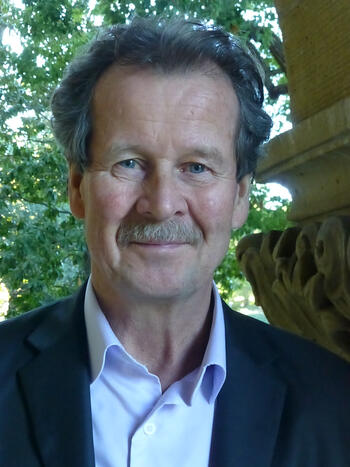
Image of Manfred Nowak, Visiting Austrian Chair Professor 2013-2014, Stanford University
Manfred Nowak (LL.M., Columbia University, 1975) is Distinguished Visiting Austrian Chair Professor; Visiting Professor, Stanford Law School; and, Professor of Law, University of Vienna. One of the world’s most renowned human rights scholars and legal theorists, Nowak has published more than 400 books and articles on international, constitutional, administrative, and human rights law, including the standard commentary on the International Covenant on Civil and Political Rights. He was the Director of the Netherlands Institute of Human Rights at the University of Utrecht (1987-1989), and he founded the Austrian Ludwig Boltzmann Institute of Human Rights in 1989. From 1996-2003, Nowak was a judge at the Human Rights Chamber in Bosnia. He has also served as a U.N. legal expert on missing persons and enforced disappearances, and was appointed the U.N. Special Rapporteur on Torture and other Cruel, Inhuman or Degrading Treatment in 2004. 
 
Manfred Nowak was awarded the UNESCO Prize for the Teaching of Human Rights in 1994 and the Bruno Kreisky Prize for Human Rights in 2007.


Workshop Schedules  

 
The Europe Center invites you to attend the talks of speakers in the following workshop series: 
 

Europe and the Global Economy

 
February 20, 2014
Alan Deardorff, John W. Sweetland Professor of International Economics & Prof. of Economics and Public Policy, University of Michigan
RSVP by Feb 19, 2014
 
Mar 6, 2014
Sophie Meunier, Research Scholar, Woodrow Wilson School and Co-Director, EU Program at Princeton, Princeton University
RSVP by Mar 3, 2014
 
Mar 13, 2014
Randy Stone, Professor of Political Science, University of Rochester
RSVP by Mar 10, 2014
 
Apr 3, 2014
Kåre Vernby, Associate Professor, Department of Government, Uppsala University
RSVP by Mar 31, 2014
 
Apr 17, 2014
Mark Hallerberg, Professor of Public Management and Political Economy, Hertie School of Governance 
RSVP by Apr 4, 2014
 
May 15, 2014
Christina Davis, Prof. of Politics and International Affairs, Princeton University
RSVP by May 12, 2014
 

European Governance

 
May 22, 2014
Wolfgang Ischinger, Former German Ambassador to the U.S.; Chairman, Munich Security Conference
RSVP by May 19, 2014
 
May 29, 2014
Simon Hug, Professor of Political Science, University of Geneva
RSVP by May 26, 2014


The Europe Center Sponsored Events

 
We invite you to attend the following events sponsored or co-sponsored by The Europe Center:
 
March 6, 2014
“Promise and Critique of Capitalism: Changing Discourses Since the 18th Century”
Jürgen Kocka, Professor and Former President of the Social Science Research Center, Berlin
Location: Watt Room, Stanford Humanities Center
 
March 6 and 7, 2014
Indian Ocean Conference
“Connecting Continents: Setting an Agenda for a Historical Archaeology of the Indian Ocean World”
Location: Stanford Archaeology Center, Building 500, 488 Escondido Mall
 
March 31, 2014
Simon Hix, Professor of European and Comparative Politics, London School of Economics and Political Science
Political Science Comparative Politics Workshop
Location: Encina Hall West Room 400
 
April 15, 2014
Ulrich Wilhelm, Director General, Bavarian Broadcasting Corporation
“Assessing the Impact of the NSA Spy Scandal on American-European Relations” 
The Europe Center and FSI Stanford Special Event
Location: Oksenberg Conference Room, Encina Hall
RSVP by April 10, 2014


Other Events

 
The Europe Center also invites you to attend the following events of interest:
 
February 20, 2014
Gregory Shaffer, Melvin C. Steen Professor of Law, University of Minnesota Law School
“How the WTO Shapes Regulatory Governance”
Room 185, Stanford Law School
 
European Entrepreneurship & Innovation @Stanford Engineering
February 24, 2014
    “Switzerland and Turkey - Venture Capital and Product Design Firms”
    Giuseppe Zocco, Founding Partner, Index Ventures; Emrah Yalaz, CEO, Spring Ventures
March 3, 2014
    “Flanders and Sweden - Enterprise Software and VC Funds”
    Lieven Vermaele, CEO, SDNsquare; Martin Hauge, Founding Partner, Creandum
March 10, 2014
    “Hungary and Italy - Digital Infrastructure Startups and ‘Maker’ Movements”
    Gyula Feher, CTO & Co-Founder, Ustream
Location: Hewlett 201 Auditorium, Engineering School
 

We welcome you to visit our website for additional details.

All News button
1
-


Abstract: 

The recently concluded 16th Lok Sabha elections in India was the biggest democratic election in history. It produced the first absolute majority in Indian national elections in thirty years and catapulted BJP and its leader Narendra Modi to power after a sustained presidential style campaign. The election decisively changed the political landscape in India and seemed to reverse a longstanding trend towards fragmentation of Indian politics along lines of region and caste.

What are the underlying dynamics that made this historic vote possible? Can BJP and Modi deliver the economic growth and employment that they promise? What are the necessary reforms and challenges that confront the new government? Will BJP remain focused on development, or will the older cultural and majoritarian agenda of the RSS and its associated organizations re-appear? What is the prospects for India’s multiple minorities in this new dispensation?

These and other questions will be debated by a panel of three Stanford based academics. 


Speaker Bios:

Thomas Blom Hansen (Moderator/Speaker) is the Reliance-Dhirubhai Ambani Professor of Anthropology at Stanford University. He is also the director of the Center for South Asia at Stanford. He has worked extensively on Hindu-Muslim relations, communal violence and the rise of Hindu nationalism in India. His books include The Saffron Wave. Hindu Nationalism and Democracy in Modern India (Princeton University Press 1999) and Wages of Violence, Naming and identity in postcolonial Bombay (Princeton University Press 2001).


Harish S. Wankhede (Speaker) research interest is to imagine theoretical spaces by interconnecting certain approaches and themes of social science mainly, Justice, politics of recognition and redistribution, secularism, nationalism and the Caste identity. The emphasis of his work is on the marginalized communities in India especially the Muslims, Dalits and the Tribals.

Currently, he is a visiting scholar at the Center for South Asia, Stanford University and working on a research project on the Dalit Panthers’ Movement in Maharashtra. He teaches at the Department of Political Science, University of Delhi.


Alexander Lee (Speaker) is a postdoctoral fellow at the Center on Democracy, Development, and the Rule of Law. In the fall of 2014 he will be an assistant professor of political science at the University of Rochester. His research focuses on the historical factors governing the success or failure of political institutions, particularly in South Asia and other areas of the developing world. His work has been published in World Politics and the Quarterly Journal of Political Science. Alex earned his PhD from Stanford in 2013. More information on his work can be found on his website.


This event is hosted by the Center for South Asia and the Center for Democracy, Development and the Rule of Law. 


CISAC Conference Room

Thomas Blom Hansen Director Moderator Center for South Asia
Harish S. Wankhede Visiting Scholar Speaker Center for South Asia

Encina Hall
616 Serra Street
Stanford, CA 94305-6055

0
CDDRL Postdoctoral Fellow, 2013-14
Lee_HS.jpg

Alexander Lee's research focuses on the historical factors governing the success or failure of political institutions, particularly in South Asia and other areas of the developing world. His dissertation examined the ways in which colonialism changed the distribution of wealth in Indian society, and the ways in which these changes affected the development of caste identities. Additional research areas include the study of colonialism and European expansion in a cross- national perspective, and the causes of political violence, especially terrorism. His work has been published in World Politics and the Quarterly Journal of Political Science. Alex earned his PhD from Stanford in 2013. More information on his work can be found on his website: https://people.stanford.edu/amlee/

Alexander Lee Postdoctoral Fellow Speaker Center on Democracy, Development, and the Rule of Law
Seminars
-

Abstract:

The United States spends over 17 percent of GDP on health care; the next six highest countries spend over 11 percent. This six percent differential indicates an excess spending of approximately one trillion dollars per year. Depending on the benefit from the extra spending, this suggests the possibility of a huge misallocation of resources. Also, because the federal government funds almost half of total health care spending, there are significant effects on the deficit and the debt. The main reasons for the excess are (1) the U.S. pays higher prices for drugs, devices, and equipment and higher fees to specialists and sub-specialists; (2) higher administrative costs; and (3) a more expensive mix of medical care. The seminar will focus on institutional and political explanations for the three proximate reasons.


Speaker Bio:

Victor R. Fuchs is the Henry J. Kaiser Jr Professor Emeritus at Stanford University, in the Departments of Economics and Health Research and Policy.  He is also a Research Associate of the National Bureau of Economic Research and a Senior Fellow at SIEPR.  He applies economic analysis to social problems of national concern, with special emphasis on health and medical care.  He is author of nine books, the editor of six others, and has published over two hundred papers and shorter pieces.  His current research focuses on male-female differences in mortality, reform of medical education, and the future of U.S. health care.

His best known work, Who Shall Live?  Health, Economics, and Social Choice (1974; expanded edition 1998, 2nd expanded edition 2011), helps health professionals and policy makers to understand the economic and policy problems in health that have emerged in recent decades.  Other books include The Service Economy (1968), How We Live (1983), The Health Economy (1986), Women’s Quest For Economic Equality (1988), and The Future of Health Policy (1993).  He is the editor of Individual and Social Responsibility: Child Care, Education, Medical Care, and Long-term Care in America (1996).

Professor Fuchs was elected president of the American Economic Association in 1995.  He has also been elected to the American Philosophical Society, the American Academy of Arts and Sciences, the Institute of Medicine of the National Academy of Sciences, and is an Honorary Member of Alpha Omega Alpha.  He has received the John R. Commons Award, Emily Mumford Medal for Distinguished Contributions to Social Science in Medicine, Distinguished Investigator Award (Association for Health Services Research), Baxter Foundation Health Services Research Prize, and Madden Distinguished Alumni Award (New York University).  ASHE’s (American Society of Health Economists) Career Award for Lifetime Contributions to the Field of Health Economics and the RAND Corporation prize for the Best Paper published in the Forum for Health Economics and Policy are named and awarded in honor of Professor Fuchs.

This event is sponsored by the Stanford Center on Democracy, Development and the Rule of Law and the Center for Health Policy/Center for Primary Care and Outcomes Research.


CISAC Conference Room

Victor Fuchs the Henry J. Kaiser Jr Professor Emeritus Speaker Stanford University
Seminars
-

Abstract:

Moulay Hicham’s newly published memoir, Journal d’un prince banni, retells his personal life within the context of devastating political critique against the Moroccan political system, its authoritarian monarchy, and the “deep state” within that resists democratic change, the Makhzen.  Written during Moulay Hicham's time as a fellow at the Center for Democracy, Development, and Rule of Law at Stanford University, the volume is neither a settlement of accounts nor a gossipy narrative of frivolous stories.  It instead uniquely ensconces vivid personal recollections within the context of authoritarian politics.  The prince witnessed the rise of the system under King Hassan II, the long-lasting ruler who eliminated all opposition, centralized power, and linked a loyal community of courtiers, elites, and cronies to his will—the Makhzen.  The memoir reveals how Moulay Hicham’s aspirations towards autonomy and independence were constantly blocked by this system, often by either the King himself or his coercive apparatus, comprising the intelligence services and military.  At the same time, the nearly half-century reign of King Hassan exposes critical insight into the development of Moroccan politics and identity, from his acumen regarding the Western Sahara problem to his ability to make the kingdom a focal point of Arab politics after the demise of Nasserism. 

Those personal observations on governance continue with the royal ascent of Hassan’s son, Mohamed VI, who assumed the throne in 1999 and is Moulay Hicham’s cousin.  Replacing Hassan’s powerfully intent personality was this more humane yet political disengaged new king.  His inability to curb the Makhzen and enact meaningful democratic reforms shows the system’s very success.  Whereas the pressures of conforming to the system crushed many of those personalities who grew up in the court, Moulay Hicham managed to elude this destructive side through his self-imposed exile to the United States and his intellectual decision to criticize an authoritarian machine to which he was meant to belong.  As the memoir concludes, such resistance to change implicates the monarchy’s future.  Decades of political exclusion, false promises, and rising inequality have alienated much of the Moroccan public.  As the Arab Spring showed, such discontentment portends to future social and political conflict that could well discredit the monarchy, resulting in its overthrow after 350 years of continuous reign.

Journal d’un prince banni has become a literary and political phenomenon in Morocco and the Moroccan diaspora worldwide.  Its release ignited tumultuous debates within the press, social media, and civil society.  Dubbed an “exceptional document” by Le Nouvel Observateur, the memoir has become one of the best-selling non-fiction works in France.  Though print versions are currently unavailable in Morocco, electronic versions have been downloaded and disseminated on an exponential scale.  Arabic, English, and other language-editions are scheduled for release in the near future.


Speaker Bio:

Hicham Ben Abdallah received his B.A. in Politics in 1985 from Princeton University, and his M.A. in Political Science from Stanford in 1997. His interest is in the politics of the transition from authoritarianism to democracy.

He has lectured in numerous universities and think tanks in North America and Europe. His work for the advancement of peace and conflict resolution has brought him to Kosovo as a special Assistant to Bernard Kouchner, and to Nigeria and Palestine as an election observer with the Carter Center. He has published in journals such Le Monde,  Le Monde Diplomatique,Pouvoirs, Le Debat, The Journal of Democracy, The New York Times, El Pais, and El Quds.

In 2010 he has founded the Moulay Hicham Foundation which conducts social science research on the MENA region. He is also an entrepreneur with interests in agriculture, real estate, and renewable energies. His company, Al Tayyar Energy, has a number of clean energy projects in Asia and Europe. 


Oksenberg Conference Room

CDDRL
Stanford University
Encina Hall
616 Serra Street
Stanford, CA 94305-6055

0
Consulting Professor
Ben_Abdallah.jpg MA

Hicham Ben Abdallah received his B.A. in Politics in 1985 from Princeton University, and his M.A. in Political Science from Stanford in 1997. His interest is in the politics of the transition from authoritarianism to democracy.

He has lectured in numerous universities and think tanks in North America and Europe. His work for the advancement of peace and conflict resolution has brought him to Kosovo as a special Assistant to Bernard Kouchner, and to Nigeria and Palestine as an election observer with the Carter Center. He has published in journals such Le Monde,  Le Monde Diplomatique,Pouvoirs, Le Debat, The Journal of Democracy, The New York Times, El Pais, and El Quds.

In 2010 he has founded the Moulay Hicham Foundation which conducts social science research on the MENA region. He is also an entrepreneur with interests in agriculture, real estate, and renewable energies. His company, Al Tayyar Energy, has a number of clean energy projects in Asia and Europe. 

Hicham Ben Abdallah Consulting Professor Speaker Stanford University
Conferences
-

Mark von Hagen teaches the history of Eastern Europe and Russia, with a focus on Ukrainian-Russian relations, at Arizona State University, after teaching 24 years at Columbia University, where he also chaired the history department and directed the Harriman Institute.  At the Harriman Institute, he developed Ukrainian studies in the humanities and social sciences.  He was elected President of the International Association for Ukrainian Studies in 2002 and presided over the Congress in Donetsk in 2005.  He also served as President of the Association for Slavic, East European and Eurasian Studies (2009).  During his New York years, he was a member of the Council on Foreign Relations, and remains a member of the Advisory Board for Europe and Asia at Human Rights Watch.  He has worked with historians, archivists, and educators in independent Ukraine and with diaspora institutions.  He has served on the advisory board of the European University in Minsk (in exile in Vilnius, Lithuania), to the Open Society Institute; on the Board of Directors of the National Council for Eurasian and East European Research, and the International Fellowship Committee of the Social Science Research Council.
 

Ambassador Vlad Lupan has been the Ambassador, Permanent Representative of the Republic of Moldova to the United Nations, in New York, since January 2012, where he is focusing on development issues, rule of law and human rights, and conflict resolution. He has held a variety of diplomatic posts since 1996 till 2008, last one being Head of Political-Military Cooperation Department and was a negotiator on Transnistrian conflict settlement. He also worked with OSCE field Missions in in Georgia, Albania and Croatia. In 2008 Mr. Lupan joined the civil society, and became a member of the advisory board to the Ministry of Defense. During this time he was also the host of the “Euro-Atlantic Dictionary” radio talk show. In 2010 he became the Foreign Policy Advisor to the Acting President of the Republic of Moldova, and was later elected as a Member of the Parliament. 

Educated at the State University of Moldova and at the National School of Political Science and Public Administration in Bucharest, Romania, Ambassador Lupan earned his international relations degree, and later a master’s degree in journalism and public communications from the Free Independent Moldovan University in Chisinau.  Ambassador Lupan has published mainly in Romanian, though he also published in Russian or English, on foreign and domestic politics issues, including international security matters, Security Sector Reform, Transnistrian conflict settlement and European Union Eastern Partnership.
 

Dr. Yaroslav Prytula is an Associate Professor at the Department of International Economic Analysis and Finance at Lviv Ivan Franko National University (LIFNU) and a Professor at the Lviv Business School of the Ukrainian Catholic University in Lviv, Ukraine. Previously he served as an Academic Secretary of LIFNU and a Vice-Dean of the Faculty of International Relations at LIFNU. He is a member of the Supervisory Board of Lviv Ivan Franko National University. His scholarly interests are in macroeconomic modelling, quantitative methods in social science and higher education in transitional societies. His current research is related to socio-economic regional development in Ukraine. During 2001 he spent a semester in The George Washington University Elliott School of International Affairs under William and Helen Petrach scholarship and continued his research during 2003-04 in The George Washington University Research Program in Social and Organizational Learning under the U.S. Department of State funded Junior Faculty Development Program. During 2004-07 he was a fellow of the Open Society Institute Academic Fellowship Program. During 2007-09 Yaroslav was a fellow of the Global Policy Fellowship Program of the Institute for Higher Education Policy (Washington, DC). In 2011 Dr. Prytula was a visiting scholar at the George Mason University under the University Administration Support Program funded by the Carnegie Corporation of New York and administered by the International Research and Exchanges Board (IREX). Currently Dr. Prytula is a Fulbright Research Scholar at the George Washington University School of Business. Dr. Prytula was awarded his PhD in Mathematical Analysis from LIFNU in 2000. He graduated from the Faculty of Mechanics and Mathematics of LIFNU.  Yaroslav Prytula has received numerous awards and scholarships.


Presented by the Center for Russian, East European and Eurasian Studies, and co-sponsored by The Europe Center and the Stanford Humanities Center.

Levinthal Hall

Mark von Hagen Professor of History Speaker Arizona State University
Ambassador Vlad Lupan Permanent Representative of the Republic of Moldova to the UN Speaker
Yaroslav Prytula Associate Professor Speaker Lviv Ivan Franko National University
Robert Crews Associate Professor of History Moderator Stanford University
Panel Discussions
-

For nearly 70 years, CARE has been serving individuals and families in the world's poorest communities. Today, they work in 84 countries around the world, with projects addressing issues from education and healthcare to agriculture and climate change to education and women's empowerment. Helene Gayle, president and CEO of CARE USA, will discuss her work with CARE and her experiences in the field of international development. Dr. Gayle will discuss how access to global health is integral to CARE's effort in addressing the underlying causes of extreme global poverty.

Dr. Michele Barry, director of the Center for Innovation in Global Health, will moderate a conversation between CARE President and CEO, Dr. Helene Gayle and former Prime Minister of Norway and United Nations Special Envoy, Dr. Gro Brundtland. 

This event is sponsoredy by CARE USA, the Center on Democracy, Development and the Rule of Law and the Haas Center for Public Service.

A reception will follow the event. 


Dr. Gro Brundtland Bio:

Dr. Gro Harlem Brundtland is the former prime minister of Norway and the current deputy chair of The Elders, a group of world leaders convened by Nelson Mandela and others to tackle the world’s toughest issues. She was recently appointed as the Mimi and Peter E. Haas Distinguished Visitor for spring 2014 at the Haas Center for Public Service at Stanford University. Dr. Brundtland has dedicated over 40 years to public service as a doctor, policymaker and international leader. She was the first woman and youngest person to serve as Norway’s prime minister, and has also served as the former director-general of the World Health Organization and a UN special envoy on climate change.

Her special interest is in promoting health as a basic human right, and her background as a stateswoman as well as a physician and scientist gives her a unique perspective on the impact of economic development, global interdependence, environmental issues and medicine on public health.


 Dr. Helene Gayle Bio:

Helene D. Gayle joined CARE USA as president and CEO in 2006. Born and raised in Buffalo, New York, she received her B.A. from Barnard College of Columbia University, her M.D. from the University of Pennsylvania and her M.P.H. from Johns Hopkins University. After completing her residency in pediatric medicine at the Children's Hospital National Medical Center in Washington, D.C., she entered the Epidemic Intelligence Service at the Centers for Disease Control and Prevention, followed by a residency in preventive medicine, and then remained at CDC as a staff epidemiologist.

At CDC, she studied problems of malnutrition in children in the United States and abroad, evaluating and implementing child survival programs in Africa and working on HIV/AIDS research, programs and policy. Dr. Gayle also served as the AIDS coordinator and chief of the HIV/AIDS division for the U.S. Agency for International Development; director for the National Center for HIV, STD, and TB Prevention, CDC; director of CDC's Washington office; and health consultant to international agencies including the World Health Organization, UNICEF, the World Bank and UNAIDS. Prior to her current position, she was the director of the HIV, TB and reproductive health program for the Bill and Melinda Gates Foundation.


Hewlett 201
Hewlett Teaching Center
370 Serra Mall
Stanford, CA 94305

Dr. Gro Brundtland Mimi and Peter E. Haas Distinguished Visitor Panelist Haas Center for Public Service, Stanford University
Dr. Helene Gayle President and CEO Panelist CARE USA
Michele Barry Director Moderator Center for Innovation in Global Health
Conferences
-


Abstract:

Political polarization has paralyzed the functioning of democracy in Thailand, Bangladesh, and Taiwan, where students have recently occupied the parliament building.  Civil liberties and political opposition are under intensified assault by an abusive prime minister in Turkey.  Indian democracy is increasingly diminished by brazen corruption and rent-seeking. Several African democracies have failed, and others are slipping.  The Arab Spring has largely imploded, and Egypt is in the grip of military authoritarian rule more repressive than anything the country has seen in decades.  After invading and swallowing a piece of Ukraine, Russia now poses a gathering threat to its democratic postcommunist neighbors.  For the eighth consecutive year, Freedom House finds that the number of countries declining in freedom have greatly exceeded the number improving.  And most of the advanced industrial democracies, including the United States, seem unable to address their long-term fiscal and other policy challenges.  Is there an emerging global crisis of democracy?  And if so, why?

Speaker Bio:

Larry Diamond is a senior fellow at the Hoover Institution and at the Freeman Spogli Institute for International Studies, where he directs the Center on Democracy, Development, and the Rule of Law. Diamond also serves as the Peter E. Haas Faculty Co-Director of the Haas Center for Public Service at Stanford. He is the founding co-editor of the Journal of Democracy and also serves as Senior Consultant (and previously was co-director) at the International Forum for Democratic Studies of the National Endowment for Democracy. During 2002-3, he served as a consultant to the U.S. Agency for International Development (USAID) and was a contributing author of its report Foreign Aid in the National Interest. He has also advised and lectured to the World Bank, the United Nations, the State Department, and other governmental and nongovernmental agencies dealing with governance and development. His latest book, The Spirit of Democracy: The Struggle to Build Free Societies Throughout the World (Times Books, 2008), explores the sources of global democratic progress and stress and the prospects for future democratic expansion.


Image

Reuben W. Hills Conference Room

CDDRL
Stanford University
Encina Hall, C147
616 Jane Stanford Way
Stanford, CA 94305-6055

(650) 724-6448 (650) 723-1928
0
Mosbacher Senior Fellow in Global Democracy at the Freeman Spogli Institute for International Studies
William L. Clayton Senior Fellow at the Hoover Institution
Professor, by courtesy, of Political Science and Sociology
diamond_encina_hall.png MA, PhD

Larry Diamond is the William L. Clayton Senior Fellow at the Hoover Institution, the Mosbacher Senior Fellow in Global Democracy at the Freeman Spogli Institute for International Studies (FSI), and a Bass University Fellow in Undergraduate Education at Stanford University. He is also professor by courtesy of Political Science and Sociology at Stanford, where he lectures and teaches courses on democracy (including an online course on EdX). At the Hoover Institution, he co-leads the Project on Taiwan in the Indo-Pacific Region and participates in the Project on the U.S., China, and the World. At FSI, he is among the core faculty of the Center on Democracy, Development and the Rule of Law, which he directed for six and a half years. He leads FSI’s Israel Studies Program and is a member of the Program on Arab Reform and Development. He also co-leads the Global Digital Policy Incubator, based at FSI’s Cyber Policy Center. He served for 32 years as founding co-editor of the Journal of Democracy.

Diamond’s research focuses on global trends affecting freedom and democracy and on U.S. and international policies to defend and advance democracy. His book, Ill Winds: Saving Democracy from Russian Rage, Chinese Ambition, and American Complacency, analyzes the challenges confronting liberal democracy in the United States and around the world at this potential “hinge in history,” and offers an agenda for strengthening and defending democracy at home and abroad.  A paperback edition with a new preface was released by Penguin in April 2020. His other books include: In Search of Democracy (2016), The Spirit of Democracy (2008), Developing Democracy: Toward Consolidation (1999), Promoting Democracy in the 1990s (1995), and Class, Ethnicity, and Democracy in Nigeria (1989). He has edited or coedited more than fifty books, including China’s Influence and American Interests (2019, with Orville Schell), Silicon Triangle: The United States, China, Taiwan the Global Semiconductor Security (2023, with James O. Ellis Jr. and Orville Schell), and The Troubling State of India’s Democracy (2024, with Sumit Ganguly and Dinsha Mistree).

During 2002–03, Diamond served as a consultant to the US Agency for International Development (USAID) and was a contributing author of its report, Foreign Aid in the National Interest. He has advised and lectured to universities and think tanks around the world, and to the World Bank, the United Nations, the State Department, and other organizations dealing with governance and development. During the first three months of 2004, Diamond served as a senior adviser on governance to the Coalition Provisional Authority in Baghdad. His 2005 book, Squandered Victory: The American Occupation and the Bungled Effort to Bring Democracy to Iraq, was one of the first books to critically analyze America's postwar engagement in Iraq.

Among Diamond’s other edited books are Democracy in Decline?; Democratization and Authoritarianism in the Arab WorldWill China Democratize?; and Liberation Technology: Social Media and the Struggle for Democracy, all edited with Marc F. Plattner; and Politics and Culture in Contemporary Iran, with Abbas Milani. With Juan J. Linz and Seymour Martin Lipset, he edited the series, Democracy in Developing Countries, which helped to shape a new generation of comparative study of democratic development.

Download full-resolution headshot; photo credit: Rod Searcey.

Former Director of the Center on Democracy, Development and the Rule of Law
Faculty Chair, Jan Koum Israel Studies Program
Date Label
Larry Diamond Speaker
Seminars
Subscribe to Rule of Law