Media
Paragraphs

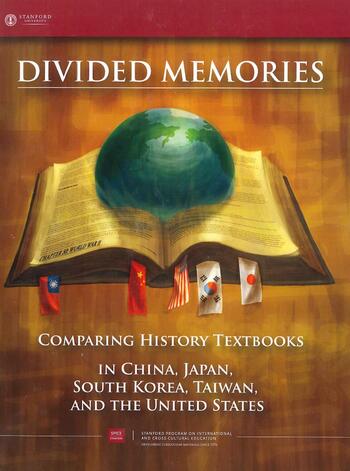
Divided Lenses: Screen Memories of War in East Asia is the first attempt to explore how the tumultuous years between 1931 and 1953 have been recreated and renegotiated in cinema. This period saw traumatic conflicts such as the Sino-Japanese War, the Pacific War, and the Korean War, and pivotal events such as the Rape of Nanjing, Pearl Harbor, the Battle of Iwo Jima, and the bombings of Hiroshima and Nagasaki, all of which left a lasting imprint on East Asia and the world. By bringing together a variety of specialists in the cinemas of East Asia and offering divergent yet complementary perspectives, the book explores how the legacies of war have been reimagined through the lens of film.

This turbulent era opened with the Mukden Incident of 1931, which signaled a new page in Japanese militaristic aggression in East Asia, and culminated with the Korean War (1950–1953), a protracted conflict that broke out in the wake of Japan's post–World War II withdrawal from Korea. Divided Lenses explores how the intervening decades have continued to shape politics and popular culture throughout East Asia and the world. Essays in part I examine historical trends at work in various "national" cinemas, including China, Taiwan, Japan, Korea, and the United States. Those in part 2 focus on specific themes such as comfort women in Chinese film, the Nanjing Massacre, or nationalism, and how they have been depicted or renegotiated in contemporary films. Of particular interest are contributions drawing from other forms of screen culture, such as television and video games.

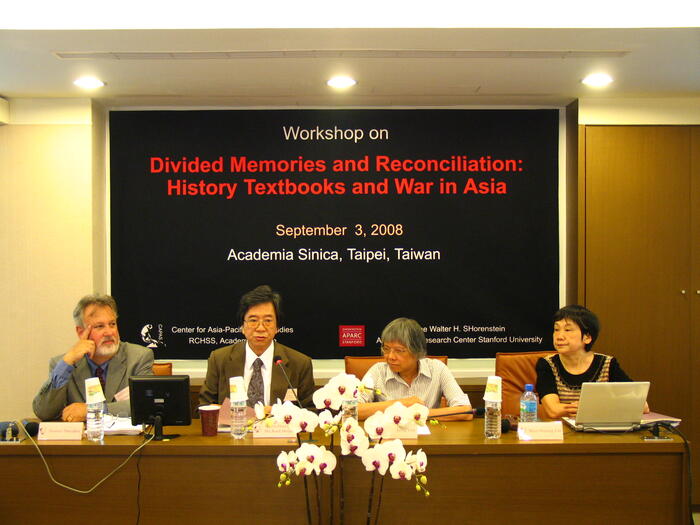
This book is an outcome of the conference, Divided Lenses: Film and War Memory in Asia, that the Shorenstein Asia-Pacific Research Center hosted in December 2008, part of the Divided Memories and Reconciliation research project.

All Publications button
1
Publication Type
Books
Publication Date
Journal Publisher
University of Hawai'i Press
Authors
-

Image
joon nak choi 7 cropped
Why has Korean pop music (K-Pop) become so popular overseas? A wide variety of explanations have been proposed by academics, journalists and the fans themselves, ranging from superior training and product quality to the strategic usage of social media. Although some of these explanations have become widely-cited especially in the Korean media, whether or not they are actually correct remains largely unknown. To demystify why K-Pop has gained a following overseas, this study examines data on K-Pop concert booking overseas, from 2011 through 2014. The findings highlight the importance of cultural proximity, while casting doubt upon several other widely-cited explanations.

Joon Nak Choi is the 2015-2016 Koret Fellow in the Korea Program at Stanford's Shorenstein Asia-Pacific Research Center (APARC). A Stanford graduate and sociologist by training, Choi is an assistant professor at Hong Kong University of Science and Technology. His research and teaching areas include economic development, social networks, organizational theory, and global and transnational sociology, within the Korean context. He recently coauthored Global Talent: Skilled Labor as Social Capital in Korea which he developed the manuscript from 2010-11 while he was a William Perry postdoctoral fellow at APARC.

This event is made possible through the generous support of the Koret Foundation.

Shorenstein APARC
Encina Hall
Stanford University
Stanford, CA 94305-6055

0
joon_nak_choi_7_cropped.jpg

Joon Nak Choi is the 2015-2016 Koret Fellow in the Korea Program at Stanford University's Walter H. Shorenstein Asia-Pacific Research Center (Shorenstein APARC). A sociologist by training, Choi is an assistant professor at Hong Kong University of Science and Technology. His research and teaching areas include economic development, social networks, organizational theory, and global and transnational sociology, within the Korean context.

Choi, a Stanford graduate, has worked jointly with professor Gi-Wook Shin to analyze the transnational bridges linking Asia and the United States. The research project explores how economic development links to foreign skilled workers and diaspora communities.

Most recently, Choi coauthored Global Talent: Skilled Labor as Social Capital in Korea with Shin, who is also the director of the Korea Program. From 2010-11, Choi developed the manuscript while he was a William Perry postdoctoral fellow at Shorenstein APARC.

During his fellowship, Choi will study the challenges of diversity in South Korea and teach a class for Stanford students. Choi’s research will buttress efforts to understand the shifting social and economic patterns in Korea, a now democratic nation seeking to join the ranks of the world’s most advanced countries.
 
Supported by the Koret Foundation, the Koret Fellowship brings leading professionals to Stanford to conduct research on contemporary Korean affairs with the broad aim of strengthening ties between the United States and Korea. The fellowship has expanded its focus to include social, cultural and educational issues in Korea, and aims to identify young promising scholars working on these areas.


2015-2016 Koret Fellow
Visiting Scholar
2015 Koret Fellow 2015 Koret Fellow, Korea Program, APARC, Stanford
Seminars
Paragraphs

The breakthrough agreement on the comfort women issue between Japan and South Korea on Dec. 28, 2015, was the culmination of at least four years of negotiations between the two governments. South Korean President Park Geun-hye and Japanese Prime Minister Shinzo Abe pushed for the agreement; the Obama administration provided persistent pressure while resisting a mediation role. The danger of the agreement falling apart is apparent to officials in Washington and Seoul, and hopefully Tokyo too, writes Sneider.

All Publications button
1
Publication Type
Commentary
Publication Date
Journal Publisher
Toyo Keizai Online
Authors
Daniel C. Sneider
Authors
News Type
News
Date
Paragraphs

In a new book, David Straub explains why massive anti-American protests erupted across South Korea in 2002 and considers whether it could happen again.

South Korea is often seen as a pro-American ally, a model country that went from a poor, postwar nation into a maturing democracy in just four short decades.

But despite a historic alliance between South Korea and the United States, anti-Americanism flared throughout the Asian nation between 1999-2002 when a series of events and longstanding tensions aligned, according to Stanford researcher David Straub.

“It was a sort of venting of steam,” said Straub, an associate director at Stanford’s Walter H. Shorenstein Asia-Pacific Research Center.

“Many Koreans at the time were grossly overinterpreting issues and incidents involving the United States. And this was because they were viewing the U.S.-Korea relationship through a lens of historic victimization by other nations, including the United States,” he added.

Straub, who held a thirty-year diplomatic career in the State Department, headed the political section of the American embassy in Seoul during those years and was deeply involved in managing problems in the bilateral relationship.

Boiling point

Since the end of the Korean War, the United States Forces Korea (USFK) has been stationed in Seoul – now about 28,500 uniformed personnel.

In June 2002, a USFK vehicle struck two Korean students in a tragic accident. In December of that same year, after a U.S. court martial found the drivers of the vehicle not guilty of wrongdoing, hundreds of thousands of people protested in Seoul and other major Korean cities. Not only did activists partake but ordinary citizens too, he said.

Straub said the South Korean public had been “unintentionally primed” for such a reaction to the USFK traffic accident; it was the “spark that lit the firestorm” after years of escalation. A series of events led-up to the mass protests, they included:

  • A few months before the USFK traffic accident, a Korean athlete was disqualified at the Winter Olympics in Salt Lake City during a speed skating competition. American athlete Apolo Anton Ohno instead won gold after a disputed call.
  • A non-governmental organization in May 2000 revealed that USFK personnel dumped formaldehyde into a drain that ran into the Han River in Seoul.
  • In Sept. 1999, the Associated Press published its first investigative story examining the Nogun-ri incident of 1950, when hundreds of Korean refugees were killed in an alleged massacre by U.S. service members.

Asymmetry of attention

Straub said the shaping of Koreans’ views of Americans and fanning of tensions could be attributed in part to an “asymmetry of attention” on the part of the Korean and American publics to the U.S.-Korean relationship.

While the Korean public put tremendous focus on U.S.-Korean relations and the presence of U.S. military personnel in Korea, the American public was unaware of Korean attitudes and feelings, he said.

Similarly during the 1999-2002 period, Korean media reported hypercritical views of the United States and USFK, while the American media paid far less attention.

In negotiating with U.S. officials, South Korean officials would often allude to strong Korean public opinion and demand U.S. concessions. With no American public opinion on Korea issues to point to, U.S. officials were at a major disadvantage, Straub said.

U.S. officials would sometimes note opinions shared by members of Congress, he said, “however, for Korean officials, those claims weren’t as powerful as having a social movement literally on the front doorstep.”

In plain terms, the United States is much larger than South Korea. This very imbalance – which translates to military and economic power – added to Koreans’ assumption that they were “getting the worse end of the bargain,” he added.

“Most Koreans saw Korea as a victim of great powers,” Straub said. “It’s not just the media. It’s more than that, it was – and still is – a shared national narrative.”

Koreans’ sense of national vulnerability is magnified by their historic victimization to neighbors. South Koreans do not want to become a de facto tributary state of China or a colony of Japan again, he said.

Will anti-Americanism return?

USFK incidents were a main focus of Korean attention during the 1999-2002 period, and while there is always a possibility of problems arising, the intensity is gone now, Straub said.

“Some steam is under the lid again,” Straub said. “But I don’t think it’s nearly at the level like it was back then. I’m doubtful that we’d see an exact repeat.”

The media landscape in South Korea has improved and shifted away from its earlier position of “criticize the United States first and ask questions later,” Straub said.

Today, South Korea and the United States are in good standing at the government-level and among the people. President Obama and Korean President Park Geun-hye have an established rapport.   

What troubles Koreans now is North Korea, a Japan focused on collective defense, and the strategic rivalry between the United States and China and its possible implications for Korea, he said.

“South Korea being sandwiched between the United States and China – based on a perception that China is going to be the world’s dominant power – is a real worry for many Koreans,” Straub said, and a large number of Koreans – albeit still a minority – feel that their country must find a more equidistant ground between the two.

Most Koreans, however, still believe in the need for the continued presence of USFK personnel, at least for the time being, said Straub, and must be reassured of their strategic alliance with the United States.

Obama and Park are expected to meet in Washington in mid-October, and Straub said it will be used as an opportunity for both sides to reinforce the importance they attach to the alliance and to pressing North Korea to abandon its nuclear weapons and long-range missile programs.

Links to related articles

NK News: South Korean anti-Americanism dwindles, but roots remain: diplomat

NK News: South Korean anti-Americanism: a thing of the past?

Anti-Americanism in Democratizing South Korea, July 2015

Asia Times: American faces Seoul court over infamous unsolved murder

The Christian Science Monitor: South Korea: 20 years later, Californian son faces trial for Seoul murder

JoongAng Ilbo: Is anti-Americanism dead?

JoongAng Ilbo (Korean): 한미동맹은 빈틈없이 튼실한가 전 미국 국무부 한국과장의 진단

Hero Image
rtrpaj1
A South Korean protestor holds an American flag on which protesters left their footprints at a Seoul rally in June 2003.
Reuters/Lee Jae-Won
All News button
1
-

Abstract:

Both South Korea and Taiwan are considered consolidated democracies, but the two countries have developed very different sets of electoral campaign regulations. While both countries had highly restrictive election laws during their authoritarian eras, they have diverged after democratic transition. South Korea still restricts campaigning activities, including banning door-to-door canvassing, prohibiting pre-official period campaigning, and restricting the quantity and content of literature. Taiwan has removed most campaigning restrictions, except for finance regulations. This study explores the causes of these divergent trajectories through comparative historical process tracing, using both archival and secondary sources. The preliminary findings suggest that the incumbency advantage and the containment of the leftist or opposition parties were the primary causes of regulation under the soft and hard authoritarian regimes of South Korea and Taiwan. The key difference was that the main opposition party as well as the ruling party in South Korea enjoyed the incumbency advantage but that opposition forces in Taiwan did not. As a result, the opposition in Taiwan fought for liberalization of campaign regulations, but that in South Korea did not. Democratization in Taiwan was accompanied by successive liberalizations in campaign regulation, but in South Korea the incumbent legislators affiliated with the ruling and opposition parties were both interested in limiting campaigning opportunities for electoral challengers.


Bio:

Dr. Jong-sung You is a senior lecturer in the Department of Political and Social Change, Australian National University. His research interests include comparative politics and the political economy of inequality, corruption, social trust, and freedom of expression. He conducts both cross-national quantitative studies and qualitative case studies, focusing on Korea and East Asia. He recently published a book entitled Democracy, Inequality and Corruption: Korea, Taiwan and the Philippines Compared with Cambridge University Press. His publications have appeared at American Sociological Review, Political Psychology, Journal of East Asian Studies, Journal of Contemporary Asia, Asian Perspective, Trends and Prospects, and Korean Journal of International Studies. He obtained his Ph.D. in Public Policy from Harvard University and taught at UC San Diego. Before pursuing an academic career, he fought for democracy and social justice in South Korea.


Jong-sung You Senior Lecturer College of Asia and the Pacific, Australia National University
Seminars
-
Abstract 
Based on first-hand participant-observation, this talk will examine the culture, politics, and spatiality of the Sunflower Movement. Taiwan's most significant social movement in decades, the Sunflower Movement not only blocked the passage of a major trade deal with China, but reshaped popular discourse and redirected Taiwan's political and cultural trajectory. It re-energized student and civil society, precipitated the historic defeat of the KMT in the 2014 local elections, and prefigured the DPP's strong position coming into the 2016 presidential and legislative election season.
 
The primary spatial tactic of the Sunflowers-- occupation of a government building-- was so successful that a series of protests in the summer of 2015 by high school students was partly conceived and represented as a "second Sunflower Movement". These students, protesting "China-centric" curriculum changes, attempted to occupy the Ministry of Education building. Thwarted by police, these students settled for the front courtyard, where a Sunflower-style pattern of encampments and performances emerged. While this movement did not galvanize the wider public as dramatically as its predecessor, it did demonstrate the staying power of the Sunflower Movement and its occupation tactics for an even younger cohort of activists.
 
The Sunflower Movement showed that contingent, street-level, grassroots action can have a major impact on Taiwan's cross-Strait policies, and inspired and trained a new generation of youth activists. But with the likely 2016 presidential win of the DPP, which has attempted to draw support from student activists while presenting a less radical vision to mainstream voters, what's in store for the future of Taiwanese student and civic activism? And with strong evidence of growing Taiwanese national identification and pro-independence sentiment, particularly among youth, what's in store for the future of Taiwan's political culture? 
 

Speaker Bio

Ian Rowen in Legislative Yuan Ian Rowen in Taiwan's Legislative Yuan during the Sunflower Student Movement protest.

Ian Rowen is PhD Candidate in Geography at the University of Colorado, Boulder, and recent Visiting Fellow at the European Research Center on Contemporary Taiwan, Academia Sinica’s Institute of Sociology, and Fudan University. He participated in both the Sunflower and Umbrella Movements and has written about them for The Journal of Asian StudiesThe Guardian, and The BBC (Chinese), among other outlets. He has also published about Asian politics and protest in the Annals of the Association of American Geographers (forthcoming) and the Annals of Tourism Research. His PhD research, funded by the US National Science Foundation, the Fulbright Program, and the Taiwan Foundation for Democracy, has focused on the political geography of tourism and protest in China, Taiwan, and Hong Kong. 


Presentation Slides

Ian Rowen Doctoral Candidate University of Colorado Dept of Geography
Seminars
-

Image
joyojeet headshot

India's Prime Minister Narendra Modi has almost 15 million followers on Twitter and over almost 30 million “likes” on Facebook, making him among the most followed politicians on social media. With a mix of ‘feel good’ messages, shout-outs to other celebrities, well-timed ritualized responses, as well as a careful strategy of ‘followbacks’ for a small selection of his most active followers, Modi grew his following dramatically since 2013. This talk looks at ways in which Twitter is used as part of a larger brand management exercise through which Modi has emphasized different issues at various phases of his political evolution.

Joyojeet examines four specific phases, during each of which, the focus of his social media message evolved based on electoral or post-election needs. While Twitter helped Modi circumvent the mainstream media and directly reach a significant constituency of listeners, he also examines how social media was central to Modi's image shaping as a technology-savvy leader who represents pan-Indian aspirations of modernity, away from Modi’s own past image in the popular media as a divisive communal politician.
 

Bio

Joyojeet Pal is an assistant professor at the University of Michigan's School of Information where his work focuses on user experience and accessibility in low and middle-income countries. His recent research looks at the use of social media in political communication in India, specifically on the role of political branding online in India. He is one of the technical collaborators on the Unfinished Sentences project examining oral histories of the El Salvador civil war, and leads the Colombia Digital Culture project at the University of Michigan. He researched and produced the award-winning documentary, "For the Love of a Man" based on the fan following of South Indian film star Rajnikanth.  


Note: Those of you attending this talk may be interested in a related event, "Why India Matters", a talk by Richard Verma, 25th US Ambassador to India.

Wallenberg Theatre

450 Serra Mall #124

(The room is located in the main quad, across the road from Stanford Oval).

-

Date 日期

July 13, 2015

Time 时间

19:00 – 20:30

Venue 地点

Stanford Center at Peking University

Tsachy Weissman is Professor of Electrical Engineering at Stanford University since 2003. His research focuses on Information Theory and Communications and Statistical Signal Processing. His is the recipient of NSF CAREER award and several best paper awards including the Horev fellowship for Leaders in Science and Technology, Henry Taub prize for excellence in research, incumbent of the STMicroelectronics Chair in the School of Engineering, and IEEE fellow. Weissman is serving on the editorial boards of the IEEE Transactions on Information Theory and Foundations and Trends in Communications and Information Theory. He is also the Founding Director of the Stanford Compression Forum.

In this lecture, Weissman will discuss information theory and statistical signal processing, the interplay between them, and their applications. He will survey some of the activity in his group pertaining to inference and data compression, including: Justification of inference under logarithmic loss; Estimation of the associated information measures from 'big data', and its applications; Compression under logarithmic loss; and Successively refinable lossy compression, with applications to genomic data. 

Stanford Center at Peking University

The Lee Jung Sen Building Peking University

No.5 Yiheyuan Road

Haidian District

Beijing, P.R.China 100871

Tsachy Weissman Professor Electrical Engineering, Stanford University
Lectures
Subscribe to Media