Global Health
Paragraphs

Poor air quality is thought to be an important mortality risk factor globally1,2,3, but there is little direct evidence from the developing world on how mortality risk varies with changing exposure to ambient particulate matter. Current global estimates apply exposure–response relationships that have been derived mostly from wealthy, mid-latitude countries to spatial population data4, and these estimates remain unvalidated across large portions of the globe. Here we combine household survey-based information on the location and timing of nearly 1 million births across sub-Saharan Africa with satellite-based estimates5 of exposure to ambient respirable particulate matter with an aerodynamic diameter less than 2.5 μm (PM2.5) to estimate the impact of air quality on mortality rates among infants in Africa. We find that a 10 μg m−3 increase in PM2.5 concentration is associated with a 9% (95% confidence interval, 4–14%) rise in infant mortality across the dataset. This effect has not declined over the last 15 years and does not diminish with higher levels of household wealth. Our estimates suggest that PM2.5 concentrations above minimum exposure levels were responsible for 22% (95% confidence interval, 9–35%) of infant deaths in our 30 study countries and led to 449,000 (95% confidence interval, 194,000–709,000) additional deaths of infants in 2015, an estimate that is more than three times higher than existing estimates that attribute death of infants to poor air quality for these countries2,6. Upward revision of disease-burden estimates in the studied countries in Africa alone would result in a doubling of current estimates of global deaths of infants that are associated with air pollution, and modest reductions in African PM2.5 exposures are predicted to have health benefits to infants that are larger than most known health interventions.

All Publications button
1
Publication Type
Journal Articles
Publication Date
Journal Publisher
Nature
Authors
Sam Heft-Neal
Eran Bendavid
Paragraphs

A favorite icon for cigarette manufacturers across China since the mid-twentieth century has been the panda, with factories from Shanghai to Sichuan using cuddly cliché to market tobacco products. The proliferation of panda-branded cigarettes coincides with profound, yet poorly appreciated, shifts in the worldwide tobacco trade. Over the last fifty years, transnational tobacco companies and their allies have fueled a tripling of the world's annual consumption of cigarettes. At the forefront is the China National Tobacco Corporation, now producing forty percent of cigarettes sold globally. What's enabled the manufacturing of cigarettes in China to flourish since the time of Mao and to prosper even amidst public health condemnation of smoking? 


In Poisonous Pandas, an interdisciplinary group of scholars comes together to tell that story. They offer novel portraits of people within the Chinese polity—government leaders, scientists, tax officials, artists, museum curators, and soldiers—who have experimentally revamped the country's pre-Communist cigarette supply chain and fitfully expanded its political, economic, and cultural influence. These portraits cut against the grain of what contemporary tobacco-control experts typically study, opening a vital new window on tobacco—the single largest cause of preventable death worldwide today.

You can read the Introduction and Chapter 1 online.

About the editors

 
Matthew Kohrman is Associate Professor of Anthropology at Stanford University.
 
Gan Quan is the Director of Tobacco Control of the International Union Against Tuberculosis and Lung Disease.
 
Liu Wennan is Editor for the Institute of Modern History at the Chinese Academy of Social Sciences.


Robert N. Proctor is Professor of the History of Science at Stanford University.
All Publications button
1
Publication Type
Books
Publication Date
Journal Publisher
Stanford University Press
Authors
Matthew Kohrman
Number
978-1503602-06-9
Authors
News Type
News
Date
Paragraphs

Stanford scientists found that the global economy is likely to benefit from ambitious global warming limits agreed to in the United Nations Paris Agreement.

Failing to meet climate mitigation goals laid out in the U.N. Paris Agreement could cost the global economy tens of trillions of dollars over the next century, according to new Stanford research. The study, published in Nature, is one of the first to quantify the economic benefits of limiting global warming to levels set in the accord.

The agreement commits 195 countries to the goal of holding this century’s average temperature to 2 degrees Celsius above levels in the pre-industrial era. It also includes an aspirational goal of pursuing an even more stringent target of limiting temperature rise to 1.5 degrees. To date, the economic benefits of achieving these temperature targets have not been well understood.

 “Over the past century we have already experienced a 1-degree increase in global temperature, so achieving the ambitious targets laid out in the Paris Agreement will not be easy or cheap. We need a clear understanding of how much economic benefit we’re going to get from meeting these different targets,” said Marshall Burke, assistant professor of Earth system science in the School of Earth, Energy & Environmental Sciencesand lead author of the study.

To develop this understanding, a team of Stanford researchers studied how economic performance over the past half-century correlated with changes in temperature around the world. Then, using climate model projections of how temperatures could change in the future, they calculated how overall economic output is likely to change as temperatures warm to different levels.

The researchers found a large majority of countries – containing close to 90 percent of the world’s population – benefit economically from limiting global warming to 1.5 degrees instead of 2 degrees. This includes the United States, China and Japan – the three largest economies in the world. It is also true in some of the world’s poorest regions, where even small reductions in future warming generate a notable increase in per capita gross domestic product.

“The countries likely to benefit the most are already relatively hot today,” said Burke. “The historical record tells us that additional warming will be very harmful to these countries’ economies, and so even small reductions in future warming could have large benefits for most countries.”

The projected costs from higher temperatures come from factors such as increases in spending to deal with extreme events, lower agricultural productivity and worse health, the scientists said.

Previous research has shown that the actual climate commitments each country has made as part of the Paris Agreement add up to close to 3 degrees of global warming, instead of the 1.5–2 degrees warming goals.

Given this discrepancy, the researchers also calculated the economic consequences of countries meeting their individual Paris commitments, but failing to meet the overall global warming goals of 1.5–2 degrees. They found that failing to achieve the 1.5–2 degrees goals is likely to substantially reduce global economic growth.

climate economics Percentage gain in GDP per capita in 2100 from achieving 1.5 degrees Celsius global warming instead of 2 degrees.

Percentage gain in GDP per capita in 2100 from achieving 1.5 degrees Celsius global warming instead of 2 degrees. (Image credit: Marshall Burke)

“It is clear from our analysis that achieving the more ambitious Paris goals is highly likely to benefit most countries – and the global economy overall – by avoiding more severe economic damages,” said Noah Diffenbaugh, professor of Earth system science and paper co-author.

The authors note the study may underestimate the total costs of higher levels of global warming. That’s especially true if catastrophic changes such as rapid melting of the ice on Greenland or Antarctica come to pass, or if extreme weather events such as heatwaves and floods intensify well beyond the range seen in historical observations. A recent studyby Diffenbaugh and his colleagues showed that even with reduced levels of global warming, unprecedented extreme events are likely to become more prevalent.

The new research helps shed light on the overall economic value of the Paris Agreement, as well as on the Trump administration’s decision to withdraw the U.S. from the accord because of concerns that it is too costly to the U.S. economy. The researchers calculated that the overall global benefits of keeping future temperature increases to 1.5 degrees are likely in the tens of trillions of dollars, with substantial likely benefits in the U.S. as well. They note that these benefits are more than 30 times greater than the most recent estimates of what it will cost to achieve the more ambitious 1.5 degrees goal.

“For most countries in the world, including the U.S., we find strong evidence that the benefits of achieving the ambitious Paris targets are likely to vastly outweigh the costs,” said Burke.

Burke is also a fellow at the Center on Food Security and the Environment, the Stanford Woods Institute for the Environmentand the Freeman Spogli Institute for International Studies. Diffenbaugh is also the Kara J Foundation Professor, the Kimmelman Family Senior Fellow in the Stanford Woods Institute for the Environment and an affiliate of the Precourt Institute for Energy. Additional co-authors include W. Matt Davis, a former researcher at the Center on Food Security and the Environment. The research was supported by the Erol Foundation.

Media Contacts

Marshall Burke, School of Earth, Energy & Environmental Sciences: mburke@stanford.edu, (650) 721-2203
Noah Diffenbaugh, School of Earth, Energy & Environmental Sciences: diffenbaugh@stanford.edu, (650) 223-9425
Michelle Horton, Center on Food Security and the Environment: mjhorton@stanford.edu, (650) 498-4129


Hero Image
climateeconomics 555x370
The three largest economies in the world and almost 90 percent of the global population benefit economically from limiting global warming to 1.5 degrees instead of 2 degrees. | iStockphoto/leolintang
All News button
1
-

Humanitarians in Crisis: Lessons from the Battle for Mosul, Iraq

The Battle of Mosul was one of the largest urban sieges since World War II. From October 2016 and July 2017, Iraqi and Kurdish forces fought to retake Iraq’s second largest city, which had fallen to ISIL in 2014. They were backed by U.S.-led coalition forces. More than 940,000 civilians fled during the siege, and thousands were injured as they sought safety.


Paul H. Wise, MD, MPH

Professor of Pediatrics, Director, Center for Policy, Outcomes, and Prevention, and Richard E. Behrman Professor of Child Health and Society, Stanford University

Paul H Wise, Richard E. Behrman Professor of Child Health and Society, Professor of Pediatrics, and Senior Fellow at the Freeman Spogli Institute for International Studies, was part of a small team tasked to evaluate the health response to the fighting in Mosul.  Their report has raised serious questions regarding the continued utility of traditional humanitarian health responses to violent conflict.  This presentation will convey the findings of the report and the profound challenges the lessons of Mosul have generated for physicians, humanitarians, and war-fighters around the world.


RSVP is now closed.

LK130 Conference Room

Li Ka Shing Center

291 Campus Drive

Stanford, CA 94305

Seminars
Authors
News Type
Q&As
Date
Paragraphs

In March 2011, a post-earthquake tsunami triggered nuclear meltdowns, hydrogen-air explosions and the release of radioactive materials from the Fukushima Daiichi Nuclear Power Plant in Fukushima Prefecture, Japan. The Fukushima disaster has been called the most significant nuclear incident since the 1986 Chernobyl disaster. Professor Rodney C. Ewing, Frank Stanton Professor in Nuclear Security and co-director at the Center for International Security and Cooperation (CISAC) in the Freeman Spogli Institute for International Studies (FSI), as a member of a team of Japanese researchers, today published a report on the details of what exactly — at the particle level — was released into the air after the disaster.

In the discussion that follows, Ewing explains the team’s findings and why they are important for health and environmental safety.

Why did you decide to study the Fukushima disaster?

The Fukishima Daiichi event surprised me. I now teach a freshman seminar on this event. I am particularly interested to understand why the accident occurred and what the long-term impact will be on the environment. This research paper reflects my interest in answering these questions.

We’ve heard lots about possible health effects from contaminated water after the Fukushima disaster, but less about particulates in the air. What did you find?

During the core melt-down events at Fukushima Daiichi, radioactivity was released as fine particulates that traveled in the air, sometime for distances of tens of kilometers, and settled onto the surrounding countryside.

In order to understand the health risk, it is very important to understand the form and chemistry of these particulates.

Recently, in a previous paper we have described a new type of particulate that is Cs-rich (some Cs isotopes are highly radioactive). The highly radioactive Cs-rich particles formed in the reactor by condensation from a silica-rich vapor, formed from the melting of core and concrete structures. In this paper, we describe the first identification of fragments of the melted core that were entrapped by the Cs-particles and transported away from the reactor site, some 4 kilometers. This is an important discovery because this provides us with samples of the fuel and melted core.

This is a special contribution because it uses very advanced electron microscopy techniques that allow for imaging of individual atoms or clusters of atoms. This advanced technique is required because the particles are so small — nanometers in size.

How did you come to work with your collaborators in Japan?

I have had long standing collaborations with Japanese scientists for decades. The lead researcher for the group, Professor Satoshi Utusunomiya, was once a member of my research group when I was at the University of Michigan. We have always collaborated on topics that involve radioactive materials and the use of electron microscopy. This collaboration is an entirely natural outgrowth of previous collaborations.

What, if any, policy recommendations would you suggest based on your findings?

The most direct result would be to design monitoring systems so that we have a good record of released particulates. Also, we need to push the development of advanced analytical techniques so that these particulates can be quickly identified and characterized.

Hero Image
gettyimages nuclearsmokestacks1 7cnjkfma broe4a8wwlg q
Getty Images | Getty Images
All News button
1
Authors
Beth Duff-Brown
News Type
News
Date
Paragraphs

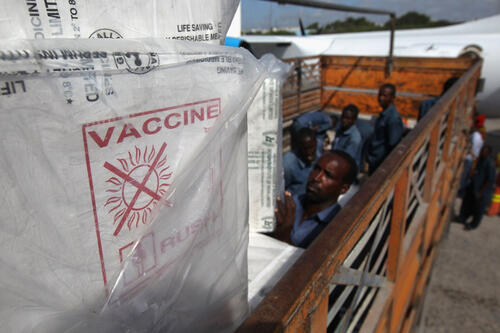
As global health assistance for developing countries dwindles, a Stanford student working on her PhD in health policy has developed a novel formula to help donors make more informed decisions about where their dollars should go.

Donors have typically relied predominately on gross national income (GNI) per capita to determine aid allocations. But using GNI is problematic because it effectively penalizes economic growth. It also fails to capture contextual nuances important to channeling aid effectively and efficiently.

So Tara Templin, a first-year Stanford PhD student specializing in health economics, and her Harvard colleague Annie Haakenstad, have developed a framework that estimates funding based on needed resources, expected spending and potential spending into 2030. They believe the more flexible model makes it adaptable for use by governments, donors and policymakers.

“We've observed development assistance for health growth attenuate over the last seven years,” said Templin, who was a research fellow at the Institute for Health Metrics and Evaluation before coming to Stanford. “There are difficult trade-offs, and this entails honing in on the specific challenges and countries most in need.”

Their research published in the journal Health Policy and Planning outlines how their “financing gaps framework” can be adapted to short- or long-run time frames, between or within countries.

“Depending on donor preferences, the framework can be deployed to incentivize local investments in health, ensuring the long-term sustainability of health systems in low- and middle-income countries, while also furnishing international support for progress toward global health goals,” write the authors, who also are Stephen Lim of the University of Washington, Jesse B. Bump of Harvard and Joseph Dieleman, also at the University of Washington.

The authors developed a case study of child health to test out their framework. It shows that priorities vary substantially when using their results as compared to focusing mainly on GNI per capita or child mortality.

The case study uses data from the Global Burden of Disease 2013 Study, Financing Global Health 2015, the WHO Global Health Observatory and National Health Accounts. Funding flows are anchored to progress toward the U.N. Sustainable Development Goals’ target for reductions in the death rates of children under 5. More than six million children die each year before their fifth birthday, so the United Nations set a goal to reduce under-5 mortality to at least 25 per 1,000 live births.

To build their child health case study, the authors relied on a 2015 study that estimated the average cost per child-life saved is $4,205 in low-income countries, $6,496 in lower-middle income countries and $10,016 in upper-middle countries.

The framework considers three concepts. First, expected government spending is constructed from national health accounts, which are standardized financial reports from countries around the world. Second, ability to pay is estimated by looking at countries with similar levels of economic development and looking at associations with country investment in the health sector. Lastly, needed investment considers a health target, the country’s current health burden, and average costs to save children’s lives in each country.

“Our focus is on the gap between the resources needed to reach critical health targets and domestic health spending,” the authors wrote. “We highlight two facets of domestic health resources—expected spending and potential spending—as critical. While donor preferences may vary, basing aid allocation on expected or existing spending levels incentivizes countries to spend less on health. We therefore propose the use of potential spending, which is a measure of a country’s ability to pay, as the domestic resource benchmark.”

Image
vaccines loaded truck

Instead of the gap between expected spending and need, their framework focuses on the gap between potential spending and the health resources needed to meet global health targets. In the framework, policymakers can choose which gap they want to target, since this decision can involve many factors.

“By focusing on that gap, donors can catalyze sustained domestic spending while also addressing the resource needs critical to reaching international health goals,” they wrote.

They then looked at 10 countries with the most need for additional child health resources. The gap between expected spending and potential spending was highest in Afghanistan, at 79 percent, and lowest in Cameroon, where expected spending exceeded potential spending.

“Fifty years ago, GNI was the best proxy for countries’ ability to finance their own development and health,” the authors wrote.

But today, more empirical data and technology are available, allowing donors to incorporate a broader set of health financing measures into their decision-making process.

“The flexible but targeted nature of our framework is critical in the current era of global health financing,” said Haakenstad, the lead author. “Our framework helps to ensure the poor and disadvantaged, the majority of which now reside in middle-income countries, are reached by development assistance and other public financing. This funding is critical to reducing death and disability and reaching global targets in health.”


The authors’ research was supported by the Welcome Trust (099114/Z/12/Z).

Hero Image
getty child vaccine
Oli Scarff/Getty Images
All News button
1
Authors
Beth Duff-Brown
News Type
News
Date
Paragraphs

At least 91 Americans die every day from an opioid overdose. The epidemic has claimed more than 300,000 lives since 2000 and is expected kill another half million over the next decade.

So perhaps it’s time to step up lawsuits against the drug manufacturers that sell the opioids to the tune of $13 billion per year, Stanford Health Policy’s Michelle Mello argues in a commentary in the current issue of The New England Journal of Medicine.

Mello, a professor of law and of health research and policy, and co-author Rebecca L. Haffajee, an assistant professor of health management and policy at University of Michigan School of Public Health, note that although heroin and illicitly manufactured fentanyl account for an increasing proportion of opioid overdoses, the majority of people who are addicted to opioids get hooked on prescribed painkillers.

While clinicians and health-care providers are trying to prescribe fewer opioids, Mello and Haffajee believe litigation is another crucial method to fight the crisis.

“The search for solutions has spread in many directions, and one tentacle is probing the legal accountability of companies that supply opioids to the prescription market,” the authors write.

The final report of President Trump’s Commission on Combating Drug Addiction and the Opioid Crisis details decades of aggressive marketing of oxycodone from 1997-2002 that led to a tenfold rise in prescriptions to treat moderate to severe pain. “To this day, the opioid pharmaceutical industry influences the nation’s response to the crisis,” the report said, noting the industry had sponsored some 20,000 conferences for physicians on managing pain with opioids while claiming their potential for addiction was low.

Mello and Haffajee argue that similar to the early cigarette promotions by Big Tobacco, opioid manufacturers have failed to adequately warn patients about addition risks on drug packaging and in their marketing campaigns.

“Some recent claims allege that opioid manufacturers deliberately withheld information about their products’ dangers, misrepresenting them as safer than alternatives,” they write.

Early attempts to bring class-action suits against opioid manufacturers have encountered procedural barriers. Judges typically find that proposed class members lack sufficiently common claims because of different circumstances surrounding opioid use and clinical conditions.

But the tide may be turning. There has been an uptick in litigation against Big Pharma since Purdue Pharma, the maker of the blockbuster painkiller, OxyContin, agreed in 2007 to pay $600 million to settle charges that it misled federal regulators, doctors, and patients about the drug’s risk of addiction and its potential to be abused.

“As the population harmed by opioids grows and more information about the population is documented, it becomes easier to identify subgroups with similar factual circumstances and legal claims — for example, newborns with neonatal abstinence syndrome,” they said.

Perhaps most promising, the authors write, is the “advent of suits brought against drug makers and distributors by the federal government and dozens of states, counties, cities, and Native American tribes.

“Because the government itself is claiming injury and seeking restitution so that it can repair social systems debilitated by opioid addiction, these suits avoid defenses that blame opioid consumers or prescribers,” they said. “They also garner substantial publicity.”

The government is borrowing from the playbooks used to sue tobacco and firearms companies, relying on four strategies:

  • Focus on the “public scourge” created by the opioid manufacturers due to their oversaturation of the market, arguing that opioids constitutes a public nuisance;
  • Paint the opioid companies’ business practices as deceptive;
  • Call out the manufacturers’ lax monitoring of suspicious opioid orders; and
  • Ask courts to make companies disgorge the “unjust enrichment” they have reaped at the government’s expense through their unfair business practices.

Two large settlements have occurred in state cases that included unjust enrichment claims, the authors note, although the pharmaceutical companies avoided admitting fault. The Commonwealth of Kentucky settled with Purdue Pharma for $24 million in 2015 over allegations that it had profited while Kentucky was left paying associated medical and drug costs of those who became addicted.

Earlier this year, drug wholesaler Cardinal Health Inc. agreed to pay $20 million to settle a lawsuit brought by West Virginia’s attorney general over accusations that it flooded the market with opioids in a state that now has the highest opioid overdose rate in the nation.

Such lawsuits have garnered a lot of media attention and contributed to pressure on the U.S. government to take action against the abusive practices of drug manufacturers and distributors.

“Win or lose, lawsuits that very publicly paint the opioid industry as contributing to the worst drug crisis in American history put wind in the sails of agencies and legislatures seeking stronger oversight,” Mello and Haffajee write. “Together, litigation and its spillover effects hold real hope for arresting the opioid epidemic.”


Listen to a podcast with Haffajee talking about the opioid crisis.


Hero Image
heroin boy
Five-year-old Derrick Slaughter attends a march through the streets of Norwalk, Ohio, against the epidemic of heroin with his grandmother on July 14, 2017. Both of Derrick's parents are heroin addicts and he is now being raised by his grandparents. At least 4,149 Ohioans died from drug overdoses in 2016, a 36 percent leap from just the previous year. | Spencer Platt/Getty Images
All News button
1
Authors
Beth Duff-Brown
News Type
News
Date
Paragraphs

There is plenty of research on how the rapid warming of the planet is going to have growing adverse impacts on global economies, health, food supplies and natural disasters.

A new study now suggests that as temperatures continue to rise — particularly with more and more 90-plus-degree days — more fetuses and infants will experience economic loss by age 30.

“There is a growing body of evidence that finds that shocks to the fetus and young child — whether nutritional, environmental, economic or stress-related — have long-term consequences on health, education and economic outcomes throughout the life cycle,” said Maya Rossin-Slater, an assistant professor of health research and policy at Stanford Medicine and a faculty fellow at the Stanford Institute for Economic Policy Research.

Rossin-Slater published her study Dec. 4 in the Proceedings of the National Academy of Sciences, indicating early-life exposure to extreme temperatures is linked to potential losses in human capital. Her co-authors are Adam Isen, an economist with the U.S. Department of Treasury, and Reed Walker, an assistant professor at University of California, Berkeley.

The researchers used data from the U.S. Census Bureau’s Longitudinal Employer Household Dynamic Files, which contain information on adult labor market outcomes linked to county and exact date of birth. They looked at weather in counties in 24 states on any given day, and then measured how many days with average temperatures above 90 degrees a child born on that day in that county would have experienced during gestation and during the first year of life. They then compared the earnings of individuals who were exposed to different numbers of such hot days, but who were of the same race and gender, and born in the same county and on the same day of the year (but in different years).

Each day a fetus or infant experiences 90-plus-degree temperatures, Rossin-Slater and her co-authors found that he made $30 less a year on average, or $430 over the course of his lifetime. While that may not seem like a huge loss of income, the authors point out that their study is best understood from a population-level perspective rather than from an individual one.

“There is a lot of research already showing that extreme heat has immediate effects on labor market productivity and GDP,” she said. “What we are saying is that there is another wrinkle to this — that there can be consequences many years later, on cohorts who are still in the womb.”

Most Americans today only experience one day a year that is 90 degrees or hotter. But the Climate Impact Lab has indicated that if countries continue to take only moderate action on climate change, by the end of this century there will be about 43 such days a year.

So, if you multiple a $30 annual loss a day by 43 days, you come up with an average $1,290 a year — and compounded in large populations of pregnant women in hot climates.

“Prior research shows that exposure to extreme heat in utero leads to lower birth weight and increases infant mortality,” said Rossin-Slater, who is also a core faculty member at Stanford Health Policy. She said poor fetal and infant health could impact adult earnings in three ways: cognitive impairment, poor health that causes people to miss school or work, and less non-cognitive skill development such as self-control.

“With regard to exposure to heat specifically, fetuses and infants are especially sensitive because their thermoregulatory systems are not fully developed and they have less capacity to self-regulate when their bodies are exposed to extreme temperatures,” Rossin-Slater said.

Hot Zones and Air Conditioners

The obvious questions that arise from such research: What happens to the babies of women who already live in very high temperatures? And why not just ensure that all pregnant women have air conditioners, at least in the developed world where it would be more affordable?

Women in warm zones such as parts of Africa and South Asia, as well as U.S. cities like Phoenix and Washington, D.C., shouldn’t worry too much. The loss of income is relatively little and people living in hot climates may actually adapt over time to exposure to extreme heat.

“Our study is not saying that individual people should be doing something differently to avoid exposure to extreme heat,” Rossin-Slater said. “Instead, we think we are providing additional evidence for the possible population-level consequences of climate change and the projected increase in the number of days with extreme temperatures.”

And what about those air conditioners? The cohorts in the study are actually born in the 1970s, during a period of rapid expansion in air conditioning across American households. The researchers found the earning losses went away in areas where most people got air conditioners installed.

“If we think that there is something biological going on as a result of the fetus being overheated, then it makes sense that AC, which prevents the overheating, can mitigate this negative effect,” Rossin-Slater said.

But it’s important to recognize, she said, that air conditioners come with costs, both financial from the perspective of individuals and households who can and can’t afford such systems, and environmental from the perspective of the country or planet as a whole.

“So this is not a `free’ solution and any cost-benefit calculations related to climate change should take into account this adaption response,” Rossin-Slater said. “But we ought to think about what these results imply at the global level — in many countries that are much hotter than the United States and still don’t have AC. So if we are trying to understand global inequality and the impacts of climate change on developing countries, our results suggest that climate change could play a role in perpetuating global inequality across generations.”


Hero Image
pregnancy
Getty Images
All News button
1
Authors
Beth Duff-Brown
News Type
News
Date
Paragraphs


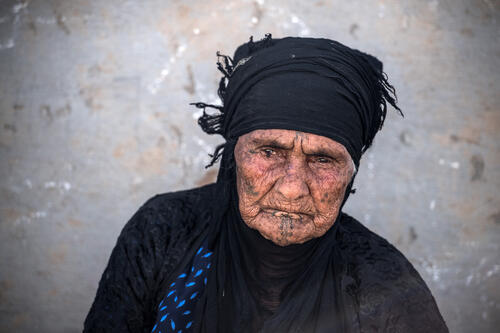
Paul Wise watched as children ran around a playground attached to a health clinic at a displaced persons camp on the outskirts of Mosul — the northern city in Iraq once controlled by the Islamic State but now back in the hands of the Iraqi government.

The children had survived the Battle of Mosul, which had fallen to ISIS in 2014 but was retaken by the government forces and allied militias during a nine-month military campaign that ended in July. Many of the children suffer from physical and mental wounds and Wise wondered how they would recover with so little medical infrastructure.

Wise was part of a small delegation of physician-academics asked to evaluate a World Health Organization-led system to treat civilians injured in the Mosul fighting. Wise and his colleagues recently slipped into Mosul to visit field hospitals, review health care on the ground and determine whether there is a better way to distribute medical aid during armed conflict.

The visit left the Stanford Medicine professor of pediatrics and senior fellow at the Freeman Spogli Institute for International Studies with questions about health care, humanitarian ethics, and conduct of war: Are there better ways to deliver emergency medical care during the height of battle? How do relief workers maintain neutrality when embedded with government security forces? Has the system of financing humanitarian interventions — one that was essentially created during the Cold War — become dangerously outdated?

Answering these questions is the mission of a new health-and-security initiative at Stanford led by Wise, a core faculty member at Stanford Health Policy who has spent 40 years working to improve the health of children impacted by conflict. Much of his work has been in Guatemala through his Children in Crisis project, the first university-based program to address the needs of children in areas of unstable governance and civil war.

“In talking with the groups that are running these humanitarian efforts in Mosul, there was this uneasiness, this kind of disorientation with the way things are now,” said Wise. “It was a kind of recognition that humanitarian norms are changing, the health personnel and facilities are at greater risk; the financial gap between humanitarian need and humanitarian capability is growing; and the old way of financing humanitarian intervention is inadequate, archaic.”


An Interdisciplinary Approach

Wise believes academics are well suited to help resolve these humanitarian conundrums.

“So we are going to move ahead and try to bring all the players together to reconsider this global challenge. Here at Stanford, we have the capacity to draw upon remarkable resources,” he said.

The new biosecurity initiative led by Stanford Medicine physician and FSI senior fellow, David Relman, together with world-renowned political scientists, security specialists, computer scientists and health policy experts will “attempt to craft new strategies for the provision of critical services to populations affected by conflict and political stability.”

The initiative will collaborate with other institutions such as Johns Hopkins, UCSF, Harvard, and the American Academy of Arts and Sciences. It will also seek the engagement of partners committed to providing humanitarian services, including WHO, the U.N. High Commissioner for Refugees, Doctors Without Borders and the International Committee of the Red Cross.

“The voice of communities impacted by war should also be an essential element in this ambitious effort,” Wise said. “To break new ground, we’re going to have to do things differently; the health strategies need to take into consideration fundamental understanding of the political dynamics. But we have a special opportunity here at Stanford because we take an interdisciplinary approach.”

Children of War

Most of the children Wise saw will never be the same, he said, nor the humanitarian workers who risked their lives to treat them, their families, and fighters from all sides of the battle to oust the Islamic extremists from the city on the Tigris River.

“I look at these little kids with horrendous emotional trauma and PTSD, and I think to myself, it’s the collision of all these questions playing out within a 50-square-meter little playground,” he said. “It’s these broader, strategic and ethical questions that are really profound. And as a pediatrician who is dedicating the last phase of my career to these questions of security and the political dimensions — I have to engage on all of these levels. That’s not easy.”

Wise traveled with WHO officials, as well as Paul Spiegel, a physician who leads the Center for Humanitarian Health at Johns Hopkins Bloomberg School of Public Health; Adam Kushner, a trauma surgeon affiliated with Johns Hopkins; and Kent Garber, a surgical resident at UCLA and research associate at Johns Hopkins.


Image
mosul bike


Spiegel also believes academics are uniquely positioned to help assess the current system of responding to medical crises during conflict.

“I believe that we can bring objectivity and rigor to analyzing and evaluating important and innovative responses, such as the trauma response by WHO and others in Mosul,” Spiegel said. “Humanitarian organizations are often busy responding quickly to rapidly changing situations; they don’t always have the luxury of time to do what academic humanitarians can do.”

Making the two-hour drive from Erbil to Mosul in armored, bulletproof SUVs provided by the United Nations, they slipped into field hospitals to meet with Iraqi physicians and medical teams with the humanitarian agencies.

Wise, who was able to take a few photos and video on his smartphone, described the devastation on the ground, noting that not since the siege of Leningrad has a city of this size experienced such street-by-street fighting. In large parts of the city, virtually every building was bombed or bulleted. It will take years to clear the rubble and rebuild.

“It’s just a remarkable story of tragedy and resilience,” he said.

Image

Since the city was not long ago controlled by ISIS, the field hospitals are still surrounded by massive concrete barricades and tactical trucks stationed outside with mounted machine guns.

The team found that at the height of the battle for Mosul, there was tremendous pressure to treat injured civilians and discharge patients very quickly, due to the lack of medical infrastructure and personnel and the continuous wave of new injuries coming in.

“The charge for us was to evaluate the system and how well it worked, what ways could it be improved, how many lives that it saved,” Wise said. “One of the concerns, for example, was that in order to put in medical people that close to the frontline, you have to give them some kind of security. This raised issues among the humanitarians about their need for independence and neutrality, since you’re essentially embedding them with Iraqi security forces.”

Epidemiology and Ethics


“We are looking at the technical issues and the epidemiologic issues, but also dealing with the ethical issues and their implications,” he said.

They intend to write an internal report and then publish their findings in a major medical journal, to get the word out about the issue and gain support for ongoing collaborative work. They’re looking to partners like the American Academy of Arts and Sciences, which recently devoted an entire issue of its journal, Daedalus, to the factors and influences of contemporary civil war. One of the essays in that issue by Wise and his Stanford colleague, Dr. Michele Barry, who directs the Center for Innovation in Global Health, talks about the threat of a global pandemic as a potential byproduct of the 30 ongoing civil wars around the world.

“We’re trying to get the report completed quickly because the model of trauma care for civilians in Mosul is a new model and could be implemented in other combat areas, like the fighting in Syria and other places in Iraq,” Wise said.

Wise worries some see Stanford University as an insulated Silicon Valley institution in a beautiful setting and not always engaged in the real world.

“Well, this is about as engaged in the real world as you can get — this is Stanford moving and doing things out there, not just sitting around in seminar rooms. Sometimes you need to get close to the front lines to save lives,” he said.

When asked what surprised him during this trip to Mosul, Wise smiled.

“I’m sort of old and I’ve seen a lot of the world and not a lot surprises me anymore,” he said. “But it was a reminder of how desperate are the lives of millions of people — that we could do so much more. It’s a reminder of just how fragile physical security really is in this world."

Image
mosul old woman


Hero Image
mosul health
ERBIL, IRAQ — A Red Cross nurse from Sweden applies a dressing to a 3-year-old boy who was injured after an improvised explosive device (IED) detonated near him in Mosul on April 17, 2017. | Carl Court/Getty Images
All News button
1
Subscribe to Global Health