Education
-

In an effort to infuse Asian studies in the social studies and literature curricula, the Stanford Program on International and Cross-Cultural Education (SPICE), in cooperation with the National Consortium for Teaching About Asia (NCTA), is offering a professional development opportunity at Stanford University.

This all day workshop will focus on teaching about issues Asian American face in contemporary society. This is the fourth workshop in a four part series.

Encina Basement Conf. Room, Encina Hall
616 Serra Street
Stanford, CA 94305

Seminars
-

In an effort to infuse Asian studies in the social studies and literature curricula, the Stanford Program on International and Cross-Cultural Education (SPICE), in cooperation with the National Consortium for Teaching About Asia (NCTA), is offering a professional development opportunity at Stanford University.

This all day workshop will focus on teaching about Korea in the social studies classroom. Participants will hear from top Korea scholars, engage in Korea related curriculum, and network with other local teachers.  This is the third workshop in a four part series.

Encina Basement Conf. Room, Encina Hall
616 serra Street 
Stanford, CA 94305

Seminars
-

In an effort to infuse Asian studies in the social studies and literature curricula, the Stanford Program on International and Cross-Cultural Education (SPICE), in cooperation with the National Consortium for Teaching About Asia (NCTA), is offering a professional development opportunity at Stanford University.

This all day workshop will focus on teaching about contemporary China in the social studies classroom. Participants will hear from top China scholars, engage in China related curriculum, and network with other local teachers.  This is the first workshop in a four part series.

During the course of the day, participants will learn about the challenges China faces, including their geopolitical, cultural, military, and economic significance. 


Encina Hall, Ground Floor Conf. Room
616 Serra Street
Stanford, CA 94305

Seminars
-

The 7th Annual Koret Workshop

The conference will examine the current status of the internationalization of Korean universities and the main challenges they confront in pursuing the internationalization. Scholars from the Asia-Pacific region and the U.S. will present comparative perspectives. The conference results will be published as an edited volume.

The Koret Workshop is made possible through the generous support of the Koret Foundation.

Bechtel Conference Center,
Encina Hall

Stanford University

Workshops
News Type
News
Date
Paragraphs

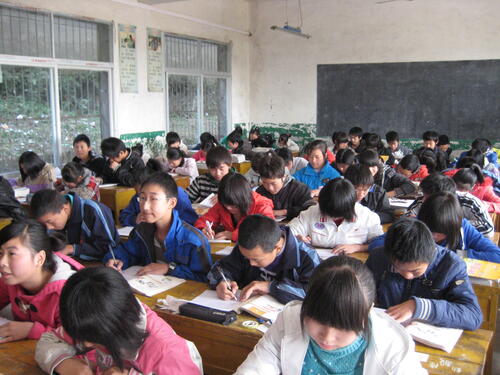
In November and December of this year, REAP researchers are working with our partners at the Center for Experimental Economics in Education (CEEE) to teach a 5-week intensive graduate course on impact evaluation at Shaanxi Normal University.  CEEE aims to raise the quality and effectiveness of education policy and projects throughout China by not only conducting actionable research, but also educating the next generation of scholars on the importance of evidence-based action and the core principles and methodology of impact evaluation.  Founded in January of 2014, CEEE has successfully established a new department of Experimental Economics in Education--with 24 Master's students and 3 PhD students in its first class of students--at Shaanxi Normal University, and will be expanding enrollment at this same rate over the next two years.  This intensive course on impact evaluation forms a core part of the curriculum for these students, and also attracted a number of students from REAP partner institutions across China.

Taught by REAP faculty, this graduate course covers all aspects of impact evaluation, from statistics and STATA to project design and randomization.  Launching this course marks a significant step forward in REAP's efforts to expand quality impact evaluation in China, thereby contributing to REAP's overarching goal of using evidence-based research to bring about effective and cost-efficient education policies and programs for the benefit of rural China's children.


Hero Image
photo
All News button
1
-

About IEI: The International Education Initiative (IEI) is a cross-campus collaboration between FSI and the GSE.  The purpose of IEI is to promote greater collaboration around research and policy analysis in international education at Stanford.  The initiative includes a speaker series as well as a series of workshops targeted at graduate students and young researchers.

About the Topic: Cost-effectiveness analysis is being used increasingly in education to compare the efficiency of different approaches to gaining educational results. This presentation will provide a brief introduction to the purpose and method of cost-effectiveness analysis in education. It will also provide illustrations of recent work. The main focus will be to address a range of challenges that arise in carrying out these studies. These will include the problem of using retrospective data, issues of outcomes that are not strictly comparable, and multi-site results.

About the Speaker: Henry M. Levin is the William Heard Kilpatrick Professor of Economics and Education at Teachers College, Columbia University, and Director of the National Center for the Study of Privatization in Education, a nonpartisan entity. He is also the David Jacks Professor Emeritus of Higher Education and Economics at Stanford University where he served from 1968-99 after working as an economist at the Brookings Institution in Washington, DC. He is a specialist in the economics of education and human resources and has published 16 books and almost 300 articles on these and related subjects. At present Levin is doing research on educational reform, educational vouchers, cost-effectiveness analysis, financing educational equity, and educational privatization.

Sponsored by:

Freeman Spogli Institute for International Studies, Stanford Graduate School of Education, Rural Education Action Program, Center for Education Policy Analysis


Followed by wine and cheese.

Open to the public.


“Challenges to Doing Cost-Effectiveness Studies in Education”
Download pdf
Seminars
News Type
News
Date
Paragraphs

From October 19th to 22nd, REAP's partner at Shaanxi Normal University, the Center for Experimental Economics in Education (CEEE), held a conference gathering representatives from 10 universities across China and more than 20 foundations, NGOs, and government education departments to exchange experiences regarding education development programs and impact evaluation in China.  Founded in January of 2014, CEEE aims to raise the quality and effectiveness of education policy and projects throughout China not only by conducting action research, but also by leading training sessions to help other academic research teams, government officials, and NGO and foundation members understand the importance of evidence-based action and the core principles and basic methodology of impact evaluation.

During the conference, CEEE led the participants through a comprehensive training in impact evaluation and provided a forum for participants to share their own diverse experiences in the field of education development.  Participants also visited a field site for one of REAP's Computer Assisted Learning projects in order to understand how impact evaluation is conducted in the field.  Recalling the four day conference, one participant said, "Before, we all went out to look for the disease believing we already had the prescription in hand. Now we finally understand how to analyze the causal chain underlying a problem in order to find a real solution."

The first in a series of workshops, this conference marks a step forward in REAP's overarching goal to promote evidence-based action in China and bring about effective and cost-efficient education policies and programs for the benefit of rural China's children.

Read more (in Chinese) here.


Hero Image
14152371981906
All News button
1
News Type
News
Date
Paragraphs

China Education Daily, a national newspaper published by the Department of Education with daily readership in the millions, published a feature article highlighting REAP research on teacher performance pay structures in rural China.  The article rapidly caught the attention of policymakers and educators across China and was widely circulated on a number of China's largest news media websites. 

What is teacher performance pay, and why does it matter?  Students in rural schools in China are falling behind.  Much of the burden for why students from China’s rural schools perform poorly may fall on teachers, as studies from both developed and developing countries, including China, consistently show that teachers are one of the (if not the) most important factors affecting student achievement.  Despite their importance, teachers in rural schools in China often lack strong incentives to help students--especially lower-achieving students--learn.  Surprisingly, almost nothing is known about how to incentivize teachers in rural China to help their students.  "Performance pay" is designed to address this problem by providing contracts to teachers that tie their pay to students test scores, with the goal of raising teacher quality and ultimately student achievement.

The Chinese government is also highly interested in addressing this problem, and in 2009 launched the Teacher Performance Pay Policy asking schools to implement teacher performance pay.  However, in 2012 REAP researchers found that 46% of rural schools still had not implemented teacher incentive programs, and in most cases teacher incentive programs that were in place did not lead to improved student achievement. 

Therefore, REAP researchers designed an intervention to test three different teacher incentive designs, with the goal of identifying which scheme boosted student achievement the most.  The "Pay-for-Percentile" design, which rewarded teachers for focusing on low-achieving students in addition to high-achievers--and thereby differs sharply from most incentive schemes that have been implemented in China--generated remarkable improvements in overall student test scores (learn more about the project here).  These results have significant implications for how to raise the quality of schooling across China.

Read the full article (in Chinese) here, or see the English translation below.

 

Hero Image
9768042085 b91a665db3 o
All News button
1
News Type
News
Date
Paragraphs

Image
5445603683 9faa5b42d0 o


An article published in Caixin Online (in Chinese) on March 28, 2014, features REAP research on how to improve high school enrollment rates in rural China. 

Yi Hongmei, an assistant professor at the Chinese Academy of Sciences and researcher with REAP, found that in China's poor rural areas, 63 percent of high school students are not receiving a complete high school education.  Yi Hongmei identifies four major causes leading to the high dropout rate: high tuition costs in Chinese high schools; rising opportunity costs of attending high school associated with rapidly increasing wages in the labor market; a lack of academic planning and guidance for high school students; and students with lower scores giving up on their education due to the competitive nature of the Chinese education system.  

Yi Hongmei found that both subsidizing high school tuition for poor students and offering conditional cash transfers to students who stayed in school effectively lowered the high school drop out rate, whereas training students in academic and career planning was not an effective means to do so.  Furthermore, solving the problem of secondary education in rural China will also require improving vocational schools, which, despite their growing popularity in China, have very low quality in many rural areas.

Read more here

Hero Image
5445603683 9faa5b42d0 o
All News button
1
Subscribe to Education