Education
1
Visiting Scholar at APARC, 2025-2026
yuko_murase.jpg

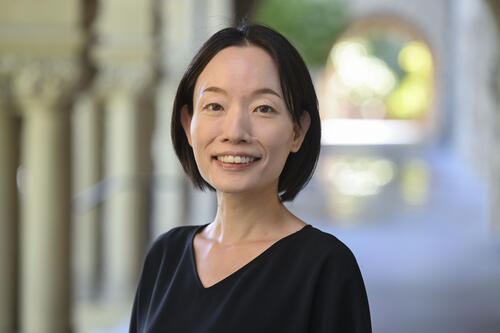
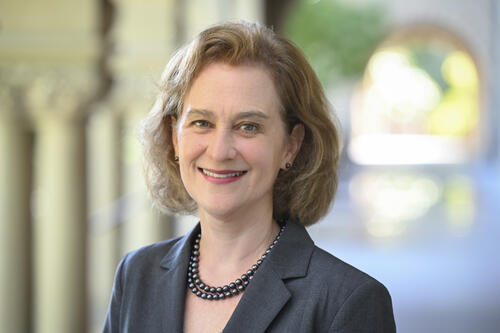
Yuko Murase was a Fulbright Visiting Scholar at the Shorenstein Asia-Pacific Research Center (APARC) for the fall and winter quarters of the 2025–2026 academic year. She is a journalist with more than 15 years of experience at The Mainichi Shimbun, one of Japan’s leading national newspapers, which also operates an English-language news site. Murase received the Fulbright Scholar Award in Journalism in 2025, becoming the only Japanese journalist selected that year.

Under the Fulbright program, Murase conducted comparative research at APARC on educational systems and practices in the United States and Japan. Drawing on her reporting on education in Japan, including “Preference for ‘Free Schools’ over Compulsory Education Stirs Controversy in Japan,” she examined diverse educational models in the United States — such as charter schools, homeschooling, and innovative learning initiatives in Silicon Valley — and their implications for expanding educational opportunities in Japan. Her work also aimed to contribute to ongoing conversations about education in both countries.

Murase has written extensively in both English and Japanese, with a focus on education, social issues, and culture. Her reporting includes school nonattendance (futoko), bullying, school consolidation in depopulating regions, and the growing demand for more educational options in Japan. She was among the journalists who reported on the case of a 13-year-old student who died by suicide in Shiga Prefecture, which drew national attention and led to the enactment of Japan’s Anti-Bullying Act (2013). Her investigative series on harassment within a fire department in Shiga Prefecture during and after the COVID-19 pandemic received the 19th Hikita Keiichiro Award (2025) from the Japan Federation of Newspaper Workers’ Unions, which honors journalism that protects human rights and promotes trust in the press.

Having spent many years reporting in Shiga Prefecture near Kyoto, Murase developed a deep appreciation for local journalism and a strong interest in its future in the digital age. Her work reflects a belief that investigating local issues can yield lessons of global relevance.

Murase has also covered major international events, including the historic visit of President Barack Obama to Hiroshima, and interviewed filmmaker Oliver Stone during his first visit to Hiroshima. She has reported on global perspectives on the legacy of the atomic bombings and nuclear weapons.

Her interest in education has been shaped by studying in several countries. After graduating from high school in Australia, she earned a BA in International Relations from Ritsumeikan University in Kyoto. While there, she studied journalism at Rutgers University in the United States and sociology at the University of the Philippines as an exchange student. She was selected for the Japanese University Student Delegation to Korea by the Japan–Korea Cultural Foundation (2004).

Date Label
Authors
Gary Mukai
News Type
Blogs
Date
Paragraphs

The fifth year of the Stanford/SPICE East Asia Seminars for Teachers in Hawaiʻi (“Stanford SEAS Hawai‘i”) was launched in April 2025 and included four online seminars that featured Stanford-affiliated scholars—Professor Ethan Segal, Professor Andrew Walder, PhD candidate Zoë Gioja, and Ambassador Scot Marciel—and culminated in a three-day in-person summer institute that took place from July 12 to 14, 2025 at the Hawai‘i Imin International Conference Center at Jefferson Hall, East-West Center. This year’s cohort included 19 public and private high school teachers—Stanford/Freeman SEAS Hawai‘i Fellows—from across Hawai‘i. Below are the names of the 2025 Stanford/Freeman SEAS Hawai‘i Fellows, their schools, and the islands where their schools are located:

Adrienne PuluMaui High SchoolMaui
Amelia ThorneKonawaena High SchoolHawai‘i
Angelica GrimbleKailua High SchoolO‘ahu
Annie PaopaoKahuku High and Intermediate SchoolO‘ahu
Aura-Rae Pohai WongCentral District Office @ ‘Aiea ElementaryO‘ahu
Casey HultenKea‘au High SchoolHawai‘i
Eric AsuncionMaui High SchoolMaui
Jaylin Petersen‘Aiea High SchoolO‘ahu
Jonathan LoomisMcKinley High SchoolO‘ahu
Kristen HairstonLeilehua High SchoolO‘ahu
Lono BaldadoHilo High SchoolHawai‘i
Lyn Nicole Chua‘Aiea High SchoolO‘ahu
Mahina GooPearl City High SchoolO‘ahu
Micah Kawaguchi-AiletcherLahainaluna High SchoolMaui
Michelle Levine AquinoFarrington High SchoolO‘ahu
Misael BernardHawaiian Mission AcademyO‘ahu
Rhealiza Pira-MikiKonawaena High SchoolHawai‘i
Rukhsanna GuidrozSeabury HallMaui
Tammy JohnsonCalvary Chapel Christian SchoolO‘ahu

Stanford SEAS Hawai‘i Manager Rylan Sekiguchi invited scholars from Hawai‘i as well as curriculum writers and facilitators of teacher professional development to offer presentations over the course of the institute. They are listed below as well as the titles of their presentations. The presentation topics were selected to support Hawai‘i State Department of Education standards such as “U.S. History and Government Theme 1 (Immigration and Migration, 1880–1930), Anchor Standard 16 (Global Interconnections and Changing Spatial Patterns): Cause and Effects of Migration.”

  • Shana Brown, Associate Professor, University of Hawai‘i at Mānoa, “U.S.–China Relations: Problems and Potential”
  • Douglas D. L. Chong, President of the Hawaii Chinese History Center, “The Chinese Diaspora in Hawai‘i”
  • Jonas Edman, Instructional Designer, SPICE, “SPICE Curricula on Chinese American History”
  • Naomi Funahashi, Manager, Reischauer Scholars Program and Teacher Professional Development, SPICE, “Teaching Contemporary Korea with SPICE”
  • Merle Grybowski, Director of Teacher Training, Pacific and Asian Affairs Council, “East-West Center Walkabout”
  • Patricia Halagao, Professor, University of Hawai‘i at Mānoa, “Teaching Filipino Identity, History, and Resistance”
  • Ken K. Ito, Professor Emeritus, University of Hawai‘i at Mānoa, “Nakashima Naoto’s ‘Waiawa Station’ (1934) as Diasporic Fiction”
  • C. Harrison Kim, Associate Professor, University of Hawai‘i at Mānoa, “Korea in the 20th Century: Colonialism, North/South Division, Futures”
  • Jonathan Okamura, Professor Emeritus, University of Hawai‘i at Mānoa, “East Asians and Southeast Asians in Unequal Hawai‘i”
  • Rylan Sekiguchi, Manager of Curriculum and Instructional Design, SPICE, “Divided Memories: Comparing History Textbooks”
     
Image
a person speaking at the podium


Stanford SEAS Hawai‘i is made possible by a generous grant from the Freeman Foundation. President Graeme Freeman (photo above) spoke during the summer institute about the Freeman Foundation’s mission of helping to enhance the teaching of East Asia through programs such as the National Consortium for Teaching about Asia and Stanford SEAS Hawaiʻi and expressed his gratitude to the Stanford/Freeman SEAS Hawai‘i Fellows for the tremendous impact their learning has on their students. Graeme was joined by Vice President Shereen Goto, Executive Assistant Sandra Lee, and Foundation Assistant Kellie Matsudaira of the Freeman Foundation. Additional support for the summer institute was kindly provided by Stanford Global Studies and the Stanford Center for East Asian Studies through the U.S. Department of Education National Resource Center funding under the auspices of Title VI, Section 602(a) of the Higher Education Act of 1965.

As I observed the lectures, curriculum demonstrations, and listened to the Stanford/Freeman SEAS Hawai‘i Fellows’ comments, questions, and resource sharing, I reflected on ways that SPICE has continued to serve as a bridge between Stanford University scholars and teachers in Hawai‘i since 1988 when SPICE founding director Dr. David Grossman established the Consortium for Teaching Asia and the Pacific in the Schools (CTAPS) at the East-West Center. During the institute, I shared thoughts on three Stanford scholars. Stanford scholar Lee Shulman is someone whom I mentioned to teachers at the second CTAPS summer institute that was held in 1989. Shulman is known for developing the concept of pedagogical content knowledge or PCK, which emphasizes that teachers need not only subject matter expertise but also pedagogical content knowledge. While listening to the Stanford/Freeman SEAS Hawai‘i Fellows, their unique blend of subject matter knowledge and pedagogical content knowledge really shined. Second, during the institute, I could really feel the fellows’ embrace of the diversity of their students, the people in Hawai‘i, and beyond. I spoke about Stanford psychologist Jamil Zaki, who has noted that empathy is an umbrella term that captures at least three ways that we connect with one another’s emotions. One is emotional empathy, which is vicariously sharing somebody else’s feelings. Cognitive empathy is one’s attempt to understand what someone else is feeling and why. And empathic concern or compassion is one’s motivation to improve others’ well-being. Third, Stephen Murphy-Shigematsu is a psychologist formerly with the University of Tokyo who now teaches at Stanford. His scholarship on heartfulness—elucidated in his book, From Mindfulness to Heartfulness: Transforming Self and Society with Compassion—notes that heartfulness is a way of living with mindfulness, compassion, and responsibility that enhances well-being and transformation. Sekiguchi noted that he certainly felt this heartfulness while interacting with the Stanford/Freeman SEAS Hawai‘i Fellows since April of this year.

In the month following the institute’s conclusion, each Stanford/Freeman SEAS Hawai‘i Fellow will create an original lesson plan that incorporates content that was introduced during Stanford SEAS Hawaiʻi. Sekiguchi awaits in anticipation of seeing how content from the seminar will reach hundreds of secondary school students throughout Hawai‘i.

Sekiguchi and Sabrina Ishimatsu, SPICE Event Coordinator, who organized the institute, and I are grateful to the East-West Center for allowing SPICE to host the Stanford SEAS Hawai‘i summer institute at its beautiful venue.

Most importantly, everyone at SPICE is immensely grateful to President Graeme Freeman, Vice President Shereen Goto, and the Freeman Foundation for its generosity in making Stanford SEAS Hawai‘i possible and providing us the opportunity to engage Stanford/Freeman SEAS Hawai‘i Fellows with scholars from Stanford University, the University of Hawai‘i at Mānoa, and beyond.

To stay informed of SPICE news, join our email list and follow us on FacebookX, and Instagram.

Read More

Stanford Professor Kären Wigen gives a virtual seminar for Stanford SEAS Hawaii
News

Teachers in Hawaii Connect with Stanford Scholars

Twenty-four high school educators comprise the inaugural cohort of Stanford/Freeman SEAS Hawaii Fellows.
Teachers in Hawaii Connect with Stanford Scholars
Hero Image
group of people standing outside
Stanford/Freeman SEAS Hawai‘i Fellows at the East-West Center
Photo Credit: Sheldon Tamon
All News button
1
Subtitle

The Stanford/Freeman SEAS Hawai‘i Fellows gathered at the East-West Center, from July 12 to 14, 2025.

Date Label
Authors
News Type
News
Date
Paragraphs

Applications are now open for Stanford e-Entrepreneurship Japan (SeEJ), an online course conducted in English to foster Japanese students’ creative thinking and innovative problem-solving skills to address social issues. SeEJ is offered twice a year in the fall and spring through a collaboration between SPICE and the non-profit organization e-Entrepreneurship in Japan. It is open to Japanese-speaking students, in or from Japan, in their first and second years of high school. The fall 2025 course will be taught by Irene Bryant and will run from late October 2025 through February 2026.

The application form is now live at https://forms.gle/52f9U8okGxchtxE8A. The deadline to apply is September 5, 2025 at 23:59 Japan Time.

This program made innovative thinking and design thinking my norm.
Shinnosuke Nakagawa, fall 2024 participant

Stanford e-Entrepreneurship Japan offers students an opportunity to engage with scholars and entrepreneurs from Stanford University and beyond through live virtual classes, which are held twice a month on Sundays. The course will culminate in an individual research paper and final group projects. Students who successfully complete the course will receive a Certificate of Completion from SPICE and NPO e-Entrepreneurship.

Past students have credited SeEJ with not only expanding their knowledge about entrepreneurship, but also shifting their attitudes and mindset in how to look at problems. “What I really loved about this program is that it required constant innovative thinking, relatively free presentation topics, and more independent action,” reflects Shinnosuke Nakagawa, who completed the fall 2024 course. “This program made innovative thinking and design thinking my norm. I think this program helped me to develop thinking habits that will be very useful in the future.”

Fellow alum Shia Han agrees. “Stanford e-Entrepreneurship Japan gave me insight on topics I would otherwise never be able to learn about. From the mechanisms on how to think entrepreneurially to how various companies strive for social change, I gained valuable information on how I can work towards solving issues in the world. Hearing about how the guest lecturers and my peers in this program were actively taking action towards topics they were interested in motivated me to not be held back because of my age or abilities but to work towards contributing to causes I was passionate about.”

For more information about Stanford e-Entrepreneurship Japan, visit the program webpage. Interested high school students should apply online by September 5, 2025.

Stanford e-Entrepreneurship Japan is one of several online courses offered by SPICE.

To stay updated on SPICE news, join our email list or follow us on Facebook, Instagram, and X.

Read More

a person standing in the snow
Blogs

Solving Tough Problems with Teen Ideas

Millie Gan, a current student of Stanford e-Entrepreneurship Japan, launches Teenage Business Contest Japan (TBCJ), a new social entrepreneurship platform for teens.
Solving Tough Problems with Teen Ideas
Hero Image
the arches of the main quad at Stanford University
The arches of the Main Quad
Photo Credit: Andrew Broadhead
All News button
1
Subtitle

Applications are now being accepted for the fall 2025 session. Interested high school students in Japan should apply by September 5, 2025.

Date Label
Authors
Rylan Sekiguchi
News Type
News
Date
Paragraphs

SPICE continues to broaden its impact across Japan, recently launching the new Stanford e-Yamaguchi program. This addition joins the growing network of SPICE’s regional high school programs in Japan, which already includes Stanford e-Hiroshima, Stanford e-Kagoshima City, Stanford e-Kawasaki, Stanford e-Kobe, Stanford e-Oita, Stanford e-Tottori, Stanford e-Wakayama, and Stanford e-Fukuoka*.

These online courses are the result of partnerships between SPICE and local governments and schools in Japan. Designed to challenge students to think critically, the programs focus on global issues related to U.S. society, culture, and U.S.–Japan relations.

With the conclusion of the 2024–2025 academic year, each program has selected two standout students for their overall performance, including exceptional final research projects. These 16 honorees will present their work during several recognition ceremonies to be held at Stanford University in August 2025. Distinguished guests will include members of the Stanford community, the Consulate General of Japan in San Francisco, and representatives from the Japanese community in the Bay Area.

The SPICE staff extends its warmest congratulations to the following student honorees for their remarkable academic performance.

Stanford e-Hiroshima (Instructor Rylan Sekiguchi)

Student Honoree: Haruka Morisako
School: Kamo High School

Student Honoree: Yura Sakamoto
School: Kure Mitsuta High School

Stanford e-Kagoshima City (Instructor Amy Cheng)

Student Honoree: Aoi Machida
School: Kagoshima Gyokuryu High School

Student Honoree: Yujiro Matsunaga
School: Kagoshima Gyokuryu High School

Stanford e-Kawasaki (Instructor Maiko Tamagawa Bacha)

Student Honoree: Yuka Nagasawa
School: Kawasaki High School

Student Honoree: Reimi Ito
School: Tachibana High School

Stanford e-Kobe (Instructor Alison Harsch)

Student Honoree: Karen Ito 
School: Kobe Municipal Fukiai High School

Student Honoree: Shoko Urakami
School: Kobe University Secondary School

Stanford e-Oita (Instructor Kasumi Yamashita)

Student Honoree: Yuri Kishida
School: Ajimu High School

Student Honoree: Yoka Okuda
School: Usa High School

Stanford e-Tottori (Instructor Jonas Edman)

Student Honoree: Maiko Koyama
School: Tottori Nishi High School

Student Honoree: Nobuki Tokukura
School: Seishokaichi High School

Stanford e-Wakayama (Instructor Makiko Hirata)

Student Honoree: Yuto Nishi
School: Kushimoto Koza High School

Student Honoree: Tomoka Kishigami
School: Kaichi High School

Stanford e-Yamaguchi (Instructor Mia Kimura)

Student Honoree: Asako Kaya
School: Iwakuni High School

Student Honoree: Miku Kuramura
School: Shimonoseki Nishi High School

SPICE applauds the curiosity, academic excellence, and global mindset of these students and looks forward to celebrating their achievements next month.

* Stanford e-Fukuoka ends later this summer so its honorees will be announced at a later date.

SPICE also offers online courses to U.S. high school students on Japan (Reischauer Scholars Program), China (China Scholars Program), and Korea (Sejong Korea Scholars Program), and online courses to Chinese high school students on the United States (Stanford e-China) and to Japanese high school students on the United States and U.S.–Japan relations (Stanford e-Japan) and on entrepreneurship (Stanford e-Entrepreneurship Japan).

To stay informed of news about Stanford e-Japan and SPICE’s other programs, join our email list and follow us on FacebookX, and Instagram.

Read More

screenshot of two speakers
Blogs

Top Students in SPICE’s 2023–2024 Regional Programs in Japan Are Recognized

Congratulations to the 2023–2024 student honorees from Fukuoka, Hiroshima, Kagoshima, Kawasaki, Kobe, Oita, Tottori, and Wakayama.
Top Students in SPICE’s 2023–2024 Regional Programs in Japan Are Recognized
Hero Image
aerial view of university campus with a tower in the middle
Aerial view of Stanford campus
Photo Credit: Andrew Broadhead
All News button
1
Subtitle

Congratulations to the 16 student honorees from Hiroshima Prefecture, Kagoshima City, Kawasaki City, Kobe City, Oita Prefecture, Tottori Prefecture, Wakayama Prefecture, and Yamaguchi Prefecture.

Date Label
Authors
News Type
Blogs
Date
Paragraphs

The following is a guest article written by Akiko Mizuno, who traveled to the San Francisco Bay Area with other graduate students from the University of Tokyo—under the leadership of Professor Hideto Fukudome—in January 2025. SPICE/Stanford collaborates closely with the Graduate School of Education at the University of Tokyo and met with the students during their visit to the Bay Area.     

As a student at the University of Tokyo’s Graduate School of Education, I had an opportunity to travel to Stanford University to participate in a SPICE-supported intensive seminar at the end of January this year. What I learned during the week-long program far exceeded my expectations. I would like to share some of the highlights of my experience during my stay at Stanford University, but first I would very much like to express my appreciation to Dr. Hideto Fukudome of the University of Tokyo who led our group, and to Dr. Gary Mukai, Director of SPICE, who guided us throughout the special lecture series. My heartfelt thanks also go to all the lecturers who gave us such a heartwarming welcome and truly inspiring and eye-opening lectures.

There were many great things that impressed me through my participation in the SPICE-supported intensive seminar. One of the experiences that gave me a lasting impression was a morning walk through San Jose Japantown guided by Dr. Mukai. As we walked, he told us about his childhood growing up as a sansei (third-generation Japanese American) in the 1960s. As I kept listening to his stories, I was able to imagine the hardships he and his family must have gone through even though he told his stories without drama or hyperbole.

Image
granite monument


At one street corner in Japantown, there was a long, horizontal granite monument. There, I saw big romaji characters carved in capital letters that read “GAMAN. KODOMO NO TAME NI,” which means, “Endure. For the sake of our children.” It suddenly dawned on me that years upon years of struggles that issei (first-generation Japanese immigrants) and nisei (second-generation Japanese Americans) endured so that their children could have a brighter future were expressed in just those 19 letters etched on the stone bench. To this day, I can still vividly recall those letters because they are now etched on my heart.

Another experience that left me with a strong impression was a lecture on design thinking by SPICE educational researcher Dr. Mariko Yang-Yoshihara. Before we left Japan, she had given us an assignment to watch a video about Dr. Ge Wang, professor in the Center for Computer Research in Music and Acoustics (CCRMA) at Stanford University, and write about our reactions. The video included Dr. Wang’s talk and a demonstration of how he produces novel musical sounds using a computer and a bow-shaped metal. At first, they were so unfamiliar to me that I felt somewhat uncomfortable. “Is this considered music?,” was my initial reaction. However, when he played Bach on the Ocarina iPhone app he had invented, I could even say that it was soothing. Towards the end of the video, Dr. Wang also introduced us to a piece of music performed by the Stanford Laptop Orchestra, which he had founded. As I listened to their unconventional orchestra sound, I became even more relaxed and fascinated by the beautiful harmony they produced. I then realized that the whole point of this assignment was to gain a perspective on how we should not be close-minded and embrace new experiences. In her research, Dr. Yang-Yoshihara has introduced a trilogical mindset—think out of the box, give it a try, and fail forward—highlighting these as common attitudes shared by individuals thriving in STEAM fields (Science, Technology, Engineering, the Arts, and Mathematics) across diverse sectors today. By being introduced to Dr. Ge Wang’s endeavor and experiencing my own shift in how I appreciate music, I now see myself beginning to “think out of the box” and finding new experiences more enjoyable.

Dr. Mukai, a noted educator and compassionate person, was the very personification of his parents’ profound love and perseverance, and I learned from Dr. Yang-Yoshihara the importance of having an open mind to be innovative. Having had these valuable lessons, how could I stay the same as before? I am truly thankful that I can still grow even though I am no longer in my youth.

In March 2025, both Dr. Mukai and Dr. Yang-Yoshihara came to Japan and took some time to visit us at the University of Tokyo’s Graduate School of Education. It was a big bonus for me to be able to see them again. I know I am fortunate to have had this extra opportunity to further exchange ideas and learn from them. I am looking forward to implementing the lessons learned through SPICE in my daily life. It was indeed a wonderful way to start a New Year.

To stay informed of SPICE news, join our email list and follow us on Facebook,  X, and Instagram.  

Read More

group photo of students and professors in a conference room
Blogs

Reflections on Dr. Mariko Yang-Yoshihara’s Lecture on STEAM Education

Ryoya Shinozaki, a doctoral researcher at the University of Tokyo’s Graduate School of Education, reflects on his experience in the SPICE-linked intensive seminar in the San Francisco Bay Area.
Reflections on Dr. Mariko Yang-Yoshihara’s Lecture on STEAM Education
people gathered in a restaurant, holding red paper bags
Blogs

Experiencing Global Education Firsthand: The Profound Value of In-Person Education Reassessed in an Era of Digitalization

Makoto Nagasawa, a doctoral researcher at the University of Tokyo’s Graduate School of Education, reflects on his experience in the SPICE-linked intensive seminar in the San Francisco Bay Area, led by Professor Hideto Fukudome.
Experiencing Global Education Firsthand: The Profound Value of In-Person Education Reassessed in an Era of Digitalization
Hero Image
person standing at the Angel Island
Akiko Mizuno on Angel Island
Photo courtesy Akiko Mizuno
All News button
1
Subtitle

Akiko Mizuno, a graduate student at the University of Tokyo’s Graduate School of Education, reflects on her experience in the SPICE-supported intensive seminar in the San Francisco Bay Area.

Date Label
Authors
News Type
Blogs
Date
Paragraphs

The following reflection is a guest post written by Millie Gan, a student in the Spring 2025 Stanford e-Entrepreneurship Japan Program. Millie recently launched Teenage Business Contest Japan, a platform for encouraging social entrepreneurship among teens.

I believe that ideas from young people can help solve some of the world’s toughest problems; the voices of students are more essential than ever.

My name is Millie Gan, and I am a high school senior in San Diego and a participant in the Stanford e-Entrepreneurship Japan (SeEJ) program. I am a British national, born and raised in Tokyo. I’m bilingual in English and Japanese, and studying Spanish. My mother is a third-generation Korean-Japanese, and my father is originally from Hong Kong. Though I have no ethnic roots in Japan, living there allowed me to appreciate and respect its people, traditions, and local diversity. 

When I moved to the U.S. three years ago, I was surprised by the number of questions asked by peers and teachers about Japan’s rural challenges, such as its aging population, shrinking towns, and what people were doing to help. I realized how giving younger people a voice can raise awareness of these urgent issues. That is why I created Teenage Business Contest Japan (TBCJ), a national contest that invites high school students across Japan to identify issues in rural areas and propose business solutions, all in English. The top 10 finalists will pitch their ideas live to judges from large corporations and academia. I had the drive to make TBCJ work, but SeEJ helped me execute that drive into action, giving me the mindset and community to take the project further than I could have alone.

Image
flyer


SeEJ gave me a deeper understanding of what it means to lead with purpose and empathy. For example, Dr. Rie Kijima’s session on design thinking taught me how to think from the perspective of those directly impacted. Dr. Damon Horowitz’s lessons on ethical entrepreneurship helped me reflect on why I started this journey. Ms. Megan Carroll’s insights into the nonprofit sector inspired me to treat TBCJ as a mission-driven platform, not just a contest. In one of our first VC sessions, I was partnered with another student for an exercise on creative problem-solving. My partner chose Japan’s aging society and spoke passionately about the need to amplify student voices. At that moment, I remember thinking, “That is exactly what TBCJ is about.” That moment reminded me that while our concerns are local, our hopes are widely shared.

These lessons transformed how I approached leadership as I began to see every obstacle as a lesson. As I worked to grow TBCJ, I started to think more like an entrepreneur: solving problems while learning from them, adjusting my strategies, and staying true to my original mission.

One of the first things I had to figure out was securing sponsorship. I reached out to dozens of companies focused on education and regional revitalization. After many emails and meetings, I was fortunate to secure seven sponsors and raise over ¥3 million. This funding allowed us to provide prizes for the contest and recognize the efforts of students working to help the community.

Reaching students was another major challenge. Japan has nearly 4,800 high schools, but only 150 have strong English or international programs. I directly contacted the 100 schools that had available email addresses. At first, there was silence, and I remember refreshing my inbox, getting more and more frustrated each day, hoping for a reply. But slowly, after a few weeks, a few schools and their students began responding and signing up. That small breakthrough reminded me how wide the access gap truly is. Only around 17% of Japanese citizens hold a valid passport, compared to around 50% in the U.S., which shows how few Japanese students get global exposure. It made me even more determined to connect local youth with global perspectives and to use English as a bridge to opportunity.

The most difficult challenge was gaining official recognition. I applied to multiple Japanese Government offices for endorsement, but most declined due to government policies and TBCJ’s short history. Thankfully, the Cabinet Office met with me and offered support through their regional revitalization team. Soon after, the University of Tokyo’s Innovation Platform Co., Ltd. (IPC) offered its endorsement and created a new “UTokyo IPC Special Innovation Prize” for the contest.

Through this experience, and with the support of SeEJ, I have learned that we don’t have to wait to make a difference. Entrepreneurship isn’t necessarily about launching companies, but about identifying problems and solving them with purpose. I hope to continue expanding TBC Japan and encouraging more students to take initiative, because I truly believe that ideas from young people are what can solve these challenges. It’s our future, and it is up to us to protect and improve it.

If you’re passionate about solving real-world problems, I highly recommend the Stanford e-Entrepreneurship Japan Program.

Sign up now to participate in TBCJ.

Stanford e-Entrepreneurship Japan will start accepting applications for fall 2025 in August.

Stanford e-Entrepreneurship Japan is one of several online courses offered by SPICE.

To stay updated on SPICE news, join our email list and follow us on FacebookX, and Instagram.

Read More

Stanford e-Entrepreneurship Japan student Naho Abe in Mexico City
Blogs

Stanford e-Entrepreneurship Japan: Fostering Innovative Ways to Address Social Issues

The following reflection is a guest post written by Naho Abe, an alumna of Stanford e-Entrepreneurship Japan.
Stanford e-Entrepreneurship Japan: Fostering Innovative Ways to Address Social Issues
Hero Image
a person standing in the snow
All News button
1
Subtitle

Millie Gan, a current student of Stanford e-Entrepreneurship Japan, launches Teenage Business Contest Japan (TBCJ), a new social entrepreneurship platform for teens.

Date Label
Authors
News Type
News
Date
Paragraphs

Applications are now open for the Fall 2025 session of the Stanford University Scholars Program for Japanese High School Students (also known as “Stanford e-Japan”). The course will run from the end of September 2025 through March 2026, with an application deadline of August 17, 2025.

Stanford e-Japan
Fall 2025 session (September 2025 to March 2026)
Application period: July 1 to August 17, 2025

All applications must be submitted at https://spicestanford.smapply.io/prog/stanford_e-japan/ via the SurveyMonkey Apply platform. Applicants and recommenders will need to create a SurveyMonkey Apply account to proceed. Students who are interested in applying to the online course are encouraged to begin their applications early.

Accepted applicants will engage in an intensive study of U.S. society and culture and U.S.–Japan relations. Government officials, leading scholars, and experts from Stanford University and across the United States provide web-based lectures and engage students in live discussion sessions.

Stanford e-Japan is offered by the Stanford Program on International and Cross-Cultural Education (SPICE), Stanford University. Stanford e-Japan is generously supported by the Yanai Tadashi Foundation, Tokyo, Japan.

For more information about Stanford e-Japan, please visit stanfordejapan.org.


Stanford e-Japan is one of several online courses for high school students offered by SPICE, including the Reischauer Scholars Program, the China Scholars Program, the Sejong Korea Scholars ProgramStanford e-ChinaStanford e-Entrepreneurship Japan, as well as numerous local student programs in Japan.

To stay informed of news about Stanford e-Japan and SPICE’s other student programsjoin our email list or follow us on FacebookInstagram, and X.

Read More

people sitting around a table
Blogs

The Yanai Tadashi Foundation and SPICE/Stanford University

Four Stanford freshmen Yanai Scholars reflect on their experiences.
The Yanai Tadashi Foundation and SPICE/Stanford University
cherry blossoms blooming in Japan
News

Announcing the Spring and Fall 2024 Stanford e-Japan Award Recipients

Congratulations to the students who have been named our top honorees and honorable mention recipients for 2024.
Announcing the Spring and Fall 2024 Stanford e-Japan Award Recipients
Students holding plaques standing on staircase on Stanford campus.
Blogs

Highest Performing Students of Stanford e-Japan and the Reischauer Scholars Program Are Recognized at Stanford University

The Honorable Yo Osumi, Consul General of Japan in San Francisco, makes opening comments.
Highest Performing Students of Stanford e-Japan and the Reischauer Scholars Program Are Recognized at Stanford University
Hero Image
stanford campus scenery
Main Quad
Photo Credit: Andrew Broadhead
All News button
1
Subtitle

Interested students must apply by August 17, 2025.

Date Label
0
Korea Program Postdoctoral Fellow, 2025-2027
minyoung_an.jpg PhD

Minyoung An joins the Walter H. Shorenstein Asia-Pacific Research Center (APARC) as Korea Program Postdoctoral Fellow beginning July 2025 through 2027. She recently obtained her doctorate in Sociology from the University of Arizona. Her research lies at the intersection of gender, transnational migration, and knowledge production, combining statistical modeling, computational methods, and in-depth interviews.

Her dissertation analyzes gendered migration patterns in South Korea and among international PhD students in the U.S., revealing how gender inequality in countries of origin produces distinct selection effects and return migration dynamics. She also studies academic career trajectories and prestige hierarchies, exploring how gender and national origin affect integration into global academia.

At APARC, she will be involved with the Korea Program and the Stanford Next Asia Policy Lab (SNAPL) as she pursues two projects that extend this research agenda: one using computational analysis of social media data to examine gendered migration intent, and another investigating the academic trajectories and institutional reception of international scholars from East Asia. Through these projects, she aims to advance understanding of how transnational inequalities shape global mobility, opportunity, and inclusion.

Date Label
Authors
Noa Ronkin
News Type
News
Date
Paragraphs

When Stanford sociologist Gi-Wook Shin left his home country of South Korea in 1983 to pursue graduate studies at the University of Washington, he was certain he would return to Korea upon graduation. More than 40 years later, Shin, the William J. Perry Professor of Contemporary Korea and a senior fellow at the Freeman Spogli Institute for International Studies, is still in the United States. 

Yet he does not consider himself a case of brain drain for Korea. Shin, who is also the founding director of the Korea Program at the Shorenstein Asia-Pacific Research Center (APARC) and APARC director, has continuously contributed to Korea by leading transnational collaborations, researching and publishing on pressing issues in Korean affairs, and otherwise engaging in diverse intellectual exchanges with the country.

Shin’s experiences sparked his interest in the sociological patterns of mobile talent and a central question: How do countries attract, develop, and retain talent in a globalized world? His new book, The Four Talent Giants (Stanford University Press, 2025), explores that question regarding transnational talent flows from a comparative lens by examining how four strikingly different Asia-Pacific nations – Japan, Australia, China, and India – have become economic powerhouses.

We interviewed Shin about his book – watch:

Sign up for APARC newsletters to receive our scholars’ research updates >


The book’s main idea, Shin explains, is that how countries manage talent is key to their strength and future success. He calls the four Asia-Pacific nations the book examines “talent giants” because each has used a distinct talent strategy that has proven critical to national development. Three of these nations – China, Japan, and India – are among the top five economies in the world in terms of GDP, and Australia, despite its relatively small population size, is third in terms of wealth per adult.

In The Four Talent Giants, Shin investigates how these four nations have become global powers and sustained momentum by responding to risks and challenges, such as demographic crises, brain drain, and geopolitical tensions, and what lessons their developmental paths hold for other countries.

There is no ‘one-size-fits-all’ path to development [...] Rather, the ‘talent giants’ have developed distinctive talent portfolios with different emphases on human versus social capital, domestic versus foreign talents, and homegrown versus foreign-educated talents.
Gi-Wook Shin

A New Framework for Studying Human Resource Development 


Asia’s robust economic growth over the past forty years is nothing short of a remarkable feat. The Asia-Pacific today continues to be the world's fastest-growing region, despite global economic uncertainty. How did this phenomenal ascendance come about?

The existing literature has emphasized common “recipes” of success among Asia-Pacific powers. Endeavoring to find one-size-fits-all formulas that could be replicated in other countries seeking rapid development, it has overlooked the distinct developmental journeys of Asian nations. “We need a new lens, or framework, to explain their successes, while also accounting for cross-national variation in development and sustainability,” writes Shin. 

In his book, Shin examines talent – the skilled occupations essential to a nation’s economy – as a key driver of economic development. While all countries rely on human resources for development, their talent strategies vary based on historical, cultural, and institutional factors. Shin introduces a new framework, talent portfolio theory (TPT), inspired by financial portfolio theory, to analyze and compare these national approaches.

“TPT views a nation’s talent development, like financial investment, as constructing a ‘talent portfolio’ that mixes multiple forms of talent – domestic, foreign, and diasporic – adjusting its portfolio over time to meet new risks and challenges,” he explains. Just as an investor may select different financial products in a mix of assets, countries can create talent portfolios by picking from various strategies.

Shin identifies four main strategies by which a country can harness talent – what he calls the four B's: 

  • Brain train” signifies efforts to develop and expand a country’s domestic talent or human capital.
  • Brain gain” refers to attracting foreign talent to strengthen the domestic workforce.
  • Brain circulation” involves bringing back nationals who have gone abroad for work or study.
  • Brain linkage” means leveraging the global networks and expertise of citizens living overseas through transnational collaboration.


Shin uses TPT as an analytical framework to examine how each of the four talent giants has constructed its distinct national talent portfolio and how this portfolio has evolved. As in an investment portfolio rebalancing, a nation can maintain diversification across the four B's and within each B. TPT therefore offers a holistic framework for understanding the overall picture of a country’s talent strategy, and how and why it may “rebalance” its talent portfolio.

Throughout the book, Shin shows that, while Japan has relied on the brain train strategy, Australia, whose population was too small for such an approach, emphasized brain gain. China used brain circulation: it first sent students and professionals abroad to learn, then implemented policies to encourage them to return. India, by contrast, established linkages among its diaspora and used them to develop its economy.

Immigrants have not just filled jobs. They have created new industries and helped the United States and their home countries alike. If the US makes it harder for talent to come in and stay, it risks hurting its long-term success.
Gi-Wook Shin

New Geopolitics of Global Talent: Lessons and Policy Implications


The case studies of the four talent giants reveal that there is no single path to talent-driven development. Each of the four Asia-Pacific countries has built its unique talent portfolio, balancing human and social capital, homegrown and foreign-educated individuals, and domestic and diasporic talents. While the talent giants use all four B's to some extent, each emphasizes them differently, reflecting diverse strategies and development paths. The core findings of these studies offer valuable insights for countries aiming to design effective talent policies. 

The four B's were instrumental in the economic rise of the four Asian nations, and they will be equally critical in addressing new challenges facing all economies, from demographic crises to emergent geopolitical tensions. For the United States, one such challenge is its sprawling competition with China, where the battle for talent is heating up in the race for technological supremacy.

Shin warns that the advantage the United States has long held in technological innovation, driven by its ability to attract skilled foreign talent, is now at risk from the Trump administration’s anti-immigration policies, pressures on universities, and cuts to research funding. “Immigrants have not just filled jobs,” he emphasizes. “They have created new industries and helped the US and their home countries. If the US makes it harder for talent to come in and stay, it risks hurting its long-term success.”

The Four Talent Giants is an outcome of Shin’s longstanding project investigating Talent Flows and Development, now one of the research tracks he leads at the Stanford Next Asia Policy Lab (SNAPL), which he launched in 2022. Housed at APARC, the lab is an interdisciplinary research initiative addressing Asia’s social, cultural, economic, and political challenges through comparative, policy-relevant studies. SNAPL’s education mission is to cultivate the next generation of researchers and policy leaders by offering mentorships and fellowship opportunities for students and emerging scholars.

Shin notes that the SNAPL team illustrates all four B’s in his talent portfolio theory, as some members are U.S.-born and trained, some come from Asia and, after working at the lab, return to their home countries, whereas some stay here, promoting linkages with their home countries. “In many ways, this project shows what is possible when we invest in talent and encourage international collaboration.”


In the Media


Stanford Scholar Reveals How Talent Development Strategies Shape National Futures
The Korean Daily, July 13, 2025 (interview)
- English version
- Korean version

Read More

College students wait in line to attend an information session at the Mynavi Shushoku MEGA EXPO in Tokyo, Japan.
News

A New Approach to Talent Development: Lessons from Japan and Singapore

Stanford researchers Gi-Wook Shin and Haley Gordon propose a novel framework for cross-national understanding of human resource development and a roadmap for countries to improve their talent development strategies.
A New Approach to Talent Development: Lessons from Japan and Singapore
Gi-Wook Shin, Evan Medeiros, and Xinru Ma in conversation at the Center for Strategic and International Studies.
News

Stanford Next Asia Policy Lab Engages Washington Stakeholders with Policy-Relevant Research on US-China Relations and Regional Issues in Asia

Lab members recently shared data-driven insights into U.S.-China tensions, public attitudes toward China, and racial dynamics in Asia, urging policy and academic communities in Washington, D.C. to rethink the Cold War analogy applied to China and views of race and racism in Asian nations.
Stanford Next Asia Policy Lab Engages Washington Stakeholders with Policy-Relevant Research on US-China Relations and Regional Issues in Asia
Lee Jae-myung, the presidential candidate of the Democratic Party, and his wife Kim Hea-Kyung celebrate in front of the National Assembly on June 4, 2025 in Seoul, South Korea.
Commentary

Is South Korea’s New President Good for Democracy?

South Koreans have elected Lee Jae-myung president. Will he be a pragmatic democratic reformer? Or will he continue the polarizing political warfare of recent South Korean leaders?
Is South Korea’s New President Good for Democracy?
Hero Image
Gi-Wook Shin seated in his office, speaking to the camera during an interview.
All News button
1
Subtitle

In his new book, The Four Talent Giants, Shin offers a new framework for understanding the rise of economic powerhouses by examining the distinct human capital development strategies used by Japan, Australia, China, and India.

Date Label
Display Hero Image Wide (1320px)
No
Authors
Gary Mukai
News Type
Blogs
Date
Paragraphs

Introduction to Issues in International Security is a collaboration between the Center for International Security and Cooperation (CISAC) and the Stanford Program on International and Cross-Cultural Education (SPICE). Four CISAC scholars are featured in accessible video lectures that aim to introduce high school students to issues in international security and increase awareness of career opportunities available in the field. Free discussion guides, developed by Irene Bryant of SPICE, are available for each of the lectures in this series.

For the fourth year since 2022, Dr. Ignacio Ornelas Rodriguez introduced the lectures and lessons in the discussion guides to students from San Jose and Salinas Valley. The course culminated in a symposium on May 22, 2025 that was organized by Sabrina Ishimatsu. Each student had the opportunity to present their research project to CISAC scholars, the Honorable Rose GottemoellerProfessor Norman NaimarkDr. Harold Trinkunas, and Visiting Research Scholar Xunchao Zhang. The scholars provided extremely useful feedback on their research projects and also asked thought-provoking questions. Students from the 2022, 2023, and 2024 cohorts have commented on how the feedback and questions from the CISAC scholars helped them to prepare for college.

Image
Zoom screenshot of a speaker


Also during the symposium, students were honored to listen to reflections on the importance of international security from former Secretary of Defense Leon Panetta who underscored the importance of education and encouraged the students to consider international security, or more broadly international relations as an academic field of study and career. Panetta has also served as Director of the CIA and White House Chief of Staff. Students were also very fortunate to listen to words of encouragement from Alexandra Arguello, a 2023 alum of the course taught by Ornelas Rodriguez. Arguello is now a student at Harvard University.

Ornelas Rodriguez closed the symposium by extending his praise for the 2025 cohort which exceeded his expectations and commended them for adding his class to their already busy academic lives.

To stay informed of SPICE news, join our email list and follow us on Facebook, X, and Instagram.

Read More

CISAC Scholars Martha Crenshaw, Rose Gottemoeller, Norman Naimark, Megan Palmer; photos courtesy CISAC
News

Introduction to Issues in International Security

A new video curriculum series is released.
Introduction to Issues in International Security
Hero Image
screenshot of Zoom meeting
Top row, left to right: Secretary Leon Panetta, Dr. Ignacio Ornelas Rodriguez, Dr. Harold Trinkunas, the Honorable Rose Gottemoeller, Professor Norman Naimark; second row, far left: Visiting Research Scholar Xunchao Zhang; third row, fourth from the left: Alexandra Arguello.
All News button
1
Subtitle

Students from San Jose and Salinas Valley—taught by Dr. Ignacio Ornelas Rodriguez—met on May 22, 2025 for the fourth annual International Security Symposium.

Date Label
Subscribe to Education