Economic Affairs
Paragraphs

Railroad regulation in the post-Staggers Act regime compares the revenues earned to a measure of the “variable cost” of the shipment. While revenues are readily observed, the “variable cost” is calculated using the “Uniform Rail Costing System” (URCS) that was developed by the Interstate Commerce Commission. We characterize the properties of the URCS rail costing methodology and its role in rate regulation, and we assess whether it produces an economically valid estimate of the cost caused by a rail shipment. We find that the URCS methodology is an accounting cost allocation procedure that does not recover an estimate of the cost of a rail shipment that a rational railroad operator would use to make pricing or operating decisions. We then explain why in the post-Staggers Act regime, even if an economic meaningful shipment cost measure were available, this information would not come any closer to solving the problem of determining what is an unreasonable price for a railroad to charge. We conclude by arguing that the use of the URCS methodology should be abandoned in railroad rate reasonableness regulation and replaced with a price benchmarking approach.

All Publications button
1
Publication Type
Journal Articles
Publication Date
Journal Publisher
Review of Industrial Organization
Authors
Frank Wolak
-

Co-sponsored by the King Center on Global Development and Shorenstein APARC, this virtual panel discusses the impacts of the coronavirus pandemics on China's urban and rural employment and its health care sectors. Karen Eggleston, Hongbin Li, Scott Rozelle, and Xueguang Zhou will share their expertise during this critical time as China lifts its lockdown and U.S. cases of COVID-19 ramp up.

Image
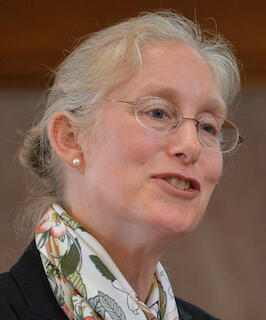
Dr. Karen Eggleston
Karen Eggleston is a senior fellow at the Freeman Spogli Institute for International Studies (FSI) at Stanford University, and director of the Stanford Asia Health Policy Program and deputy director of the Shorenstein Asia-Pacific Research Center at FSI. She is also a fellow with the Center for Innovation in Global Health at Stanford University School of Medicine, and a faculty research fellow of the National Bureau of Economic Research (NBER). Eggleston earned her PhD in public policy from Harvard University and has MA degrees in economics and Asian studies from the University of Hawaii and a BA in Asian studies summa cum laude (valedictorian) from Dartmouth College. Eggleston studied in China for two years and was a Fulbright scholar in Korea. Her research focuses on government and market roles in the health sector and Asia health policy, especially in China, India, Japan, and Korea; healthcare productivity; and the economics of the demographic transition. She served on the Strategic Technical Advisory Committee for the Asia Pacific Observatory on Health Systems and Policies, and has been a consultant to the World Bank, the Asian Development Bank, and the WHO regarding health system reforms in the PRC.


Image
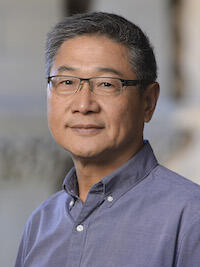
Dr. Hongbin Li
Hongbin Li is the James Liang Director of the China Program at the Stanford King Center on Global Development, and a senior fellow of Stanford Institute for Economic Policy Research (SIEPR). Hongbin Li obtained a PhD in economics from Stanford University in 2001 and joined the economics department of the Chinese University of Hong Kong (CUHK), where he became full professor in 2007. He was also one of the two founding directors of the Institute of Economics and Finance at the CUHK. He taught at Tsinghua University in Beijing 2007-2016 and was C.V. Starr Chair Professor of Economics in the School of Economics and Management. He also founded and served as the executive associate director of the China Data Center at Tsinghua. He also co-directs the China Enterprise Survey and Data Center at Wuhan University, which conducts the China Employer-Employee Survey (CEES).


Image
Dr. Scott Rozelle
Scott Rozelle is the Helen F. Farnsworth Senior Fellow and the co-director of the Rural Education Action Program in the Freeman Spogli Institute for International Studies at Stanford University. He received his BS from the University of California, Berkeley, and his MS and PhD from Cornell University. Previously, Rozelle was a professor at the University of California, Davis and an assistant professor in Stanford’s Food Research Institute and department of economics. He currently is a member of several organizations, including the American Economics Association, the International Association for Agricultural Economists, and the Association for Asian Studies. Rozelle also serves on the editorial boards of Economic Development and Cultural Change, Agricultural Economics, the Australian Journal of Agricultural and Resource Economics, and the China Economic Review.


Image
Dr. Xueguang Zhou
Xueguang Zhou is the Kwoh-Ting Li Professor in Economic Development, a professor of sociology and a Freeman Spogli Institute for International Studies senior fellow. His main area of research is institutional changes in contemporary Chinese society, focusing on Chinese organizations and management, social inequality, and state-society relationships. One of his current research projects is a study of the rise of the bureaucratic state in China. He works with students and colleagues to conduct participatory observations of government behaviors in the area of environmental regulation enforcement, in policy implementation, in bureaucratic bargaining, and in incentive designs. With colleagues and students, he also studies patterns of career mobility and personnel flow among different government offices to understand intra-organizational relationships in the Chinese bureaucracy.


Via Zoom webinar.

Register at: https://bit.ly/3apHvgG

Shorenstein APARC
Stanford University
Encina Hall E301
Stanford, CA 94305-6055

(650) 723-9072 (650) 723-6530
0
Senior Fellow at the Freeman Spogli Institute for International Studies
Center Fellow at the Center for Health Policy and the Center for Primary Care and Outcomes Research
Faculty Research Fellow of the National Bureau of Economic Research
Faculty Affiliate at the Stanford Center on China's Economy and Institutions
karen-0320_cropprd.jpg PhD

Karen Eggleston is a Senior Fellow at the Freeman Spogli Institute for International Studies (FSI) at Stanford University and Director of the Stanford Asia Health Policy Program at the Shorenstein Asia-Pacific Research Center at FSI. She is also a Fellow with the Center for Innovation in Global Health at Stanford University School of Medicine, and a Faculty Research Fellow of the National Bureau of Economic Research (NBER). Her research focuses on government and market roles in the health sector and Asia health policy, especially in China, India, Japan, and Korea; healthcare productivity; and the economics of the demographic transition.

Eggleston earned her PhD in public policy from Harvard University and has MA degrees in economics and Asian studies from the University of Hawaii and a BA in Asian studies summa cum laude (valedictorian) from Dartmouth College. Eggleston studied in China for two years and was a Fulbright scholar in Korea. She served on the Strategic Technical Advisory Committee for the Asia Pacific Observatory on Health Systems and Policies and has been a consultant to the World Bank, the Asian Development Bank, and the WHO regarding health system reforms in the PRC.

Director of the Asia Health Policy Program, Shorenstein Asia-Pacific Research Center
Stanford Health Policy Associate
Faculty Fellow at the Stanford Center at Peking University, June and August of 2016
CV
Date Label
Karen Eggleston APARC Deputy Director, Asia Health Policy Program Director Shorenstein APARC
Hongbin Li James Liang Director of the China Program , Senior Fellow (SIEPR) King Center on Global Development

Encina Hall East, E404
Stanford, CA 94305-6055

0
Faculty Co-director of the Stanford Center on China's Economy and Institutions
Helen F. Farnsworth Endowed Professorship
Senior Fellow at the Freeman Spogli Institute for International Studies
Senior Fellow at the Stanford Institute for Economic Policy Research
scott_rozelle_new_headshot.jpeg PhD

Scott Rozelle is the Helen F. Farnsworth Senior Fellow and the co-director of Stanford Center on China's Economy and Institutions in the Freeman Spogli Institute for International Studies and Stanford Institute for Economic Policy Research at Stanford University. He received his BS from the University of California, Berkeley, and his MS and PhD from Cornell University. Previously, Rozelle was a professor at the University of California, Davis and an assistant professor in Stanford’s Food Research Institute and department of economics. He currently is a member of several organizations, including the American Economics Association, the International Association for Agricultural Economists, and the Association for Asian Studies. Rozelle also serves on the editorial boards of Economic Development and Cultural Change, Agricultural Economics, the Australian Journal of Agricultural and Resource Economics, and the China Economic Review.

His research focuses almost exclusively on China and is concerned with: agricultural policy, including the supply, demand, and trade in agricultural projects; the emergence and evolution of markets and other economic institutions in the transition process and their implications for equity and efficiency; and the economics of poverty and inequality, with an emphasis on rural education, health and nutrition.

Rozelle's papers have been published in top academic journals, including Science, Nature, American Economic Review, and the Journal of Economic Literature. His book, Invisible China: How the Urban-Rural Divide Threatens China’s Rise, was published in 2020 by The University of Chicago Press. He is fluent in Chinese and has established a research program in which he has close working ties with several Chinese collaborators and policymakers. For the past 20 years, Rozelle has been the chair of the International Advisory Board of the Center for Chinese Agricultural Policy; a co-director of the University of California's Agricultural Issues Center; and a member of Stanford's Walter H. Shorenstein Asia-Pacific Research Center and the Center on Food Security and the Environment.

In recognition of his outstanding achievements, Rozelle has received numerous honors and awards, including the Friendship Award in 2008, the highest award given to a non-Chinese by the Premier; and the National Science and Technology Collaboration Award in 2009 for scientific achievement in collaborative research.

Faculty affiliate at the Center on Democracy, Development, and the Rule of Law
Faculty Affiliate at the Walter H. Shorenstein Asia-Pacific Research Center
Date Label
Scott Rozelle Helen F. Farnsworth Senior Fellow, Co-director of REAP Freeman Spogli Institute

Shorenstein APARC
Stanford University
Encina Hall, E301
Stanford, CA 94305-6055

(650) 725-6392 (650) 723-6530
0
Senior Fellow at the Freeman Spogli Institute for International Studies
Kwoh-Ting Li Professor in Economic Development
Professor of Sociology
Graduate Seminar Professor at the Stanford Center at Peking University, June and July of 2014
Faculty Affiliate at the Stanford Center on China's Economy and Institutions
Xueguang Zhou_0.jpg PhD

Xueguang Zhou is the Kwoh-Ting Li Professor in Economic Development, a professor of sociology, and a Freeman Spogli Institute for International Studies senior fellow. His main area of research is on institutional changes in contemporary Chinese society, focusing on Chinese organizations and management, social inequality, and state-society relationships.

One of Zhou's current research projects is a study of the rise of the bureaucratic state in China. He works with students and colleagues to conduct participatory observations of government behaviors in the areas of environmental regulation enforcement, in policy implementation, in bureaucratic bargaining, and in incentive designs. He also studies patterns of career mobility and personnel flow among different government offices to understand intra-organizational relationships in the Chinese bureaucracy.

Another ongoing project is an ethnographic study of rural governance in China. Zhou adopts a microscopic approach to understand how peasants, village cadres, and local governments encounter and search for solutions to emerging problems and challenges in their everyday lives, and how institutions are created, reinforced, altered, and recombined in response to these problems. Research topics are related to the making of markets, village elections, and local government behaviors.

His recent publications examine the role of bureaucracy in public goods provision in rural China (Modern China, 2011); interactions among peasants, markets, and capital (China Quarterly, 2011); access to financial resources in Chinese enterprises (Chinese Sociological Review, 2011, with Lulu Li); multiple logics in village elections (Social Sciences in China, 2010, with Ai Yun); and collusion among local governments in policy implementation (Research in the Sociology of Organizations, 2011, with Ai Yun and Lian Hong; and Modern China, 2010).

Before joining Stanford in 2006, Zhou taught at Cornell University, Duke University, and Hong Kong University of Science and Technology. He is a guest professor at Peking University, Tsinghua University, and the People's University of China. Zhou received his Ph.D. in sociology from Stanford University in 1991.

CV
Date Label
Xueguang Zhouu Senior Fellow Shorenstein APARC
Panel Discussions
-

This is a virtual event. Please click here to register and generate a link to the talk. 
The link will be unique to you; please save it and do not share with others.

Data-intensive technologies such as AI may reshape the modern world. We propose that two features of data interact to shape innovation in data-intensive economies: first, states are key collectors and repositories of data; second, data is a non-rival input in innovation. We document the importance of state-collected data for innovation using comprehensive data on Chinese facial recognition AI firms and government contracts. Firms produce more commercial software and patents, particularly data-intensive ones, after receiving government public security contracts. Moreover, effects are largest when contracts provide more data. We then build a directed technical change model to study the state's role in three applications: autocracies demanding AI for surveillance purposes, data-driven industrial policy, and data regulation due to privacy concerns. When the degree of non-rivalry is as strong as our empirical evidence suggests, the state's collection and processing of data can shape the direction of innovation and growth of data-intensive economies.

Image
Portrait of David Yang
David Yang’s research focuses on political economy, behavioral and experimental economics, economic history, and cultural economics. In particular, David studies the forces of stability and forces of changes in authoritarian regimes, drawing lessons from historical and contemporary China. David received a B.A. in Statistics and B.S. in Business Administration from University of California at Berkeley, and PhD in Economics from Stanford. David is currently a Prize Fellow in Economics, History, and Politics at Harvard and a Postdoctoral Fellow at J-PAL at MIT. He also joined Harvard’s Economics Department as an Assistant Professor as of 2020.

Via Zoom Webinar.
Register at: https://bit.ly/2VlhaMm

David Yang Prize Fellow in Economics, History, and Politics; Department of Economics, Harvard University
Seminars
News Type
News
Date
Paragraphs

Image
innovative china book cover
The book looks into how and why “China’s economy is transitioning to a ‘new normal’ of slower but more balanced and sustainable growth.” It reviews the reallocation of labor from agriculture to industry and notes that it has been a major driving force of China’s economic growth, but the surplus of rural laborers has declined considerably and will continue to decline. China needs “productivity and innovation as new driver of growth” and structural and institutional reform. One of the strategies to achieve reform is to build China’s human capital and make it "the cornerstone of its economy”.

Several REAP publications are cited in chapter 6: Building Human Capital. The chapter talks about education attainment in the labor force, quality disparities across rural and urban residents, school dropout problems, and the importance of early childhood development – all pillars of REAP’s research.


Read Excerpts from the Chapter Here

Hero Image
china urban mopeds Rural Education Action Program
All News button
1
Subtitle

REAP research is cited in a chapter of a recently published book title, "Innovative China: New Drivers of Growth", written by the World Bank Group and the People’s Republic of China Development Research Center of the State Council.

Authors
Colin H. Kahl
News Type
Commentary
Date
Paragraphs

The novel coronavirus (COVID-19) is a global public health disaster of almost biblical proportions. It is a once-in-a-century occurrence that threatens to destroy countless lives, ruin economies, and stress national and international institutions to their breaking point. And, even after the virus recedes, the geopolitical wreckage it leaves in its wake could be profound.

Many have understandably drawn comparisons to the influenza pandemic of 1918 and 1919. That pandemic, which began in the final months of World War I, may have infected 500 million people and killed 50 million people around the globe. As the grim toll of COVID-19 mounts, it remains to be seen if that comparison will prove apt in terms of the human cost.

But, if we want to understand the even darker direction in which the world may be headed, leaders and policymakers ought to pay more attention to the two decades after the influenza pandemic swept the globe. This period, often referred to as the interwar years, was characterized by rising nationalism and xenophobia, the grinding halt of globalization in favor of beggar-thy-neighbor policies, and the collapse of the world economy in the Great Depression. Revolution, civil war, and political instability rocked important nations. The world’s reigning liberal hegemon — Great Britain — struggled and other democracies buckled while rising authoritarian states sought to aggressively reshape the international order in accordance with their interests and values. Arms races, imperial competition, and territorial aggression ensued, culminating in World War II — the greatest calamity in modern times.

In the United States, the interwar years also saw the emergence of the “America First” movement. Hundreds of thousands rallied to the cause of the America First Committee, pressing U.S. leaders to seek the false security of isolationism as the world burned around them. President Franklin Delano Roosevelt pushed back, arguing that rising global interdependence meant no nation — not even one as powerful and geographically distant as the United States — could wall itself off from growing dangers overseas. His warning proved prescient. The war eventually came to America’s shores in the form of the attack on Pearl Harbor.

Even before COVID-19, shadows of the interwar years were beginning to re-emerge. The virus, however, has brought these dynamics into sharper relief. And the pandemic seems likely to greatly amplify them as economic and political upheaval follows, great-power rivalry deepens, institutions meant to encourage international cooperation fail, and American leadership falters. In this respect, as Richard Haas notes, the COVID-19 pandemic and the aftershocks it will produce seem poised to “accelerate history,” returning the world to a much more dangerous time.

However, history is not destiny. While COVID-19 worsens or sets in motion events that may increasingly resemble this harrowing past, we are not fated to repeat it. Humans have agency. Our leaders have real choices. The United States remains the world’s most powerful democracy. It has a proud legacy of transformational leaps in human progress, including advances that have eradicated infectious diseases. It is still capable of taking urgent steps to ensure the health, prosperity, and security of millions of Americans while also leading the world to navigate this crisis and build something better in its aftermath. America can fight for a better future. Doing so effectively, however, requires understanding the full scope of the challenges it is likely to face.

Read the rest at War on the Rocks

Hero Image
covid 19 radoslav zilinsky Radoslav Zilinsky - Getty Images
All News button
1
Subtitle

The novel coronavirus (COVID-19) is a global public health disaster of almost biblical proportions. It is a once-in-a-century occurrence that threatens to destroy countless lives, ruin economies, and stress national and international institutions to their breaking point. And, even after the virus recedes, the geopolitical wreckage it leaves in its wake could be profound.

Paragraphs

This paper uses a Lagrangian approach to provide sufficient conditions under which money burning expenditures are used in an optimal delegation contract. For comparison, we also establish simple sufficient conditions for the optimality of a cap allocation under a restricted set of preferences for a benchmark setting in which money burning is not allowed. We also apply our findings to a model of cooperation and to a model with quadratic preferences and families of distribution functions. In addition, we provide several comparative statics results.

All Publications button
1
Publication Type
Journal Articles
Publication Date
Journal Publisher
Games and Economic Behavior
Authors
Kyle Bagwell
Paragraphs

We propose a general and highly efficient method for solving and estimating general equilibrium heterogeneous-agent models with aggregate shocks in discrete time. Our approach relies on the rapid computation and composition of sequence-space Jacobians—the derivatives of perfect-foresight equilibrium mappings between aggregate sequences around the steady state. We provide a fast algorithm for computing Jacobians for heterogeneous agents, a technique to substantially reduce dimensionality, a rapid procedure for likelihood-based estimation, a determinacy condition for the sequence space, and a method to solve nonlinear perfect-foresight transitions. We apply our methods to three canonical heterogeneous-agent models: a neoclassical model, a New Keynesian model with one asset, and a New Keynesian model with two assets.

All Publications button
1
Publication Type
Working Papers
Publication Date
Journal Publisher
NBER
Authors
Paragraphs

In the context of interwar Poland, we find that Jews tended to be more literate than non Jews, but show that this finding is driven by a composition effect. In particular, most Jews lived in cities and most non-Jews lived in rural areas, and people in cities were more educated than people in villages regardless of their religion. The case of interwar Poland illustrates that the Jewish relative education advantage depends on the historical and institutional contexts.

All Publications button
1
Publication Type
Working Papers
Publication Date
Journal Publisher
NBER Working Paper
Authors
Ran Abramitzky
Paragraphs

Product reliability is a key concern for manufacturers. We examine a significant but under-recognized determinant of product reliability: the rate of workers quitting from the product's assembly line, or its worker turnover. While modern manufacturers make extensive efforts to control defects and assure quality worksmanship, some quality variation in the manufactured units may be revealed only after they have been used repeatedly. If this is the case, then the disruptiveness of high turnover may directly lead to product reliability issues. To evaluate this possibility, our study collects four post-production years of field failure data covering nearly fifty million sold units of a premium mobile consumer electronics product. Each device is traced back to the assembly line and week in which it was produced, which allows us to link product reliability to production conditions including assembly lines' worker turnover, workloads, firm learning, and the quality of components. Significant effects manifest in two main ways: (1) In the high-turnover weeks immediately following paydays, eventual field failures are surprisingly 10.2% more common than for devices produced in the lowest-turnover weeks immediately before paydays. Using post-payday as an instrumental variable, we estimate that field failure incidence grows by 0.74-0.79% per 1 percentage increase in weekly turnover. (2) Even in other weeks, assembly lines experiencing higher turnover produce an estimated 2-3% more field failures. We demonstrate that staffing and retaining a stable factory workforce critically underlies product reliability and show the value of connected field data in informing manufacturing operations.

Keywords: Data-driven workforce planning, Empirical operations management, Employee turnover, People 

All Publications button
1
Publication Type
Working Papers
Publication Date
Authors
Prashant Loyalka
Paragraphs

Using millions of historical census records and modern birth certificates, we document that immigrants assimilated into US society at similar rates in the past and present. We measure cultural assimilation as immigrants giving their children less foreign names after spending more time in the United States, and show that immigrants erase about one-half of the naming gap with natives after 20 years both historically and today. Immigrants from poorer countries choose more foreign names upon first arrival in both periods but are among the fastest to shift toward native-sounding names. We find substantial cultural assimilation for immigrants of all education levels.

All Publications button
1
Publication Type
Journal Articles
Publication Date
Journal Publisher
American Economic Review: Insights
Authors
Ran Abramitzky
Number
1
Subscribe to Economic Affairs