Corruption
-

ABSTRACT

This talk examines the multiple crises manifesting in Lebanon today and their impact on the fate of the uprising that began in October 2019. While the currency, fiscal, and infrastructural crises were central to the making of Lebanon’s uprising, the novel strategic innovations that the protesters made were key to shaping its trajectory relative to past protests. More recently, the COVID-19 pandemic has both exacerbated existing dynamics while also providing respite to the government and some of the traditional political parties. The presentation therefore engages these complexities to take stock of the current status of popular mobilizations, elite efforts to contain them, and the economic structures that undergird both.

SPEAKER BIO

Image
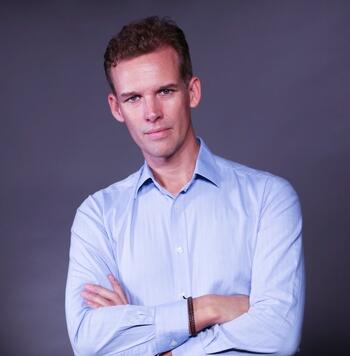
ziad abu rish
Ziad Abu-Rish is Assistant Professor of History at Ohio University, where he is founding director of the Middle East & North Africa Studies Certificate Program. His research explores state formation, economic development, and popular mobilizations in the Middle East, with a particular focus on Lebanon and Jordan. Abu-Rish is co-editor of The Dawn of the Arab Uprisings: End of an Old Order? (2012). He currently serves as Senior Editor at Arab Studies Journal, co-editor at Jadaliyya e-zine, and board member of the Lebanese Studies Association. He is also a Research Fellow at the Lebanese Center for Policy Studies (LCPS).

Online, via Zoom: REGISTER

Ziad Abu-Rish Ohio University
Authors
News Type
News
Date
Paragraphs

In a talk dated May 31, 2019, UC Santa Cruz scholars Muriam Haleh Davis and Thomas Serres examined Algeria’s recent uprising, which led to the resignation of President Abdelaziz Bouteflika. The talk shed light on the protests, analyzing them both in a historical lens while also addressing the future prospects for democratic change and their implications for regional geopolitics. The speakers explored the role of the war of independence (1954-1962) and civil war (1992-1999) in political contestation, questions of language and national identity, and the landscape of the current political opposition.


Hero Image
screen shot 2019 12 10 at 12 54 29 pm
All News button
1
-


This event is now full and we are unable to take any further reservations. However, if you would like to be added to the waitlist, please email us at sj1874@stanford.edu.


This panel will examine the role of Ukraine and Russia in the Trump impeachment inquiry. Why has Ukraine emerged as central focus of the charges? What are Russia’s goals here, and how has it tried to achieve them? How different is an impeachment process driven by foreign policy concerns, rather than by domestic charges? Bringing together three experts on Ukraine, Russia, and US presidential politics, we will examine this extraordinary moment in American and international politics.

PANELISTS:

Image
Headshot of Michael McFaul

Michael McFaul, '86, MA '86, is the Director and Senior Fellow at the Freeman Spogli Institute for International Studies; the Ken Olivier and Angela Nomellini Professor of International Studies in Political Science; and the Peter and Helen Bing Senior Fellow at the Hoover Institution, all at Stanford University. He was also the Distinguished Mingde Faculty Fellow at the Stanford Center at Peking University from June to August of 2015. He joined the Stanford faculty in 1995. Michael McFaul is also an analyst for NBC News and a contributing columnist to The Washington Post.

He received his B.A. in International Relations and Slavic Languages and his M.A. in Soviet and East European Studies from Stanford University in 1986. As a Rhodes Scholar, he completed his D. Phil. in International Relations at Oxford University in 1991.

He also served for five years in the Obama administration, first as Special Assistant to the President and Senior Director for Russian and Eurasian Affairs at the National Security Council at the White House (2009-2012), and then as U.S. Ambassador to the Russian Federation (2012-2014). He has authored several books, including most recently the New York Times bestseller, From Cold War to Hot Peace: An American Ambassador in Putin’s Russia. He is currently writing a book on great powers relations in the 21st century.

Image
Headshot of Terry M. Moe
Terry M. Moe
is the William Bennett Munro Professor of Political Science at Stanford University and a senior fellow at the Hoover Institution. He has written extensively on the presidency, public bureaucracy, and the theory of political institutions more generally. His most recent book on American national politics is Presidents, Populism, and the Crisis of Democracy (University of Chicago Press, forthcoming.  Coauthored with William G. Howell.)

Image
Headshot of Steve Pifer
Steven Pifer is a William Perry research fellow at Stanford University's Center for International Security and Cooperation and a nonresident senior fellow with the Brookings Institution.  He writes on nuclear arms control, Ukraine and Russia.  A retired Foreign Service officer, his assignments included U.S. ambassador to Ukraine and special assistant to the President and senior director for Russia, Ukraine and Eurasia on the National Security Council.

MODERATOR:
Image
Headshot of Anna Grzymala-Busse

Anna Grzymala-Busse is a professor in the Department of Political Science, the Michelle and Kevin Douglas Professor of International Studies, senior fellow at the Freeman Spogli Institute for International Studies and the director of The Europe Center. Her research interests include political parties, state development and transformation, informal political institutions, religion and politics, and post-communist politics.

Encina Hall
616 Jane Stanford Way
Stanford, CA 94305-6055

0
Senior Fellow, Freeman Spogli Institute for International Studies
Ken Olivier and Angela Nomellini Professor of International Studies, Department of Political Science
Peter and Helen Bing Senior Fellow, Hoover Institution
mcfaul_headshot_2025.jpg PhD

Michael McFaul is the Ken Olivier and Angela Nomellini Professor of International Studies in Political Science, Senior Fellow at the Freeman Spogli Institute for International Studies, and the Peter and Helen Bing Senior Fellow at the Hoover Institution, all at Stanford University. He joined the Stanford faculty in 1995 and served as FSI Director from 2015 to 2025. He is also an international affairs analyst for MSNOW.

McFaul served for five years in the Obama administration, first as Special Assistant to the President and Senior Director for Russian and Eurasian Affairs at the National Security Council at the White House (2009-2012), and then as U.S. Ambassador to the Russian Federation (2012-2014).

McFaul has authored ten books and edited several others, including, most recently, Autocrats vs. Democrats: China, Russia, America, and the New Global Disorder, as well as From Cold War to Hot Peace: An American Ambassador in Putin’s Russia, (a New York Times bestseller) Advancing Democracy Abroad: Why We Should, How We Can; and Russia’s Unfinished Revolution: Political Change from Gorbachev to Putin.

He is a recipient of numerous awards, including an honorary PhD from Montana State University; the Order for Merits to Lithuania from President Gitanas Nausea of Lithuania; Order of Merit of Third Degree from President Volodymyr Zelenskyy of Ukraine, and the Dean’s Award for Distinguished Teaching at Stanford University. In 2015, he was the Distinguished Mingde Faculty Fellow at the Stanford Center at Peking University.

McFaul was born and raised in Montana. He received his B.A. in International Relations and Slavic Languages and his M.A. in Soviet and East European Studies from Stanford University in 1986. As a Rhodes Scholar, he completed his D. Phil. in International Relations at Oxford University in 1991. 

CV
Date Label
Panelist Stanford University
Terry Moe Professor of Political Science and Senior Fellow at the Hoover Institution Panelist Stanford University
Panelist Stanford University

Encina Hall
616 Jane Stanford Way
Stanford, CA  94305


(650) 723-4270
0
Senior Fellow at the Freeman Spogli Institute for International Studies
Michelle and Kevin Douglas Professor of International Studies
Professor of Political Science
Senior Fellow, Hoover Institution
anna_gb_4_2022.jpg

Anna Grzymała-Busse is a professor in the Department of Political Science, the Michelle and Kevin Douglas Professor of International Studies, senior fellow at the Freeman Spogli Institute for International Studies and the director of The Europe Center. Her research interests include political parties, state development and transformation, informal political institutions, religion and politics, and post-communist politics.

In her first book, Redeeming the Communist Past, she examined the paradox of the communist successor parties in East Central Europe: incompetent as authoritarian rulers of the communist party-state, several then succeeded as democratic competitors after the collapse of these communist regimes in 1989.

Rebuilding Leviathan, her second book project, investigated the role of political parties and party competition in the reconstruction of the post-communist state. Unless checked by a robust competition, democratic governing parties simultaneously rebuilt the state and ensured their own survival by building in enormous discretion into new state institutions.

Anna's third book, Nations Under God, examines why some churches have been able to wield enormous policy influence. Others have failed to do so, even in very religious countries. Where religious and national identities have historically fused, churches gained great moral authority, and subsequently covert and direct access to state institutions. It was this institutional access, rather than either partisan coalitions or electoral mobilization, that allowed some churches to become so powerful.

Anna's most recent book, Sacred Foundations: The Religious and Medieval Roots of the European State argues that the medieval church was a fundamental force in European state formation.

Other areas of interest include informal institutions, the impact of European Union membership on politics in newer member countries, and the role of temporality and causal mechanisms in social science explanations.

Director of The Europe Center
Moderator Stanford University
Panel Discussions
-

DAY 1: Friday October 11


8:30 – 9:00am         Breakfast


9:00 – 9:15am         Introductory Remarks


9:15 – 11:15am       Panel 1: The Boundaries of Authoritarianism post-Arab Uprisings

Amr Hamzawy, Stanford University

“The Discourse of Authoritarianism in Egypt”

Sean Yom, Temple University

“Mobilization without Movement: The Curse of the Arab Spring in Jordan”

Samia Errazzouki, University of California, Davis

“Political and Economic Stagnation in Morocco: Twenty Years into King Mohamed VI’s Reign”

Chair: Lisa Blaydes, Stanford University


11:15-11:30am        Coffee Break


11:30-1:30pm          Panel 2: Popular Uprisings and Uncertain Transitions

Thomas Serres, University of California, Santa Cruz

“Beyond the ‘Isaba: A Political Economy of the Algerian Hirak”

Lindsay Benstead, Portland State University

“Religious Ideology or Clientelism? Explaining Voter Preferences in Tunisia’s Transitional Elections”

Khalid Medani, McGill University

"The Prospects and Challenges of Democratic Consolidation in Sudan: Understanding the Roots, Dynamics and Potential of an “Impossible” Revolution""

Chair: Hicham Alaoui, Harvard University


1:30-2:30pm             Lunch


2:30-4:30pm             Panel 3: Politics, Succession and Sectarianism in the GCC States

Toby Matthiesen, Oxford University

“Saudi Arabia and the Arab Counter-Revolution”

Michael Herb, Georgia State University

“Monarchical Institutions and the Decay of Family Rule in the Gulf”

Farah Al-Nakib, California Polytechnic State University

“Kuwait's New Urbanism: Palace Projects and the Erosion of the Public”                                   

Chair: Hesham Sallam, Stanford University


DAY 2: Saturday October 12


8:30 – 9:00am          Breakfast


9:00 – 11:00am       Panel 4: Social Strife and Proxy Conflict in the Middle East

Lina Khatib, Chatham House

“Syria’s Conflict: The Intersections of the International and the Domestic”

Stacey Philbrick Yadav, Hobart and William Smith Colleges,

“Can Allies in War Become Partners in Peace? 
Foreign Agendas, Foreign Investment, and Peacebuilding in Yemen”

David Patel, Brandeis University

“Institutions and Competition in Post-Occupation Iraq”

Chair: Amr Hamzawy, Stanford University


11:00-11:15am        Coffee Break


11:15-1:15pm          Panel 5: International Forces in the Arab Political Arena

Lisa Blaydes, Stanford University

“Will China's 'Belt and Road' Initiative Steady or Destabilize Arab Authoritarians?”  

Abbas Milani, Stanford University,

“Iran and its Role in the Prospects of Democracy in the Arab World”

Colin Kahl, FSI, Stanford University

“US Policy Toward a Changing Middle East”

Ayca Alemdaroglu, FSI, Stanford University

“The Rise and Fall of ‘neo-Ottomanism’”

Chair: Larry Diamond, Stanford University


SPEAKER BIOS


Image
hicham alaoui

Hicham Alaoui is an established voice calling for political reform in the Arab world. He is currently a research fellow based at the Weatherhead Center for International Affairs at Harvard University, and is pursuing a D.Phil. at the University of Oxford.  Previously at Stanford, he was a Consulting Professor at the Center for Democracy, Development, and Rule of Law, and advisory board member at the Freeman Spogli Institute. He has published on democratic reforms in the Middle East for journals such as Politique Internationale, Le Debat, Pouvoirs, Le Monde Diplomatique, and Journal of Democracy. He has contributed to The New York Times, Le Monde, La Nouvelle Observateur, El Pais, and Al-Quds. He also served on the MENA Advisory Committee for Human Rights Watch. He holds degrees from Princeton and Stanford. [Back to top]


Image
ayca

Ayça Alemdaroğlu (Ph. D. Cambridge, 2011) (Ph. D. Cambridge, 2011) is the associate director of the Keyman Modern Turkish Studies Program and research assistant professor of sociology at Northwestern University. Her research has engaged with a broad range of theoretical and ethnographic issues, including youth culture and politics, gender and sexuality, experiences of modernity, nationalism, eugenics and higher education. Between 2011-2015, Alemdaroğlu taught in the Anthropology Department and Introductory Studies at Stanford University. Her most publications include "Spatial Segregation and Class Subjectivity in Turkey” published in Social and Cultural Geography; and “Dialectics of Reform and Repression: Unpacking Turkey’s Authoritarian Turn” (with Sinan Erensu) in ROMES. [Back to top]


Image
lindsay b 2

Lindsay J. Benstead  is Associate Professor of Political Science in the Mark O. Hatfield School of Government and Director of the Middle East Studies Center (MESC) at Portland State University. Previously, she served as Fellow in the Middle East Program and the Women’s Global Leadership Initiative at the Woodrow Wilson International Center for Scholars in Washington, DC (2018-2019) and Kuwait Visiting Professor at SciencesPo in Paris (fall 2016). She is an Affiliated Scholar in the Program on Governance and Local Development (GLD) at the University of Gothenburg and Yale University. Benstead has conducted surveys in Morocco, Algeria, Tunisia, Libya, and Jordan and contributes to the Transitional Governance Project. Her research on women and politics, public opinion, and survey methodology has appeared in Perspectives on Politics, International Journal of Public Opinion Research, Governance, and Foreign Affairs. She holds a Ph.D. in Public Policy and Political Science from the University of Michigan in Ann Arbor and served as a doctoral fellow at Yale University and a post-doctoral fellow at Princeton University. [Back to top]


Image
lisa blaydes

Lisa Blaydes is a Professor of Political Science at Stanford University and a Senior Fellow at the Freeman Spogli Institute for International Studies. She is the author of Elections and Distributive Politics in Mubarak’s Egypt (Cambridge University Press, 2011). Her articles have appeared in the American Political Science ReviewInternational Studies QuarterlyInternational OrganizationJournal of Theoretical PoliticsMiddle East Journal, and World Politics. She holds degrees in Political Science (PhD) from the University of California, Los Angeles and International Relations (BA, MA) from Johns Hopkins University. [Back to top]


Image
Larry Diamond

Larry Diamond is a senior fellow at the Hoover Institution and at the Freeman Spogli Institute for International Studies. For more than six years, he directed FSI’s Center on Democracy, Development, and the Rule of Law, where he now leads its Program on Arab Reform and Democracy and its Global Digital Policy Incubator. He is the founding co-editor of the Journal of Democracy and also serves as Senior Consultant at the International Forum for Democratic Studies of the National Endowment for Democracy. His research focuses on democratic trends and conditions around in the world, and on policies and reforms to defend and advance democracy. His 2016 book, In Search of Democracy, explores the challenges confronting democracy and democracy promotion, gathering together three decades of his writing and research, particularly on Africa and Asia. He is author of Ill Winds: Saving Democracy from Russian Rage, Chinese Ambition, and American Complacency, published in 2019 by Penguin Press. He is now writing a textbook on democratic development. [Back to top]


Image
samia e

Samia Errazzouki is a PhD student focusing on early modern Northwest African history. Prior to UC Davis, she worked as a journalist based in Morocco reporting for the Associated Press, and later, with Reuters. Samia also worked as a research associate in Morocco with the University of Cambridge, researching the dynamics of surveillance and citizen media in light of the "Arab Spring." She is currently a co-editor with Jadaliyya. Her work and commentary has appeared in various platforms including The Washington PostBBCForeign PolicyThe GuardianAl Jazeera, the Carnegie Endowment's Sada Journal, the Journal of North African Studies, and the Middle East Institute, among others. Samia holds an MA in Arab Studies from Georgetown University and a BA in Global Affairs from George Mason University. [Back to top]


Image
amr hamzawy cropped

Amr Hamzawy is a Senior Research Scholar at CDDRL. He studied political science and developmental studies in Cairo, The Hague, and Berlin. He was previously an associate professor of political science at Cairo University and a professor of public policy at the American University in Cairo. Between 2016 and 2017, he served as a senior fellow in the Middle East program and the Democracy and Rule of Law program at the Carnegie Endowment for International Peace, Washington, DC. His research and teaching interests as well as his academic publications focus on democratization processes in Egypt, tensions between freedom and repression in the Egyptian public space, political movements and civil society in Egypt, contemporary debates in Arab political thought, and human rights and governance in the Arab world. He is currently writing a new book on contemporary Egyptian politics, titled Egypt’s New Authoritarianism. Hamzawy is a former member of the People’s Assembly after being elected in the first Parliamentary elections in Egypt after the January 25, 2011 revolution. He is also a former member of the Egyptian National Council for Human Rights. Hamzawy contributes a weekly op-ed to the Egyptian independent newspaper al-Shorouk and a weekly op-ed to the London based newspaper al-Quds al-Arabi[Back to top]


Image
michael herb square 620x620

Michael Herb is professor and chair of political science at Georgia State University. His work focuses on Gulf politics, monarchism and the resource curse. He is the author of The Wages of Oil: Parliaments and Economic Development in Kuwait and the UAE (Cornell University Press, 2014) and All in the Family: Absolutism, Revolution, and Democracy in the Middle Eastern Monarchies (SUNY ‎‎1999), in addition to numerous articles. He maintains the Kuwait Politics Database, a comprehensive and authoritative source of information on Kuwaiti elections.  He has twice won Fulbright awards to study in Kuwait. [Back to top]


Image
colin kahl

Colin H. Kahl is co-director of the Center for International Security and Cooperation, the inaugural Steven C. Házy Senior Fellow at the Freeman Spogli Institute for International Studies, and a Professor, by courtesy, in the Department of Political Science at Stanford University. He is also a Strategic Consultant to the Penn Biden Center for Diplomacy and Global Engagement. From October 2014 to January 2017, he was Deputy Assistant to the President and National Security Advisor to the Vice President. In that position, he served as a senior advisor to President Obama and Vice President Biden on all matters related to U.S. foreign policy and national security affairs, and represented the Office of the Vice President as a standing member of the National Security Council Deputies’ Committee. From February 2009 to December 2011, Dr. Kahl was the Deputy Assistant Secretary of Defense for the Middle East at the Pentagon. In this capacity, he served as the senior policy advisor to the Secretary of Defense for Egypt, Iran, Iraq, Israel and the Palestinian territories, Saudi Arabia, Syria, Yemen, and six other countries in the Levant and Persian Gulf region. In June 2011, he was awarded the Secretary of Defense Medal for Outstanding Public Service by Secretary Robert Gates. From 2007 to 2017 (when not serving in the U.S. government), Dr. Kahl was an assistant and associate professor in the Security Studies Program at Georgetown University's Edmund A. Walsh School of Foreign Service. From 2007 to 2009 and 2012 to 2014, he was also a Senior Fellow at the Center for a New American Security (CNAS), a nonpartisan Washington, DC-based think tank. From 2000 to 2007, he was an assistant professor of political science at the University of Minnesota. In 2005-2006, Dr. Kahl took leave from the University of Minnesota to serve as a Council on Foreign Relations International Affairs Fellow in the Office of the Secretary of Defense, where he worked on issues related to counterinsurgency, counterterrorism, and responses to failed states. In 1997-1998, he was a National Security Fellow at the John M. Olin Institute for Strategic Studies at Harvard University. Current research projects include a book analyzing American grand strategy in the Middle East in the post-9/11 era. A second research project focuses on the implications of emerging technologies on strategic stability. He has published numerous articles on international security and U.S. foreign and defense policy in Foreign Affairs, Foreign Policy, International Security, the Los Angeles Times, Middle East Policy, the National Interest, the New Republic, the New York Times, Politico, the Washington Post, and the Washington Quarterly, as well as several reports for CNAS. His previous research analyzed the causes and consequences of violent civil and ethnic conflict in developing countries, focusing particular attention on the demographic and natural resource dimensions of these conflicts. His book on the subject, States, Scarcity, and Civil Strife in the Developing World, was published by Princeton University Press in 2006, and related articles and chapters have appeared in International Security, the Journal of International Affairs, and various edited volumes. Dr. Kahl received his B.A. in political science from the University of Michigan (1993) and his Ph.D. in political science from Columbia University (2000). [Back to top]


Image
lina khatib

Lina Khatib is Head of the Middle East and North Africa Program at Chatham House. She was formerly director of the Carnegie Middle East Center in Beirut and co-founding Head of the Program on Arab Reform and Democracy at Stanford University’s Center on Democracy, Development, and the Rule of Law. Her research focuses on the international relations of the Middle East, Islamist groups and security, political transitions and foreign policy, with special attention to the Syrian conflict. She is a research associate at SOAS, was a senior research associate at the Arab Reform Initiative and lectured at Royal Holloway, University of London. She has published seven books and also written widely on public diplomacy, political communication and political participation in the Middle East. She is a frequent commentator on politics and security in the Middle East and North Africa at events around the world and in the media. [Back to top]


Image
toby m press photo tm

Toby Matthiesen is a Senior Research Fellow in the International Relations of the Middle East at the Middle East Centre, St. Antony’s College, University of Oxford. He was previously a Research Fellow at Pembroke College, Cambridge, and at the London School of Economics and Political Science and gained his doctorate from the School of Oriental and African Studies (SOAS). He is the author of Sectarian Gulf: Bahrain, Saudi Arabia, and the Arab Spring That Wasn't (Stanford University Press, 2013), and The Other Saudis: Shiism, Dissent and Sectarianism (Cambridge University Press, 2015). His current research focuses on Sunni-Shii relations and the legacies of the Cold War in the Middle East. [Back to top]


Image
Medani 2 sc

Khalid Medani is currently associate professor of political science and Islamic studies at McGill University, and has also taught at Oberlin College and Stanford University. Dr. Medani received an A.B. in development studies from Brown University (1987), an MA in development studies from the Center for Contemporary Arab Studies at Georgetown University (1994), and a PhD in political science from the University of California, Berkeley (2003). His research focuses on the political economy of Islamic and ethnic politics in Egypt, Sudan and Somalia. He has published widely on the roots of civil conflict and the funding of the Islamic movement in Sudan, the question of informal finance and terrorism in Somalia, the obstacles to state building in Iraq, and the role of informal networks in the rise of Islamic militancy. Dr. Medani has worked as a researcher at the Brookings Institution and at Stanford University’s Center for International Security and Cooperation (CISAC). He also served as a Homeland Security Fellow at Stanford University from 2006-2007, and has worked with a variety of international organizations including the United Nations Development Program (UNDP), and the UN Office of the Coordinator of Humanitarian Affairs. Dr. Medani has also served as a senior consultant for a variety of governments on issues such as the roots of Islamic militancy, the Darfur crisis, youth politics in Sudan, and electoral reforms in Morocco including the governments of the United States, the Netherlands, the United Kingdom, and Norway. He is a previous recipient of a Carnegie Scholar on Islam award from the Carnegie Corporation of New York. [Back to top]


Image
milani

Abbas Milani is the Hamid & Christina Moghadam Director of Iranian Studies and Adjunct Professor at the Center on Democracy, Development and Rule of Law at the Freeman Spogli Institute at Stanford University. He has been one of the founding co-directors of the Iran Democracy Project and a research fellow at the Hoover Institution. His expertise is U.S.-Iran relations as well as Iranian cultural, political, and security issues. Until 1986, he taught at Tehran University’s Faculty of Law and Political Science, where he was also a member of the Board of Directors of the university’s Center for International Relations. After moving to the United States, he was for fourteen years the Chair of the Political Science Department at the Notre Dame de Namur University. For eight years, he was a visiting Research Fellow in University of California, Berkeley’s Middle East Center. [Back to top]


Image
al nakib headshot

Farah Al-Nakib is Assistant Professor of History at California Polytechnic State University in San Luis Obispo.  She received her PhD (2011) and MA (2006) in History from the School of Oriental and African Studies in London. Her book Kuwait Transformed: A History of Oil and Urban Life (Stanford University Press, 2016) analyzes the relationship between the urban landscape, the patterns and practices of everyday life, and social behaviors and relations in Kuwait, and traces the historical transformation of these three interrelated realms in the shift from the pre-oil to oil eras. Her current research focuses on collective memory and forgetting in Kuwait, and on the Iraqi invasion and occupation of Kuwait in 1990-91.  Her articles have been published in numerous peer reviewed journals and various edited volumes. Until 2018 Al-Nakib was Associate Professor of History and Director of the Center for Gulf Studies at the American University of Kuwait. [Back to top]


Image
dspatel medium

David Siddhartha Patel is the Associate Director for Research at the Crown Center for Middle East Studies at Brandeis University. His research focuses on religious authority, social order, and identity in the contemporary Arab world. He conducted independent field research in Iraq on the role of mosques and clerical networks in generating order after state collapse, and his book, Order Out of Chaos: Islam, Information, and Social Order in Iraq, is being prepared for publication by Cornell University Press. Patel has also recently written about the Jordanian Muslim Brotherhood; ISIS in Iraq; and dead states in the Middle East. He teaches courses on Middle Eastern politics, research design, and GIS and spatial aspects of politics. Before joining the Crown Center, Patel was an assistant professor of government at Cornell University. Patel received his B.A. from Duke University in Economics and Political Science and his Ph.D. from Stanford University in Political Science, where he also was a fellow at CDDRL and CISAC. He studied Arabic in Lebanon, Yemen, Morocco, and Jordan. [Back to top]


Image
hesham sallam headshot

Hesham Sallam is a Research Associate at CDDRL and serves as the Associate-Director of the Program on Arab Reform and Democracy. He is also a co-editor of Jadaliyya ezine and a former program specialist at the U.S. Institute of Peace. His research focuses on Islamist movements and the politics of economic reform in the Arab World. Sallam’s research has previously received the support of the Social Science Research Council and the U.S. Institute of Peace. Past institutional affiliations include Middle East Institute, Asharq Al-Awsat, and the World Security Institute. He is editor of Egypt's Parliamentary Elections 2011-2012: A Critical Guide to a Changing Political Arena (Tadween Publishing, 2013). Sallam received a Ph.D. in Government (2015) and an M.A. in Arab Studies (2006) from Georgetown University, and a B.A. in Political Science from the University of Pittsburgh (2003). [Back to top]


Image
thomas

Thomas Serres is a lecturer in the Politics Department at UC Santa Cruz and a specialist of North African and Mediterranean politics and his scholarship focuses on questions of crisis, economic restructuring and authoritarian upgrading. His first book was published in French by Karthala in 2019. It studies the politics of catastrophization in post-civil war Algeria and is entitled Algeria and the Suspended Disaster: Managing the Crisis and Blaming the People under Bouteflika. He has also recently co-edited the volume North Africa and the Making of Europe: Governance, Institutions, Culture, which was published by Bloomsbury Academic Press in 2018. [Back to top]


Image
stacey philbrick yadav

Stacey Philbrick Yadav is Associate Professor and chair of the Department of Political Science at Hobart and William Smith Colleges. She has written extensively about Islamist-Leftist and intra-Islamist dynamics in Yemen, including Islamists and the State: Legitimacy and Institutions in Yemen and Lebanon, and was a contributor to the “Rethinking Political Islam” project at the Brookings Institution. Focusing increasingly on Yemen’s evolving war dynamics, she co-edited Politics, Governance, and Reconstruction in Yemen’s War for the Project on Middle East Political Science and the spring 2019 issue of Middle East Report devoted to the conflict. Philbrick Yadav serves on the executive committee of the American Institute for Yemeni Studies, and is currently a non-resident fellow at the Crown Center for Middle East Studies at Brandeis University. [Back to top]


Image
sean yom headshot closeup

Sean Yom is Associate Professor of Political Science at Temple University and Senior Fellow in the Middle East Program at the Foreign Policy Research Institute. His research explores authoritarian politics, institutional stability, and historical identity in these countries, as well as their implications for US foreign policy. His publications include From Resilience to Revolution: How Foreign Interventions Destabilize the Middle East (Columbia University Press, 2016); the Routledge textbooks Societies of the Middle East and North Africa (2019) and Government and Politics of the Middle East and North Africa (2019); and numerous articles in academic journals and popular media. He is currently writing a new book, under contract, on the history and politics of Jordan. [Back to top]

Conferences
News Type
News
Date
Paragraphs

“Win support from the people,” Yuhua Wang, Assistant Professor of Government at Harvard University, repeated the words from one of Xi Jinping’s speeches that was given to justify China’s massive anti-corruption campaign. The exact scope and motivations for President Xi Jinping’s anti-corruption campaign is, as yet, unknowable, Wang stated; but clearly, a major public aim of CCP Chairman Xi Jinping was to build regime support by cracking down on bad actors in the government.

Prof. Yuhua Wang gave a talk titled “Why Xi Jinping’s Anti-Corruption Campaign has Undermined Chinese Citizens’ Regime Support?” at the Stanford China Program on November 12th, 2018, based on a national-level survey analysis that he had conducted with his co-author, Prof. Bruce Dickson at George Washington University. Rather than focusing on Xi’s motivations for undertaking his crackdown, however, Wang and Dickson tried to measure the impact of Xi’s anti-corruption campaign on public perception of the central government and the Chinese Communist Party (CCP). Did the campaign, in other words, shore up public support for China’s central government and Party, as Xi hoped it would – or did it, in fact, undermine regime support?

Professor Wang first offered some background on how this anti-corruption campaign got started around 2012-2013, shortly after Xi Jinping became Chairman of the CCP. A staggering 261 vice-ministerial officials and 350,000 officials had been investigated to date; and, even those at the highest levels of China’s leadership – former Politburo and Politburo Standing Committee members, for instance –were not immune from scrutiny. And, equally unprecedented, media coverage of these corruption cases – from Bo Xilai to Zhou Yongkang and Xu Caihou – were extensive, exposing their lavish lifestyles and illicit dalliances on social and traditional media. Wang speculated that such lurid publicity most likely shocked the public, potentially turning citizens against even the central government, which consistently enjoys significantly higher levels of public trust than local governments in China. He decided, therefore, to explore with his co-author what the effects of such exposés might be on public perception of the central regime.

Replicating the same questionnaire and sampling design, Wang and his co-author took a national random sample in two waves – one before the anti-corruption campaign in 2010 and a second one during the campaign in 2014. They interviewed approximately 4,000 people across 25 provinces in China in order to measure potential shifts in people’s attitudes towards the regime over those four years. The findings were, indeed, illuminating:

First, Wang stated, increasing frequency of corruption investigations in a locality was correlated with a greater drop in popular regime support (defined as trust in central government or support for the CCP) in that locality. Higher volume of corruption investigations in a locality was also negatively correlated with people’s perception that government officials were generally honest and clean. The corrosive effects of the campaign, furthermore, proved strongest on those who had initially believed in the integrity of government officials; but for those who were already cynical about official corruption, the campaign had a smaller effect. Lastly, higher the survey respondent’s use of social media like WeChat, stronger the negative effects on his/her support for the regime. The authors also took into account how the chilling effects of the campaign may be negatively impacting local economies and how that slowing economy may actually be the primary cause behind decreasing public regime support. To account for this potentially confounding effect, Wang looked for evidence as to whether the campaign had contributed to a slowdown in China’s economy by 2014. Perhaps because 2014 was still early on in the campaign, he stated that they found no evidence of slower GDP growth rate, growth rate per capita GDP, etc., in the regions where they had undertaken their surveys.

Overall, Wang’s research calls into question whether Xi Jinping’s anti-corruption campaign is, in fact, advancing one of his main goals– i.e., to increase people’s faith in the central regime – or whether it is actually proving counterproductive to his aim. In fact, Wang’s research seems to indicate that the more Chinese citizens are exposed to evidence of government corruption, the more the central regime appears to suffer a loss in credibility. Wang was careful to point out, however, that they were barred, due to political sensitivity, from asking any questions regarding respondents’ attitudes towards Xi Jinping himself. Thus, it is still an open question whether popular support for Xi Jinping himself is increasing even though public trust in the regime might be decreasing.

The recording and transcript are available below.  

Hero Image
wang
Yuhua Wang, Assistant Professor of Government at Harvard University, speaks at the Asia-Pacific Research Center's China Program on November 12th, 2018.
All News button
1
Encina Hall, E112 616 Jane Stanford Way Stanford, CA 94305-6055  
0
CDDRL Postdoctoral Scholar, 2019-20
tesalia.jpg

Tesalia Rizzo holds a Ph.D. in Political Science at the Massachusetts Institute of Technology (MIT). Her research focuses on the demand and supply side of political mediation. Specifically, on how political (formal, informal or clientelist) intermediaries shape citizens’ attitudes and political engagement. She also works with non-governmental practitioners in Mexico to develop and test policies that disincentivize citizen reliance on clientelist and corrupt avenues of engaging with government and strengthen citizen demand for accountability. Her work with Mexican practitioners was awarded the 2017 Innovation in Transparency Award given by the Mexican National Institute for Access to Information (INAI). She is also a Research Fellow at MIT GOV/LAB and the Political Methodology Lab, at MIT. She is a graduate of the Instituto Tecnológico Autónomo de México (ITAM) in Mexico City. Prior to arriving at Stanford, she was a pre-doctoral fellow at the Center for US-Mexican Studies at University of California, San Diego and will join the Political Science Faculty at the University of California, Merced in 2020.

CV
0
CDDRL Postdoctoral Scholar, 2019-20
carothers_headshot.jpeg

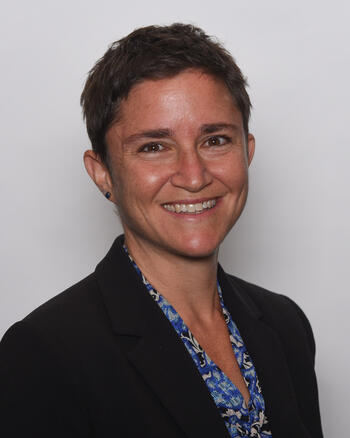
I am a scholar of comparative politics and currently a postdoctoral fellow at the University of Pennsylvania’s Center for the Study of Contemporary China. My research is on authoritarianism and corruption control with a regional focus on East Asia—especially China, the Koreas, and Taiwan. My first book, Corruption Control in Authoritarian Regimes: Lessons from East Asia (Cambridge University Press, 2022), is about why some autocrats are motivated to curb corruption, why their efforts succeed or fail, and what the political consequences of such efforts are. I received my Ph.D. in Government from Harvard University in 2019.

My writing has been published or is forthcoming in numerous academic and policy journals, including Perspectives on Politics, Government and Opposition, the Journal of Democracy, Politics and Society, the Journal of Contemporary China, the Journal of East Asian Studies, Foreign Affairs, Foreign Policy, the China Leadership Monitor, and The National Interest.

Before academia, I lived and traveled in East Asia for several years, learning Chinese and Korean along the way. I worked for The Wall Street Journal Asia in Hong Kong, taught English in Xinjiang, and studied Korean in Seoul. I received my B.A. (summa cum laude), also from Harvard, in Social Studies and East Asian Studies.

0
renee-diresta.jpg

Renée DiResta is the former Research Manager at the Stanford Internet Observatory. She investigates the spread of malign narratives across social networks, and assists policymakers in understanding and responding to the problem. She has advised Congress, the State Department, and other academic, civic, and business organizations, and has studied disinformation and computational propaganda in the context of pseudoscience conspiracies, terrorism, and state-sponsored information warfare.

You can see a full list of Renée's writing and speeches on her website: www.reneediresta.com or follow her @noupside.


Former Research Manager, Stanford Internet Observatory
Authors
Noa Ronkin
News Type
News
Date
Paragraphs

STANFORD, CA, May 21, 2019 — Stanford University’s Walter H. Shorenstein Asia-Pacific Research Center (APARC) announced today that the esteemed journalist Maria Ressa is the recipient of the 2019 Shorenstein Journalism Award. Ressa, the cofounder, CEO, and executive editor of the Philippine news platform Rappler, has been a highly-regarded journalist in Asia for more than thirty years and commended worldwide for her courageous work in fighting disinformation and attempts to silence the free press. Presented annually by APARC, the Shorenstein award is conferred upon a journalist who has contributed significantly to greater understanding of Asia through outstanding reporting on critical issues affecting the region. Ressa will receive the award at a ceremony at Stanford in fall quarter 2019.

Ressa spent nearly two decades at CNN, where she was lead investigative reporter focusing on terrorism in Southeast Asia and served as the network’s bureau chief in Manila, then Jakarta. She then became head of news and current affairs at ABS-CBN, the largest media network in the Philippines. Her work aimed to redefine journalism by combining traditional broadcast and new media for social change. In 2012, Ressa launched Rappler, turning it into one of the Philippines’ most influential news organizations and integrating data, content, and new technologies to promote public service journalism and civic engagement. With a commitment to editorial independence, Rappler has often produced critical coverage of Philippines President Rodrigo Duterte’s controversial policies and actions. In response to these reports, Duterte and his government have repeatedly targeted Rappler and Ressa with threats and lawsuits. Ressa has been arrested twice in recent months.

“Maria Ressa is a champion of digital journalism innovation, and a paragon of protecting democracy and speaking truth to power,” said Gi-Wook Shin, Shorenstein APARC director. “For decades, before she became internationally acclaimed for her brave fight to ‘hold the line,’ Maria’s work had provided deep insights into the complexities of Southeast Asia based on her nuanced knowledge, investigative skills, and the ability to draw upon them to connect with audiences around the world. We are honored to recognize her with the Shorenstein Journalism Award.”

Ressa has taught courses in politics and the press in Southeast Asia for her alma mater, Princeton University, and in broadcast journalism for the University of the Philippines. She is the author of two books: From Bin Laden to Facebook (2012), which traces the spread of terrorism from the training camps of Afghanistan to Southeast Asia and the Philippines, and Seeds of Terror: An Eyewitness Account of Al-Qaeda’s Newest Center of Operations in Southeast Asia (2003), which documented the changing tactics of Al-Qaeda and its next-generation roots in the Muslim strongholds in the Philippines and Indonesia.

The Shorenstein Journalism Award, which carries a $10,000 cash prize, honors the legacy of APARC’s benefactor, Mr. Walter H. Shorenstein, and his twin passions for promoting excellence in journalism and understanding of Asia. APARC recently introduced a new selection committee for the award that presides over the judging of nominees and honoree selection. “We are grateful to the Shorenstein family for its support of our Center and its mission, and to our selection committee members for their expertise and service,” noted Shin. “Our sincere thanks also to the members of the award’s previous jury for their contributions over the years.”

The independent selection committee for the Shorenstein Journalism Award, which unanimously chose Ressa as the 2019 honoree, includes Wendy Cutler, Vice President and Managing Director, Washington, D.C. Office, Asia Society Policy Institute; James Hamilton, Hearst Professor of Communication, Chair of the Department of Communication, and Director of the Stanford Journalism Program, Stanford University; Raju Narisetti, Director of the Knight-Bagehot Fellowship in Economics and Business Journalism and Professor of Professional Practice at Columbia Journalism School; Philip Pan, Asia Editor, The New York Times; and Prashanth Parameswaran, Senior Editor, The Diplomat.  

“Maria Ressa is recognized around the world as a stellar leader in accountability journalism,” said committee member James Hamilton. “As an investigative reporter at CNN, she shed light on terrorism’s threats in Southeast Asia. In cofounding and leading the online news outlet Rappler, she’s brought attention to contentious politics and policies in the Philippines even as she endured politically motivated arrests for her coverage.”

Ressa has earned multiple honors and awards by professional peers and international press freedom organizations, including the Golden Pen of Freedom Award from the World Association of Newspapers and News Publishers, the Knight International Journalism Award of the International Center for Journalists, the Gwen Ifill Press Freedom Award of the Committee to Protect Journalists, the Free Media Pioneer Award from the International Press Institute, the National Democratic Institute’s Democracy Award, and the 2018 Time magazine Person of the Year.

Seventeen journalists have previously received the Shorenstein award, including most recently Anna Fifield, the Washington Post’s Beijing Bureau Chief and long-time North Korea watcher; Siddharth Varadarajan, founding editor of the Wire and former editor of the Hindu; Ian Johnson, a veteran journalist with a focus on Chinese society, religion, and history; and Yoichi Funabashi, former editor-in-chief of the Asahi Shimbun.

Information about the 2019 Shorenstein Journalism Award ceremonies featuring Ressa will be forthcoming in the fall quarter.

Find out more at aparc.fsi.stanford.edu/events/shorenstein-journalism-award.


Media Contact:

Noa Ronkin
Associate Director for Communications and External Relations
Shorenstein APARC
noa.ronkin@stanford.edu


Hero Image
Portrait of Maria Ressa Rappler
All News button
1

Please join Larry Diamond, Senior fellow at the Freeman Spogli Institute for International Affairs and the Hoover Institution for the launch of his latest book, "Ill Winds: Saving Democracy from Russian Rage, Chinese Ambition, and American Complacency."


Featuring a Panel Conversation with:


Zin Mar Aung

Burmese MP and political activist


Vladimir Kara-Murza

Russian journalist and anti-corruption crusader


Cara McCormick

CEO, Chamberlain Project, Co-founder/Co-leader of The

Committee for Ranked Choice Voting in Maine


*Reception to follow

Bechtel Conference Center

Encina Hall

616 Serra Mall

Stanford, CA 94305

Subscribe to Corruption