Corruption

Shorenstein APARC
Stanford University
Encina Hall, Room E301
Stanford, CA 94305-6055

(650) 736-0656 (650) 723-6530
0
mike_breger.jpg

Michael (Mike) Breger joined APARC in 2021 and serves as the Center's communications manager. He collaborates with the Center's leadership to share the work and expertise of APARC faculty and researchers with a broad audience of academics, policymakers, and industry leaders across the globe. 

Michael started his career at Stanford working at Green Library, and later at the Center for Russian, East European and Eurasian Studies, serving as the event and communications coordinator. He has also worked in a variety of sales and marketing roles in Silicon Valley.

Michael holds a master's in liberal arts from Stanford University and a bachelor's in history and astronomy from the University of Virginia. A history buff and avid follower of international current events, Michael loves learning about different cultures, languages, and literatures. When he is not at work, Michael enjoys reading, painting, music, and the outdoors.

Communications Manager
Date Label
Authors
Callista Wells
News Type
News
Date
Paragraphs

On April 21, 2021, the APARC China Program hosted Professor Erin Baggott Carter, Assistant Professor in the Department of Political Science and International Relations, University of Southern California, and Visiting Scholar at the Stanford Center on Democracy, Development and the Rule of Law. Her program, "When Beijing Goes to Washington: Autocratic Lobbying Influence in Democracies," explored how lobbying from China and China-based companies can affect policy in the United States. Professor Jean Oi, William Haas Professor of Chinese Politics and director of the APARC China Program, moderated the event.

Professor Baggot Carter based her talk on a dataset drawn from the public records of the US Foreign Agents Registration Act, which includes over 10,000 lobbying activities undertaken by the Chinese government between 2005 and 2019. According to Baggot Carter, the evidence suggests that Chinese government lobbying makes legislators at least twice as likely to sponsor legislation that is favorable to Chinese interests. Moreover, US media outlets that participated in Chinese-government sponsored trips subsequently covered China as less threatening. Coverage pivoted away from US-China military rivalry and the CCP’s persecution of religious minorities and toward US-China economic cooperation. These results suggest that autocratic lobbying poses an important challenge to democratic integrity. Watch now: 

Read More

National Emblem of the People's Republic of China on the Great Hall of the People
News

What’s ‘Communist’ about the Communist Party of China?

Is the Chinese Communist Party really communist at all? Expert Jude Blanchette, Freeman Chair in China Studies at the Center for Strategic and International Studies, weighs in.
What’s ‘Communist’ about the Communist Party of China?
American and Chinese flags
News

U.S.-China Relations in the Biden Era

Dr. Thomas Wright examines the recent history of US-China relations and what that might mean for the new administration.
U.S.-China Relations in the Biden Era
Hero Image
United States Capitol Building from an angle Photo by Harold Mendoza on Unsplash
All News button
1
Subtitle

Professor Erin Baggot Carter tells us how autocratic lobbying affects political outcomes and media coverage in democracies.

-

This is a virtual event. Please click here to register and generate a link to the talk. 
The link will be unique to you; please save it and do not share with others.


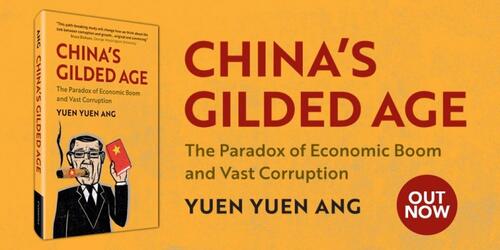
Corrupt countries are usually poor, yet China is an exception. President Xi Jinping acknowledges that corruption in the country has reached crisis proportions. If this is true, why has China nevertheless sustained 40 years of economic growth and deep transformation?

In this talk, Professor Yuen Yuen Ang will analyze how different types of corruption exert different effects on the economy.  Reminiscent of America’s Gilded Age during the 19th century, reform-era China has steadily evolved toward a particular type of corruption: access money (elite exchanges of power and wealth).  Starting in the 2000s, the central government effectively curbed directly growth-damaging types of corruption such as embezzlement and bureaucratic extortion. But access money fueled commerce by rewarding politicians for aggressively promoting growth and connected capitalists for taking on increasingly risky ventures. Such corruption has also produced systemic risks, distortions, and inequality, however—problems that define China's Gilded Age under Xi Jinping’s leadership. As a result, China today is a high-growth but risky and imbalanced economy. 

Despite popular perceptions that China and the United States are two polar opposites, therefore, contemporary China and 19th century America share some striking commonalities.


Image
Portrait of Yuen Yuen Ang
Yuen Yuen Ang is a PhD graduate of Stanford University, where she studied comparative political economy with a focus on China. She is the inaugural recipient of the Theda Skocpol Prize, awarded by the American Political Science Association for “impactful empirical, theoretical and/or methodological contributions to the study of comparative politics.” She was also named an Andrew Carnegie Fellow for “high-caliber scholarship that applies fresh perspectives to the most pressing issues of our times.” Her first, award-winning book, How China Escaped the Poverty Trap (2016), is acclaimed as “game changing” and “field shifting.” It received the Peter Katzenstein Prize in Political Economy, the Viviana Zelizer Prize in Economic Sociology, and was named “Best of Books 2017″ by Foreign Affairs. The sequel to this book, China’s Gilded Age: the Paradox of Economic Boom & Vast Corruption, is released in 2020. It was featured in The DiplomatThe Economist, and The Wire China. She is an associate professor in political science at the University of Michigan and previously a faculty member at Columbia University SIPA.

Image
Cover of "China's Gilded Age" by Yuen Yuen Ang


Image
American and Chinese flags
This event is part of the 2021 Winter/Spring Colloquia series, Biden’s America, Xi’s China: What’s Now & What’s Next?, sponsored by APARC's China Program.


Via Zoom Webinar. Register at: https://bit.ly/3cEtX5f

Yuen Yuen Ang Associate Professor of Political Science, University of Michigan
Seminars
-

This is a virtual event. Please click here to register and generate a link to the talk. 
The link will be unique to you; please save it and do not share with others.


This event is co-sponsored by the Center on Democracy, Development, and the Rule of Law.

How does autocratic lobbying affect political outcomes and media coverage in democracies? This talk focuses on a dataset drawn from the public records of the US Foreign Agents Registration Act. It includes over 10,000 lobbying activities undertaken by the Chinese government between 2005 and 2019. The evidence suggests that Chinese government lobbying makes legislators at least twice as likely to sponsor legislation that is favorable to Chinese interests. Moreover, US media outlets that participated in Chinese-government sponsored trips subsequently covered China as less threatening. Coverage pivoted away from US-China military rivalry and the CCP’s persecution of religious minorities and toward US-China economic cooperation. These results suggest that autocratic lobbying poses an important challenge to democratic integrity.


Portrait of Erin Baggott CarterErin Baggott Carter is an Assistant Professor at the Department of Political Science and International Relations at the University of Southern California. There, she is also a Co-PI at the Lab on Non-Democratic Politics. She received a Ph.D. in Government from Harvard University, is currently a visiting scholar at the Stanford Center on Democracy, Development and the Rule of Law, and was previously a Fellow at the Stanford Center for International Security and Cooperation.

Dr. Carter's research focuses on Chinese politics and propaganda. She recently completed a book on autocratic propaganda based on an original dataset of eight million articles in Arabic, Chinese, English, French, Russian, and Spanish drawn from state-run newspapers in nearly 70 countries. She is currently working on a book on how domestic politics influence US-China relations. Her other work has appeared or is forthcoming in the British Journal of Political ScienceJournal of Conflict Resolution, and International Interactions. Her work has been featured by the New York Times, the Brookings Institution, and the Washington Post Monkeycage Blog.


Image
American and Chinese flags
This event is part of the 2021 Winter/Spring Colloquia series, Biden’s America, Xi’s China: What’s Now & What’s Next?, sponsored by APARC's China Program.


Via Zoom Webinar. Register at: https://bit.ly/3beG7Qz

Erin Baggott Carter Assistant Professor, Department of Political Science and International Relations, University of Southern California; Visiting Scholar, Center on Democracy, Development and the Rule of Law, Stanford University
Seminars
Authors
Donald K. Emmerson
News Type
Commentary
Date
Paragraphs

This op-ed by Donald K. Emmerson first appeared in The Jakarta Post.

Above all, Trump wanted to be a winner. History granted his wish. He is the first president in the 245-year life of his country to have been impeached twice. By that standard, he won the title of America’s Worst President (AWP)—worse than any of the 44 presidents who preceded him.

AWP rhymes with 'gawp,' and that’s what he also wanted: to be stared at, talked about, catered to, the center of fawning attention, unforgettably present, dominating the news, astride the world in which the news is made. He wanted applause. His ravenous insecurity—narcissism—inflated his ego to continental size. In effect, in his authoritarian imagination, the “extremely stable genius” that he called himself deserved to be the indispensable “me” in “America,” without which the country’s name and the country itself would crumble.

The roars and chants of Trump’s crowds slaked his thirst for veneration. But they imprisoned him in his “base.” By satisfying his craving to be idolized, they gave him no reason to convince the unimpressed. How much more gratifying it must have been for him to bask in mass flattery at rallies than to engage in the difficult business of persuading the uncommitted. That would have taken assets he lacked: empathy, knowledge, intelligence, and a willingness not to lie.

[Subscribe to APARC's newsletters to get regular updates on our scholars.]

So how could Americans have elected such a demagogue? Trump was corrupt but charismatic. He broke the rules. He said whatever was on his mind. He appealed to the streak of individualism in American culture. He ran his campaign and his presidency as a mass entertainment featuring a lone patriot fighting a “deep state” controlled by globalist elites. Especially in rural areas between Silicon Valley and the Boston-to-Washington corridor, millions of white Americans felt threatened by the transfer of jobs from physical toward mental labor in a computerized society whose racial make-up was increasingly non-white. Globalization fed those anxieties. Trump stoked them. He promised to end them and “make America great again.”

Joe Biden defeated Trump in both the popular vote and the Electoral College—respectively by 4.4 and 13.7 percent. Biden’s margins were narrower than one might have wished, given the blatant flaws in Trump’s character, including the 30,573 false or misleading claims that he made during his presidency as tracked and noted by The Washington Post . The egregiousness of his behavior is, however, a double testament to America’s democratic system: to its failure to select a less despicable leader, yes, but also to its success in providing the lawful framework within which his desperate effort to stage what in Latin America would be called an autogolpe or “self-coup” could be and was overcome.

On 1 February 2021, watching television at his 126-room estate in Palm Beach, Florida, ex-president Trump would have learned of the coup in Myanmar and might have envied Senior General Min Aung Hlaing. Both men had been banned by Facebook for inciting violence in their respective countries—Trump in 2021, the general in 2018. Both had suffered defeats in elections held just five days apart in 2020—3 November in the US, 8 November in Myanmar. Both had rejected the voters’ verdict, claiming fraud. But whereas Trump’s frantic and deadly effort to subvert the US election and retain power failed, Min Aung Hlaing’s self-coup has succeeded, at least for now. The general quickly seized full power despite his party’s massive embarrassment at the polls in November, Aung San Suu Kyi’s party having won 83 percent of the available seats. In contrast, Trump could not reverse his exit from power despite a far slimmer margin of electoral defeat. To the extent that the ex-president was even aware of the difference, it could have fanned what angry envy of the general he may have felt.

Trump failed mainly due to the checks and balances that generally call government to account in America. Min Aung Hlaing succeeded in no small part thanks to the checks and balances in the bank accounts of the generals who have compromised Myanmar’s transition to democracy and helped make it the second most corrupted country in Southeast Asia (after Cambodia) as measured by the Corruption Perceptions Index.

Among the many reactions to the Burmese coup, several stand out for their courage and creativity. UN Secretary General António Guterres was unequivocal. "It's absolutely unacceptable,” he said, “to reverse the result of the elections and the will of the people.” Presumably speaking on behalf of the UN, its secretariat, or himself, or all three, he went further: "We'll do everything we can to mobilize all the key actors of the international community to put enough pressure on Myanmar to make sure that this coup fails." 

This notable response came from Indonesia’s former foreign minister Marty Natalegawa: “Deafening silence in the face of assaults against democratic principles [has] increasingly become the norm,” he said. He urged ASEAN to “demonstrate its relevance: It must speak urgently for the respect of constitutional process and rule of law in Myanmar, and call for the immediate release of those unlawfully detained.”

In the days immediately following the coup, ASEAN’s Bruneian secretary general said nothing about it, preferring to remain, in the Indonesian expression, “silent in a thousand tongues.” Speaking for ASEAN as its current chair, however, Brunei’s government did at least encourage a “return to normalcy in accordance with the will and interests of the people of Myanmar,” noting that the group charter’s called for adherence to “democracy, the rule of law” and “human rights and fundamental freedoms.”

As for ASEAN’s next chair, Cambodia, its strongman Hun Sen did speak, but only to say that "Cambodia does not comment on the internal affairs of any country at all.” Hun Sen’s restraint made historical sense. Had Cambodia’s old despot chosen to criticize Myanmar’s new despot, observers could have noted that Min Aung Hlaing had only done what Hun Sen himself had bloodily accomplished in 1997 by seizing full control over Cambodia in a self-coup of his own that had enabled him to become the longest-serving prime minister in the world.

Critical Southeast Asian voices, unconstrained by look-the-other-way diplomacy, have been heard. The chairman of the ASEAN Parliamentarians for Human Rights, Charles Santiago, has urged ASEAN to send a high-level delegation to Myanmar to tell Min Aung Hlaing that his coup “violates ASEAN principles and the ASEAN charter” and is “not acceptable.” “If Myanmar does not turn around,” he added, “there should be proceedings to expel Myanmar out of ASEAN.”

Who is better positioned to deal with this crisis than ASEAN’s largest and debatably least authoritarian member country? It was Indonesia’s Natalegawa who patched up ASEAN’s consensus after Hun Sen damaged it on China’s behalf in 2012. And it is Natalagewa who believes, with the Myanmar coup in mind, that “at this critical juncture for the region, Indonesia must demonstrate its leadership within ASEAN.”

Indonesia’s president Jokowi, rather than trying to rally the region against the coup, will likely continue to focus on domestic economic growth. Not to mention the existential priority that COVID-19 also warrants on his agenda.

So why not task Natalegawa with a damage-control trip around the region comparable the one he took with some success in 2012? He could start with fact-finding in Myanmar. He could then explore an intra-ASEAN understanding that would reassert the core democratic values in the ASEAN Charter while lessening, if possible, the chance that Myanmar will revert to entrenched and fully authoritarian rule. That may be a lost cause. But nothing ventured, nothing gained.

Although Donald Trump is no longer in office, America is still not safe from Trumpism. But America’s system—democracy—is working as it should. Is ASEAN really a dictators’ club? Or does it, too, when threatened from within, have a system that can at least manage and minimize the damage that is, in Myanmar as I write this, being done?

Read More

Protesters opposing the February 1 coup in Myanmar
Q&As

The Myanmar Coup Is a Major Setback, but the Story of Myanmar's Struggle for Democracy Is Not Over

According to Scot Marciel, former U.S. ambassador to Myanmar and Stanford visiting scholar at APARC, building a democracy is a difficult process that can be upended, particularly when the military is politicized and has its own agenda.
The Myanmar Coup Is a Major Setback, but the Story of Myanmar's Struggle for Democracy Is Not Over
President Biden walks past a row of Chinese and American flags.
News

APARC Experts on the Outlook for U.S.-Asia Policy Under the Biden Administration

Ahead of President-elect Biden’s inauguration and on the heels of the attack on the U.S. Capitol by a pro-Trump mob that has left America shaken, an APARC-wide expert panel provides a region-by-region analysis of what’s next for U.S. policy towards Asia and recommendations for the new administration.
APARC Experts on the Outlook for U.S.-Asia Policy Under the Biden Administration
Barack Obama addresses a crowd of young leaders from ASEAN nations.
Commentary

A Global Town Hall Welcomes America Back

Despite the reversals of the Trump era, a flurry of online diplomacy served as a reminder that the U.S. is welcome in Southeast Asia writes Donald K. Emmerson in The Diplomat.
A Global Town Hall Welcomes America Back
Hero Image
Protesters in Myanmar stand on a picture of General Min Aung Hlaing
Chung Sung-Jun, Getty Images
All News button
1
Subtitle

Southeast Asia Program Director Donald K. Emmerson compares responses across Southeast Asia to the February coup in Myanmar and reflects on the parallels and differences between the state of democracy there and in the United States.

-

This workshop is designed to develop skills that participants can use to write public policy case studies and to develop a case library that can be used in teaching programs. The workshop will be offered online, both synchronously and asynchronously.     

The first sessions will involve an introduction to participant-centered learning and case study writing, as well as a full discussion of a selected case. The workshop will involve "how to" lessons on each stage in the case writing process, interspersed with group activities and discussions. We will discuss several existing cases, combined with a “post-mortem” of what worked and what did not.  

We will address issues such as how to refine a case topic and learning objectives, how to prepare for case study research, how to collect qualitative data through interviews, what material should be included and what should be left out of case studies, and how to build participant engagement into the way a case is written.

Workshop Agenda
Download pdf

Online

Via Zoom

Workshops
-
This workshop is designed to develop skills that participants can use to write public policy case studies and to develop a case library that can be used in teaching programs. We will discuss several existing cases, combined with a “post-mortem” of what worked and what did not. We will address issues such as how to refine a case topic and learning objectives, how to prepare for case study research, how to collect qualitative data through interviews, what material should be included and what should be left out of case studies, and how to build participant engagement into the way a case is written. A key element of the workshop is that participants will work to develop their own case study. The workshop faculty will provide coaching and feedback that will progress throughout the workshop. During the five-week period between the two three-day blocks, participants will be expected to meet in their case-writing groups and develop outlines of their case studies. At the end of the workshop, participants will have an opportunity to present preliminary versions of their cases and get feedback from the entire group.
Workshop Agenda
Download pdf

Online Via Zoom

-

This event is available through livestream only. Please register in advance for the webinar by using the link below.

REGISTRATION LINKhttps://bit.ly/34pAVrb

Inside the Billion Dollar Whale Scandal: 2020 Shorenstein Journalism Award Recipient Tom Wright to Headline Award Panel Discussion

The $7 billion 1Malaysia Development Bhd (1MDB) scandal, one of the largest-ever financial frauds, exposed the depths of corruption in global markets. The story starts in Malaysia, but a raft of institutions from Goldman Sachs to Big Four auditors and Manhattan lawyers enabled the graft. Five years after the story came to light, almost no one has gone to jail. What’s in store for the main players, how can our justice system ensure history does not repeat itself, and how do political actors shape the trajectories of anticorruption efforts in Asia?
 

Tom Wright, winner of the 2020 Shorenstein Journalism Award, addresses these questions and more in his keynote address.

Wright is the coauthor of the New York Times bestseller Billion Dollar Whale, which unravels the story of one of the world's greatest financial scandals involving the multibillion-dollar looting of the Malaysian sovereign wealth fund 1MDB. Wright’s work sparked investigations by law enforcement and regulators in multiple countries and outrage in Malaysia, where the ruling coalition, after 61 years in power, suffered a landslide defeat in a shocking 2018 election.

The keynote will be followed by a guided interview with the award winner led by Meredith Weiss, Professor and Chair of Political Science at the Rockefeller College of Public Affairs and Policy, University at Albany, SUNY.

The event will conclude with an audience Q&A session moderated by Donald K. EmmersonDirector of the Southeast Asia Program at the Walter H. Shorenstein Asia-Pacific Research Center.

Follow us on Twitter and use the hashtag #SJA20 to join the conversation.

Speakers:

Image
Portrait of Tom Wright, winner of 2020 Shorenstein Journalism Award
Tom Wright is an author, journalist, and speaker who over the past twenty-five years has lived and worked mainly in South and Southeast Asia. He is a Pulitzer finalist, a Loeb winner, and co-author of the New York Times bestseller Billion Dollar Whale, about the 1MDB scandal. A theme running through Tom’s work is the blight of corruption in Asia, abetted by Western companies and institutions. He started his career with Reuters in Indonesia in the 1990s at a time when Gen. Suharto’s military dictatorship was crumbling. During the Asian financial crisis of 1997-1998, Tom joined Dow Jones Newswires in Bangkok, later moving to the Wall Street Journal.
 
He has investigated corruption in Indian companies, the failure of the U.S. civilian aid program for Pakistan, and was one of the first journalists to arrive at the scene of the raid in which Navy SEALs killed Osama bin Laden. In 2013, Tom spearheaded the coverage of the Rana Plaza factory disaster in Bangladesh, which killed over 1,000 people, earning the Wall Street Journal a Sigma Delta Chi award from The Society of Professional Journalists. The series exposed how international garment manufacturers turned a blind eye to safety violations in order to reduce costs.
 
As Asia Economics Editor in Hong Kong, Tom managed a number of correspondents in the region, while continuing to report. In 2015, he began investigations into the 1MDB scandal, an almost unbelievable series of events in which bankers at Goldman Sachs helped a young Malaysian financier steal at least $4 billion from Malaysian state fund 1MDB, one of the largest financial frauds of all time. The three-year investigation showed the degree to which Western institutions, from Wall Street banks, law firms, auditors, and even Hollywood film companies, ignore malfeasance in the pursuit of profits.
 

Image
Portrait of Meredith Weiss, Professor and Chair of Political Science in the Rockefeller College of Public Affairs and Policy at the University at Albany, State University of New York
Meredith Weiss is Professor and Chair of Political Science in the Rockefeller College of Public Affairs & Policy at the University at Albany, State University of New York. Her research addresses social mobilization and civil society, the politics of identity and development, parties and elections, institutional reform and (anti)corruption, and subnational governance in Southeast Asia, with particular focus on Malaysia and Singapore. She has conducted fieldwork in those two countries as well as Indonesia, the Philippines, and Timor-Leste, and has held visiting fellowships or professorships in Australia, Japan, Malaysia, the Philippines, Singapore, and the US.

Her books include Protest and Possibilities: Civil Society and Coalitions for Political Change in Malaysia (2006), Student Activism in Malaysia: Crucible, Mirror, Sideshow (2011), The Roots of Resilience: Political Machines and Grassroots Politics in Southeast Asia (2020), and eleven edited or co-edited volumes, most recently, The Political Logics of Anticorruption Efforts in Asia (2019) and Toward a New Malaysia? The 2018 Election and Its Aftermath (2020).  Her articles appear in Asian Studies ReviewAsian SurveyCritical Asian StudiesDemocratizationJournal of Contemporary AsiaJournal of DemocracyTaiwan Journal of Democracy, and elsewhere.

Professor Weiss co-edits the Cambridge University Press Elements book series on Politics and Society in Southeast Asia and is an associate editor for Southeast Asia of the Association for Asian Studies’ (AAS) Journal of Asian Studies. She co-founded the Southeast Asian Politics related group of the American Political Science Association (APSA) and chairs the APSA’s Asia Workshops steering committee, is past chair of the AAS’s Southeast Asia Council, and is on the Southeast Asia Research Group (SEAREG) Council. She received her MA and PhD in Political Science from Yale University and a BA in Political Science, Policy Studies, and English from Rice University.


About the Shorenstein Journalism Award:

The Shorenstein Journalism Award, which carries a cash prize of US $10,000, recognizes outstanding journalists who have spent their careers helping audiences around the world understand the complexities of the Asia-Pacific region, defined broadly to include Northeast, Southeast, South, and Central Asia and Australasia. Award recipients are veteran journalists with a distinguished body of work. News organizations are also eligible for the award.

The award is sponsored and presented by the Walter H. Shorenstein Asia-Pacific Research Center (Shorenstein APARC) at Stanford University. It honors the legacy of the Center’s benefactor, Mr. Walter H. Shorenstein, and his twin passions for promoting excellence in journalism and understanding of Asia. It also symbolizes the Center’s commitment to journalism that persistently and courageously seeks accuracy, deep reporting, and nuanced coverage in an age when attacks are regularly launched on the independent news media, on fact-based truth, and on those who tell it.

An annual tradition, the Shorenstein Journalism Award alternates between recipients whose work has mostly been conveyed through American news media and recipients whose work has mostly been conveyed through news media in one or more parts of the Asia-Pacific region. Included among the latter candidates are journalists who are from the region and work there, and who, in addition to their recognized excellence, may have helped defend and encourage free media in one or more countries in the region.

Learn more at https://aparc.fsi.stanford.edu/events/shorenstein-journalism-award.

Virtual Webinar Via Zoom

Registration Link: https://bit.ly/34pAVrb

Tom Wright <br>Journalist, Author, Speaker</br><br>
Meredith Weiss <br>Professor and Chair of Political Science, University at Albany,SUNY</br>
Seminars
Authors
Kathryn Stoner
News Type
News
Date
Paragraphs

The findings show the Trump Campaign's interactions with Russian intelligence agencies posed what they're calling a "grave" threat to U.S. counterintelligence. For more, KCBS Radio news anchors Dan Mitchinson and Margie Shafer spoke with Kathryn Stoner, Deputy Director of the Freeman Spogli Institute for International Studies at Stanford specializing in Russian politics.

Listen to KCBS Radio

Hero Image
Woman with glasses
All News button
1
Subtitle

The findings show the Trump Campaign's interactions with Russian intelligence agencies posed what they're calling a "grave" threat to U.S. counterintelligence. For more, KCBS Radio news anchors Dan Mitchinson and Margie Shafer spoke with Kathryn Stoner, Deputy Director of the Freeman Spogli Institute for International Studies at Stanford specializing in Russian politics.

0
CDDRL Postdoctoral Scholar, 2020-21
nate.jpg

I am a teaching fellow in Civic, Liberal, and Global Education (COLLEGE) at Stanford University. I teach courses focused on democracy, citizenship, and the politics of development. My research focuses on party systems, ideology, nostalgia, and corruption during transitions from authoritarian rule, especially in North Africa. My book manuscript focuses on the question of why democratization in Tunisia failed to address the social and economic grievances that precipitated it. My work has appeared in the Journal of Democracy, MERIP Middle East Report Online, and Washington Post Monkey Cage

I received my PhD in political science (with specialties in comparative politics, quantitative methods, and political economy) from Yale University in December 2020. I have a BA in international relations from Tufts University, an MS in applied economics from Johns Hopkins University, and an MA and MPhil in political science from Yale. I have spent more than three years living in Egypt, Morocco, and Tunisia. My CV is available here.

Subscribe to Corruption