Climate change is intensifying droughts and threatening water security worldwide, particularly in arid and semi-arid regions. Israel’s innovative response has been to integrate large-scale desalination into its water supply and climate resilience strategy, recently constructing the Reverse Water Carrier, a pioneering project that conveys desalinated seawater from the Mediterranean inland to Lake Kinneret (Sea of Galilee). This study examines the objectives, rationale, and feasibility of this system as a model for climate-resilient water management. Using a qualitative case study approach, it evaluates the project across four dimensions: water security, environmental sustainability, economic feasibility and regional cooperation. Data were drawn from policy documents, expert interviews, and government reports. The analysis finds that replenishing the Kinneret with surplus desalinated water enhances national water reliability, reduces salinity, stabilizes agricultural production, and provides a critical emergency reserve, while introducing manageable energy and ecological trade-offs. Although long-term sustainability will depend on continued efficiency improvements and adaptive management, Israel’s experience demonstrates how inter-basin desalination transfers can strengthen water security and offer a replicable framework for other regions confronting climate-induced scarcity.
This event will offer simultaneous translation between Japanese and English.
当イベントは日本語と英語の同時通訳がついています。
This is a virtual event. Please click here to register and generate a link to the talk.
The link will be unique to you; please save it and do not share with others.
当イベントはZoomウェビナーで行われます。ウェビナーに参加するためには、こちらのリンクをクリックし、事前登録をして下さい。
March 1, 5-6:30 p.m. California time/ March 2, 10-11:30 a.m. Japan time
The challenges of climate change require solutions on multiple fronts, one of which is technological innovation. Attempts for innovation for new energy sources have been ongoing in many parts of the world, and Japan has produced a number of new technologies. This session will focus on two of the most promising innovations coming out of Japan, biofuel and hydrogen energy, and assess their promises and challenges, highlighting technological, regulatory, and business aspects of developing new technologies. Where do these technologies fit in the energy portfolio that would address the issues of climate change and what can Japan and the United States do to collaboratively solve the key problems in advancing these technologies further? Three leading experts in the field will discuss these questions that would shape the future of climate change.
Panelists
Image
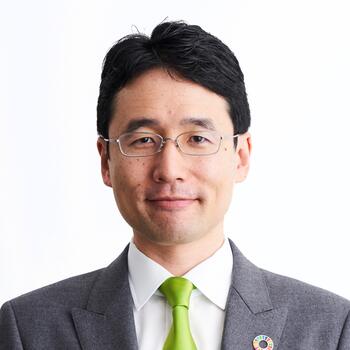
Mitsuru Izumo is a graduate of the University of Tokyo, having specialised in agricultural structural
management. In 2005, he established Euglena Co., Ltd. to harness the properties of microalgae
Euglena. Euglena Co., Ltd. became the world’s first biotechnology company that succeeded in the
outdoor mass cultivation of Euglena. Currently, Euglena Co., Ltd upholds “Sustainability First” as
their philosophy and has developed the manufacture and sale of foods and cosmetics as the
healthcare domain, the biofuel business, the bioinformatics business, and the social business in
Bangladesh by leveraging Euglena and other advanced technologies.
Image
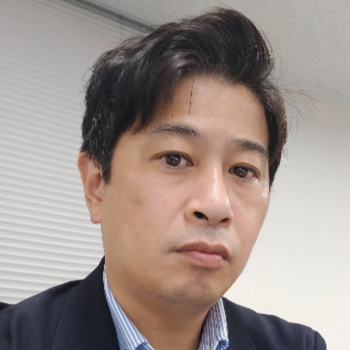
Eiji Ohira is the Director General of the New Energy and Industrial Technology Development Organization (NEDO)’s Fuel Cell and Hydrogen Technology Office In this capacity, he is responsible for the overall strategy, execution and coordination of NEDO’s research, development and demonstration project on fuel cell and hydrogen.
He has also coordinated fuel cell and hydrogen activities with international stakeholders, through International Energy Agency’s Technology Collaboration Program (IEA TCP: Advanced Fuel Cell & Hydrogen), and International Partnership for Hydrogen and Fuel Cells in the Economy (IPHE).
He joined the NEDO in 1992, just after graduation from the Tokyo University of Science. He served as a visiting scholar at the Massachusetts Institute of Technology in 1997-1998.
Moderator
Image
Kate Hardin, Deloitte Executive Director for Energy and Industrials Research, has worked in the energy industry for 25 years. She currently leads Deloitte research on the impact of the energy transition on the energy and industrial manufacturing sectors. Before that, Kate led integrated coverage of transportation decarbonization and the implications for the oil, gas, and power sectors. Kate has also developed global energy research for institutional investors and has led analysis of Russian and European energy developments. Kate recently served as an expert in residence at Yale’s Center for Business and Environment, and she is also a member of the Council on Foreign Relations.
Mitsuru Izumo
<br>Founder and President, Euglena Co Ltd.<br><br>
Eiji Ohira
<br>Director General of Fuel Cell and Hydrogen Technology Office, Japan New Energy and Industrial Technology Development Organization (NEDO) <br><br>
Kate Hardin
<br>Executive Director, Deloitte Research Center for Energy & Industrials
By monitoring crops through machine learning and satellite data, Stanford scientists have found farms that till the soil less can increase yields of corn and soybeans and improve the health of the soil – a win-win for meeting growing food needs worldwide.
Agriculture degrades over 24 million acres of fertile soil every year, raising concerns about meeting the rising global demand for food. But a simple farming practice born from the 1930’s Dust Bowl could provide a solution, according to new Stanford research. The study, published Dec. 6 in Environmental Research Letters, shows that Midwest farmers who reduced how much they overturned the soil – known as tilling – increased corn and soybean yields while also nurturing healthier soils and lowering production costs.
“Reduced tillage is a win-win for agriculture across the Corn Belt,” said study lead author Jillian Deines, a postdoctoral scholar at Stanford’s Center on Food Security and the Environment. “Worries that it can hurt crop yields have prevented some farmers from switching practices, but we found it typically leads to increased yields.”
The U.S. – the largest producer of corn and soybeans worldwide – grows a majority of these two crops in the Midwest. Farmers plucked about 367 million metric tons of corn and 108 million metric tons of soybeans from American soil this past growing season, providing key food, oil, feedstock, ethanol and export value.
Monitoring farming from space
Farmers generally till the soil prior to planting corn or soybeans – a practice known to control weeds, mix nutrients, break up compacted dirt and ultimately increase food production over the short term. However, over time this method degrades soil. A 2015 report from the Food and Agriculture Organization of the United Nations found that in the past 40 years the world has lost a third of food-producing land to diminished soil. The demise of once fertile land poses a serious challenge for food production, especially with mounting pressures on agriculture to feed a growing global population.
In contrast, reduced tillage – also known as conservation tillage – promotes healthier soil management, reduces erosion and runoff and improves water retention and drainage. It involves leaving the previous year’s crop residue (such as corn stalks) on the ground when planting the next crop, with little or no mechanical tillage. The practice is used globally on over 370 million acres, mostly in South America, Oceania and North America. However, many farmers fear the method could reduce yields and profits. Past studies of yield effects have been limited to local experiments, often at research stations, that don’t fully reflect production-scale practices.
The Stanford team turned to machine learning and satellite datasets to address this knowledge gap. First, they identified areas of reduced and conventional tilling from previously published data outlining annual U.S. practices for 2005 to 2016. Using satellite-based crop yield models – which take into account variables such as climate and crop life-cycles – they also reviewed corn and soybean yields during this time. To quantify the impact of reduced tillage on crop yields, the researchers trained a comput
Average impacts on corn yields from conservation tillage across the U.S. Corn Belt from 2008 to 2017. Red colors indicate increased yields under conservation tillage, blue colors indicate yield declines.
er model to compare changes in yields based on tillage practice. They also recorded elements such as soil type and weather to help determine which conditions had a larger influence on harvests.
Improved yields
The researchers calculated corn yields improved an average of 3.3 percent and soybeans by 0.74 percent across fields managed with long-term conservation tillage practices in the nine states sampled. Yields from the additional tonnage rank in the top 15 worldwide for both crops. For corn, this totals approximately 11 million additional metric tons matching the 2018 country output of South Africa, Indonesia, Russia or Nigeria. For soybeans, the added 800,000 metric tons ranks in between Indonesia and South Africa’s country totals.
Some areas experienced up to an 8.1 percent increase for corn and 5.8 percent for soybeans. In other fields, negative yields of 1.3 percent for corn and 4.7 for soybeans occurred. Water within the soil and seasonal temperatures were the most influential factors in yield differences, especially in drier, warmer regions. Wet conditions were also found favorable to crops except during the early season where water-logged soils benefit from conventional tillage that in turn dries and aerates.
“Figuring out when and where reduced tillage works best could help maximize the benefits of the technology and guide farmers into the future,” said study senior author David Lobell, a professor of Earth system science in the School of Earth, Energy & Environmental Sciences and the Gloria and Richard Kushel Director of the Center on Food Security and the Environment.
It takes time to see the benefits from reduced tillage, as it works best under continuous implementation. According to the researchers’ calculations, corn farmers won’t see the full benefits for the first 11 years, and soybeans take twice as long for full yields to materialize. However, the approach also results in lower costs due to reduced need for labor, fuel and farming equipment while also sustaining fertile lands for continuous food production. The study does show a small positive gain even during the first year of implementation, with higher gains accruing over time as soil health improves. According to a 2017 Agricultural Censuses report, farmers appear to be getting on board with the long-term investment and close to 35 percent of cropland in the U.S. is now managed with reduced tillage.
“One of the big challenges in agriculture is achieving the best crop yields today without comprising future production. This research demonstrates that reduced tillage can be a solution for long-term crop productivity,” Deines said.
To read all stories about Stanford science, subscribe to the biweekly Stanford Science Digest.
David Lobell is also the William Wrigley Senior Fellow at the Stanford Woods Institute for the Environment, a senior fellow at the Freeman Spogli Institute for International Studies and the Stanford Institute for Economic Policy and Research. Graduate student Sherrie Wang is also a co-author. Research was funded by NASA Harvest.
Hero Image
According to new Stanford research, tilling soils less can increase corn and soybean crops across the Midwest Corn Belt. | Flickr/Steven Baird
Stanford’s Center for Ocean Solutions and Center on Food Security and the Environment, together with Springer-Nature, are hosting a workshop focused on building a research agenda that, for the first time, analyzes the role of oceans within the context of global food systems.
Massive changes in the global food sector over the next few decades – driven by climate change and other environmental stresses, growing population and income, advances in technology, and shifts in policies and trade patterns – will have profound implications for the oceans and vice versa. While there is a large community of researchers addressing challenges in food policy and agriculture and a similar community in oceans and fisheries, there is very little interaction between them. This workshop addresses a pressing need to foster more interaction among these communities, to build a research agenda that illuminates the many interconnections among food and the oceans, and to inform action to meet these challenges.
“Stanford is in a perfect position to take the lead in developing this new area of research and outreach, with its strong expertise in terrestrial food systems, global food security, and the oceans,” claims Roz Naylor, Professor of Earth System Science, founding Director of the Center on Food Security and the Environment, and co-organizer of the workshop.
This event brings together diverse leaders across academia, business, policy, and government. Together participants will analyze the role of the oceans within a global food systems context, highlighting issues related to food security, equity, poverty alleviation, marine ecosystems, and environmental change. The aim is to define and develop this emerging field, as researchers and stakeholders explore cutting edge ideas and identify emerging trends and challenges that can inform ongoing policy discussions.
“This is a unique opportunity to build a new and vibrant community, bringing together leading researchers in oceans, fisheries, food, and agriculture from around the world," explained COS co-director Jim Leape. "We're coming together to ask the key questions needed to identify emerging themes and solutions, in lockstep with those who will put these findings into practice," added COS co-director Fiorenza Micheli. "As the world's demand for food continues to grow, we will increasingly need to understand and act on the critical role of the oceans to meet these challenges."
Jim Leape is also the William and Eva Price Fellow at the Stanford Woods Institute for the Environment. Fiorenza Micheli is also the David and Lucile Packard Professor in Marine Sciences at Stanford's Hopkins Marine Station and senior fellow at the Woods Institute. Read more about the Stanford Center for Ocean Solutions.
Low-intensity tillage has become more popular among farmers in the United States and many other regions. However, accurate data on when and where low-intensity tillage methods are being used remain scarce, and this scarcity impedes understanding of the factors affecting the adoption and the agronomic or environmental impacts of these practices. In this study, we used composites of satellite imagery from Landsat 5, 7, and 8, and Sentinel-1 in combination with producer data from about 5900 georeferenced fields to train a random forest classifier and generate annual large-scale maps of tillage intensity from 2005 to 2016. We tested different combinations of hyper-parameters using cross-validation, splitting the training and testing data alternatively by field, year, and state to assess the influence of clustering on validation results and evaluate the generalizability of the classification model. We found that the best model was able to map tillage practices across the entire North Central US region at 30 m-resolution with accuracies spanning between 75% and 79%, depending on the validation approach. We also found that although Sentinel-1 provides an independent measure that should be sensitive to surface moisture and roughness, it currently adds relatively little to classification performance beyond what is possible with Landsat. When aggregated to the state level, the satellite estimates of percentage low- and high-intensity tillage agreed well with a USDA survey on tillage practices in 2006 (R2 = 0.55). The satellite data also revealed clear increases in low-intensity tillage area for most counties in the past decade. Overall, the ability to accurately map spatial and temporal patterns in tillage should facilitate further study of this important practice in the United States, as well as other regions with fewer survey-based estimates.
Braun Hall, Stanford University, Stanford, CA 94305
0
gorelick@stanford.edu
gorelick_0.jpg
Professor Gorelick runs the Hydrogeology and Water Resources program and directs the interdisciplinary Global Freshwater Initiative. He is also a Senior Fellow at the Woods Institute for the Environment. Dr. Gorelick is a US National Academy of Engineering (NAE) member and received Fulbright and Guggenheim Fellowships for research on water and oil resources. He is a Fellow of the American Association for the Advancement of Science (AAAS), American Geophysical Union (AGU) and the Geological Society of America (GSA. Dr. Gorelick has produced over 140 journal papers and 3 books in the areas of water management in underdeveloped regions, hydrogeology, optimal remediation design, hydrogeophysics, ecohydrology, and global oil resources.
Dr. Noah Diffenbaugh is the Kara J Foundation Professor and Kimmelman Family Senior Fellow at Stanford University. He studies the climate system, including the processes by which climate change could impact agriculture, water resources, and human health. Dr. Diffenbaugh is currently Editor-in-Chief of the peer-review journal Geophysical Research Letters. He has served as a Lead Author for Working Group II of the Intergovernmental Panel on Climate Change (IPCC), and has provided testimony and scientific expertise to the White House, the Governor of California, and U.S. Congressional offices. Dr. Diffenbaugh is a recipient of the James R. Holton Award from the American Geophysical Union, a CAREER award from the National Science Foundation, and a Terman Fellowship from Stanford University. He has also been recognized as a Kavli Fellow by the U.S. National Academy of Sciences, and as a Google Science Communication Fellow.
The recently launched Stanford Alumni in Food & Ag group aims to bring together Stanford graduates with a background or interest in food and agriculture issues. Tannis Thorlakson, one of the group’s creators, works as the environmental lead for Driscoll’s in the U.S. and Canada, and recently earned her Ph.D. from Stanford’s E-IPER program. She hopes the group will help alumni stay connected with cutting-edge research and stay up-to-date on news within the food and agriculture space. Thorlakson sat down with FSE to chat about the group and upcoming launch event taking place at the O'Donohue Family Stanford Educational Farm later this month.
Q: What inspired you to create the group and who else was involved? Thorlakson: It has been exciting to see the increasing enthusiasm for agriculture and food around Stanford's campus during my time there. Between the newly expanded Stanford Farm and the buzz around ag tech, more and more students are interested in careers in food and agriculture. My cofounders Manuel Waenke, Anthony Atlas and I wanted to harness some of this enthusiasm to bring alumni together.
Q: Who is eligible to join? Thorlakson: At this point, we are focused only on Stanford alumni, but will build collaborations with student groups over time.
Q: What are your goals or focus areas? Thorlakson: We have two primary goals; to connect alumni to share insights and opportunities in the food and agriculture space; and to keep alumni connected to campus through events and sharing of cutting-edge Stanford research.
Q: You have your first event on Oct. 26. What are you hoping to accomplish, who can come, and how can people learn more? Thorlakson: All alumni and faculty are invited to join. This will be a chance to connect with fellow alumni and learn a bit more about the club. More information here: https://www.stanfordfoodag.com/events.
Q: Anything else you’d like to let others know about? Thorlakson: We're just getting started, so if you have ideas on how to make this group more relevant to you, please reach out to us at mwaenke@stanford.edu.
Vincent Tanutama is a research data analyst at the Center on Food Security and the Environment, where he supports the work of Marshall Burke on climate’s impact on economic outcomes such as workers' labor productivity and subnational economic output. Vincent's interest in the environment sprouts from investigating the distribution of rent among bureaucrats in their management of forest and oil palm resources in Indonesia, his country of origin. He has worked at the Indonesian Ministry for Economic Development Planning (Bappenas), The Abdul Latif Jameel Poverty Action Lab (JPAL Southeast Asia), Oxford Policy Management (OPM), and the United Nations Economic and Social Commission for Asia and the Pacific (UNESCAP). He holds a B.A. in Ethics, Politics and Economics from Yale University.
The rising level of carbon dioxide in the atmosphere means that crops are becoming less nutritious, and that change could lead to higher rates of malnutrition that predispose people to various diseases.
That conclusion comes from an analysis published Tuesday in the journal PLOS Medicine, which also examined how the risk could be alleviated. In the end, cutting emissions, and not public health initiatives, may be the best response, according to the paper's authors.
Research has already shown that crops like wheat and rice produce lower levels of essential nutrients when exposed to higher levels of carbon dioxide, thanks to experiments that artificially increased CO2 concentrations in agricultural fields. While plants grew bigger, they also had lower concentrations of minerals like iron and zinc.


 Average impacts on corn yields from conservation tillage across the U.S. Corn Belt from 2008 to 2017. Red colors indicate increased yields under conservation tillage, blue colors indicate yield declines.


