FSI researchers work to understand continuity and change in societies as they confront their problems and opportunities. This includes the implications of migration and human trafficking. What happens to a society when young girls exit the sex trade? How do groups moving between locations impact societies, economies, self-identity and citizenship? What are the ethnic challenges faced by an increasingly diverse European Union? From a policy perspective, scholars also work to investigate the consequences of security-related measures for society and its values.
The Europe Center reflects much of FSI’s agenda of investigating societies, serving as a forum for experts to research the cultures, religions and people of Europe. The Center sponsors several seminars and lectures, as well as visiting scholars.
Societal research also addresses issues of demography and aging, such as the social and economic challenges of providing health care for an aging population. How do older adults make decisions, and what societal tools need to be in place to ensure the resulting decisions are well-informed? FSI regularly brings in international scholars to look at these issues. They discuss how adults care for their older parents in rural China as well as the economic aspects of aging populations in China and India.
As a high school student in San Jose in the late 1960s and early 1970s, I used to see Norman Mineta on occasion in San Jose’s Japantown. Once at Fukuda Barber in Japantown, Mineta was on the barber chair. After he left, barbers Takeo and Atsuo Fukuda asked me if I knew who he was. I didn’t, and Takeo told me that he was Norman Mineta, vice mayor of San Jose. Since that day, I recognized Mineta whenever I saw him in Japantown, in the San Jose Mercury News, and on television. In 1971, Mineta became mayor of San Jose, and in 1974, he ran successfully for the U.S. House of Representatives. He was reelected ten more times. Mineta also served as President Bill Clinton’s Secretary of Commerce from July 2000 to January 2001 and President George W. Bush’s Secretary of Transportation from January 2001 to August 2006. Never did I imagine that our paths would cross professionally through my work at SPICE. From 2017, SPICE curriculum designer Rylan Sekiguchi assumed the responsibility of authoring lesson plans for a project called “What Does It Mean to Be an American?”—a free web-based curriculum toolkit inspired by Mineta’s life and career.
As a 10-year-old Japanese American boy in 1942, Norman Mineta was powerless when his country imprisoned him and his family in a fit of wartime hysteria. But nearly 60 years later, he sat at the highest levels of government as the United States reeled from 9/11 and began experiencing a new hysteria. In times of crisis like these, how has the institution of civil liberties been affected by individuals like Mineta whose voices guide government policy, and how have those changes impacted the lives of Americans? This was the central question that Mineta and Sekiguchi focused their comments on during their National Council of History Education session, “Civil Liberties in Times of Crisis,” on March 16, 2019.
"Civil Liberties in Times of Crisis" session at the 2019 NCHE conference, led by Rylan Sekiguchi and Secretary Norman Mineta.
The 30 teachers in attendance were first offered a preview by Sekiguchi of the soon-to-be released “What Does It Mean to Be an American?” The lesson plans, explained Sekiguchi, consist of six independent learning modules that examine a key theme from Secretary Norman Mineta’s life and career: immigration, civil liberties and equity, civic engagement, justice and reconciliation, leadership, and U.S.–Japan relations. The lessons were developed in consultation with Mineta and the Mineta Legacy Project team, including Dianne Fukami and Debra Nakatomi, who were also in attendance. Fukami and Nakatomi are the producers of the documentary film, Norman Mineta and His Legacy: An American Story.
Following the curriculum preview, Mineta reflected upon his life and highlighted the striking parallels between the hysteria following the Japanese attack on Pearl Harbor on December 7, 1941 and the hysteria following 9/11. His memories of the immediate aftermath of Pearl Harbor seemed to be seared in the back of his mind as he spoke, as he vividly recalled seeing his father cry for the first time and wondering where his neighbor of Japanese descent had suddenly been taken, and by whom. (He later learned it was the FBI.) A short time later, Mineta and his family were also evicted from their home in San Jose, California and incarcerated in Heart Mountain, Wyoming, as part of what is often called the mass internment of Japanese Americans.
Mineta also shared his memories of the morning of 9/11—being informed as Secretary of Transportation of the first plane hitting the twin towers, watching the live broadcast as the second plane hit, and then being called to the Presidential Emergency Operations Center, a bunker-like underground structure that lies below the White House. He recalled how he had asked one of his chiefs to draw up the new flight security guidelines that would govern aviation henceforth, and the first bullet point was “No racial profiling will be used.” He also vividly recalled how President George W. Bush, in the aftermath of 9/11, firmly declared that the United States would not let what happened to Norm and his family (following the Pearl Harbor attack) happen again. “You could’ve knocked me off my chair with a feather!” Mineta reflected.
Deborah Rowland with Secretary Norman Mineta
Following the session, comments from teachers underscored the success of the session. “A number of participants said they’d never seen anything like our lessons before. One teacher told us that even though she expected our session would be her conference highlight, she was still overwhelmed!” reflected Sekiguchi. “That was so heartening to hear. I hope everyone in our session felt that way. Even more than that, I hope they feel inspired to educate the next generation about the importance of civil liberties and share these lessons from Secretary Mineta’s life.” Deborah Rowland was among the teachers who attended the conference. She tweeted, “Such a privilege to visit with this incredible man today. Norman Mineta, former Secretary of Transportation, former Secretary of Commerce, former Congressman, former childhood detainee of Executive Order 9066, always an American.”
The documentary film Norman Mineta and His Legacy: An American Story will receive a national PBS airing on May 20. Fukami and Nakatomi hope that the film and lesson plans become widely used in U.S. schools and carry on the legacy of Norman Mineta. They noted, “They are important tools to help young students grapple with the divisiveness in U.S. society today and to underscore the critical importance of considering civil liberties-related issues in U.S. history as well as today.”
I had the privilege of attending several screenings of the film. At the San Jose screening, it was gratifying to listen to tributes to Mineta from people who represent San Jose’s diverse communities, and it was especially moving to witness them and numerous Japanese Americans in attendance give a standing ovation to Mineta following the screening. An old family friend in attendance used to also frequent Fukuda Barber and we boasted about how our barber used to also cut the hair of Norman Mineta.
Hero Image
Secretary Norman Mineta with Debra Nakatomi (left) and Dianne Fukami (right) and Rylan Sekiguchi
Efforts are underway in South Africa to turn around a decade of governance reversal. But progress in addressing an underlying cause of the reversals remains very limited – extreme, racially-tinged inequality, with missing ladders of opportunity into the middle class. In this seminar, Brian Levy will explore some interactions between shortfalls in inclusion and institutional pressures, including an in-depth focus on one key challenge – improving the learning outcomes of South Africa’s poorly performing system of basic education. The findings from his recent co-authored book, The Politics and Governance of Basic Education: A Tale of Two South African Provinces suggest that a narrow focus on ‘fixing the bureaucracy’ can only go so far. Re-balancing focus away from narrowly top-down approaches towards the evocation of agency offers a variety of added possibilities for creative and constructive action.
Speaker Bio:
Image
Brian Levy is Professor of the Practice of International Development, School of Advanced International Studies, Johns Hopkins University; and Academic Director, Nelson Mandela School of Public Governance, University of Cape Town. He worked at the World Bank from 1989 to 2012, including as head of the secretariat responsible for the design and implementation of the World Bank Group's governance and anti-corruption strategy. He has published widely on the interactions among institutions, political economy and development policy, including Working with the Grain: Integrating Governance and Growth in Development Strategies (Oxford U Press, 2014; info at www.workingwiththegrain.com) and, as lead editor and author, The Governance and Politics of Basic Education: A Tale of Two South African Provinces (Oxford U Press, 2018). He completed his Ph.D in economics at Harvard University in 1983.
Goldman conference room Encina Hall East, 4th floor Room E409
Brian Levy
Professor of the Practice of International Development, School of Advanced International Studies, Johns Hopkins University
Militaries around the world are racing to build robotic systems with increasing autonomy. What will happen when a Predator drone has as much autonomy as a Google car? Should machines be given the power to make life and death decisions in war? Paul Scharre, a former Army Ranger and Pentagon official, will talk on his new book, Army of None: Autonomous Weapons and the Future of War. Army of None was named one of Bill Gates’ Top 5 Books of 2018. Scharre will explore the technology behind autonomous weapons and the legal, moral, ethical, and strategic dimensions of this evolving technology. Paul Scharre is a Senior Fellow and Director of the Technology and National Security Program at the Center for a New American Security.
Paul's Biography: Paul Scharre is a Senior Fellow and Director of the Technology and National Security Program at the Center for a New American Security. He is author of Army of None: Autonomous Weapons and the Future of War. Mr. Scharre formerly worked in the Office of the Secretary of Defense (OSD) where he played a leading role in establishing policies on emerging weapons technologies. He led the working group that drafted DOD Directive 3000.09, establishing DOD’s policy on autonomy in weapon systems. He is a former infantryman in the Army’s 75th Ranger Regiment and completed multiple tours to Iraq and Afghanistan.
Radha's Biography: Radha Iyengar is the head of Product Policy Research at Facebook and an adjunct economist at the RAND Corporation. Previously, she served in senior staff positions at the White House National Security Council, Department of Defense, and Department of Energy. Over the course of her government service, she was instrumental in executive actions on sexual assault and suicide prevention, budget and policy related to nuclear and energy infrastructure security and resilience, and security assistance and counterterrorism efforts in the the Middle East and North Africa. Her research has covered empirical evaluations of policies aimed at reducing violence including criminal violence, sexual assault, terrorist behavior, and sexual and intimate partner violence.
Jeremy's Biography: Jeremy is a Professor of Political Science and Senior Fellow at the Freeman Spogli Institute for International Studies. He is also a non-resident fellow at the Center for Global Development in Washington, D.C. His research focuses on civil wars and political violence; ethnic politics and the political economy of development; and democracy, accountability, and political change. He is the author of Inside Rebellion: The Politics of Insurgent Violence (Cambridge University Press), which received the William Riker Prize for the best book on political economy. He is also the co-author of Coethnicity: Diversity and the Dilemmas of Collective Action (Russell Sage Foundation), which received the Gregory Luebbert Award for the best book in comparative politics. He has published articles in the American Political Science Review, American Journal of Political Science, Annual Review of Political Science, Journal of Conflict Resolution, Foreign Affairs, Foreign Policy, Journal of Democracy, World Policy Journal, and the SAIS Review.
Stanford University CEMEX Auditorium (655 Knight Way, Stanford, CA 94305)
Paul Scharre
Senior Fellow and Director, Technology and National Security Program
Center for a New American Security
The winner of the Urban Land Institute Prize is selected by The Journal of Economic Geography (JoEG) Editors, Oxford University Press, and the Urban Land Institute. The prize is awarded annually to the author(s) of the best JoEG paper published online in the previous calendar year. Papers are evaluated on the basis of their creativity, quality of scholarship, and contribution to advancing understanding of the geographic nature of economic systems and global economic change.
Lee’s paper investigates whether entrepreneurship causes local employment and wage growth, and if so, how large the impact is. Empirical analysis of this question is difficult due to the joint determination of entrepreneurship and economic growth. Lee’s article uses two different sets of variables—the homestead exemption levels in state bankruptcy laws from 1975 and the share of metropolitan statistical area (MSA) overlaying aquifers—to instrument for entrepreneurship and examine urban employment and wage growth between 1993 and 2002. Lee’s research shows that the creation of small businesses indeed causes substantial employment and payroll growth in cities.
On the heels of the abrupt ending of the Hanoi summit between President Trump and North Korean leader Kim Jong Un, with the future of the diplomacy of denuclearization in question, the Korea Program at Shorenstein APARC convened the 11th Koret Workshop, appropriately titled this year “North Korea and the World in Flux.”
The workshop, an annual gathering made possible through generous funding from the Koret Foundation, brought together international experts in Korean affairs for a full day of panel discussions. Participants assessed the U.S.-DPRK summit diplomacy, examined the challenges and opportunities in media coverage related to the negotiations between the two countries, and considered the prospects and pitfalls for summitry with North Korea in the near term. A report on the workshop proceedings is forthcoming.
At a midday public keynote, General Vincent Brooks, U.S. Army (Ret.), spoke before a packed audience about the challenges and opportunities in Korea. Brooks, who recently retired from active duty as the four-star general in command of all U.S. Forces in Korea, provided his unique and very-timely assessment of the situation on the Korean peninsula, and offered his insights on where the diplomacy of denuclearization may go next.
How do memory and forgetting shape politics in autocracies? We combine the logic of collective action with a theory of informational politics, in which autocrats have three instruments: propaganda, threats of violence embedded within propaganda, and censorship. For citizens, we argue that historical memory drives the calendar of protest. In turn, the likelihood of historical forgetting drives the informational strategy of repressive governments. We test our theory in the context of China. The most powerful focal points for protest, we find, are anniversaries of the regime's crimes against citizens. Those most likely to be forgotten -- those that occurred decades ago -- are subject to censorship, while those too fresh to be forgotten are subject to propaganda as well. Explicit threats of violence are reserved for China's ethnic minorities, and coincide with anniversaries of failed separatist movements. We conclude with evidence that propaganda-based threats of violence generate a short-term reduction in protest.
Speaker(s) Bio:
Image
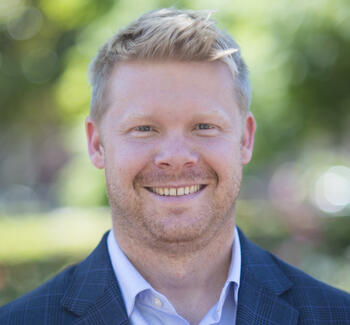
Erin Baggott Carter is an Assistant Professor at the School of International Relations at the University of Southern California. She received a Ph.D. in Government from Harvard University and was previously a fellow at the Stanford Center for International Security and Cooperation. Her research focuses on Chinese foreign policy and propaganda. She recently completed a book manuscript on autocratic propaganda in global perspective and is currently working on another on how the United States and China attempt to shape each other’s domestic politics.
Image
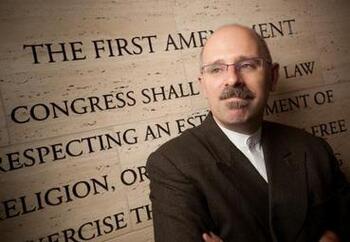
Brett Carter is Assistant Professor in the School of International Relations at the University of Southern California. He received a Ph.D. in Political Science from Harvard University, where he was a Graduate Fellow at the Harvard Academy for International and Area Studies. He was previously a fellow at Stanford University's Center on Democracy, Development, and the Rule of Law, as well as the Hoover Institution. He recently finished a book about propaganda in the world’s autocracies and is currently working on another book project about autocratic survival in Central Africa.
Reuben Hills Conference room, E207
Erin Baggott Carter
Assistant Professor at the School of International Relations at the University of Southern California
Brett Carter
Assistant Professor at the School of International Relations at the University of Southern California
Democracies are in danger. Around the world, a rising wave of populist leaders threatens to erode the core structures of democratic self rule. In the United States, the election of Donald Trump marked a decisive turning point for many. What kind of president calls the news media the “enemy of the American people,” or sees a moral equivalence between violent neo-Nazi protesters in paramilitary formation and residents of a college town defending the racial and ethnic diversity of their homes? Yet, whatever our concerns about the current president, we can be assured that the Constitution offers safeguards to protect against lasting damage—or can we? How to Save a Constitutional Democracy mounts an urgent argument that we can no longer afford to be complacent. Constitutional rules can either hinder or hasten the decline of democratic institutions. The checks and balances of the federal government, a robust civil society and media, and individual rights—such as those enshrined in the First Amendment—do not necessarily succeed as bulwarks against democratic decline. Rather, the sobering reality for the United States is that, to a much greater extent than is commonly realized, the Constitution’s design makes democratic erosion more, not less, likely. But we—and the rest of the world—can do better. The authors conclude by laying out practical steps for how laws and constitutional design can play a more positive role in managing the risk of democratic decline.
Speaker Bio:
Image
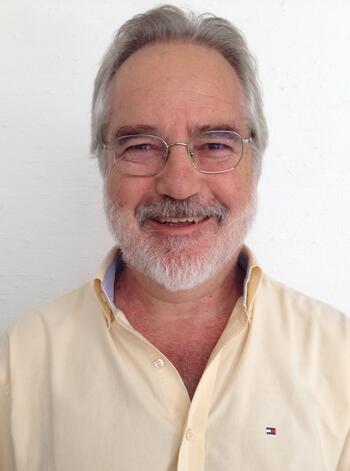
Tom Ginsburg is Leo Spitz Professor of Law, University of Chicago, and a professor of political science. He is also director of the Comparative Constitutions Project He focuses on comparative and international law from an interdisciplinary perspective. He holds BA, JD, and PhD degrees from the University of California at Berkeley. His books include Judicial Review in New Democracies (2003), which won the C. Herman Pritchett Award from the American Political Science Association; The Endurance of National Constitutions (2009), which also won a best book prize from APSA; Constitutions in Authoritarian Regimes (2014); and Law and Development in Middle-Income Countries (2014)..
Image
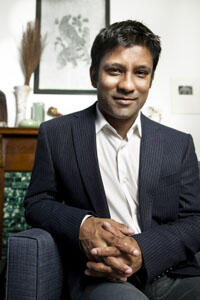
Aziz Huq is is the Frank and Bernice J. Greenberg Professor of Law at the University of Chicago. His scholarship focuses on how institutional design influences individual rights and liberties. He clerked for Judge Robert D. Sack of the U.S. Court of Appeals for the Second Circuit and then for Justice Ruth Bader Ginsburg of the Supreme Court of the United States. Before teaching, he led the Brennan Center’s project on Liberty and National Security and was a senior consultant analyst for the International Crisis Group.
Encina Hall, 4th floor East Wing
Goldman conference room (E409)
Tom Ginsburg
Leo Spitz Professor of International Law, Ludwig and Hilde Wolf Research Scholar, Professor of Political Science
Aziz Huq
Frank and Bernice J. Greenberg Professor of Law, Mark Claster Mamolen Teaching Scholar

 FSI researchers work to understand continuity and change in societies as they confront their problems and opportunities. This includes the implications of


 "Civil Liberties in Times of Crisis" session at the 2019 NCHE conference, led by Rylan Sekiguchi and Secretary Norman Mineta.
 Deborah Rowland with Secretary Norman Mineta