FSI researchers work to understand continuity and change in societies as they confront their problems and opportunities. This includes the implications of
Bridging “Social Distancing” Across the Pacific: Student Reflections on Cross-Cultural Online Exchange
The following is Part 2 of a two-article series on facilitating cross-cultural online learning. For Part 1, please go here.
Last month, I shared my reflections on a March 20, 2020 virtual class (VC) session that SPICE facilitated for high school students in Japan and the United States to engage in a cross-cultural online exchange. This online discussion engaged my U.S.-based students of the 2020 Reischauer Scholars Program and Waka Brown’s Japan-based students of the Spring 2020 Stanford e-Japan Program in a Zoom session, during which they talked and learned with and from one another on a range of topics, including the impact of COVID-19 within their respective communities.
During the main portion of the session, the 45 students were divided into six small breakout rooms to engage in 40 minutes of discussion. Each group had a designated volunteer student moderator and a notetaker/reporter; the latter was asked to share the key points of discussion from his or her small group when we reconvened towards the end of the 90-minute VC. All discussions were conducted in English, with the exception of one group, which was designated as a bilingual space for students who felt comfortable conversing in both English and Japanese.
Since this was the 2020 students’ first opportunity to meet (another joint VC on comparative education took place on April 10), we felt it important to preface the session by setting a few ground rules for discussion. Communication styles and norms—particularly in group settings—tend to be quite different in Japan and the United States. We have found it helpful, for example, to address these differences up-front to alleviate potential cross-cultural misunderstandings.
For assessment purposes, we also asked students to send feedback on their experiences in the session. Some of their comments are included below as we turn to the student perspectives on what they experienced in this joint online discussion. More specific points from our observations and students’ feedback fall into five areas.
First, the session provided a platform for students to talk openly about the COVID-19 pandemic and also to learn about perspectives from another country. Risako of Stanford e-Japan reflected, “I could … learn about the way American students perceive political issues and coronavirus through an absorbing discussion and was surprised to discover that their perspectives were much more similar to Japanese students than I had expected.” Alika of the RSP noted, “It was really interesting to me to see how different countries are coping with the virus. I was pretty surprised to hear that many Japanese people still use public transport/eat out at restaurants and go on with their daily lives in the face of the global pandemic.” She continued, “I think some of the e-Japan students were also surprised to hear that California has a ‘6 feet apart’ rule and that many restaurants have closed as a precaution.” Yasuyuki from Japan added, “It’s not difficult to look up the news to find out about what’s going on in America, but living in Japan, you hardly ever get the chance to talk with people in America and hear from the horse’s mouth.”
Second, the session underscored the importance of empathy at times like this. Kristie from the RSP commented, “I always enjoy finding commonalities between me and others, and I think our shared experiences with the coronavirus really allowed us to connect and understand one another. I think the most important thing I will take away from this experience is that youth in Japan and America are really no different—despite our varied experiences and interests we were able to communicate about issues facing our countries and relate to one another on a deeper level.” Similarly, Yuna of Stanford e-Japan noted, “Since I have had only [a] few opportunities to interact with American high schoolers, it was a precious time for me. It was wonderful especially because we both were interested in each other. Talking ... with them made me realize how [thin] the border between our minds actually are. We were, after all, just friends.”
Third, the session prompted students to reexamine their own culture. For example, Hiromu of Stanford e-Japan noted, “I feel very pleased to have such a wonderful opportunity to teach them [the RSP students about Japanese language] and, simultaneously, however, recognized how I lack information about Japanese culture. I think this integrated meeting is vital in that it provides us opportunities for looking back on our culture and broaden[ing] our narrow-minded thoughts.” Jin of the RSP added, “What’s more, they [the Stanford e-Japan students] all spoke fluent English. This made me reflect on the world languages education in the U.S. I think the U.S. should incorporate more global studies (both language and culture) in the education system. America-centric curriculum will cause the younger generation to lose a global vision, and become unaware of Japan as a major political and economic ally in East Asia.”
Fourth, the session shed light upon how diverse both countries are. Jin of the RSP noted, “I’ve always thought that Japan has a rather homogeneous population, but talking to e-Japan students has given me a new perspective on Japanese society. I encountered a student from Myanmar who is living in Japan currently, a Japanese student who used to live in NYC for four years, and a student from Singapore who has been studying abroad in Europe for a couple years.” Rinako of Stanford e-Japan reflected, “Up until now, even when I had the chance to communicate with people outside of Japan, it was usually done in English. However, this time, all three of the Reischauer Scholar students [in her small group] spoke fluent Japanese which made me very happy as we were able to use both English and Japanese.”
Fifth, we came to realize how invaluable international and cross-cultural dialog—especially during times of crisis—can be for students. Having a session during such an unprecedented time seemed to add special significance to the experience. Brandon of the RSP noted, “Overall, it was an extremely memorable discussion, and I hope that we can continue this kind of online cross-cultural connection throughout the rest of the program.” Many Stanford e-Japan students like Fuka also reflected upon the opportunity to discuss critical topics like the coronavirus at this time. She noted, “It gave me a chance to think about familiar issues not just with people of my own country but with people from all kinds of backgrounds.”
Students are among those most acutely experiencing the direct impact of this global pandemic. As they look into the future with confusion and uncertainty about their educational prospects and options, our students seemed to find comfort in this opportunity to connect with their like-minded peers across the Pacific. As they reflected upon their differences, they deepened their understanding of one another and forged what I hope become lasting friendships.
For more information about the Reischauer Scholars Program or the Stanford e-Japan Program, please visit our programs’ webpages at reischauerscholars.org and stanfordejapan.org. SPICE also offers other online courses to U.S. high school students on China (China Scholars Program) and Korea (Sejong Korea Scholars Program), and an online course to Chinese high school students on the United States (Stanford e-China Program).
To stay informed of SPICE news, join our email list and follow us on Facebook, Twitter, and Instagram.
Related articles:
- Bridging “Social Distancing” Across the Pacific: 6 Tips for Facilitating Cross-Cultural Online Learning
- SPICE’s Stanford e-Japan Instructor Waka Takahashi Brown Honored with the Elgin Heinz Outstanding Teacher Award
- Stanford e-Japan: My Window to the Wider World
- Honoring High School Students from Japan and the United States: A Glow for Global Peace
- The RSP: A Stepping Stone in My Journey with Japan
- Yanai Tadashi Foundation and SPICE/Stanford University

 Karen Eggleston is a senior fellow at the Freeman Spogli Institute for International Studies (FSI) at Stanford University, director of the Stanford Asia Health Policy Program, and deputy director of the Walter H. Shorenstein Asia-Pacific Research Center at FSI. She is also a fellow with the Stanford Center for Innovation in Global Health and a faculty research fellow of the National Bureau of Economic Research (NBER). Eggleston earned her PhD in public policy from Harvard University, studied in China for two years, and was a Fulbright scholar in South Korea. Her research focuses on comparative health systems and health reform in Asia, especially China; government and market roles in the health sector; supply-side incentives; healthcare productivity; and economic aspects of demographic change.
 Thomas Fingar is a Shorenstein Distinguished Fellow in the Shorenstein Asia-Pacific Research Center at Stanford University. From May 2005 through December 2008, he served as the first deputy director of national intelligence for analysis and, concurrently, as chairman of the National Intelligence Council. Previous positions include assistant secretary of state for Intelligence and Research (2000-2001, 2004–2005), principal deputy assistant secretary (2001–2003), deputy assistant secretary for analysis (1994–2000), director of the Office of Analysis for East Asia and the Pacific, and chief of the China Division. Fingar is a graduate of Cornell University (AB in government and history) and Stanford University (MA and PhD, both in political science). His most recent books are Uneasy Partnerships: China’s Engagement with Japan, the Koreas, and Russia in the Era of Reform (editor) (Stanford University Press, 2017); The New Great Game: China’s Relations with South and Central Asia in the Era of Reform (editor) (Stanford University Press, 2016); and Reducing Uncertainty: Intelligence Analysis and National Security (Stanford University Press, 2011).
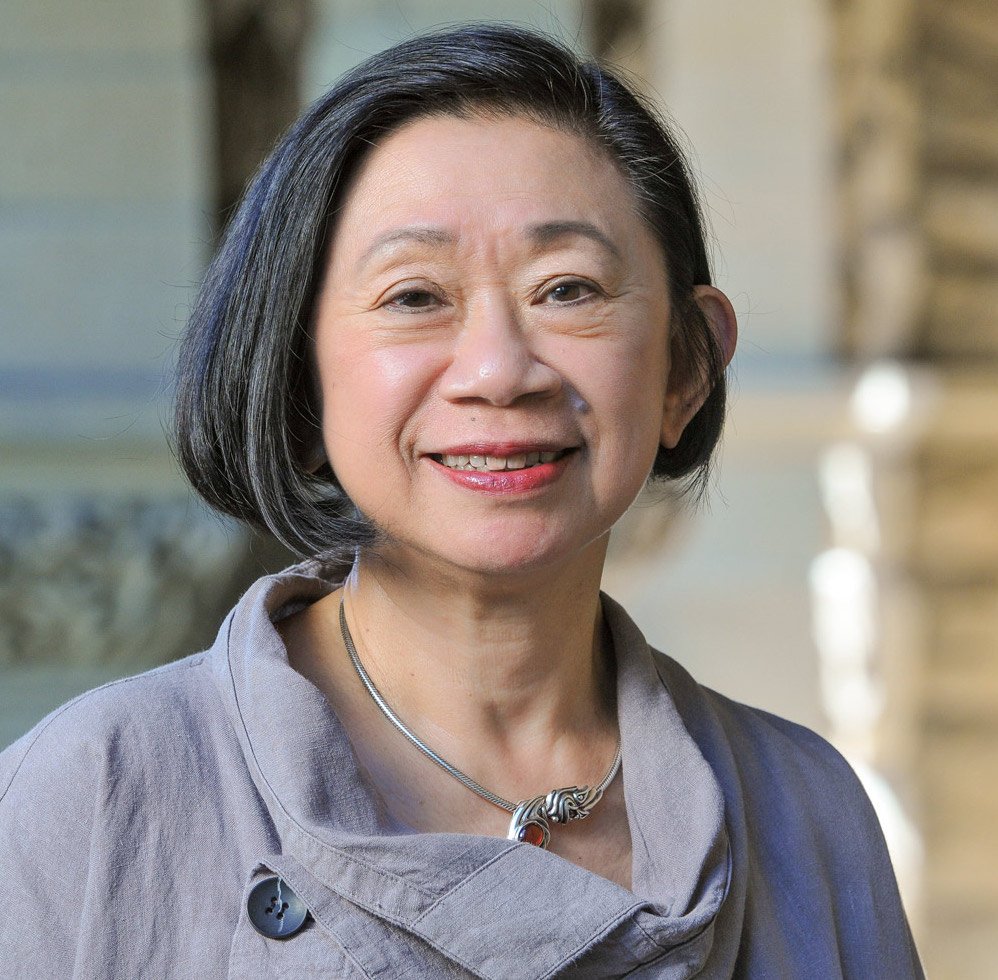 Jean C. Oi is the William Haas Professor of Chinese Politics in the Department of Political Science and a senior fellow in the Freeman Spogli Institute for International Studies at Stanford University. She directs the China Program at the Walter H. Shorenstein Asia-Pacific Research Center and is the Lee Shau Kee Director of the Stanford Center at Peking University. Oi has published extensively on China’s reforms. Recent books include Zouping Revisited: Adaptive Governance in a Chinese County, coedited with Steven Goldstein (Stanford University Press, 2018), and Challenges in the Process of China’s Urbanization, coedited with Karen Eggleston and Yiming Wang (2017). Current research is on fiscal reform and local government debt, continuing SOE reforms, and the Belt and Road Initiative.
 Andrew G. Walder is the Denise O’Leary and Kent Thiry Professor of Sociology in the School of Humanities and Sciences, and a senior fellow in the Freeman Spogli Institute for International Studies at Stanford University. A political sociologist, Walder has long specialized in the study of contemporary Chinese society and political economy. After receiving his PhD at the University of Michigan, he taught at Columbia, Harvard, and the Hong Kong University of Science and Technology. At Stanford he has served as chair of the Department of Sociology, director of the Asia-Pacific Research Center, and director of the Division of International, Comparative, and Area Studies in the School of Humanities and Sciences. His most recent books are Fractured Rebellion: The Beijing Red Guard Movement (2009), China under Mao: A Revolution Derailed (2015), and Agents of Disorder: Inside China’s Cultural Revolution (2019).
 I currently live in Naypyitaw, Myanmar, though I am originally from Japan. Naypyitaw is currently not under shelter-in-place, though the city of Yangon is. In Naypyitaw, restaurants are serving only take-out meals, and most amusement facilities like movie theaters, karaoke boxes, bars, and beauty salons have been closed. There are still a few big department stores open, as well as the public golf course and tennis courts.