Society

FSI researchers work to understand continuity and change in societies as they confront their problems and opportunities. This includes the implications of migration and human trafficking. What happens to a society when young girls exit the sex trade? How do groups moving between locations impact societies, economies, self-identity and citizenship? What are the ethnic challenges faced by an increasingly diverse European Union? From a policy perspective, scholars also work to investigate the consequences of security-related measures for society and its values.

The Europe Center reflects much of FSI’s agenda of investigating societies, serving as a forum for experts to research the cultures, religions and people of Europe. The Center sponsors several seminars and lectures, as well as visiting scholars.

Societal research also addresses issues of demography and aging, such as the social and economic challenges of providing health care for an aging population. How do older adults make decisions, and what societal tools need to be in place to ensure the resulting decisions are well-informed? FSI regularly brings in international scholars to look at these issues. They discuss how adults care for their older parents in rural China as well as the economic aspects of aging populations in China and India.

-

This event is part of the Asia Health Policy Program (AHPP) 2020-21 Colloquium series "Health, medicine, and longevity: Exploring public and private roles"

Hong Kong time: Friday, October 16, 2020, 8:00am - 9:15am

Gabriel Leung, one of Asia’s leading epidemiologists and Dean of Medicine at the University of Hong Kong, provides an update on the global pandemic and policy responses in Asia. Leung’s presentation draws on his deep experience in research and policy, including research that defined the epidemiology of three novel viral epidemics, namely SARS in 2003, influenza A(H7N9) in 2013 and most recently COVID-19. Leung also served as Hong Kong's first Under Secretary for Food and Health (2008-11) and fifth Director of the Chief Executive's Office (2011-2).

Image
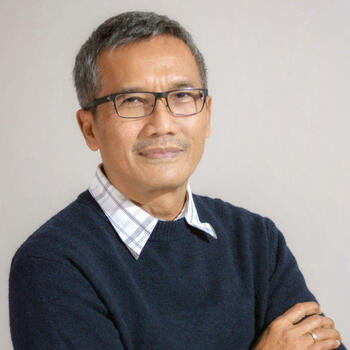
Gabriel Leung 101520
Gabriel Leung is the fortieth Dean of Medicine (2013-), inaugural Helen and Francis Zimmern Professor in Population Health and holds the Chair of Public Health Medicine at the University of Hong Kong (HKU). He was the last Head of Community Medicine (2012-3) at the University as well as Hong Kong's first Under Secretary for Food and Health (2008-11) and fifth Director of the Chief Executive's Office (2011-2) in government.

Leung is one of Asia's leading epidemiologists and global health exponents, having authored more than 500 scholarly papers with an h-index of 66 (Scopus). His research defined the epidemiology of three novel viral epidemics, namely SARS in 2003, influenza A(H7N9) in 2013 and most recently COVID-19. He led Hong Kong government's efforts against pandemic A(H1N1) in 2009. He was founding co-director of HKU's World Health Organisation (WHO) Collaborating Centre for Infectious Disease Epidemiology and Control (2014-8) and currently directs the Laboratory of Data Discovery for Health at the Hong Kong Science and Technology Park (2020-).

Leung regularly advises national and international agencies including the World Health Organisation, World Bank, Asian Development Bank, Boao Forum for Asia, Institut Pasteur, Japan Center for International Exchange and China Centers for Disease Control and Prevention. He is an Adjunct Professor of Peking Union Medical College Hospital and Adjunct Professorial Researcher of the China National Health Development Research Center.

He edited the Journal of Public Health (2007-14), was inaugural co-editor of Epidemics, associate editor of Health Policy and is founding deputy editor-in-chief of China CDC Weekly. He currently serves on the editorial boards of seven journals, including the British Medical Journal.    

He is an elected member of the US National Academy of Medicine.

Via Zoom Webinar

Register at https://bit.ly/33jLhGO

Gabriel Leung Dean of Medicine, University of Hong Kong
Seminars
-

* Please note all CISAC events are scheduled using the Pacific Time Zone.


Seminar Recording: https://youtu.be/bUXHbUj5uxE


About the Event: While most civil wars today are fought within Muslim-majority states and, frequently, by armed groups that self-identify as Islamic, we know little about the relationships between and amongst Islamic humanitarian law, Western (treaty-based) humanitarian law, and the rhetoric and behavior of Islamic armed groups. Our legal analysis suggests that, while there is a great deal of overlap between Western and Islamic humanitarian law, this overlap is not perfect. Our empirical analysis, which focuses on both the words and behaviors of Islamic armed groups, suggests similarly mixed results. Specifically, we find that, on average, Islamic armed groups do not appear to be more or less compliant with Western or Islamic humanitarian law than non-Islamic armed groups when it comes to civilian targeting and child soldiering. While they often appeal to Islamic humanitarian law, Islamic armed groups appear to be bound by similar political and military – rather than religious or legal – constraints to non-Islamic armed groups.


About the Speaker: Tanisha Fazal is Professor of Political Science at the University of Minnesota. Her scholarship focuses on sovereignty, international law, and armed conflict.  Fazal’s current book project analyzes the effect of improvements in medical care in conflict zones on the long-term costs of war.  She is the author of State Death: The Politics and Geography of Conquest, Occupation, and Annexation (Princeton University Press, 2007), and Wars of Law: Unintended Consequences in the Regulation of Armed Conflict (Cornell University Press, 2018.

Virtual Seminar

Tanisha Fazal Professor of Political Science University of Minnesota
Seminars
-

Please join the Cyber Policy Center on Wednesday, September 9th, from 10 a.m. - 11 a.m. pacific time for Navigating U.S.-China Technology Futures, an online seminar, open to the public with Andrew Grotto, Director of the Program on Geopolitics, Technology, Graham Webster, editor in chief of the Stanford–New America DigiChina Project, Jeffrey Ding from the Center for International Security and Cooperation, and Jennifer Pan, Assistant Professor of Communication in the Stanford Department of Communication. Speakers will be exploring how the U.S. can address security and values challenges in U.S.-China technological cooperation, while avoiding excesses that impede innovation and harm innocent people.

This event is open to the public but registration is required.

CISAC
Stanford University
Encina Hall, C428

Stanford, CA 94305-6165

(650) 723-9866
0
Andrew Grotto

Andrew J. Grotto is a research scholar at the Center for International Security and Cooperation at Stanford University.

Grotto’s research interests center on the national security and international economic dimensions of America’s global leadership in information technology innovation, and its growing reliance on this innovation for its economic and social life. He is particularly interested in the allocation of responsibility between the government and the private sector for defending against cyber threats, especially as it pertains to critical infrastructure; cyber-enabled information operations as both a threat to, and a tool of statecraft for, liberal democracies; opportunities and constraints facing offensive cyber operations as a tool of statecraft, especially those relating to norms of sovereignty in a digitally connected world; and governance of global trade in information technologies.

Before coming to Stanford, Grotto was the Senior Director for Cybersecurity Policy at the White House in both the Obama and Trump Administrations. His portfolio spanned a range of cyber policy issues, including defense of the financial services, energy, communications, transportation, health care, electoral infrastructure, and other vital critical infrastructure sectors; cybersecurity risk management policies for federal networks; consumer cybersecurity; and cyber incident response policy and incident management. He also coordinated development and execution of technology policy topics with a nexus to cyber policy, such as encryption, surveillance, privacy, and the national security dimensions of artificial intelligence and machine learning. 

At the White House, he played a key role in shaping President Obama’s Cybersecurity National Action Plan and driving its implementation. He was also the principal architect of President Trump’s cybersecurity executive order, “Strengthening the Cybersecurity of Federal Networks and Critical Infrastructure.”

Grotto joined the White House after serving as Senior Advisor for Technology Policy to Commerce Secretary Penny Pritzker, advising Pritzker on all aspects of technology policy, including Internet of Things, net neutrality, privacy, national security reviews of foreign investment in the U.S. technology sector, and international developments affecting the competitiveness of the U.S. technology sector.

Grotto worked on Capitol Hill prior to the Executive Branch, as a member of the professional staff of the Senate Select Committee on Intelligence. He served as then-Chairman Dianne Feinstein’s lead staff overseeing cyber-related activities of the intelligence community and all aspects of NSA’s mission. He led the negotiation and drafting of the information sharing title of the Cybersecurity Act of 2012, which later served as the foundation for the Cybersecurity Information Sharing Act that President Obama signed in 2015. He also served as committee designee first for Senator Sheldon Whitehouse and later for Senator Kent Conrad, advising the senators on oversight of the intelligence community, including of covert action programs, and was a contributing author of the “Committee Study of the Central Intelligence Agency’s Detention and Interrogation Program.”

Before his time on Capitol Hill, Grotto was a Senior National Security Analyst at the Center for American Progress, where his research and writing focused on U.S. policy towards nuclear weapons - how to prevent their spread, and their role in U.S. national security strategy.

Grotto received his JD from the University of California at Berkeley, his MPA from Harvard University, and his BA from the University of Kentucky.

Research Scholar, Center for International Security and Cooperation
Director, Program on Geopolitics, Technology, and Governance
Date Label
Andrew Grotto
0
Senior Fellow at the Freeman Spogli Institute for International Studies
Professor of Communication
Professor, by courtesy, of Political Science and of Sociology
Stanford Affiliate at the Stanford Center on China's Economy and Institutions
Stanford Affiliate at the Tech Impact and Policy Center
jenniferpan-20220922-055.jpg PhD

Jennifer Pan is a Professor of Communication and a Senior Fellow at the Freeman Spogli Institute at Stanford University. Her research focuses on political communication and authoritarian politics. Pan uses experimental and computational methods with large-scale datasets on political activity in China and other authoritarian regimes to answer questions about how autocrats perpetuate their rule. How political censorship, propaganda, and information manipulation work in the digital age. How preferences and behaviors are shaped as a result.

Her book, Welfare for Autocrats: How Social Assistance in China Cares for its Rulers (Oxford, 2020) shows how China's pursuit of political order transformed the country’s main social assistance program, Dibao, for repressive purposes. Her work has appeared in peer reviewed publications such as the American Political Science Review, American Journal of Political Science, Comparative Political Studies, Journal of Politics, and Science.

She graduated from Princeton University, summa cum laude, and received her Ph.D. from Harvard University’s Department of Government.

Date Label
Jennifer Pan
0
Research Scholar
Graham Webster

Graham Webster is a research scholar in the Program on Geopolitics, Technology, and Governance and editor-in-chief of the DigiChina Project at the Center for International Security and Cooperation at Stanford University. He researches, writes, and teaches on technology policy in China and US-China relations.

Before bringing DigiChina to Stanford in 2019, he was its cofounder and coordinating editor at New America, where he was a China digital economy fellow. From 2012 to 2017, Webster worked for Yale Law School as a senior fellow and lecturer responsible for the Paul Tsai China Center’s Track II dialogues between the United States and China and co-taught seminars on contemporary China and Chinese law and policy. While there, he was an affiliated fellow with the Yale Information Society Project, a visiting scholar at China Foreign Affairs University, and a Transatlantic Digital Debates fellow with New America and the Global Public Policy Institute in Berlin. He was previously an adjunct instructor teaching East Asian politics at New York University and a Beijing-based journalist writing on the Internet in China for CNET News. 

In recent years, Webster's writing has been published in MIT Technology Review, Foreign Affairs, Slate, The Wire China, The Information, Tech Policy Press, and Foreign Policy. He has been quoted by The Wall Street Journal, The New York Times, The Washington Post, and Bloomberg and spoken to NPR and BBC World Service. Webster has testified before the US-China Economic and Security Review Commission and speaks regularly at universities and conferences in North America, East Asia, and Europe. His chapter, "What Is at Stake in the US–China Technological Relationship?" appears in The China Questions II (Harvard University Press, 2022).

Webster holds a bachelor's in journalism and international studies from Northwestern University and a master's in East Asian studies from Harvard University. He took doctoral coursework in political science at the University of Washington and language training at Tsinghua University, Peking University, Stanford University, and Kanda University of International Studies.

Editor-in-Chief, DigiChina
Date Label
Graham Webster
Jeffrey Ding
Authors
News Type
Blogs
Date
Paragraphs

I grew up with STEM as my backbone, my crutch. My parents met in engineering school, and the childhood they gifted me with was one filled with opportunities to get my hands dirty. The identity I built for myself was defined by asking questions about snail slime, aphids on roses, simply everything about the “hows” and “whys” of the biological world around me. And not once did I think to steer my gaze elsewhere in hopes of enriching my worldview. To an elementary school Mallika, understanding science and science alone would gift me the tools to solve the world’s greatest problems.

So, of course, it confused me to see my dad, an equity analyst focused on the semiconductor and green tech industries, travel so often to Japan, China, and Korea. Hands filled with stuffed animal pandas wearing qi paos, he would talk on and on about East Asia’s incomparable ability to merge the old with the new: cities at the forefront of tech innovation were sparkled with architecture and customs from lineages spanning thousands of years. My dad sold the intrigue. Not in an orientalist way, rather through a deep appreciation of recognizing the past in an effort to rebrand the future. I just had to get my peek.

I started learning Japanese in fourth grade, Chinese in seventh, and was in love with the languages. They were logical, pictographic, and simply scientific. But the classes were one-dimensional, one-epochical almost, if that’s even a word. What they were able to capture in unraveling the past did nothing in describing the translation to the future. I wanted to get a grasp of contemporary issues to eventually find ways to apply this newfound information to my STEM pursuits.

Fast forward a few years, a semester of SPICE’s Reischauer Scholars Program under my belt, I loved my experience with the SPICE program so much that I had to return for a second program. Naturally, I applied to SPICE’s China Scholars Program (CSP) my junior year of high school, and compounded with classes like AP U.S. History and Honors Chinese, my worldview felt interconnected. Everything I was studying added to an accumulated web of information, weaving connections between economics, public policy, technology, and culture. I wrote my final paper on how bureaucracy, educational equity, and green technology could help China establish itself as the (not a) global superpower, and it had quite honestly been my first exploration in drawing conclusions between seemingly disparate fields. For someone who had conducted many science research projects in the past, CSP and its instructor, Dr. Tanya Lee, challenged and stretched me in ways I never thought possible.

I’m currently studying Materials Science and Engineering and Bioengineering at MIT, but my love for STEM is bolstered by a global lens.
Mallika Pajjuri

At MIT, we’re taught the merits of collaboration through group-based projects and exceedingly difficult problem sets. However, I often doubt the translatability of this approach in the real world. Students of similar academic backgrounds collaborate on similar projects with similar solutions. The web of information synthesized by students of different majors is undeniably extremely useful in developing real-world solutions. Completing CSP through a STEM lens was a unique way of doing just that. I met students from Virginia all the way to Hong Kong who were passionate about everything under the sun. The variation in perspectives livened discussion boards, and I could almost liken the completed responses to a mosaic: each student had their unique piece to offer, such that the image created was one of heightened clarity. Since then, I’ve taken classes on Chinese, on economics, and even on how to stage revolutions, all as a result of understanding the merits of cross-disciplinary and cross-cultural exploration. And who knows, I might even minor in Chinese to pay homage to the language that shaped my worldview.


Hero Image
group of students taking a photo in front of a building
Mallika Pajjuri (woman standing to the far right) with her floormates from Baker House in front of MIT's Great Dome; photo courtesy Mallika Pajjuri
All News button
1
Subtitle

The following reflection is a guest post written by Mallika Pajjuri, an alumna of the China Scholars Program and the Reischauer Scholars Program. She is now a student at MIT.

News Type
News
Date
Paragraphs

China's future will be determined by how its leaders manage its myriad interconnected challenges. In Fateful Decisions (Stanford University Press, May 2020), editors Thomas Fingar, a center fellow at APARC, and Jean Oi, the director of APARC’s China Program, join other experts across multiple disciplines in providing close analyses of the most critical demographic, economic, social, political, and foreign policy challenges China’s leaders face today. They outline the options and opportunity costs entailed, providing an analytic framework for understanding the decisions that will determine China's trajectory.

Fingar and Oi discussed the main arguments in their edited volume at a virtual program of the National Committee on U.S.-China Relations. Watch here:

Read More

Quote from Thomas Fingar and Jean Oi from, "China's Challeges: Now It Gets Much Harder"
Commentary

Now It Gets Much Harder: Thomas Fingar and Jean Oi Discuss China’s Challenges in The Washington Quarterly

Now It Gets Much Harder: Thomas Fingar and Jean Oi Discuss China’s Challenges in The Washington Quarterly
BEIJING, CHINA - Workers sit near a CRH (China Railway High-speed) "bullet train" at the Beijing South Railway Station under reconstruction.
News

High-Speed Rail Holds Promise and Problems for China, Explains David M. Lampton

In a new audio interview, Lampton discusses some of the challenges, uncertainties, and decisions that loom ahead of China's Belt and Road Initiative.
High-Speed Rail Holds Promise and Problems for China, Explains David M. Lampton
Elderly Chinese citizens sit together on a park bench.
Q&As

Karen Eggleston Examines China’s Looming Demographic Crisis, in Fateful Decisions

Karen Eggleston Examines China’s Looming Demographic Crisis, in Fateful Decisions
Hero Image
Cover of the book Fateful Decisions: Choices That Will Shape China's Future
All News button
1
Subtitle

Fingar and Oi joined the National Committee on U.S.-China Relations to discuss their edited volume, ‘Fateful Decisions: Choices that Will Shape China’s Future.’

Authors
News Type
Q&As
Date
Paragraphs

This interview was originally conducted and published by Melissa De Witte on behalf of the Stanford News Service.


September 2, 1945, is recognized in many American history books as the day World War II formally ended in Asia. But according to Stanford sociologist Gi-Wook Shin, the conflict was never fully resolved in the region, leading to strains in diplomatic relations today.

On the 75th anniversary of this historic milestone, Shin discusses the legacy of World War II in the Asia-Pacific, specifically the failure among nations to fully address past wrongdoings and reach a mutual understanding of the conflict.

As a result, there is a “mismatch” in how Koreans, Chinese, Japanese and also Americans memorialize the war: China celebrates its victory against Japan while Korea commemorates its liberation from Japanese oppression. Meanwhile, Japan honors the victims of the atomic bombings in Hiroshima and Nagasaki – an atrocity many Americans still feel uncomfortable talking about today, Shin points out.

Here, Shin discusses how these diverging perspectives of World War II have led to misgivings today and how, some 75 years later, relations can still be improved in the region.

Shin is a professor of sociology in the School of Humanities and Sciences, the director of the Walter H. Shorenstein Asia-Pacific Research Center, the William J. Perry Professor of Contemporary Korea, director of the Korea Program and a senior fellow at the Freeman Spogli Institute for International Studies. He has led a decade-long study on historical memory in wartime period in Asia called 'Divided Memories and Reconciliation.'

[Subscribe to our newsletters to get the latest updates from our scholars.]


As the world remembers 75 years of the war ending in Asia, what legacies from this period persist today?

War has not really ended in Asia. Even before war settlements were signed, another war broke out on the Korean peninsula and technically never ended. Furthermore, “history wars” that began in the 1980s have intensified in recent years, as Japan and its neighbors continue to fight over the unfortunate past and dispute over territories. Despite increased economic, cultural, and educational exchanges and interactions, war legacies persist to strain regional relations.

Is there anything in this history that you think has been largely forgotten, overlooked or misunderstood?

While U.S. Army Gen. Douglas MacArthur formally accepted Japan’s surrender to allied forces aboard the USS Missouri in Tokyo Bay some 75 years ago, legacies from the war have persisted, straining regional relations to this very day, according to Shin. (Image credit: United States Navy/Wikimedia Commons)

America celebrates World War II victory in Europe (Victory in Europe Day) but remains relatively quiet on its victory in the Asia-Pacific war. In contrast to the moral clarity and nobility of purpose associated with the war in Europe and the defeat of Nazi Germany, the path to war with Japan and its conclusion is far less clear and many Americans still feel uncomfortable talking about the use of atomic weapons – even if it was militarily necessary but morally questionable. Also, it was during the war that about 120,000 people in the U.S. of Japanese ancestry (62 percent being U.S. citizens) were incarcerated in concentration camps.

Compared to Europe, U.S.-led post-war settlements in Asia such as the Tokyo War Crimes Tribunal and San Francisco Peace Treaty were insufficient in addressing atrocities committed by Japan during wartime and the colonial period, sowing the seeds of current disputes and tensions between Japan and its neighbors. The Tokyo tribunal focused on Japanese actions that had most directly affected Western allies (the attack on Pearl Harbor and the mistreatment of Allied prisoners of war) and thus failed to address the massive suffering of the Chinese and the Koreans. The 1951 Peace Treaty expunged Japan’s obligations to pay reparations for its wartime acts but neither the Republic of Korea nor the People’s Republic of China was party to the treaty.

You have written extensively about the repeated failure among Koreans, Chinese and Japanese to produce a shared, historical view of World War II. Can you briefly describe what are these conflicting, historical memories? 

For Koreans and Chinese, Japanese atrocities such as the Nanjing massacre, sexual slavery and forced labor are key events that shape their historical memories. For Japanese, on the other hand, actions related to the U.S. such as the Japanese attack on the Pearl Harbor and American bombings (fire and atomic) on Japanese cities are most important to the formation of their memories of war, which led to a widely held view that they were also victims of American aggression and that post-war settlements were “victor’s justice.” These divergent memories are reflected in the ways that they commemorate the end of the war. China celebrates its victory against Japan in the war, while Korea commemorates its liberation from Japanese oppression. Japan holds its annual ceremony to honor victims of atomic bombings.

According to your scholarship, what explains these divergent perspectives?

The divergence comes from the different weight each country places on historical events in their respective memory formation. Japanese actions figure prominently for Chinese and Korean, but China and Korea are not as significant to Japanese war memories as much as the U.S. is. This mismatch creates perception gaps and misgivings, hindering historical reconciliation.

How has this tension affected relations in the region? Do you think, some 75 years later, these tensions persist today?

Yes, they are very much alive. Look at the current Japanese-South Korean relations. They are two leading economies with liberal democracies in Asia and also key U.S. allies. They are important trade partners and are facing the same demographic crisis. They share strategic interests in the face of a rising China and North Korean aggression. Nonetheless, the resurfacing of the unresolved historical issues has continued to strain the bilateral relationship. For example, the relationship deteriorated since late 2018 when the South Korea supreme court ruled that Japanese companies should compensate Koreans who were conscripted as forced laborers during the war. In response to the ruling, the Japanese government removed Korea from a list of favored trade partners and the Korean government followed suit. These governmental actions are now fueled by populist nationalism (the rightist in Japan and the leftist in Korea), which has proven to be very effective in the politics of both nations.

Can the U.S. play any role to help achieve historical reconciliation?

The U.S. can take a more proactive role in encouraging Japan to work toward achieving regional reconciliation. As noted above, Japan does not seem to be taking its Asian neighbors as seriously as it should be when it comes to historical matters, but is rather predominantly focused on reconciling with the U.S. For example, Japan had been calling for the U.S. president to visit the sites of atomic bombings as a way of “removing a historical thorn” in the relationship and President Obama did make a historic visit to Hiroshima in 2016. Japanese Prime Minister Shinzo Abe followed suit soon after by visiting Pearl Harbor to pay respects to the victims of the 1941 attack. But the reconciliation efforts stopped there and did not expand to other victim countries of the war.

When you teach this history of World War II, what do you remind students about this period? How might the past shape students’ understanding of Northeast Asia or the U.S. in the present day?

To avoid repeating the unfortunate past (colonialism and war), I ask, what and how we can learn from history? For example, was the war with Japan necessary, or was it the result of a series of accidents and miscalculations or lack of political leadership? How does the war help us to understand the current tensions between the U.S. and China? What can we learn from the experience of the Japanese internment during the war? Even though President Reagan made an official apology of the internment in 1988, why do we still see similar racialist politics in American society? Addressing these questions requires a critical reflection of the history.

<< The original interview is available via Stanford News >>

Read More

A young boy prays after releasing a floating lantern onto the Motoyasu River in front of the Atomic Bomb Dome in Hiroshima, Japan.
Commentary

Why the US-Japan Partnership Prospered Despite Hiroshima and Nagasaki

There has been little diplomatic conflict between the United States and Japan over the atomic bombings of Hiroshima and Nagasaki during WWII, but that stability could change in the future, writes Japan Program Director Kiyoteru Tsutsui in an op-ed for The Hill.
Why the US-Japan Partnership Prospered Despite Hiroshima and Nagasaki
Encina Courtyard
News

Call for Stanford Student Applications: APARC Hiring 2020-21 Research Assistants

To support Stanford students working in the area of contemporary Asia, the Shorenstein Asia-Pacific Center is offering research assistant positions for the fall, winter, and spring quarters of the 2020-21 academic year.
Call for Stanford Student Applications: APARC Hiring 2020-21 Research Assistants
Hero Image
The Japanese delegation onboard the USS Missouri during the surrender ceremony on September 2, 1945.
Wikimedia Commons
All News button
1
Subtitle

In an interview with Stanford News, Gi-Wook Shin, the director of APARC and the Korea Program, describes how divergent perspectives on the legacies of WWII continue to shape different understandings of history and impact inter-Asia and U.S.-Asia relations.

Authors
Gary Mukai
News Type
Blogs
Date
Paragraphs

The sports world has been dramatically affected by COVID-19. Not only has there been a significant decline of events for the spectator—both in person and on television—but the impact on the participants themselves has also been unprecedented. Due to social gathering restrictions, organized youth sports have been almost completely shuttered. High schools and colleges have been cancelling their practices and competitive seasons. The PAC-12 recently postponed its football season. The pandemic has also had a dramatic effect on sports at the highest level. Only fairly recently have there been abbreviated attempts to reinstitute professional sports seasons such as Major League Baseball and the National Basketball Association. Even the 2020 Olympic Games in Tokyo were postponed to 2021.

SPICE is helping to develop the CoviDB Speaker Series, a TeachAids initiative which provides free online videos to educate the general public about the ongoing COVID-19 pandemic. For episode 4 of the CoviDB Speaker Series, TeachAids Founder and CEO Dr. Piya Sorcar decided to provide a glimpse into how the pandemic has impacted the lives of two of the world’s greatest athletes. Sorcar enlisted the support of Emmy Award-winning sportscaster Ted Robinson to interview three-time Olympic diver and gold medalist Laura Wilkinson and five-time Olympic gold medalist swimmer and Stanford student Katie Ledecky.

The interview can be viewed here. Robinson drew out insightful perspectives from Ledecky and Wilkinson concerning the uncertainty that they lived with while awaiting the decision about whether the 2020 Olympics would be held, and also their feelings once the decision to postpone the Olympics was made. Wilkinson reflected, “What was frustrating at first, turned out to be really special” as she reflected upon things like spending extra time with her family, including four children. Ledecky added that being able to focus more on her studies at Stanford University definitely helped to create a little more balance in her life. In response to Robinson’s question about maintaining the discipline to train in light of the postponement, Ledecky responded

I tried to stay focused on my goals. We are going to do whatever it takes to be the best and put in the work that we know is necessary to reach our goals.
Katie Ledecky

During a segment of the interview that focused on advice for youth, Ledecky noted, “The work that you put in doesn’t go away… It is always in the bank… At some point in the future, you are going to be able to compete again, have those opportunities to let that work show.” Wilkinson added, “When you want something, it doesn’t matter what people say about you or what they think of you. If you think you want to do this, if this is your goal, you have to go after it because you’re capable of more than you probably think you are. And other people’s opinions do not need to define you or what you’re capable of doing. You define that.”

For each of the first four episodes in the CoviDB Speaker Series, SPICE has developed a teacher’s guide to encourage the showing of the episodes in U.S. classrooms at the secondary school level. Each of the guides includes (1) a summary of the questions that were asked by the interviewer, including terms and definitions, (2) guiding questions for small-group work, and (3) debriefing activities. In the area of debriefing activities, writing prompts such as the following for episode 4 are offered to students.

  • Laura and Katie commented on how their lives have been disrupted since the pandemic. Write a diary entry about how your life has been disrupted. What has been especially challenging? What lessons have you learned from the experience?
  • Write about a time when you were disappointed with the cancellation of something. How did you cope with it? Did you learn something positive from the experience? Have you ever been in limbo about whether an event was going to happen or not? How did this make you feel?


Other suggested debriefing activities involve the designing of an artistic image, writing of a poem, or writing lyrics to a song that captures the significance of quotes from the interview such the following:

  • Laura: The sun is a great healer in a lot of ways, both emotionally and physically.
  • Katie: The Olympics is … an opportunity for the world to come together.
  • Laura: I think that it [COVID-19] has reminded us of how connected we are as a world and how we all need to be doing our individual parts to combat this.
  • Ted: I have been around athletes in team sports who at some point have said that they kept playing because they wanted their kids to see them.


As TeachAids and SPICE think about their work with youth, two statements from the interview were especially poignant to the staffs. Ledecky noted, “This is history [the time of COVID-19] but you don’t have to be afraid of it. Fear is really a mindset… so if you do everything that you can do, there is no point in worrying beyond that because worrying does not help you at all. It is not going to change anything. Do what you can control. Worry about the things that you can control and things that you cannot control, you have to let those go.” Wilkinson stated, “This [challenging time] could be that gift to you. This could be that opportunity to rise to a whole new level. Don’t look at this and be sad and upset. Look at this as an opportunity of how you can get ahead.” Though the statements were intended as advice for youth, in fact, the statements seem relevant today to all of us.

The CoviDB Speaker Series is a TeachAids initiative that is co-sponsored by the Stanford Center for Innovation in Global Health, the University of California San Francisco’s Institute for Global Health Sciences, and the Stanford Program on International and Cross-Cultural Education (SPICE).


Read More

Poster image with a title, two speakers, and five sponsors logos
News

CoviDB Speaker Series

In collaboration with TeachAids, Stanford Medicine, and the University of California, San Francisco, SPICE is helping to develop the CoviDB Speaker Series, which seeks to provide free online videos to educate the general public about the ongoing COVID-19 pandemic.
CoviDB Speaker Series
CrashCourse filming at Stanford University
Blogs

CrashCourse: The Prevention and Treatment of Concussions

CrashCourse: The Prevention and Treatment of Concussions
Hero Image
Webinar poster with three speakers
CoviDB Speaker Series; photo courtesy TeachAids
All News button
1
Subtitle

For episode 4 of the CoviDB Speaker Series, TeachAids Founder and CEO Dr. Piya Sorcar provides a glimpse into how the pandemic has impacted the lives of two of the world’s greatest athletes.

Authors
News Type
News
Date
Paragraphs

Friction between machines and humans has existed since the beginning of the automated industry and machine-assisted work. It’s a trend that fuels the imaginations of pop culture and political debates alike as people voice worries about the roles increasingly sophisticated robots and technology are taking in society and workplaces.

But is this concern warranted? According to APARC’s Yong Suk Lee, the deputy director of the Korea Program and the SK Center Fellow at FSI, and Karen Eggleston, the deputy director of APARC and the director of the Asia Health Policy Program, perhaps not. A recent article published by the Stanford Institute for Human-Centered Artificial Intelligence (HAI) highlights Lee and Eggleston’s ongoing research into innovative uses of technology across industries, particularly in healthcare. Their findings indicate that the adoption of robotics ultimately does more to augment and adjust, rather than outrightly replace, the role of human labor in the workplace.

What will ultimately matter is whether there will be entirely new occupations, what economists call the ‘reinstatement effect.’ Simply saying that robots lead to permanent job reductions isn’t the end of the story.
Yong Suk Lee
Deputy Director of the Korea Program

[Subscribe to our newsletters to stay up-to-date with the latest from our researchers.]

Lee studies the impacts of AI and robotics across multiple industries, including manufacturing, retail banking, and nursing homes. A trend he sees across most sectors following the adoption of robotics or AI is a positive increase in productivity. This has impacts for both the short-term and long-term relationships between humans and their robot coworkers, or “co-bots.” While it is true that the introduction of automation and robots initially replaces a significant number of workers in sectors such as manufacturing, over time, that impact reverses and there are job gains in many cases.

“The impact of robots often evolves over time from replacing human workers to augmenting them,” Lee explains, “and productivity gains [can] create opportunities for existing and new occupations.” This happens in a variety of ways. In some cases, the use of robotics and automation in one area frees up time, labor, and resources to employ more people in other, higher-skilled areas. In another situation, increases in productivity brought on by automation allow for greater company growth than would not have been possible otherwise. This, in turn, spurs the need to expand the workforce.

Alternatively, supplementing the labor of a small workforce with robotics and AI can also spread limited resources much farther. Lee and Eggleston’s studies of the impacts of robots on nursing home care in Japan repeatedly show that the use of robots positively increases the quality of service that oftentimes-understaffed care facilities can provide to the elderly and infirm. This can range from monitoring the physical condition of patients and reliably delivering medications to providing mental and emotional support to elderly residents through the use of robotic humanoid companions. Such innovative use of tech fills critical gaps that a human-only workforce would struggle to meet in a staffing shortage like Japan faces.

Looking to the future, Lee shares this perspective: “When the automobile was invented, we suddenly had a new demand for drivers. Now we’ll have to see if [automation] creates demand for other new occupations.” It’s an area of innovation and research he, Dr. Eggleston, and other Stanford researchers will be closely watching with their human eyes in the years to come.

Read the original article by Stanford HAI here >>

Read More

A communications robot named Pepper by Softbank
Q&As

Robots May Be the Right Prescription for Struggling Nursing Homes

Karen Eggleston and Yong Suk Lee speak to the Oliver Wyman Forum on how robotics and advancing technologies are helping staff in Japanese nursing homes provide better and safer care to their patients.
Robots May Be the Right Prescription for Struggling Nursing Homes
Cover image of the book "Healthy Aging in Asia", showing a smiling elderly Chinese woman with a cane standing in a small village.
News

New Book Highlights Policy Initiatives and Economic Research on Healthy Longevity Across Asia

Asia health policy expert Karen Eggleston’s new volume, ‘Healthy Aging in Asia,’ examines how diverse Asian economies – from Singapore and Hong Kong to Japan, India, and China – are preparing for older population age structures and transforming health systems to support patients who will live with chronic disease for decades.
New Book Highlights Policy Initiatives and Economic Research on Healthy Longevity Across Asia
Encina Courtyard
News

Call for Stanford Student Applications: APARC Hiring 2020-21 Research Assistants

To support Stanford students working in the area of contemporary Asia, the Shorenstein Asia-Pacific Center is offering research assistant positions for the fall, winter, and spring quarters of the 2020-21 academic year.
Call for Stanford Student Applications: APARC Hiring 2020-21 Research Assistants
Hero Image
A man with interacts with 'Emiew,' a humanoid robot.
A man with interacts with 'Emiew,' a humanoid robot made by Hitachi.
Koichi Kamoshida, Getty Images
All News button
1
Subtitle

Yong Suk Lee and Karen Eggleston’s ongoing research into the impact of robotics and AI in different industries indicates that integrating tech into labor markets adjusts, but doesn’t replace, the long-term roles of humans and robots.

Date Label
-

**Please note all CDDRL events are scheduled using the Pacific Time Zone

About this Event:  This book offers a novel theory of the nuances in relationships between business and political elites in three authoritarian regimes in developing Asia: Indonesia under Suharto’s New Order, Malaysia under the Barisan Nasional (BN), and China under the Chinese Communist Party (CCP). How did business-state relations in all three regimes come to be seen as “crony,” and why do some crony arrangements generate growth and political stability and others stagnation or crisis? The book develops conceptual models of state-business relations (mutual alignment and mutual endangerment) and explains their genesis. I argue that the main factors explaining why one pattern dominates over the other are the political status of capitalists, determined during regime formation, and the political management of the financial system. The research draws on extensive archival and interview sources as well as novel datasets on corporate filings in each country.


Image
Meg Rithmere
About the Speaker:  Meg Rithmire is F. Warren MacFarlan associate professor in the Business, Government, and International Economy Unit. Professor Rithmire holds a PhD in Government from Harvard University, and her primary expertise is in the comparative political economy of development with a focus on China and Asia. Her first book, Land Bargains and Chinese Capitalism (Cambridge University Press, 2015), examines the role of land politics, urban governments, and local property rights regimes in the Chinese economic reforms. A new project, for which Meg conducted fieldwork in Asia 2016-2017, investigates the relationship between capital and the state and globalization in Asia. The project focuses on a comparison of China, Malaysia, and Indonesia from the early 1980s to the present. The research has two components; first, examining how governments attempt to discipline business and when those efforts succeed and, second, how business adapts to different methods of state control. 


Online, via Zoom: REGISTER

Meg Rithmire F. Warren MacFarlan associate professor in the Business, Government, and International Economy Unit
Seminars
-

Webinar recording: https://youtu.be/ou4OpF-8j-g


Connie will speak about how the Chinese detention barracks on Angel Island were saved from demolition in the 1970s, opening the door to the hidden history of the immigration station. She will recount the experience of her grandmother, Mrs. Lee Yoke Suey, who was detained in the barracks for 15 and a half months starting in 1924 and how the United States Court of Appeals for the Ninth Circuit ruled on her grandmother’s case.  

The Stanford Program on International and Cross-Cultural Education (SPICE), which is a program of the Freeman Spogli Institute for International Studies, worked with graphic artist Rich Lee to publish Angel Island: The Chinese-American Experience. Its author, Jonas Edman, will share activities and materials from this graphic novel that tells the story of Chinese immigrants who were detained at Angel Island Immigration Station in San Francisco Bay between 1910 and 1940.

This webinar is a joint collaboration between the Center for East Asian Studies and SPICE at Stanford University.


Featured Speakers:

Connie Young Yu

Connie Young Yu

Connie Young Yu is a writer, activist and historian. She is the author of Chinatown, San Jose, USA, co-editor of Voices from the Railroad: Stories by Descendants of Chinese Railroad Workers, and has written for many exhibits and documentaries on Asian Americans. She was on the citizens committee (AIISHAC) that saved the Angel Island immigration barracks for historical preservation and was a founding member of Asian Americans for Community Involvement (AACI). Connie is board member emeritus of the Chinese Historical Society of America and historical advisor for the Chinese Historical and Cultural Project (CHCP).


Jonas Edman

Image
Jonas Edman

Jonas Edman is an Instructional Designer for the Stanford Program on International and Cross-Cultural Education (SPICE). In addition to writing curricula, Jonas coordinates SPICE’s National Consortium for Teaching About Asia (NCTA) professional development seminars on East Asia for middle school teachers, and teaches online courses for high school students. He also collaborates with Stanford Global Studies on the Education Partnership for Internationalizing Curriculum (EPIC) Fellowship Program. Prior to joining SPICE in 2010, Jonas taught history and geography in Elk Grove, California, and taught “Theory of Knowledge” at Stockholm International School in Stockholm, Sweden.


Via Zoom Webinar. Registration Link: https://bit.ly/3g9qnPc.

Connie Young Yu, independent historian and author
Jonas Edman Stanford University
Workshops
Subscribe to Society