Society

FSI researchers work to understand continuity and change in societies as they confront their problems and opportunities. This includes the implications of migration and human trafficking. What happens to a society when young girls exit the sex trade? How do groups moving between locations impact societies, economies, self-identity and citizenship? What are the ethnic challenges faced by an increasingly diverse European Union? From a policy perspective, scholars also work to investigate the consequences of security-related measures for society and its values.

The Europe Center reflects much of FSI’s agenda of investigating societies, serving as a forum for experts to research the cultures, religions and people of Europe. The Center sponsors several seminars and lectures, as well as visiting scholars.

Societal research also addresses issues of demography and aging, such as the social and economic challenges of providing health care for an aging population. How do older adults make decisions, and what societal tools need to be in place to ensure the resulting decisions are well-informed? FSI regularly brings in international scholars to look at these issues. They discuss how adults care for their older parents in rural China as well as the economic aspects of aging populations in China and India.

-

About the Event:

The Autocratic Middle Class studies the post-communist middle classes – not as a force for democracy, but as a source of support for autocracy and authoritarian resilience. It helps to explain why authoritarianism deepened across the ex-Soviet region over a period when the middle class was rapidly expanding; why anti-Putin protests in Russia have thus far failed to achieve a critical mass; and why it has been so difficult to consolidate democracy in Ukraine. Drawing on attitudinal surveys, unique data on protest participation, and extensive fieldwork in the former Soviet Union, this book shows that state dependence weakens the middle classes’ incentives to prefer and pursue democracy and sheds light on why development doesn’t necessarily lead to democratization.


About the Speaker:

Image
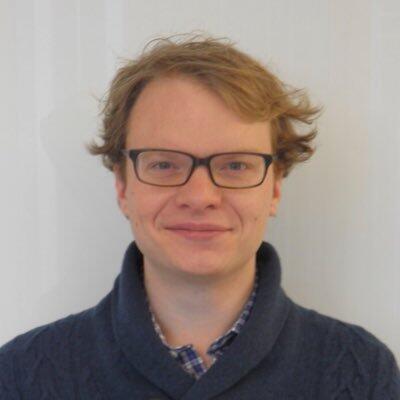
Bryn Rosenfeld
Bryn Rosenfeld is Assistant Professor of Government at Cornell University. Her research interests include political behavior, development and democratization, protest, post-communist politics, and survey methodology. Her new book, The Autocratic Middle Class examines how middle-class economic dependence on the state impedes democratization and contributes to authoritarian resilience. She is the recipient of a Juan Linz Best Dissertation Prize and a Best Article Award honorable mention, both by the American Political Science Association’s Democracy & Autocracy Section. Her work appears in the American Political Science Review, the American Journal of Political Science, the Journal of Politics, Comparative Political Studies, and Sociological Methods & Research. She holds a PhD from Princeton.

Online, via Zoom:  REGISTER

Bryn Rosenfeld Assistant Professor of Government at Cornell University
Seminars
-

Image
the trump takedown

The Facebook Oversight Board will release its decision concerning the takedown of President Donald Trump's account this Wednesday. On Thursday, May 6, from 2:00 to 3:15 PM Pacific, members of the Oversight Board will be joined by the leaders of the Stanford Cyber Policy Center to discuss the Board's decision. Two members of the Oversight Board, Michael McConnell and Julie Owono, will be joined by Nate Persily, Renee DiResta, Daphne Keller, Marietje Schaake and Alex Stamos to discuss the decision and its implications for Facebook's handling of similar controversies around the world.

Please join us for a workshop discussion of Dr. Minayo Nasiali's draft book chapter, "A Working Alias: African Sailors and Fungible Identities across France and Great Britain’s Maritime Empires (1920-1939).


The French Culture Workshop is co-sponsored by the Stanford Humanities Center, the DLCL Research Unit, the France-Stanford Center, and the Europe Center at the Freeman Spogli Institute.

Lectures
-

RSVP for this event

The annual Eurovision Song Contest is one of the world’s longest-running and most popular television shows, having been first staged in 1956. The European Broadcasting Union, the Eurovision Song Contest’s organiser, has always maintained that the contest is a non-political event that promotes cooperation among the European Broadcasting Union’s members, national public service broadcasting organisations from Europe and the Mediterranean rim. Yet, as entries in it represent states, the Eurovision Song Contest has always reflected political relations in Europe and has been appropriated by governments in their cultural diplomacy. For example, as a Western European event during the Cold War, the Eurovision Song Contest inspired the formation of and was challenged by an Eastern European equivalent, the Intervision Song Contest. In his talk, Dr. Dean Vuletic, the world’s leading academic expert on the history of the Eurovision and Intervision song contests, will address why these two song contests have been so politically significant for Europe. He will also discuss how this year’s Eurovision Song Contest reflects contemporary politics in Europe, especially with regards to East Europe.

Dean Vuletic is a historian of contemporary Europe based in the Research Center for the History of Transformations at the University of Vienna. After receiving his doctoral degree in history from Columbia University, he designed the world’s first-ever university course on the Eurovision Song Contest, which he began teaching at New York University. He is the author of Postwar Europe and the Eurovision Song Contest (London: Bloomsbury, 2018), the only scholarly monograph on the history of the contest, which he produced under a Marie Skłodowska-Curie Intra-European Fellowship. As a Lise Meitner Fellow, he has also led a research project on the history of the Intervision Song Contest. Dean is a leading media commentator and public speaker on the Eurovision Song Contest, and more information about his work can be found on his website www.deanvuletic.com.

 
Authors
News Type
News
Date
Paragraphs

“How can we engage with North Korea on human rights?” That is the question Robert R. King, former U.S. special envoy for North Korean human rights issues at the U.S. Department of State, has long been focused on. King, a visiting scholar and Koret Fellow at APARC in fall 2019, rejoined the Korea Program to discuss his new book, Patterns of Impunity.

In this volume, he provides an inside look into his time as special envoy, traces U.S. involvement and interest in North Korean human rights, offers insights into the United Nations’ role in addressing the North Korean human rights crisis, and discusses the challenges of providing humanitarian assistance to a country with no formal relations with the United States and where separating human rights from politics is virtually impossible.

King was joined by his longtime colleague Jung-Hoon Lee, South Korea's former Ambassador for Human Rights and the ROK’s inaugural Ambassador-at-Large for North Korean Human Rights. Watch their conversation:

[Subscribe to APARC’s newsletters to receive our experts' latest updates.]

The Role of the Special Envoy

As the Biden administration begins to review policy towards North Korea in earnest, King’s book and perspectives are particularly timely. Drawing on over a decade of experience, King explains how the role of the special envoy provides a unique opportunity to influence the policy agenda on human rights. As a senior member within the U.S. State Department, the envoy is in a position to both elevate the importance of rights violations to policymakers in Washington and provide feedback on how policy decisions impact the situation on the ground.     

King outlines several avenues where U.S. policymakers can increase pressure on North Korea to address the ongoing human rights crisis in the country. Predominantly among them is the recommendation to support the work on human rights already done by the UN and UN agencies, such as the reporting of Special Rapporteur Tomás Quintana.

“North Korea is very sensitive about its international legitimacy,” King notes. “Working through the UN and with UN agencies gives greater validity and acceptability to the human rights issues and puts greater pressure on North Korea to follow international norms.”

King’s other recommendations center more directly on the people of North Korea. He urges ongoing support for initiatives and agreements that foster access to information and proper distribution of resources and aid for North Koreans within the country along with freedom of movement for those who are attempting to leave and face crossing hostile borders into China. 

Responsibilities in Seoul

Speaking as King’s counterpart and colleague in South Korea, Jung-Hoon Lee echoed the need for visibility and accountability — both globally and in South Korea — for the DPRK's human rights crisis. “In the public eye and the global context, the human rights condition in North Korea is not very familiar. Why? There’s no access. The North Korean society is completely cocooned. There are terrible human rights conditions in other parts of the world, but there is access in those cases to see what is going on. In North Korea, there are only testimonials. There are no pictures or documentaries of the gulags and atrocities. That’s why it is so important that we keep raising this issue.”

For Lee, this means working with and through many of the same channels that King points to, such as the UN, and recognizing as a global community the scale of the crimes against humanity being committed.

But it also means accepting responsibilities closer to home. Lee firmly rejects the opinion raised by the South Korean Foreign Minister that refocusing on North Korean human rights and reappointing an ambassador to fill Lee’s now-vacant position is “useless.” Such indifference towards human rights issues in North Korea is damaging, warns Lee, citing the scrutiny South Korea suffered during the recent Tom Lantos Human Rights Commission hearings before the U.S. Congress.

The Road Towards Accountability

Human rights are only one facet of U.S. policy toward North Korea, but we undermine the overall relationship with the North if the United States abandons human rights in pursuit of security or economic goals, writes King in his book. "Policy toward North Korea involves interrelated issues that we frequently separate for analytical purposes or because they are dealt with in different ways or by different means. But these issues are interconnected, and they are not really separable."

Ultimately, any meaningful action to address North Korea's human rights violations will require coordinated efforts from international organizations, national governments, and civic organizations. In the third and final part of the Korea Program’s spring 2021 series on human rights in North Korea, forthcoming on May 20, leaders from the private sector will discuss the challenges of bringing together independent actors and organizations to raise awareness and call for accountability in North Korea. Registration for the event is open to the public.  

Read More

[Top left] Gi-Wook Shin; [top right] Roberta Cohen; [bottom left] Tomás Ojea Quintana; [bottom right] Joon Oh
News

Using the UN to Create Accountability for Human Rights Crimes in North Korea

Experts on human rights agree that the UN needs to work through multiple channels to support ongoing investigations and build evidence for future litigations in order to create accountability and pressure the DPRK to desist in committing human rights crimes.
Using the UN to Create Accountability for Human Rights Crimes in North Korea
Small flags of North Korea and China for sale near the China-North Korea border
Commentary

China’s Dangerous Double Game in North Korea

Biden must force Beijing to cooperate fully with Washington or pivot to obvious obstruction writes FSI Center Fellow Oriana Skylar Mastro in her latest op-ed for Foreign Affairs.
China’s Dangerous Double Game in North Korea
Brightly colored ribbons tied to fences around Imjingak Village in the DMZ on the North Korean Border.
News

Koret Conference Convenes Virtually to Discuss Human Rights Crisis in North Korea

Amid escalating inter-Korean tension and increasing economic and social strain on North Koreans in the era of COVID-19, the importance of keeping international attention on the DRPK’s human rights violations is more urgent than ever.
Koret Conference Convenes Virtually to Discuss Human Rights Crisis in North Korea
Hero Image
"Patterns of Impunity" by Robert King on a backgorund showing the flags of North Korea, South Korea, and the United States.
All News button
1
Subtitle

In his new book, "Patterns of Impunity," Ambassador King, the U.S. special envoy for North Korean human rights from 2009 to 2017, shines a spotlight on the North Korean human rights crisis and argues that improving human rights in the country is an integral part of U.S. policy on the Korean peninsula.

Authors
News Type
Q&As
Date
Paragraphs

Hong Kong is a geographically, culturally, and historically unique city. Shan Huang, a Stanford doctoral candidate in anthropology, is fascinated by how the history and culture of “Asia’s World City” continue to affect its social and political development.

predoctoral fellow at APARC during the 2020-21 academic year, Shan researches urban studies and contemporary social movements with a focus on Hong Kong and mainland China. His dissertation examines how the Hong Kong government’s developmental schemes are confronted by grassroots actions aimed at democratizing urban planning and promoting alternative urban futures.

APARC introduced the predoctoral fellowship in January 2021 as part of our expanded funding and training offerings in response to the harsh impacts of the COVID-19 pandemic on students' academic careers and their access to future jobs and valuable work experience, and in recognition of the critical need to make the field of Asian Studies more diverse and inclusive.

We chatted with Shan to learn more about how his study of anthropology informs his research interests, how's he has spent his time away from Stanford during the pandemic closures, and how he's planning for the future in unpredictable times.

[Subscribe to APARC's newsletters to hear about other opportunities at APARC.]


Tell us about your dissertation and research interests. What initially drew you to these topics?

My current research broadly concerns the contested field of urban politics in which established regimes of “development” meet various sociopolitical demands and cultural aspirations that call these regimes into question. My dissertation, Land, Democracy, and the Urban Future: An Ethnography of Political Culture in Late Colonial Hong Kong, examines how Hong Kong government’s developmental schemes are confronted by grassroots actions that aim at democratizing land-use planning and promoting alternative urban futures. A full-length ethnography of Hong Kong's political culture, it also seeks to reflect on urbanism of our times.

With characteristic images filled with skyscrapers and dense residential buildings, Hong Kong is typically portrayed as an urban miracle. In contrast, my main fieldwork was conducted in the massive countryside of the metropolis. There, I followed the path of a network of advocate groups, local residents, and activists who are invested in reviving agriculture, studying local history, and strengthening community ties through experimental social projects. In revitalizing the villages that many of them used not to be familiar with, they are also exploring how to make new environmental, social, and political visions tangible and participatory for ordinary citizens. It is these methodologies of envisioning that interest me the most.

I was initially drawn to this research on a field trip to Hong Kong’s countryside during the Inter-Asia Cultural Studies Summer School at Lingnan University in 2016. Thanks to the wonderful tours led by local activists and researchers, I came to be fascinated by the anti-displacement campaigns there and the question of how the urban-rural connections shape what we know as “Hong Kong.”

What’s something unexpected that you’ve learned through the course of your research?

The most unexpected experience during the course of my research in Hong Kong was certainly my witness of the 2019-2020 protest movements triggered by the Extradition Law Amendment Bill. As an anthropologist trying to understand Hong Kong’s political culture, I learned from this game-changing event about the limit of my field. As I wrote elsewhere, it means the government’s exhaustion of strategies of control, which, read in the longer trajectory of the city’s social and political transformation, suggests the furthest extent to which the post-Handover arrangement can win consensus among citizens. I also think that the failed politics of land-use planning, which is another field of civil participation, may also serve as a concrete example that explains how this grand limit has eventually arrived, though in a less eventful manner.

When you’re not working on your dissertation, what kinds of things have you done to stay grounded during this year of quarantine?

In the first few months of quarantine, I couldn’t do much on my dissertation, so I started learning more cooking skills by watching videos by vloggers who specialize in Chinese cuisines. After I relocated to China in the past summer, I had the chance to cook for my extended family a few times with all I had learned and they seemed to really like it!

How have the unusual circumstances of this past year and your time as a remote predoctoral fellow at APARC affected your research goals?

I was fortunate to complete the main part of my fieldwork before the COVID-19 pandemic, so I’m very lucky in that. The main challenge regarding my predoctoral fellowship is that I couldn’t join as many APARC/FSI talks as I wish due to the awkward time difference!

Where are you hoping your interests take you after you receive your degree from Stanford?

One practical thing I’ve learned during the pandemic is the need to be prepared for sudden changes in plans. This is particularly true and challenging for the community of floating, “international” scholars to which I belong. My hope is to still find an academic home where I can teach and polish my work, but I am also trying to be more poised for other possibilities. In the end, perhaps learning how to relax about some planning and expectations is not a bad thing either.

Read More

Spring blooms in the courtyard near History Corner, Stanford University.
News

APARC Names 2021-22 Shorenstein Postdoctoral Fellows

Political scientist Dr. Diana Stanescu and sociologist Mary-Collier Wilks will join APARC as Shorenstein postdoctoral fellows on contemporary Asia for the 2021-22 academic year.
APARC Names 2021-22 Shorenstein Postdoctoral Fellows
[Left] Postdoc Spotlight, Jeffrey Weng, Shorenstein Postdoctoral Fellow in Contemporary Asia, [Right] Jeffrey Weng
Q&As

Postdoc Spotlight: Jeffrey Weng on Language and Society

Shorenstein Postdoctoral Fellow in Contemporary Asia Jeffrey Weng shares insights from his research into how language and society shape one another, particularly how the historical use of Mandarin affects contemporary Chinese society and linguistics.
Postdoc Spotlight: Jeffrey Weng on Language and Society
Stanford campus, main quad with cloudy sky
News

APARC Offers Fellowship and Funding Opportunities to Support, Diversify Stanford Student Participation in Contemporary Asia Research

The Center has launched a suite of offerings including a predoctoral fellowship, a diversity grant, and research assistant internships to support Stanford students interested in the area of contemporary Asia.
APARC Offers Fellowship and Funding Opportunities to Support, Diversify Stanford Student Participation in Contemporary Asia Research
Hero Image
[Left] Hong Kong skyline; [Right] Encina Hall, Stanford Florian Wehde, Unsplash
All News button
1
Subtitle

Meet Shan Huang, a Stanford doctoral candidate in anthropology and a 2020-21 APARC predoctoral fellow, whose dissertation provides an ethnographic account of Hong Kong’s political culture in the post-Handover era.

News Type
News
Date
Paragraphs

Laitin has made “culture,” often the junk drawer of political science studies, studiable and concrete by identifying various cultural components of a nation’s inner life; language is one aspect of culture, religion another, art and literature a third, how private family life is organized a fourth. Central to his thinking is that these cultural components do not have to easily reinforce each other or pull in the same direction. These “spheres” can co-exist without coinciding.

Hero Image
David D. Laitin
All News button
1
Subtitle

The Johan Skytte Prize in Political Science, known by many as the “Nobel Prize in Political Science,” is being awarded for the 27th consecutive year. This year’s recipient is David D. Laitin, for his “original and objective explanation of how politics shapes cultural strategies in heterogeneous societies.”

Paragraphs

Image
Democracy task force paper cover

The Task Force on US Strategy to Support Democracy and Counter Authoritarianism launched in September 2020 as a joint effort of Freedom House, the Center for Strategic and International Studies (CSIS), and the McCain Institute. It has conducted itself as a working Task Force, with the active engagement of its members. The final recommendations of this report draw on the significant experience of the Task Force members, who contributed their deep expertise to help create recommendations that are both forward-looking and practical.

Eileen Donahoe of the Stanford Cyber Policy's Global Digital Policy Incubator, was a working group lead. 


All Publications button
1
Publication Type
White Papers
Publication Date
Subtitle
Report of the Task Force on US Strategy to Support Democracy and Counter Authoritarianism
Authors
Authors
News Type
News
Date
Paragraphs

Political attention is turning once again to the Korean Peninsula and the United States’ policy towards both the Democratic People's Republic of Korea. On April 15, 2021, the Human Rights Commission of the United States Congress convened a hearing on “Civil and Political Rights in the Republic of Korea: Implications for Human Rights on the Peninsula.” This follows on the announcement of the first face-to-face White House visit between President Biden and President Moon Jae-In where “North Korea is likely to be high on the agenda.”

In the first of three public events on North Korea Human Rights, APARC’s Korea Program hosted Tomás Ojea Quintana, United Nations Special Rapporteur on the situation of human rights in DPRK; Roberta Cohen, co-chair emeritus of the Committee for Human Rights in North Korea; and former South Korean Ambassador to the United Nations Joon Oh for a discussion of what role the United Nations plays in creating accountability for the ongoing human rights violations and crimes against humanity being enacted by the North Korean government against its people.

The full discussion is available to watch below.

[Subscribe to APARC’s newsletters for updates on our scholars’ research.]

Exploring Means of Enforcing Accountability

Speaking as an independently acting investigator, Special Rapporteur Tomás Ojea Quintana echoed the findings of his predecessors in warning that the activity within North Korea has escalated from human rights violations to international crimes against humanity, including extermination, enslavement, torture, sexual violence, and knowingly inflicting prolonged starvation.

What governing body has the ability to hold national leadership at the highest level accountable for such crimes? Quintana outlines several options. One is the International Criminal Court, the international tribunal seated in The Hauge. However, superpower nations such as the United States, China, and Russia are historically recalcitrant to the jurisdiction of this legal body and could feasibly veto a case against the DPRK sent to the ICC.

Another option is for the UN Security Council to create a hybrid tribunal through which international prosecution could litigate. This option is more ad hoc, but would circumvent some of the potential veto pitfalls to using the ICC.

The Secretary General of the United Nations could also use the pejoratives given under Article 99 of the United Nations Charter to force action and accountability forward. This would be a difficult and even unprecedented means of jurisdiction, but it is supported by an already existing, if rarely enacted, legal framework.

Moving Forward

Each of the avenues proposed by Special Rapporteur Quintana has varying levels of efficacy and shortcomings, particularly in the immediate context of the ongoing COVID-19 pandemic and the further hindrance it has created to gathering evidence and intelligence directly from North Korea. As Roberta Cohen notes,

“No possibility exists right now for International Criminal Court referral, or establishing an ad hoc tribunal, but progress is nonetheless being made in laying the groundwork for eventual criminal prosecution and other aspects of transitional justice.”

Former Ambassador Joon Oh echoes the importance of keeping the issue of human rights and international crimes in North Korea in the spotlight even if immediate legal options stall.

“The issue of accountability is extremely important. These alternative ways [of creating accountability] should be explored. Exploring these avenues adds pressure on North Korea. Even remote possibilities add pressure, which might help change their behavior.”

On April 26, 2021, Ambassador Robert King, former U.S. Special Envoy for North Korean human rights issues will continue the dialogue on accountability in North Korea with a discussion of his forthcoming book, Patterns of Impunity: Human Rights in North Korea and the Role of the U.S. Special Envoy, and the role the South Korean and U.S. governments play in promoting human rights in North Korea. Registration for the book launch is open through the day of the event.  

Read More

Brightly colored ribbons tied to fences around Imjingak Village in the DMZ on the North Korean Border.
News

Koret Conference Convenes Virtually to Discuss Human Rights Crisis in North Korea

Amid escalating inter-Korean tension and increasing economic and social strain on North Koreans in the era of COVID-19, the importance of keeping international attention on the DRPK’s human rights violations is more urgent than ever.
Koret Conference Convenes Virtually to Discuss Human Rights Crisis in North Korea
Small flags of North Korea and China for sale near the China-North Korea border
Commentary

China’s Dangerous Double Game in North Korea

Biden must force Beijing to cooperate fully with Washington or pivot to obvious obstruction writes FSI Center Fellow Oriana Skylar Mastro in her latest op-ed for Foreign Affairs.
China’s Dangerous Double Game in North Korea
(From left to right) Siegfried Hecker, Victor Cha, Oriana Mastro, Gi-Wook Shin, Robert Carlin
News

Experts Discuss Future U.S. Relations with North Korea Amid Escalations

Led by APARC, a panel of scholars hosted by the Freeman Spogli Institute weighs in on the implications of recent events on the Korean peninsula and the ongoing uncertainties in charting a future course with the DPRK.
Experts Discuss Future U.S. Relations with North Korea Amid Escalations
Hero Image
[Top left] Gi-Wook Shin; [top right] Roberta Cohen; [bottom left] Tomás Ojea Quintana; [bottom right] Joon Oh
All News button
1
Subtitle

Experts on human rights agree that the UN needs to work through multiple channels to support ongoing investigations and build evidence for future litigations in order to create accountability and pressure the DPRK to desist in committing human rights crimes.

-

This event is part of Shorenstein APARC's spring webinar series "The United States in the Biden Era: Views from Asia."

American politics, especially presidential elections, have always drawn significant attention from Japanese policy makers and the public, because of their enormous impact on Japanese politics. The recent developments in the U.S. – from the Trump presidency to the contested election and the unconventional transition of power that included a riot at the Capitol – have engendered an elevated level of curiosity and concern about the state of American politics in Japan. This webinar will examine how Japanese leaders and citizens have processed what unfolded in the U.S. and how it may have shaped their current views on US-Japan relations, featuring two leading experts on the topic, Keiko Iizuka (Yomiuri Shimbun) and Toshihiro Nakayama (Keio University). Moderated by Kiyoteru Tsutsui, Director of the Japan Program at APARC, the webinar will have a Q&A session, and the participants are welcome to submit their questions in advance using the registration form and at the event using the Q&A function of Zoom.

SPEAKERS

Image
Keiko Iizuka
Keiko Iizuka is Senior Political Writer/Editorial Writer at The Yomiuri Shimbun and lead commentator for the nightly news program “News in Depth (Shinso News)” on the BS4 channel. Her expertise is international relations specially focusing on Indo-Pacific, Japan-U.S. relations, and European affairs. Her U.S. experience includes working at the Brookings Institution as a visiting fellow (2008-2009) and a role of Washington Bureau Chief with Yomiuri (2013-2015). She has held several other positions at the paper including chief editor for international news department (2015-2017) and chief political correspondent at the Prime Minister’s office of Japan (2006-2007). She was posted twice in London as correspondent (2003-2006, 2017-2019).

Image
Toshihiro Nakayama
Toshihiro Nakayama, Ph.D, is a Professor of American Politics and Foreign Policy at the Faculty of Policy Management at Keio University. He is also a Senior Adjunct Fellow at the Japan Institute of International Affairs (JIIA). He was a Special Correspondent for the Washington Post at the Far Eastern Bureau (1993-94), Special Assistant at the Permanent Mission of Japan to the United Nations in New York (1996-98), Senior Research Fellow at The Japan Institute of International Affairs (2004-06), Associate Professor at Tsuda College (2006-10), and Professor at Aoyama Gakuin University (2010-14). He was also a CNAPS Visiting Fellow at the Brookings Institution (2005-06), Sir Howard Kippenberger Chair Visiting Professor at the Center for Strategic Studies, Victoria University in Wellington (2017) , Japan Scholar at the Woodrow Wilson Center (2018-2019), and an Advisor to the Ministry of Defense (2019-2020). He received his M.A.(1993) and Ph.D.(2001) from Aoyama Gakuin University. He has written two books and numerous articles on American politics, foreign policy and international relations. Recipient of Nakasone Yasuhiro Award (Incentive Award) in 2014.

MODERATOR 

Image
Kiyoteru Tsutsui
Kiyoteru Tsutsui is Henri H. and Tomoye Takahashi Professor and Senior Fellow in Japanese Studies at the Walter H. Shorenstein Asia-Pacific Research Center at Stanford University, where he is also Director of the Japan Program, a Senior Fellow of the Freeman Spogli Institute for International Studies, and a Professor of Sociology. He is the author of Rights Make Might: Global Human Rights and Minority Social Movements in Japan (Oxford University Press, 2018), co-editor of Corporate Responsibility in a Globalizing World (Oxford University Press, 2016) and co-editor of The Courteous Power: Japan and Southeast Asia in the Indo-Pacific Era (University of Michigan Press, forthcoming 2021). 

This event is being held virtually via Zoom. Please register for the webinar via the following link: https://bit.ly/3sfxcVs

Keiko Iizuka <br><i>Senior Political Writer/Editorial Writer at The Yomiuri Shimbun</i><br><br>
Toshihiro Nakayama <br><i>Professor of American Politics and Foreign Policy at the Faculty of Policy Management at Keio University</i><br><br>
Seminars
Subscribe to Society