Society

FSI researchers work to understand continuity and change in societies as they confront their problems and opportunities. This includes the implications of migration and human trafficking. What happens to a society when young girls exit the sex trade? How do groups moving between locations impact societies, economies, self-identity and citizenship? What are the ethnic challenges faced by an increasingly diverse European Union? From a policy perspective, scholars also work to investigate the consequences of security-related measures for society and its values.
The Europe Center reflects much of FSI’s agenda of investigating societies, serving as a forum for experts to research the cultures, religions and people of Europe. The Center sponsors several seminars and lectures, as well as visiting scholars.

Societal research also addresses issues of demography and aging, such as the social and economic challenges of providing health care for an aging population. How do older adults make decisions, and what societal tools need to be in place to ensure the resulting decisions are well-informed? FSI regularly brings in international scholars to look at these issues. They discuss how adults care for their older parents in rural China as well as the economic aspects of aging populations in China and India.

-

The lecture aims to introduce the prevalence of Non-communicable Diseases (NCDs) in Zhejiang Province in China, and also share experience of Control and Prevention of NCDs. The lecture is composed by five parts. Firstly, NCDs surveillance system in Zhejiang will be introduced, including its establishment history and system coverage. Then, epidemiological characteristics of major NCDs (such as diabetes, cancer, stroke, and acute coronary heart disease events) will be presented, as well as NCDs related behavioral risk factors and hospital-based injury surveillance. Next, current work of NCDs prevention and control in Zhejiang Province will be described, including work network, human resources, community management and pilot programs for NCDs. Fourthly, economic cost of diabetes will be illustrated. Finally, countermeasures for NCDs Prevention and Control will be discussed.

Image
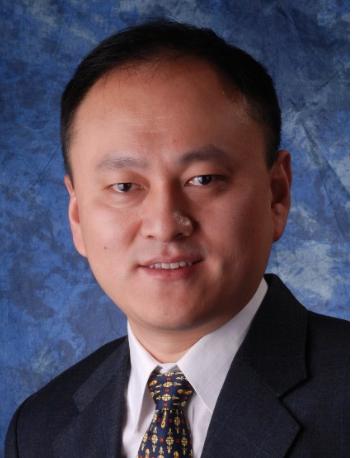
photo of min yu 113015 4x6
Min Yu is deputy director of Zhejiang Provincial Center for Disease Control and Prevention. He was awarded as New-Century 151 Talents of Zhejiang Province, China. He is a committee member of Epidemiology Branch of Chinese Preventive Medicine Association. He is the leader of key discipline of Non-Communicable Diseases epidemiology (NCDs), and led the establishing of NCDs and behavioral risk factor surveillance system in Zhejiang province.  

Yu got Medical degree in Zhejiang University and Master degree of Public Health in Peking Medical University. Now his research focuses on epidemiology of NCDs, strategy for NCDs control and prevention, and disease burden.

Min Yu Deputy director of Zhejiang Provincial Center for Disease Control and Prevention
Seminars
-
Co-sponsored by the Asia Health Policy Program & the Southeast Asia Program
 
This paper analyzes the effects of an early-life shock in Indonesia on children’s human capital formation and parental responses to these shocks. We exploit the geographical variation of Indonesia’s forest fires during the El Nino phenomenon in 1997, as well as cohort variation in exposure. Children affected by these shocks in utero and in early years have worse health outcomes relative to children not exposed to these shocks. We find that the health effects persist, but other factors mitigate the initial effect on cognitive skills.
 
My main research interest lies at the intersection of development and health economics. I am particularly interested in how social policies affect health outcomes for the poor, early health investments, and health-seeking behavior in limited resource settings, focusing on the evaluation of different strategies that seek to promote health investments and the effects of these interventions. Specifically, I have analyzed the effects of Indonesia’s household conditional cash transfer program on health outcomes, local health care price, and quality of care. I have also analyzed the long-term effects of a large-scale midwifery program in Indonesia. Current projects study the effects of early life shocks on children’s human capital outcomes in Indonesia and the Philippines.
 
Image
triyana margaret crop 113015a 4x6
Margaret Triyana is currently Assistant Professor of Economics at Nanyang Technological University, Singapore. Triyana graduated from the Harris School of Public Policy at the University of Chicago. She was previously the Asia Health Policy Postdoctoral Fellow at the Shorenstein Asia Pacific Research Center in 2013-14.
Margaret Triyana Assistant Professor of Economics, Nanyang Technological University, Singapore
Seminars
News Type
News
Date
Paragraphs

As we look toward year 2016, the Walter H. Shorenstein Asia-Pacific Research Center documents highlights from the 2014-15 academic year. The latest edition of the Center Overview, entitled "Asia in Flux," includes special research, people, events and outreach features, and is now available for download online.

Hero Image
annual report cover 14 15
All News button
1
Authors
News Type
News
Date
Paragraphs

Henry S. Rowen, a Stanford economist and professor emeritus of public policy and management, died in Palo Alto on Nov. 12. He was 90.

Rowen, known affectionately as “Harry” to colleagues and friends, led a long, notable career in academia and public service. Having served in three U.S. administrations, he shaped the construction of American policy on a range of issues from entrepreneurship to intelligence.

“Harry was one of the great policy analysts, defense experts, public intellectuals and government servants of his generation,” said Michael H. Armacost, a colleague and Stanford distinguished fellow. “He is one of the reasons they are referred to as ‘the greatest generation.’”

Rowen was the Edward B. Rust Professor of Public Policy and Management, emeritus, at Stanford’s Graduate School of Business, a senior fellow at the Hoover Institution, and a senior fellow, emeritus, at the Freeman Spogli Institute for International Studies, and a director emeritus of the Walter H. Shorenstein Asia-Pacific Research Center (APARC).

Arriving at Stanford in 1972, Rowen studied economic development and high-tech industries in the United States and Asia, and contributed numerous publications on innovation, as well as international security and energy policy. He assumed emeritus status in 1995.

Public servant, scholar

Born in Boston, he earned a bachelor’s degree from the Massachusetts Institute of Technology, and a master’s degree from Oxford University, in 1949 and 1955, respectively.

Over the course of his career Rowen twice held positions at the RAND Corporation, first as an economist, and later as its president for five years from 1967 to 1972.

In Washington, he held several prominent positions in the Kennedy, Reagan and George H. W. Bush administrations. From 1981 to 1983, he was the chairman of the U.S. National Intelligence Council (NIC), and the assistant secretary of defense for international security affairs from 1989 to 1991.

Thomas Fingar, an FSI distinguished fellow, described Rowen as “an institution” and a “very productive scholar as well as an effective and imaginative leader and manager.”

“My own career intersected with Harry’s several times, both at Stanford and Washington. Every time that it did, he was generous with his time and genuinely interested in whatever topic I brought to him,” said Fingar, who was one of Rowen’s successors as chairman of the NIC.

Rowen also served on the policy advisory board for the Secretary of Defense from 2001-04, and in 2004, was appointed to the yearlong U.S. commission charged with assessing the intelligence community’s readiness to respond to a proliferation of weapons of mass destruction.

He returned to the Stanford campus in the 1980s, 1990s and 2000s. Rowen’s versatility supported and expanded the research aims of Shorenstein APARC and FSI, and the greater Stanford community.

“His name pops up in virtually every book written about U.S. national security policy during that period,” remarked Fingar, referring to Rowen’s influence in Washington in the early 1960s.

A collection of Rowen’s government papers was recently made available by the Hoover Institution Archives.

Rowen’s interdisciplinary experiences yielded a deep knowledge of the social and political factors in nations struggling with a sustainable peace, weighing nuclear proliferation issues, and considering new forms of governance.

In a 1996 issue of the National Interest, Rowen predicted that China would become a democracy by 2015. Although the forecast was seemingly incorrect, he suggested earlier this year that the transition was still a question of “when, not if.”

Rowen’s latest book Greater China’s Quest for Innovation was published in 2008. The co-edited book examines the talent, resources and research and development (R&D) environments in Mainland China, Taiwan and Hong Kong, and suggests institutions needed to create a successful innovation-based economy.

A comprehensive set of Rowen’s works can be found on his bio.

Leadership, innovation

Rowen became the director of Shorenstein APARC in 1997. He served in that role until 2001, and as co-director from 2000 to 2001, with Stanford professor Andrew Walder.

“Harry was a core member of our center’s past and present,” said Takeo Hoshi, a Stanford economist and acting director of Shorenstein APARC. “He pioneered research on entrepreneurship and innovations throughout Asia. The importance of such research has only continued to grow over time.”

Rowen also led the Stanford Program on Regions of Innovation and Entrepreneurship (SPRIE). Active for fifteen years, until 2013, its mission was to hold collaborative research and colloquia on the dynamics and sustainability of high-tech areas around the world.

William F. Miller, SPRIE faculty co-director and a Stanford professor emeritus of management and computer science, spoke of him as a man of great principle.

“Harry brought to bear his vast research experience, extensive government experience, and his international experiences on everything we did. He will be greatly missed by his many friends and colleagues,” Miller said.

SPRIE inspired other Stanford initiatives aiming to build bridges between Silicon Valley and Asia, such as China 2.0 and the still-present Centers and Initiatives for Research, Curriculum and Learning Experiences.

Rowen never retired. This year, he was advising a Fulbright visiting scholar and coordinating a conference on technology interaction between Singapore and Silicon Valley. He often attended seminars across campus and was known to pose insightful, straightforward questions.

Rowen is survived by his wife, Beverly, of Palo Alto, six children and nine grandchildren. Information about any memorial activities will be published when available.

Additional coverage:

Los Angeles TimesHenry 'Harry' Rowen, Rand leader at time of Pentagon Papers, dies at 90

San Jose Mercury News: Think tank leader at time of Pentagon Papers dies at 90

Stanford News Service: Henry S. Rowen, Stanford business professor and U.S. policymaker, dies at 90

Hero Image
2011 harry rowen
Henry S. Rowen at Stanford University in 2011.
All News button
1
Encina Hall E301616 Serra StreetStanford, CA94305-6055
(650) 724-5676 (650) 723-6530
0
Ph.D.

Anne Booth is the Lee Kong Chian NUS-Stanford Distinguished Fellow on Contemporary Southeast Asia at Shorenstein-APARC during October and November 2015. She was Professor of Economics (with reference to Asia) at the School of Oriental and African Studies, University of London from 1991 to 2013, and is now Professor Emeritus. Before moving to London, she held posts at the University of Singapore and the Australian National University.

She grew up in New Zealand, and graduated from Victoria University of Wellington, and the Australian National University in Canberra. Her main research interest is the modern economic history of Southeast Asia, and the impact of different colonial legacies on post-colonial development across East and Southeast Asia. Her book, Colonial Legacies: Economic and Social Development in East and Southeast Asia, was published by the University of Hawaii Press in 2007, and she has just completed a study of Indonesian economic development which will be published by Cambridge University Press next year.

She will use her time at Stanford to gather material for a study of changing living standards in Southeast Asia from the 19th century to the present. 

2015-16 Lee Kong Chian NUS-Stanford Distinguished Fellow on Contemporary Southeast Asia
Authors
News Type
News
Date
Paragraphs


A podcast from the book event on Jan. 15 is available at the link above. An earlier interview with author Michael Armacost was first published in Oct. 2015 and is reposted below.

When it comes to elections, politics can supersede strategy. But what is often overlooked is the process through which the United States selects their commander in chief and its impact on policy – particularly, foreign policy.

What then shapes foreign policy during that time? “Events, my dear boy, events,” Harold Macmillan, a former British prime minister, famously replied when asked what could change a government's directions. To which Michael Armacost agrees and explores the interplay between campaign politics and foreign policy in his new book.

“Since World War II, the United States has consistently pursued a global role, but the tempo of its engagement with the world has been repeatedly adjusted to reflect circumstances and domestic moods,” Armacost wrote.

A veteran scholar, former ambassador and undersecretary of state for political affairs, Armacost is an expert on the U.S. government system and policy process. In the book, he examines ideology and the struggle for power in the six elections that have taken place since 1948, ending with Barack Obama’s re-election in 2012.

The book, which reads somewhat like a guide, largely began as a project for students, he said. 

Armacost initially came to Stanford in 1994, and in 2002, returned as a distinguished fellow at the Walter H. Shorenstein Asia-Pacific Research Center. He co-teaches a graduate course on U.S. policy in Northeast Asia.

“When I left government, I found a lot of literature on how foreign policy affects elections but little in the reverse,” Armacost said. “So my aim behind the research was to not only satisfy my own curiosity but to offer a comprehensive and accessible analysis for students.”

Armacost’s career in government began in 1983 when an advisor encouraged him to apply for a White House fellowship. His fellowship in the deputy secretary of state’s office – which was only set to be a single year in Washington – led to 24 years of public service.

He went on to serve as the U.S. ambassador to Japan from 1989 to 1993 and the Philippines from 1982 to 1984, and was a member of the National Security Council.

Armacost said he remains positive about the electoral system, while also suggesting a few reforms. The system ensures a cyclical chance to step back and assess where America stands in the world, he said.

“Our system provides regular opportunities to put the spotlight on troubling foreign policy problems,” he wrote. “And supplies an incentive to consider course corrections for costly, inconclusive foreign as well as domestic policies, or offers a chance to select new management to fix them.”

Shorenstein APARC asked him a few questions about his research in the context of the 2016 election cycle. His answers are posted below.

Will Obama attempt a “sprint to the finish line” on foreign policy?

He is well embarked on that sprint. In the fourth quarter of his presidency, he is eager to burnish his foreign policy legacy. President Obama’s agenda is clear. It includes the normalization of relations with Cuba, implementation of the Iran nuclear agreement, ratification of the Trans-Pacific Partnership free trade agreement, and promotion of further international cooperation on climate change. He will also seek to avoid losing ground in geopolitical competition with ISIS in Iraq and Syria, the Russians in the Ukraine and elsewhere, and China in the South China Sea.

A president’s power to effectively undertake controversial initiatives at home and abroad tends to ebb as his tenure runs out. Those requiring Congressional support are particularly problematic. And events will play a large role in determining the problems and opportunities that come his way before Jan. 20, 2017.

Does the Trans-Pacific Partnership (TPP) stand a chance of getting ratified?

It stands a chance, but it will not be easy. Fortunately, Trade Promotion Authority has been secured from the Congress. Hence, it will be limited to an up or down vote without amendments.

Opposition from labor unions and environmental groups assures that there will be very limited Democratic support for the TPP, and Hillary Clinton, Bernie Sanders and Martin O’Malley have publicly expressed their opposition. There has also been some erosion of support for free trade among the Republicans, whose leaders have mostly expressed misgivings about some of the TPP’s provisions.

I believe the TPP will advance U.S. economic and strategic interests, but whether its ratification will be achieved before or after the 2016 election is at this point uncertain.

How do the politics of the TPP differ from that of George H.W. Bush’s pursuit of the NAFTA agreement in 1992?

In 1992 President Bush didn’t hesitate to push hard for NAFTA throughout his campaign. And the Mexican and Canadian governments also regarded the U.S. election day as a convenient deadline for getting the agreement finished. The president’s GOP Party believed in free trade, and considered the push for an embryonic hemispheric market a worthy and historic objective. A NAFTA accord could be portrayed as extending a helping hand to a friendly neighbor. The Party’s business constituency was supportive; the bulwark of opposition to the deal were labor and environmental groups, which were unlikely to vote for Bush anyway.

Promoting NAFTA also offered the president a chance to put the Democratic candidate, Bill Clinton, who had made public remarks supporting such an agreement, on the spot. If he reversed his position and opposed the accord, he could be accused of “waffling;” if he didn’t, he would risk alienating his labor and environmental constituencies. Bush nearly got the deal finished, but side letters on labor and environmental issues remained to be completed after Clinton won the election.

This year, a Democratic president is confronting major opposition from his own party, and widespread support from Congressional Republicans is therefore indispensable to his chances of ratifying the agreement. A number of Republican leaders who are generally supportive of free trade, however, contend that President Obama was so eager to wrap up the deal on his own watch, that he missed a chance to drive a harder bargain. Others are reluctant to hand the president a foreign policy victory during a presidential campaign.

And as November 2016 nears, the Democratic candidate is likely to be reluctant to buck unions and environmental groups who not only provide much needed financial support, but supply the volunteers who perform crucial “get out the vote” duties on election day.

Where does foreign policy fit into the 2016 campaign? 

Foreign policy is likely to feature very prominently in the coming election, particularly if the economy continues its steady, if modest, rate of growth. The reason is simple. The United States faces serious challenges in the Middle East, the Ukraine, South Asia and the South China Sea. And many voters who favored retrenchment in 2008, now fear it is now perceived increasingly by friends and adversaries as weakness and/or retreat.

One should not, however, expect the presidential campaign to illumine the strategic choices we face abroad. Presidential contenders typically articulate a wide range of aspirational foreign policy goals. But they rarely outline priorities among these declared aims, let alone their potential costs and risks, or the trade-offs among them. To address these core elements of strategy might offend one or another potential voting bloc. Candidates, therefore, tend to focus upon the appeal of their foreign policy objectives at home, rather than their efficacy abroad.

A wide field of candidates has emerged early on. What foreign policy issues are not being addressed that should figure in the debates?

It’s a bit early to say. The first primaries are still three months away. Few debates have yet been held. The election is likely in any event to be in part a referendum on President Obama’s record. But Hillary Clinton, who served for four years as the Secretary of State, is differentiating her position from that of Obama’s on a number of foreign policy matters. And as I noted above, the focus in most campaigns is on laudable goals rather than the key elements of strategy, i.e. the operational tests of foreign policy for anyone who occupies the Oval Office.

What will happen to the U.S. “pivot back to Asia” strategy?

President Obama performed a useful service in underlining America’s growing stake in Asia. I would expect the candidates of both major parties to affirm their intent to devote more time, attention and resources to the Asia-Pacific region. The problems the current administration has experienced in Asia are a by-product of the policy’s implementation. Many Asian leaders wonder whether the policy has been forgotten or overtaken by events. Adjustments in our regional security policy have been essentially symbolic.

With China, we are still looking for a sustainable balance between constructive engagement and prudent hedging. The diplomatic opening to Myanmar was timely, but progress has been complicated by ethnic struggles in that country. American leaders visit Asia periodically, but the United States is still perceived as primarily preoccupied with problems in the Middle East. Conclusion of the TPP will lend credibility to the policy, but only if the agreement is ratified. So it will be up to the next president to put some meat on the bones of this strategic initiative.

How do election cycles in the United States and South Korea mesh, and what might the coming cycle mean for U.S.-Korean relations?

America has a four-year election cycle for the presidency. The Republic of Korea elects its presidents for a five-year term. We have experienced several occasions when our cycles appeared out of sync, i.e. when the United States elected more conservative candidates to the White House as the Koreans chose more liberal contenders for the Blue House. George W. Bush, a conservative, served during a period when the South Korean presidents – Kim Dae Jung and Roh Moo-Hyun – were both liberals or progressives. American and South Korean perspectives on policy toward North Korea diverged sharply. Nonetheless, they joined hands in launching the U.S.-Korea Free Trade Agreement, and formulated plans for a major redeployment of U.S. military forces away from the Seoul metropolis to bases further south. And President Obama, a liberal, fashioned a close relationship with Presidents Lee Myung-bak and Park Geun-hye, both conservatives.

Thus, shared national interests have a way of tempering the ideological predilections of our respective leaders, enabling them to collaborate when dangers loom or when opportunities beckon.

South Korea now trades twice as much with China as it does with the United States and Japan combined. So its economy is tied more closely to China now, though it still looks to Washington for protection. Seoul will not want to choose between its economic interests and its strategic concerns. The United States has no reason to force such a choice on its ally, but it is clear that Beijing hopes to use its economic leverage to influence the Republic of Korea’s strategic decisions, for example, its readiness to deploy a THAAD, high altitude ballistic missile defense system. This is the kind of issue that could feed back into our election-year politics.

Related links

WNYC Brian Lehrer Show (Audio): How Elections Derail Foreign Policy (Aug. 4, 2015)

Hero Image
rtr3a3uf
Confetti on stage as U.S. President Barack Obama celebrates after winning the U.S. presidential election in Chicago, Illinois, Nov. 7, 2012.
Reuters/Phillip Scott
All News button
1
Date Label
-

A Lecture-Concert by

Professor Jindong Cai, Music Director and Conductor, Stanford Symphony Orchestra

In collaboration with members of

The Peking University Symphony Orchestra


NOV 12, 2015

19:30 – 21:00

Stanford Center at Peking University

At the turn of the twentieth century, the foundations of traditional Chinese society were crumbling. Many patriotic and idealistic young people went overseas to seek inspiration and education, determined to learn from the outside world and forge a new path forward for China. Beethoven was introduced to China during this period by a series of remarkable artists and intellectuals who learned about the composer while studying in Japan. The polymath artist, writer, and monk Li Shutong was the first Chinese to write about Beethoven in a short, but revealing, article called  “The Sage of Music.”  Xiao Youmei was the first Chinese to bring the sound of Beethoven to Chinese people.  After his studies in Japan and Germany, Xiao came back to China in 1921 and began promoting music education at Peking University, where he created the first Chinese symphony orchestra to perform Beethoven’s music. Since then, Beethoven has become an iconic figure in China and played a role in many major historical events from the May Fourth Movement to the normalization of US-China relations.  Beethoven became a hero to reformers, intellectuals, music lovers, and party cadres alike. The new Penguin Special “Beethoven in China,” by Stanford professor and orchestra conductor Jindong Cai and culture journalist Sheila Melvin tells the compelling story of Beethoven and the Chinese people.

In the first part of this special lecture-concert, Professor Cai will share his own experience of hearing Beethoven’s music for the first time in the midst of the Cultural Revolution. He will also briefly tell the story of how Beethoven and his music became so deeply rooted in modern China. The second part of the event will feature a 15-member ensemble of musicians from the Peking University Orchestra – a first-ever re-creation of the 1922 orchestra that premiered Beethoven in Beijing. The performance, conducted by Maestro Cai, will give the audience a unique historical experience and allow them to travel back in time and hear how Beethoven’s music sounded when it was first performed at Peking University.  


Stanford Center at Peking University, The Lee Jung Sen Building, Langrun Yuan, Peking University

Peking University is a closed campus, please bring a photo ID and enter PKU through the Northeast Gate. 

Jindong Cai Music Director and Conductor Stanford Symphony Orchestra
The Peking University Symphony Orchestra
Lectures
-

This is an event that will be held at BCC

Speaker A
Lectures
-

This event is now full.  Please contact khaley@stanford.edu if you would like to be added to the wait list.

Russian President Vladimir Putin is not the cipher he is sometimes thought to be. His early life, his career in intelligence, and his early service in the newly democratic St. Petersburg -- explain the policies now on display at home and increasingly abroad. Putin has evolved as the country has, becoming the most consequential leader of any country in the world. Although he is often portrayed as an enigma or as caricature, it is essential to understand the characteristics, events and goals that motivate him.  

Steven Lee Myers has worked at The New York Times for twenty-six years, seven of them in Russia during the period when Putin consolidated his power. He spent two years as bureau chief in Baghdad, covering the winding down of the American war in Iraq, and now covers national security issues. He lives in Washington, D.C.


Steven Lee Myers Diplomatic Correspondent, Washington Bureau, The New York Times
Lectures
Subscribe to Society
