 Ursula von der Leyen, Minister of Defense, Federal Republic of Germany
In her March visit to Stanford University, Ursula von der Leyen, Minister of Defense for the Federal Republic of Germany, spoke to members of the Stanford community about the consequences of current international security challenges for Germany and for Europe. In recent months, some in Germany have advocated border closures as a solution to the ongoing migration crisis. Von der Leyen was highly critical of such measures because they necessitate closing intra-European Union borders thereby limiting the freedom of movement within the European Union, something she heralds as one of the greatest achievements of European integration.
As an alternative to the simplistic border closure approach, von der Leyen advocated a more nuanced approach, consisting of four broad steps. First, she said that the EU member states must clarify the meaning of “asylum,” and that those wishing to migrate to Germany or some other European country but who are not fleeing persecution must go through the regular migration process. Second, she stated that in order to maintain border-free travel across the Schengen area, the member states must reinforce external borders in an effort to combat human smuggling, human trafficking, and organized crime. The third step in von der Leyen’s approach was to enhance multilateral cooperation. She highlighted increased NATO naval patrols in the Mediterranean, the EU-NATO-Turkey summit meeting, and commitment to raising funds to feed and shelter refugees as examples of such cooperation. Finally, she said that Europe and its allies must deal with the root causes of the refugee flows by bringing peace and stability to both Iraq and Syria and by stopping ISIS. Doing so, she argued, will require military means, at least initially, and also requires increased coordination among the many disparate actors currently involved in the conflict. In order to successfully deal with the ongoing crisis, she argued, people must have a viable future in their own countries.
A medical doctor by training, von der Leyen spoke fondly of the time that she and her family spent at Stanford in the nineties. She became a member of the Christian Democratic Union (CDU) in 1990 and became active in politics shortly after returning to Germany from Stanford. Since that time, she has served at the local, lander, and federal levels of government and was first appointed to the cabinet in 2005. Prior to her 2013 appointment as Minister of Defense, von der Leyen served as the Minister of Family Affairs and Youth (2005-2009) and as the Minister of Labour and Social Affairs (2009-2013).
The Europe Center Undergraduate Internship Program in Europe
Please join us in congratulating the students selected to participate in The Europe Center’s summer 2016 Undergraduate Internship Program in Europe:
The Alliance of Liberals and Democrats for Europe (ALDE)
Christine Cavallo
Joshua Petersen
Bruegel
Nafia Chowdhury
Max Morales
Andrea Villarreal
The Centre for European Policy Studies (CEPS)
Amanda Jaffe
The International Center for Defense and Security (ICDS)
Caitlyn Littlepage
Sarah Manney
For more information about The Europe Center’s Undergraduate Internship Program in Europe, please visit our website.
Featured Faculty Research: Ken Scheve
We would like to introduce you to some of The Europe Center’s faculty affiliates and the projects on which they are working. Our featured faculty member this month is Ken Scheve, who is a Professor of Political Science and Director of The Europe Center.
 Ken earned his Ph.D. from Harvard University in 2000 and joined the faculty at Stanford University in 2012. Ken's research interests are in the fields of international and comparative political economy and comparative political behavior with particular interest in the behavioral foundations of the politics of economic policymaking. An example of this research is his recent book, Taxing the Rich: A History of Fiscal Fairness in the United States and Europe, which he co-authored with David Stasavage of New York University. In this book, Scheve and Stasavage tackle a subject of considerable political conflict: taxes on the richest members of society. There has been a great deal of debate about what government should do in this area, but we know far less about the reasons why some governments actually do tax the rich and others do not. Scheve and Stasavage address this question by examining income, inheritance, and other taxes from 1800 to the present in a set of twenty countries.
The core argument of the book is that countries tax the rich when the public thinks the state has failed to treat citizens as equals and in so doing has privileged the rich. Scheve and Stasavage begin with the premise that debates about taxation revolve around self-interest (no one likes paying taxes), economic efficiency, and fairness. They argue that fairness considerations center on what it means for the state to treat citizens as equals in income tax policy. Historically, they demonstrate that there are three main fairness arguments that have been used for or against taxing the rich. Equal Treatment arguments claim that everyone should be taxed at the same rate just like everyone has one vote. Ability to Pay arguments contend that states should tax the rich at higher rates because they can better afford to pay when compared with everyone else. Compensatory arguments suggest that it is fair to tax the rich at higher rates when it compensates for unequal treatment by the state in some other policy area. They argue that over the last two centuries compensatory arguments have been the most powerful arguments in favor of taxing the rich.
Examining the history of income taxation, Scheve and Stasavage find that compensatory arguments were important in the early development of income tax systems in the 19th century when it was argued that income taxes on the rich were necessary to compensate for heavy indirect taxes that fell disproportionately on the poor and middle class. But the most significant compensatory arguments over the last two centuries have been arguments to raise taxes on the rich to preserve equal sacrifice in wars of mass mobilization. These conflicts, particularly World War I and World War II, led states to raise large armies, often through conscription, and citizens and politicians alike adopted compensatory fairness arguments to justify higher taxes on income and wealth. Mass war mobilization led governments of both left and right to tax the rich.
Scheve and Stasavage show that governments have neither taxed the rich just because inequality is high, nor have they done so simply because the poor and middle classes outnumber the rich when it comes to voting. The main occasion when governments have moved to tax the rich is during times of mass mobilization for war, especially in democracies in which the norm of treating citizens as equals is held more strongly. They demonstrate that the real watershed for taxing the rich for many countries came in 1914. The era of the two world wars and their aftermath was one in which governments taxed the rich at rates that would have previously seemed unimaginable.
Throughout the book, Scheve and Stasavage show that when countries shift from peace to war, or the reverse, there has also been a big shift in the type of fairness arguments made in favor of taxing the rich. During times of peace, debates about whether it is fair to tax the rich center on competing equal treatment and ability to pay arguments. During times of war, supporters of taxing the rich have also been able to make compensatory arguments. If the poor and middle classes are doing the fighting, then the rich should be asked to pay more for the war effort. If some with wealth benefit from war profits, then this creates another compensatory argument for taxing the rich. These compensatory arguments had the biggest impact in democracies that are founded on the idea that citizens should be treated as equals. The fact that war had a much bigger impact on taxes on the rich in democracies than in autocracies also suggests that the rich weren’t being taxed out of simple necessity. It was because war determined what types of fairness arguments could be made.
The findings in Taxing the Rich have implications for the future of income taxation: Don’t expect high and rising inequality to necessarily lead to a return to the high top tax rates of the post-war era. What really matters is what people believe about how inequality is generated in the first place. If it is clear that inequality has risen because the government has failed to treat citizens as equals in the first place, then there is room for convincing compensatory arguments. Today, in an era where military technology favors more limited forms of warfare — drones rather than boots on the ground — the wartime compensatory arguments of old are no longer available. Absent new compensatory arguments, Scheve and Stasavage expect some to argue for taxing the rich based on ability to pay, but this probably won’t suffice to produce radically higher tax rates. More politically plausible reforms include those that involve increasing taxes on the rich by appealing to the logic of equal treatment to remove deductions, exemptions, and cases of special treatment. For more information about this research, please visit the book's website.
Publication Details: Scheve, Kenneth F., and David Stasavage. 2016. Taxing the Rich: A History of Fiscal Fairness in the United States and Europe. Princeton, NJ and New York, NY: Princeton University Press and the Russell Sage Foundation.
Featured Graduate Student Research: Melissa Kagen
We would like to introduce you to some of the graduate students that we support and the projects on which they are working. Our featured graduate student this month is Melissa Kagen (German Studies). Melissa is a Ph.D. candidate in the Department of German Studies at Stanford University. Prior to beginning her doctoral studies at Stanford, Melissa earned an MA in Humanities from the University of Chicago and a BA in Literary Arts from Brown University.
 Melissa's research interests include nineteenth and twentieth century German and Austrian opera and fiction, Jewish studies, and performance studies, as well as digital humanities. In her dissertation, Melissa examines the concept of "Wandering" - an important theme since Wagner's work - in modernist German opera. She considers the distinctive conceptions of German and Jewish wanderers in four operas written by German-speaking Jews prior to World War II. These operas include Der Ferne Klang (1912) by Franz Schreker, Die Tote Stadt (1920) by Erich Wolfgang, Moses und Aron (1933) by Arnold Schoenberg, and The Eternal Road (1937) by Kurt Weill. Supported by The Europe Center, Melissa conducted research in Germany and Austria during summer 2015. During this time, she traveled to libraries and archives to access works related to her dissertation research. A highlight of her research trip was seeing a performance of Der Ferne Klang in Manheim. Because this opera is rarely performed and is not available on DVD, this was the first time Melissa had ever seen a performance of Der Ferne Klang. Another crucial outcome of her archival work was the realization that in Die Tote Stadt, the protagonist himself does not wander, but rather the spaces wander around him. This realization was crucial to her novel discussion of this work. Melissa will be presenting her completed project in May and graduating in June. She hopes to return to Europe this summer to work on a related project.
For more information about The Europe Center's Graduate Student Grant program, please visit our website.
Stanford Student Sarah Flamm Participates in Model WTO
 Model WTO Participants at the University of St. Gallen
In April Stanford University student Sarah Flamm traveled to Switzerland to participate in the 19th annual Model World Trade Organization program. Here is Sarah’s description of her experience:
I had the pleasure of representing the delegation of the United States at the 19th annual Model World Trade Organization (WTO) this April. With the generous support of SIEPR and The Europe Center at the Freeman Spogli Institute, I traveled to Switzerland to join 60 graduate and undergraduate students from different parts of the world to deliberate over the Government Procurement Agreement (GPA). The simulation took place at the University of St. Gallen and the WTO headquarters in Geneva. Over the course of an intense week, we delegates negotiated and drafted amendments to the GPA to reflect changing national and international priorities and values.
Government procurement refers to purchases of goods and services made by government agencies with public money for public purposes. This topic is more interesting and polemical than one might initially suspect. Federal procurement represents a huge market ($530 billion in the United States), making its impact quite consequential. The goal of the GPA is to facilitate and to open trade opportunities and to ensure that governments follow the principles of non-discrimination, transparency, and procedural fairness in procurement. It is one of the few agreements where the United States has allowed itself to be subject to international arbitration, favoring the benefits of market access. Government procurement is also symbolically important as it reflects how nations choose to spend their money and whom they decide to support.
I represented the delegation of the United States, along with four others students from Belgium, Switzerland, China, and Hong Kong. We were each assigned to represent the United States on different committees, which included Green Procurement, Anti-corruption, African Participation, Small and Medium Enterprises (SMEs), and Social Issues. I served on the Social Issues Committee, which addressed priorities in government procurement as they relate to labor standards, minority rights and discrimination, among others. On the Social Committee I had two main negotiation goals: 1) insert the term "social issues" into the GPA text in order to empower governments to explicitly take social responsibility into account when awarding government contracts, and 2) define "social issues" to mean meeting minimum labor standards, notably to comply with two International Labour Organization conventions - Convention 105 on the Abolition of Forced Labour and Convention 182 on the Worst Forms of Child Labour. Over the course of six moderated negotiation rounds, we discussed these as well as priorities raised by other countries. The negotiations varied from meticulous arguments over text, to practical discussions on how to create allowances for developing countries that currently rely on child and cheap labor, making them presently unable to meet the requirements of developed countries in order to compete for contracts.
Amidst negotiations, our delegation consulted with David Bisbee, who is the Attaché at the U.S. Mission to the WTO. He advised on negotiations and strategy, and upon conclusion of the negotiations we met with him in person at the U.S. embassy in Geneva. It was interesting to represent a country that is not very enthusiastic about multilateral bodies such as the WTO. In reality, the United States would likely have abstained from voting to include the Social Issues language that we had promoted because of the fear that it would open the door to discrimination. At the end of the week, we met with lawyers from the WTO Secretariat in Geneva who gave us detailed feedback on the new GPA text we had created. This provided an opportunity to better understand whether our results were realistic and how they compared to real negotiation outcomes. We also learned about the procedure for ratification of the amended document.
Simulations like Model WTO differ from reality in that country representatives are often more willing to compromise than they would in reality, but this also allowed for an expanded policy space for our countries to come up with workable solutions. This experience has piqued my interest in one day representing the labor and trade priorities of the United States on the global stage.
The Europe Center Sponsored Events
April 28, 2016
12:00PM - 1:30PM
Pauline Schnapper, Université Paris 3 Sorbonne Nouvelle
Is Britain Going to Leave the EU? The Referendum Campaign and the Crisis of British Democracy
CISAC Central Conference Room, Encina Hall
RSVP by 5:00PM April 25, 2016.
Save the Date: April 28-29, 2016
9:00AM - 5:00PM
Conference: Networks of European Enlightenment
Levinthal Hall, Stanford Humanities Center
This conference is co-sponsored by The Europe Center, the French Cultural Workshop, the Stanford Humanities Center, and the Division of Literatures, Cultures, and Languages.
Save the Date: April 29-30, 2016
Symposium: Adjudicating Across Borders: Contemporary Challenges in International Adoption
Stanford Law School Room 290
RSVP required.
This conference is co-sponsored by The Europe Center
May 9, 2016
11:30AM - 1:00PM
Monica Martinez-Bravo, Centro de Estudios Monetarios y Financieros (CEMFI), Madrid
Workshop Title TBD
Room 400 (Graham Stuart Lounge), Encina Hall West
No RSVP required.
This seminar is part of the Comparative Politics Workshop in the Department of Political Science and is co-sponsored by The Europe Center.
European Security Initiative Events
Save the Date: April 28, 2016
4:15PM - 5:45PM
John Bass, United States Ambassador to Turkey
Save the Date: May 3, 2016
Steve Sestanovich, Professor of International Diplomacy at Columbia University

 FSI researchers work to understand continuity and change in societies as they confront their problems and opportunities. This includes the implications of

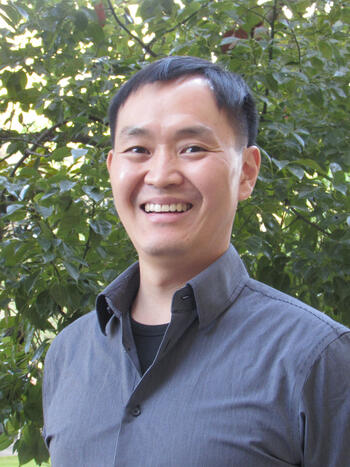

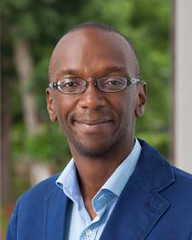


 Dr. Thomas Fingar is the inaugural Oksenberg-Rohlen Distinguished Fellow in the Freeman Spogli Institute for International Studies at Stanford University. From 2005 to 2008, he served concurrently as the first deputy director of national intelligence for analysis and as chairman of the National Intelligence Council. He served previously as assistant secretary of the State Department’s Bureau of Intelligence and Research (2004–2005), principal deputy assistant secretary (2001–2003), deputy assistant secretary for analysis (1994–2000), director of the Office of Analysis for East Asia and the Pacific (1989–1994), and chief of the China Division (1986–1989).


