8:45 - 9:10 a.m.
Opening Session
Welcome Remarks
Shih-Torng Ding
Executive Vice President, National Taiwan University
Gi-Wook Shin
Director, Shorenstein APARC and the Taiwan Program, Stanford University
Congratulatory Remarks
Chia-Lung Lin
Minister of Foreign Affairs, Taiwan
Raymond Greene
Director, American Institute in Taiwan
9:10-10:40 a.m.
Panel 1 — Advancing Health and Healthcare: Technology and Policy Perspectives
Panelists
Kuan-Ming Chen
Assistant Professor, Department of Economics, National Taiwan University
Lynia Huang
Founder and CEO, Bamboo Technology Ltd.
Ming-Jen Lin
Distinguished Professor, Department of Economics, National Taiwan University
Siyan Yi
Associate Professor, School of Public Health, National University of Singapore
Moderator
Karen Eggleston
Director, Asia Health Policy Program, Shorenstein APARC, Stanford University
10:40-10:50 a.m.
Coffee and Tea Break
10:50 a.m.-12:30 p.m.
Panel 2 — Innovation, Entrepreneurship, and Technology Leadership
Panelists
Steve Chen
Co-founder, YouTube and Taiwan Gold Card Holder #1
Matthew Liu
Co-founder, Origin Protocol
Huey-Jen Jenny Su
Professor, Department of Environmental and Occupational Health and Former President, National Cheng Kung University
Yaoting Wang
Founding Partner, Darwin Ventures, Taiwan
Moderator
H.-S. Philip Wong
Willard R. and Inez Kerr Bell Professor in the School of Engineering, Stanford University
12:30-1 p.m.
Perspectives from Stanford and NTU Students
Tiffany Chang
BS Student in Engineering Management & Human-Centered Design, Stanford University
Liang-Yu Ko
MA Student in Sociology, National Taiwan University
1-2 p.m.
Lunch Break
2-3:30 p.m.
Panel 3 — Interwoven Identities: Exploring Chinese Languages, Taiwanese-american Narratives, and Japanese Colonial Legacies in Taiwan
Panelists
Carissa Cheng
BA Student in International Relations, Stanford University
Yi-Ting Chung
PhD Candidate in History, Stanford University
Jeffrey Weng
Assistant Professor, Department of Sociology, National Taiwan University
Moderator
Ruo-Fan Liu
Taiwan Program Postdoctoral Fellow, Shorenstein APARC, Stanford University
3:30-3:45 p.m.
Coffee and Tea Break
3:45-5:15 p.m.
Panel 4 — The Demographic Transformation: Lessons from Taiwan and Comparative Cases
Panelists
Yen-Hsin Alice Cheng
Professor, Institute of Sociology, Academia Sinica
Youngtae Cho
Professor of Demography and Director, Population Policy Research Center, Seoul National University
Setsuya Fukuda
Senior Researcher, National Institute of Population and Social Security Research, Japan
Moderator
Paul Y. Chang
Tong Yang, Korea Foundation, and Korea Stanford Alumni Association Senior Fellow, Shorenstein APARC, Stanford University
5:15-5:30 p.m.
Closing Remarks
Gi-Wook Shin
Director, Shorenstein APARC and the Taiwan Program, Stanford University

Paul Y. Chang is the Tong Yang, Korea Foundation, and Korea Stanford Alumni Association Senior Fellow at Shorenstein APARC and Senior Fellow at the Freeman Spogli Institute for International Studies at Stanford University. Chang is also the Deputy Director of the Korea Program at Shorenstein APARC and the President of the Association of Korean Sociologists in America. Chang’s research on South Korean society has appeared in flagship disciplinary and area studies journals. He is the author of Protest Dialectics: State Repression and South Korea’s Democracy Movement, 1970-1979 (Stanford University Press) and co-editor of South Korean Social Movements: From Democracy to Civil Society (Routledge). His current work examines the diversification of family structures in South Korea. Before joining Stanford, Chang served on the faculty at Harvard University, Yonsei University, and Singapore Management University. He earned his B.A. from UC Santa Cruz, M.A. degrees from Harvard Divinity School, UCLA, and Stanford, and his Ph.D. from Stanford’s Sociology Department.

Tiffany Chang, Miss Asia USA 2024 and the first Taiwanese recipient of the title, is a Stanford University junior studying Engineering Management & Human-Centered Design. She is a research assistant at APARC under Dr. Karen Eggleston and worked as an Intern at a Taiwanese AI company, Intumit Inc last summer. Tiffany plays a significant role in the Taiwanese and Asian American communities, serving as a spokesperson, emcee, influencer, and model. She has moderated high-profile events featuring notable figures such as the President of Taiwan and representatives from Chanel, and serves as a brand ambassador for esteemed Asian products. Recognized as Taiwan's "guiding light," reflecting her influential leadership within the community, Tiffany is a frequent guest on Taiwanese talk shows. Tiffany's philanthropic endeavors include founding Madhatter Knits, a global nonprofit dedicated to providing knit hats for premature babies in NICUs, showcasing her unwavering commitment to advocacy, inspiration, and empowerment, particularly for marginalized voices.

Kuan-Ming Chen is an Assistant Professor in the Department of Economics at National Taiwan University and Director of the Behavioral and Data Science Research Center. He is a labor economist specializing in family economics, studying how family members support one another through caregiving, financial transfers, and labor market decisions. His research covers topics such as job flexibility, intimate partner violence, long-term care, and the economic impact of family structures on well-being. Dr. Chen’s work applies empirical methods, including natural experiments and administrative data analysis, to understand labor supply dynamics and policy impacts. He earned his Ph.D. in Economics from the University of Chicago and was a Postdoctoral Fellow at the National Bureau of Economic Research.

Steve Chen is an Internet entrepreneur who co-founded YouTube. Born in Taiwan, Steve moved to the US when he was 8 years old. Steve grew up in Chicago and moved to Silicon Valley in 1999 to join PayPal, where he met Chad Hurley, the co-founder of YouTube. In 2005, Steve left PayPal to create YouTube. YouTube quickly became one of the web's fastest-growing sites and was sold to Google for $1.65 billion. Steve was the first recipient of the Gold Card, a program Taiwan launched in 2018 to attract foreign talent to move to the country. In 2019, after 20 years spent in Silicon Valley, Steve moved his family to Taiwan using the Gold Card. In Taiwan, Steve has collaborated with the government to foster a better ecosystem for local entrepreneurs to create startups.

Carissa Cheng is a Taiwanese American Stanford University senior studying International Relations, focusing on Asia. Her interest in Asian American activism began when she started making student films in high school and questioned why Asian Americans were so underrepresented behind and in front of the camera. Last year, she served as one of the Co-Chairs of Stanford’s Taiwanese Cultural Society (TCS), which hosts Stanford’s largest pan-Asian event each year: TCS Night Market. Last summer, she studied at National Taiwan University, where she also interned at AI firm Intumit as part of the Stanford Global Studies program. Through her academic and professional work, she hopes to learn how Asian countries can unite to fight global challenges such as climate change and political polarization and explore the intersections and differences between Asian and Asian American identities and cultures.

Yen-Hsin Alice Cheng is a Professor and Research Fellow at the Institute of Sociology at Academia Sinica in Taipei, Taiwan. She is trained as a demographer and received a Ph.D. in Sociology and Demography from the Pennsylvania State University in the United States. She also spent two years as a postdoctoral fellow at the Max Planck Institute for Demographic Research in Germany. Her main research interest is family demography, focusing on family changes and social inequalities. Her recent research investigates the socioeconomic differentials in marriage, cohabitation, divorce, and fertility over the past few decades in Taiwan and East Asia. Her latest works also include studies on disadvantaged youths and families, as well as comparative studies on public attitudes toward homosexuality.

Youngtae Cho (Ph.D) has been a professor of demography at the Graduate School of Public Health at Seoul National University (SNU) since 2004. Currently, he serves as the director of the SNU Population Policy Research Center. Professor Cho and his research team’s academic interests include the fundamental cause of the lowest low fertility in Korea, measuring and analyzing a new concept of population (presenting population), the impact of population dynamics on future market change, and demographic dividend issues for Vietnam and Indonesia. He achieved his Ph.D., specializing in demography, from the University of Texas-Austin in 2002. He served as a member of the Presidential Committee on Ageing Society and Population Policy, and a member of the National Economic Advisory Council.

Yi-Ting Chung is a History Ph.D. student in the fields of East Asia and transpacific history. Born and raised in Taiwan, her concern lies in the marginalized communities who were excluded, sacrificed, and forgotten in the making of the Japanese empire. Her current research direction examines how the colonial subjects of the Japanese empire—Okinawans, Koreans, and Taiwanese—traversed the Pacific while treading the complex boundaries of nation, empire, and race between Japan and the US in the first half of the twentieth century. Yi-Ting is also deeply passionate about teaching and dedicated to bettering her pedagogy. At Stanford, she designed and taught the class “Between Empires: Modern History of Taiwan.”

Shih-Torng Ding is the Executive Vice President and a distinguished professor at National Taiwan University, specializing in animal nutrition, molecular regulation, smart agriculture, agricultural biotechnology, and industry development strategies. His outstanding research has earned him numerous prestigious honors.
With extensive experience in government advisory roles, Dr. Ding has served on the Board of Science and Technology (Executive Yuan), the Research Advisory Committee for the Council of Agriculture, and BioHub Taiwan. As NTU’s Vice President for Academic Affairs, Dr. Ding led key educational innovations, including a specialization-focused learning system, future classrooms, and enhancements to NTU COOL. Now, as Executive Vice President, he advances teaching and learning, sustainability initiatives, school development research, bilingual education, and international exchanges.
Furthermore, Dr. Ding serves as the CEO of National Taiwan University System, working to foster collaboration among three universities and expand educational resources for students.

Karen Eggleston is a Senior Fellow at the Freeman Spogli Institute for International Studies (FSI) at Stanford University and Director of the Stanford Asia Health Policy Program at the Shorenstein Asia-Pacific Research Center at FSI. She is also a Fellow with the Center for Innovation in Global Health at Stanford University School of Medicine, and a Faculty Research Fellow of the National Bureau of Economic Research (NBER). Eggleston earned her PhD in public policy from Harvard University and has MA degrees in economics and Asian studies from the University of Hawaii and a BA in Asian studies summa cum laude (valedictorian) from Dartmouth College. Eggleston studied in China for two years and was a Fulbright scholar in Korea. Her research focuses on government and market roles in the health sector and Asia health policy, especially in China, India, Japan, and Korea; healthcare productivity; and the economics of the demographic transition.

Setsuya Fukuda is a Senior Researcher at the National Institute of Population and Social Security Research in Japan, where he conducts demographic research on the inter-relationships between gender, family formation, and family policy. His current research focuses on gender role division, educational assortative mating, fertility, and intergenerational transfers in international comparative settings, looking, in particular, at how Japan’s gender structure and intergenerational relations are poised to change in relation to population decline, new family policies and technological development.

Raymond F. Greene assumed duties as the Director of the American Institute in Taiwan (AIT) on July 8, 2024. Prior to this assignment, he served as the Deputy Chief of Mission at the U.S. Embassy in Tokyo, Japan. Mr. Greene is a member of the State Department’s Senior Foreign Service with the personal rank of Minister-Counselor and has spent his entire 28-year career advancing U.S. diplomatic, economic, and security engagement with the Indo-Pacific region. In Washington, Mr. Greene was Director for Japan and East Asian Economic Affairs at the National Security Council and Director of the Office of Economic Policy in the State Department’s Bureau of East Asian and Pacific Affairs. In the latter capacity, Mr. Greene was elected as Chair of the Asia Pacific Economic Cooperation (APEC) forum’s Economic Committee.
Overseas, Mr. Greene served as U.S. Consul General in Chengdu, China, Okinawa, Japan, and as the Deputy Director at AIT. Earlier assignments included Chief of the Political-Military Affairs Unit at the U.S. Embassy in Tokyo, Deputy Chief of the Political Section at AIT Taipei, and as a political officer in Tokyo and Manila. Mr. Greene was the first Baker-Kato Diplomatic Exchange Fellow at the Japanese Ministry of Foreign Affairs in Tokyo. He also was assigned as a State Department Faculty Advisor at the U.S. Army War College in Carlisle, Pennsylvania. He holds a B.A. (Government/Japanese) and M.P.M. (International Security and Economic Policy) from the University of Maryland, College Park.

Lynia Huang is the CEO and founder of Bamboo Technology Ltd., a company focused on advancing mental health care through AI-driven solutions. With a background in military psychological counseling and a strong commitment to mental health advocacy, she has dedicated her career to integrating technology with psychological support. Lynia holds an MBA in Entrepreneurship and Innovation from National Taiwan University. She is also a pioneer in the development of AI-based mental health services, including the HereHear virtual therapist app, which has gained global recognition. Lynia’s passion for improving emotional well-being through accessible technology is evident in her work with various organizations, including collaborations with hospitals and corporations. She believes that mental health support should be universal and strives to make these services available to everyone, especially in underserved communities.

Liang-Yu (Louis) Ko is currently an MA student in the Department of Sociology at National Taiwan University. His research centers on political sociology, focusing on state-society relations, political culture, and public opinion. He investigates how political trends interact with cultural and institutional factors, particularly in areas such as polarization, nationalism, and "culture wars." He is always open to connection and collaborative research.

Chia-Lung Lin possesses extensive experience in government, academia, and industry. He currently serves as minister of foreign affairs of Taiwan, vice chairman of the Taiwan Foundation for Democracy, and chairman of the International Cooperation and Development Fund. Previously, he held positions including secretary-general of the Office of the President, ambassador-at-large of the Ministry of Foreign Affairs, minister of transportation and communications, mayor of Taichung City, legislator, minister of the Government Information Office, National Security Council advisor, assistant professor at National Chung Cheng University, research associate at the United Nations University, and Fulbright scholar in the United States. He is also a cofounder of Taiwan Thinktank and honorary chairman of Mt. Dadu Industrial Innovation Foundation.
Minister Lin holds a PhD in political science from Yale University in the United States, as well as dual master’s degrees in political science and philosophy. Additionally, he earned a master’s and bachelor’s degree in political science from National Taiwan University.
Ming-Jen Lin earned his Ph.D. in Economics from the University of Chicago in 2002. His research interests span multiple fields, including data science and economics, demography and health, law and economics, and labor economics, with particular interest in interdisciplinary collaboration within the social sciences. His research appears in journals such as American Economic Review, Nature Communication, Journal of Public Economics, Journal of Development Economics, and International Economic Review.
Currently, he serves as a Distinguished Professor in the Department of Economics at National Taiwan University. He previously held the government position of Deputy Executive Secretary at the Office of Science and Technology Policy and the Director at the Division of Humanities and Social Sciences, both at the National Science and Technology Council. He has also served as the Chair of the Department of Economics at National Taiwan University and President of the Taiwan Economic Association.
Matthew Liu is a serial entrepreneur and co-founder of Origin Protocol. He is also active as an angel investor and advisor to dozens of startups. Previously, he served as VP of product at Qwiki and Bonobos. Matthew started his career as the third product manager at YouTube. He graduated with a B.S. in electrical engineering and M.S. in management science and engineering from Stanford University.
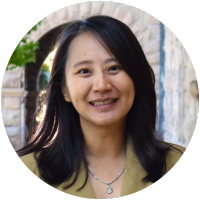
Ruo-Fan Liu is the inaugural Taiwan Program Postdoctoral Fellow at Shorenstein APARC, Stanford Univerity. She earned her PhD in sociology from the University of Wisconsin-Madison. Her research explores how Taiwan's holistic admission reforms created uncertainties for students and how parents and teachers leveraged cultural and social capital to restore admissions advantages. A Fulbright recipient and former Congress party negotiator, Ruo-Fan is also the author of Let the Timber Creek: An Alternative School’s Utopia for Coming Generations, recognized as one of the top ten non-fiction books by China Times. Her work has been published in International Studies in Sociology of Education and Ethnography, and she also investigates transformative meritocracy and credentialism in East Asia. At APARC, Ruo-Fan is transforming her dissertation, When Ladders Move, into a book manuscript, while expanding her research on uncertainty and legitimacy to offer practical recommendations for different nations’ policies and talent flows.

Gi-Wook Shin is the William J. Perry Professor of Contemporary Korea in Sociology and a senior fellow of the Freeman Spogli Institute for International Studies at Stanford University. He has served as director of the Walter H. Shorenstein Asia-Pacific Research Center since 2005, and as founding director of the Korea Program since 2001. His research concentrates on social movements, nationalism, and international relations, focusing on Korea and Asia. He is the author/editor of numerous books and articles, including South Korea’s Democracy in Crisis: The Threats of Illiberalism, Populism, and Polarization and The North Korean Conundrum: Balancing Human Rights and Nuclear Security. His new book, Talent Giants in the Asia-Pacific Century, a comparative study of talent strategies of Japan, Australia, China, and India, will be published by Stanford University Press in 2025.
In 2023, Shin launched the Stanford Next Asia Policy Lab (SNAPL), an initiative committed to addressing emergent social, cultural, economic, and political challenges in Asia. In May 2024, he launched the new Taiwan Program at APARC and currently serves as the program director.
Shin previously taught at the University of Iowa and the University of California, Los Angeles. He holds a B.A. from Yonsei University and an M.A. and Ph.D. from the University of Washington.
Huey-Jen Jenny Su was the first and only female president in the 95-year history of National Cheng Kung University (2015–2023) and a professor of Environmental Health (1992–2024). In 2018, the scientific journal Nature recognized her as one of the 10 “Science Stars of East Asia.” She received the 2017 Leadership Award in Public Health Practice from the Harvard T.H. Chan School of Public Health and the 2022 Outstanding Professional Global Corporate Sustainability Award, the first recipient from the academic.
Dr. Su actively fosters academia-industry collaborations and international partnerships, strengthening Taiwan as a key global player in sustainability, multidisciplinary research, and technological innovation. Currently, she leads strategic planning initiatives for the Ministry of Education’s University Academic Alliance in Taiwan and serves on the National Climate Change Committee, Office of the President, R.O.C. (Taiwan). Her leadership drives sustainability and resilience in a rapidly evolving global landscape.

Yao-Ting Wang is an experienced entrepreneur and technology visionary. Yaoting co-founded two successful technology startup companies in Silicon Valley. In 1995, he co-founded Numerical Technologies, Inc. (San Jose, California) (NASDAQ:NMTC) based on his doctoral research for IC manufacturing. As the Chief Technology Officer and Senior VP of Engineering, Yaoting was active in company operations and helped take it public in 2000. The company was later acquired by Synopsys, Inc. (NASDAQ:SNPS) in 2003.
In 2004, Yaoting co-founded Clear Shape Technologies, Inc. (Sunnyvale, California) and was the Chairman and Chief Technology Officer. The company was a pioneer in the space of design for manufacturing (DFM) and recognized by multiple prestigious awards including the EDN Innovation of the Year Award (2007), the EE Times Annual Creativity in Electronics (ACE) Award (2007), one of the top 10 semiconductor companies' Partner Award (2007) and the EE Times 60 Emerging Startups (2007). The company was acquired by Cadence (NASDAQ:CDNS) in August of 2007.
In August of 2008, Yaoting moved back to Taiwan and co-founded Darwin Ventures with Simon Fang.
Yaoting received his Ph.D. and M.S. in electrical engineering from Stanford University, and his B.S. in electrical engineering from National Taiwan University.

Jeffrey Weng has been an Assistant Professor of Sociology at National Taiwan University since 2021. His research centers on language and nationalism in China and Taiwan, and his work has appeared in the Journal of Asian Studies, Theory and Society, and the European Journal of Sociology.
Weng holds a B.A. from Yale University and Ph.D. from the University of California, Berkeley. Before joining NTU, he was a Shorenstein Postdoctoral Fellow in Contemporary Asia at Stanford University's Shorenstein Asia-Pacific Research Center.

H.-S. Philip Wong is the Willard R. and Inez Kerr Bell Professor in the School of Engineering at Stanford University. He joined Stanford University as Professor of Electrical Engineering in 2004. From 1988 to 2004, he was with the IBM T.J. Watson Research Center. From 2018 to 2020, he was on leave from Stanford and was the Vice President of Corporate Research at TSMC, the world's largest semiconductor foundry, and since 2020 has remained TSMC's Chief Scientist in a consulting, advisory role.
He is a Fellow of the IEEE and received the IEEE Andrew S. Grove Award, the IEEE Technical Field Award to honor individuals for outstanding contributions to solid-state devices and technology, as well as the IEEE Electron Devices Society J.J. Ebers Award, the society’s highest honor to recognize outstanding technical contributions to the field of electron devices that have made a lasting impact.
He is the founding Faculty Co-Director of the Stanford SystemX Alliance – an industrial affiliate program focused on building systems and the faculty director of the Stanford Nanofabrication Facility – a shared facility for device fabrication on the Stanford campus that serves academic, industrial, and governmental researchers across the U.S. and around the globe, sponsored in part by the National Science Foundation. He is the Principal Investigator of the Microelectronics Commons California-Pacific-Northwest AI Hardware Hub, a consortium of over 40 companies and academic institutions funded by the CHIPS Act. He is a member of the US Department of Commerce Industrial Advisory Committee on Microelectronics.

Siyan Yi is an Associate Professor and UHS-SPH Integrated Research Programme Leader, National University of Singapore Saw Swee Hock School of Public Health. He also serves as Director of KHANA Center for Population Health Research in Cambodia and Adjunct Associate Professor at Touro University California, the United States. Dr. Yi is a medical doctor and an infectious disease epidemiologist by training. He received his Ph.D. from the School of International Health of the University of Tokyo in 2010. He was a 2011-12 postdoctoral fellow at the Asia Health Policy Program at Shorenstein APARC, Stanford University.
His implementation research program focuses on developing and evaluating community-based innovative interventions for improving access to prevention, treatment, and care services for HIV/AIDS, tuberculosis, sexual and reproductive health, and maternal and child health among vulnerable and marginalized populations in Southeast Asia.

 FSI researchers work to understand continuity and change in societies as they confront their problems and opportunities. This includes the implications of


