Trade

Michael McFaul, director of Stanford's Freeman Spogli Institute for International Studies, and other members of the International Working Group on Russian Sanctions, will speak about and answer questions about the group's two new white papers, "Individual Sanctions Roadmap: Recommendations for Sanctions against the Russian Federation,” and “Strengthening Financial Sanctions against the Russian Federation.”

Additional panelists include:
 

  • Dr. Andriy Boytsun, Founder and Editor of the Ukrainian SOE Weekly; Independent Corporate Governance Consultant; Former Member of the Strategic Advisory Group for Supporting Ukrainian Reforms
     
  • Jacob Nell, Former Chief Russia Economist and Head of European Economics, Morgan Stanley
     
  • Natalia Shapoval, Vice President for Policy Research, Kyiv School of Economic
     
  • Daria Sofina, National Agency on Corruption Prevention, Ukraine

Online, via Zoom

Encina Hall
616 Jane Stanford Way
Stanford, CA 94305-6055

0
Senior Fellow, Freeman Spogli Institute for International Studies
Ken Olivier and Angela Nomellini Professor of International Studies, Department of Political Science
Peter and Helen Bing Senior Fellow, Hoover Institution
mcfaul_headshot_2025.jpg PhD

Michael McFaul is the Ken Olivier and Angela Nomellini Professor of International Studies in Political Science, Senior Fellow at the Freeman Spogli Institute for International Studies, and the Peter and Helen Bing Senior Fellow at the Hoover Institution, all at Stanford University. He joined the Stanford faculty in 1995 and served as FSI Director from 2015 to 2025. He is also an international affairs analyst for MSNOW.

McFaul served for five years in the Obama administration, first as Special Assistant to the President and Senior Director for Russian and Eurasian Affairs at the National Security Council at the White House (2009-2012), and then as U.S. Ambassador to the Russian Federation (2012-2014).

McFaul has authored ten books and edited several others, including, most recently, Autocrats vs. Democrats: China, Russia, America, and the New Global Disorder, as well as From Cold War to Hot Peace: An American Ambassador in Putin’s Russia, (a New York Times bestseller) Advancing Democracy Abroad: Why We Should, How We Can; and Russia’s Unfinished Revolution: Political Change from Gorbachev to Putin.

He is a recipient of numerous awards, including an honorary PhD from Montana State University; the Order for Merits to Lithuania from President Gitanas Nausea of Lithuania; Order of Merit of Third Degree from President Volodymyr Zelenskyy of Ukraine, and the Dean’s Award for Distinguished Teaching at Stanford University. In 2015, he was the Distinguished Mingde Faculty Fellow at the Stanford Center at Peking University.

McFaul was born and raised in Montana. He received his B.A. in International Relations and Slavic Languages and his M.A. in Soviet and East European Studies from Stanford University in 1986. As a Rhodes Scholar, he completed his D. Phil. in International Relations at Oxford University in 1991. 

CV
Date Label
Michael McFaul FSI Director
Panel Discussions
-

Michael McFaul, director of Stanford's Freeman Spogli Institute for International Studies, and several other members of the International Working Group on Russian Sanctions will speak about and answer questions about the group's new white paper, "Action Plan on Strengthening Sanctions against the Russian Federation." The event will begin with brief presentations from these speakers, followed by comments from other members:
 

  • Sergei Guriev, Professor of Economics at Sciences Po Paris and former Chief Economist at the European Bank for Reconstruction and Development.z
  • Edward Fishman, former Russia and Europe Lead at the U.S. Department of State Office of Economic Sanctions Policy and Implementation and Member of the Secretary of State’s Policy Planning Staff.
  • Daniel Fried, former State Department Sanctions Coordinator and Assistant Secretary of State for European Affairs.
  • Iryna Mudra, Chief Compliance Officer at the State Savings Bank of Ukraine.
  • Natalia Shapoval, Vice President for Policy Research at the Kyiv School of Economics.
  • Dr. Benjamin Schmitt, Project Development Scientist at Harvard University, Senior Fellow for Democratic Resilience at the Center for European Policy Analysis and Rethinking Diplomacy Fellow at Duke University.

Online, via Zoom

Encina Hall
616 Jane Stanford Way
Stanford, CA 94305-6055

0
Senior Fellow, Freeman Spogli Institute for International Studies
Ken Olivier and Angela Nomellini Professor of International Studies, Department of Political Science
Peter and Helen Bing Senior Fellow, Hoover Institution
mcfaul_headshot_2025.jpg PhD

Michael McFaul is the Ken Olivier and Angela Nomellini Professor of International Studies in Political Science, Senior Fellow at the Freeman Spogli Institute for International Studies, and the Peter and Helen Bing Senior Fellow at the Hoover Institution, all at Stanford University. He joined the Stanford faculty in 1995 and served as FSI Director from 2015 to 2025. He is also an international affairs analyst for MSNOW.

McFaul served for five years in the Obama administration, first as Special Assistant to the President and Senior Director for Russian and Eurasian Affairs at the National Security Council at the White House (2009-2012), and then as U.S. Ambassador to the Russian Federation (2012-2014).

McFaul has authored ten books and edited several others, including, most recently, Autocrats vs. Democrats: China, Russia, America, and the New Global Disorder, as well as From Cold War to Hot Peace: An American Ambassador in Putin’s Russia, (a New York Times bestseller) Advancing Democracy Abroad: Why We Should, How We Can; and Russia’s Unfinished Revolution: Political Change from Gorbachev to Putin.

He is a recipient of numerous awards, including an honorary PhD from Montana State University; the Order for Merits to Lithuania from President Gitanas Nausea of Lithuania; Order of Merit of Third Degree from President Volodymyr Zelenskyy of Ukraine, and the Dean’s Award for Distinguished Teaching at Stanford University. In 2015, he was the Distinguished Mingde Faculty Fellow at the Stanford Center at Peking University.

McFaul was born and raised in Montana. He received his B.A. in International Relations and Slavic Languages and his M.A. in Soviet and East European Studies from Stanford University in 1986. As a Rhodes Scholar, he completed his D. Phil. in International Relations at Oxford University in 1991. 

CV
Date Label
Michael McFaul FSI Director
Seminars
Authors
Callista Wells
News Type
News
Date
Paragraphs

On October 6, 2021, the APARC China Program hosted the panel program, "Engaging China: Fifty Years of Sino-American Relations." In honor of her recently released book of the same title, Director of the Grassroots China Initiative Anne Thurston was joined by contributors Mary Bullock, President Emerita of Agnes Scott College; Thomas Fingar, Shorenstein APARC Fellow; and David M. Lampton, Professor Emeritus at Johns Hopkins School of Advanced International Studies (SAIS). Thomas Fingar also moderated the panel.

Recent years have seen the U.S.-China relationship rapidly deteriorate. Engaging China brings together leading China specialists—ranging from academics to NGO leaders to former government officials—to analyze the past, present, and future of U.S.-China relations.

During their panel, Bullock, Fingar, Lampton, and Thurston reflected upon the complex and multifaceted nature of American engagement with China since the waning days of Mao’s rule. What initially motivated U.S.’ rapprochement with China? Until recent years, what logic and processes have underpinned the U.S. foreign policy posture towards China? What were the gains and the missteps made during five decades of America’s engagement policy toward China? What is the significance of our rapidly deteriorating bilateral relations today? Watch now: 

For more information about Engaging China or to purchase a copy, please click here.

Read More

Xi and Biden
Q&As

Biden, Xi Will Want To Diminish Exaggerated Characterizations of Bilateral Friction, Stanford Scholar Says

In this Q&A, Stanford scholar Thomas Fingar discusses what to expect when President Biden meets with Chinese President Xi Jinping.
Biden, Xi Will Want To Diminish Exaggerated Characterizations of Bilateral Friction, Stanford Scholar Says
Taiwan
Commentary

America's Future in Taiwan

Intensifying threats of a military conflict over Taiwan have brought uncertainty to the stability of regional security for Southeast Asia, according to Center Fellow Oriana Skylar Mastro on radio show On Point.
America's Future in Taiwan
USS Key West during during joint Australian-United States military exercises Talisman Sabre 2019 in the Coral Sea.
Commentary

In Defense of AUKUS

This is not only about nuclear-powered submarines; it is about a strengthened US commitment to Australia.
In Defense of AUKUS
Hero Image
"Engaging China: Fifty Years of Sino-American Relations" book cover
All News button
1
Subtitle

Was the strategy of engagement with China worthwhile? Experts Mary Bullock, Thomas Fingar, David M. Lampton, and Anne Thurston discuss their recent release, "Engaging China: Fifty Years of Sino-American Relations."

Authors
Soomin Jun
News Type
Blogs
Date
Paragraphs

The Asia-Pacific Economic Cooperation (APEC) is a regional economic forum with 21 member economies, including the US, China, and Russia, headquartered in Singapore. As a summer graduate intern at APEC, I worked closely with APEC’s policy unit that oversees and conducts policy research and analysis for publications and reports, which are used as key discussion agendas in ministerial level discussions and conferences. The Policy Support Unit (PSU)’s core areas of work are 1) trade and investment liberalization and facilitation, 2) structural reform, 3) connectivity including supply chain connectivity and global supply chains, 4) economic and financial analysis, and 5) sustainable economic development. During my summer internship, I was able to gain direct experience with almost all of these core areas through conducting quantitative and qualitative research.

As a graduate intern at APEC, I worked closely with APEC’s policy unit that oversees and conducts policy research for publications and reports used in ministerial meetings.
Image
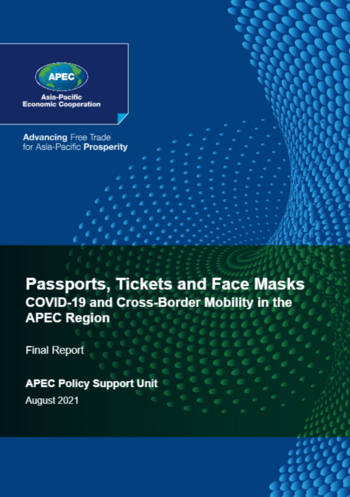
Figure 1: PSU’s publication on cross-border mobility

The PSU has been working on a publication that analyzed the impacts of travel restrictions during the pandemic. The report provided evidence and policy recommendations for APEC economies to resume cross-border travel in a safe and equitable way. I was tasked to draft two sections of the report, including a literature review of various multilateral organizations’ initiatives on safe re-opening, and an analysis of the disproportionate impacts of travel restrictions on vulnerable population, especially women. Women were not only experiencing economic impacts from border closures, such as loss of jobs and business closures, but women seeking abortion procedures in countries with restrictive regulations faced significant challenges when cross-border travel was limited to “essential workers.” Such challenges were even more pronounced for lower-income women or women with disabilities who may not be able to access services through other means domestically. 

I also worked on drafting APEC’s flagship publication, APEC in Charts 2021, which resides within APEC’s fourth core area of work, economic and financial analysis. APEC in Charts is an annual publication that provides a visual overview of the region’s economic, trade and investment performance. Using data from international organizations like the World Bank, International Monetary Fund, and the United Nations, I calculated aggregate statistics for the APEC region on the following indicators: trend in trade, tariff liberalization indicators such as free trade agreements, trend in FDI inflows and outflows, COVID-19 vaccination status, and various sustainability indicators such as household food waste and greenhouse gas emissions trends.

Since APEC includes Taiwan and Hong Kong, both of which did not have disaggregated data, the most challenging part of this task was to locate and calculate the information using limited data. While data disaggregation was challenging, I was thankful for all those nights that I stayed up in the first quarter to complete data aggregation for economic analysis assignments for the Global Economy course, INTLPOL 302, which built a foundation for key skills required at APEC.

Figure 2: APEC in Charts 2021 publication
APEC in Charts 2021 publication

I also immersed myself in the topic of climate change over the summer. Policy actions on climate change became one of the center of APEC’s agendas to build economic resilience post-COVID. I drafted a section on climate change in APEC’s Regional Trends Analysis (ARTA) report by conducting quantitative and qualitative research on green indicators. Calculating carbon emissions was one challenge, but comparing how much each economy had pledged to reduce emissions and what it would actually take to keep global warming below 2°C was another challenge. 

Climate change was not a topic I was very familiar with from a research standpoint, but I took the opportunity to self-educate through reading various literature, including the most recent publication from the Intergovernmental Panel on Climate Change (IPCC). It was striking that more than 60% of global greenhouse gases were generated by APEC economies. Unless APEC as a region curbs cumulative emissions, the expected repercussions are disastrous. Again, the most vulnerable – including women and girls, migrants, those in poverty, mountain communities and people in urban slums – will experience more severe consequences, and the repercussions are even more pronounced for those in developing nations.

This 11-week internship experience at APEC over the summer was a rewarding one that helped me understand the way multilateral organizations work. I was motivated by working with an organization responsible for shaping economic policies through cooperation to build resilience in the post-COVID world. Plus, I was able to tone up key techniques learned from MIP’s core courses such as STATA and advanced excel skills. Although it was a remote internship, I benefited from learning from my fellow interns and co-researchers on their broad range of expertise and experience. I strongly recommend future MIP students work with APEC over the summer as policy interns!

Soomin Jun, Master's in International Policy ('22)

Soomin Jun

Ford Dorsey Master’s in International Policy Class of ’22
See Full Profile
Hero Image
Soomin Jun, Master's in International Policy ('22)
All News button
1
Subtitle

Working with the Asia-Pacific Economic Cooperation, Soomin Jun (Master’s in International Policy '22) found new connections between her interests in supporting the economic development of marginalized groups with policies like climate change.

-

To watch the recording of the event, click here.

This event is co-hosted with the East Asia Institute (EAI) in Korea.

Event Time: November 18, 4:00 - 6:00 PM (PST) / November 19, 9:00 - 11:00 PM (Japan and Korea)
Please register for this event at EAI event page.

The ROK-U.S. and U.S.-Japan joint statements have increased expectations for a possible expansion of security and economic cooperation among South Korea, the U.S. and Japan. However, heightened U.S.-China strategic competition, as well as persistent challenges in the region such as historical tensions and the North Korea threat, have complicated the strategic calculus of U.S., South Korea and Japan. Under these circumstances, the South Korea, the U.S. and Japan must define their economic and security interests and seek ways to maintain friendly relations among the three countries. This seminar will discuss security and economic cooperation among Korea, the United States and Japan in the era of strategic competition between the U.S. and China.

Panel 1 on security:

Park Joon Woo, former Chairman of the Sejong Institute; former South Korean Ambassador to E.U. and to Singapore

Tomiko Ichikawa, Director General of the Japan Institute of International Affairs

Gen. Vincent Brooks, former USFK Commander

Moderated by Young Sun Ha, Chairman of East Asia Institute; Professor Emeritus, Seoul National University

Panel 2 on economic cooperation:

Young Ja Bae, Professor of Political Science and Diplomacy, Konkuk University, Korea

Andrew Grotto, Director of the Program on Geopolitics, Technology and Governance, FSI, Stanford University

Kimura Fukunari, Professor of Economics, Keio University, Japan

Moderated by Thomas Fingar, Shorenstein APARC Fellow, Stanford University


Via Zoom. Register at https://bit.ly/3w7Ak9g

Panel Discussions
Authors
Callista Wells
News Type
News
Date
Paragraphs

In collaboration with Global:SF and the State of California Governor’s Office of Business and Economic Development, the China Program at Shorenstein APARC presented session five of the New Economy Conference, "Navigating Chinese Investment, Trade, and Technology," on May 19. The program featured distinguished speakers Ambassador Craig Allen, President of the US-China Business Council; David K. Cheng, Chair and Managing Partner of China & Asia Pacific Practice at Nixon Peabody LLPJames Green, Senior Research Fellow at the Initiative for U.S.-China Dialogue on Global Issues at Georgetown University; and Anja Manuel, Co-Founder and Principal of Rice, Hadley, Gates & Manuel LLC. The session was opened by Darlene Chiu Bryant, Executive Director of GlobalSF, and moderated by Professor Jean Oi, William Haas Professor of Chinese Politics and director of the APARC China Program.

U.S.-China economic relations have grown increasingly fraught and competitive. Even amidst intensifying tensions, however, our two major economies remain intertwined. While keeping alert to national security concerns, the economic strength of the United States will depend on brokering a productive competition with China, the world’s fastest growing economy. Precipitous decoupling of trade, investment, and human talent flows between the two nations will inflict unnecessary harm to U.S. economic interests--and those of California.  

Chinese trade and investments into California have grown exponentially over the last decade. But they have come under increasing pressure following geopolitical and economic tensions between the two nations, particularly in the science and technology sectors. Ambassador Craig Allen, David Cheng, James Green, and Anja Manuel explored the role of Chinese economic activity in California in the context of the greater US-Chinese relationship. Watch now: 

Read More

American and Chinese flags
News

U.S.-China Relations in the Biden Era

Dr. Thomas Wright examines the recent history of US-China relations and what that might mean for the new administration.
U.S.-China Relations in the Biden Era
Hero Image
Blue image with event title, time, and date
All News button
1
Subtitle

Ambassador Craig Allen, David Cheng, James Green, and Anja Manuel explore the role of Chinese economic activity in California in the context of the greater US-Chinese relationship.

Authors
Callista Wells
News Type
News
Date
Paragraphs

On April 21, 2021, the APARC China Program hosted Professor Erin Baggott Carter, Assistant Professor in the Department of Political Science and International Relations, University of Southern California, and Visiting Scholar at the Stanford Center on Democracy, Development and the Rule of Law. Her program, "When Beijing Goes to Washington: Autocratic Lobbying Influence in Democracies," explored how lobbying from China and China-based companies can affect policy in the United States. Professor Jean Oi, William Haas Professor of Chinese Politics and director of the APARC China Program, moderated the event.

Professor Baggot Carter based her talk on a dataset drawn from the public records of the US Foreign Agents Registration Act, which includes over 10,000 lobbying activities undertaken by the Chinese government between 2005 and 2019. According to Baggot Carter, the evidence suggests that Chinese government lobbying makes legislators at least twice as likely to sponsor legislation that is favorable to Chinese interests. Moreover, US media outlets that participated in Chinese-government sponsored trips subsequently covered China as less threatening. Coverage pivoted away from US-China military rivalry and the CCP’s persecution of religious minorities and toward US-China economic cooperation. These results suggest that autocratic lobbying poses an important challenge to democratic integrity. Watch now: 

Read More

National Emblem of the People's Republic of China on the Great Hall of the People
News

What’s ‘Communist’ about the Communist Party of China?

Is the Chinese Communist Party really communist at all? Expert Jude Blanchette, Freeman Chair in China Studies at the Center for Strategic and International Studies, weighs in.
What’s ‘Communist’ about the Communist Party of China?
American and Chinese flags
News

U.S.-China Relations in the Biden Era

Dr. Thomas Wright examines the recent history of US-China relations and what that might mean for the new administration.
U.S.-China Relations in the Biden Era
Hero Image
United States Capitol Building from an angle Photo by Harold Mendoza on Unsplash
All News button
1
Subtitle

Professor Erin Baggot Carter tells us how autocratic lobbying affects political outcomes and media coverage in democracies.

-

To watch the recording of the event, click here.

This event is made possible by generous support from the Korea Foundation and other friends of the Korea Program.

This event is part of Shorenstein APARC's spring webinar series "The United States in the Biden Era: Views from Asia."

Many Koreans were relieved by Biden's victory but were left wondering where his policy toward China and North Korea would be heading. Under Biden, Koreans expect better alliance management but are concerned that North Korean nuclear issues may not get much attention. They also watch his China policy closely, as the US-China conflict puts South Korea in a difficult position of having to choose one or the other. In light of the upcoming Biden-Moon summit, two leading experts of national security and trade in South Korea, Congressman Taeyong Cho and Professor Dukgeun Ahn of Seoul National University, will discuss these issues in a moderated conversation with APARC and Korea Program director Gi-Wook Shin.

Speakers:

Image
Taeyong Cho, Congressman and former National Security Adviser of South Korea.

Taeyong Cho is a Member of the National Assembly of the Republic of Korea. He serves in the Committee on Foreign Affairs and Unification as well as the Committee on Intelligence. He is a member of the conservative People Power Party, the largest opposition party. Before being elected to the National Assembly in 2020, he served in government for 37 years, mostly in the Foreign Ministry. He served as Deputy Director of the Presidential Office of National Security and as Vice Foreign Minister. He also served as Korean Ambassador to Australia and to Ireland. After retirement in 2017, Ambassador Cho taught at Yonsei University as visiting professor and spent a year in Tokyo as visiting fellow at Keio University. He wrote regular columns in major newspapers and spoke at forums in Korea and abroad. He received B.A. in political science from Seoul National University and studied at Oxford University, Foreign Service Program. 

Image
Dukgeun Ahn, Professor of International Trade Law and Policy at Seoul National University. Speaker of May 11, 2021.

Dukgeun Ahn is Dean of International Affairs and Professor of International Trade Law and Policy at Seoul National University. Professor Ahn has taught at various universities including Columbia University, Singapore National University, University of Barcelona in Spain, World Trade Institute in Switzerland as well as regularly at the World Trade Organization (WTO) for government officials. He served, among others, as Commissioner of the Korea Trade Commission, Member of National Economic Advisory Council and Chair for CPTPP Strategy Forum. Professor Ahn was President of the Korean Association of Trade and Industry Studies in 2020 and the Korean Society of Trade Remedies in 2019-2020. He holds a Ph.D. in economics and J.D. (Member of New York Bar) from the University of Michigan.

Via Zoom: Register at https://bit.ly/3xe3J1K

-

Please note the event time has been changed to 10:30AM (PT) to 12:00PM (PT).


This is a virtual event. Please click here to register for the talk. 


This event is presented in partnership with Global:SF and the State of California Governor’s Office of Business and Economic Development.
 

U.S.-China economic relations have grown increasingly fraught and competitive.  Even amidst intensifying tensions, however, our two major economies remain intertwined.  While keeping alert to national security concerns, the economic strength of the United States will depend on brokering a productive competition with China, the world’s fastest growing economy.  Precipitous decoupling of trade, investment, and human talent flows between the two nations will inflict unnecessary harm to U.S. economic interests -- and those of California.  

Chinese trade and investments into California have grown exponentially over the last decade.  But they have come under increasing pressure following geopolitical and economic tensions between the two nations, particularly in the science and technology sectors.  This session will explore the role of Chinese economic activity in California in the context of the greater US-Chinese relationship. 


Portrait of Ambassador Craig AllenCraig Allen began his tenure in Washington, DC, as the sixth President of the United States-China Business Council, a private, nonpartisan, nonprofit organization representing over 200 American companies doing business with China. Ambassador Allen began his government career in 1985 at the Department of Commerce’s International Trade Administration (ITA) where, from 1986 to 1988, he worked as an international economist in ITA’s China Office. In 1988, Allen transferred to the American Institute in Taiwan, where he served as Director of the American Trade Center in Taipei. He returned to the Department of Commerce for a three-year posting at the US Embassy in Beijing as Commercial Attaché in 1992. In 1995, Allen was assigned to the US Embassy in Tokyo where he was promoted to Deputy Senior Commercial Officer in 1998. Allen became a member of the Senior Foreign Service in 1999. Starting from 2000, he served a two-year tour at the National Center for APEC in Seattle where he worked on the APEC Summits in Brunei, China, and Mexico. In 2002, Allen first served as the Senior Commercial Officer in Beijing where he was later promoted to the Minister Counselor rank of the Senior Foreign Service. After a four-year tour in South Africa, Ambassador Allen became Deputy Assistant Secretary for Asia at the US Department of Commerce’s International Trade Administration. He later became Deputy Assistant Secretary for China. Ambassador Allen was sworn in as the United States ambassador to Brunei Darussalam on December 19, 2014 where he served until he transitioned to take up his position as President of the US-China Business Council.
 

Image
Portrait of David Cheng
David Cheng is the chair and managing partner of Nixon Peabody’s China and Asia-Pacific practice. He is qualified in both the United States and Hong Kong. He focuses on cross-border transactions, litigations and investigations, advising on issues ranging from acquisitions, capital financing (initial public offering), intellectual property protection and disputes to fraud, FCPA and SEC investigations. He has a client portfolio from all over the world, including the United States, Middle East, Europe, Japan, Singapore, Taiwan, mainland China and Hong Kong.
 

james greenJames Green has worked for over two decades on U.S.-Asia relations. For five years, Green was the Minister Counselor for Trade Affairs at the U.S. Embassy in Beijing (2013-2018).  As the senior official in China from the Office of the United States Trade Representative (USTR), Green was deeply involved in all aspects of trade negotiations, trade enforcement, and in reducing market access barriers for American entities.  In prior government service, Green worked on the Secretary of State’s Policy Planning Staff and at the State Department’s China Desk on bilateral affairs. He also served as the China Director of the White House’s National Security Council.  In the private sector, Green was a senior vice president at the global strategy firm founded by former Secretary of State Madeleine Albright and was the founding government relations manager at the American Chamber of Commerce in Shanghai, Asia’s largest AmCham.  Currently, Green is a Senior Research Fellow at Georgetown University's Initiative for U.S.-China Dialogue on Global Issues and hosts a U.S.-China Dialogue Podcast.  He was most recently named as APARC's inaugural China Policy Fellow
 

Image
Portrait of Anja Manuel
Anja Manuel is Co-Founder and Principal, along with former Secretary of State Condoleezza Rice, former National Security Advisor Stephen Hadley and former Secretary of Defense Robert Gates, in Rice, Hadley, Gates & Manuel LLC, a strategic consulting firm that helps US companies navigate international markets. She currently serves on two corporate boards: Overseas Shipping Group, Inc., a NYSE listed energy transportation company, and Ripple Labs Inc., a leading blockchain payments company. Manuel also serves on several advisory boards, including Former Governor Brown’s California Export Council. From 2005-2007, she served as an official at the U.S. Department of State, responsible for South Asia Policy. She is a frequent commentator on foreign policy and technology policy, for TV and radio (NBC/MSNBC, Fox Business, BBC, Bloomberg, Charlie Rose, NPR, etc.) and writes for publications ranging from the New York Times, to the Financial Times, Fortune, The Atlantic, and Newsweek, among others. She is the author of the critically acclaimed This Brave New World: India, China and the United States, published by Simon and Schuster in 2016. A graduate of Harvard Law School and Stanford University, Manuel now also lectures and is a Research Affiliate at Stanford University. She is the Director of the Aspen Strategy Group and Aspen Security Forum -- the premier bipartisan forum on foreign policy in the U.S. -- and is a member of the Council on Foreign Relations.


This Session is part of a larger conference series titled “The New Economy Conference – California’s Place in the New Global Economy”.   The New Economy Conference will broadcast public programs from April 21-May 25 on a weekly basis, designed to inform and identify the impact of COVID-19 on the economic competitiveness and resilience of the State of California.  Topics addressed will include Challenges and Opportunities Post-COVID in California (4/21); the International Dimension (4/28), Investing in the New Economy and Keeping Businesses in California (5/5); Sustainability and Urbanism (5/12); Navigating Chinese Investment, Trade and Technology (5/19); and Where do We Go from Here? (6/09).


Via Zoom Webinar. Register at: https://www.globalsf.biz/session-5-nec 

Amb. Craig Allen <br><i>President of US-China Business Council</i><br><br>
David K. Cheng <br><i>Chair and Managing Partner of China & Asia Pacific Practice, Nixon Peabody LLP</i><br><br>
James Green <br><i>Senior Research Fellow, Initiative for U.S.-China Dialogue on Global Issues, Georgetown University</i><br><br>
Anja Manuel <br><i>Co-Founder and Principal, Rice, Hadley, Gates & Manuel LLC</i><br><br>
Seminars
-

This is a virtual event. Please click here to register and generate a link to the talk. 
The link will be unique to you; please save it and do not share with others.

How can the U.S. best manage its relationship with China? The country is at once a major and increasingly hostile competitor to the U.S., a formidable challenger to U.S.’ regional and global leadership, and an important partner on a range of transnational challenges. Will it be possible for both sides to coexist amidst intensifying competition? How great is the risk of US-China conflict, including over Taiwan? Ryan Hass, author of Stronger: Adapting America’s China Strategy in an Age of Competitive Interdependence, will address these questions and more in opening comments before engaging in an open Q&A on the future of the world’s most consequential bilateral relationship.


Image
Portrait of Ryan Hass
Ryan Hass is a senior fellow and the Michael H. Armacost Chair in the Foreign Policy program at Brookings, where he holds a joint appointment to the John L. Thornton China Center and the Center for East Asia Policy Studies. He is also the Interim Chen-Fu and Cecilia Yen Koo Chair in Taiwan Studies. Hass focuses his research and analysis on enhancing policy development on the pressing political, economic, and security challenges facing the United States in East Asia. He is the author of Stronger: Adapting America’s China Strategy in an Age of Competitive Interdependence, published by Yale University Press.

Image
"Stronger" Book Cover
From 2013 to 2017, Hass served as the director for China, Taiwan and Mongolia at the National Security Council (NSC) staff. In that role, he advised President Obama and senior White House officials on all aspects of U.S. policy toward China, Taiwan, and Mongolia, and coordinated the implementation of U.S. policy toward this region among U.S. government departments and agencies. He joined President Obama’s state visit delegations in Beijing and Washington respectively in 2014 and 2015, and the president’s delegation to Hangzhou, China, for the G-20 in 2016, and to Lima, Peru, for the Asia-Pacific Economic Cooperation (APEC) Leaders Meetings in 2016. Prior to joining NSC, Hass served as a Foreign Service Officer in U.S. Embassy Beijing, where he earned the State Department Director General’s award for impact and originality in reporting. Hass also served in Embassy Seoul and Embassy Ulaanbaatar, and domestically in the State Department Offices of Taiwan Coordination and Korean Affairs. 


Image
American and Chinese flags
This event is part of the 2021 Winter/Spring Colloquia series, Biden’s America, Xi’s China: What’s Now & What’s Next?, sponsored by APARC's China Program.


Via Zoom Webinar. Register at: https://bit.ly/3c3v10W

Ryan Hass Senior Fellow, Michael H. Armacost Chair in Foreign Policy Studies, Brookings Institution
Seminars
Subscribe to Trade