Policy Analysis
-

Lina Khatib is the manager and co-founder of the Program on Arab Reform and Democracy at Stanford University's Center on Democracy, Development, and the Rule of Law. She is an expert on Middle East politics and media and has published widely on topics such as new media and Islamism, political media and conflict in the Arab world, and the political dynamics in Lebanon and Iran. She is also a Research Fellow at the USC Center on Public Diplomacy at the Annenberg School. She is currently writing a book titled Image Politics in the Middle East for IB Tauris, which examines the power struggles among states, political leaders, political parties, civil society groups, and citizens in the region. She has also recently led a research project on US public diplomacy towards the Arab world in the digital age. She is the author of two books, Filming the Modern Middle East: Politics in the Cinemas of Hollywood and the Arab World (2006), and Lebanese Cinema: Imagining the Civil War and Beyond (2008) and has published widely on Middle East politics. 

In this seminar, she will talk about how Lebanon reached the political crisis it is in right now, the political strategy that has led to it, and what this means for Lebanon's political future.

Encina Ground Floor Conference Room

Lina Khatib Program Manager for the Program on Arab Reform and Democracy Speaker CDDRL
Seminars
-

Please join the Center on Democracy, Development, and the Rule of Law as we celebrate the publication of Francis Fukuyama's latest book, The Origins of Political Order: From Prehuman Times to the French Revolution, which will be released in April by Farrar, Straus and Giroux. This first of a major two-volume work provides a sweeping account of how today's basic political institutions developed. Professor's Morris and Weingast will provide commentary and reflections on the book to engage in a substantive conversation about the important insights that Fukuyama highlights tracing the evolution of human history through the 18th century.  

Book signing and reception to follow.

Francis Fukuyama is the Olivier Nomellini Senior Fellow at the Freeman Spogli Institute for International Studies (FSI), resident in FSI's Center on Democracy, Development, and the Rule of Law, effective July 2010.  He comes to Stanford from the Paul H. Nitze School of Advanced International Studies (SAIS) of Johns Hopkins University, where he was the Bernard L. Schwartz Professor of International Political Economy and director of SAIS' International Development program.

Dr. Fukuyama has written widely on issues relating to questions concerning democratization and international political economy.  His book, The End of History and the Last Man, was published by Free Press in 1992 and has appeared in over twenty foreign editions. His most recent books are America at the Crossroads: Democracy, Power, and the Neoconservative Legacy, and Falling Behind: Explaining the Development Gap between Latin America and the United States.

Bechtel Conference Center

Encina Hall, C148
616 Jane Stanford Way
Stanford, CA 94305

0
Olivier Nomellini Senior Fellow at the Freeman Spogli Institute for International Studies
Director of the Ford Dorsey Master's in International Policy
Research Affiliate at The Europe Center
Professor by Courtesy, Department of Political Science
yff-2021-14290_6500x4500_square.jpg

Francis Fukuyama is the Olivier Nomellini Senior Fellow at Stanford University's Freeman Spogli Institute for International Studies (FSI), and a faculty member of FSI's Center on Democracy, Development and the Rule of Law (CDDRL). He is also Director of Stanford's Ford Dorsey Master's in International Policy, and a professor (by courtesy) of Political Science.

Dr. Fukuyama has written widely on issues in development and international politics. His 1992 book, The End of History and the Last Man, has appeared in over twenty foreign editions. His book In the Realm of the Last Man: A Memoir will be published in fall 2026.

Francis Fukuyama received his B.A. from Cornell University in classics, and his Ph.D. from Harvard in Political Science. He was a member of the Political Science Department of the RAND Corporation, and of the Policy Planning Staff of the US Department of State. From 1996-2000 he was Omer L. and Nancy Hirst Professor of Public Policy at the School of Public Policy at George Mason University, and from 2001-2010 he was Bernard L. Schwartz Professor of International Political Economy at the Paul H. Nitze School of Advanced International Studies, Johns Hopkins University. He served as a member of the President’s Council on Bioethics from 2001-2004. He is editor-in-chief of American Purpose, an online journal.

Dr. Fukuyama holds honorary doctorates from Connecticut College, Doane College, Doshisha University (Japan), Kansai University (Japan), Aarhus University (Denmark), the Pardee Rand Graduate School, and Adam Mickiewicz University (Poland). He is a non-resident fellow at the Carnegie Endowment for International Peace. He is a member of the Board of Trustees of the Rand Corporation, the Board of Trustees of Freedom House, and the Board of the Volcker Alliance. He is a fellow of the National Academy for Public Administration, a member of the American Political Science Association, and of the Council on Foreign Relations. He is married to Laura Holmgren and has three children.

(October 2025)

CV
Date Label
Francis Fukuyama Olivier Nomellini Senior Fellow at FSI, CDDRL Speaker
Barry Weingast Professor of Political Science Commentator Stanford University
Ian Morris Professor of History Commentator Stanford University
Conferences
-

About the speaker:

Dr. Franz Cede is a retired Austrian diplomat who served as the Austrian Ambassador to Russia (1999-2003) and to NATO (2003-2007). He also was the Legal Advisor to the Austrian Foreign Ministry. He has a strong California connection dating back to the time when he was the Austrian Consul General in Los Angeles 20 years ago. Dr Cede holds the degree "Doctor of Law" from Innsbruck University. He received an M.A. in international affairs from the School of Advanced International Studies (SAIS) in Washington, D.C., and is currently an associate professor at the Andrassy University in Budapest, Hungary. Dr. Cede has published several books and articles in the field of international relations, international law and diplomacy.

Jointly sponsored by The Europe Center at the Freeman Spogli Institute for International Studies, and the Center for Russian, East European and Eurasian Studies.


Audio Synopsis:

In this talk, Dr. Cede details his views on Russia's evolving relationships with the EU, NATO, and the US, drawing on his experiences as Austrian ambassador to the Soviet Union from1999 to 2003. Cede first outlines his perceptions of present-day Russia-US and Russia-NATO relations. Russia, he explains, still thinks in Cold War terms of bilateral relations and considers the United States to be its primary strategic partner on global security issues, especially in light of the Obama administration's recent "reset" of relations and ratification of the new START treaty. In contrast, Russia views NATO as outdated and yet still a threat. Its expansion to the East is viewed with suspicion by Putin's administration, which considers these developments to be distinctly anti-Russian. Russia engages with NATO only to the extent that it believes it can influence the organization's behavior and policies toward Moscow.  Still, in Cede's experience, the NATO-US-Russia triangle continues to be at the forefront of Russian policymakers' dialogue. Russian leaders prefer to avoid dealing with the EU because it lacks a coherent foreign policy, and also because Russia prefers bilateral relations with countries that offer a strategic benefit. Dr. Cede quotes Timothy Garton Ash, who wrote in a recent op-ed that "much of the Russian foreign policy elite treats the European Union as a kind of transient, post-modern late 20th century anachronism: flawed in principle, and feeble in practice. What matters in the 21st century, as much as it did in the 19th century, is the...determination of great powers." Dr. Cede cites the Georgian military intervention and recent Ukrainian gas crisis as examples of Russia's renewed attempts to reestablish dominance in its neighborhood.  

In the second portion of his talk Dr. Cede traces the evolution of Russian views of the EU and NATO.  Ten years ago, the EU-Russia relationship was largely ignored in the Russian media. When Cede asked Russian citizens for their views on the EU, they "either didn't know or didn't care." As Ambassador, Dr. Cede found Russian officials better informed, but  disdainful of being given orders by EU donors and "treated like a developing country." Cede illustrates this dynamic by recounting the 2004 incident in which the EU forced the residents of Russia's Kaliningrad Oblast region to apply for EU Shengen visas, which then required special permits to travel throughout Russia.  Western assurances that EU expansion to the east was not an attack on Russia but rather an attempt to extend stability to the Eastern bloc fell on deaf ears. Cede believes that notwithstanding Russia's attitude, the country is too big to ever join the EU, or to be influenced by Europe in its policy decisions. Because Russia still views itself as "one of the poles in a multipolar world," Dr. Cede insists that any change must come from within the country. However, Cede views Russia's candidacy to the WTO, which would require a clearer commitment to democracy and open economic policies, as a glimmer of hope.

Finally, Dr. Cede outlines several "permanent" features of Russia's relationship with the world, including economic interdependence, lack of cooperation on security policy, and weak relations with stateless organizations like the EU and NATO. He lays out several recommendations, which are elaborated on during the Q&A session:

  1. EU policymakers and other Western powers (notably the US) should strengthen their common Russia policy. Given the EU's dependence on Russia for oil and gas, it should also diversify its own energy sources to strengthen its bargaining position.
  2. The EU should consider membership for "bridge countries" such as Ukraine, Moldova, and Belarus.
  3. Personal diplomacy between universities, civil society, and citizens is important.  This includes reevaluation of visa policy. Cede hopes that the advent of the internet will also help improve attitudes between Russia and the rest of the world.

Reuben W. Hills Conference Room

Franz Cede Former Austrian Ambassador to Russia Speaker
Seminars
Authors
Larry Diamond
News Type
Commentary
Date
Paragraphs

The toppling of Egypt's modern-day pharaoh through peaceful mass protests, aided by Facebook and Twitter, marks a watershed for Egypt and the entire Arab world. Contrary to widespread anxieties in the U.S. foreign policy establishment, it will also serve the long-term interests of the United States - and Israel.

Many analysts of Egypt have been warning for years that the status quo under Hosni Mubarak was not sustainable. A repressive and deeply corrupt dictatorship was sitting on top of a social volcano - an increasingly young, urbanized, digitally connected population seething over the lack of freedom, dignity and economic opportunity. A quarter of Egypt's working-age youth are unemployed and many more under-employed. Over the past two decades, average incomes in Egypt stagnated while they doubled or tripled elsewhere in the region.

Think of what could have happened. Many observers (including myself) worried that the growing alienation of young Egyptians might flow in anti-American, anti-Israeli and radical Islamist directions. The inevitable eruption could have turned violent, resulting in the kind of bloody suppression that gripped Algeria in the early 1990s, when 200,000 died. Or it might have been hijacked by radical Islamists who would ride the popular revolution to power, as in Iran in 1979.

So far, none of these have happened. The millions of Egyptians who have poured into the streets of Cairo and other cities have not been chanting "down with America," nor have their protests been about Israel (or the Palestinians). Rather, they want freedom, justice and accountability in Egypt. They have mobilized for democratic change with extraordinary discipline, imagination and moderation. In the face of killings, provocations, arrests and torture, they have adhered to nonviolence as a sacred principle.

In achieving the first condition for Egypt's liberation, the departure of the pharaoh, through peaceful grassroots mobilization, a huge chip has been lifted from their shoulders. Now Egyptians feel a new sense of pride, confidence and empowerment. And they are beginning to view the United States in a fresh and more hopeful light, not because of President Obama's Cairo Speech in 2009 but because of what he said and subtly did in the last two weeks (after several rhetorical blunders by some in his administration). As the mass protests grew, Obama aligned the United States more explicitly behind the goal of peaceful democratic change, warned the regime against the use of force, and urged Mubarak to step aside. The experience could mark a turning point not just for Egypt but for Barack Obama personally. He now has the chance to nurture democratic change in the Arab world through artful diplomacy and timely assistance, where George W. Bush failed with blunter rhetoric and means.

Israel as well should be reassured by developments so far. Egypt's new (and hopefully temporary) military junta has quickly reaffirmed the country's treaty obligations. Few protesters are calling for abrogation of Egypt's peace with Israel. Most protesters resent Israel's treatment of the Palestinians and want an independent Palestinian state, but mainly they want to transform their own country politically and economically. They know their aspirations for human dignity and economic opportunity can only be met with far-reaching internal reforms, and that the worn-out theme of anti-Zionism is a divergence from that. Israel and its friends should thus welcome democratic change in Egypt. The only way to guarantee a lasting Middle East peace is to root negotiated agreements in the same democratic legitimacy that undergirds the stability and resilience of Israel's political system. As Thomas Friedman recently observed, it is a better bet to make peace with 82 million people than with one man.

The challenge now is to ensure that Egypt's revolution produces a genuine pluralist democracy. This is far from assured.

Egypt's military rulers may well seek to sabotage the transition and restore the old order with a slightly more democratic façade. Or the Muslim Brotherhood (which rejects violent means but clings to Islamist political ends) could gain the upper hand in popular mobilization or elections. But the second scenario will be much more likely to follow, rather than prompt, the first. If a democratic transition unfolds seriously and peacefully through negotiations and reform, and if democratic institutions are well designed, the Muslim Brotherhood will be a significant but minority player.

For Egypt, Mubarak's fall is only the first step along a tortuous path. If its transition leads to democracy, it will produce a much more reliable partner for peace and progress in the Middle East. That is why other democracies in the world should support it in every way possible.

Hero Image
Larry Diamond website pic
All News button
1
-

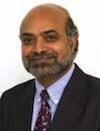
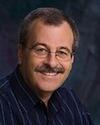
Food and agricultural policy experts Prabhu Pingali and Philip Pardey will each speak on trends in productivity and investments in technology, survey of constraints to productivity, incentives and investment, and opportunities to raise productivity.

The Green Revolution - past successes, unfinished business, and the way forward

Pingali will review strategic components of the Green Revolution and its achievement and limits in terms of agricultural productivity improvement and broader impact at social, environmental and economic levels, including its impact on food and nutrition security. Lessons learned and the strategic insights these provide will be reviewed as the world is preparing a "redux" version of the Green Revolution with more integrative environmental and social impact combined with agricultural and economic development. Pingali will also point to core research & policy gaps that can enhance further spread and sustainable adoption of productivity enhancing technologies.

Image

Prabhu Pingali is the Deputy Director of Agricultural Development at the Bill and Melinda Gates Foundation. Formerly, he served as Director of the Agricultural and Development Economics Division of the Food and Agriculture Organization (FAO) of the United Nations. Pingali was elected to the U.S. National Academy of Sciences as a Foreign Associate in May 2007, and he was elected Fellow of the American Agricultural Economics Association in 2006. Pingali was the President of the International Association of Agricultural Economists (IAAE) from 2003-06. Pingali has over twenty five years of experience in assessing the extent and impact of technical change in agriculture in developing countries, including Asia, Africa and Latin America.

 African Agricultural R&D and Productiivity Growth in a Global Setting

Given the continuing importance of agriculture in most African economies, an in-depth understanding of the past and likely future productivity performance of African agriculture is key to assessing the overall economic growth and development prospects of the region. African agriculture operates in increasingly interconnected global commodity markets, so the relative productivity performance of African vis-à-vis rest-of-world agriculture is also relevant. This talk will present new evidence on African agricultural productivity performance and place that evidence in relation to the evolving pattern of agricultural productivity growth worldwide. Technological change is a principal driver of productivity growth, and new, updated evidence on the trends in R&D investments that give rise to these technological changes will also be presented and discussed. The productivity effects of R&D play out over comparatively long periods of time demanding a long-run look at these developments.    
 

Image

Philip Pardey is Professor of Science and Technology Policy in the Department of Applied Economics, and Director of the University of Minnesota's International Science and Technology Practice and Policy (InSTePP) center. His research deals with the finance and conduct of R&D globally, methods for assessing the economic impacts of research, and the economic and policy (especially intellectual property) aspects of genetic resources and the biosciences. He is a Fellow of the American Agricultural Economics Association and a Distinguished Fellow of the Australian Agricultural and Resource Economics Society.

Bechtel Conference Center

Prabhu Pingali Deputy director, Agricultural Development Speaker Bill & Melinda Gates Foundation
Philip Pardey Professor of Science and Technology, Applied Economics Speaker University of Minnesota
Symposiums
Authors
News Type
News
Date
Paragraphs
Stanford University’s Center on Democracy, Development, and the Rule of Law in partnership with the Canadian Foreign Affairs and International Trade department are hosting a symposium, Addressing the Accountability Gap in Statebuilding: The Case of Afghanistan, on February 25, 2011. The distinguished Ashraf Ghani, former Afghan Minister of Finance and 2009 Presidential Candidate, will be delivering the keynote address. This event will bring together practitioners, experts, and diplomats from Afghanistan and beyond, to share experiences and explore options to improve the contemporary practice of state-building. This conference and keynote address is open to the public.
All News button
1
Subscribe to Policy Analysis