Policy Analysis
-

Abstract: Governments around the world have been targeting and killing individuals to prevent them from committing terror attacks or other atrocities. They use this method secretly, sometimes without even taking responsibility for such operations, and without making public most of the relevant information: who is being targeted and what are the criteria for targeting individuals, what evidence is used to make targeting decisions, and what procedures are adopted to identify mistakes or misuse of this method. Recently released documents, such as the U.S. Department of Justice Drone Memo (analyzing lethal operations against U.S. citizen Anwar Al-Aulaqi), the more general White Paper on targeted killings of US citizens, or the Report of the Israeli Special Investigatory Commission on the targeted killing of Salah Shehadeh, shed some light on otherwise highly secretive decision-making processes, thereby introducing to the public debate important information previously unavailable. At the same time, in revealing only a small amount of relevant information, they emphasize the thick veil of secrecy that still surrounds the discussions in this field. Moreover, the information that is available demonstrates the vague nature of the relevant rules; the security-oriented implementation of these rules; and the inadequacy of current oversight mechanisms of targeted killing operations. These challenges to a process designed to take human lives emphasize the need to develop effective and independent accountability mechanisms, with powers to investigate high-level policymakers as well as operational-level decision-makers. This policy-paper proposes concrete solutions to the main weaknesses of the current legal framework: it narrowly (and clearly) defines legal terms such as ‘imminent threat,’ ‘feasibility,’ and ‘last resort’; it develops an activity-based test for determinations on direct participation in hostilities; it designs an independent ex post review mechanism; and it calls for governmental transparency and meaningful oversight. Most importantly, it promotes a targeted killing policy that protects civilians from both terror and counter-terror attacks.

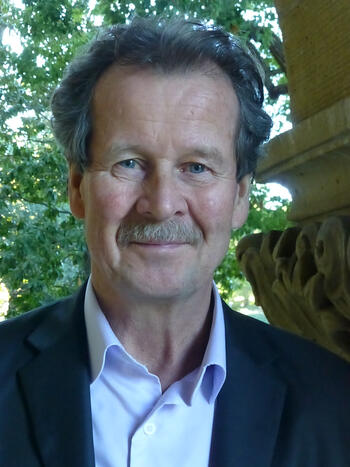
About the Speaker: Shiri Krebs is a JSD Candidate at Stanford Law School, specializing in international criminal and humanitarian law. She was recently awarded the Christiana Shi Stanford Interdisciplinary Graduate Fellowship in International Studies and is a Law and International Security Predoctoral Fellow at Stanford Center on International Security and Cooperation (CISAC).

Her doctoral dissertation focuses on war crimes investigations and fact-finding during armed conflicts. This interdisciplinary research project combines theories and methods from law, psychology, sociology and political science, including online survey experiments.

From 2005 to 2010 Shiri served as legal advisor on international law matters in the Chief-Justice's chambers, the Israeli Supreme Court. During that time she has taught public international law at the Hebrew University of Jerusalem, a teaching assistantship which granted her the Dean's award for excellent junior faculty members, as well as 'best teacher' award. After leaving the Supreme Court, Shiri joined the Israeli Democracy Institute as a researcher, working on 'Terrorism and Democracy' projects, and publishing frequent op-eds in various newspapers and blogs.

In September 2010 Shiri started her graduate studies at Stanford Law School. Her Masters thesis - an empirical analysis of preventive detention cases - was presented in several international conferences and has won the Steven M. Block Civil Liberties Award. 

In 2012, while working on her dissertation, Shiri was appointed as a Teaching Scholar at Santa Clara University School of Law, teaching international criminal law and international humanitarian law. She is currently serving as a Teaching Assistant for the Stanford Interschool Honors Program in International Security Studies. 

Encina Hall (2nd floor)

Shiri Krebs JSD Candidate at Stanford Law School, CISAC Law and International Security Fellow Speaker Stanford University
Seminars

BACKGROUND

Since 2008, Rio de Janeiro has implemented a new public security policy called the “Pacification”, a police strategy with full support from the Federal government that aims to improve the overall levels of security in the city and retake areas previously dominated by criminal organizations. Based on this new model of policing - that takes an approach on community policing initiatives – “Pacifying Police Units (UPPs)” are implemented in different poor communities in the city (shanty towns).

-

Abstract: In the early morning hours of March 28, 1979, began a series of events that led to a partial meltdown of the reactor core at Unit 2 of the Three Mile Island nuclear plant and the worst accident in the history of the commercial nuclear power industry in the United States. Catalyzed by this event, the industry leadership formed an independent oversight entity, the Institute of Nuclear Power Operations, resourced its technical staffing, and ceded significant authorities to it in the areas of operational oversight, training and accreditation, the sharing of operational experience and provision of assistance to plants in need. As the former President and CEO of INPO, Admiral Ellis will discuss the requirements for effective self-regulation, specifically, and consider the issues surrounding broader employment of the concept.

About the Speaker: James O. Ellis Jr. is an Annenberg Distinguished Visiting Fellow at the Hoover Institution and a CISAC Affiliate. He retired as president and chief executive officer of the Institute of Nuclear Power Operations (INPO), a self-regulatory nonprofit located in Atlanta, Georgia, on May 18, 2012. In 2004, Admiral Ellis completed a thirty-nine-year US Navy career as commander of the United States Strategic Command. In this role, he was responsible for the global command and control of US strategic and space forces. 

His sea service included carrier-based tours with three fighter squadrons and command of the USS Abraham Lincoln, a nuclear-powered aircraft carrier. His shore assignments included commander in chief, US Naval Forces, Europe, and Allied Forces, Southern Europe, where he led United States and NATO forces in combat and humanitarian operations during the 1999 Kosovo crisis. 

Ellis holds two masters’ degrees in aerospace engineering and is a member of the National Academy of Engineering.


Self-regulation in the US Commercial Nuclear Power: Why Does It Work And Why Can’t It Be Replicated?
Download pdf

Encina Hall (2nd floor)

James O. Ellis Jr Annenberg Distinguished Visiting Fellow at the Hoover Institution and CISAC Affiliate Speaker Hoover Institution, CISAC
Seminars
Paragraphs

"North Korean Human Rights: A Long Journey with Little Progress" examines human rights in the Democratic People's Republic of Korea (DPRK, or North Korea) and the approaches that the European Union has taken to address the situation. In this paper, Mike Cowin provides perspective on EU-DPRK engagement; the two sides officially established diplomatic relations in May 2001. The EU and its members have continued to raise the human rights issue during bilateral meetings. But, North Korea says it will continue to refuse dialogue if the EU continues to sponsor resolutions against North Korea at the UN Human Rights Commission/Council. The EU has rejected this as a precondition. "The EU has had no incentive or justifiable reason to take the initiative to break out of this chicken-and-egg dilemma...The DPRK has also maintained its position. The gap between the two sides has therefore widened," he writes. Cowin suggests the EU could take additional steps to restart EU-DPRK engagement.

Mike Cowin is the 2014-15 Pantech Fellow in the Korea Program at the Walter H. Shorenstein Asia-Pacific Research Center. Before coming to Stanford, he served as the deputy head of mission at the British Embassy in Pyongyang, North Korea. He has also served in the British embassies in Seoul from 2003 to 2007, and in Tokyo from 1992 to 1997.

All Publications button
1
Publication Type
Policy Briefs
Publication Date
Journal Publisher
Shorenstein Asia-Pacific Research Center
Authors
Mike Cowin
-

Abstract: The first Snowden disclosure was that Verizon was providing daily updates of telephony metadata to the NSA. This caused great consternation, and resulted in two government studies, one by the President's NSA Review Committee and one by the Privacy and Civil Liberties Oversight Board.  Both concluded the collection should be ended. The President asked Office of the Director of National Intelligence to produce a report "assessing the feasibility of creating software that would allow the intelligence community more easily to conduct targeted information acquisition rather than bulk collection."  This talk reports on that work, which considered the issue from the angle of technical alternatives, and concluded that there is no technical replacement for bulk data collection, but that software can enhance targeted collection and automate control of data usage. This talk will discuss that report, conducted by the National Research Council, explaining what the report says — and what it doesn't say.

About the Speaker: Susan Landau is Professor of Cybersecurity Policy in the Department of Social Science and Policy Studies at Worcester Polytechnic Institute. Landau has been a senior staff Privacy Analyst at Google, a Distinguished Engineer at Sun Microsystems, a faculty member at the University of Massachusetts at Amherst and at Wesleyan University. She has held visiting positions at Harvard, Cornell, and Yale, and the Mathematical Sciences Research Institute. Landau is the author of Surveillance or Security?  The Risks Posed by New Wiretapping Technologies (MIT Press, 2011), and co-author, with Whitfield Diffie, of Privacy on the Line: The Politics of Wiretapping and Encryption (MIT Press, 1998, rev. ed. 2007). She has written numerous scientific and policy research papers, and has also published in other venues, including Science, Scientific American, and the Washington Post. Landau has testified in Congress on cybersecurity and on electronic surveillance. Landau currently serves on the Computer Science Telecommunications Board of the National Research Council.  A 2012 Guggenheim fellow, Landau was a 2010-2011 fellow at the Radcliffe Institute for Advanced Study, the recipient of the 2008 Women of Vision Social Impact Award, and also a fellow of the American Association for the Advancement of Science and the Association for Computing Machinery.  She received her BA from Princeton, her MS from Cornell, and her PhD from MIT.

Encina Hall (2nd floor)

Susan Landau Professor of Cybersecurity Policy in the Department of Social Science and Policy Studies Speaker Worcester Polytechnic Institute
Seminars
-

Howard White, International Initiative for Impact Evaluation

About the speaker: Howard White is the Executive Director of the International Initiative for Impact Evaluation (3ie), co-chair of the Campbell International Development Coordinating Group and Adjunct Professor at the Alfred Deakin Research Institute, Deakin University. His previous experience includes leading the impact evaluation program of the World Bank’s Independent Evaluation Group and before that, several multi-country evaluations. Other experience includes leading large projects like the World Bank published report African Poverty at the Millennium, and developing the overall direction of poverty training for 2,000 DFID staff at country offices around the world. 

Howard White
-

Abstract: Imagine two guys. Second-generation Muslim-American Ahmad feels threatened by the ‘corrupting influences’ within his suburban factory town, detests his mother’s ‘western’ ways, and seeks out a radical imam for guidance. In contrast, Palestinian-born Mike worked as an Intel engineer, married an American Christian, and played company softball in his spare time. If only one is a terrorist, it is easy to pick out which one. Right? Wrong. Maher “Mike” Hawash served a six-year sentence for conspiring to aid the Taliban. Ahmad Mulloy is the fictional protagonist of John Updike’s novel, Terrorist.

It is easy to assume that terrorists are poorly integrated or disconnected from society. But this talk argues that such assumptions about the ‘typical terrorist’ are not only wrong, but dangerous. I argue that better immigrant integration will not stop terrorism – because most terrorists are just as well, if not better, integrated into western societies than other immigrants. Further, policies that exacerbate differences between immigrants and the native-born actually may facilitate radicalization of new terrorists; they provide new fuel for the argument that immigrants, and especially Muslims, are being disproportionately targeted.

About the Speaker: Betsy Cooper is a Law and International Security Postdoctoral Fellow with CISAC, working on projects related to state immigration policy. Dr. Cooper recently finished serving as a Yale Public Interest Fellow, working with the Department of Homeland Security's Office of Policy on Comprehensive Immigration Reform and related issues. She is a 2012 graduate of Yale Law School, after which she clerked for Judge William Fletcher on the Ninth Circuit Court of Appeals. Dr. Cooper is the author of over twenty manuscripts and articles on US and European immigration and refugee policy, and has consulted for Atlantic Philanthropies (Dublin, Ireland), the Prime Minister's Strategy Unit in London, the World Bank, and a number of immigration think tanks. In addition to her law degree, Betsy holds a DPhil in Politics from Oxford University, an M.Sc. in Forced Migration from Oxford University, and a B.A. in Industrial and Labor Relations from Cornell University.

Encina Hall (2nd floor)

Betsy Cooper Law and International Security Postdoctoral Fellow, CISAC Speaker CISAC
Seminars
-

Dr. Mark McClellan

Senior Fellow and Director of the Health Care Innovation and Value Initiative at the Brookings Institution

About the speaker: Mark McClellan, MD, PhD, is a senior fellow and director of the Health Care Innovation and Value Initiative at the Brookings Institution. Within Brookings, his work focuses on promoting quality and value in patient-centered health care. Dr. McClellan is a former administrator of the Centers for Medicare & Medicaid Services (CMS) and former commissioner of the U.S. Food and Drug Administration (FDA), where he developed and implemented major reforms in health policy. He previously served as a member of the President’s Council of Economic Advisers and senior director for health care policy at the White House, and was an associate professor of economics and medicine at Stanford University. 


CISAC Central Conference Room

Encina Hall, Second Floor

616 Serra Street

Stanford, CA 94022

Paragraphs

The thirteenth session of the Korea-U.S. West Coast Strategic Forum, held in Seoul on December 11, 2014, convened senior South Korean and American policymakers, scholars and regional experts to discuss North Korea policy and recent developments in the Korean peninsula. Hosted by the Korea Program at the Walter H. Shorenstein Asia-Pacific Research Center at Stanford University, the Forum is also supported by the Korea National Diplomatic Academy.

All Publications button
1
Publication Type
Policy Briefs
Publication Date
Authors
News Type
News
Date
Paragraphs

Understanding the nature of violent conflict in the world's most dangerous flashpoints may help find ways to peace and stability, according to a Stanford expert.

Once a soldier, now a scholar, Joe Felter knows better than most the intrinsic meaning of war and conflict – he served on the front lines in the U.S. Special Forces in places such as Iraq, Afghanistan and the Philippines.

Today, the senior research scholar at Stanford's Center for International Security and Cooperationand research fellow at the Hoover Institution is on a different kind of mission: building knowledge on the subject of politically motivated conflict.

For example, how are the most casualties suffered and under what conditions? Are there patterns to why rebels are surrendering? And how do armed battles affect development and education in local communities?

Answers to these and other questions are found in the Empirical Studies of Conflict project database, which is led by Felter and Jacob Shapiro, his former Stanford political science classmate, now a professor at Princeton University. The effort focuses on insurgency, civil war and other sources of politically motivated violence worldwide. Launched last year, it currently covers the Philippines, Afghanistan, Colombia, Iraq, Northern Ireland, Mexico, the Israeli-occupied territories, Pakistan and Vietnam. The site includes geospatial and tabular data as well as thousands of documents, archives and interviews.

Since 2009, Felter has collaborated with colleagues at Princeton, the University of California, San Diego, and other institutions in developing the database. Today, they are advising policymakers and military leaders on how best to curb conflict, reduce civilian casualties and promote prosperity. Felter and his colleagues have outlined some of their work in this Foreign Affairs article published in January 2015.

Felter's research on Filipino insurgencies, for instance, has produced significant results. The senior officials there have invited him to brief their military on battlefield trends and counterinsurgency strategy, as Felter and his colleagues have interviewed thousands of combatants as part of the project.

What do they learn about the insurgent mindset? One Islamic militant chief talked tactics with him, then revealed that his greatest tool was his men's belief that Allah was waiting for them on the other side. Others included a Roman Catholic nun who was running guns and money to help the poor and a young college freshman recruited with the promise of $40 a month to support her family.

Pathways to peace

In the case of the Philippines, Felter had access to more than 100,000 individual reports of conflict episodes dating back to 1975 and more than 13,000 interview transcripts from rebels who were captured or had surrendered over the last 30 years. That information was coded in detail and compiled as part of the Empirical Studies of Conflict Project database. The Philippines is home to some of the most protracted Muslim separatist and communist insurgencies in the world, and that is precisely why the government is interested in learning how to thwart it.

L.A. Ciceroscholar Joe Felter and student research assistant Crystal Lee

Crystal Lee, a Stanford senior and history major, has been Joe Felter’s research assistant since her freshman year.

"For me, it's kind of validating all the thousands and thousands of hours that went into all our coding," said Felter, adding that the information will help the Philippines government find ways to ease the costs and human suffering in the conflicts it faces.

It has been a transformational journey for Felter, who retired in 2012 from the U.S. Army as a colonel following a career as a Special Forces and foreign area officer with missions and deployments across Asia, Panama, Iraq and Afghanistan. In 2010-11, he commanded the International Security and Assistance Force Counter Insurgency Advisory and Assistance Team in Afghanistan.

"I spent a long time in the military deployed to environments where you could appreciate that what you were doing was having an impact," Felter said.

In higher education now, his vantage point is different from what it was on the front lines. Today, both perspective and policy are two of his main goals.

"Since I transitioned to academia, I haven't lost my commitment to trying to help practitioners in the field to better understand conflict – by using data," Felter said.

Stanford senior Crystal Lee, a history major, has been working with Felter as a research assistant since her freshman year, helping him code and compile the datasets.

"It's been really interesting for me to think about the implications that this type of data analysis has on governments and broader policy work," said Lee, who also has analyzed and reconstructed hundreds of interviews with former rebels for Felter's upcoming book.

She said that a romantic notion exists in Silicon Valley that if one uses a huge database, one can wave a magic wand and believe that so-called "big data" will solve everything. "But it's a really messy field and we've had to use best practices to make sense of the increasingly complicated picture of counterinsurgency and terrorism," she said.

Study at the local level

Felter pointed out that to truly comprehend the nature of counterinsurgency in places like the Philippines, Iraq or Afghanistan, one must realize that its roots are in local communities.

"You need to study it at the local level to really understand it," Felter said. "And the Philippines is like a petri dish for studying both insurgency and counterinsurgency because you have multiple, long-running insurgencies, each with distinct characteristics, and with an array of government and military responses to address these threats over time."

The coders are now doubling back over the dataset from 1975 to 2012 to make sure it's accurate and cleaned of any potentially sensitive details before it goes public. The data are the basis for two of Felter's ongoing book projects and dozens of working papers and journal articles.

Roots of research

A Stanford alum, Felter was in the Philippines in 2004 conducting field research as part of his doctoral dissertation when he was first able to gain access to what would become a trove of detailed incident-level data on insurgency and counterinsurgency.

John Troncoscholar Joe Felter with members of the First Scout Ranger Regiment, Philippine Army

Stanford scholar Joe Felter with members of the First Scout Ranger Regiment, Philippine Army. His research in the Philippines helps inform the Empirical Studies of Conflict database.

After bringing back the data and meeting with his faculty advisers – Stanford political science Professors David Laitin and James Fearon – he realized the extensive incident-level data could be coded in a manner that would make it a tremendous resource for scholars studying civil wars, insurgencies and other forms of politically motivated violence.

"This comprehensive conflict dataset is going to be the holy grail of micro-level conflict data," Felter said. "It has the potential to drive a significant number of publications, reports and analyses, and enable conflict researchers to develop insights and test theories that they would not have been able to do before."

The network is expanding. A dozen young scholars who were supported by funding for the Empirical Studies of Conflict (ESOC) project as postdoctoral fellows have now been placed in tenure-track positions at universities.

"What's unique about ESOC is that we're trying hard to make it easier for others to study conflict by pulling together everything we can on the conflicts we've studied," said Jake Shapiro, an associate professor of politics and international affairs at Princeton University and the project's co-director.

On Iraq, for example, the website provides data on conflict outcomes, politics and demographics, in addition to maps, links to other useful information sources and other types of research on Iraq, he said.

Shapiro says researchers working for the Canadian Armed Forces, the World Bank and the U.S. military have already turned to the database for help. Insurgencies cost human lives and dollars, enough so that the United States and the international community are now focused on rebuilding social and political orders in those troubled countries.

As Felter put it, "We are devoted to learning from all those experiences and to making it easier for others to do so as well, so that we can all live more peacefully and safely in the future."

Research highlights

The Empirical Studies of Conflict project includes the following scholarly advances:

• Research on insurgent compensation paid during the U.S. Iraq conflict shows that pay was not based on risk factors.
• Findings show rebel violence will decrease when projects are secure and valued by community members and when implementation is conditional on the behavior of non-combatants.
• A journal article describes the preference for "certainty" in the relationship between violence and economic risk in wartime Afghanistan.

Media Contact

Beth Duff-Brown, Center for International Security and Cooperation: (650) 725-6488,bethduff@stanford.edu

Clifton B. Parker, Stanford News Service: (650) 725-0224, cbparker@stanford.edu

Hero Image
conflict joe
CISAC Senior Research Scholar Joe Felter with members of the First Scout Ranger Regiment, Philippine Army. His research in the Philippines helps inform the Empirical Studies of Conflict Project database.
John Tronco
All News button
1
Subscribe to Policy Analysis