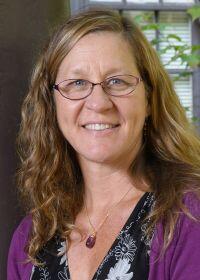
Monica Martinez-Bravo is an associate professor at CEMFI in Madrid, Spain. She received her Ph.D. in economics from MIT in 2010. Her research interests are in the fields of Political Economy and Economic Development.
This seminar is part of the Comparative Politics Workshop in the Department of Political Science and is co-sponsored by The Europe Center.
Encina Hall West, Room 400 (Graham Stuart Lounge)
Monica Martinez-Bravo
Associate Professor
Speaker
CEMFI
States make war, and wars make states. The second clause of Tilly's dictum assumes that the fiscal effort that states exert to wage war persists over time. This paper investigates the effect of war on long-term fiscal capacity as a function of two types of war financing instruments: taxes and loans. Tax-waged wars are argued to exert lasting effects on state capacity, as new taxes require enhancements of the state apparatus as well as complementary fiscal innovations. Loan-waged wars may not contribute to long-term state capacity, as countries might default once the war is over, thus preempting any persistent fiscal effect. Importantly, the way war is waged might be endogenous. To cope with this possibility, I exploit unanticipated crashes in the nineteenth-century international capital markets, which temporarily banned warring states from borrowing regardless of their (un)observed characteristics. The analysis shows that countries that fought wars while the international credit markets were down have today higher fiscal capacity, measured by income tax ratios as well as the size of the tax administration. Altogether, the paper advances the conditions under which wars exert positive and lasting effects on state building.
Didac Queralt is a junior professor at the Institute of Political Economy and Governance (IPEG) in Barcelona. He received his Ph.D. from the NYU Politics Department in September 2012.
His research lies at the intersection of comparative political economy and international relations, with a focus on the political economy of fiscal capacity building in Europe (East and West) and the Americas. Using formal methods, he investigates tax compliance in scenarios of low fiscal capacity, as well as the replacement of old forms of taxation (e.g. trade taxes) by modern extractive technologies (e.g. income taxation) that result from deliberate investment in the tax administration. He analyzes the theoretical predictions using contemporary data from developing economies in Latin America and Eastern Europe, as well as historical data for European powers in the pre-modern era.
In addition, he investigates the origins of direct taxation in the Western World, both with macro- and micro-data, as well as the electoral politics underlying the expansion of the fiscal state. Currently, he is involved in a quasi-experimental test of the legacy of pre-modern wars on state capacity, and an field experiment on tax progressivity in Colombia,
This seminar is part of the Comparative Politics Workshop in the Department of Political Science and is co-sponsored by The Europe Center.
Encina Hall West, Room 400 (Graham Stuart Lounge)
Didac Queralt
Junior Professor
Speaker
Institute of Political Economy and Governance (IPEG), Barcelona
Booseung Chang joins the Walter H. Shorenstein Asia-Pacific Research Center as Shorenstein Postdoctoral Fellow for the 2015-16 year. His research interests span comparative foreign policy and policymaking process.
Currently, he is working on two projects. One deals with application of game-theoretic approaches to the inter-Korean relations. Specifically, he is interested in how the tools of the game theory can contribute to the improvement of the cooperation as well as the security in the Korean peninsula. The topic of the other article will be the change of Japanese foreign policy. The goal of this article is to shed light on the implications of the recent change in Japanese security-related laws and to measure its domestic, regional, and global impact.
His dissertation, which he seeks to build upon, is titled “The Sources of Japanese Conduct: Asymmetric Security Dependence, Role Conceptions, and the Reactive Behavior in response to U.S. Demands.” It is a qualitative comparative case study of how key U.S. allies in Asia – namely Japan and South Korea – and major powers in Europe - the United Kingdom and France - responded to the U.S.-led Persian Gulf War and the Iraq War.
Chang completed his doctorate in political science from the Paul H. Nitze School of Advanced International Studies (SAIS) of Johns Hopkins University in 2014.
Before joining the Walter H. Shorenstein Asia-Pacific Research Center, he worked for the South Korean Foreign Service for 15 years between 2000 and 2015. During the service, he mostly worked on Northeast Asian affairs including the North Korean nuclear issue. He spent three years in the embassy in Beijing and two and a half years in the consulate general in Vladivostok.
The sectarian-based segregation that has shaped urbanism in Baghdad is a direct outcome of the 2003 U.S.-led invasion and occupation of Iraq. The "post"-occupied city is characterized by the normalization of concrete “security” blast-walls that choke urban circulation and sever communities. The notorious blast walls -- or "Bremer Walls" -- perpetuate and intensify conditions of urban segregation. As the summer's surge of anti-government protests in Baghdad demonstrate, the short-sighted nature of this militarized solution to sectarian-based violence has proven to be a superficial and unsustainable fix to the deep dilemma of sectarian segregation codified in Iraq’s political system. This presentation will examine the context for recent public dissent on the streets of Baghdad through the story of the capital city's fragmentation between 2006 and 2007.
Speaker Bio
Image
Mona Damluji is Associate Dean and Director of The Markaz: Resource Center at Stanford University. She is a liberal arts educator, cultural activist and scholar with expertise in the Arab Middle East and broader Muslim World. Mona received her PhD from the University of California, Berkeley and was the Mellon Postdoctoral Fellow in Asian & Islamic Visual Culture at Wheaton College in Massachusetts. Mona regularly curates and organizes exhibits and programs featuring the work of artists and activists linked to Muslim and Arab communities and countries. Major recent projects have included "Open Shutters Iraq" at UC Berkeley and "Arab Comics: 90 Years of Popular Visual Culture" at Brown University. Mona has worked as the educational outreach director for the Arab Film Festival, organizing an annual festival screening for students and teachers in San Francisco, Oakland and Berkeley. Her exhibition and book reviews appear in Jadaliyya, AMCA and the International Journal of Islamic Architecture. Mona's publications also appear in the Journal of Urban History, Comparative Studies of South Asia, Africa and the Middle East, and Subterranean Estates: the Life Worlds of Oil and Gas.
The fifteenth session of the Korea-U.S. West Coast Strategic Forum, held in Korea on November 17, 2015, convened senior South Korean and American policymakers, scholars and regional experts to discuss North Korea policy and recent developments on the Korean Peninsula. Hosted by the Korea Program at the Walter H. Shorenstein Asia-Pacific Research Center at Stanford University, the Forum is also supported by the Sejong Institute.
Senior Military Fellow John Chu was promoted to the rank of colonel in the U.S. Army at Stanford last Friday, a position selectively afforded for distinguished service and leadership. Colleagues and Stanford affiliates attended the afternoon ceremony marking the occasion.
“We look over the course of John’s life and where he’s been, and it says so much good about him and the strengths of the United States of America,” Eikenberry said.
“As threats have changed, doctrine has changed and our national security has changed, John has continued to adapt. It says a great deal about him, our services and our country that he has been able to steadily make those shifts over the course of his career.”
Chu was born in Seoul, South Korea, and raised in the United States. He attended West Point and later achieved advanced degrees in environmental engineering and national security. Chu has had three tours of duty in Korea and served in Iraq as staff at the highest strategic level, among other posts.
At Stanford, Chu has been studying U.S. policy toward North Korea and strategic deterrence on the Korea Peninsula as a fellow at FSI’s Walter H. Shorenstein Asia-Pacific Research Center during the current academic year.
The fellowship program, supported by the U.S.-Asia Security Initiative and the Center for International Security and Cooperation, provides military officers an opportunity for self-directed study under the tutelage of Stanford scholars. The program started under former U.S. Secretary of Defense William Perry. Five fellows came to campus this year; their brief bios can be found here.
Chu thanked his wife of eighteen years, Tina, and expressed gratitude to everyone who guided him over the years.
“You are the real heroes – the people I’ve worked with throughout my career,” Chu said, addressing the audience. “It is you that really deserves all the recognition, for I would not be here today without the support of many.”
Chu expects to deploy to Afghanistan as his follow-on assignment.
Hero Image
Senior Military Fellow John Chu (right) is promoted to colonel in the U.S. Army in a ceremony at Stanford on Dec. 11, 2015. Lt. Gen. (Ret.) Karl Eikenberry (left) led the proceedings.
A conference that honored the life and scholarly contributions of Stanford economist Masahiko Aoki was held at Stanford. Dozens of friends, family and community members paid tribute to Aoki, the Henri and Tomoye Takahashi Professor of Japanese Studies and Professor of Economics, emeritus, who died in July at the age of 77.
Eleven renowned economists and social scientists gave talks on Aoki’s extensive fields of research in economic theory, institutional analysis, corporate governance, and the Japanese and Chinese economies at the Dec. 4 conference, which was followed by a memorial ceremony the next day.
“When we contacted people to speak at this conference, few people turned us down,” said Stanford professor Takeo Hoshi. “The reason for this is Masa. It shows how much Masa was respected and how much his work is valued.”
The events were hosted by the Japan Program at the Walter H. Shorenstein Asia-Pacific Research Center, the Freeman Spogli Institute for International Studies (FSI), Graduate School of Business, Department of Economics and the Stanford Institute for Economic Policy Research (SIEPR).
Image
Aoki came to Stanford in 1967 as an assistant professor, held faculty appointments at Kyoto University and Harvard, and returned to Stanford in 1984. He retired to emeritus status at Stanford in 2005.
Throughout the conference, Aoki was described as an astute professor and colleague, valuable mentor and loyal friend by the many speakers and participants who shared works, stories and multimedia featuring their interactions with Aoki.
Aoki pioneered the field of comparative institutional analysis (CIA) with a team of scholars at Stanford: Avner Greif, John Litwack, Paul Milgrom and Yingyi Qian, among others. CIA analyzes and compares different institutions that evolve to regulate different societies.
Masahiko Aoki (far left) is pictured with colleagues on the Stanford campus in the late 1960s.
“Masa had a good background in looking at the economy as a whole, financial institutions as a whole – not just how numbers or actors economically interact – but also the people who interact within a given institutional framework,” said Koichi Hamada, a professor emeritus at Yale University.
“Masa had a good background in looking at the economy as a whole, financial institutions as a whole – not just how numbers or actors economically interact…”
-Koichi Hamada, Yale University
Aoki applied a systematic lens to everything he studied, a “take society as a total entity” approach, Hamada said.
Aoki grew up in Japan, and developed a deep interest in Japanese politics at an early age. He was actively involved in student movements in the early 1960s, at the heart of which was a campaign against a controversial U.S.-Japan security treaty. China became another great interest of his as the country began to undergo economic transformation and modernization.
Throughout his career, Aoki traveled to Japan and China often, and sought to better inform policy debates by engaging scholars, government leaders and journalists there.
He believed in sharing lessons learned from his own scholarly analyses on what constitute institutions, particularly the “people” aspects – the employees, their cognitive abilities and levels of participation.
[Continues below]
Caption TBD.
Caption TBD.
Top left to right: Yingyi Qian of Tsinghau University talks with Avner Greif of Stanford University and Hugh Patrick of Columbia University. / Koichi Hamada of Yale University delivers his remarks titled "Masahiko Aoki: A Social Scientist." Bottom: Reiko Aoki, the wife of Masahiko Aoki, listens in to Kenneth Arrow, a professor emeritus at Stanford University. Credit: Rod Searcey
Aoki was not only a scholar of institutions but also a builder of them.
“Amid a time of diplomatic tensions between China and Japan…Masa was able to bring Japanese, Chinese and American economists together to study and do research,” said Yingyi Qian, dean and professor at the school of economics and management at Tsinghua.
At Stanford, Aoki played a leading role in the creation of the Stanford Japan Center and a multi-day conference that convened annually in Kyoto on issues of mutual concern between Asia-Pacific countries and the United States.
“Masa Aoki’s legacy will serve as an integral guidepost for many years to come. May his soul rest in peace.”
-Kotaro Suzumura, Hitotsubashi University
Earlier this year, Aoki was hospitalized for lung disease. Even at that stage, he worked tirelessly to revise a paper that examines the institutional development of China and Japan in the late 19th to early 20th centuries.
Aoki was also fondly remembered for his mentorship of students at Stanford and other universities he taught at.
“He was an original and unique professor – quite different from others that I’ve met in many respects. He was generous with his time, not hierarchical,” said Miguel Angel Garcia Cestona, who studied for a doctorate at Stanford and now teaches at the Universitat Autonoma de Barcelona.
Garcia Cestona, among other former students, spoke of Aoki as a friend and shared memories of their former professor hosting them at his home.
The Internet has already changed many aspects of peoples’ lives in developed economies and has provided far-reaching economic and social benefits. Extending these opportunities is critical to accelerating economic and social growth in developing economies as well. Many international organizations have set ambitious plans to promote Internet access globally; they pore over reports and expend considerable money, time and talent exploring new ways to connect the unconnected (e.g., blimps, drones, satellites). But raw enthusiasm and aggregate statistics fail to capture the reality of the digital divide in the developing world. Facebook’s commitment to connecting the developing world includes a desire to understand the complexity of the issue as it relates to the cultural, structural and technological inequalities between and within countries. This approach requires bringing together insights from large number of publicly available data sources that employ different methodologies to understanding the multi-faceted nature of the digital divide, even when the assembled sources of data reach different conclusions.
In this talk, researchers from Facebook will discuss the difficulties and limitations often faced by aggregating numerous country-specific data sources together to measure the extent, cause and consequences of differences in Internet adoption between countries and populations. They will explain how Facebook evaluates the quality of existing publicly available data sources (e.g., national statistics, academic studies and industry reports), aggregates multiple sources to obtain relevant estimates and supplement data “holes” with original data collection efforts. The multi-faceted approach allows Facebook to conduct scalable and comprehensive comparative analyses at multiple levels, which in turn leads to more culturally-sensitive and context-specific approaches for bridging the digital divide.
Speaker Bio
Image
Lauren Bachan is a quantitative researcher on the Growth Population and Survey Science team at Facebook. Her current research focuses on understanding the social and cultural barriers to Internet use in developing countries. More broadly, she’s interested in how new technologies change social life and are adapted to fit long-standing cultural norms. Lauren received her PhD in Sociology and Demography from Penn State University, where she studied extended family childcare systems in sub-Saharan Africa. Lauren also holds a BA in International Relations from Mount Holyoke College and has previously worked in the fields of international development and market research.
Encina Hall 616 Serra Street Stanford, CA 94305-6165
0
mmannino@stanford.edu
Visiting Student Researcher at The Europe Center, 2015-2016
massimo_mannino.jpg
Massimo Mannino is a Visiting Student Researcher from the University of St.Gallen, Switzerland, under the supervision of Michael Bechtel (University of St.Gallen) and Jens Hainmueller (Stanford University). His dissertation explores the political economy of natural disasters and is part of a project funded by the Swiss National Science Foundation.