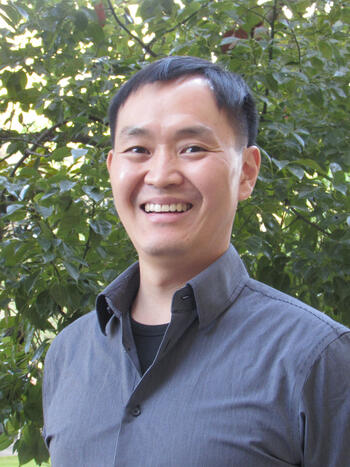
Walder receives award for Cultural Revolution research
Stanford professor Andrew Walder has been awarded the Founder’s Prize from the journal Social Science History for his paper, “Rebellion and Repression in China, 1966-1971.” The journal’s editorial board selects one recipient annually for exemplary scholarly work.
Using data from 2,213 historical county and city annals, the paper charts the breadth of the Chinese Cultural Revolution, its evolution through time and the repression through which state structures were rebuilt in the post-Mao era.
Walder, who is a senior fellow in the Freeman Spogli Institute for International Studies and director emeritus of the Shorenstein Asia-Pacific Research Center, has long studied the sources of conflict, stability and change in communist regimes. He recently published China under Mao, a book that explores the rise and fall of Mao Zedong’s radical socialism.
Markus Tepe
Encina Hall
616 Serra Street
Stanford, CA 94305-6165
Markus Tepe is a professor of Political Science (Political System of Germany) at the University of Oldenburg. He holds a doctoral degree from the Free University of Berlin (FU Berlin) and an MA in Political Science, Public Law and Economic Policy from the University of Münster. His research centers on public policies, political economy, and laboratory experiments in social science research. Currently, he is conducting a research project on need-based justice and redistribution (FOR2104) funded by the German Research Foundation (DFG).
Jaakko Meriläinen
Encina Hall
616 Serra Street
Stanford, CA 94305-6165
Jaakko Meriläinen is a Visiting Student Researcher from the Institute for International Economic Studies at Stockholm University, Sweden. His primary area of research is Political Economics with empirical emphasis, and he is also interested in Economic and Political History as well as immigration-related questions. Jaakko's current research concerns political careers, economic consequences of political representation, historical development of voting behavior and historical impacts of time saving technologies on women's labor force and political participation.
LAD Course: Case Teaching and Case Study Writing for Public Policy at the Ukrainian Catholic University
This workshop course is designed to develop skills that faculty in policy-focused universities and training institutions can use both to develop interactive and participant-centered teaching styles and to help faculty develop skills in case writing.
The first two days mostly involve "how to" lessons on both teaching and writing, interspersed with activities where the participants work in teams to prepare case teaching plans and class openings that they present to all of the participants. The initial emphasis is on case teaching, since before participants can write a successful case, they must understand how learning in a case-oriented classroom takes place. The workshop includes case discussions on several existing cases, combined with a “post-mortem” of what worked and what did not in both the written case and the case discussion. We discuss core teaching strategies including development of time management plans, whiteboard management plans, how to pose opening questions, “cold-calling” versus “warm calling,” and how to close a case-discussion class with “Take-Aways.”
Ukrainian Catholic University campus
Lviv, Ukraine
LAD Course: LBSNAA Lal Bahadur Shastri National Academy of Administration
This five day intensive program for a select group of mid- and high-level Indian government officials and business leaders is designed to address how government can encourage and enable the private sector to play a larger, more constructive role as a force for economic growth and development. A driving principle of this LAD-LBSNAA program is that policy reform is not like engineering or other technical fields that have discrete skills and clear, optimal solutions. Instead, successful reformers must be politically aware and weigh a broad range of factors that influence policy outcomes. This program is designed to provide participants with an analytical framework to build these leadership abilities and operate effectively under adverse conditions.
LBSNAA Campus
Mussoorie, India
Sixteenth Korea-U.S. West Coast Strategic Forum
The sixteenth session of the Korea-U.S. West Coast Strategic Forum, held at Stanford University on June 28, 2016, convened senior South Korean and American policymakers, scholars and regional experts to discuss North Korea policy and recent developments on the Korean Peninsula. Hosted by the Korea Program at the Walter H. Shorenstein Asia-Pacific Research Center at Stanford University, the Forum is also supported by the Sejong Institute.
Nate Persily on Trends in Polarization
As part of Stanford Worldview's Wide Angle: Election 2016 Project, Nate Persily of Stanford Law School recently described how the 2016 election highlights changing trends in polarization and gridlock in the United States, particularly the role of campaign finance and digital technology.
The common-sense fix that American nuclear policy needs
A Pragmatic Take on the U.S. Role in the World
- This talk is co-sponsored by the Program in International Relations at Stanford University -
Abstract: Debates about how the United States’ should behave rarely address the central problem. Global challenges – from violent extremism to migration, inequality, climate change, epidemics, and economic or technological disruptions – unfold alongside governments that are increasingly ill fit to meet them. Global connections have generated concerns on scales that do not match the scale of the nation state. Analysts at the National Intelligence Council understand this and claim that the key to global power in the future will be the ability to marry national power and technological advantage with the ability to connect across a broad array of stakeholders. Arguments about engagement and retrenchment focus American strategy only on traditional relationships with other states. The growing body on new or networked governance forms rarely link their claims to a strategy for action. A slate of recent suggestions about how pragmatism might offer useful advice for United States action are built on assumptions that pragmatic action is inherently incremental (and thus of questionable use for meeting global challenges) and that US preferences are clear and fixed (something notably undermined by the fundamentally different visions of “the US” evident in the 2016 presidential campaign). I concur that pragmatism is useful, but it is not purely incremental, nor does it work through fixed preferences. Pragmatic thinkers like William James, John Dewey, and Jane Addams saw the potential for great transformation not simply incremental change. And transformation was possible precisely because they saw preferences as mutable and shaped through social interaction in relation to available means. Building more firmly on these philosophical roots suggests a pragmatic framework that both refocuses analysis of past American success and offers a more productive way to think about the future.
About the Speaker: Deborah Avant is the Sié Chéou-Kang Chair for International Security and Diplomacy and Director of the Sié Chéou-Kang Center for International Security and Diplomacy at the Josef Korbel School of International Studies, University of Denver. Her research (funded by the Institute for Global Conflict and Cooperation, the John D. and Catherine T. MacArthur Foundation, the Smith Richardson Foundation, and the Carnegie Corporation, among others) has focused on civil-military relations, military change, and the politics of controlling violence. She is author/editor of The New Power Politics: Networks and Transnational Security Governance with Oliver Westerwinter (Oxford University Press, 2016); Who Governs the Globe? with Martha Finnemore and Susan Sell (Cambridge: Cambridge University Press, 2010), The Market for Force: the Consequences of Privatizing Security (Cambridge: Cambridge University Press, 2005), and Political Institutions and Military Change: Lessons From Peripheral Wars (Ithaca: Cornell University Press, 1994) , along with articles in such journals as International Organization, International Studies Quarterly, Security Studies, Perspectives on Politics, and Foreign Policy. Under her leadership the Sié Chéou-Kang Center launched the Private Security Monitor (http://psm.du.edu/), an annotated guide to regulation, data and analyses of global private military and security services, in 2012 and in 2013 she was awarded an honorary doctorate from University of St. Gallen for her research and contribution toward regulating private military and security companies. Professor Avant serves on numerous governing and editorial boards, and is editor in chief of the International Studies Association’s newly launched journal: the Journal of Global Security Studies.
Encina Hall, 2nd floor