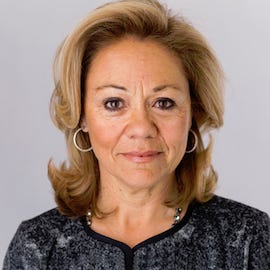
Democracy promotion has been a longstanding goal of US foreign policy in the Middle East and elsewhere. President George W. Bush championed democracy promotion as a way to counter the ideology and extremism that led to the September 11, 2001 terror attacks against the United States. After Bush’s attempts ended in abject failure, President Barack Obama sought to repair relations with the Muslim world but also withdraw the US footprint in the Middle East. But Obama was forced to take a far more hands-on approach with the outbreak of the 2010-2011 uprisings known as the Arab Spring. President Donald Trump, who has displayed an almost allergic aversion to Obama’s policies, has openly embraced the region’s autocrats with little regard for their abuse of human rights or absence of attention to political or economic freedom. How the United States approaches the region matters – both for aspiring democrats and for those who wish to silence them. Despite the rise of Russia and China, the United States remains the sole superpower, with the loudest voice on the world stage. Thus, the shift from democracy promoter – albeit reluctantly at times – to authoritarian enabler has made the task of democratic political reform far more challenging for people across the Middle East. This discussion will examine the recent democracy promotion efforts of the United States, with a focus on the Obama and Trump years.
SPEAKER BIO
Image
Sarah Yerkes is a fellow in the Carnegie Endowment for International Peace’s Middle East Program, where her research focuses on Tunisia’s political, economic, and security developments as well as state-society relations in the Middle East and North Africa. She has been a visiting fellow at the Brookings Institution and a Council on Foreign Relations international affairs fellow and has taught in the Security Studies Program at Georgetown University and at the Elliott School of International Affairs at the George Washington University. Yerkes is a former member of the State Department’s policy planning staff, where she focused on North Africa. Previously, she was a foreign affairs officer in the State’s Department’s Office of Israel and Palestinian affairs. Yerkes also served as a geopolitical research analyst for the U.S. military’s Joint Staff Strategic Plans and Policy Directorate (J5) at the Pentagon, advising the Joint Staff leadership on foreign policy and national security issues.
This is a virtual event. Please click here to register and generate a link to the talk. The link will be unique to you; please save it and do not share with others.
Much recent commentary on US relations with China claims that the policy of “Engagement” was a foolish and failed attempt to transform the People’s Republic into an American style democracy that instead created an authoritarian rival. This narrative mocks the policies of eight US administrations to justify calls for “Decoupling” and “Containment 2.0.” Fingar’s talk will challenge this narrative by examining the origins, logic, and achievements of Engagement and explain why Decoupling is neither wise nor attainable.
Image
Thomas Fingar is a Shorenstein APARC Fellow in the Freeman Spogli Institute for International Studies at Stanford University. He was the inaugural Oksenberg-Rohlen Distinguished Fellow from 2010 through 2015 and the Payne Distinguished Lecturer at Stanford in 2009. From 2005 through 2008, he served as the first deputy director of national intelligence for analysis and, concurrently, as chairman of the National Intelligence Council. Fingar served previously as assistant secretary of the State Department’s Bureau of Intelligence and Research (2000-01 and 2004-05), principal deputy assistant secretary (2001-03), deputy assistant secretary for analysis (1994-2000), director of the Office of Analysis for East Asia and the Pacific (1989-94), and chief of the China Division (1986-89). Between 1975 and 1986 he held a number of positions at Stanford University, including senior research associate in the Center for International Security and Arms Control.
Fingar is a graduate of Cornell University (A.B. in Government and History, 1968), and Stanford University (M.A., 1969 and Ph.D., 1977 both in political science). His most recent books are The New Great Game: China and South and Central Asia in the Era of Reform, editor (Stanford, 2016), Uneasy Partnerships: China and Japan, the Koreas, and Russia in the Era of Reform (Stanford, 2017), and Fateful Decisions: Choices that will Shape China’s Future, co-edited with Jean Oi (Stanford, 2020).
In the past six weeks, I have been in mainland China, Hong Kong (three times), and Washington. From these trips and recent developments, I have concluded that Hong Kong is a huge tragedy in the making. Proactive and positive moves by all parties to this rapidly deteriorating situation are required.
Though Washington is not a principal party in these developments, it should be a constructive force rather than irrelevant or counterproductive...
The elements of the current crisis are many. In Hong Kong, there is a leaderless movement on the ground. There are rising levels of political and socio-economic frustration among many Hong Kong citizens stemming from mobility and economic considerations, as well as perceptions of political retrogression in the special administrative region.
There is a tone-deaf, neutered local leadership that is prideful and unwilling to admit that it made a huge strategic misstep pushing forward with an ill-conceived extradition bill. And there are local tycoons who curry favour with Beijing rather than protecting the rule of law that is in their own long-term interests...
HONG KONG, CHINA - JULY 27: A woman shouts at police officers as they advance towards protesters in the district of Yuen Long on July 27, 2019 in Hong Kong, China. | Getty Images/Laurel Chor
Encina Hall, E112
616 Jane Stanford Way
Stanford, CA 94305-6055
0
tesalia@stanford.edu
CDDRL Postdoctoral Scholar, 2019-20
tesalia.jpg
Tesalia Rizzo holds a Ph.D. in Political Science at the Massachusetts Institute of Technology (MIT). Her research focuses on the demand and supply side of political mediation. Specifically, on how political (formal, informal or clientelist) intermediaries shape citizens’ attitudes and political engagement. She also works with non-governmental practitioners in Mexico to develop and test policies that disincentivize citizen reliance on clientelist and corrupt avenues of engaging with government and strengthen citizen demand for accountability. Her work with Mexican practitioners was awarded the 2017 Innovation in Transparency Award given by the Mexican National Institute for Access to Information (INAI). She is also a Research Fellow at MIT GOV/LAB and the Political Methodology Lab, at MIT. She is a graduate of the Instituto Tecnológico Autónomo de México (ITAM) in Mexico City. Prior to arriving at Stanford, she was a pre-doctoral fellow at the Center for US-Mexican Studies at University of California, San Diego and will join the Political Science Faculty at the University of California, Merced in 2020.
Renée DiResta is the former Research Manager at the Stanford Internet Observatory. She investigates the spread of malign narratives across social networks, and assists policymakers in understanding and responding to the problem. She has advised Congress, the State Department, and other academic, civic, and business organizations, and has studied disinformation and computational propaganda in the context of pseudoscience conspiracies, terrorism, and state-sponsored information warfare.
You can see a full list of Renée's writing and speeches on her website: www.reneediresta.com or follow her @noupside.
Former Research Manager, Stanford Internet Observatory
Please join Larry Diamond, Senior fellow at the Freeman Spogli Institute for International Affairs and the Hoover Institution for the launch of his latest book, "Ill Winds: Saving Democracy from Russian Rage, Chinese Ambition, and American Complacency."
Featuring a Panel Conversation with:
Zin Mar Aung
Burmese MP and political activist
Vladimir Kara-Murza
Russian journalist and anti-corruption crusader
Cara McCormick
CEO, Chamberlain Project, Co-founder/Co-leader of The
Room 212, Crown Quadrangle 559 Nathan Abbott Way Stanford, CA 94305-8610
650.736.8771
0
joconnell@law.stanford.edu
Lecturer in Residence, Stanford Law School
jamie-oconnell-3-400x400.jpg
Jamie O’Connell is a Lecturer in Residence at Stanford Law School. He teaches and writes on political and legal development and has particular expertise in law and development, transitional justice, democratization, post-conflict reconstruction, and business and human rights. Until 2018, he was a Senior Fellow of the Honorable G. William and Ariadna Miller Institute for Global Challenges and the Law at the University of California, Berkeley, School of Law, as well as a Lecturer in Residence, teaching both law and undergraduate students.
O’Connell has worked on human rights and development in over a dozen countries in Africa, the Americas, Asia, and Europe, under the auspices of the United Nations, local and international non-governmental organizations, and academic institutions. He co-founded International Professional Partnerships for Sierra Leone, a non-governmental organization that worked with the government of Sierra Leone to enhance the performance of its agencies and civil servants. Earlier in his career, O’Connell studied international business as a researcher at Harvard Business School, publishing numerous case studies. He has directed the Human Rights Clinic at the University of Sierra Leone and taught as a visitor at Harvard Law School and Columbia Law School. O’Connell clerked for the Honorable James R. Browning on the U.S. Court of Appeals for the Ninth Circuit and is admitted to practice in California (inactive status) and New York. In 2016-17, he was a visiting professor and Fulbright Senior Scholar at the University of Valencia (Spain) Faculty of Law.
Most studies that look at whether democracy improves global health rely on measurements of life expectancy at birth and infant mortality rates. Yet those measures disproportionately reflect progress on infectious diseases — such as malaria, diarrheal illnesses and pneumonia — which relies heavily on foreign aid.
A new study led by Stanford Health Policy's Tara Templin and the Council on Foreign Relations suggests that a better way to measure the role of democracy in public health is to examine the causes of adult mortality, such as noncommunicable diseases, HIV, cardiovascular disease and transportation injuries. Little international assistance targets these noncommunicable diseases.
When the researchers measured improvements in those particular areas of public health, the results proved dramatic.
“The results of this study suggest that elections and the health of the people are increasingly inseparable,” the authors wrote.
“Democratic institutions and processes, and particularly free and fair elections, can be an important catalyst for improving population health, with the largest health gains possible for cardiovascular and other noncommunicable diseases,” the authors wrote.
Templin said the study brings new data to the question of how governance and health inform global health policy debates, particularly as global health funding stagnates.
“As more cases of cardiovascular diseases, diabetes and cancers occur in low- and middle-income countries, there will be a need for greater health-care infrastructure and resources to provide chronic care that weren’t as critical in providing childhood vaccines or acute care,” Templin said.
Image
Free and fair elections for better health
In 2016, the four mortality causes most ameliorated by democracy — cardiovascular disease, tuberculosis, transportation injuries and other noncommunicable diseases — were responsible for 25 percent of total death and disability in people younger than 70 in low- and middle-income countries. That same year, cardiovascular diseases accounted for 14 million deaths in those countries, 42 percent of which occurred in individuals younger than 70.
Over the past 20 years, the increase in democratic experience reduced mortality in these countries from cardiovascular disease, other noncommunicable diseases and tuberculosis between 8-10 percent, the authors wrote.
“Free and fair elections appear important for improving adult health and noncommunicable disease outcomes, most likely by increasing government accountability and responsiveness,” the study said.
What Templin and her co-authors found was democracy was associated with better noncommunicable disease outcomes. They hypothesize that democracies may give higher priority to health-care investments.
HIV-free life expectancy at age 15, for example, improved significantly — on average by 3 percent every 10 years during the study period — after countries transitioned to democracy. Democratic experience also explains significant improvements in mortality from cardiovascular disease, tuberculosis, transportation injuries, cancers, cirrhosis and other noncommunicable diseases, the study said.
Watch: Some of the authors of the study discuss the significant their findings:
What Templin and her co-authors found was democracy was associated with better noncommunicable disease outcomes. They hypothesize that democracies may give higher priority to health-care investments.
HIV-free life expectancy at age 15, for example, improved significantly — on average by 3 percent every 10 years during the study period — after countries transitioned to democracy. Democratic experience also explains significant improvements in mortality from cardiovascular disease, tuberculosis, transportation injuries, cancers, cirrhosis and other noncommunicable diseases, the study said.
Foreign aid often misdirected
And yet, this connection between fair elections and global health is little understood.
“Democratic government has not been a driving force in global health,” the researchers wrote. “Many of the countries that have had the greatest improvements in life expectancy and child mortality over the past 15 years are electoral autocracies that achieved their health successes with the heavy contribution of foreign aid.”
They note that Ethiopia, Myanmar, Rwanda and Uganda all extended their life expectancy by 10 years or more between 1996 and 2016. The governments of these countries were elected, however, in multiparty elections designed so the opposition could only lose, making them among the least democratic nations in the world.
Yet these nations were among the top two-dozen recipients of foreign assistance for health.
Only 2 percent of the total development assistance for health in 2016 was devoted to noncommunicable diseases, which was the cause of 58 percent of the death and disability in low-income and middle-income countries that same year, the researchers found.
“Although many bilateral aid agencies emphasize the importance of democratic governance in their policy statements,” the authors wrote, “most studies of development assistance have found no correlation between foreign aid and democratic governance and, in some instance, a negative correlation.”
Autocracies such as Cuba and China, known for providing good health care at low cost, have not always been as successful when their populations’ health needs shifted to treating and preventing noncommunicable diseases. A 2017 assessment, for example, found that true life expectancy in China was lower than its expected life expectancy at birth from 1980 to 2000 and has only improved over the past decade with increased government health spending. In Cuba, the degree to which its observed life expectancy has exceeded expectations has decreased, from four-to-seven years higher than expected in 1970 to three-to-five years higher than expected in 2016.
“There is good reason to believe that the role that democracy plays in child health and infectious diseases may not be generalizable to the diseases that disproportionately affect adults,” Bollyky said. Cardiovascular diseases, cancers and other noncommunicable diseases, according to Bollyky, are largely chronic, costlier to treat than most infectious diseases, and require more health care infrastructure and skilled medical personnel.
The researchers hypothesize that democracy improves population health because:
When enforced through regular, free and fair elections, democracies should have a greater incentive than autocracies to provide health-promoting resources and services to a larger proportion of the population;
Democracies are more open to feedback from a broader range of interest groups, more protective of media freedom and might be more willing to use that feedback to improve their public health programs;
Autocracies reduce political competition and access to information, which might deter constituent feedback and responsive governance.
Various studies have concluded that democratic rule is better for population health, but almost all of them have focused on infant and child mortality or life expectancy at birth.
Over the past 20 years, the average country’s increase in democracy reduced mortality from cardiovascular disease by roughly 10 percent, the authors wrote. They estimate that more than 16 million cardiovascular deaths may have been averted due to an increase in democracy globally from 1995 to 2015. They also found improvements in other health burdens in the countries where democracy has taken hold: an 8.9 percent reduction in deaths from tuberculosis, a 9.5 percent drop in deaths from transportation injuries and a 9.1 percent mortality reduction in other noncommunicable disease, such as congenital heart disease and congenital birth defects.
“This study suggests that democratic governance and its promotion, along with other government accountability measures, might further enhance efforts to improve population health,” the study said. “Pretending otherwise is akin to believing that the solution to a nation’s crumbling roads and infrastructure is just a technical schematic and cheaper materials.”
The other researchers who contributed to the study are Matthew Cohen, Diana Schoder, Joseph Dieleman and Simon Wigley, from CFR, the University of Washington-Seattle and Bilkent University in Turkey, respectively.
Funding for the research came from Bloomberg Philanthropies and the Bill & Melinda Gates Foundation. Stanford’s Department of Health Research and Policy also supported the work.
Hero Image
Election officials count the votes at a polling station on February 24, 2019 in Dakar, Senegal. | Xaume Olleros/Getty Images
My research centers on topics in comparative politics and the political economy of development. I focus on the micro-foundations of political behavior to gain leverage on macro-political questions. How do autocrats survive? How can citizen-state relations be improved and government accountability strengthened? Can shared identities mitigate out-group animosity? Adopting a multi-method approach, I use lab-in-the-field and online experiments, surveys, and in-depth field research to examine these questions in sub-Saharan Africa and the US. My current book project reexamines the role of elections in authoritarian endurance and explains why citizens vote in elections with foregone conclusions in Tanzania and Uganda. Moving beyond conventional paradigms, my theory describes how a social norm of voting and accompanying social sanctions from peers contribute to high turnout in semi-authoritarian elections. In other ongoing projects, I study how national and pan-African identification stimulated through national sports games influence attitudes toward refugees, the relationship between identity, emotions, and belief in fake news, and how researchers can use Facebook as a tool for social science research.
For the past two days, the United States Senate and House of Representatives grilled Facebook CEO Mark Zuckerberg on everything from user privacy to platform bias to Russian interference in the 2016 elections. Though prompted by Cambridge Analytica’s improper use of user data, Zuckerberg’s testimony provided a broader platform to talk about Facebook’s role in today’s increasingly digital world and regulation for the tech industry as a whole. FSI scholars Eileen Donahoe and Allison Berke give us their top take-aways from Zuckerberg’s testimony.
There were two big “take-aways” from Mark Zuckerberg’s testimony before Congress this week.
Digital privacy is a form of security that matters to Facebook users and to citizens in our democracy.
The good news that came out of the hearings is that the American public and our representatives in Congress are waking up to the importance of citizens’ privacy in our democracy, as well as to the consequences of the loss of privacy for freedom and security. The Cambridge Analytica — Facebook saga has succeeded in bringing to public consciousness a significant security threat to our democracy, which until now has been relatively invisible in public debate: how failure to protect user’s digital privacy can have real world consequences for democratic processes, national security, and citizens’ liberty. Earlier un-nuanced assertions expressed by many in the technology community that “privacy is over” and users don’t care about how their data is shared, can no longer function as a dominant operating assumption. The hard reality ahead of us is how challenging it will be to protect citizens’ privacy in a context where digital platforms, tools and services are intertwined with our daily lives. The bottom line is that digital platforms now will be required to have much more nuanced conversations with their users about the tradeoffs of using free services in exchange for monetizing personal data. This will have consequences for Facebook’s business model and all freemium digital services.
Congressional hearings are not an adequate vehicle for educating legislators about how to regulate digital platforms.
The range of complex, multilayered challenges that must be tackled to optimally govern digital platforms in democracy cannot be addressed effectively through a brief set of public hearings. Many Senators and members of Congress displayed a lack of understanding of how Facebook works, which strands of the debate warrant deeper inspection, or which issues must be prioritized to protect the liberty and security of citizens on digital platforms. Representatives jumped around from one subject to the next — from political bias in restricting content on Facebook, to whether Facebook is a monopoly, to whether citizens own their data, to the efficacy of user consent to terms of service — without adequately framing any of these important subjects. In effect, the Senate and Congressional hearings themselves were shown to be poor vehicles for deepening regulators’ knowledge or helping progress toward an optimal approach to regulating Facebook or other digital platforms. Other than moving toward passage of the bipartisan Honest Ads Act sponsored by Senators Amy Klobuchar (D), Mark Warner (D), and John McCain(R), which regulates political advertising on digital platforms in the same way as on television and radio, our representatives are not yet well-prepared to regulate digital services. A different mode of engagement between government representatives and technology companies must be developed, if legislators want to help protect citizens in the digital realm, while also allowing users to continue to enjoy the benefits of digital platforms they have come to rely upon in their daily lives.
Allison Berke, executive director of the Stanford Cyber Initiative at FSI. Working across disciplines, the Stanford Cyber Initiative aims to understand how technology affects security, governance, and the future of work.
Mark Zuckerberg prepared for his testimony as though expecting to face hostile opposing counsel. His notes — leaked, ironically, by a press photographer when left open on his table during a bathroom break — show prepared language to address calls for his own resignation, and for compensation for users whose data was improperly shared, though these topics were not raised during questioning. Despite promising to work with legislators on regulations, Zuckerberg stopped short of proposing specific measures. Though he voiced his support of the Honest Ads Act, when asked if he would return to Washington to aid its passage, he offered someone on his team instead and noted that he “doesn’t come to Washington too often.” The implications, both that he doesn’t need to and that he doesn’t want to be involved in forming regulations, revealed a relationship between Facebook and lawmakers with distance, shading from incomprehension to distrust to antagonism, on both sides.
Many of those watching the hearings noted the Senators’ and Representatives’ clunky and repetitive lines of questioning, their difficulty choosing the precise terminology to communicate the technological gist of their inquiries, and the inability of a five-minute oral format to properly convey — and convey strictly enough to reign in a witness looking for a question’s easiest possible interpretation — the nuance in, for example, the points made by Senators Blunt and Wicker about Facebook’s cross-platform tracking between a device hosting a logged-in Facebook app and a device registered to the same user but lacking the Facebook login.
One could imagine a more collegial relationship between Facebook and Washington DC, in which representatives would have discussed their questions with Zuckerberg and his team at greater length, and perhaps behind closed doors, and could use the testimonial hearing format to place prior agreements and understandings on the record. Facebook’s apparent openness to exploring regulation should be taken as an opportunity by policymakers, both to craft regulation that may need to be complex — to cover the myriad ways in which data can be collected and mixed, and to ensure that a savvy company can’t avoid both compliance and detection — and to forge a closer relationship between the tech giant and its community representatives. That may require Zuckerberg visiting Washington a little more often, and it will also require the acquisition of more technological knowledge and expertise by legislators and their staff, which may require them to visit Silicon Valley more, too.
Views expressed here do not necessarily represent those of the Freeman Spogli Institute for International Studies or Stanford University, both of which are nonpartisan institutions.