


“Let’s Talk! Facilitating Track Two Dialogue between India and Pakistan”
-
About the Topic: The scholarly literature on Track Two in South Asia has traditionally held that the region is inhospitable to this kind of dialogue. Drawing on his extensive experience with facilitating Track Two dialogues in South Asia, Peter Jones will explore the ways in which the literature may not be properly capturing the situation. He will also explore the positive role that Track Two can play in the region, and consider pitfalls that can arise if it is done badly. The talk will include reflections on key issues that arise in facilitating such dialogues, such as: the questions of designing such projects and selecting the participants; how to transfer the results of such projects to the official track; dealing with those who oppose such projects; and maintaining momentum.
About the Speaker: Before joining the University of Ottawa, Peter Jones served as a senior analyst for the Security and Intelligence Secretariat of the Privy Council of Canada. An expert on security in the Middle East and track-two diplomacy, he led the Middle East Security and Arms Control Project at the Stockholm International Peace Research Institute (SIPRI) in Sweden in the 1990s. He is presently leading several Track Two initiatives in South Asia and the Middle East, and is also widely published on Iran. Jones holds a Ph.D. in War Studies from Kings' College, London, and an MA in War Studies from the Royal Military College of Canada.
CISAC Conference Room
Peter Jones
Associate Professor, School of Public and International Affairs, University of Ottawa; Annenberg Distinguished Visiting Fellow, Hoover Institution
Speaker
Seminars
"When You Come to a Fork in the Road, Take It"
-
"When you come to a fork in the road, take it." – Yogi Berra
Ambassador Bosworth will discuss some of the possible options for dealing with North Korea. This is a keynote speech open to the public during the Fifth Annual Koret Conference on "North Korea Policy."
Ambassador Bosworth is the Dean of The Fletcher School of Law and Diplomacy at Tufts University. A former career diplomat, he served as U.S. Ambassador to the Republic of Korea, the Philippines, and Tunisia. Most recently, he served as U.S. Special Representative for North Korea Policy for the Obama administration.
This event is made possible by the generous support of the Koret Foundation.
Oksenberg Conference Room
Stephen W. Bosworth
Dean of The Fletcher School of Law and Diplomacy
Speaker
Tufts University
Lectures
The Eurocrisis and Opportunities for further EU Integration
Related Multimedia


The Eurocrisis and Opportunities for further EU Integration
-
During the past few years, the European Union has experienced one of the most difficult periods in its now sixty-year long process of unification. To fight the current eurocrisis, the EU has taken further steps toward integration that seemed unthinkable just a few years ago. In this seminar, we will discuss the challenges and opportunities the crisis offers for more European unification.
Ambassador Veestraeten has been the Belgian Consul General in Los Angeles since September 2012. Prior to his arrival in California he was Belgian Ambassador to Thailand. He has also held positions at the Belgian Embassies in Nigeria, Bulgaria, Kenya and Washington DC. Amb. Veestraeten holds a degree in Romance Literature from KU Leuven.
This event is part of The Europe Center's series on the "European and Global Economic Crisis."
Daniel and Nancy Okimoto Conference Room
Rudi Veestraeten
Consul General to the US
Speaker
the Consulate General of Belgium in Los Angeles
Seminars
Takeo Hoshi
0
Former Henri H. and Tomoye Takahashi Senior Fellow in Japanese Studies at the Freeman Spogli Institute for International Studies
Former Professor, by courtesy, of Finance at the Graduate School of Business
Takeo Hoshi was Henri and Tomoye Takahashi Senior Fellow at the Freeman Spogli Institute for International Studies (FSI), Professor of Finance (by courtesy) at the Graduate School of Business, and Director of the Japan Program at the Shorenstein Asia-Pacific Research Center (APARC), all at Stanford University. He served in these roles until August 2019.
Before he joined Stanford in 2012, he was Pacific Economic Cooperation Professor in International Economic Relations at the Graduate School of International Relations and Pacific Studies (IR/PS) at University of California, San Diego (UCSD), where he conducted research and taught since 1988.
Hoshi is also Visiting Scholar at Federal Reserve Bank of San Francisco, Research Associate at the National Bureau of Economic Research (NBER) and at the Tokyo Center for Economic Research (TCER), and Senior Fellow at the Asian Bureau of Finance and Economic Research (ABFER). His main research interest includes corporate finance, banking, monetary policy and the Japanese economy.
He received 2015 Japanese Bankers Academic Research Promotion Foundation Award, 2011 Reischauer International Education Award of Japan Society of San Diego and Tijuana, 2006 Enjoji Jiro Memorial Prize of Nihon Keizai Shimbun-sha, and 2005 Japan Economic Association-Nakahara Prize. His book titled Corporate Financing and Governance in Japan: The Road to the Future (MIT Press, 2001) co-authored with Anil Kashyap (Booth School of Business, University of Chicago) received the Nikkei Award for the Best Economics Books in 2002. Other publications include “Will the U.S. and Europe Avoid a Lost Decade? Lessons from Japan’s Post Crisis Experience” (Joint with Anil K Kashyap), IMF Economic Review, 2015, “Japan’s Financial Regulatory Responses to the Global Financial Crisis” (Joint with Kimie Harada, Masami Imai, Satoshi Koibuchi, and Ayako Yasuda), Journal of Financial Economic Policy, 2015, “Defying Gravity: Can Japanese sovereign debt continue to increase without a crisis?” (Joint with Takatoshi Ito) Economic Policy, 2014, “Will the U.S. Bank Recapitalization Succeed? Eight Lessons from Japan” (with Anil Kashyap), Journal of Financial Economics, 2010, and “Zombie Lending and Depressed Restructuring in Japan” (Joint with Ricardo Caballero and Anil Kashyap), American Economic Review, December 2008.
Hoshi received his B.A. in Social Sciences from the University of Tokyo in 1983, and a Ph.D. in Economics from the Massachusetts Institute of Technology in 1988.
Former Director of the Japan Program at the Shorenstein Asia-Pacific Research Center
CV
Document
hoshicv2016.pdf
(183.49 KB)
File title
hoshicv2016.pdf
(Un)Covering North Korea
-
North Korea, arguably the most isolated country in the world, poses unique challenges for journalists. Access to the country is severely limited and even when a journalist is able to gain entry, the secretive and repressive nature of the state significantly limits what can be learned. Still, despite these difficult conditions, the realities of North Korean life are increasingly finding their way into various media, from newspaper reporting and on-line media to thinly fictionalized accounts.
This panel will take a multi-faceted look at the coverage of North Korea through the journalist (represented by 2012 Shorenstein Journalism Award winner Barbara Demick), the editor, the development/relief worker, and the novelist.
Panelists include:
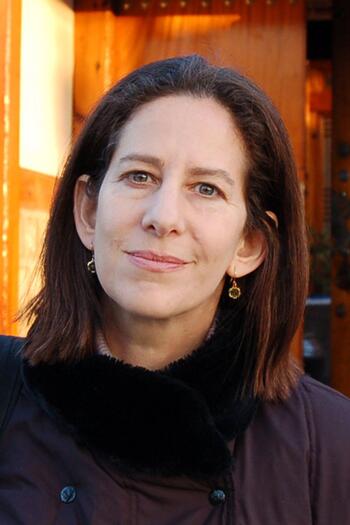
Barbara Demick, has been Beijing bureau chief for the Los Angeles Times since 2008. She has focused on human trafficking, corruption, and minorities, as well as North Korea. Demick is the author of two books -- Nothing to Envy: Ordinary Lives in North Korea and Logavina Street: Life and Death in a Sarajevo Neighborhood. Her work has won awards from the Asia Society, the Overseas Press Club, the American Academy of Diplomacy, among others. Her North Korea book, which has been translated into more than 20 languages, recently won the International Book Award on Human Rights. She is a graduate of Yale and taught a seminar on coverage of repressive regimes at Princeton University. She lives in Beijing with her son Nicholas.Image
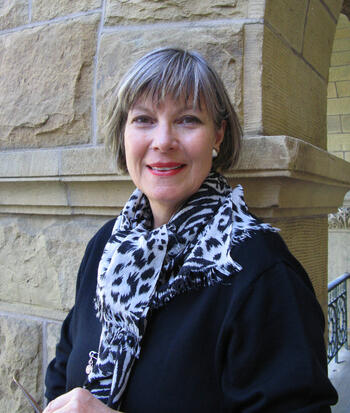
Susan Chira, was named assistant managing editor for news for the New York Times in September 2011. Previously, she had served as foreign editor (since January 2004), and as editorial director of book development (since September 2002). Before that, Chira was the editor of the "Week in Review" section at the Times (since October 1999), after having served as deputy foreign editor of the newspaper (since February 1997). Earlier, she served in a variety of reporting positions including national education correspondent, Tokyo correspondent (from October 1984 until February 1989), metropolitan reporter in the Albany and Stamford bureaus, and reporter for the "Business Day" section.Image

Image
Image
Bechtel Conference Center
Conferences
Visualizing Political Struggle in the Middle East
-
Abstract:
Marking the publication of Lina Khatib's latest book Image Politics in the Middle East: The Role of the Visual in Political Struggle, this seminar focuses on the evolution of political expression in the Middle East over the past decade, highlighting the visual dimension of power struggles between citizens and leaders in Lebanon, Iran, Egypt, Libya, and Syria.
About the speaker:
Lina Khatib is a co-founder and Program Manager of the Program on Arab Reform and Democracy at the Center on Democracy, Development, and the Rule of Law at Stanford University. She joined Stanford University in 2010 from the University of London where she was an Associate Professor. Her research is firmly interdisciplinary and focuses on the intersections of politics, media, and social factors in relation to the politics of the Middle East. She is also a consultant on Middle East politics and media and has published widely on topics such as new media and Islamism, US public diplomacy towards the Middle East, and political media and conflict in the Arab world, as well as on the political dynamics in Lebanon and Iran. She has an active interest in the link between track two dialogue and democratization policy. She is also a Research Associate at SOAS, University of London, and, from 2010-2012, a Research Fellow at the USC Center on Public Diplomacy at the Annenberg School.
Lina is a founding co-editor of the Middle East Journal of Culture and Communication, a multidisciplinary journal concerned with politics, culture and communication in the region, and in 2009 co-edited (with Klaus Dodds) a special issue of the journal on geopolitics, public diplomacy and soft power in the Middle East. She also edited the Journal of Media Practice from 2007-2010. She is one of the core authors of the forthcoming Arab Human Development Report (2012) published by the UNDP.
She has written two books, Filming the Modern Middle East: Politics in the Cinemas of Hollywood and the Arab World (IB Tauris 2006), which is a study of the link between international relations and film, focusing on 25 years of cinematic representation of politics in the region (1980-2005), from the Arab-Israeli conflict to the Gulf War to Islamic fundamentalism, and Lebanese Cinema: Imagining the Civil War and Beyond (IB Tauris 2008). The book takes a socio-political approach to the study of Lebanese cinema over the last thirty years, focusing on the issues of Lebanese national identity, history, sectarian conflict, and memory of the Civil War.
Lina has recently finished writing a book titled Image Politics in the Middle East: The Role of the Visual in Political Struggle for IB Tauris. The book examines the power struggles among states, other political actors, and citizens in the region that are expressed through visuals, and focuses on case studies from Lebanon, Egypt, Syria, Libya, and Iran, with a focus on the role of the image as a political tool in the Arab Spring. She has also recently led a multidisciplinary research project on US public diplomacy in the digital age, in collaboration with the University of Oxford and the University of Wolverhampton, the outcome of which will appear in the Middle East Journal in 2012.
Before joining the academic field, Lina worked in broadcast journalism in Lebanon. She is a frequent commentator on the Middle East in the media with appearances on Al-Jazeera (Arabic and English), CNN, BBC, Sky News and other media outlets across the globe.
Encina Ground Floor Conference Room
Lina Khatib
Program Manager for the Program on Arab Reform and Democracy
Speaker
CDDRL
Seminars