Diplomacy
News Type
News
Date
Paragraphs

SPICE is now accepting applications for the 2019 East Asia Summer Institute for High School Teachers. This free three-day institute is SPICE’s premier professional development opportunity for teachers, combining Stanford’s deep content expertise with SPICE’s award-winning lesson plans.

SPICE/NCTA East Asia Summer Institute for High School Teachers
July 8–10, 2019
Stanford University
Application deadline: May 6, 2019

High school teachers of social studies and language arts are especially encouraged to apply.

Participants will learn from Stanford faculty and other experts about the geography, cultures, politics, economics, history, and literature of East Asia, including a special focus on U.S.–Asia relations and the Asian diaspora in the United States. Teachers will also engage in pedagogy-focused discussions and receive training on several SPICE lesson plans on East Asia, in order to help them translate their new content knowledge to the classroom. Teachers who complete the professional development seminar will be eligible for a $250 stipend and three units of credit from Stanford Continuing Studies, and they will leave Stanford with several extensive SPICE curriculum units in hand.

This professional development opportunity will focus largely on China, Japan, and Korea. For example, last year’s speakers included Kathleen Stephens (former U.S. Ambassador to the Republic of Korea), Peter Duus (renowned Stanford scholar of modern Japan), and Clayton Dube (Director of the USC U.S.-China Institute). The institute also featured speakers like author Chun Yu (who grew up in China’s Cultural Revolution) and Joseph Yasutake (who grew up in a Japanese American internment camp), whose rich personal stories brought history to life. SPICE staff led complementary interactive curriculum training sessions on China’s economic development, the atomic bombing of Hiroshima, South Korean pop culture, and East Asia’s “history wars.”

“Every speaker added a new perspective to historical and contemporary events,” remarked participant Kimberly Gavin. “[The] lectures enriched my knowledge base of topics, curriculum demonstrations gave me ideas for effective lessons in the classroom, small group discussions led to rich conversations about primary and secondary sources, and teacher sharing introduced me to new websites. There wasn’t anything that was done that wasn’t valuable to me… I told my administrator yesterday that this was the best conference I have been to as a teacher.”

More information is available at https://spice.fsi.stanford.edu/fellowships/ncta_for_high_school_teachers. Interested high school teachers can apply directly at https://forms.gle/Jd3PP8EowXyPkAyX9. The application deadline is May 6.

The 2019 East Asia Summer Institute for High School Teachers at Stanford University is made possible by the National Consortium for Teaching about Asia.

Stay informed of SPICE news by joining our email list or following us on Facebook and Twitter.


Please note: Due to unexpected funding reductions this year, we are only able to offer our high school institute in 2019. We hope to bring back our middle school institute next year.


Related articles:


Hero Image
Stanford high school teacher professional development
Participants collaborate at the 2018 East Asia Summer Institute for High School Teachers.
Rylan Sekiguchi
All News button
1
Paragraphs
Kim Jong-un showcased a series of summit meetings throughout 2018, including the first-ever meeting of a North Korean leader with a sitting US president. North Korea improved its strained relations with China and South Korea. The country’s denuclearization has yet to be seen, but these events sparked considerable debate about the future.
 
All Publications button
1
Publication Type
Journal Articles
Publication Date
Journal Publisher
Asian Survey
Authors
Gi-Wook Shin
Rennie Moon
-

RSVPs for this event are now closed. This event is open only to the Stanford community; a valid Stanford ID will be required to enter. 

NOTE: THIS EVENT IS CLOSED TO THE MEDIA

Image
Kaohsiung Mayor Han Kuo-yu

Han Kuo-yu was elected Mayor of Kaohsiung, Taiwan, in November 2018, becoming the first member of the Kuomintang (KMT) to hold that office since 1998. He served as a member of the Legislative Yuan from Taipei County from 1993-2002, and later became the general manager of the Taipei Agricultural Products Marketing Corporation. 

Mr. Han graduated from Soochow University (Taipei) with a degree in English literature, and earned a master’s degree in law from National Chengchi University’s Graduate Institute of East Asian Studies.
 
This event is co-sponsored by the Hoover Institution and the Taiwan Democracy and Security Project, part of the U.S.-Asia Security Initiative
 

Philippines Room
616 Serra Mall
Encina Hall, 3rd Floor, Central (C330)
Stanford, CA 94305

Han Kuo-yu Mayor of Kaohsiung, Taiwan
-

Image
sagan 3x2 copy
The volatile relationship between the United States and North Korea has left the American public questioning whether North Korea is a threat or not. Existing polls suffer from poor design and, thus, provide a confusing and often contradictory narrative of U.S. public opinion on North Korea. As a result, a number of critical questions remain unanswered: Are Americans willing to live with the North Korean nuclear threat? Under what conditions would the public support using military force to accomplish what sanctions and diplomacy have not? What are the characteristics of the individuals willing to risk war against North Korea today? Professor Scott D. Sagan will discuss the findings of a recent survey experiment and offer a unique perspective to the ongoing public debate.

Scott D. Sagan is the Caroline S.G. Munro Professor of Political Science, the Mimi and Peter Haas University Fellow in Undergraduate Education, and Senior Fellow at the Center for International Security and Cooperation and the Freeman Spogli Institute at Stanford University. Before joining the Stanford faculty, Sagan was a lecturer in the Department of Government at Harvard University. From 1984 to 1985, he served as special assistant to the director of the Organization of the Joint Chiefs of Staff in the Pentagon. Sagan has also served as a consultant to the office of the Secretary of Defense and at the Sandia National Laboratory and the Los Alamos National Laboratory. In 2017, he received the International Studies Association’s Susan Strange Award which recognizes the scholar whose “singular intellect, assertiveness, and insight most challenge conventional wisdom and intellectual and organizational complacency" in the international studies community. Sagan was also the recipient of the National Academy of Sciences William and Katherine Estes Award in 2015, for his pioneering work addressing the risks of nuclear weapons accidents and the causes of nuclear proliferation.     


Okimoto Conference Room
Encina Hall, 3rd Floor
616 Serra Street, Stanford

Scott D. Sagan <i>Caroline S.G. Munro Professor of Political Science, Stanford University</i>
Seminars
News Type
News
Date
Paragraphs

On the heels of the abrupt ending of the Hanoi summit between President Trump and North Korean leader Kim Jong Un, with the future of the diplomacy of denuclearization in question, the Korea Program at Shorenstein APARC convened the 11th Koret Workshop, appropriately titled this year “North Korea and the World in Flux.”

The workshop, an annual gathering made possible through generous funding from the Koret Foundation, brought together international experts in Korean affairs for a full day of panel discussions. Participants assessed the U.S.-DPRK summit diplomacy, examined the challenges and opportunities in media coverage related to the negotiations between the two countries, and considered the prospects and pitfalls for summitry with North Korea in the near term. A report on the workshop proceedings is forthcoming.

At a midday public keynote, General Vincent Brooks, U.S. Army (Ret.), spoke before a packed audience about the challenges and opportunities in Korea. Brooks, who recently retired from active duty as the four-star general in command of all U.S. Forces in Korea, provided his unique and very-timely assessment of the situation on the Korean peninsula, and offered his insights on where the diplomacy of denuclearization may go next.

Gen. Brooks’ public address was followed by a conversation with Karl Eikenberry, director of APARC’s U.S.-Asia Security Initative.

Watch the video recording of Gen. Brooks’ remarks:


Hero Image
U.S.-Asia Security Initiative Director Karl Eikenberry, left, questions General Vincent Brooks during 2019 Koret Workshop
Thom Holme, APARC
All News button
1
Authors
Ari Chasnoff
News Type
News
Date
Paragraphs

Secret negotiations between the U.S. government and Iran’s intelligence services over the fate of political prisoners led to a lasting friendship.


When Secretary of State John Kerry first asked Brett McGurk to lead secret negotiations with Iran to secure the release of Jason Rezaian, Brett’s initial reaction was that he did not have the time to give the new mission the attention it deserved.

“I was incredibly busy building this huge coalition [to defeat ISIS], developing a military campaign, and developing a diplomatic campaign plan,” said McGurk at a recent talk he and Jason delivered at Stanford about Jason’s new book, Prisoner.

McGurk was recently appointed the Freeman Spogli Institute’s (FSI) Payne Distinguished Lecturer. Prior to his arrival at Stanford, he served as the Special Presidential Envoy for the Global Coalition to Defeat ISIS at the U.S. Department of State, a position he held in both the Obama and Trump administrations.

Sign up for the FSI newsletter to receive more stories like this directly to your email inbox.

Secretary Kerry was persistent, and Brett agreed to take on the sensitive assignment to secure the release of Jason, his wife Yegi, as well as four other Americans detained in Iran.

Jason, the Washington Post’s bureau chief in Tehran at the time, spent 544 days in the city’s notorious Evin Prison, much of it in solitary confinement.

Jason and Yegi’s ordeal began in June 2014. “[My wife and I] exited the apartment to go down to the garage. The elevator doors opened, and there was a guy standing there with a gun pointed directly at my face,” said Jason.

What ensued was prolonged captivity at the hands of the Iranian intelligence apparatus. But an unexpected friendship was a surprise result.

The diplomatic process to free Jason and the other American political prisoners began in the fall of 2014. Brett started by reading everything he could find about Jason and getting to know him through his brother Ali and other family members.

“As a diplomat working on these very difficult missions in the world, they’re rarely as personal as this,” said Brett. “This became very personal to me. It’s even more so now that I’ve read Jason’s book about what he was experiencing at the time, which really, honestly, I didn’t know.”

Jason was eventually released in January 2016, shortly after the historic nuclear deal, also known as the Joint Comprehensive Plan of Action, between Iran, the United States, and a number of other global powers, was implemented.

Brett boarded the Swiss plane carrying Jason and the other freed prisoners when it finally touched down in Geneva. “It was quite emotional,” said Brett. “I told Jason, ‘you don’t know who I am but we’re glad you’re home. You’re going to be taken good care of.’ Jason and I have become close friends, partially due to the experience that we both had,” he said.

As someone so directly affected by U.S. policy, Jason feels fortunate to have gotten to know Brett in return.

“It would have been impossible to predict the way our lives have criss-crossed the last couple of years,” said Jason. “Yegi and I ended up being Brett and Gina’s (Brett’s wife) neighbor, more or less, in Washington D.C. Even today, we just arrived in town and ran into Gina in the parking lot of the Stanford Mall.”

The book talk with Jason Rezaian and Brett McGurk was co-sponsored by Stanford’s Iranian Studies Program and the Center for International Security and Cooperation’s Middle East Initiative.

Hero Image
conference2
All News button
1
Authors
Noa Ronkin
News Type
News
Date
Paragraphs
U.S. and Chinese trade negotiators remain engaged in intensive talks, although it is yet to be seen whether and when they can strike a final deal. But even if they are able to reach an agreement, in the confrontation between Washington and Beijing “the trade part is incidental: it’s a technology war, not a trade war,” said Ambassador Craig Allen, president of the U.S.-China Business Council (USCBC), speaking at Shorenstien APARC on March 11.
 
Allen has spent much of his career in Asia and dealing with China-related issues from various posts within government, including serving as deputy assistant secretary for China at the U.S. Department of Commerce. As head of USCBC, he now leads an organization representing over 200 American companies doing business with China. He delivered his remarks at a seminar that is part of the China Program’s colloquia series about the future of U.S.-China relations.
 
Allen first brought the audience up to speed on the latest developments in the U.S.-China trade talks, where there are still outstanding questions such as whether the tariffs end now or later and whether a trade agreement will include a unilateral or bilateral enforcement mechanism. He expressed optimism that an agreement would bring significant progress on multiple fronts from the U.S. perspective, including enormous expansion in Chinese purchase of U.S. goods in various sectors; progress over IP rights; progress in eliminating forced technology transfers; improved market access to China; and even renewed commitment to reducing cybertheft. Yet Allen also suggested that these changes, which the Chinese are willing to make, are the ones that they know serve to make their markets more competitive in the end.
 

Structural vs. Cosmetic Changes

Allen was far less confident, however, about the prospects of addressing structural issues with China, that is, areas where the Chinese economy is an outlier to the global economy, violates WTO rules, and greatly differs from OECD norms. This is because these core dimensions touch on the role of the Chinese Communist Party (CCP) in the government and in the economy.

He counted among these structural issues the enormous role of state-owned enterprises (SOEs); the scale of subsidies going to the technology sector and their lack of transparency; prohibitions on foreign investment in sensitive industries like telecommunications and media; the unequal treatment of foreign companies; discriminatory implementation of regulations and the lack of an appeals process; uneven implementation of IP rights; the outsized role of the CCP in the economy; the dominant role of industrial policy; Xi Jinping government’s aggressive techno-nationalism, which is manifested in its calls for indigenous innovation and for self-reliance; and its excessive control over the information space.

“China is willing to make cosmetic changes to these problems,” said Allen, “even muscular changes, but no changes to the skeleton, the core, the system under which the CCP has complete control.”

A trade deal might remove the immediate threat of tariffs as a source of friction between the United States and China, noted Allen, but the essence of the conflict is not about trade: rather, it has to do with technology. “The trade war will morph into a technology war,” he predicted, and 2019 will mark a change in that direction, making life much more complicated for both American—especially Silicon Valley—and Chinese companies.

A Security Dilemma

Both the United States and China are now locked in a “security dilemma,” noted Allen. “One side takes defensive measures which the other side perceives as aggressive measures,” and “we are ratcheting up on national security.” The U.S. Department of Commerce, for instance, is looking to change the ways of dealing with Chinese companies and to expand export controls, extending their scope to a whole new category of “emerging technologies,” regarding whose definition there is intensive debate in Washington. Depending on its scope, a broad definition could jeopardize hundreds of thousands of projects and disrupt investment and global supply chains.

On the Chinese side, Allen noted, there is a parallel process going on. In 2019, we should expect China to similarly impose tightened export controls, he cautioned, cybersecurity law, personal identification information law, data localization requirements, and a strengthened national security law that, among other requirements, will ratchet up audit requirements of American companies seeking market access and the type of companies allowed to have only Chinese-origin equipment.

Both countries have given in to exaggerated security concerns that threaten the global commons, argued Allen. “American and Chinese companies have worked together in the innovation space for years in a beautiful manner. It has been a remarkably productive exercise over the last four decades that brought tremendous benefit for everyone. You can't imagine a company like Apple without China, and you can't imagine China without a company like Apple. Now all this is being put into question.”

The heightened security measures on both sides are fraught with threats to research institutions, businesses, and the innovation ecosystem at large. Academic exchanges, students, and professors will be deemed exports of knowledge subject to technology licensing laws, cautioned Allen. He asked: “How many thousands of collaborative research ventures will be impacted?”

We are entering the technology war at the wrong time, said Allen, just as China is becoming a middle-income country with hundreds of millions of middle-class citizens who want to buy American-made goods and services that U.S. companies want to sell to them. Now is the time to take advantage of China’s transitioning to a consumption-led economy, he claimed, and “become a good friend of Chinese middle-class consumers.”

China is also forging ahead with its innovative economy, particularly in areas such as AI, 5G, and aspects of the life sciences. “This isn’t a one-way street,” emphasized Allen. “We need their brains as much as they need ours […] China will remain an innovative country, and we need to deal with that.”

“This is not a time to panic,” he pointed out, “but a time to reset and ask: ‘What are the rules of the road for technology cooperation and competition? What are the rules for enforcement and how do we enforce the new rules fairly?”

“If China follows its WTO obligations then we would get there,” Allen claimed. “But if President Xi is going to be single-minded about self-reliance and cutting foreign influence on the Chinese economy, then we’re up for rough sledding and 2019 will be a definitive year in determining the course forward.”

Trade deal or no deal, in the U.S.-China race for technology supremacy, he concluded, trust is a commodity in short supply.



Hero Image
U.S. and Chinese officials meeting in the White House as part of ongoing trade negotiations.
U.S. Secretary of the Treasury Steven Mnuchin (2nd L) speaks as U.S. Trade Representative Robert Lighthizer (3rd L) and U.S. Secretary of Commerce Wilbur Ross (L) listen during a meeting between U.S. President Donald Trump and Chinese Vice Premier Liu He (R) in the Oval Office of the White House February 22, 2019 in Washington, DC.
Alex Wong/ Getty Images
All News button
1
-
Image
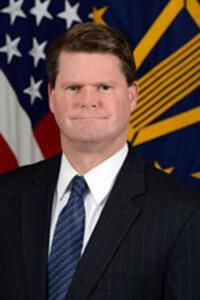
Randy Schriver
Mr. Randall Schriver
is the Assistant Secretary of Defense for Indo-Pacific Security Affairs. Mr. Schriver was appointed as Assistant Secretary of Defense by President Donald Trump on 8 January 2018. Prior to his confirmation, Mr. Schriver was one of five founding partners of Armitage International LLC, a consulting firm that specializes in international business development and strategies. He was also CEO and President of the Project 2049 Institute, a non-profit research organization dedicated to the study of security trend lines in Asia.
 
Previously, Mr. Schriver served as Deputy Assistant Secretary of State for East Asian and Pacific Affairs. He was responsible for China, Taiwan, Mongolia, Hong Kong, Australia, New Zealand, and the Pacific Islands. From 2001 to 2003, he served as Chief of Staff and Senior Policy Advisor to the Deputy Secretary of State. From 1994 to 1998, he worked in the Office of the Secretary of Defense, including as the senior official responsible for the day-to-day management of U.S. bilateral relations with the People's Liberation Army and the bilateral security and military relationships with Taiwan.
 
Prior to his civilian service, he served as an active duty Navy Intelligence Officer from 1989 to 1991, including a deployment in support of Operation Desert Shield/Desert Storm. After active duty, he served in the Navy Reserves for nine years, including as Special Assistant to the Chairman of the Joint Chiefs of Staff and an attaché at U.S. Embassy Beijing and U.S. Embassy Ulaanbaatar.
 
Mr. Schriver has won numerous military and civilian awards from the U.S. government and was presented while at the State Department with the Order of the Propitious Clouds by the President of Taiwan for service promoting U.S.-Taiwan relations. Mr. Schriver received a Bachelor of Arts degree in history from Williams College and a Master of Arts degree from Harvard University.
 

Oksenberg Conference Room
616 Serra Mall
Encina Hall, 3rd Floor, Central S350
Stanford, CA 94305

Randall Schriver Assistant Secretary of Defense for Indo-Pacific Security Affairs
-

RSVP required

NOTE: THIS EVENT IS CLOSED TO THE MEDIA 

No recording will be allowed during the program. RSVP required for admission. No walk-ins.

Experts talk about a new Cold War between China and the United States. The world’s two largest economies are in open trade conflict, engaged in technological competition and stoking geopolitical uncertainty. The Oksenberg Conference will explore the causes that underlie today’s intensified conflict between the United States and China. We ask: What has precipitated the confrontational approach that currently unites U.S. policy towards China? What is the future of our strategic competition in the technological, economic and security realms? If U.S.-China rivalry is allowed to escalate, what might its implications be for our international liberal order? If a “new” Cold War is forming, how might it follow or diverge from the “old” Soviet-era Cold War?

Image
2019 Oksenberg Conference
The Oksenberg Conference
, held annually honors the legacy of the late Professor Michel Oksenberg (1938–2001) who was a senior fellow at Shorenstein APARC and the Freeman Spogli Institute for International Studies. Professor Oksenberg also served as a key member of the National Security Council when the United States normalized relations with China, and consistently urged that the United States engage with Asia in a more considered manner. In tribute, the Oksenberg Lecture recognizes distinguished individuals who have helped to advance understanding between the United States and the nations of the Asia-Pacific.
 
Agenda
 
2:35-3:05 PM    Conversation with Dr. Condoleezza Rice, former U.S. Secretary of State and National Security Advisor
3:05-3:30 PM    Audience Q & A
3:30-3:45 PM    Break
3:45-4:25 PM    Panel discussion with Prof. David M. Lampton and Amb. Michael A. McFaul
4:25-5:00 PM    Audience Q & A


Speakers

Image
David M. Lampton
David M. Lampton is Oksenberg-Rohlen Fellow and Research Scholar at FSI and affiliated with Walter H. Shorenstein Asia-Pacific Research Center (Shorenstein APARC).  He also is the Hyman Professor of China Studies and Director of the China Studies Program at the Johns Hopkins School of Advanced International Studies (SAIS) Emeritus.  Dr. Lampton's current book project is focused on the development of high-speed railways from southern China to Singapore.  He is the author of a dozen books and monographs, including Following the Leader: Ruling China, from Deng Xiaoping to Xi Jinping (University of California Press, 2014, and second edition 2019) and The Three Faces of Chinese Power: Might, Money, and Minds (University of California Press, 2008).  He has testified at multiple congressional and commission sessions and published numerous articles, essays, book reviews, and opinion pieces in many venues popular and academic in both the western world and in Chinese-speaking societies, including Foreign Affairs, Foreign Policy, The American Political Science Review, The China Quarterly, The New York Times, The Washington Post,and many others.

Formerly President of the National Committee on United States-China Relations, Professor Lampton consults with government, business, and social sector organizations, and has served on the boards of several non-governmental and educational organizations, including the Asia Foundation for which he served as chairman.  The recipient of many academic awards, he is an Honorary Senior Fellow of the American Studies Institute of the Chinese Academy of Social Sciences, former Gilman Scholar at Johns Hopkins, and the inaugural winner of the Scalapino Prize in 2010, awarded by the National Bureau of Asian Research and the Woodrow Wilson International Center for Scholars in recognition of his exceptional contributions to America’s understanding of the vast changes underway in Asia.


Image
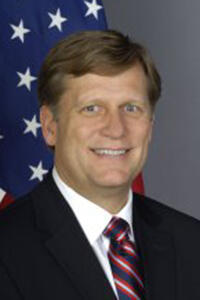
Amb. Michael McFaul
Michael McFaul is the Ken Olivier and Angela Nomellini Professor of International Studies in Political Science; Director and Senior Fellow at the Freeman Spogli Institute for International Studies (FSI); and the Peter and Helen Bing Senior Fellow at the Hoover Institution, all at Stanford University.  He was also the Distinguished Mingde Faculty Fellow at the Stanford Center at Peking University from June to August of 2015.  He joined the Stanford faculty in 1995.  Professor McFaul is also an analyst for NBC News and a contributing columnist to The Washington Post.  

Dr. McFaul served for five years in the Obama administration, first as Special Assistant to the President and Senior Director for Russian and Eurasian Affairs at the National Security Council at the White House (2009-2012), and then as U.S. Ambassador to the Russian Federation (2012-2014).  He has authored several books, most recently TheNew York Timesbestseller, From Cold War to Hot Peace: An American Ambassador in Putin’s Russia.  Earlier books include Advancing Democracy Abroad: Why We Should, How We Can; Transitions to Democracy: A Comparative Perspective(eds. with Kathryn Stoner); Power and Purpose: American Policy toward Russia after the Cold War (with James Goldgeier); and Russia’s Unfinished Revolution: Political Change from Gorbachev to Putin.  


Image
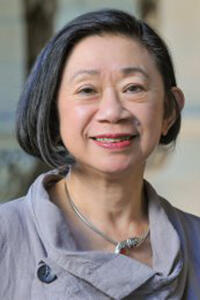
Jean Oi

Jean C. Oi is the William Haas Professor of Chinese Politics in the Department of Political Science and a Senior Fellow of FSI at Stanford University.  She is the founding director of the Stanford China Program at Shorenstein APARC and is the founding Lee Shau Kee Director of the Stanford Center at Peking University.  Professor Oi has published extensively on political economy and the process of reform in China.  Her books include Zouping Revisited:  Adaptive Governance in a Chinese County, co-edited with Steven Goldstein (2018); and Challenges in the Process of China’s Urbanization, co-edited with Karen Eggleston and Wang Yiming (2017); Rural China Takes Off (1999); Property Rights and Economic Reform in China (1999), co-edited with Andrew Walder; and State and Peasant in Contemporary China (1989).  Professor Oi also has an edited volume, China’s Path to the Future: Challenges, Constraints, and Choices, co-edited with Dr. Thomas Fingar (forthcoming, Stanford University Press).  Her recent articles include “Unpacking the Patterns of Corporate Restructuring during China’s SOE Reform,” co-authored with Xiaojun Li in Economic and Political Studies (2018); and “Reflections on 40 Years of Rural Reform,” in Jacques deLisle and Avery Goldstein, eds., Reform and Opening:  40 Years and Counting, forthcoming.  Her current research centers on fiscal reform and local government debt as well as continuing SOE reforms in China.


Image
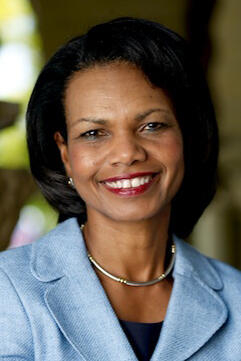
Secretary Condoleezza Rice

Secretary Condoleezza Rice is currently the Denning Professor in Global Business and the Economy at the Stanford Graduate School of Business; the Thomas and Barbara Stephenson Senior Fellow on Public Policy at the Hoover Institution; and a professor of Political Science at Stanford University. She is also a founding partner of RiceHadleyGates, LLC.

From January 2005 to 2009, Rice served as the 66th Secretary of State of the United States, the second woman and first African American woman to hold the post. Rice also served as President George W. Bush’s Assistant to the President for National Security Affairs (National Security Advisor) from January 2001 to 2005, the first woman to hold the position.

Rice served as Stanford University’s Provost from 1993 to 1999, during which she was the institution's chief budget and academic officer. As Provost, she was responsible for a $1.5 billion annual budget and the academic program involving 1,400 faculty members and 14,000 students. In 1997, she also served on the Federal Advisory Committee on Gender -­- Integrated Training in the Military.

From 1989 through March 1991, Rice served on President George H.W. Bush’s National Security Council staff. She served as Director; Senior Director of Soviet and East European Affairs; and, Special Assistant to the President for National Security Affairs. In 1986, while an international affairs fellow of the Council on Foreign Relations, Rice also served as Special Assistant to the Director of the Joint Chiefs of Staff.

As professor of Political Science, Rice has been on the Stanford faculty since 1981 and has won two of the highest teaching honors – the 1984 Walter J. Gores Award for Excellence in Teaching and the 1993 School of Humanities and Sciences Dean's Award for Distinguished Teaching.

She has authored and coauthored numerous books, including three bestsellers, Democracy: Stories from the Long Road to Freedom (2017); No Higher Honor: A Memoir of My Years in Washington (2011); and Extraordinary, Ordinary People: A Memoir of Family (2010). She also wrote Germany Unified and Europe Transformed: A Study in Statecraft (1995) with Philip Zelikow; The Gorbachev Era (1986) with Alexander Dallin; and Uncertain Allegiance: The Soviet Union and the Czechoslovak Army (1984).

In  1991,  Rice  cofounded  the  Center for  a  New  Generation  (CNG),  an  innovative,  after-­school academic enrichment program for students in East Palo Alto and East Menlo Park, California. In 1996, CNG merged with the Boys and Girls Club of the Peninsula (an affiliate club of the Boys and Girls Clubs of America). CNG has since expanded to local BGCA chapters in Birmingham, Atlanta, and Dallas. She remains an active proponent of an extended learning day through after school programs.

Since 2009, Rice has served as a founding partner at Rice Hadley Gates, LLC, an international strategic consulting firm based in Silicon Valley and Washington, D.C. The firm works with senior executives of major companies to implement strategic plans and expand in emerging markets. Other partners include former National Security Advisor Stephen J. Hadley and former Secretary of Defense Robert M. Gates.

Rice currently serves on the boards of Dropbox, an online-­storage technology company; C3, an energy software company; and Makena Capital, a private endowment firm. In addition, she is vice chair of the board of governors of the Boys and Girls Clubs of America; a member of the board of the Foundation for  Excellence in Education; and a trustee of the Aspen Institute. Previously, Rice served on various additional boards, including those of: the George W. Bush Institute; the Commonwealth Club; KiOR, Inc.; the Chevron Corporation; the Charles Schwab Corporation; the Transamerica Corporation; the Hewlett-­Packard Company; the University of Notre Dame; the John F. Kennedy Center for the Performing Arts; and, the San Francisco Symphony Board of Governors.

In 2013, Rice was appointed to the College Football Playoff Committee, formerly the Bowl Championship Series.

Born in Birmingham, Alabama, Rice earned her bachelor's degree in political science, cum laude and Phi Beta Kappa, from the University of Denver; her master’s from the University of Notre Dame; and her Ph.D. from the Graduate School of International Studies at the University of Denver.

Rice is a Fellow of the American Academy of Arts and Sciences and has been awarded fifteen honorary doctorates. She currently resides in Stanford, California.


Bechtel Conference Center
616 Serra Mall
Encina Hall, Central, 1st Floor
Stanford, CA 94305

David M. Lampton <br><i>Oksenberg-Rohlen Fellow, FSI, Stanford University</i><br><br>
Michael A. McFaul <br><i>Director, Freeman Spogli Institute for International Studies (FSI); Professor, Political Science, Stanford University; Senior Fellow, Hoover Institution </i><br><br>
Jean C. Oi (Moderator) <br><i>Director, Stanford China Program; William Haas Professor of Chinese Studies, Stanford University</i><br><br>
Secretary Condoleezza Rice <br><i>The Denning Professor in Global Business and the Economy, Stanford Graduate School of Business; The Thomas and Barbara Stephenson Senior Fellow on Public Policy, Hoover Institution; Professor of Political Science, Stanford University</i><br><br>
Lectures
Subscribe to Diplomacy