Democracy
Authors
News Type
Commentary
Date
Paragraphs

As a new U.S. administration assumes office next year, it will face numerous policy challenges in the Asia-Pacific, a region that accounts for nearly 60 percent of the world’s population and two-thirds of global output.

Despite tremendous gains over the past two decades, the Asia-Pacific region is now grappling with varied effects of globalization, chief among them, inequities of growth, migration and development and their implications for societies as some Asian economies slow alongside the United States and security challenges remain at the fore.

Seven scholars from Stanford’s Shorenstein Asia-Pacific Research Center (APARC) offered views on policy challenges in Asia and some possible directions for U.S.-Asia relations during the next administration.

View the scholars' commentary by scrolling down the page or click on the individual links below to jump to a certain topic.

U.S.-China relations

U.S.-Japan relations

North Korea

Southeast Asia and the South China Sea

Global governance

Population aging .

Trade


U.S.-China relations

By Thomas Fingar

Image
thomasfingar 3x4
Managing the United States’ relationship with China must be at the top of the new administration’s foreign policy agenda because the relationship is consequential for the region, the world and American interests. Successful management of bilateral issues and perceptions is increasingly difficult and increasingly important.

Alarmist predictions about China’s rise and America’s decline mischaracterize and overstate tensions in the relationship. There is little likelihood that the next U.S. administration will depart from the “hedged engagement” policies pursued by the last eight U.S. administrations. America’s domestic problems cannot be solved by blaming China or any other country. Indeed, they can best be addressed through policies that have contributed to peace, stability and prosperity.

Strains in U.S.-China relations require attention, not radical shifts in policy. China is not an enemy and the United States does not wish to make it one. Nor will or should the next administration resist changes to the status quo if change can better the rules-based international order that has served both countries well. Washington’s objective will be to improve the liberal international system, not to contain or constrain China’s role in that system.

The United States and China have too much at stake to allow relations to become dangerously adversarial, although that is unlikely to happen. But this is not a reason to be sanguine. In the years ahead, managing the relationship will be difficult because key pillars of the relationship are changing. For decades, the strongest source of support for stability in U.S.-China relations has been the U.S. business community, but Chinese actions have alienated this key group and it is now more likely to press for changes than for stability. A second change is occurring in China. As growth slows, Chinese citizens are pressing their government to make additional reforms and respond to perceived challenges to China’s sovereignty.

The next U.S. administration is more likely to continue and adapt current policies toward China and Asia more broadly than to pursue a significantly different approach. Those hoping for or fearing radical changes in U.S. policy will be disappointed..

Thomas Fingar is a Shorenstein Distinguished Fellow and former chairman of the U.S. National Intelligence Council. He leads a research project on China and the World that explores China’s relations with other countries.


U.S.-Japan relations

By Daniel Sneider

Image
danielsneider 3x4
U.S.-Japan relations have enjoyed a remarkable period of strengthened ties in the last few years. The passage of new Japanese security legislation has opened the door to closer defense cooperation, including beyond Japan’s borders. The Japan-Korea comfort women agreement, negotiated with American backing, has led to growing levels of tripartite cooperation between the U.S. and its two principal Northeast Asian allies. And the negotiation of a bilateral agreement within the Trans-Pacific Partnership (TPP) talks brought trade and investment policy into close alignment. The U.S. election, however, brings some clouds to this otherwise sunny horizon.

Three consecutive terms held by the same party would certainly preserve the momentum behind the ‘pivot to Asia’ strategy of the last few years, especially on the security front. Still there are some dangers ahead. If Japan moves ahead to make a peace treaty with Russia, resolving the territorial issue and opening a flow of Japanese investment into Russia, that could be a source of tension. The new administration may also want to mend fences early with China, seeking cooperation on North Korea and avoiding tensions in Southeast Asia.

The big challenge, however, will be guiding the TPP through Congress. While there is a strong sentiment within policy circles in favor of rescuing the deal, perhaps through some kind of adjustment of the agreement, insiders believe that is highly unlikely. The Sanders-Warren wing of the Democratic party has been greatly strengthened by this election and they will be looking for any sign of retreat on TPP. Mrs. Clinton has an ambitious agenda of domestic policy initiatives – from college tuition and the minimum wage to immigration reform – on which she will need their support. One idea now circulating quietly in policy circles is to ‘save’ the TPP, especially its strategic importance, by separating off a bilateral Japan-U.S. Free Trade Agreement. Tokyo is said to be opposed to this but Washington may put pressure on for this option, leaving the door open to a full TPP down the road. .

Daniel Sneider is the associate director for research and a former foreign correspondent. He is the co-author of Divergent Memories: Opinion Leaders and the Asia-Pacific Wars (Stanford University Press, 2016) and is currently writing about U.S.-Japan security issues.


North Korea

By Kathleen Stephens

Image
kathleenstephens 3x4
North Korea under Kim Jong Un has accelerated its campaign to establish itself as a nuclear weapons state. Two nuclear tests and multiple missile firings have occurred in 2016. More tests, or other provocations, may well be attempted before or shortly after the new American president is inaugurated next January. The risk of conflict, whether through miscalculation or misunderstanding, is serious. The outgoing and incoming administrations must coordinate closely on policy and messaging about North Korea with each other and with Asian allies and partners.

From an American foreign policy perspective, North Korea policy challenges will be inherited by the next president as “unfinished business,” unresolved despite a range of approaches spanning previous Republican and Democratic administrations. The first months in a new U.S. president’s term may create a small window to explore potential new openings. The new president should demonstrate at the outset that North Korea is high on the new administration’s priority list, with early, substantive exchanges with allies and key partners like China to affirm U.S. commitment to defense of its allies, a denuclearized Korean Peninsula and the vision agreed to at the Six-Party Talks in the September 2005 Joint Statement of Principles. Early messaging to Pyongyang is also key – clearly communicating the consequences of further testing or provocations, but at the same time signaling the readiness of the new administration to explore new diplomatic approaches. The appointment of a senior envoy, close to the president, could underscore the administration’s seriousness as well as help manage the difficult policy and political process in Washington itself.

2017 is a presidential election year in South Korea, and looks poised to be a particularly difficult one. This will influence Pyongyang’s calculus, as will the still-unknown impact of continued international sanctions. The challenges posed by North Korea have grown greater with time, but there are few new, untried options acceptable to any new administration in Washington. Nonetheless, the new administration must explore what is possible diplomatically and take further steps to defend and deter as necessary. .

Kathleen Stephens is the William J. Perry Distinguished Fellow and former U.S. ambassador to the Republic of Korea. She is currently writing and researching on U.S. diplomacy in Korea.


Southeast Asia and the South China Sea

By Donald K. Emmerson

Image
donaldkemmerson 3x4
The South China Sea is presently a flashpoint, prospectively a turning point, and actually the chief challenge to American policy in Southeast Asia. The risk of China-U.S. escalation makes it a flashpoint. Future historians may call it a turning point if—a big if—China’s campaign for primacy in it and over it succeeds and heralds (a) an eventual incorporation of some portion of Southeast Asia into a Chinese sphere of influence, and (b) a corresponding marginalization of American power in the region.

A new U.S. administration will be inaugurated in January 2017. Unless it wishes to adapt to such outcomes, it should:

(1) renew its predecessor’s refusal to endorse any claim to sovereignty over all, most, or some of the South China Sea and/or its land features made by any of the six contending parties—Brunei, China, Malaysia, the Philippines, Taiwan, Vietnam—pending the validation of such a claim under international law.

(2) strongly encourage all countries, including the contenders, to endorse and implement the authoritative interpretation of the U.N. Convention on the Law of the Sea (UNCLOS) issued on July 12, 2016, by an UNCLOS-authorized court. Washington should also emphasize that it, too, will abide by the judgment, and will strive to ensure American ratification of UNCLOS.

(3) maintain its commitment to engage in publicly acknowledged freedom of navigation operations (FONOPs) in the South China Sea on a regular basis. Previous such FONOPs were conducted in October 2015 by the USS Lassen, in January 2016 by the USS Wilbur, in May 2016 by the USS Lawrence, and in October 2016 by the USS Decatur. The increasingly lengthy intervals between these trips, despite a defense official’s promise to conduct them twice every quarter, has encouraged doubts about precisely the commitment to freedom of navigation that they were meant to convey.

(4) announce what has hitherto been largely implicit: The FONOPs are not being done merely to brandish American naval prowess. Their purpose is to affirm a core geopolitical position, namely, that no single country, not the United States, nor China, nor anyone else, should exercise exclusive or exclusionary control over the South China Sea.

(5) brainstorm with Asian-Pacific and European counterparts a range of innovative ways of multilateralizing the South China Sea as a shared heritage of, and a resource for, its claimants and users alike. .

Donald K. Emmerson is a senior fellow emeritus and director of the Southeast Asia Program. He is currently editing a Stanford University Press book that examines China’s relations with Southeast Asia.


Global governance

By Phillip Y. Lipscy

Image
phillipylipscy 3x4
The basic features of the international order established by the United States after the end of World War II have proven remarkably resilient for over 70 years. The United States has played a pivotal role in East Asia, supporting the region’s rise by underpinning geopolitical stability, an open world economy and international institutions that facilitate cooperative relations. Absent U.S. involvement, it is highly unlikely that the vibrant, largely peaceful region we observe today would exist. However, the rise of Asia also poses perhaps the greatest challenge for the U.S.-supported global order since its creation.

Global economic activity is increasingly shifting toward Asia – most forecasts suggest the region will account for about half of the global economy by the midpoint of the 21st century. This shift is creating important incongruities within the global architecture of international organizations, such as the United Nations, International Monetary Fund and World Bank, which are a central element of the U.S.-based international order and remain heavily tilted toward the West in their formal structures, headquarter locations and personnel compositions. This status quo is a constant source of frustration for policymakers in the region, who seek greater voice consummate with their newfound international status. 

The next U.S. administration should prioritize reinvigoration of the global architecture.  One practical step is to move major international organizations toward multiple headquarter arrangements, which are now common in the private sector – this will mitigate the challenges of recruiting talented individuals willing to spend their careers in distant headquarters in the West. The United States should join the Asian Infrastructure Investment Bank, created by China, to tie the institution more closely into the existing architecture, contribute to its success and send a signal that Asian contributions to international governance are welcome. The Asian rebalance should be continued and deepened, with an emphasis on institution-building that reassures our Asian counterparts that the United States will remain a Pacific power. .

Philip Y. Lipscy is an assistant professor of political science and the Thomas Rohlen Center Fellow. He is the author of the forthcoming book Renegotiating the World Order: Institutional Change in International Relations (Cambridge University Press, 2017).


Population aging

By Karen Eggleston

Image
kareneggleston 3x4
Among the most pressing policy challenges in Asia, U.S. policymakers should bear in mind the longer-term demographic challenges underlying Asia’s economic and geopolitical resurgence. East Asia and parts of Southeast Asia face the headwinds of population aging. Japan has the largest elderly population in the world and South Korea’s aging rate is even more rapid. By contrast, South Asian countries are aging more gradually and face the challenge of productively employing a growing working-age population and capturing their “demographic dividend” (from declining fertility outweighing declining mortality). Navigating these trends will require significant investment in the human capital of every child, focused on health, education and equal opportunity.

China’s recent announcement of a universal two-child policy restored an important dimension of choice, but it will not fundamentally change the trajectory of a shrinking working-age population and burgeoning share of elderly. China’s population aged 60 and older is projected to grow from nearly 15 percent today to 33 percent in 2050, at which time China’s population aged 80 and older will be larger than the current population of France. This triumph of longevity in China and other Asian countries, left unaddressed, will strain the fiscal integrity of public and private pension systems, while urbanization, technological change and income inequality interact with population aging by threatening the sustainability and perceived fairness of conventional financing for many social programs.

Investment in human capital and innovation in social and economic institutions will be central to addressing the demographic realities ahead. The next administration needs to support those investments as well as help to strengthen public health systems and primary care to control chronic disease and prepare for the next infectious disease pandemic, many of which historically have risen in Asia. .

Karen Eggleston is a senior fellow and director of the Asia Health Policy Program. She is the editor of the recently published book Policy Challenges from Demographic Change in China and India (Brookings Institution Press/Shorenstein APARC, 2016).


Trade

By Yong Suk Lee

Image
Portrait of Yong Suk Lee.
Trade policy with Asia will be one of the main challenges of the new administration. U.S. exports to Asia is greater than that to Europe or North America, and overall, U.S. trade with Asia is growing at a faster rate than with any other region in the world. In this regard, the new administration’s approach to the Trans-Pacific Partnership will have important consequences to the U.S. economy.

Anti-globalization sentiment has ballooned in the past two years, particularly in regions affected by the import competition from and outsourcing to Asia. However, some firms and workers have benefited from increasing trade openness. The U.S.-Korea Free Trade Agreement of 2012, for example, led to substantial growth in exports in the agricultural, automotive and pharmaceutical sectors. Yet, there are winners and losers from trade agreements. Using an economist’s hypothetical perspective, one would assume firms and workers in the losing industry move to the exporting sector and take advantage of the gains from trade. In reality, adjustment across industries and regions from such movements are slow. Put simply, a furniture worker in North Carolina who lost a job due to import competition cannot easily assume a new job in the booming high-tech industry in California. They would require high-income mobility and a different skill set.

Trade policy needs to focus on facilitating the transition of workers to different industries and better train students to prepare for potential mobility in the future. Trade policy will also be vital in determining how international commerce is shaped. As cross-border e-commerce increases, it will be in the interest of the United States to participate in and lead negotiations that determine future trade rules. The Trans-Pacific Partnership should not simply be abandoned. The next administration should educate both policymakers and the public about the effects of trade openness and the economic and strategic importance of trade agreements for the U.S. economy.

Yong Suk Lee is the SK Center Fellow and deputy director of Korea Program. He leads a research project focused on Korean education, entrepreneurship and economic development.

Hero Image
urbanization beijing
A woman walks past a construction site in Beijing, China, Sept. 2014.
GREG BAKER/AFP/Getty Images
All News button
1

[[{"fid":"224390","view_mode":"crop_870xauto","fields":{"format":"crop_870xauto","field_file_image_description[und][0][value]":"","field_file_image_alt_text[und][0][value]":"Image of Joan Scott event Poster","field_file_image_title_text[und][0][value]":"Image of Joan Scott event Poster","field_credit[und][0][value]":"","field_caption[und][0][value]":"","field_related_image_aspect[und][0][value]":"","thumbnails":"crop_870xauto"},"type":"media","attributes":{"alt":"Image of Joan Scott event Poster","title":"Image of Joan Scott event Poster","width":"870","class":"media-element file-crop-870xauto"}}]]

Lecture by Joan Wallach Scott, Harold F. Linder Professor of Social Science at the Institute for Advanced Studies.

Sponsored by the Abbasi Program in Islamic Studies, Clayman Institute for Gender Research, Humanities Center, France-Stanford Center for Interdisciplinary Studies, The Europe Center, History Department, Department of Anthropology.

Levinthal Hall

Stanford Humanities Center

Joan Wallach Scott Harold F. Linder Professor of Social Science speaker Institute for Advanced Studies
Lectures
-

[[{"fid":"224390","view_mode":"crop_870xauto","fields":{"format":"crop_870xauto","field_file_image_description[und][0][value]":"","field_file_image_alt_text[und][0][value]":"Joan Scott event poster","field_file_image_title_text[und][0][value]":"Joan Scott event poster","field_credit[und][0][value]":"","field_caption[und][0][value]":"","field_related_image_aspect[und][0][value]":"","thumbnails":"crop_870xauto"},"type":"media","attributes":{"alt":"Joan Scott event poster","title":"Joan Scott event poster","width":"870","class":"media-element file-crop-870xauto"}}]]

Levinthal Hall

Stanford Humanities Center


Lectures
News Type
News
Date
Paragraphs

Listen to Ezra Klein's interview with CDDRL Mosbacher Director Francis Fukuyama about American democracy. Fukuyama explains how interest groups found their way to block the legislature that is not beneficial to them and how "vetocracy" can go as deep as to the local level. Listen here

Hero Image
gettyimages 617723040 Spencer Platt/Getty Images
All News button
1
-

**We are no longer accepting RSVPs. This event is at capacity. Please join us via Facebook Live.**


The Presidential Election of 2016 has been unlike any in modern American history. How will voters decide between Donald J. Trump and Hillary Clinton on Election Day? What issues dominated the election in the final days of each campaign, and what consequences will this campaign have on the Republican and Democratic parties? What does this election mean for political polarization, campaign finance reform, and the rise of social media? 

Join a panel discussion with Larry Diamond, Francis Fukuyama, Bruce Cain, and Nate Persily of the Program on American Democracy in Comparative Perspective at Stanford's Center on Democracy, Development, and the Rule of Law after the election. The panel will discuss  the candidates, the campaigns, and the implications for American democracy. 

And join the conversation on Twitter: @StanfordCDDRL #CDDRLrecap

Speaker(s) Bio:

Image
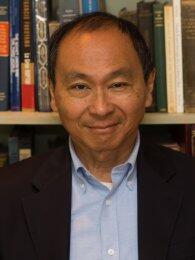
francis fukuyama

Francis Fukuyama is the Olivier Nomellini Senior Fellow at the Freeman Spogli Institute for International Studies (FSI) and the Mosbacher Director of FSI's Center on Democracy, Development, and the Rule of Law (CDDRL).  He is also a professor by courtesy in the Department of Political Science. He was previously at the Paul H. Nitze School of Advanced International Studies (SAIS) of Johns Hopkins University, where he was the Bernard L. Schwartz Professor of International Political Economy and director of SAIS' International Development program.


Image
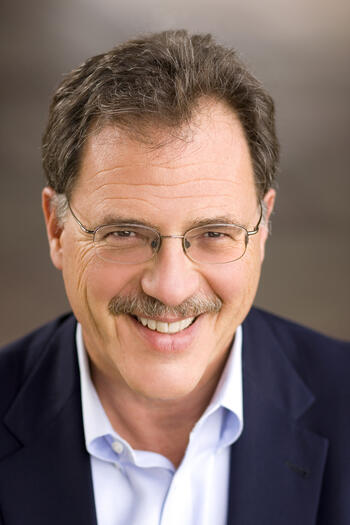
diamond larry smile

Larry Diamond is a senior fellow at the Hoover Institution and at the Freeman Spogli Institute for International Studies. He also serves as the Peter E. Haas Faculty Director of the Haas Center for Public Service at Stanford. For more than six years, he directed FSI’s Center on Democracy, Development, and the Rule of Law, and he continues to lead its programs on Liberation Technology, Arab Reform and Democracy, and Democracy in Taiwan.  He is the founding co-editor of the Journal of Democracy and also serves as Senior Consultant at the International Forum for Democratic Studies of the National Endowment for Democracy.


Image
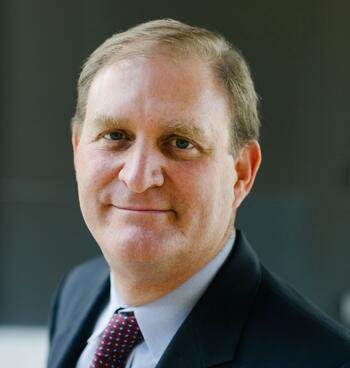
bruce cain

Bruce E. Cain is a Professor of Political Science at Stanford University and Director of the Bill Lane Center for the American West. He received a BA from Bowdoin College (1970), a B Phil. from Oxford University (1972) as a Rhodes Scholar, and a Ph D from Harvard University (1976). He taught at Caltech (1976-89) and UC Berkeley (1989-2012) before coming to Stanford. Professor Cain was Director of the Institute of Governmental Studies at UC Berkeley from 1990-2007 and Executive Director of the UC Washington Center from 2005-2012.


Image
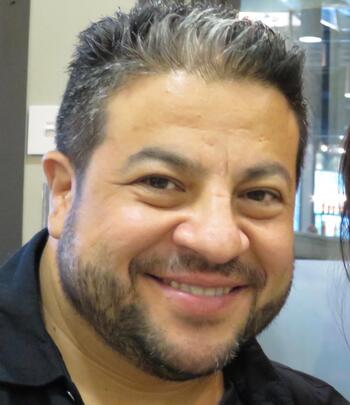
nate persily


Nathaniel Persily is a James B. McClatchy Professor and Professor, by courtesy, of Political Science and of Communication at Stanford Law School.  He received J.D. from Stanford Law School in 1998 and M.A. in 1994; PhD in Political Science in 2002 from U.C. Berkeley.  He served as Senior Research Director at the Presidential Commission on Election Administration June 2013-2014.


CDDRL
Stanford University
Encina Hall, C147
616 Jane Stanford Way
Stanford, CA 94305-6055

(650) 724-6448 (650) 723-1928
0
Mosbacher Senior Fellow in Global Democracy at the Freeman Spogli Institute for International Studies
William L. Clayton Senior Fellow at the Hoover Institution
Professor, by courtesy, of Political Science and Sociology
diamond_encina_hall.png MA, PhD

Larry Diamond is the William L. Clayton Senior Fellow at the Hoover Institution, the Mosbacher Senior Fellow in Global Democracy at the Freeman Spogli Institute for International Studies (FSI), and a Bass University Fellow in Undergraduate Education at Stanford University. He is also professor by courtesy of Political Science and Sociology at Stanford, where he lectures and teaches courses on democracy (including an online course on EdX). At the Hoover Institution, he co-leads the Project on Taiwan in the Indo-Pacific Region and participates in the Project on the U.S., China, and the World. At FSI, he is among the core faculty of the Center on Democracy, Development and the Rule of Law, which he directed for six and a half years. He leads FSI’s Israel Studies Program and is a member of the Program on Arab Reform and Development. He also co-leads the Global Digital Policy Incubator, based at FSI’s Cyber Policy Center. He served for 32 years as founding co-editor of the Journal of Democracy.

Diamond’s research focuses on global trends affecting freedom and democracy and on U.S. and international policies to defend and advance democracy. His book, Ill Winds: Saving Democracy from Russian Rage, Chinese Ambition, and American Complacency, analyzes the challenges confronting liberal democracy in the United States and around the world at this potential “hinge in history,” and offers an agenda for strengthening and defending democracy at home and abroad.  A paperback edition with a new preface was released by Penguin in April 2020. His other books include: In Search of Democracy (2016), The Spirit of Democracy (2008), Developing Democracy: Toward Consolidation (1999), Promoting Democracy in the 1990s (1995), and Class, Ethnicity, and Democracy in Nigeria (1989). He has edited or coedited more than fifty books, including China’s Influence and American Interests (2019, with Orville Schell), Silicon Triangle: The United States, China, Taiwan the Global Semiconductor Security (2023, with James O. Ellis Jr. and Orville Schell), and The Troubling State of India’s Democracy (2024, with Sumit Ganguly and Dinsha Mistree).

During 2002–03, Diamond served as a consultant to the US Agency for International Development (USAID) and was a contributing author of its report, Foreign Aid in the National Interest. He has advised and lectured to universities and think tanks around the world, and to the World Bank, the United Nations, the State Department, and other organizations dealing with governance and development. During the first three months of 2004, Diamond served as a senior adviser on governance to the Coalition Provisional Authority in Baghdad. His 2005 book, Squandered Victory: The American Occupation and the Bungled Effort to Bring Democracy to Iraq, was one of the first books to critically analyze America's postwar engagement in Iraq.

Among Diamond’s other edited books are Democracy in Decline?; Democratization and Authoritarianism in the Arab WorldWill China Democratize?; and Liberation Technology: Social Media and the Struggle for Democracy, all edited with Marc F. Plattner; and Politics and Culture in Contemporary Iran, with Abbas Milani. With Juan J. Linz and Seymour Martin Lipset, he edited the series, Democracy in Developing Countries, which helped to shape a new generation of comparative study of democratic development.

Download full-resolution headshot; photo credit: Rod Searcey.

Former Director of the Center on Democracy, Development and the Rule of Law
Faculty Chair, Jan Koum Israel Studies Program
Date Label
Senior Fellow Hoover Institution

Encina Hall, C148
616 Jane Stanford Way
Stanford, CA 94305

0
Olivier Nomellini Senior Fellow at the Freeman Spogli Institute for International Studies
Director of the Ford Dorsey Master's in International Policy
Research Affiliate at The Europe Center
Professor by Courtesy, Department of Political Science
yff-2021-14290_6500x4500_square.jpg

Francis Fukuyama is the Olivier Nomellini Senior Fellow at Stanford University's Freeman Spogli Institute for International Studies (FSI), and a faculty member of FSI's Center on Democracy, Development and the Rule of Law (CDDRL). He is also Director of Stanford's Ford Dorsey Master's in International Policy, and a professor (by courtesy) of Political Science.

Dr. Fukuyama has written widely on issues in development and international politics. His 1992 book, The End of History and the Last Man, has appeared in over twenty foreign editions. His book In the Realm of the Last Man: A Memoir will be published in fall 2026.

Francis Fukuyama received his B.A. from Cornell University in classics, and his Ph.D. from Harvard in Political Science. He was a member of the Political Science Department of the RAND Corporation, and of the Policy Planning Staff of the US Department of State. From 1996-2000 he was Omer L. and Nancy Hirst Professor of Public Policy at the School of Public Policy at George Mason University, and from 2001-2010 he was Bernard L. Schwartz Professor of International Political Economy at the Paul H. Nitze School of Advanced International Studies, Johns Hopkins University. He served as a member of the President’s Council on Bioethics from 2001-2004. He is editor-in-chief of American Purpose, an online journal.

Dr. Fukuyama holds honorary doctorates from Connecticut College, Doane College, Doshisha University (Japan), Kansai University (Japan), Aarhus University (Denmark), the Pardee Rand Graduate School, and Adam Mickiewicz University (Poland). He is a non-resident fellow at the Carnegie Endowment for International Peace. He is a member of the Board of Trustees of the Rand Corporation, the Board of Trustees of Freedom House, and the Board of the Volcker Alliance. He is a fellow of the National Academy for Public Administration, a member of the American Political Science Association, and of the Council on Foreign Relations. He is married to Laura Holmgren and has three children.

(October 2025)

CV
Date Label
Director Center on Democracy, Development, and the Rule of Law
Director Bill Lane Center for the American West
Nathaniel Persily Professor of Law Stanford Law School
Panel Discussions
-

The social and political process that a significant part of Catalan society is engaged in needs to be explained analyzing its origins some ten years ago and its current state of development. At present no one can reasonably predict the future evolution and eventual outcome of this impressive democratic challenge to twenty-first century Europe.

Image
Photo of Professor Salvador Cardüs

Salvador Cardús is a professor of sociology at the Universitat Autònoma de Barcelona and the current Ginebre Serra Visiting Professor in Catalan Studies at Stanford's Division of Literatures, Languages, and Cultures.  His research interests include identity and immigration, sociology of religion, mass media and culture, nationalistic phenomena and the epistemology of the social sciences. Cardús' recent work is on the shaping of a new paradigm to study contemporary identity processes and the challenges of fragmented societies in the global order as a means to negotiate recognition while avoiding difficulties of self-definition.

Salvador Cardús Professor of Sociology, Universitat Autònoma de Barcelona and the Ginebre Serra Visiting Professor in Catalan Studies, Division of Literatures, Languages and Cultures Speaker
Lectures

Encina Hall
616 Jane Stanford Way
Stanford, CA  94305


(650) 723-4270
0
Senior Fellow at the Freeman Spogli Institute for International Studies
Michelle and Kevin Douglas Professor of International Studies
Professor of Political Science
Senior Fellow, Hoover Institution
anna_gb_4_2022.jpg

Anna Grzymała-Busse is a professor in the Department of Political Science, the Michelle and Kevin Douglas Professor of International Studies, senior fellow at the Freeman Spogli Institute for International Studies and the director of The Europe Center. Her research interests include political parties, state development and transformation, informal political institutions, religion and politics, and post-communist politics.

In her first book, Redeeming the Communist Past, she examined the paradox of the communist successor parties in East Central Europe: incompetent as authoritarian rulers of the communist party-state, several then succeeded as democratic competitors after the collapse of these communist regimes in 1989.

Rebuilding Leviathan, her second book project, investigated the role of political parties and party competition in the reconstruction of the post-communist state. Unless checked by a robust competition, democratic governing parties simultaneously rebuilt the state and ensured their own survival by building in enormous discretion into new state institutions.

Anna's third book, Nations Under God, examines why some churches have been able to wield enormous policy influence. Others have failed to do so, even in very religious countries. Where religious and national identities have historically fused, churches gained great moral authority, and subsequently covert and direct access to state institutions. It was this institutional access, rather than either partisan coalitions or electoral mobilization, that allowed some churches to become so powerful.

Anna's most recent book, Sacred Foundations: The Religious and Medieval Roots of the European State argues that the medieval church was a fundamental force in European state formation.

Other areas of interest include informal institutions, the impact of European Union membership on politics in newer member countries, and the role of temporality and causal mechanisms in social science explanations.

Director of The Europe Center
-

ABSTRACT

By now, those following the news on Syria have been saturated with analysis, data, information, and misinformation on developments there since 2011. Yet we observe an increasing gravitation to mutually exclusive narratives that adorn websites and publications on the situation in Syria: (a) the narrative of pure and consistent revolution versus that of (b) external conspiracy/designs on Syria. Both narratives carry grains of truth, but are encumbered by maximalist claims and fundamental blindspots that forfeit various potentials for enduring cease-fires and/or transitions, let alone mutual understanding. This talk will address these competing narratives in the context of international escalation marked by increasing US-Russian tension and continued multi-layered conflicts on the battlefield. It closes with addressing a framework for understanding and gauging potential prospects despite conflicting declarations by all parties involved.


SPEAKER BIO

Image
unnamed
Bassam Haddad is Director of the Middle East Studies Program and Associate Professor at the School of Policy, Government, and International Affairs (SPGIA) at George Mason University. He is the author of Business Networks in Syria: The Political Economy of Authoritarian Resilience (Stanford University Press, 2011) and Co-Editor of Dawn of the Arab Uprisings: End of an Old Order? (Pluto Press, 2012). Bassam serves as Founding Editor of the Arab Studies Journal a peer-reviewed research publication and is co-producer/director of the award-winning documentary film, About Baghdad, and director of a critically acclaimed film series on Arabs and Terrorism, based on extensive field research/interviews. Bassam is Co-Founder/Editor of Jadaliyya Ezine and the Executive Director of the Arab Studies Institute, an umbrella for five organizations dealing with knowledge production on the Middle East. He serves on the Board of the Arab Council for the Social Sciences and is Executive Producer of Status Audio Journal.


*This event is supported by the Stanford Initiative for Religious and Ethnic Understanding and Coexistence


[[{"fid":"224129","view_mode":"crop_870xauto","fields":{"format":"crop_870xauto","field_file_image_description[und][0][value]":"Bassam Haddad flyer","field_file_image_alt_text[und][0][value]":"","field_file_image_title_text[und][0][value]":"","field_credit[und][0][value]":"","field_caption[und][0][value]":"","field_related_image_aspect[und][0][value]":"","thumbnails":"crop_870xauto"},"type":"media","attributes":{"width":"870","class":"media-element file-crop-870xauto"}}]]

Reuben Hills Conference Room
2nd Floor East Wing E207
Encina Hall
616 Serra Street
Stanford, California 94305

Bassam Haddad Associate Professor George Mason University
Seminars
News Type
News
Date
Paragraphs

The Program on Arab Reform and Democracy (ARD) at Stanford’s Center on Democracy, Development, and the Rule of Law (CDDRL) is pleased to welcome international media figure and Egyptian political satirist Bassem Youssef as a visiting scholar during the Fall of 2016. Dubbed the Jon Stewart of the Arab World, Youssef was the host of the popular TV political satire show Al-Bernameg, which was the first of its kind in the Middle East region. Al-Bernameg was the most watched show in the history of Egyptian TV with an average of 40 million viewers every week. Due to its sharp criticism of Egyptian leaders, Al-Bernameg faced political pressure from successive governments until it was finally taken off the air in the summer of 2014. Recently, Youssef launched “The Democracy Handbook,” a Fusion TV digital series that satirizes American politics through a Middle Eastern perspective. Named one of TIME’s “100 most influential people in the world” in 2013, Youssef served as a resident fellow at the Institute of Politics at Harvard University’s Kennedy School of Government in 2015.

Youssef’s fellowship is supported by a generous grant from the Carnegie Corporation, and by the Stanford Arts Office of the Associate Dean. In the following interview Youssef discusses his current projects and their relevance to the Stanford community.


[[{"fid":"224139","view_mode":"crop_870xauto","fields":{"format":"crop_870xauto","field_file_image_description[und][0][value]":"Bassem Youssef at CDDRL","field_file_image_alt_text[und][0][value]":"","field_file_image_title_text[und][0][value]":"","field_credit[und][0][value]":"Djurdja Jovanovic Padejski ","field_caption[und][0][value]":"Bassem Youssef speaking with members of the CDDRL community at Stanford University, September 29, 2016","field_related_image_aspect[und][0][value]":"","thumbnails":"crop_870xauto"},"type":"media","attributes":{"width":"870","class":"media-element file-crop-870xauto"}}]]

Bassem Youssef in conversation with ARD Associate-Director Hesham Sallam and CDDRL Visiting Scholar Alexandra Pichler Fong at the CDDRL fall 2016 reception, September 29, 2016 (Photo credit: Djurdja Jovanovic Padejski)


What are your research goals and priorities at CDDRL, Stanford?

I am not a stranger to CDDRL. About a year ago I spoke at the Center in conversation with Professor Larry Diamond in what might have been one of the best interviews I had on a college campus in the United States. During my visit, I was very impressed with CDDRL’s efforts to try to make sense of all what is happening in the Middle East and to nuance American perspectives on the situation the region. I was elated when I was informed that there was a chance for me to join forces with this prestigious center.

Through my fellowship at CDDRL, I would like to bring a different voice to the discussion over what is happening in the Middle East and the Muslim World, and how narratives in the United States can affect the realities in the region. Beyond my own research on satire and social change, my priority is to connect with the student community at Stanford and encourage them to find their own voices and their own opinions about that part of the world. I believe that satire can be a great tool to understand and even change how people view the world around them. As much I have a lot to share with students, I am sure I will have a great deal to learn from them too, and from the Stanford community more generally. I had the privilege to meet with some of the smartest young people here and I look forward to benefit from this intellectually promising experience.


How are the ongoing political developments in the United States informing your current projects?

After I moved to the United States, I started to follow the American elections very closely. With the rise of a populist Right not just in the States but also in Europe, I could see many similarities of how masses are being controlled through hate, xenophobia, and fear. These have been key elements in the narratives used by many Middle Eastern regimes for decades. As people were horrified with the likes of Donald Trump, Ted Cruz and Ben Carson, this came to me as a reminder that no nation, no matter how strong or advanced, is free of such forms of public manipulation and fear-mongering. This was a great starting point for me here in the States. I discovered many similarities that I can comment on and use to show people that we are not that different from each other and that intolerance and bigotry have no single home or language. I was fortunate to relay that message in my new show in America "Democracy Handbook" and also in my coverage of the National Conventions of the Republican and Democratic Parties.


What is your assessment of the prospects for meaningful political change at the current moment in Egypt?

The current realities in Egypt and the Middle East are a product of decades of authoritarian rule. What happened in the Arab Spring interrupted the rule of particular autocrats, but did not succeed in delivering the type of lasting social change we all had hoped for. The biggest obstacle to meaningful social change in Egypt remains the massive webs of special interests that have ruled the country for the last 60 years and shaped its political and social hierarchies. It was naive of us to think that 18 days of protests could make profound changes to the system. You can get rid of the autocrat at the helm, but the system can still endure, as evidenced by the current realities. Any changes will be worthless in the absence of complete transparency and accountability of the ruling class that controls the country’s economy, governance, and legislation.

Hero Image
bassem
Bassem Youssef at the CDDRL fall 2016 reception, September 29, 2016
Djurdja Jovanovic Padejski
All News button
1
616 Serra StreetEncina Hall E301Stanford, CA94305-6055
(650) 736-2532 (650) 723-6530
0
aditya_dasgupta.jpg Ph.D.

Aditya Dasgupta is a 2016-17 Shorenstein Postdoctoral Fellow in Contemporary Asia. He completed his PhD in the Department of Government at Harvard in May 2016. His book project, The Curse of Strong Roots: Pathways of Dominant Party Collapse and Resilience in India, investigates why dominant parties sometimes collapse but in other cases remain competitive after democratization, highlighting the role of an "organizational resource curse."

Shorenstein Postdoctoral Fellow in Contemporary Asia, 2016-17
Subscribe to Democracy