Democracy
Authors
Donald K. Emmerson
News Type
Commentary
Date
Paragraphs

Indonesia’s latest and current experiment with democracy is twenty years old. The fifth national election to be held during that period is set to occur on 17 April 2019. More than 190 million Indonesians are eligible to vote. Those who do will elect the country’s president and vice-president and legislators at four different levels—national, provincial, district, and municipal. Since the collapse of General Suharto’s authoritarian regime in 1998, there have been no coups, and the process of campaigning and balloting every five years has proven to be peaceful with remarkably few and small exceptions.  So far so good. 

Regarding the top slot, this fifth election is a re-run of the fourth.  In 2014, Joko Widodo (“Jokowi”) ran for president against Prabowo Subianto and won.  The two men face each other again.  For the 2019 race, Jokowi picked Mar’uf Amin to be his vice-president; Prabowo picked Sandiaga Uno to be his.  All four men are Muslims.

Compared with Prabowo, Jokowi is a man of the people.  Jokowi is the first-ever Indonesian president with a non-elite background.  His first career was not in politics, and not in Indonesia’s megalopolis and capital, Jakarta, but in small business in Central Java.  He made and sold wood furniture in Surakarta, a city a fraction of Jakarta’s size.  He benefited from having begun his political career as Surakarta’s first directly elected mayor.  That post afforded him face-to-face contact with his constituents and gained him popularity based on his success in reforming governance, reducing corruption, and improving public services. 

Jokowi burnished that reputation as the elected governor of Jakarta.  Among his accomplishments on that larger scale were socioeconomic betterment and attention to public transportation.  Construction of Indonesia’s very first subway system began in Jakarta on Jokowi’s watch.  To his political advantage, the project’s first phase—ten miles of underground and elevated track—was completed and opened to the public in March 2019 mere weeks before the national election in April.

Prabowo’s father was a leading figure in Indonesia’s economy, diplomacy, and politics.  Prabowo was schooled in Europe before returning to Indonesia to embark upon a 24-year career in the army.  He rose to the rank of a lieutenant general, but his record was marred by association with violence and insubordination.  Especially brutal were his roles in crushing movements for independence from coercive Indonesian rule in East Timor and Papua and in the abusive repression of democracy activists during riots in Jakarta in 1998. When Indonesia transitioned to democratic rule later that year, he was, in effect, dishonorably discharged.  In 2000 he was denied an American visa, apparently on human rights grounds.  Upon leaving the military, Prabowo began a lucrative career in business. He lost the 2014 presidential election to Jokowi, 47-to-53 percent.

ndonesian Presidential candidate Prabowo Subianto addresses to his supporters at the Kridosono stadium during election campaign rally on April 8, 2019 in Yogyakarta, Indonesia. Photo by Ulet Ifansasti/Getty Images Indonesian Presidential candidate Prabowo Subianto addresses to his supporters at the Kridosono stadium during election campaign rally on April 8, 2019 in Yogyakarta, Indonesia. Photo by Ulet Ifansasti/Getty Images

Muslims account for an estimated 87 percent of the 269 million people who live in Indonesia, the world’s fourth largest country and the third largest democracy after India and America.  It is mathematically understandable that majoritarian Muslim faith and sentiment might drive the country’s politics.  But Indonesia is not an Islamic state.  Its leaders have, more or less effectively, curated an ethno-religiously plural national identity that legitimates not only Islam but, in theory, Buddhist, Catholic, Confucian, Hindu, and Protestant beliefs as well. 

When Jokowi ran for governor of Jakarta in 2012, his running mate was Basuki Tjahaja Purnama, an ethnic-Chinese Christian Indonesian better known by his nickname “Ahok.”  When the ticket won, Ahok became vice-governor.  A man of probity and candor with a background in business and science, Ahok quickly earned kudos for his efforts to curb poverty, corruption, and traffic congestion, among other ills of the metropolis.  In 2014, when Jokowi took a leave of absence to run for president, Ahok replaced him as the acting governor of Jakarta. When Jokowi defeated Pabowo to become president later that year, Ahok became governor in his own right—the first-ever ethnic Chinese and the first non-Muslim in half a century to fill that position. Sinophobia has a long history in Indonesia. In the context of the economic and political crises that obliged Suharto to resign in 1998, for example, anti-Chinese mobs ran riot in Jakarta.  Prabowo, Suharto’s son-in-law at the time, may have been at least indirectly involved in that outbreak of racial violence.

In a speech in September 2016, Ahok made an unscripted reference to the possibility that, were he to run again, some Muslims might not vote for him.  But all he said was that voters should not believe those who intentionally lie about—misinterpret—verse 51 in Al-Ma’idah, a chapter in the Qur’an that seems to advise Muslims against becoming allies of Jews and Christians.  Some Islamists had indeed glossed that verse as an obligation for Muslims not to vote for a non-Muslim to occupy public office.  An edited version of the video made it sound as though Ahok were not accusing some people of lying about what the verse meant, but was instead blaming the falsehood on the Qur’an itself—Allah’s own words.

The altered video went viral. Extreme Islamist organizations pressed for Ahok’s arrest and imprisonment for having violated Indonesia’s law on the Misuse and Insult of Religion.  He was tried, sentenced, and incarcerated in May 2017.

A man is draped with a flag showing the images of Indonesian President Joao Widodo and his Vice Presidential running mate Ma'ruf Amin at a concert and political rally for President Joko Widodo.
A man is draped with a flag showing the images of Indonesian President Joao Widodo and his Vice Presidential running mate Ma'ruf Amin at a concert and political rally for President Joko Widodo. Photo by Ed Wray/Getty Images

Ahok regained his freedom in January 2019. When he was released, Jokowi’s and Prabowo’s presidential campaigns had already begun. Six months before, Jokowi’s partisan allies, knowing how closely associated with Ahok their candidate had been, had persuaded him to strengthen his Islamic appeal by choosing Mar’uf Amin to fill the vice-presidential slot on his ticket.  At the time, Amin chaired Indonesia’s if not the world’s largest independent Islamic organization, Nahdlatul Ulama. Amin also headed a state-supported Indonesian Ulama Council that issues rulings ( fatwa ) on Islamic matters.  Under Amin’s leadership in November 2016, the Council had gone so far as to insist, in a statement he signed on the Council’s behalf, that verse 51 in Al-Ma’idah really does forbid Jews and Christians from becoming leaders and does obligate Muslims to choose to be led only by Muslims—and that to deny this is to insult the Qur’an, the ulama, and the Muslim community.  Yet there is nothing in Indonesia’s constitution or its laws that endorses, let alone requires, prejudicial voting—ballot-box communalism—of this kind.

Beyond boosting Jokowi’s image in the eyes of illiberal Muslims, Amin was an attractive choice for two other reasons as well:  NU’s demographic strength, notably in the heavily populated provinces of East and Central Java; and the hoped-for gravitas of Amin’s age and wisdom that some voters might read into his being 76 years old on election day—seventeen more than Jokowi’s 58.

In choosing Sandiago (“Sandi”) Uno for the vice-presidential slot on his ticket, Prabowo may also have taken age into account, but in the reverse direction.  Sixty-seven years old on election day, Prabowo may have chosen his running mate hoping to benefit from the image of relatively youthful energy and savvy modernity that Sandi, eighteen years younger, might evoke in voters’ minds.  Not to mention Sandi’s money.  Forbes Magazine ranked him 27 th among the 40 richest Indonesians in 2010, although he has since fallen off that list.  Sandi’s proven ability to attract support, having been elected vice-governor of Jakarta in 2017, likely also favored his selection. 

Sandi has an MBA from George Washington University. Whatever he learned about good business practices while there, however, did not prevent his name from surfacing in the “Paradise Papers” and in research by the International Consortium of Investigative Journalists, sources that linked him to shell companies registered in Panama, the British Virgin Islands, and other tax-haven locations.

Sandiaga Uno, Vice-Presidential candidate and running mate of Indonesian Presidential candidate Prabowo Subianto Waves to supporters
Sandiaga Uno, Vice-Presidential candidate and running mate of Indonesian Presidential candidate Prabowo Subianto Waves to supporters after giving a speech at the National Stadium on April 7, 2019 in Jakarta, Indonesia. Photo by Ed Wray/Getty Images.

Prabowo did not excel in his televised debates with Jokowi.  The many polls conducted again and again during the campaign showed Jokowi ahead of Prabowo in the public’s opinion by as much as twenty percent.  As election day neared, the gap between the two men may have narrowed.  But that evidence may have been tainted by unreliable polls that Prabowo’s camp may have incentivized to exaggerate his support. [1]

Prabowo has in the past cultivated relations with Islamist figures and groups. A question to be settled on 17 April is whether Jokowi’s supporters among softer-line, mainstream Muslims and their associations will outvote the harder-line Islamist and more Sinophobic voters to whom Prabowo has appealed.  Relevant, too, is the credulity of voters regarding fake news on social media, including hoaxes designed to stoke fears of Chinese immigration.  One viral claim blamed Jokowi for welcoming investments from China to the point of making Indonesians compete for jobs with an influx of as many as ten million China-born workers. If official Indonesian data are accurate, of 95,335 foreign workers in the country in 2018, only 32,000 were from China. [2]

In the past, Indonesia has been lauded for exemplifying the compatibility of Islam and democracy and for cultivating ethnic tolerance as well.  For democracy to survive and succeed, however, as Americans are learning, it must be continually safeguarded and reconfirmed.  One of the concepts that will crucially affect the further institutionalization of democracy in Indonesia is the extent to which its large and ethnically Malay Muslim majority will be accountable to the country as a whole and not be demagogued into violating minority rights and freedoms.  A populist who inflames his partisan base should not enjoy immunity from oversight. Crucial, too, is the notion of a loyal opposition whose leader is willing and able to reaffirm allegiance to a system in which it has just lost an election fairly.  Additionally essential to the implementation of these core ideas, as polarized Americans are being reminded, is the empathy necessary to bridge identity-based cleavages by imagining oneself in the shoes or sandals of “the other.” 

In any event, one can hope for the best: that the fifth electoral testing of Indonesia’s two-decades-long experiment with democratic rule in 2019, and the 59th American presidential election in 2020, including their respective aftermaths, will reinvigorate the purpose and power of democratic principles as inoculations against the risks, in both countries, of authoritarian division from within.

Donald K. Emmerson last visited Indonesia in December 2018 to speak at the 11th  Bali Democracy Forum.  Without implicating them in the above, he is grateful to Bill Liddle, Wayne Forrest, and Lisa Lee for helpful comments on its first draft.


[1] Compare Seth Soderberg, “Indonesia: How the Polls are Performing,” 15 April 2019, New Mandala , https://www.newmandala.org/indonesia-how-the-polls-are-performing/ , with Malvyandie Haryadi, “Hasil Survei Pilpres Terbaru: 7 Lembaga Survei Menangkan Jokowi, 4 Lembaga Unggulkan Prabowo,” (Latest Presidential Election Surveys: 7 Surveyers Show Jokowi Winning, 4 Surveyers Put Prabowo on Top), Tribunnews.com , 10 April 2019, http://www.tribunnews.com/pilpres-2019/2019/04/10/hasil-survei-pilpres-terbaru-7-lembaga-survei-menangkan-jokowi-4-lembaga-unggulkan-prabowo .

[2] Amy Chew, “‘Let’s Copy Malaysia’: Fake News Stokes Fears for Chinese Indonesians,” South China Morning Post , 7 April 2019, https://www.scmp.com/week-asia/politics/article/3004909/indonesia-election-anti-beijing-sentiments-spread-will-chinese .

 

Hero Image
Joko Widodo Campaigns Ahead Of Indonesia's Presidential Election
SOLO, INDONESIA - APRIL 09: Indonesian incumbent Presidential candidate Joko Widodo, addresses his supporters at the Sriwedari stadium during election campaign rally on April 9, 2019 in Solo, Central Java, Indonesia. Indonesia's general elections will be held on April 17 pitting incumbent President Joko Widodo against Prabowo who he defeated in the last election in 2014. | Ulet Ifansasti/Getty Images
All News button
1
-

After the events of the Revolution of Dignity, Ukraine made a decisive historic choice in its shift towards democracy, notwithstanding current threats to security and sovereignty from Russia’s annexation of Crimea and the war in Donbas. Due to these circumstances, Ukraine is on the frontline of democracy between Russia and the West. In 2019, Ukrainians are facing major decisions in their country’s democratic development with the presidential and parliamentary elections. During the 2019 Presidential elections Ukrainians elected Volodymyr Zelenskiy, a former actor with no political background, with 73% of the vote. The more important Parliamentary elections are yet to come in the fall, and the resulting coalition will shape the future government.

In light of the elections the Ukrainian Emerging Leaders Program at the Stanford University Center on Democracy, Development and the Rule of Law has gathered DC-based policy makers, high-level Ukrainian state officials and parliamentarians to discuss lessons that should be learned from the presidential elections, and what can we take away looking toward the October 2019 parliamentary elections.

The Ukrainian Emerging Leaders Program at the Stanford University Center on Democracy, Development and the Rule of Law has organized a conference on these political developments to discuss pertinent policy issues that will affect Ukraine’s future. This conference reflects how UELP fellows are creating an important place for conversation on global development and Ukraine at Stanford University by raising key questions about the country’s future direction. They are also providing knowledge to their own community by connecting stakeholders in Ukraine to resources at Stanford and Silicon Valley.


VISIT CONFERENCE PAGE


Panels will include the following: 

9:15-10:45 Reforms in Ukraine

Since the Revolution of Dignity, Ukraine has been scrutinized for its record on implementing reforms. However, in the past five years there have been many more success stories than in the history of Ukrainian independence prior to 2014. This panel will explore some of the most successful reforms in post-Maidan Ukraine, such as steps taken to improve the health care system, economics, and anti-corruption efforts. Please join the discussion on Reforms Panel Moderated by former Ambassador Steven Pifer with the Minister of the Cabinet of Ministers of Ukraine Oleksandra Saenko, Acting Minister of Health of Ukraine Dr. Ulana Suprun,  Member of the Ukrainian Parliament Mustafa Nayem and the Ukrainian Emerging Leader Fellows at Stanford – Natalia Mykolska, former Trade Representative of Ukraine and Oleksandra Ustinova, former Board Member of the Anti-Corruption Action Center in Ukraine.


11:00-12:30 Church and Identity

On January 5, 2019 the tomos of autocephaly of the Ukrainian Orthodox Church was signed, thus granting independence for the Ukrainian church, after centuries of subjugation to Russia. This was a historic move for Ukraine on many levels, from its cultural significance to its role in fighting Russian propaganda as the churches under the Moscow Patriarchate were massively used for propaganda  Since then, at least 340 parishes that were formerly under the Moscow Patriarchate have joined with the newly independent church. The creation of an independent Ukrainian Orthodox Church is a watershed moment in the global understanding of Ukrainian identity. 


12:30-2:00 Luncheon: New Faces in Ukrainian Politics

In light of the upcoming 2019 parliamentary elections you will have the opportunity to meet representatives from major political parties and movements who are considered up and coming reformers in Ukraine. The goal is to engage parliamentarians and others in a discussion about the future of Ukrainian political development. Stanford will bring together reform-minded stakeholders from prominent political parties that will be contending in the October 2019 parliamentary elections so that a multitude of opinions can be voiced and debated.


2:15-3:45 Security and Foreign Policy

One of the largest challenges Ukraine’s next president will face is the security of the country against Russian aggression. The 2018 Kerch Strait incident not only demonstrated the relentlessness of Russia’s continued incursions on Ukrainian sovereignty, but raised questions as to how Ukraine and the West should act in light of such attacks. Whoever wins the spring 2019 presidential elections will face important strategic decisions in the war effort and cooperation with international allies.


4:00-5:30 Tech & Innovation: Shaping Ukrainian Future

IT industry is a growth engine of Ukraine’s economy. Ukraine IT outsourcing industry is a globally recognized leader. Tech ventures working with enterprise software, ML / AI, cyber security, life-science, big data management, gaming, agribusiness and e-commerce. Exports of Ukrainian ICT services is the third largest export sector showing constant growth. Foreign investments into the industry are increasing ($285 mln in 2018). Moreover, the number of SMEs tech companies is growing as well (4,000+ IT companies). Furthermore, from year to year the number of successful tech ventures with Ukrainian founding teams and R&D offices in Silicon Valley is increasing. Ukraine has the largest and fastest-growing engineering talent pool in Europe with 160,000 specialists in 2018 and 242,000 prognosis by 2025. The country’s universities and polytechnic institutes graduate over 100,000 new engineers annually incl. 23000+ IT graduates.


Koret-Taube Conference Center
366 Galvez Street
Stanford, CA 94305


Conferences
-

RSVPs for this event are now closed. This event is open only to the Stanford community; a valid Stanford ID will be required to enter. 

NOTE: THIS EVENT IS CLOSED TO THE MEDIA

Image
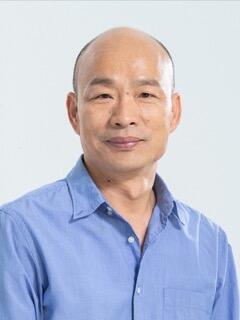
Kaohsiung Mayor Han Kuo-yu

Han Kuo-yu was elected Mayor of Kaohsiung, Taiwan, in November 2018, becoming the first member of the Kuomintang (KMT) to hold that office since 1998. He served as a member of the Legislative Yuan from Taipei County from 1993-2002, and later became the general manager of the Taipei Agricultural Products Marketing Corporation. 

Mr. Han graduated from Soochow University (Taipei) with a degree in English literature, and earned a master’s degree in law from National Chengchi University’s Graduate Institute of East Asian Studies.
 
This event is co-sponsored by the Hoover Institution and the Taiwan Democracy and Security Project, part of the U.S.-Asia Security Initiative
 

Philippines Room
616 Serra Mall
Encina Hall, 3rd Floor, Central (C330)
Stanford, CA 94305

Han Kuo-yu Mayor of Kaohsiung, Taiwan
News Type
News
Date
Paragraphs

Scholars Corner is an ongoing SPICE initiative to share FSI’s cutting-edge social science research with high school and college classrooms nationwide and international schools abroad.


This week we released “The Rise and Implications of Identity Politics,” the latest installment in our ongoing Scholars Corner series. Each Scholars Corner episode features a short video discussion with a scholar at the Freeman Spogli Institute for International Studies (FSI) at Stanford University sharing his or her latest research.

This Scholars Corner video features New York Times bestselling author Francis Fukuyama discussing the recent rise of identity politics, both in the United States and around the world. “In the 20th century we had a politics that was organized around an economic axis, primarily. You had a left that worried about inequality…and you had a right that was in favor of the greatest amount of freedom,” summarizes Fukuyama. “[N]ow we are seeing a shift in many countries away from this focus on economic issues to a polarization based on identity.”

According to Fukuyama, this shift in politics is reflected in such domestic social movements as Black Lives Matter and #MeToo, as well as in international movements like the Catalan independence movement, white nationalism, and even the Islamic State.

The rise of identity politics may have troubling implications for modern democracies. “In the United States, for example, the Republican party increasingly has become a party of white people, and the Democratic party has become increasingly a party of minorities and women. In general, I think the problem for a democracy is that you’ve got these specific identities…[but] you need something more than that. You need an integrative sense of national identity [that’s] open to the existing diversity of the society that allows people to believe that they’re part of the same political community,” says Fukuyama.

“That, I think, is the challenge for modern democracy at the present moment.”

To hear more of Dr. Fukuyama’s analysis, view the video here: “The Rise and Implications of Identity Politics.” For other Scholars Corner episodes, visit our Scholars Corner webpage. Past videos have covered topics such as cybersecurity, immigration and integration, and climate change.

"Identity" hardcover book by Francis Fukuyama "Identity" hardcover book by Francis Fukuyama

Francis Fukuyama is a Senior Fellow at FSI and the Mosbacher Director of the Center on Democracy, Development, and the Rule of Law. This video is based on his recent book Identity: The Demand for Dignity and the Politics of Resentment, which was recognized as The Times (UK) Best Books of 2018, Politics, and Financial Times Best Books of 2018.

Stay informed of SPICE news by joining our email list or following us on Facebook and Twitter.


Related article:


Hero Image
Scholars Corner video featuring Francis Fukuyama discussing identity politics
Francis Fukuyama discusses identity politics in SPICE's latest Scholars Corner video.
All News button
1
-
Image
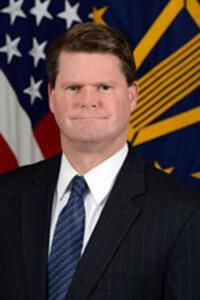
Randy Schriver
Mr. Randall Schriver
is the Assistant Secretary of Defense for Indo-Pacific Security Affairs. Mr. Schriver was appointed as Assistant Secretary of Defense by President Donald Trump on 8 January 2018. Prior to his confirmation, Mr. Schriver was one of five founding partners of Armitage International LLC, a consulting firm that specializes in international business development and strategies. He was also CEO and President of the Project 2049 Institute, a non-profit research organization dedicated to the study of security trend lines in Asia.
 
Previously, Mr. Schriver served as Deputy Assistant Secretary of State for East Asian and Pacific Affairs. He was responsible for China, Taiwan, Mongolia, Hong Kong, Australia, New Zealand, and the Pacific Islands. From 2001 to 2003, he served as Chief of Staff and Senior Policy Advisor to the Deputy Secretary of State. From 1994 to 1998, he worked in the Office of the Secretary of Defense, including as the senior official responsible for the day-to-day management of U.S. bilateral relations with the People's Liberation Army and the bilateral security and military relationships with Taiwan.
 
Prior to his civilian service, he served as an active duty Navy Intelligence Officer from 1989 to 1991, including a deployment in support of Operation Desert Shield/Desert Storm. After active duty, he served in the Navy Reserves for nine years, including as Special Assistant to the Chairman of the Joint Chiefs of Staff and an attaché at U.S. Embassy Beijing and U.S. Embassy Ulaanbaatar.
 
Mr. Schriver has won numerous military and civilian awards from the U.S. government and was presented while at the State Department with the Order of the Propitious Clouds by the President of Taiwan for service promoting U.S.-Taiwan relations. Mr. Schriver received a Bachelor of Arts degree in history from Williams College and a Master of Arts degree from Harvard University.
 

Oksenberg Conference Room
616 Serra Mall
Encina Hall, 3rd Floor, Central S350
Stanford, CA 94305

Randall Schriver Assistant Secretary of Defense for Indo-Pacific Security Affairs
-

To listen to the audio recording of this talk, please visit our multimedia page.

 
Daniel Ziblatt will describe current dangers facing democracies around the world, including Europe and the United States and ways of preventing democracy's breakdown. He will draw lessons from the fateful missteps that have wrecked other democracies and from ways citizens have risen to meet the great democratic crises of the past.

Image
Portrait of Daniel Ziblatt, Harvard University

Daniel Ziblatt
is Eaton Professor of the Science of Government at Harvard University and Acting Director of Harvard's Center for European Studies.  Ziblatt's scholarship on democratization, democratic breakdown, and state-building include New York Times bestseller, How Democracies Die (2018), co-authored with Steven Levitsky; Conservative Parties and the Birth of Democracy (2017), winner of the American Political Science Association’s Woodrow Wilson Award for the best book published in the United States on government, politics, or international affairs; and Structuring the State: The Formation of Italy and Germany and the Puzzle of Federalism (2006).

Oksenberg Conference Room
Encina Hall -3rd floor
616 Serra Street, Stanford, California 94305

Daniel Ziblatt Eaton Professor of the Science of Government Speaker Harvard University
Lectures
Authors
Beth Duff-Brown
News Type
News
Date
Paragraphs

Most studies that look at whether democracy improves global health rely on measurements of life expectancy at birth and infant mortality rates. Yet those measures disproportionately reflect progress on infectious diseases — such as malaria, diarrheal illnesses and pneumonia — which relies heavily on foreign aid.

A new study led by Stanford Health Policy's Tara Templin and the Council on Foreign Relations suggests that a better way to measure the role of democracy in public health is to examine the causes of adult mortality, such as noncommunicable diseases, HIV, cardiovascular disease and transportation injuries. Little international assistance targets these noncommunicable diseases. 

When the researchers measured improvements in those particular areas of public health, the results proved dramatic.

“The results of this study suggest that elections and the health of the people are increasingly inseparable,” the authors wrote.

A paper describing the findings was published today in The Lancet. Templin, a graduate student in the Department of Health Research and Policy, shares lead authorship with Thomas Bollyky, JD, director of the Global Health Program at the Council on Foreign Relations.

“Democratic institutions and processes, and particularly free and fair elections, can be an important catalyst for improving population health, with the largest health gains possible for cardiovascular and other noncommunicable diseases,” the authors wrote.

Templin said the study brings new data to the question of how governance and health inform global health policy debates, particularly as global health funding stagnates.

“As more cases of cardiovascular diseases, diabetes and cancers occur in low- and middle-income countries, there will be a need for greater health-care infrastructure and resources to provide chronic care that weren’t as critical in providing childhood vaccines or acute care,” Templin said.

Image

Free and fair elections for better health

In 2016, the four mortality causes most ameliorated by democracy — cardiovascular disease, tuberculosis, transportation injuries and other noncommunicable diseases — were responsible for 25 percent of total death and disability in people younger than 70 in low- and middle-income countries. That same year, cardiovascular diseases accounted for 14 million deaths in those countries, 42 percent of which occurred in individuals younger than 70.

Over the past 20 years, the increase in democratic experience reduced mortality in these countries from cardiovascular disease, other noncommunicable diseases and tuberculosis between 8-10 percent, the authors wrote.

“Free and fair elections appear important for improving adult health and noncommunicable disease outcomes, most likely by increasing government accountability and responsiveness,” the study said.

The researchers used data from the Global Burden of Diseases, Injuries, and Risk Factors StudyV-Dem; and Financing Global Health databases. The data cover 170 countries from 1970 to 2015.

What Templin and her co-authors found was democracy was associated with better noncommunicable disease outcomes. They hypothesize that democracies may give higher priority to health-care investments.

HIV-free life expectancy at age 15, for example, improved significantly — on average by 3 percent every 10 years during the study period — after countries transitioned to democracy. Democratic experience also explains significant improvements in mortality from cardiovascular disease, tuberculosis, transportation injuries, cancers, cirrhosis and other noncommunicable diseases, the study said.

Watch: Some of the authors of the study discuss the significant their findings: 


What Templin and her co-authors found was democracy was associated with better noncommunicable disease outcomes. They hypothesize that democracies may give higher priority to health-care investments.

HIV-free life expectancy at age 15, for example, improved significantly — on average by 3 percent every 10 years during the study period — after countries transitioned to democracy. Democratic experience also explains significant improvements in mortality from cardiovascular disease, tuberculosis, transportation injuries, cancers, cirrhosis and other noncommunicable diseases, the study said.

Foreign aid often misdirected

And yet, this connection between fair elections and global health is little understood.

“Democratic government has not been a driving force in global health,” the researchers wrote.  “Many of the countries that have had the greatest improvements in life expectancy and child mortality over the past 15 years are electoral autocracies that achieved their health successes with the heavy contribution of foreign aid.”

They note that Ethiopia, Myanmar, Rwanda and Uganda all extended their life expectancy by 10 years or more between 1996 and 2016. The governments of these countries were elected, however, in multiparty elections designed so the opposition could only lose, making them among the least democratic nations in the world.

Yet these nations were among the top two-dozen recipients of foreign assistance for health.

Only 2 percent of the total development assistance for health in 2016 was devoted to noncommunicable diseases, which was the cause of 58 percent of the death and disability in low-income and middle-income countries that same year, the researchers found.

“Although many bilateral aid agencies emphasize the importance of democratic governance in their policy statements,” the authors wrote, “most studies of development assistance have found no correlation between foreign aid and democratic governance and, in some instance, a negative correlation.”

Autocracies such as Cuba and China, known for providing good health care at low cost, have not always been as successful when their populations’ health needs shifted to treating and preventing noncommunicable diseases. A 2017 assessment, for example, found that true life expectancy in China was lower than its expected life expectancy at birth from 1980 to 2000 and has only improved over the past decade with increased government health spending. In Cuba, the degree to which its observed life expectancy has exceeded expectations has decreased, from four-to-seven years higher than expected in 1970 to three-to-five years higher than expected in 2016.

“There is good reason to believe that the role that democracy plays in child health and infectious diseases may not be generalizable to the diseases that disproportionately affect adults,” Bollyky said. Cardiovascular diseases, cancers and other noncommunicable diseases, according to Bollyky, are largely chronic, costlier to treat than most infectious diseases, and require more health care infrastructure and skilled medical personnel.  

The researchers hypothesize that democracy improves population health because:

  1. When enforced through regular, free and fair elections, democracies should have a greater incentive than autocracies to provide health-promoting resources and services to a larger proportion of the population;
  2. Democracies are more open to feedback from a broader range of interest groups, more protective of media freedom and might be more willing to use that feedback to improve their public health programs;
  3. Autocracies reduce political competition and access to information, which might deter constituent feedback and responsive governance.

Various studies have concluded that democratic rule is better for population health, but almost all of them have focused on infant and child mortality or life expectancy at birth.

Over the past 20 years, the average country’s increase in democracy reduced mortality from cardiovascular disease by roughly 10 percent, the authors wrote. They estimate that more than 16 million cardiovascular deaths may have been averted due to an increase in democracy globally from 1995 to 2015. They also found improvements in other health burdens in the countries where democracy has taken hold: an 8.9 percent reduction in deaths from tuberculosis, a 9.5 percent drop in deaths from transportation injuries and a 9.1 percent mortality reduction in other noncommunicable disease, such as congenital heart disease and congenital birth defects.

“This study suggests that democratic governance and its promotion, along with other government accountability measures, might further enhance efforts to improve population health,” the study said. “Pretending otherwise is akin to believing that the solution to a nation’s crumbling roads and infrastructure is just a technical schematic and cheaper materials.”

The other researchers who contributed to the study are Matthew CohenDiana SchoderJoseph Dieleman and Simon Wigley, from CFR, the University of Washington-Seattle and Bilkent University in Turkey, respectively.

Funding for the research came from Bloomberg Philanthropies and the Bill & Melinda Gates Foundation. Stanford’s Department of Health Research and Policy also supported the work.

Hero Image
gettyimages senegal elections2
Election officials count the votes at a polling station on February 24, 2019 in Dakar, Senegal. | Xaume Olleros/Getty Images
All News button
1
-

Abstract: Existing international relations scholarship on human rights focuses on international law and transnational advocacy to the exclusion of "human rights diplomacy" (HRD)---efforts by government officials to engage publicly and privately with their foreign counterparts---because diplomacy is often not publicly observable. We exploit an opportunity to assess the effectiveness of HRD: a campaign coordinated by the U.S. government to free twenty female political prisoners called #Freethe20. Our analysis of release outcomes for #Freethe20 women compared to two control groups (a longer list of women considered by the State Department for the campaign and a list of women imprisoned simultaneously in the same target countries) suggests the campaign was highly effective. While #Freethe20 was public-facing, we find little evidence that "naming and shaming" alone drove releases. Drawing on in-depth interviews with U.S. officials, we argue that foreign governments were most responsive when public pressure was matched with private, coercive diplomacy.  


Speaker Bio: Jeremy M. Weinstein is a Professor of Political Science and Senior Fellow at the Freeman Spogli Institute for International Studies. He is also a non-resident fellow at the Center for Global Development in Washington, D.C.

His research focuses on civil wars and political violence; ethnic politics and the political economy of development; and democracy, accountability, and political change. He is the author of Inside Rebellion: The Politics of Insurgent Violence (Cambridge University Press), which received the William Riker Prize for the best book on political economy. He is also the co-author of Coethnicity: Diversity and the Dilemmas of Collective Action (Russell Sage Foundation), which received the Gregory Luebbert Award for the best book in comparative politics. He has published articles in the American Political Science Review, American Journal of Political Science, Annual Review of Political Science, Journal of Conflict Resolution, Foreign Affairs, Foreign Policy, Journal of Democracy, World Policy Journal, and the SAIS Review.

Weinstein received the International Studies Association’s Karl Deutsch Award in 2013. The award is given to a scholar younger than 40 or within 10 years of earning a Ph.D. who has made the most significant contribution to the study of international relations. He also received the Dean’s Award for Distinguished Teaching at Stanford in 2007.

He has also worked at the highest levels of government on major foreign policy and national security challenges, engaging in both global diplomacy and national policy-making. Between 2013 and 2015, Weinstein served as the Deputy to the U.S. Ambassador to the United Nations and before that as the Chief of Staff at the U.S. Mission to the United Nations. As Deputy, Weinstein was a standing member of the National Security Council Deputies’ Committee – the sub-cabinet policy committee with primary responsibility for advising the National Security Council, the Cabinet, and the President on the full range of foreign policy issues, including global counterterrorism, nonproliferation, U.S. policy in the Middle East, the strategic rebalance to Asia, cyber threats, among a wide variety of other issues.

During President Obama’s first term, he served as Director for Development and Democracy on the National Security Council staff at the White House between 2009 and 2011. In this capacity, he played a key role in the National Security Council’s work on global development, democracy and human rights, and anti-corruption, with a global portfolio. Before joining the White House staff, Weinstein served as an advisor to the Obama campaign and, during the transition, as a member of the National Security Policy Working Group and the Foreign Assistance Agency Review Team.

Weinstein obtained a BA with high honors from Swarthmore College, and an MA and PhD in political economy and government from Harvard University. He is a member of the Council on Foreign Relations and serves on a number of non-profit boards and advisory groups.

Jeremy Weinstein Senior Fellow at the Freeman Spogli Institute for International Studies Professor of Political Science Stanford University
Seminars
-

Image
The strength and prestige of the American presidency has waxed and waned since George Washington. Accidental Presidents looks at eight men who came to the office without being elected to it. It demonstrates how the character of the man in that powerful seat affects the nation and world.

Eight men have succeeded to the presidency when the incumbent died in office. In one way or another they vastly changed our history. Only Theodore Roosevelt would have been elected in his own right. Only TR, Truman, Coolidge, and LBJ were re-elected.

John Tyler succeeded William Henry Harrison who died 30 days into his term. He was kicked out of his party and became the first president threatened with impeachment. Millard Fillmore succeeded esteemed General Zachary Taylor. He immediately sacked the entire cabinet and delayed an inevitable Civil War by standing with Henry Clay’s compromise of 1850. Andrew Johnson, who succeeded our greatest president, sided with remnants of the Confederacy in Reconstruction. Chester Arthur, the embodiment of the spoils system, was so reviled as James Garfield’s successor that he had to defend himself against plotting Garfield’s assassination; but he reformed the civil service. Theodore Roosevelt broke up the trusts. Calvin Coolidge silently cooled down the Harding scandals and preserved the White House for the Republican Herbert Hoover and the Great Depression. Truman surprised everybody when he succeeded the great FDR and proved an able and accomplished president. Lyndon B. Johnson was named to deliver Texas electorally. He led the nation forward on Civil Rights but failed on Vietnam.

Accidental Presidents adds immeasurably to our understanding of the power and limits of the American presidency in critical times.


Image
Jared Cohen is the founder and CEO of Jigsaw at Alphabet Inc. He also serves as an Adjunct Senior Fellow at the Council on Foreign Relations. Prior to Alphabet, he was Google’s first Director of Ideas and chief advisor to Google’s executive chairman Eric Schmidt. From 2006 to 2010 he served as a member of the Secretary of State’s Policy Planning Staff and as a close advisor to both Condoleezza Rice and Hillary Clinton.

Cohen is the New York Times bestselling author of four books, including "Children of Jihad", "One Hundred Days of Silence: America and the Rwanda Genocide", and "The New Digital Age: Transforming Nations, Business, and our Lives", which he co-authored with Eric Schmidt. His new book, "The Accidental Presidents" examines the eight instances in American history when a president has died in office. His writing has appeared in the New York Times, Wall Street Journal, Foreign Affairs, LA Times, Washington Post, TIME Magazine, and Foreign Policy. He has been named to the “TIME 100” list, Foreign Policy’s “Top 100 Global Thinkers,” and Vanity Fair’s “Next Establishment.” Cohen received his B.A. from Stanford University and his M.Phil in International Relations from the University of Oxford, where he studied as a Rhodes Scholar.


Oksenberg Conference Room

616 Serra Mall

Encina Hall, 3rd floor, Central

Jared Cohen <i>Founder and CEO of Jigsaw at Alphabet Inc. </i>
Seminars
Subscribe to Democracy