
Democracy
-
Civil Islam - Beyond the Headlines     

A lecture and three seminars by Robert W. Hefner, 2008 NUS-Stanford Lee Kong Chian Distinguished Fellow, Shorenstein APARC and Professor of Anthropology, Boston University 

April 28 - May 1, 2008 

Media coverage of Islam and Muslims, especially since 9/11, has featured violence and the threat of violence.  In his opening lecture and three seminars to follow, Prof. Hefner will explore a different reality "beyond the headlines."  Is there a "civil Islam"?  Are Islam and democracy compatible?  Is "Islamism" always radical, or can it be democratic?  How does Muslim schooling affect the answers to these questions?  Prof. Hefner will also look beyond the media's focus on the Middle East to examine the interactions between Islam, Muslims, and democracy in Southeast Asia.  


This is the second of the three seminars scheduled with Dr. Hefner.  

The third and final seminar in this series will be on Thursday, May 1 and is titled Muslim Politics in Southeast Asia: Democratic Islam Hijacked? or Re-invigorated? 


Robert W. Hefner's latest books include Schooling Islam (co-ed., 2007); Remaking Muslim Politics (ed., 2005); and Civil Islam (2000). He is the invited editor of the sixth volume of the forthcoming New Cambridge History of Islam, Muslims and Modernity: Society and Culture since 1800.  He directs the program on Islam and civil society at Boston University since 1991. 

All four events are co-sponsored by the the Abbasi Program in Islamic Studiesthe Stanford Humanities Center, and the Southeast Asia Forum in the Walter H. Shorenstein Asia-Pacific Research Center, Stanford University. 

The Board Room
Humanities Center
424 Santa Teresa Street
Stanford University
Stanford, CA

Shorenstein APARC
Stanford University
Encina Hall E301
Stanford, CA 94305-6055

0
Lee Kong Chian NUS-Stanford Distinguished Fellow on Southeast Asia
Website_Headshot.jpg PhD

Robert William Hefner, professor of anthropology and associate director of the Institute on Culture, Religion, and World Affairs at Boston University, is the inaugural Lee Kong Chian NUS-Stanford Distinguished Fellow on Southeast Asia.

Professor Hefner has been associate director of the Institute on Culture, Religion, and World Affairs at Boston University, where he has directed the program on Islam and civil society since 1991. Hefner has carried out research on religion and politics in Southeast Asia for the past thirty years, and has authored or edited a fourteen books, as well as several major policy reports for private and public foundations. His most recent books include, Schooling Islam: The Culture and Politics of Modern Muslim Education (edited with Muhammad Qasim Zaman, Princeton 2007); ed., Remaking Muslim Politics: Pluralism, Contestation, Democratization (Princeton 2005), ed., and Civil Islam: Muslims and Democratization in Indonesia (Princeton 2000). Hefner is also the invited editor for the sixth volume of the forthcoming New Cambridge History of Islam, Muslims and Modernity: Society and Culture since 1800.

Hefner is currently writing a book on Islamic education, democratization, and political violence in Indonesia. The research and writing locate the Indonesian example in the culture and politics of the broader Muslim world. His book also revisits the the question of the role of religious and secular knowledge in modernity.

Hefner will divide his time between Boston University, the National University of Singapore, and Stanford, where he will teach a seminar during the spring quarter.
Robert Hefner 2008 NUS-Stanford Lee Kong Chian Distinguished Fellow, Shorenstein APARC and Professor of Anthropology, Boston University Speaker
Conferences
-

Civil Islam - Beyond the Headlines     

A lecture and three seminars by Robert W. Hefner, 2008 NUS-Stanford Lee Kong Chian Distinguished Fellow, Shorenstein APARC and Professor of Anthropology, Boston University 

April 28 - May 1, 2008 

Media coverage of Islam and Muslims, especially since 9/11, has featured violence and the threat of violence.  In his opening lecture and three seminars to follow, Prof. Hefner will explore a different reality "beyond the headlines."  Is there a "civil Islam"?  Are Islam and democracy compatible?  Is "Islamism" always radical, or can it be democratic?  How does Muslim schooling affect the answers to these questions?  Prof. Hefner will also look beyond the media's focus on the Middle East to examine the interactions between Islam, Muslims, and democracy in Southeast Asia.  


This is the first of the three seminars scheduled with Dr. Hefner.  

The second seminar of this series is on Wednesday, April 30 and is titled Schooling Islam: Madrasas and the Remaking of Muslim Modernity. 

The third seminar will be on Thursday, May 1 and is titled Muslim Politics in Southeast Asia: Democratic Islam Hijacked? or Re-invigorated? 


Robert W. Hefner's latest books include Schooling Islam (co-ed., 2007); Remaking Muslim Politics (ed., 2005); and Civil Islam (2000). He is the invited editor of the sixth volume of the forthcoming New Cambridge History of Islam, Muslims and Modernity: Society and Culture since 1800.  He directs the program on Islam and civil society at Boston University since 1991. 

All four events are co-sponsored by the the Abbasi Program in Islamic Studiesthe Stanford Humanities Center, and the Southeast Asia Forum in the Walter H. Shorenstein Asia-Pacific Research Center, Stanford University. 

The Board Room
Humanities Center
424 Santa Teresa Street
Stanford University
Stanford, CA

Shorenstein APARC
Stanford University
Encina Hall E301
Stanford, CA 94305-6055

0
Lee Kong Chian NUS-Stanford Distinguished Fellow on Southeast Asia
Website_Headshot.jpg PhD

Robert William Hefner, professor of anthropology and associate director of the Institute on Culture, Religion, and World Affairs at Boston University, is the inaugural Lee Kong Chian NUS-Stanford Distinguished Fellow on Southeast Asia.

Professor Hefner has been associate director of the Institute on Culture, Religion, and World Affairs at Boston University, where he has directed the program on Islam and civil society since 1991. Hefner has carried out research on religion and politics in Southeast Asia for the past thirty years, and has authored or edited a fourteen books, as well as several major policy reports for private and public foundations. His most recent books include, Schooling Islam: The Culture and Politics of Modern Muslim Education (edited with Muhammad Qasim Zaman, Princeton 2007); ed., Remaking Muslim Politics: Pluralism, Contestation, Democratization (Princeton 2005), ed., and Civil Islam: Muslims and Democratization in Indonesia (Princeton 2000). Hefner is also the invited editor for the sixth volume of the forthcoming New Cambridge History of Islam, Muslims and Modernity: Society and Culture since 1800.

Hefner is currently writing a book on Islamic education, democratization, and political violence in Indonesia. The research and writing locate the Indonesian example in the culture and politics of the broader Muslim world. His book also revisits the the question of the role of religious and secular knowledge in modernity.

Hefner will divide his time between Boston University, the National University of Singapore, and Stanford, where he will teach a seminar during the spring quarter.

Robert W. Hefner 2008 NUS-Stanford Lee Kong Chian Distinguished Fellow, Shorenstein APARC and Professor of Anthropology, Boston University Speaker
Conferences
-

Civil Islam - Beyond the Headlines

A lecture and three seminars by Robert W. Hefner, 2008 NUS-Stanford Lee Kong Chian Distinguished Fellow, Shorenstein APARC and Professor of Anthropology, Boston University

April 28 - May 1, 2008

Media coverage of Islam and Muslims, especially since 9/11, has featured violence and the threat of violence. In his opening lecture and three seminars to follow, Prof. Hefner will explore a different reality "beyond the headlines." Is there a "civil Islam"? Are Islam and democracy compatible? Is "Islamism" always radical, or can it be democratic? How does Muslim schooling affect the answers to these questions? Prof. Hefner will also look beyond the media's focus on the Middle East to examine the interactions between Islam, Muslims, and democracy in Southeast Asia.


The evening program on Monday, April 28 with Dr. Hefner will begin with a public reception at 6:15 p.m.

The lecture will begin at 7:00 p.m.


The following three seminars are scheduled for 4:30 p.m. and will take place in the Board Room of the Stanford Humanities Center. Reservations are not required for the seminars.

The seminar on Tuesday, April 29 is titled Varieties of Islamism: From Radical to Democratic.

The seminar on Wednesday, April 30 is titled Schooling Islam: Madrasas and the Remaking of Muslim Modernity.

The seminar on Thursday, May 1 is titled Muslim Politics in Southeast Asia: Democratic Islam Hijacked? or Re-invigorated?

Robert W. Hefner's latest books include Schooling Islam (co-ed., 2007); Remaking Muslim Politics (ed., 2005); and Civil Islam (2000). He is the invited editor of the sixth volume of the forthcoming New Cambridge History of Islam, Muslims and Modernity: Society and Culture since 1800. He directs the program on Islam and civil society at Boston University since 1991.

All four events are co-sponsored by the the Abbasi Program in Islamic Studies, the Stanford Humanities Center, and the Southeast Asia Forum in the Walter H. Shorenstein Asia-Pacific Research Center, Stanford University.

Levinthal Hall
Humanities Center
424 Santa Teresa Street
Stanford University
Stanford, CA

Shorenstein APARC
Stanford University
Encina Hall E301
Stanford, CA 94305-6055

0
Lee Kong Chian NUS-Stanford Distinguished Fellow on Southeast Asia
Website_Headshot.jpg PhD

Robert William Hefner, professor of anthropology and associate director of the Institute on Culture, Religion, and World Affairs at Boston University, is the inaugural Lee Kong Chian NUS-Stanford Distinguished Fellow on Southeast Asia.

Professor Hefner has been associate director of the Institute on Culture, Religion, and World Affairs at Boston University, where he has directed the program on Islam and civil society since 1991. Hefner has carried out research on religion and politics in Southeast Asia for the past thirty years, and has authored or edited a fourteen books, as well as several major policy reports for private and public foundations. His most recent books include, Schooling Islam: The Culture and Politics of Modern Muslim Education (edited with Muhammad Qasim Zaman, Princeton 2007); ed., Remaking Muslim Politics: Pluralism, Contestation, Democratization (Princeton 2005), ed., and Civil Islam: Muslims and Democratization in Indonesia (Princeton 2000). Hefner is also the invited editor for the sixth volume of the forthcoming New Cambridge History of Islam, Muslims and Modernity: Society and Culture since 1800.

Hefner is currently writing a book on Islamic education, democratization, and political violence in Indonesia. The research and writing locate the Indonesian example in the culture and politics of the broader Muslim world. His book also revisits the the question of the role of religious and secular knowledge in modernity.

Hefner will divide his time between Boston University, the National University of Singapore, and Stanford, where he will teach a seminar during the spring quarter.

Robert W. Hefner 2008 NUS-Stanford Lee Kong Chian Distinguished Fellow, Shorenstein APARC and Professor of Anthropology, Boston University Speaker
Conferences
-

Economic security, sustainable development, clean energy and energy security, better regulations, greater innovativeness and the growing share of Polish economy in the international market; these are the main priorities of the Polish government and Ministry of Economy. How is Poland going to handle the 21st Century challenges? How will Poland find its niche in the globalized economy? These are the questions that will be discussed by the Polish Deputy Prime Minister and Minister of Economy, Mr. Waldemar Pawlak.

Born in 1959, Mr. Waldemar Pawlak graduated from the Warsaw University of Technology with an engineering degree in automotive and construction machinery. He has served as a member of the Polish Parliament since 1989; as President of the board of the Warsaw Commodities Exchange from 2001 to 2005; as Prime Minister of Poland in 1992 and again in 1993 to 1995; and as Deputy Prime Minister and Minister of Economy of Poland since November 2007.


This seminar is jointly sponsored by the Forum on Contemporary Europe, the Center for Democracy, Development and the Rule of Law, the U.S.-Polish Trade Council, and the Consulate General of the Republic of Poland in Los Angeles.

Oksenberg Conference Room

Waldemar Pawlak Deputy Prime Minister and Minister of Economy, Poland Speaker
Seminars
-

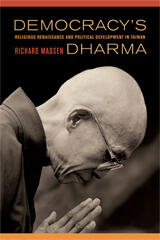
This is a CDDRL's Special Event within our Democracy in Taiwan Program. It is also co-sponsored by the Public Diplomacy/Emerging Publics Project of the Center for the Pacific Rim at University of San Francisco. In this seminar, Dr. Richard Madsen will talk about his new book that explores the religious renaissance that has reformed, revitalized, and renewed the practices of Buddhism and Daoism in Taiwan and how this religious renaissance embraces democracy modernity.  

Image
10896
Richard Madsen is distinguished professor and chair of the sociology department at the University of California, San Diego and a co-author (with Robert Bellah et al.) of The Good Society and Habits of the Heart which received the Los Angeles Times Book Award and was jury nominated for the Pulitzer Prize. He has authored or co-authored five books on China, including Morality and Power in a Chinese Village for which he received the C. Wright Mills Award; China's Catholics: Tragedy and Hope in an Emerging Civil Society; and China and the American Dream.  He also co-edited (with Tracy B. Strong) The Many and the One: Religious and Secular Perspectives on Ethical Pluralism in the Modern World. His latest book is Democracy’s Dharma: Religious Renaissance and Political Development in Taiwan.

Richard Madsen received an MA in Asian studies and a Ph.D. in sociology from Harvard.

"Madsen is a genial and well-informed guide, both to social-political change in Taiwan and to the ins and outs of religious movements. His engaging writing skillfully interweaves profound insights and themes into the descriptive analytical narrative. Democracy's Dharma presents new material based on recent research while offering a fresh spin on thinking about Asian religions."–Thomas Gold, editor of Social Connections in China: Institutions, Culture, and the Changing Nature of Guanxi

Philippines Conference Room

Richard Madsen Distinguished Professor Speaker Department of Sociology at the University of California, San Diego
Conferences
-
Mr. Melia has been Deputy Executive Director since May 2005.  He was previously Director of Research at the Institute for the Study of Diplomacy, and Adjunct Professor in the School of Foreign Service, at Georgetown University in Washington, DC where he continues to teach graduate courses about democracy promotion. For more than a dozen years, Melia held senior posts at the National Democratic Institute for International Affairs (NDI), a leading non-governmental organization engaged in the promotion of democracy worldwide. From 1998 to 2001, he was the Institute's Vice President for Programs. Earlier, he managed the Institute's programs in Central and Eastern Europe (1988 to 1993), in the Middle East (1993 to 1996), and directed programs in more than a dozen African countries. 

Mr. Melia was Associate Director of the Free Trade Union Institute of the AFL-CIO (1986 to 1988). Prior to that he served for six years as Legislative Assistant for foreign and defense policy to U.S. Senator Daniel Patrick Moynihan (D-NY).  Thomas Melia received his M.A. in Africa Studies from the Johns Hopkins University School of Advanced International Studies.

CISAC Conference Room

Thomas O. Melia Deputy Executive Director Speaker Freedom House
Seminars
-
The world’s energy infrastructure stands on the brink of a major revolution. Much of the large power generation infrastructure in the industrialized world will need replacement over the next two to three decades while in the developing world, including China and India, it will be installed for the first time. Concurrently, the risks of climate change and unprecedented high prices for oil and natural gas are transforming the economic and ethical incentives for alternative energy sources leading to growth of nuclear and renewables, including solar, wind, biofuels and geothermal technologies. The transition from today’s energy systems, based on fossil fuels, to a future decarbonized or carbon-neutral infrastructure is a socio-technical problem of global dimensions, but one for which there is no accepted solution, either at the international, national, or regional levels.

This talk describes a novel methodology to understand global energy systems and their evolution. We are incorporating state-of-the-art open tools in information science and technology (Google, Google Earth, Wikis, Content Management Systems, etc.) to create a global real time observatory for energy infrastructure, generation, and consumption. The observatory will establish and update geographical and temporally referenced records and analyses of the historical, current, and evolving global energy systems, the energy end-use of individuals, and their associated environmental impacts. Changes over time in energy production, use, and infrastructure will be identified and correlated to drivers, such as demographics, economic policies, incentives, taxes, and costs of energy production by various technologies. As time permits Dr. Gupta will show, using Google Earth, existing data on power generation infrastructure in three countries (South Africa, India and the USA) and highlight examples of unanticipated crisis (South Africa), environment (USA) and exponential growth (India). Finally Dr. Gupta will comment on how/why trust and transparency created by democratization of information that such a system would provide could motivate cooperation, provide a framework for compliance and monitoring of global treaties, and precipitate action towards carbon-neutral systems.

Rajan Gupta is the leader of the Elementary Particles and Field Theory group at Los Alamos National Laboratory and a Laboratory fellow.  He came to the USA in 1975 after obtaining his Masters in Physics from Delhi University, India, and earned his PhD in Theoretical Physics from The California Institute of Technology in 1982. The main thrust of his research is to understand the fundamental theories of elementary particle interactions, in particular the interactions of quarks and gluons and the properties hadrons composed of them. In addition, he uses modeling and simulations to study Biological and Statistical Mechanics systems, and to push the envelope of High Performance Computing. Starting in 1998 his interests broadened into the areas of health, education, development and energy security. He is currently carrying out an integrated systems analysis of global energy systems. In 2000 Dr. Gupta started the forum “International Security in the new Millennium” at Los Alamos National Laboratory. Its goals are to understand global issues dealing with societal and security challenges.

Reuben W. Hills Conference Room

Rajan Gupta Group Leader, Elementary Particles and Field Theory Speaker Los Alamos National Laboratory
Seminars
Authors
News Type
News
Date
Paragraphs

Sometimes doing field research involves dodging cow pies in an actual field. At least, that was the case for a group of Jean C. Oi's students.

Oi discussed the importance of taking students beyond the classroom in a March 6 talk titled "Cow Pies and Democracy: Teaching in the Field," presented as part of the Center for Teaching and Learning's "Award-Winning Teachers on Teaching" lecture series.

Michele Marincovich, associate vice provost of undergraduate education and director of the Center for Teaching and Learning, introduced Oi, calling "Cow Pies and Democracy" the "most colorful title" in the lecture series.

Oi, the William Haas Professor in Chinese Politics, began her talk by laughingly apologizing for her word choice. "I still can't believe I chose that title, but I think it aptly describes what I do with my students," she said.

Oi teaches courses on political change in China, and much of her research has focused on village elections. Though China has been a single-party state since the Communist Party took control in 1949, the country has held direct elections for village officials since the 1980s, a move that has been greeted by some as a possible first step toward a more democratic state.

In 2001, Oi taught a course about village elections for Sophomore College, a three-week summer seminar for incoming sophomores.

Although the class was "very successful," her students kept saying, "I wish we could do this in China," Oi recalled. She agreed.

Without leaving Stanford's campus, "I think it's difficult to convey the different world [the Chinese] are living in," Oi added.

The year after she first taught Sophomore College, Oi had the chance to take students abroad for a class as part of the Overseas Seminar Program.

They spent two weeks at Peking University learning about village elections and China's political situation. They heard guest speakers from the country's Ministry of Civil Affairs, and the students designed research projects requiring them to interview villagers and village officials.

In the third week of the program, Oi and her students took a bus to Heilonjiang, a northeastern province on China's border with Russia. As the bus approached the village, the road became blocked by a long line of carts delivering corn to the local dairy farm. Oi had all the students get off the bus, and they walked through fields and pastures to get the rest of the way to the village.

"This is where we had to dodge the cow pies," Oi explained.

Oi characterized what she did with her students as "demystifying" the process of doing research. Students learned how to interview people in the field.

"When we got to the village, I said, 'OK! Go!' and they all just scattered," Oi said. "If you set your expectations high, students are going to produce."

Oi's students got to witness a village election. Villagers lined up to mark paper ballots to elect a village committee head. The votes were tallied on a chalkboard, and the winner got 509 votes, just a few more than the runner-up.

Many of the villagers that greeted the students had never seen Americans before, Oi said. "Russians were the only foreigners they had ever seen," she said.

One student was a 6-foot-7-inch Olympic gymnast who drew crowds wherever he went.

"I've seen them on TV, but I'd never seen a real one," one awestruck observer said, marveling at the tall athlete.

Oi said her students felt like they had earned "bragging rights" after their trip to China. "They felt like they had done something none of their peers had done," she said.

One even changed her career plans after the seminar.

"Her parents were very worried about what would happen to her in China, and maybe they should have been," Oi quipped. The student had been planning to go to medical school, but she instead decided to declare a major in political science and study rural China.

"I think I did change some student lives," Oi said.

Oi is also a senior fellow at the Freeman Spogli Institute for International Studies and the director of the Stanford China Program.

Hero Image
oilogo
All News button
1
News Type
News
Date
Paragraphs
Larry Diamond has been appointed as a Senior Fellow in the Freeman Spogli Institute for International Studies (FSI). Currently a Senior Fellow at the Hoover Institution, a renowned scholar of democratization, and prolific in both editorial and policy work, Diamond is an active member of FSI’s Center on Democracy, Development, and the Rule of Law (CDDRL). He coordinates the Program on Democracy - Completed, which examines the comparative dynamics of democratic functioning and change in the contemporary world, with a particular focus on the countries of Africa, the Middle East, Asia, Latin America, and the post-communist world. He has also established the offshoot program, The Taiwan Democracy Project, in 2006, and is a central participant in the The Taiwan Democracy Project.

Primarily an Africanist, Diamond received his Ph.D. in Sociology from Stanford University in 1980. He currently serves as the co-director for the National Endowment for Democracy’s International Forum for Democratic Studies in Washington DC, as a member of U.S. Agency for International Development (USAID) Advisory Committee on Voluntary Foreign Aid, and as adviser and lecturer at the World Bank, the United Nations, and the U.S. Department of State. Previously he was senior adviser to the Coalition Provisional Authority in Iraq and consultant to USAID.

He is also founding co-editor of the Journal of Democracy, the premier journal in the field, and a co-director of the International Forum for Democratic Studies of the National Endowment for Democracy. He has an impressive record of public service, which includes numerous board memberships and government appointments, and he has published widely. In his prolific portfolio of books and papers, he has advanced the knowledge on the conceptualization, determinants, and importance of democracy by examining the relationship between development and democracy, the multidimensional nature of the democratization process, and the significance of democratic consolidation.

Diamond’s commitment and contributions to teaching are also reflected in his receipt of Stanford’s 2007 Lloyd W. Dinkelspiel Award for Distinctive Contributions to Undergraduate Education, a strong testament to the breadth and depth of his engagement at the University.
All News button
1
Authors
News Type
News
Date
Paragraphs

Addressing a packed auditorium on March 5, Vicente Fox, the former president of Mexico, spoke with intensity about Latin America’s prospects for both social welfare and economic well-being in the coming century. Mexico, which Goldman Sachs recently projected to be the world’s fifth largest economy by 2040, was emblematic of this electrifying future, he said. On the one hand, there is great promise for economic growth, stability, and entrepreneurship; and with this great promise, he was careful to note, comes great responsibility for the reduction of poverty and inequality through a “package of powerful social policies.”

Fox’s lecture was sponsored by FSI as part of the 2008 Robert G. Wesson Lecture Series in International Relations Theory and Practice, and was hosted by the Graduate School of Business. Before being elected president of Mexico, a position he held from 2000-06, Fox was president of Coca-Cola Mexico. Since leaving office, Fox has been involved with a sweeping initiative to construct a social agenda for democracy in Latin America for the next 20 years, launched by Alejandro Toledo, former president of Peru from 2001 to 2006. Toledo is a Payne Distinguished Visiting Lecturer at Stanford this year.

"It is a pleasure to welcome my friend, former President Vicente Fox, to Stanford, the Freeman Spogli Institute, and the Center on Democracy, Development, and the Rule of Law, where serious scholars and practitioners are committed to develop democracy that delivers concrete results for the poor and fosters social inclusion," said Toledo.

Fox also discussed issues specific to the relationship between Mexico and the U.S., such as trade, immigration, and NAFTA—all of which benefit both countries, he said. Looking ahead, he hoped that Latin American democracy would not to be taken for granted; “it has to be nourished, it has to be taken care of, it has to be promoted.” But his outlook for Latin America was resoundingly positive, that this is a time for its countries to consolidate democracies and freedoms, consolidate economies, and promote new leadership. After years of military dictatorships, corruption, inefficiency, and poor development, “People decided to go for change,” Fox said, “and change is a magic word. It moves people to action.”

The Wesson Lecture Series provides support for a public address at Stanford by a prominent scholar or practicing professional in the field of international relations. The series is made possible by a gift from the late Robert G. Wesson, a scholar of international affairs, prolific author, and senior research fellow at the Hoover Institution. Previous Wesson Lecturers have included such distinguished speakers as McGeorge Bundy, Willi DeClerq, Condoleezza Rice, Mikhail Gorbachev, Fernando Henrique Cardoso, and Mary Robinson.

Hero Image
presidente fox[1]
All News button
1
Subscribe to Democracy