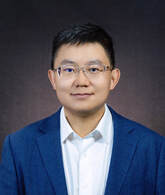
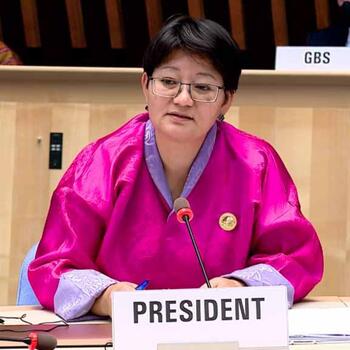
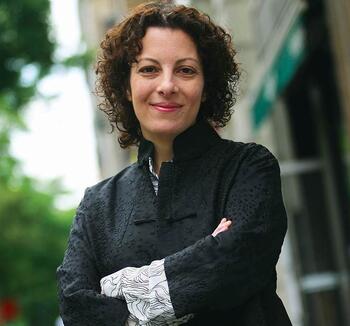
FSI scholars approach their research on the environment from regulatory, economic and societal angles. The Center on Food Security and the Environment weighs the connection between climate change and agriculture; the impact of biofuel expansion on land and food supply; how to increase crop yields without expanding agricultural lands; and the trends in aquaculture. FSE’s research spans the globe – from the potential of smallholder irrigation to reduce hunger and improve development in sub-Saharan Africa to the devastation of drought on Iowa farms.
Integrating Nature into Policy & Finance for Transformation in China with Professor Ouyang Zhiyun
Wednesday, March 9, 2022 | 4:00-5:15 pm Pacific Time
Integrating Nature into Policy & Finance for Transformation in China
In response to escalating ecosystem degradation, China has avowed to transform its development model and build an “ecological civilization” that “harmonizes humanity and nature”. I will discuss science-based policy innovation designed to achieve three key goals in support of this vision. The first is to secure the vital benefits of nature to people – such as climate stability, water security, and food security – targeting key regions and sectors. The second is to drive investments in protecting and revitalizing both natural capital and also human livelihoods and well-being. The third is to evaluate and track progress, moving beyond gross domestic product (GDP) to include a new system of accounts and high-level metric called gross ecosystem product (GEP).
About the Speaker
Dr. Ouyang Zhiyun is Professor and director, Research Center for Eco-Environmental Sciences, Chinese Academy of Sciences. His research interests include ecosystem assessment, ecosystem services, ecosystem restoration and biodiversity conservation. In recent years, he has made his main efforts in mainstreaming ecosystem services in policy making for ecosystem conservation, restoration and land management in China, including national ecosystem survey and assessment of China, national framework of ecological redline planning, national key ecological functional area identification, national park network planning, giant panda protection, and national ecological transfer payment. Dr. Ouyang has played a key role in conservation policy innovation in China since 2000.
Seminar Series Moderators

Scott Rozelle is the Helen F. Farnsworth Senior Fellow and the co-director of Stanford Center on China's Economy and Institutions in the Freeman Spogli Institute for International Studies and Stanford Institute for Economic Policy Research at Stanford University. For the past 30 years, he has worked on the economics of poverty reduction. Currently, his work on poverty has its full focus on human capital, including issues of rural health, nutrition and education. For the past 20 year, Rozelle has been the chair of the International Advisory Board of the Center for Chinese Agricultural Policy, Chinese Academy of Sciences (CAS). Most recently, Rozelle's research focuses on the economics of poverty and inequality, with an emphasis on rural education, health and nutrition in China. In recognition of this work, Dr. Rozelle has received numerous honors and awards. Among them, he became a Yangtse Scholar (Changjiang Xuezhe) in Renmin University of China in 2008. In 2008 he also was awarded the Friendship Award by Premiere Wen Jiabao, the highest honor that can be bestowed on a foreigner.
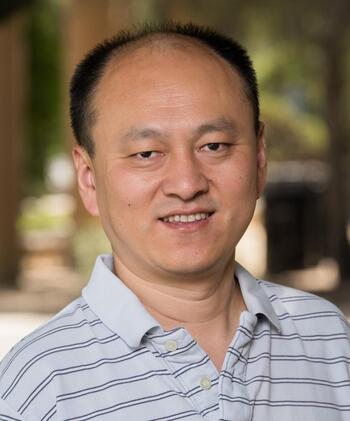
Hongbin Li is the Co-director of Stanford Center on China's Economy and Institutions, and a Senior Fellow of Stanford Institute for Economic Policy Research (SIEPR) and the Freeman Spogli Institute for International Studies (FSI). Hongbin obtained his Ph.D. in economics from Stanford University in 2001 and joined the economics department of the Chinese University of Hong Kong (CUHK), where he became full professor in 2007. He was also one of the two founding directors of the Institute of Economics and Finance at the CUHK. He taught at Tsinghua University in Beijing 2007-2016 and was C.V. Starr Chair Professor of Economics in the School of Economics and Management. He founded the Chinese College Student Survey (CCSS) in 2009 and the China Employer-Employee Survey (CEES) in 2014.
Hongbin’s research has been focused on the transition and development of the Chinese economy, and the evidence-based research results have been both widely covered by media outlets and well read by policy makers around the world. He is currently the co-editor of the Journal of Comparative Economics.
Register Here
Register once to receive the Zoom meeting link that will be used for all lectures in this series.
Academic Seminar | Zoom Meeting
Registration Required