Elections
Authors
News Type
Commentary
Date
Paragraphs

A British exit from the European Union would slow economic growth, reduce Europe's impact in world politics, and strengthen regimes such as Russia's that prefer a weaker, less united Europe, Stanford expert Christophe Crombez says.

The United Kingdom would lose more than it would gain if it left the European Union, a Stanford scholar said.

So would other European nations, and the real winners would be countries that seek to divide European unity, said Christophe Crombez, a consulting professor in Stanford’s Europe Center in the Freeman Spogli Institute for International Studies.

Britain is holding a referendum on June 23 to decide whether the country should leave or remain in the European Union.

“It would bring but an illusion of sovereignty,” said Crombez, who studies European Union politics, parliamentary systems, political economy and economic analysis of political institutions. He is an economist from Belgium.

The Stanford News Service recently interviewed Crombez on the upcoming vote, known as “Brexit.”

What is Brexit?

The term Brexit refers to the United Kingdom’s withdrawal from the European Union. Article 50 of the Treaty on European Union allows member states to withdraw.

What are the arguments for and against Brexit?

The campaign for the UK to leave the EU uses the following main arguments: leaving would save UK taxpayers money, since the UK is a net contributor to the EU budget; the UK would no longer have to comply with EU laws it does not want, whereas currently it can be outvoted in EU institutions and forced to adopt laws it opposes; and it would allow the UK to better control migration, whereas EU citizens are currently free to move and work throughout the EU.

These three arguments can easily be refuted, however. The UK does indeed contribute to the EU budget, but the benefits it derives from being part of the EU market far outweigh the budgetary contributions. Moreover, (if Britain were to withdraw) the EU would require the UK to pay into its budget, if it wants to remain part of the EU’s internal market, as it has done with Switzerland and Norway.

Also, about half of UK exports are destined for the EU. If the UK were to leave, it would no doubt want to continue to trade with the EU. UK products would have to conform to EU rules for them to be sold in the EU. UK companies that want to export to the EU would thus continue to comply with EU rules. The difference would be that the UK would no longer be involved in setting those EU rules. Post-Brexit, the rules would thus be less to the UK’s liking than prior to it, and UK companies would comply to these less advantageous rules.

Finally, the EU would impose requirements on immigration and free movement of people on the UK in exchange for free trade with the EU, as it has with other countries in similar situations, such as Norway and Switzerland. Moreover, member states may no longer feel inclined to stop refugees from moving on to the UK if the UK were to leave, which may lead to higher rather than lower immigration.

In addition to these arguments, the Britain Stronger in Europe campaign (which supports the UK remaining in the EU) argues that Britain carries more weight in world politics as part of the EU than on its own, in trade negotiations as well as on security issues, and that a united Europe is better at dealing with (Russian President Vladimir) Putin and other authoritarian rulers, terrorist threats and international crime.

What do you think is the best decision for the United Kingdom to make on this vote?

I see no advantages to leaving the EU. It would bring but an illusion of sovereignty – consider the points above. The vote would have a negative impact on growth in the UK and the rest of the EU and, in fact, the world, and it would weaken the UK, the EU and the West in world politics.

What happens economically to Britain if the country leaves the European Union?

Trade and hence gross domestic product would be negatively affected, especially in the short term. Uncertainty would reduce investment and trade. The UK and the EU would be consumed with the negotiations on the break-up for years. This would prevent both the UK and EU from tackling more important economic and security issues. In the long term, the economy would readjust, but the result would be suboptimal.

What happens to the EU if Britain leaves?

The EU is less dependent on trade with the UK than vice versa. There would be an economic impact, but it would be less substantial. The effect would be more significant for a few countries that trade more with the UK, such as Ireland, Belgium and the Netherlands.

Brexit would, however, deliver a major blow to the idea of European unification. It would weaken the EU impact in world politics and strengthen such rulers as Putin and (Turkish President Recep Tayyip) Erdogan in their dealings with the EU.

Could a British exit open up a Pandora’s Box of other EU countries exiting or spark other regional independence movements, like  Catalonia?

That is quite possible. A number of other countries may want to hold referendums on the EU. Moreover, Brexit is likely to lead to a break-up of the UK. Scotland would likely hold another referendum and decide to leave the UK in order to stay in the EU. The same may be true for Northern Ireland in the long run. Scottish secession may then give other EU regions, such as Catalonia, further incentives to secede.

 
Hero Image
UK and EU flags Getty Images
All News button
1
Paragraphs

As the American presidential election nears, Stanford political scientist and TEC director Kenneth Scheve and David Stasavage (New York University) argue that the next president could deal with voter resentment by ending lower effective tax rates for the wealthiest Americans.

All Publications button
1
Publication Type
Commentary
Publication Date
Journal Publisher
Project Syndicate
Authors
-

Abstract

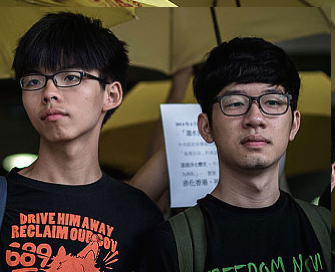
Two student leaders and activists will discuss the new era of Hong Kong's democracy movement with prospects for the future of Hong Kong after 2047.


Speaker Bios 

Image
wl
Joshua Chi-fung Wong (left), 19, founded the Hong Kong student activist group Scholarism,  and is best known for his leadership role among fellow high school students in the Sept-Dec 2014 pro-democracy  Umbrella Movement, a massive protest that demanded genuine universal suffrage for China's Hong Kong Special Administrative Region. Wong first attained popular fame in the highly successful mid-2012 "anti-Brain Washing" campaign against the HKSAR government's introduction of a mandatory "national education" course to all local schools to promote pro-PRC/CCP patriotism. He was named one of TIME Magazine's “Most influential Teens of 2014” and was nominated for TIME's 2014 “Person of The Year”.

Nathan Kwun-chung Law, 22, Is a well-known student leader and organizer in Hong Kong. He is Secretary General of the Hong Kong Federation of Students, having been a Standing Committee member from 2014-15. He participated in the only negotiation session with the Hong Kong SAR government during the Umbrella Movement.

This event is sponsored by the Taiwan Democracy Project in the Center on Democracy, Development, and the Rule of Law. It is free and open to the public. 


Video of event

Post-event interview with Joshua Wong and Nathan Law

CISAC Conference Room

Encina Hall, 2nd Floor

616 Serra Street, Stanford, CA 94305


Joshua Wong Speaker
Nathan Law Speajer
Seminars
-

Abstract

In this talk Nancy Okail will reflect on the renewed crackdown on civil society in Egypt, the closing of public space, and the continued regression in rights and freedoms. In the course of the past months the military-sponsored regime of Abdel-Fattah Al-Sisi has escalated its confrontation with civil society organizations by announcing a new set of investigations against prominent human rights defenders and NGOs. The talk will analyze the conditions motivating the regime’s renewed crackdown against civil society and the impact of these politically motivated investigations on the regime’s domestic and international standing and the struggle for political change in Egypt.
 

Speaker Bio

Image
nancy okail
Nancy Okail is the Executive Director of The Tahrir Institute for Middle East Policy (TIMEP). She brings more than 15 years of experience promoting democracy and development in the Middle East and North Africa region to this role. Prior to joining TIMEP, Dr. Okail was the director of Freedom House’s Egypt program. She has also worked with the Egyptian government as a senior evaluation officer of foreign aid and has managed programs for Egyptian pro-democracy organizations that challenged the Mubarak regime. She was also one of the defendants convicted in the widely publicized case of 43 non-governmental organization employees charged with using foreign funds to foment unrest in Egypt. She was sentenced in absentia to five years in prison, and, as a result, has spent the last four years in exile. She holds a Ph.D. from the University of Sussex in the U.K. where her dissertation examined the power relations of foreign aid.


[[{"fid":"222701","view_mode":"crop_870xauto","fields":{"format":"crop_870xauto","field_file_image_description[und][0][value]":"Nancy Okail flyer","field_file_image_alt_text[und][0][value]":"","field_file_image_title_text[und][0][value]":"","field_credit[und][0][value]":"","field_caption[und][0][value]":"","field_related_image_aspect[und][0][value]":"","thumbnails":"crop_870xauto"},"type":"media","attributes":{"width":"870","class":"media-element file-crop-870xauto"}}]]


CISAC Central Conference Room
Encina Hall, 2nd Floor
616 Serra St
​Stanford, CA 94305

Nancy Okail Executive Director TIMEP
Seminars
News Type
News
Date
Paragraphs

In a recent piece in Jadaliyya Magazine, Program on Arab Reform and Democracy Visiting Scholar Amr Hamzawy comments on the growing social discontent with failtures of the military-backed regime in Egypt. Hamzawy states that aside from silencing dissident voices, the regime is also implementing a powerful strategy of 'ridiculing politics' where civilian communities are rendered incompetent and inferior to the current generals running the country. Hamzawy was elected to serve in Egypt’s first parliament after the outset of the January 25 Revolution before it was dissolved in the summer of 2012.


Hero Image
Egypt Yannis Behrakis web PBS
All News button
1
-

Abstract:

The Wild Lily movement was a student demonstration in 1990 calling for democracy through direct election. 24 years later, the Sunflower movement was driven by a coalition of students and civic groups that were discontent with the Taiwanese government's handling of China relations. We discuss the general trajectory of student movements and the subsequent rise of numerous 'Third Force' parties that represent a new way for civic engagement in politics. 

Speaker Bio:

Dr. Fan Yun (范雲), PhD, is associate professor of sociology at the National Taiwan University. She is a politician, sociology scholar, feminist theorist, and former chairperson of the Social Democratic Party in Taiwan. After graduating from NTU with a B.A. and M.A. in Sociology, she received her PhD in Sociology from Yale University. She was president of the student association at NTU, assistant research fellow at Academia Sinica, commander for the Wild Lily student movement, and chairperson for the Awakening Foundation for women's rights. Her research interests include social movement, collective action, gender politics, identity politics, civil society and democracy. She has participated in social movement since the Wild Lily student movement in 1990, and was participant and witness to the trajectory of Taiwan’s transition into modern civil society and democracy.

Bechtel Conference Room

Encina Hall, 1st Floor

616 Serra St., Stanford, CA

Fan Yun Associate Professor of Sociology Keynote Speaker National Taiwan University
Lectures
-

In January 2016, voters in Taiwan went to the polls to select a new president and legislature, bringing to a close President Ma Ying-jeou’s second and final term in office. This roundtable, held at the annual conference of the Association of Asian Studies in Seattle, Washington, brings together four specialists on Taiwanese politics to reflect on the legacy of the last eight years of rule by the Kuomintang (Chinese Nationalist Party), and to consider the challenges facing the new DPP administration of Tsai Ing-wen, which takes office in May 2016. 


The roundtable panel will consider questions about five key developments under President Ma. First, on cross-Strait relations: what has been the political impact of the wide array of agreements that Taipei signed with the PRC, and is this period of enhanced cooperation likely to be sustained by his successor? Second, on the economy: Taiwan’s economy has become increasingly integrated with that of mainland China. What are the long-term political consequences of this trend? Does the next administration have any feasible alternatives to continued dependence on the PRC market? Third, on social changes: wealth inequality has risen significantly under President Ma. Why, and with what consequences for Taiwan’s social compact? Fourth, on social movements: social activism has surged during the Ma era, most notably during the student protests that came to be called the Sunflower Movement. What are the root causes of this increase in social movement activity, and what are likely to be the lasting consequences for Taiwan’s democracy? And finally, on democratic governance: the Ma administration to a surprising degree struggled to pass reforms and to respond effectively to social demands despite holding a large KMT majority in the legislature. Is this worrisome? Does it indicate a general decline in the Taiwanese political system’s ability to govern, or is it something more specific to the Ma administration?  

In considering these questions, the panelists will contribute to the debate about both the state of Taiwan’s democracy and Ma Ying-jeou’s legacy as president.

This special event at the Association for Asian Studies annual conference is sponsored by the Taiwan Democracy Project at the Center on Democracy, Development, and the Rule of Law at Stanford University. 


Washington State Convention Center, Seattle, WA

Larry Diamond Senior Fellow Chair Center on Democracy, Development and the Rule of Law
Yun Fan Associate Professor of Sociology Panelist National Taiwan University
Szu-Yin Ho Professor of International Relations Panelist Tamkang University
Shelley Rigger Professor of Political Science Panelist Davidson College
Yun-han Chu Professor of Political Science Panelist National Taiwan University
Panel Discussions
Subscribe to Elections