


The Repudiation of American Internationalism and What It Means for Japan
Paragraphs
Prime Minister Shinzo Abe has apparently decided to hold an urgent meeting with U.S. President-elect Donald Trump in New York, on his way to the Asia Pacific Economic summit in Peru. It is far from clear what the Prime Minister hopes to accomplish, or whether such a meeting will even be a good idea, so early in the transition process. But one thing is surely true – the Prime Minister needs to go into that meeting with a clear understanding of what has happened in the U.S. and what it could mean for U.S.-Japan relations, Sneider writes.
All Publications button
1
Publication Type
Commentary
Publication Date
Journal Publisher
Toyo Keizai Online
Valuing Peace: The Effects of Financial Market Exposure on Votes and Political Attitudes
-
- This talk is co-sponsored by the Stanford Institute for Innovation in Developing Economies (SEED) -
Abstract: Financial markets expose individuals to the broader economy. Does participation in financial markets also lead citizens to re-evaluate the costs of conflict, their views on politics and even their voting decisions? Prior to the 2015 Israeli elections, we randomly assigned financial assets from Israeli and Palestinian companies to likely voters and gave them incentives to actively trade for up to seven weeks. Exposure to financial markets systematically shifted vote choices and increased support for peace initiatives. We delineate the mechanisms for this change and show that financial market exposure led to learning and reevaluation of the economic costs of conflict.
About the Speaker: Saumitra Jha is an Associate Professor of Political Economy at Stanford’s Graduate School of Business, and, by courtesy, of Economics and of Political Science. Saumitra's research focuses upon understanding the effectiveness of organizations and innovations that societies have developed to address the problems of violence and other political risks, and to seek new lessons for fostering peace and development. Saum holds a BA from Williams College, master’s degrees in economics and mathematics from the University of Cambridge, and a PhD in economics from Stanford University. Prior to joining the GSB, he was an Academy Scholar at Harvard University. He has been a Fellow of the Niehaus Center for Globalization and Governance and the Center for the Study of Democratic Politics at Princeton University and received the Michael Wallerstein Award for best published article in Political Economy from the American Political Science Association in 2014 for his research on ethnic tolerance. Saumitra has consulted on economic and political risk issues for the United Nations/ WTO and the World Bank.
Encina Hall, 2nd floor
Saumitra Jha
Associate Professor of Political Economy
Stanford University's Graduate School of Business
Seminars
Reality-based election security
-
Abstract: There is a state of high anxiety about this year's election being "hacked" or "rigged". The media began speculating about the possibility when emails were stolen from the Democratic National Committee and, later, Hillary Clinton's campaign chairman, allegedly by state-sponsored hackers. Additionally, Donald Trump has been predicting that the election will be "rigged", worrying many of his supporters. New voter ID requirements have been imposed in many states in response to allegations of "voter fraud", but voting rights advocates worry that these requirements will disenfranchise many voters. In this talk, I will attempt a rational evaluation of election security risks and propose what we should do to address them.
About the Speaker: David L. Dill is the Donald E. Knuth Professor in the School of Engineering and Professor of Computer Science at Stanford University, where he has been on the faculty for 29 years. He is a member of the National Academy of Engineering and the American Academy of Arts and Sciences. He has been working on policy issues in voting technology since 2003. He is the founder of VerifiedVoting.org, whose mission is to safeguard elections in the digital age, and continues to serve as a board director in that organization. He was a principle investigator in the National Science Foundation's "ACCURATE" voting tresearch center center from 2006 to 2011. In 2004, he received the Electronic Frontier Foundation's "Pioneer Award" for spearheading and nurturing the popular movement for integrity and transparency in modern elections."
Encina Hall, 2nd floor
David Dill
Professor in the School of Engineering and Professor of Computer Science
Stanford University
Seminars


Election 2016: Recapping the Presidential Race
-
**We are no longer accepting RSVPs. This event is at capacity. Please join us via Facebook Live.**
The Presidential Election of 2016 has been unlike any in modern American history. How will voters decide between Donald J. Trump and Hillary Clinton on Election Day? What issues dominated the election in the final days of each campaign, and what consequences will this campaign have on the Republican and Democratic parties? What does this election mean for political polarization, campaign finance reform, and the rise of social media?
Join a panel discussion with Larry Diamond, Francis Fukuyama, Bruce Cain, and Nate Persily of the Program on American Democracy in Comparative Perspective at Stanford's Center on Democracy, Development, and the Rule of Law after the election. The panel will discuss the candidates, the campaigns, and the implications for American democracy.
And join the conversation on Twitter: @StanfordCDDRL #CDDRLrecap
Speaker(s) Bio:
Image
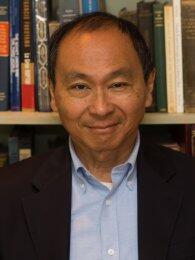
Francis Fukuyama is the Olivier Nomellini Senior Fellow at the Freeman Spogli Institute for International Studies (FSI) and the Mosbacher Director of FSI's Center on Democracy, Development, and the Rule of Law (CDDRL). He is also a professor by courtesy in the Department of Political Science. He was previously at the Paul H. Nitze School of Advanced International Studies (SAIS) of Johns Hopkins University, where he was the Bernard L. Schwartz Professor of International Political Economy and director of SAIS' International Development program.
Image
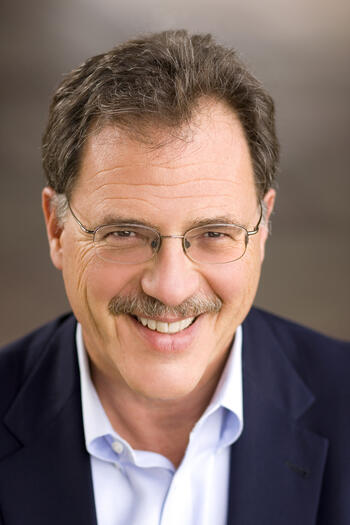
Larry Diamond is a senior fellow at the Hoover Institution and at the Freeman Spogli Institute for International Studies. He also serves as the Peter E. Haas Faculty Director of the Haas Center for Public Service at Stanford. For more than six years, he directed FSI’s Center on Democracy, Development, and the Rule of Law, and he continues to lead its programs on Liberation Technology, Arab Reform and Democracy, and Democracy in Taiwan. He is the founding co-editor of the Journal of Democracy and also serves as Senior Consultant at the International Forum for Democratic Studies of the National Endowment for Democracy.
Image
Bruce E. Cain is a Professor of Political Science at Stanford University and Director of the Bill Lane Center for the American West. He received a BA from Bowdoin College (1970), a B Phil. from Oxford University (1972) as a Rhodes Scholar, and a Ph D from Harvard University (1976). He taught at Caltech (1976-89) and UC Berkeley (1989-2012) before coming to Stanford. Professor Cain was Director of the Institute of Governmental Studies at UC Berkeley from 1990-2007 and Executive Director of the UC Washington Center from 2005-2012.
Image
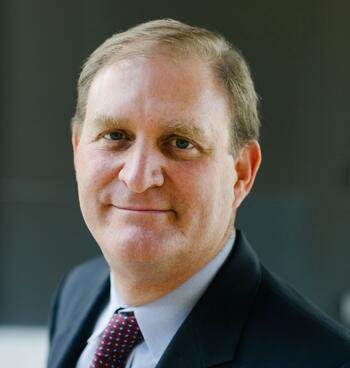
Nathaniel Persily is a James B. McClatchy Professor and Professor, by courtesy, of Political Science and of Communication at Stanford Law School. He received J.D. from Stanford Law School in 1998 and M.A. in 1994; PhD in Political Science in 2002 from U.C. Berkeley. He served as Senior Research Director at the Presidential Commission on Election Administration June 2013-2014.
Larry Diamond
CDDRL
Stanford University
Encina Hall, C147
616 Jane Stanford Way
Stanford, CA 94305-6055
0
ldiamond@stanford.edu
Mosbacher Senior Fellow in Global Democracy at the Freeman Spogli Institute for International Studies
William L. Clayton Senior Fellow at the Hoover Institution
Professor, by courtesy, of Political Science and Sociology
Larry Diamond is the William L. Clayton Senior Fellow at the Hoover Institution, the Mosbacher Senior Fellow in Global Democracy at the Freeman Spogli Institute for International Studies (FSI), and a Bass University Fellow in Undergraduate Education at Stanford University. He is also professor by courtesy of Political Science and Sociology at Stanford, where he lectures and teaches courses on democracy (including an online course on EdX). At the Hoover Institution, he co-leads the Project on Taiwan in the Indo-Pacific Region and participates in the Project on the U.S., China, and the World. At FSI, he is among the core faculty of the Center on Democracy, Development and the Rule of Law, which he directed for six and a half years. He leads FSI’s Israel Studies Program and is a member of the Program on Arab Reform and Development. He also co-leads the Global Digital Policy Incubator, based at FSI’s Cyber Policy Center. He served for 32 years as founding co-editor of the Journal of Democracy.
Diamond’s research focuses on global trends affecting freedom and democracy and on U.S. and international policies to defend and advance democracy. His book, Ill Winds: Saving Democracy from Russian Rage, Chinese Ambition, and American Complacency, analyzes the challenges confronting liberal democracy in the United States and around the world at this potential “hinge in history,” and offers an agenda for strengthening and defending democracy at home and abroad. A paperback edition with a new preface was released by Penguin in April 2020. His other books include: In Search of Democracy (2016), The Spirit of Democracy (2008), Developing Democracy: Toward Consolidation (1999), Promoting Democracy in the 1990s (1995), and Class, Ethnicity, and Democracy in Nigeria (1989). He has edited or coedited more than fifty books, including China’s Influence and American Interests (2019, with Orville Schell), Silicon Triangle: The United States, China, Taiwan the Global Semiconductor Security (2023, with James O. Ellis Jr. and Orville Schell), and The Troubling State of India’s Democracy (2024, with Sumit Ganguly and Dinsha Mistree).
During 2002–03, Diamond served as a consultant to the US Agency for International Development (USAID) and was a contributing author of its report, Foreign Aid in the National Interest. He has advised and lectured to universities and think tanks around the world, and to the World Bank, the United Nations, the State Department, and other organizations dealing with governance and development. During the first three months of 2004, Diamond served as a senior adviser on governance to the Coalition Provisional Authority in Baghdad. His 2005 book, Squandered Victory: The American Occupation and the Bungled Effort to Bring Democracy to Iraq, was one of the first books to critically analyze America's postwar engagement in Iraq.
Among Diamond’s other edited books are Democracy in Decline?; Democratization and Authoritarianism in the Arab World; Will China Democratize?; and Liberation Technology: Social Media and the Struggle for Democracy, all edited with Marc F. Plattner; and Politics and Culture in Contemporary Iran, with Abbas Milani. With Juan J. Linz and Seymour Martin Lipset, he edited the series, Democracy in Developing Countries, which helped to shape a new generation of comparative study of democratic development.
Download full-resolution headshot; photo credit: Rod Searcey.
Former Director of the Center on Democracy, Development and the Rule of Law
Faculty Chair, Jan Koum Israel Studies Program
Hide publication sections
Off
Francis Fukuyama
Encina Hall, C148
616 Jane Stanford Way
Stanford, CA 94305
0
f.fukuyama@stanford.edu
Olivier Nomellini Senior Fellow at the Freeman Spogli Institute for International Studies
Director of the Ford Dorsey Master's in International Policy
Research Affiliate at The Europe Center
Professor by Courtesy, Department of Political Science
Francis Fukuyama is the Olivier Nomellini Senior Fellow at Stanford University's Freeman Spogli Institute for International Studies (FSI), and a faculty member of FSI's Center on Democracy, Development and the Rule of Law (CDDRL). He is also Director of Stanford's Ford Dorsey Master's in International Policy, and a professor (by courtesy) of Political Science.
Dr. Fukuyama has written widely on issues in development and international politics. His 1992 book, The End of History and the Last Man, has appeared in over twenty foreign editions. His book In the Realm of the Last Man: A Memoir will be published in fall 2026.
Francis Fukuyama received his B.A. from Cornell University in classics, and his Ph.D. from Harvard in Political Science. He was a member of the Political Science Department of the RAND Corporation, and of the Policy Planning Staff of the US Department of State. From 1996-2000 he was Omer L. and Nancy Hirst Professor of Public Policy at the School of Public Policy at George Mason University, and from 2001-2010 he was Bernard L. Schwartz Professor of International Political Economy at the Paul H. Nitze School of Advanced International Studies, Johns Hopkins University. He served as a member of the President’s Council on Bioethics from 2001-2004. He is editor-in-chief of American Purpose, an online journal.
Dr. Fukuyama holds honorary doctorates from Connecticut College, Doane College, Doshisha University (Japan), Kansai University (Japan), Aarhus University (Denmark), the Pardee Rand Graduate School, and Adam Mickiewicz University (Poland). He is a non-resident fellow at the Carnegie Endowment for International Peace. He is a member of the Board of Trustees of the Rand Corporation, the Board of Trustees of Freedom House, and the Board of the Volcker Alliance. He is a fellow of the National Academy for Public Administration, a member of the American Political Science Association, and of the Council on Foreign Relations. He is married to Laura Holmgren and has three children.
(October 2025)
Global Populisms
A new project examining the global surge in populist movements and what it means for established democratic rules and institutions.
Read More
CV
Document
francis_fukuyama_cv_april_2024.pdf
(223.42 KB)
Hide publication sections
Off
Director
Bill Lane Center for the American West
Nathaniel Persily
Professor of Law
Stanford Law School
Panel Discussions
Maine can bring out the ‘better angels’ of our democracy with ranked-choice voting
News Type
Commentary
Date
Paragraphs
"American democracy is in trouble, but with a “yes” vote on Question 5 Mainers could do something significant to begin to fix it. By adopting ranked-choice voting, Maine could make its government work better while setting a model of reform for the rest of the country." - writes Larry Diamond, in an OpEd for the http://bangordailynews.com/. Read the whole article here.
Hero Image

All News button
1
Mexico and the US: Trump vs. Facts
News Type
Commentary
Date
Paragraphs
Image

The infographic shows the claims presidential candidate Donald Trump made during the first debate versus facts. For the big picture, click here.
OPINION:
By now it should be clear that Donald Trump has not paid federal taxes, probably for many years, hence his reticence to publicly release his income tax returns. This infographic was prepared after the first presidential debate, to provide some back-of-the-envelope calculations of taxes paid by Mexicans in the United States, both documented and undocumented.
Those taxes contribute to the U.S. economy and to the many services, such as schools, clinics and infrastructure that we all enjoy. The infographic also highlights that all evidence suggests NAFTA had a very small (but positive) impact on the U.S. economy and that a repeal of the North American Free Trade Agreement would disrupt millions of U.S. jobs that depend on trade with Mexico. Abandoning NAFTA would have cataclysmic effects on the Mexican economy, only adding to migratory pressures. It could even threaten U.S. security by pushing young unemployed Mexicans into illegal activities, such as drug trafficking.
Finally, the infographic highlights one additional element of the presidential debate that received relatively little scrutiny. This relates to the way taxes are in Europe and Latin America using a Value Added Tax (VAT), instead of the system in the United States that depends on state and local sales taxes. American companies are not taxed by Mexico in any protectionist manner. The functioning of VAT is somewhat complex, because it involves paying the tax at the point of sale, but also deducing any taxes paid. VAT rules are what allow American tourists visiting Europe to get a refund on the taxes they paid on the merchandise they take home. Perhaps due to ignorance regarding how VAT collection works, the false asseveration by Trump went largely unchallenged in public debate.
Citizens around the world are concerned about the efficient use of taxes and the likelihood of waste and possible corruption in government spending. A basic premise of living in a political community is that all of us have an obligation to contribute our fair share. We may disagree about what that fair share might be, and whether the rich should pay more than the poor. But there is no question that the Mexicans whom the Republican candidate intends to deport, as well as those legal residents and citizens, contribute far more to our nation than he does. According to many news reports, Trump has not paid federal taxes nor has he contributed personal funds to the charities supported by his foundation. His philosophy regarding solidarity toward others seems to have been expressed quite explicitly during the first debate:
"But I take advantage of the laws of the nation because I am running the company. My obligation right now is to do well for myself, my family, my employees, for my companies."
I believe that anyone running for public service, and the most powerful office in the world, simply cannot make a statement like that. Public servants should not look for the loopholes in the laws, but be held to a higher standard that follows the spirit of the law. Tax codes are created to ensure that all of us contribute to the greater good. Someone running for the presidency of the United States should aim higher than just doing well for his family and private interests.
A U.S. president has obligations toward the people of his nation, before himself or his family. Presidential responsibilities (moral or otherwise) should extend to U.S. allies, such as Mexico, and perhaps even to all the inhabitants of the world. Someone who lies, cheats on his taxes, and does not care for others is simply not fit to become the next President of the United States.
Hero Image

All News button
1
Francis Fukuyama: The post-truth society
News Type
News
Date
Paragraphs
"The deteriorating norms of truthfulness and authority that we’ve seen throughout the 2016 election threaten the long-term integrity of U.S. institutions", says CDDRL Mosbacher director Francis Fukuyama for the Stanford Election 2016 through the Wide Angle project.
Hero Image

All News button
1

