Elections
Paragraphs

Republican presidential nominee Donald Trump has claimed that the U.S. presidential election is rigged. In other countries where free and fairness of elections are suspect, political and societal leaders often call upon international short-term and long-term election monitors to observe their polls and render an assessment.

All Publications button
1
Publication Type
Commentary
Publication Date
Authors
Michael A. McFaul
-

Torun Dewan is a political scientist at the London School of Economics. His main research is in political economy and in the formal and empirical analysis of decision making in political parties, legislatures and executives. Amongst other issues he has looked at how cabinets structure the incentives of ministers, how leadership acts as a coordinating focal point, how political parties aggregate dispersed information, and how elections provide incentives for policy experimentation.


This seminar is part of the Comparative Politics Workshop in the Department of Political Science and is co-sponsored by The Europe Center.

Torun Dewan London School of Economics
Workshops
-

Image
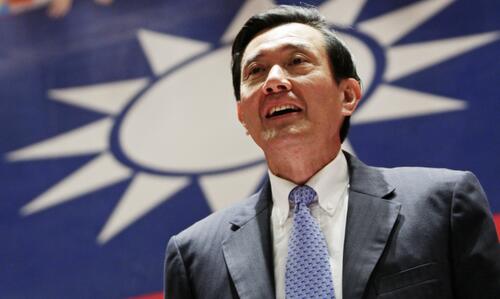
Ma Ying-jeou KMT

The eight-year presidency of Ma Ying-jeou (2008-2016) in Taiwan left a complex legacy of political achievements, confrontations, and disappointments that defies easy characterization. It began with President Ma and the Kuomintang’s (KMT) commanding electoral victories in the 2008 elections, and ended with the KMT’s overwhelming loss to the resurgent Democratic Progressive Party (DPP) and its leader Tsai Ing-wen in 2016.

It featured rapid conclusions to a broad set of agreements on cross-Strait cooperation with the People’s Republic of China (PRC). But worries about closer ties with the PRC also triggered a popular backlash against growing mainland Chinese influence in Taiwan’s economy and culminated in a student-led occupation of the Legislative Yuan.

It coincided with contradictory trends in public opinion, including both the consolidation of a separate Taiwanese identity and support for the status quo in cross-Strait relations, as well as the increasing salience of divisions over social and environmental issues such as same-sex marriage and green energy at the same time as rising concerns about economic inequality.

It also marked a return to unified government after the acrimonious partisan fights of the Chen Shui-bian years, but long-standing intra-KMT divisions and the decentralized organization of the legislature continued to frustrate the administration, especially in President Ma’s second term.        

Finally, the Ma era produced no consensus about how to move beyond Taiwan’s developmental state legacies. Plans for domestic economic liberalization and greater integration into the global economy were only partially carried out, and the Ma administration ignored or struggled to address rising inequality, stagnant wages, increasing economic dependence on the PRC market, and a skewed tax system favoring investors and corporations over salaried workers.


Conference Agenda

The 11th Annual Conference on Taiwan Democracy will bring together scholars from Taiwan, the US, and Europe to consider these political achievements, confrontations, and disappointments in depth, and to assess the strengths and weaknesses of Taiwan’s democracy at the end of the Ma Ying-jeou’s presidency. Conference participants will discuss trends in public opinion, party politics and elections, cross-Strait relations, governance and media, and the performance of political institutions. The conference papers will be revised and included in an edited volume covering democratic practice during the Ma Ying-jeou era in Taiwan.

The conference is free and open to the public. Those interested in attending are requested to RSVP at the link above. This event is organized by the Taiwan Democracy Project in the Center on Democracy, Development, and the Rule of Law.


Thursday, March 9

9:15-10:45. Panel I. Public Opinion and Elections

  • Min-hua Huang, "Why Young Voters Abandoned the KMT"
  • Ching-hsin Yu, "Trends in National Identity, Partisanship, and Attitudes toward Cross-Strait Relations"
  • Yun-han Chu, discussant

11:00-12:45. Panel II. Party Politics

  • Austin Wang, "Tsai Ing-wen and the DPP: The Path Out of the Political Wilderness"
  • Nathan Batto, "The KMT as a Presidentialized Party: Party Leaders and Shifts in China Discourse"
  • Kharis Templeman, "The Disruption that Wasn't: How 2016 Changed the Taiwanese Party System"
  • Ching-hsin Yu, discussant

12:45-1:45. Lunch

1:45-3:30. Panel III. Economics, Security, and Cross-Strait Relations

  • Szu-yin Ho, "Ma Ying-jeou's Cross-Strait Policy: Ambitions, Constraints, Results" 
  • Lang Kao, "Cross-Strait Agreements and Taiwan's Executive-Legislative Relationship, 2008-2016"
  • Dean Chen, "In the Shadow of Great Power Rivalry: The KMT Administration's Relations with America, China, and Japan, 2008-2016"
  • Larry Diamond, discussant


Friday, March 10

9:15-10:45. Panel IV. Governance, Media, and Civil Society

  • Eric Yu, "The Changing Media Environment and Public Opinion"
  • Yun-han Chu and Yu-tzung Chang, "The Challenge of Governability in Taiwan"
  • Kharis Templeman, discussant

11:00-12:30. Panel V. Political Institutions

  • Shih-hao Huang, w/ Shing-yuan Sheng, "Decentralized Legislative Organization and Its Consequences for Policy-making in the Ma Ying-jeou Era"
  • Christian Goebel, "Special Prosecutors, Courts, and Other Accountability Institutions under Ma YIng-jeou"
  • TJ Pempel, discussant

12:30-1:30. Lunch


Oksenberg Room, 3rd Floor, Encina Hall Central

CDDRL
Stanford University
Encina Hall, C147
616 Jane Stanford Way
Stanford, CA 94305-6055

(650) 724-6448 (650) 723-1928
0
Mosbacher Senior Fellow in Global Democracy at the Freeman Spogli Institute for International Studies
William L. Clayton Senior Fellow at the Hoover Institution
Professor, by courtesy, of Political Science and Sociology
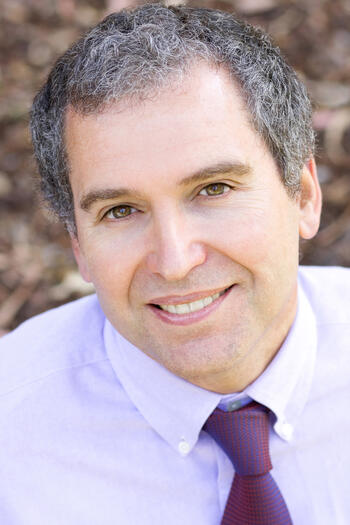
diamond_encina_hall.png MA, PhD

Larry Diamond is the William L. Clayton Senior Fellow at the Hoover Institution, the Mosbacher Senior Fellow in Global Democracy at the Freeman Spogli Institute for International Studies (FSI), and a Bass University Fellow in Undergraduate Education at Stanford University. He is also professor by courtesy of Political Science and Sociology at Stanford, where he lectures and teaches courses on democracy (including an online course on EdX). At the Hoover Institution, he co-leads the Project on Taiwan in the Indo-Pacific Region and participates in the Project on the U.S., China, and the World. At FSI, he is among the core faculty of the Center on Democracy, Development and the Rule of Law, which he directed for six and a half years. He leads FSI’s Israel Studies Program and is a member of the Program on Arab Reform and Development. He also co-leads the Global Digital Policy Incubator, based at FSI’s Cyber Policy Center. He served for 32 years as founding co-editor of the Journal of Democracy.

Diamond’s research focuses on global trends affecting freedom and democracy and on U.S. and international policies to defend and advance democracy. His book, Ill Winds: Saving Democracy from Russian Rage, Chinese Ambition, and American Complacency, analyzes the challenges confronting liberal democracy in the United States and around the world at this potential “hinge in history,” and offers an agenda for strengthening and defending democracy at home and abroad.  A paperback edition with a new preface was released by Penguin in April 2020. His other books include: In Search of Democracy (2016), The Spirit of Democracy (2008), Developing Democracy: Toward Consolidation (1999), Promoting Democracy in the 1990s (1995), and Class, Ethnicity, and Democracy in Nigeria (1989). He has edited or coedited more than fifty books, including China’s Influence and American Interests (2019, with Orville Schell), Silicon Triangle: The United States, China, Taiwan the Global Semiconductor Security (2023, with James O. Ellis Jr. and Orville Schell), and The Troubling State of India’s Democracy (2024, with Sumit Ganguly and Dinsha Mistree).

During 2002–03, Diamond served as a consultant to the US Agency for International Development (USAID) and was a contributing author of its report, Foreign Aid in the National Interest. He has advised and lectured to universities and think tanks around the world, and to the World Bank, the United Nations, the State Department, and other organizations dealing with governance and development. During the first three months of 2004, Diamond served as a senior adviser on governance to the Coalition Provisional Authority in Baghdad. His 2005 book, Squandered Victory: The American Occupation and the Bungled Effort to Bring Democracy to Iraq, was one of the first books to critically analyze America's postwar engagement in Iraq.

Among Diamond’s other edited books are Democracy in Decline?; Democratization and Authoritarianism in the Arab WorldWill China Democratize?; and Liberation Technology: Social Media and the Struggle for Democracy, all edited with Marc F. Plattner; and Politics and Culture in Contemporary Iran, with Abbas Milani. With Juan J. Linz and Seymour Martin Lipset, he edited the series, Democracy in Developing Countries, which helped to shape a new generation of comparative study of democratic development.

Download full-resolution headshot; photo credit: Rod Searcey.

Former Director of the Center on Democracy, Development and the Rule of Law
Faculty Chair, Jan Koum Israel Studies Program
Date Label
Conferences
Paragraphs

"Liberty," "secularism," "security," "people," "identity" . . . Politicians like words that slam or clash. But what precise meaning do they give them? At the dawn of a high-risk election year, and in the context of the rise of the National Front and increased terrorist threat, it is imperative to clarify the meaning of the words of the political debate.

For the first time, a scientific analysis decodes the logic of the discourse of the politicians who are competing for the 2017 presidential election - Marine Le Pen, François Fillon, Jean-Luc Mélenchon, Supplanted - François Hollande, Nicolas Sarkozy, Alain Juppé. At the crossroads of an ancient world and a new world, the ability of politicians to read the contemporary world and to verbalize it is scrutinized.

The author sifts over 1,300 texts - 2.5 million words - written or spoken from 2014 to 2016 to decrypt keywords, fetish words, and taboo words, and to map the positions of each and the reconfiguration of the political landscape.

This semantic, stylistic, and rhetorical inquiry reveals that behind the surface of small sentences is the profound structure of a political worldview. What do they say ? Who is "left" and "right" at this time of elastic political concepts? Are the "populisms" on both sides really the same? And what are the dead angles of these seasoned orators, who handle both silences and unspoken words, as well as slogans and soundbites?

More than ever, the battle of ideas will pass through the battle of words. And the one who imposes his own sense of "secularism" or "Republic" will have won an ideological victory, even beyond the electoral results.

Professor of literature at Stanford University and associate researcher at the Cevipof at Sciences Po, Cécile Alduy is the author of Le Seuil de Marine Le Pen: Decryption of the new frontistic discourse (2015).

All Publications button
1
Publication Type
Books
Publication Date
Journal Publisher
Seuil
Authors
Authors
News Type
News
Date
Paragraphs
The future of relations between China and the United States depends on the readiness of both governments to focus on resolving shared challenges, longtime journalist John Pomfret said at the Shorenstein Asia-Pacific Research Center (APARC) last Wednesday.
 
“The reality of the U.S.-China relationship is collaboration and competition,” said Pomfret, who served for 15 years as a foreign correspondent, describing the nature of interaction between the two countries that began to normalize relations in 1972.
 
Pomfret's remarks were delivered at a colloquium entitled, “The United States and China in the Era of Donald Trump,” which explored the unorthodox approach Donald Trump took during his campaign on a range of issues related to China, and implications for the bilateral relationship now that Trump has assumed the U.S. presidency.
 
Pomfret over the course of his journalism career spent seven years covering China, including during the 1989 Tiananmen Square protests and from 1998 through 2003 as the bureau chief for the Washington Post in Beijing, and recently authored the book, The Beautiful Country and the Middle Kingdom, which examines U.S.-China relations from 1776 to the present. He won the 2007 Shorenstein Journalism Award, an annual honor conferred to a journalist who produces outstanding reporting on Asia.
 
“It’s clear that a new type of reciprocity is needed to right the balance in the U.S.-China relationship, but just whether Trump and his team have the wherewithal to do it…is very much an open question,” he said.
 
Trump continues to promise to restore manufacturing jobs in the United States, but fulfillment of that promise could come in conflict with its trade relationship with China, where much manufacturing of U.S. products takes place, he said.
 
Equally important in the U.S.-China relationship is how to address North Korea and its nuclear weapons and ballistic missiles program, which remains an “extremely complicated” and pressing situation, he said.
 
Pomfret expressed uncertainty about the Trump administration’s capacity to change China’s position from the status quo, which has long supported the North Korean regime by way of trade and relaxed implementation of U.N. sanctions despite repeated provocations.
 
Yet, amidst the vague foreign policy positions projected by Trump toward China, “there is one positive, and that is that he has the Chinese off-balance,” Pomfret admitted.
 
For Pomfret, his appearance at Stanford was a bit of a homecoming; he spoke to an audience of 200 faculty, students and community members at the colloquium sponsored by the China Program and Center for East Asian Studies, the center from which he received his master’s degree in 1984.
 
Asked about the future of China and its governance, he noted that today’s China is markedly different than when he was there in the 1980s studying as a student, and later, working as a journalist. The generational changes are stark, said Pomfret, relaying a sense of optimism that the country would become more democratic over time.
 
“The amount of personal freedoms that the average Chinese person has has expanded exponentially. I think the desire of Chinese people to have more agency over their lives will continue to grow – that’s clear.”
 
Innovation will be a determinant of China’s future growth, said Pomfret, coupling the idea that societies that have knowledge-driven economies typically demand more freedoms. Without innovation, China will fall into the middle-income trap, he said, “I don’t think they want to be there; they are an incredibly proud nation.”
 
Hero Image
china uscapital reuters Reuters/Hyungwon Kang
All News button
1
Paragraphs

Scholars at Stanford's Shorenstein Asia-Pacific Research Center in the Freeman Spogli Institute for International Studies assess the strategic situation in East Asia to be unsettled, unstable, and drifting in ways unfavorable for American interests. These developments are worrisome to countries in the region, most of which want the United States to reduce uncertainty about American intentions by taking early and effective steps to clarify and solidify U.S. engagement. In the absence of such steps, they will seek to reduce uncertainty and protect their own interests in ways that reduce U.S. influence and ability to shape regional institutions. This 23-page report entitled “President Trump’s Asia Inbox” suggests specific steps to achieve American economic and security interests.

All Publications button
1
Publication Type
Policy Briefs
Publication Date
Journal Publisher
Shorenstein Asia-Pacific Research Center
Authors
Gi-Wook Shin
Takeo Hoshi
Thomas Fingar
Kathleen Stephens
Daniel C. Sneider
Donald K. Emmerson
-

ABSTRACT

Six years post Egypt’s January 25 revolution, the country remains in a state of volatility and political turmoil marked by an ailing economy, a security crisis, and unprecedented levels of repression. In this talk, Jack Shenker will discuss his recent book The Egyptians: A Radical History of Egypt's Unfinished Revolution (The New Press). The book examines the roots of Egypt’s revolution, arguing for a much more nuanced, and far-reaching view of the forces that are reshaping the region.

SPEAKER BIO

Image
js profile
Jack Shenker is an award-winning journalist based in London and Cairo, whose reporting has spanned the globe. Formerly Egypt correspondent for The Guardian, his coverage of the Egyptian revolution received multiple prizes. In 2012, his investigation into the deaths of African migrants in the Mediterranean was named news story of the year at the prestigious One World media awards. The Egyptians, published by Allen Lane / Penguin in the UK and The New Press in the US, is his first book.

CISAC Central Conference Room
Encina Hall, 2nd Floor
616 Serra St
Stanford, CA 94305

Jack Shenker Journalist and Writer
Seminars
Paragraphs

If you want to understand the trade and industrial policy that President Donald Trump is now going to pursue, simply jump into a DeLorean time machine with Marty McFly and go back to 1985. As the title of that iconic film, released that year, proclaimed – it is Back to the Future, Sneider writes.

All Publications button
1
Publication Type
Commentary
Publication Date
Journal Publisher
Toyo Keizai Online (Tokyo Business Today)
Authors
Daniel C. Sneider
News Type
Commentary
Date
Paragraphs

"The president-elect could enhance confidence in his presidency by endorsing the call of Senators McCain, Graham, Schumer, and Reed for a bipartisan select committee of Congress to undertake a 'comprehensive investigation of Russian interference' and develop 'comprehensive recommendations and, as necessary, new legislation to modernize our nation’s laws, governmental organization, and related practices to meet this challenge'” writes Larry Diamond, Senior Fellow at the Freeman Spogli Institute for International Studies in his latest article in The Atlantic. Read it here. 

Hero Image
gettyimages 630073928 Photo by Ma Ping - Pool/Getty Images
All News button
1
Subscribe to Elections