


Geography and the Gender Gap: Evidence Against the Traditional Vote Hypothesis from Post-Suffrage Sweden
-
In many countries around the world, women's enfranchisement marked the single largest expansion in the eligible electorate. In Belgium, Canada, Switzerland, and Germany, the electorate more than doubled once women could vote, while in countries that rolled out women's suffrage gradually, such as the UK and Norway, even the second smaller reforms saw the electorate grow by more than a third. The sheer size of the expansion had the potential to transform electoral politics, a prospect that provoked optimism and fear alike: for those who fought for women’s suffrage, the victory brought legitimacy and new beginnings; yet for those who fought against, the reform heralded instability. Did women's suffrage transform electoral politics for good or for bad? Did it increase electoral instability? Did women favor particular parties?
Prominent theories of post-suffrage politics suggest either that women would vote conservatively, or that women's voting power would be vitiated by their reluctance to turn out. Leveraging fine grained municipal level data from Sweden, which includes turnout figures separated by sex, to examine the impact of women's suffrage on electoral politics, we argue that the geography of the gender gap, both in terms of turnout and vote choice, jointly determine the impact of women's votes. Using three methods to estimate the gender vote gap, we find that in cities, women were slightly more likely to vote for the left than men. Although women turned out at lower rates than men overall, their concentration in cities produced a national gender vote gap for the left. These findings, which highlight how diversity among women and electoral geography produce electoral outcomes, complicate longstanding theories about the "traditional" gender voting gap.

Image

Dr. Dawn Teele holds a B.A. in Economics from Reed College, and a Ph.D. in Political Science from Yale University. Prior to joining the faculty at Penn she was a Research Fellow at the London School of Economics. Dr. Teele's research has been published in a variety of outlets in political science, including the American Political Science Review, the Journal of Politics, and Politics & Society. She is editor of a volume on social science methodology, Field Experiments and Their Critics (Yale University Press 2014), and co-editor of Good Reasons to Run: Women and Political Candidacy (Temple University Press 2020). In 2018, Princeton University Press published her book Forging the Franchise: The Political Origins of the Women’s Vote which won the Luebbert Prize for the best book in Comparative Politics from the American Political Science Association.
Online via Zoom
Dawn Langan Teele
University of Pennsylvania
Why Europe’s Single Market Surpassed America’s
-
Which has more of a “single market,” the United States or the European Union, and why? Most scholars and policy-makers will expect easy answers. Surely interstate exchange faces fewer regulatory barriers in the fluid American arena than between European countries. We argue that this common wisdom profoundly mischaracterizes both polities. The US never attempted to complete a project remotely like Europe’s SMP. Europeans have now removed or mitigated a lengthening list of barriers that Americans retain. Across the “four freedoms” of goods, services, persons and capital, today’s EU unambiguously claims and actively exercises more authority to require interstate openness than the US has ever considered. Existing explanations that privilege economic flows, institutional path dependence, or cultural attitudes struggle with these actual outcomes. Our explanation highlights contingent connections that political movements in each arena forged between ideas about markets and governance, channeling the 20th-century “return to markets” into contrasting varieties of neoliberalism.
Image

Matthias Matthijs is Associate Professor of International Political Economy at Johns Hopkins University’s School of Advanced International Studies (SAIS) and Senior Fellow for Europe at the Council on Foreign Relations (CFR) in Washington, DC. Since May 2019, he also serves as the chair of the Executive Committee of the European Union Studies Association (EUSA). He is the author of Ideas and Economic Crises in Britain (2012) and co-editor (with Mark Blyth) of The Future of the Euro (2015). He has published numerous peer-reviewed articles in the fields of comparative and international political economy, on the politics of economic ideas, and on European integration. He is currently working on a book-length project that delves into the fall and rise of national elite consensus around European integration.
Online via Zoom
Matthias Matthijs
speaker
Johns Hopkins University (SAIS)
Seminars
A wolf in sheep's clothing: Citizen uncertainty and democratic backsliding
-
A prominent contemporary phenomenon is "backsliding'' of democratic countries into (semi-)authoritarian practices. Importantly, such episodes unfold over time, and often involve uncertainty about the ultimate intentions of governments. Building on recent, we present a model in which a government engages in a reform that may allow for subsequent actions that are inconsistent with the rule of law. Citizens must decide whether to replace the incumbent following the reform. Consistent with existing work, the model suggests that polarization is an important factor in democratic backsliding. More importantly, the model demonstrates that in a dynamic setting, citizens may support incumbent governments even if citizens are fundamentally opposed to authoritarianism. One consequence is that citizens may genuinely regret their electoral choices. We illustrate the model's implications using a survey experiment in contemporary Poland.

Monika Nalepa (PhD, Columbia University) is an associate professor of political science at the University of Chicago. With a focus on post-communist Europe, her research interests include transitional justice, parties and legislatures, and game-theoretic approaches to comparative politics. Her first book, Skeletons in the Closet: Transitional Justice in Post-Communist Europe was published in the Cambridge Studies in Comparative Politics Series and received the Best Book award from the Comparative Democratization section of the APSA and the Leon Epstein Outstanding Book Award from the Political Organizations and Parties section of the APSA. She has just completed her second book, Ritual Sacrifices: Transitional Justice and the Fate of Post-authoritarian Elites. She has also published articles in the Journal of Politics, Perspectives on Politics, the Journal of Comparative Politics, World Politics, Journal of Conflict Resolution, Journal of Theoretical Politics, Parliamentary Affairs, and Constitutional Political Economy. Monika Nalepa is the Director of the Transitional Justice and Democratic Stability Lab, which produces the Global Transitional Justice Dataset.
Online via Zoom
Monika Nalepa
speaker
University of Chicago
Seminars
A Balance of Power: The Role of Vietnam’s Electoral and Legislative Institutions
News Type
Q&As
Date
Paragraphs
This week in Hanoi, the city’s streets are lined with Vietnam’s ruling Communist Party flags and posters to promote the 13th Party Congress, the most important political event in the state. Held every five years, the weeklong congress meets to approve future policy and help select Vietnam’s highest-level leaders. This time, the announcement of the next leadership team will determine key questions that will have major implications for the evolution of the role of the state’s legislative body, the Vietnam National Assembly (VNA), says Paul Schuler, APARC’s former Lee Kong Chian fellow on Southeast Asia and former Shorenstein postdoctoral fellow.
Schuler, an assistant professor of political science at the University of Arizona’s School of Government and Public Policy, is an expert on politics in Vietnam and the author of the new book United Front: Projecting Solidarity through Deliberation in Vietnam’s Single-Party Legislature (Stanford University Press, in its monograph series with APARC). In this volume, Schuler examines the past and present functioning of the VNA. Applying a diverse range of social science methods on a wealth of original data, his findings shed light on the role of institutions in Vietnam as well as in authoritarian regimes more broadly.
Here, Schuler explains how the electoral process works in Vietnam’s one-party system, discusses the ways in which the VNA differs from the conventional image of single-party legislatures, and offers insights into how the 13th Party Congress currently underway is poised to shape Vietnam’s future.
[Sign up for APARC's newsletters to get the latest updates from our scholars.]
Your book explores why Vietnam, a single-party state, has well-developed electoral and legislative institutions. How is the state’s legislative body, the Vietnam National Assembly, organized and how has it evolved in recent years?
Schuler: Vietnam’s electoral and legislative institutions are some of the most open and active in the communist world. Unlike China, Cuba, and North Korea, as well as most former communist countries in Eastern Europe, Vietnam allows direct elections for National Assembly candidates with more candidates than seats available. Additionally, the legislature allows public debate, including televised queries of high-ranking government officials, including the prime minister.
In terms of its evolution, the legislature has gradually become more professionalized and active since the Doi moi economic opening in 1986 largely to deal with the increased legal complexity required to integrate with the global economy. The electoral process, however, has not changed as much, meaning that the party exerts tremendous control over who is nominated to participate in the elections. The control over the election process is key, because this gives the party a key lever it can use to moderate debate in the legislature.
How does the electoral process work in a one-party system like Vietnam’s and what does your research reveal about Vietnamese voting behavior?
Schuler: Vietnam’s electoral system is somewhat unique compared to other communist regimes, past and present. Cuba, for example, allows direct elections for its legislature, but only one candidate is allowed to compete for each seat. China’s National People’s Congress elections are indirect, with lower-level legislatures essentially choosing the candidates for the national level. In Vietnam, by contrast, more candidates are allowed than seats. Furthermore, some non-party members are allowed to compete in these direct elections.
Despite this relative openness, the elections are limited in important ways. First, local election committees retain veto power over who gets to run. This means that while in the past few elections, some independent voices have tried to run, they have been barred from competing. Second, there are strict limits on campaigning. Candidate lists are only finalized a few weeks before the elections, and candidates are not allowed to reach out to voters independently and draw contrasts between themselves and their opponents. They are only allowed to campaign in a handful of party-controlled events with a limited number of attendees.
This has several implications for voting behavior. Because of the vetting process, voters may perceive the candidates as indistinguishable. Furthermore, even where there might be differences between the candidates, voters have little opportunity to learn about these differences. Hence, voters have low levels of awareness of their candidates and representatives and are forced to rely on observable cues such as gender, age, or party membership when voting. Interestingly, voters actually prefer party member candidates to independents. Other research I have done with Professor Edmund Malesky suggests that this is because voters at least have some information about the ideological orientation of party member candidates and because they presume these candidates will have better access to government resources.
An important question is whether the party continues its policy of merging party and government positions and bolstering party policymaking organs.
Paul Schuler
According to your research, what is the primary role of the VNA? How do your findings differ from the conventional wisdom about legislative institutions under authoritarian rule?
Schuler: Recent research challenges the conventional image of single-party legislatures as rubber stamps, suggesting that legislatures can provide some constraints on leaders in these regimes and provide regime leaders with information about citizen preferences. In terms of the VNA, I don’t find evidence that its main role is to constrain the party. Furthermore, it rarely provides information that the party doesn’t already have through other channels. Instead, the role of the VNA, since 1986, has been to take some of the increasing lawmaking burden that resulted from opening Vietnam’s economy from the party and the government. VNA participation lends legitimacy to these laws.
How, then, do we explain cases where the legislature appears active and critical? For example, how do we explain the case in 2010 where a delegate challenged the prime minister to a vote of no confidence? More recently, ahead of the current party congress, how do we explain a delegate challenging a deputy prime minister to explain the government’s delayed investigation of a company’s producing fraudulent fertilizer? I suggest these incidences are best seen as efforts by party leaders to restrain government officials through the VNA. This, in turn, reflects a key difference between Vietnam and other communist regimes, which is the relative balance of power between the prime minister and general secretary. Given this greater separation, the party has greater use for the VNA to challenge the government than the Chinese party leadership does.
The 13th National Congress of the Vietnamese Communist Party is taking place this week. What are its expected outcomes and how will they shape Vietnam’s future?
Schuler: The Party Congress is the most important national political event in Vietnam, as this is when the top-ranking positions for the next five years are selected. The announcement of the next leadership team will answer three key questions that will have implications for the evolution of the role of the VNA. First, will Nguyen Phu Trong continue as general secretary? If he does, this will likely mean the continuation of Vietnam’s anticorruption campaign. Just as important, it will also contravene an important norm, which is a two-term limit for the general secretary. While age exceptions have been made in the past, the term limit exception could set a precedent for future leaders to remain in power.
Second, will the presidency once again be separate from the general secretary position? Unlike China and other communist nations, in Vietnam, the presidency has traditionally been held by separate officials. This has contributed to an overall more balanced distribution of power in the Politburo than in other contexts, where the general secretary is a far more powerful position. This separation ended with the death of Tran Dai Quang in 2018, when Trong was appointed to replace him. If the position is once again handed to a different leader, this signals that the party will remain committed to some degree of power sharing at the top.
Third, to what degree will the party move to merge state and party functions? Consistent with the decision to merge the positions of the general secretary and president, one of the contenders for power in the Politburo, Pham Minh Chinh, experimented during his leadership of Quang Ninh province with merging party and state positions at the local level. Vietnam has also reestablished party committees, such as the Central Economic Committee, which could exert more direct control over the government. An important question, therefore, is whether the party continues its policy of merging party and government positions and bolstering party policymaking organs.
The answers to these last two questions have particular importance for the VNA. Given that the party uses the VNA to ensure the government is following its direction, if the party bolsters its own direct control mechanisms, either by empowering party committees or merging party and state positions, this could render legislative institutions increasingly superfluous. We could thus see a less visible legislature, and one focused mainly on ironing out technical details of legislation rather than playing a visible role in challenging the government.
View Schuler's New Book
Read More


Hero Image

All News button
1
Subtitle
As the 13th National Congress of Vietnam's Communist Party is selecting a new leadership team that will set the country’s course for the next five years, Vietnamese politics expert Paul Schuler discusses his new book on the state’s single-party legislature.
The January 25 Uprising at Ten: Incomplete Struggles and Evolving Trajectories in Egypt
-
This event is cosponsored by the "Ten Years on Project"
ABSTRACT
To mark the 10-year anniversary of Egypt’s January 25 Uprising and the ouster of Hosni Mubarak, this panel examines the trajectory of authoritarianism in the country over the past decade. The panelists reflect on a variety questions including: How have political developments in Egypt and elsewhere in recent years informed our understanding of the January 25 Uprising and its significance? In what ways have authoritarian institutions adapted in the aftermath of the 2011 uprising and how have they shaped the prospects for political change and/or stability? Where are the sites of political contestation and resistance in today’s Egypt?
SPEAKERS BIOS
Image

Image

Image

Online, via Zoom: REGISTER
Amr Hamzawy
0
amr.jpg
Amr Hamzawy is the director of the Carnegie Middle East Program. He studied political science and developmental studies in Cairo, The Hague, and Berlin. He was previously an associate professor of political science at Cairo University and a professor of public policy at the American University in Cairo.
His research and teaching interests as well as his academic publications focus on democratization processes in Egypt, tensions between freedom and repression in the Egyptian public space, political movements and civil society in Egypt, contemporary debates in Arab political thought, and human rights and governance in the Arab world. His new book On The Habits of Neoauthoritarianism – Politics in Egypt Between 2013 and 2019 appeared in Arabic in September 2019.
Hamzawy is a former member of the People’s Assembly after being elected in the first Parliamentary elections in Egypt after the January 25, 2011 revolution. He is also a former member of the Egyptian National Council for Human Rights. Hamzawy contributes a weekly op-ed to the Arab daily al-Quds al-Arabi.
Former Senior Research Scholar, CDDRL
Joel Beinin
Nancy Okail
Seminars
APARC Experts on the Outlook for U.S.-Asia Policy Under the Biden Administration
News Type
News
Date
Paragraphs
In the last four years of the Trump presidency, there has been no shortage of inflammatory rhetoric directed towards both partners and competitors in the Asia-Pacific. With the Biden administration now about to take office, APARC convened a center-wide panel to discuss how different regions of the Asia-Pacific are responding to the incoming presidency and recent events in the United States, and what issues the new administration should consider as it moves into a new era of U.S.-Asia policies. The panelists included APARC Director Gi-Wook Shin, FSI Center Fellow Oriana Skylar Mastro, Japan Program Director Kiyoteru Tsutsui, Southeast Asia Program Director Donald K. Emmerson, and Shorenstein Fellow Thomas Fingar. Watch the full discussion below:
[Subscribe to APARC’s newsletters to get our latest commentary and analysis]
Soft Power and U.S.-China Competition
One thing the Trump administration has identified correctly and managed to get consensus on, says Chinese military and security expert Oriana Skylar Mastro, is that the United States is in a great-power competition with China. Biden now accepts this framework, and Mastro expects him to maintain the basic principles of U.S. Asia policy, such as strategic ambiguity and ensuring Taiwan’s defense through arms sales. The difference will be in Biden’s approach, which is based on “multilateralism, strengthening partnerships, and not trying to provoke Beijing for the sake of provoking Beijing.” This approach, believes Mastro, is going to improve the U.S. position in terms of competition.
Beijing has never built its attractiveness on its political system. But the Trump administration has made political values the core of its soft power strategy. So when you have hits against political values, those hurt the United States much more than it hurts China.
Oriana Skylar Mastro
FSI Center Fellow
A core component of the U.S.-China great-power competition, however, is soft power — the ability of countries to get what they want through persuasion or attraction in the form of culture, values, and policies. Soft power, argues Mastro, is an area that is very hard for a president to have control over and rebuild, and American soft power has taken a tremendous hit with the breach of the U.S. Capitol on January 6. Demonstrating the decline of American democracy, the scenes from the pro-Trump mob attack have been a win for China and are hardly encouraging for U.S. partners and allies.
Biden can do a lot to tackle U.S. domestic problems and improve the political image of America abroad. But soft power, concludes Mastro, is organic. “I fear that President-elect Biden is going to learn that soft power, once lost, is very difficult to regain.”
The U.S.-Japan Alliance and Security in the Asia-Pacific
In shifting to relations between the United States and Japan, Kiyoteru Tsutsui focuses on how the traditional aspects of the Japan-U.S. alliance are playing out in the current geopolitical theater. In Tsutsui’s view, Japan’s early brushes with Chinese might in the 2010s has left the country particularly keen on ensuring that a strong counterbalance exists to China’s strategic advantage.
To that end, Japan has proactively partnered with other nations on trade deals such as the Regional Comprehensive Economic Partnership (RCEP) and Comprehensive and Progressive Agreement for Trans-Pacific Partnership (CPTPP). The fact that both of these major free trade agreements were concluded without U.S. involvement is significant, and whether President Biden makes any response will be “one the more closely watched issues among foreign policy experts in the coming years,” by Tsutsui’s measure.
The reemergence of ‘the Quad,’ and even discussions of a ‘Quad+’ that includes nations such as South Korea, is of particular interest to Tsutsui. Such groups provide additional avenues for further developing the ‘free and open Indo-Pacific’ strategy originally envisioned by Prime Minister Abe. But Tsutsui is also not opposed to the idea of engaging China directly in multilateral efforts as long as China understands the U.S. and Japan’s resolve in countering Chinese aggression and non-peaceful ambitions.
The Korean Peninsula in the Spotlight
When it comes to engagement on the Korean peninsula, Gi-Wook Shin hopes the new administration will avoid a reactionary response and backsliding into old habits. The temptation to respond with an “anything but Trump’s” approach to handling relations with North Korea may be strong, particularly given the president’s unusually forward relationship with North Korean leader Kim Jong Un, but Shin counsels to not set aside everything Trump did in regards to the DPRK.
It is important for Biden to send Kim Jong Un a clear message that if North Korea is willing to negotiate again with the United States, then they should not try to make any provocation but wait until his team is ready to reengage.
Gi-Wook Shin
Director of APARC and the Korea Program
“Bringing North Korea and Kim Jong Un more into the international community was an important step that no other president has made,” he says. Shin strongly cautions against a return to the strategic patience typical of the Obama era. With Kim’s consolidated control and North Korea’s wielding far more advanced nuclear capabilities and significantly strengthened ties to China than it did eight years ago, a return to previous patterns of diplomacy would fail to address the present circumstances on the Korean peninsula. Shin urges the Biden administration to reemphasize human rights and deepening dialogues with its diplomatic counterparts in Seoul. He foresees an improvement in U.S.-ROK relations but warns that North Korea can be a source of tension between the two allies.
Opportunities for Allies in Southeast Asia
Donald Emmerson also recommends strengthening diplomatic ties to the nations of Southeast Asia and the Association of Southeast Asian Nations (ASEAN). By his assessment, “ASEAN needs creativity. It needs new ideas rather than simply following the path of least resistance.” Emmerson envisions this well-spring of creativity coming in part from robust new efforts by the United States to engage with the region diplomatically and academically.
Existing forums such as the Bali Democracy Forum can provide a ready-made platform for engagement, while active participation in gatherings such as the Global Town Hall organized earlier this year by the Foreign Policy Community of Indonesia (FPCI) provide easy opportunities for the United States to meaningfully engage with Southeast Asia.
An Outlook on the Broader Asia-Pacific
Closing out the panel’s remarks, Thomas Fingar offers measured optimism for the future. “I think the incoming U.S. approach to the countries in Asia, China included, is going to be pragmatic and instrumental, not transactional. Every nation who thinks they can contribute, does contribute, and is willing to play by a rules-based order can be part of the solution.”
Fingar expects the Biden administration’s foreign policy to be “focused on problems, not places” — to be driven less by particular animosity or affection for certain countries and more by addressing global issues that promote American interests, such as climate change, the impediments in the international system to advancing American economy, and preserving security.
By consensus, the incoming Biden administration’s most immediate concerns are overwhelmingly domestic. But as Mastro articulated, the effects of the United States’ domestic policies directly impact its perception, standing, and sphere of influence around the globe.
Effective relationships between the United States and the Asia-Pacific cannot be sustained in the long term with an ongoing ‘America first’ agenda or by pursuing zero-sum goals. Rather, the Biden administration must focus on finding solutions to multilateral needs by working side-by-side with Asian nations as co-sponsors and co-leaders.
Read More


Hero Image

All News button
1
Subtitle
Ahead of President-elect Biden’s inauguration and on the heels of the attack on the U.S. Capitol by a pro-Trump mob that has left America shaken, an APARC-wide expert panel provides a region-by-region analysis of what’s next for U.S. policy towards Asia and recommendations for the new administration.
A New U.S.-Japan Relationship Under President Biden
-
This event is being held virtually via Zoom. Please register for the webinar via the following link: https://bit.ly/3nNdqhW
With President Biden’s inauguration, a new era of US-Japan relations starts on January 20. Now that the cozy personal relationship between President Trump and Prime Minister Abe is in the rearview mirror, what can we expect in the Biden-Suga era? While the Biden administration is widely expected to drop Trump’s America First foreign policy and return to multilateralism and alliance-based diplomacy, its foreign policy priorities in the Asia-Pacific are still largely unknown. What role will the US-Japan alliance play in the new geo-political landscape in the region, and how would it handle the growing influence of China and build partnerships with other players in the region? This panel, featuring a leading expert on US politics and US-Japan relations, Fumiaki Kubo (University of Tokyo), and a rising star in the Liberal Democratic Party and an alum of the Ministry of Foreign Affairs, Rui Matsukawa (House of Councilors), examines these questions, moderated by the Director of APARC Japan Program, Kiyoteru Tsutsui.
SPEAKERS
Image

Fumiaki Kubo (University of Tokyo)
Fumiaki Kubo has been the A. Barton Hepburn Professor of American Government and History at the Graduate Schools for Law and Politics, the University of Tokyo since 2003. He is affiliated with the Nakasone Peace Institute as the Executive Research Director, the Japan Institute for International Affairs as a Senior Adjunct Fellow, the 21st Century Public Policy Institute as the Director of the US Studies Project, as well as with the Tokyo Foundation as a Senior Research Scholar. He studied at Cornell University in 1984-1986, at the Johns Hopkins University in 1991-1993, and at Georgetown University and the University of Maryland in 1998-99. He was also an Invited Professor at SciencesPo in Paris in the spring of 2009, and a Japan Scholar at the Woodrow Wilson International Center for Scholars in 2014. Kubo received his B.A. in 1979 and Ph.D. in 1989 from the University of Tokyo. He is the author of many books which include: Modern American Politics (with Hitoshi Abe), Ideology and Foreign Policy After Iraq in the United States ( editor ), A Study on the Infrastructure of American Politics( editor ). In 1989, he received the Sakurada-Kai Gold Award for the Study of Politics and the Keio Gijuku Award. Kubo was the President of the Japanese Association for American Studies from 2016 to 2018.
Image

Rui Matsukawa (House of Councilors)
Rui Matsukawa is a Member of the House of Councilors (Liberal Democratic Party), and her current responsibilities include Parliamentary Vice-Minister of Defense, Parliamentary Vice-Minister of Cabinet Office. She graduated from the University of Tokyo, Faculty of Law and earned an MS in Foreign Service from Georgetown. She joined the Ministry of Foreign Affairs in 1993, where she won the Southern Bluefin Tuna Case at the International Court of Justice, negotiated free trade agreements with Thailand, Philippines, and other countries, and worked on the negotiations for disarmament as a first Secretary of the Japan Delegation to the Conference on Disarmament in Geneva. She was in charge of analysis of China and the Korean Peninsula in the Intelligence and Analysis Service. She also promoted cooperation between Japan, China, and South Korea as Counsellor of the Embassy of Japan in Korea. In 2014, Ms. Matsukawa established WAW! (World Assembly for Women) to promote women’s empowerment and gender mainstreaming as the first Director of the Gender Mainstreaming Division in the Foreign Policy Bureau. In 2016, she left MOFA, and was elected to represent Osaka in the House of Councilors.
MODERATOR
Image
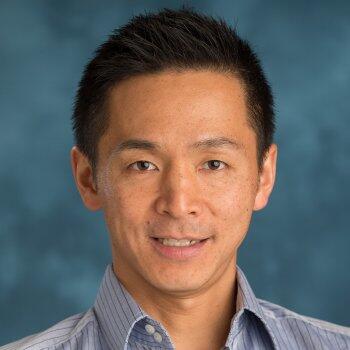
Kiyoteru Tsutsui (Stanford University)
Kiyoteru Tsutsui is Henri H. and Tomoye Takahashi Professor and Senior Fellow in Japanese Studies at the Walter H. Shorenstein Asia-Pacific Research Center at Stanford University, where he is also Director of the Japan Program, a Senior Fellow of the Freeman Spogli Institute for International Studies, and a Professor of Sociology. He is the author of Rights Make Might: Global Human Rights and Minority Social Movements in Japan (Oxford University Press, 2018), co-editor of Corporate Responsibility in a Globalizing World (Oxford University Press, 2016) and co-editor of The Courteous Power: Japan and Southeast Asia in the Indo-Pacific Era (University of Michigan Press, forthcoming 2021).
Via Zoom Webinar.
Registration Link: https://bit.ly/3nNdqhW
Fumiaki Kubo, University of Tokyo
Rui Matsukawa, House of Councilors
Kiyoteru Tsutsui, Stanford University
Panel Discussions
January 6th and the Crisis of American Democracy
Trump’s presidency has destabilized American democracy, culminating in the violent events at the United States Capitol while Congress certified the 2020 election results on January 6. Where do we go from here? This panel will discuss subversion of the electoral process, the constitutional and legal remedies available, and the future of the Republican party.
Speakers include:
Opening remarks by Michael McFaul, Director of the Freeman Spogli Institute for International Studies
Larry Diamond, Senior Fellow FSI and the Hoover Institution
Pamela S. Karlan, Kenneth and Harle Montgomery Professor of Public Interest Law, Stanford Law School
Bill Kristol, editor-at-large of The Bulwark and political commentator
David Kennedy, Donald J. McLachlan Professor of History, Emeritus, Stanford University
Moderated by Francis Fukuyama, Mosbacher Director of the Center on Democracy, Development and the Rule of Law
Francis Fukuyama
Encina Hall, C148
616 Jane Stanford Way
Stanford, CA 94305
0
f.fukuyama@stanford.edu
Olivier Nomellini Senior Fellow at the Freeman Spogli Institute for International Studies
Director of the Ford Dorsey Master's in International Policy
Research Affiliate at The Europe Center
Professor by Courtesy, Department of Political Science
Francis Fukuyama is the Olivier Nomellini Senior Fellow at Stanford University's Freeman Spogli Institute for International Studies (FSI), and a faculty member of FSI's Center on Democracy, Development and the Rule of Law (CDDRL). He is also Director of Stanford's Ford Dorsey Master's in International Policy, and a professor (by courtesy) of Political Science.
Dr. Fukuyama has written widely on issues in development and international politics. His 1992 book, The End of History and the Last Man, has appeared in over twenty foreign editions. His book In the Realm of the Last Man: A Memoir will be published in fall 2026.
Francis Fukuyama received his B.A. from Cornell University in classics, and his Ph.D. from Harvard in Political Science. He was a member of the Political Science Department of the RAND Corporation, and of the Policy Planning Staff of the US Department of State. From 1996-2000 he was Omer L. and Nancy Hirst Professor of Public Policy at the School of Public Policy at George Mason University, and from 2001-2010 he was Bernard L. Schwartz Professor of International Political Economy at the Paul H. Nitze School of Advanced International Studies, Johns Hopkins University. He served as a member of the President’s Council on Bioethics from 2001-2004. He is editor-in-chief of American Purpose, an online journal.
Dr. Fukuyama holds honorary doctorates from Connecticut College, Doane College, Doshisha University (Japan), Kansai University (Japan), Aarhus University (Denmark), the Pardee Rand Graduate School, and Adam Mickiewicz University (Poland). He is a non-resident fellow at the Carnegie Endowment for International Peace. He is a member of the Board of Trustees of the Rand Corporation, the Board of Trustees of Freedom House, and the Board of the Volcker Alliance. He is a fellow of the National Academy for Public Administration, a member of the American Political Science Association, and of the Council on Foreign Relations. He is married to Laura Holmgren and has three children.
(October 2025)
Global Populisms
A new project examining the global surge in populist movements and what it means for established democratic rules and institutions.
Read More
CV
Document
francis_fukuyama_cv_april_2024.pdf
(223.42 KB)
Hide publication sections
Off
Larry Diamond
CDDRL
Stanford University
Encina Hall, C147
616 Jane Stanford Way
Stanford, CA 94305-6055
0
ldiamond@stanford.edu
Mosbacher Senior Fellow in Global Democracy at the Freeman Spogli Institute for International Studies
William L. Clayton Senior Fellow at the Hoover Institution
Professor, by courtesy, of Political Science and Sociology
Larry Diamond is the William L. Clayton Senior Fellow at the Hoover Institution, the Mosbacher Senior Fellow in Global Democracy at the Freeman Spogli Institute for International Studies (FSI), and a Bass University Fellow in Undergraduate Education at Stanford University. He is also professor by courtesy of Political Science and Sociology at Stanford, where he lectures and teaches courses on democracy (including an online course on EdX). At the Hoover Institution, he co-leads the Project on Taiwan in the Indo-Pacific Region and participates in the Project on the U.S., China, and the World. At FSI, he is among the core faculty of the Center on Democracy, Development and the Rule of Law, which he directed for six and a half years. He leads FSI’s Israel Studies Program and is a member of the Program on Arab Reform and Development. He also co-leads the Global Digital Policy Incubator, based at FSI’s Cyber Policy Center. He served for 32 years as founding co-editor of the Journal of Democracy.
Diamond’s research focuses on global trends affecting freedom and democracy and on U.S. and international policies to defend and advance democracy. His book, Ill Winds: Saving Democracy from Russian Rage, Chinese Ambition, and American Complacency, analyzes the challenges confronting liberal democracy in the United States and around the world at this potential “hinge in history,” and offers an agenda for strengthening and defending democracy at home and abroad. A paperback edition with a new preface was released by Penguin in April 2020. His other books include: In Search of Democracy (2016), The Spirit of Democracy (2008), Developing Democracy: Toward Consolidation (1999), Promoting Democracy in the 1990s (1995), and Class, Ethnicity, and Democracy in Nigeria (1989). He has edited or coedited more than fifty books, including China’s Influence and American Interests (2019, with Orville Schell), Silicon Triangle: The United States, China, Taiwan the Global Semiconductor Security (2023, with James O. Ellis Jr. and Orville Schell), and The Troubling State of India’s Democracy (2024, with Sumit Ganguly and Dinsha Mistree).
During 2002–03, Diamond served as a consultant to the US Agency for International Development (USAID) and was a contributing author of its report, Foreign Aid in the National Interest. He has advised and lectured to universities and think tanks around the world, and to the World Bank, the United Nations, the State Department, and other organizations dealing with governance and development. During the first three months of 2004, Diamond served as a senior adviser on governance to the Coalition Provisional Authority in Baghdad. His 2005 book, Squandered Victory: The American Occupation and the Bungled Effort to Bring Democracy to Iraq, was one of the first books to critically analyze America's postwar engagement in Iraq.
Among Diamond’s other edited books are Democracy in Decline?; Democratization and Authoritarianism in the Arab World; Will China Democratize?; and Liberation Technology: Social Media and the Struggle for Democracy, all edited with Marc F. Plattner; and Politics and Culture in Contemporary Iran, with Abbas Milani. With Juan J. Linz and Seymour Martin Lipset, he edited the series, Democracy in Developing Countries, which helped to shape a new generation of comparative study of democratic development.
Download full-resolution headshot; photo credit: Rod Searcey.
Former Director of the Center on Democracy, Development and the Rule of Law
Faculty Chair, Jan Koum Israel Studies Program
Hide publication sections
Off
Michael A. McFaul
Encina Hall
616 Jane Stanford Way
Stanford, CA 94305-6055
0
Senior Fellow, Freeman Spogli Institute for International Studies
Ken Olivier and Angela Nomellini Professor of International Studies, Department of Political Science
Peter and Helen Bing Senior Fellow, Hoover Institution
Michael McFaul is the Ken Olivier and Angela Nomellini Professor of International Studies in Political Science, Senior Fellow at the Freeman Spogli Institute for International Studies, and the Peter and Helen Bing Senior Fellow at the Hoover Institution, all at Stanford University. He joined the Stanford faculty in 1995 and served as FSI Director from 2015 to 2025. He is also an international affairs analyst for MSNOW.
McFaul served for five years in the Obama administration, first as Special Assistant to the President and Senior Director for Russian and Eurasian Affairs at the National Security Council at the White House (2009-2012), and then as U.S. Ambassador to the Russian Federation (2012-2014).
McFaul has authored ten books and edited several others, including, most recently, Autocrats vs. Democrats: China, Russia, America, and the New Global Disorder, as well as From Cold War to Hot Peace: An American Ambassador in Putin’s Russia, (a New York Times bestseller) Advancing Democracy Abroad: Why We Should, How We Can; and Russia’s Unfinished Revolution: Political Change from Gorbachev to Putin.
He is a recipient of numerous awards, including an honorary PhD from Montana State University; the Order for Merits to Lithuania from President Gitanas Nausėda of Lithuania; Order of Merit of Third Degree from President Volodymyr Zelenskyy of Ukraine, and the Dean’s Award for Distinguished Teaching at Stanford University. In 2015, he was the Distinguished Mingde Faculty Fellow at the Stanford Center at Peking University.
McFaul was born and raised in Montana. He received his B.A. in International Relations and Slavic Languages and his M.A. in Soviet and East European Studies from Stanford University in 1986. As a Rhodes Scholar, he completed his D. Phil. in International Relations at Oxford University in 1991.
International Working Group on Russian Sanctions
The International Working Group on Russian Sanctions aims to provide expertise and experience to governments and companies around the world by assisting with the formulation of sanctions proposals that will increase the cost to Russia of invading Ukraine, and support democratic Ukraine in the defense of its territorial integrity and national sovereignty.
Read more
Global Populisms
A new project examining the global surge in populist movements and what it means for established democratic rules and institutions.
Read More
CV
Document
mcfaul-cv-1-25-2026.pdf
(473.05 KB)
Hide publication sections
Off
The 2020 U.S. Election: Stress Test for American Democracy
-
The 2020 U.S. Election: Stress Test for American Democracy
Time
January 14th (8:30 a.m. to 10:00 a.m. Beijing Time)
January 13th (4:30 p.m. to 6:00 p.m. Pacific Time)
Language
The language of the event will be English.
Attention
Recording (audiotaping or videotaping) during the event is not allowed.
Sponsored by the Stanford Center at Peking University and the iGCU at Peking University.
Despite a once-in-a-century pandemic, the highest number of voters in 120 years turned out for the U.S. presidential election in November. After all the mail-in ballots were counted, former Vice President Joseph Biden was declared the winner of the popular vote and the Electoral College vote by a wide margin. However, Donald Trump has yet to concede defeat and has mounted a series of court challenges to fight the results, including taking his claims to the Supreme Court.
To help us understand the U.S. election results – an election that some have described as “a referendum on Trump” -- and its aftermath that some have called the “stress test for American democracy,” we convene a roundtable discussion with leading specialists from Stanford University and Peking University.
Speakers
Image

David BRADY holds the Bowen H. and Janice Arthur McCoy Professor of Political Science in the Stanford Graduate School of Business and held the Morris M. Doyle Centennial Chair in Public Policy (emeritus). He is Deputy Director and Davies Family Senior Fellow at the Hoover Institution and has published eight books and over 100 papers in journals and books. Among his more recent publications are Leadership and Growth (World Bank Publications, 2010) coedited with Michael Spence, Revolving Gridlock: Politics and Policy from Carter to Bush II (Westview Press, 2006), and Red and Blue Nation? Characteristics and Causes of America’s Polarized Politics with Pietro Nivola (Brookings Institution Press, 2007). His study on the “electoral basis of gridlock” is forthcoming.
Brady has also published essays in the American Interest, Commentary, Policy Review, and National Affairs as well as numerous articles in Real Clear Politics, Project Syndicate and the Wall Street Journal. He has twice been a Fellow at the Center for Advanced Study in the Behavioral Sciences at Stanford University and has been a Visiting Professor at Harvard University, Sciences Po in Paris, and The Libera Università Internazionale Degli Studi Sociali "Guido Carli" (Luiss) in Rome. He has also been a distinguished lecturer at the American Academy in Berlin and a distinguished professor at Yonsei University in Korea. Brady was elected to the American Academy of Arts and Sciences in 1987.
Image

Bruce E. CAIN is an expert in U.S. politics, and particularly the politics of California and the American West. A pioneer in computer-assisted redistricting in the United States, he is a prominent scholar of U.S. elections, political regulation, and the relationships between American lobbyists and elected officials.
Prior to joining Stanford, Professor Cain was Director of the Institute of Governmental Studies at University of California (U.C.), Berkeley from 1990-2007 and Executive Director of the U.C. Washington Center from 2005-2012. He was elected to the American Academy of Arts and Sciences in 2000 and has won awards for his research (Richard F. Fenno Prize, 1988), teaching (Caltech 1988 and UC Berkeley 2003) and public service (Zale Award for Outstanding Achievement in Policy Research and Public Service, 2000). He is currently working on state regulatory processes and stakeholder involvement in the areas of water, energy, and the environment.
Image

PAN Wei obtained his Ph.D. from the Department of Political Science at the University of California, Berkeley. He is now a Professor in the School of International Studies at Peking University and frequently lectures on world political theory, Chinese politics, comparative politics, and the history of American social development, etc. At present, PAN serves as the Director of the Center for Chinese and Global Affairs of Peking University. His research interests include comparative political theory, comparative politics, political methodology, and Chinese society and government.
Image

WANG Yong holds a Ph.D. in Law from Peking University. Wang serves as the Director of the Center for International Political Economy and as a Professor and Doctoral Supervisor at the School of International Relations, all at Peking University (PKU). He is an Academic Committee Member of the Center for International Strategic Research, a Professor at the CPC Party School of the Ministry of Foreign Affairs of China, the Leading Professor of a PKU training program for senior civil servants in Hong Kong SAR, and a Professor of a PKU training program for African diplomats held by the Ministry of Commerce of China. He is also a Consultant for the Asian Development Bank, a member of the International Institute for Strategic Studies (UK), and a member of the Global Agenda Committee of the Global Trade System of the World Economic Forum in Davos, Switzerland. His research areas include Sino-US relations, Sino-US economic relations, trade politics, regional cooperation, international economic relations, international political economics, etc. In 2008, he was selected into the "Program for New Century Excellent Talents" by the Ministry of Education of China.
Moderators
Image

Jean C. Oi is the William Haas Professor of Chinese Politics in the Department of Political Science and a senior fellow in the Freeman Spogli Institute for International Studies at Stanford University. She directs the China Program at the Walter H. Shorenstein Asia-Pacific Research Center and is the Lee Shau Kee Director of the Stanford Center at Peking University. Oi has published extensively on China’s reforms. Recent books include Fateful Decisions: Choices that will Shape China’s Future, coedited with Thomas Fingar (Stanford University Press, 2020), Zouping Revisited: Adaptive Governance in a Chinese County, coedited with Steven Goldstein (Stanford University Press, 2018), and Challenges in the Process of China’s Urbanization, coedited with Karen Eggleston and Yiming Wang (2017). Current research is on fiscal reform and local government debt, continuing SOE reforms, and the Belt and Road Initiative.
Image

Wang Dong is the Deputy Director of the Office for Humanities and Social Sciences and the Executive Director of the Institute for Global Cooperation and Understanding, all at Peking University. He also serves as Member of the Steering Committee of the East Asia Security Forum, Chinese Overseas Educated Scholars Association, International Advisory Committee Member of the Shanghai Academy of Area Studies and Global Governance, Advisory Committee Member for the Carter Center-Global Times US-China Young Scholars Forum, and Secretary-General of the Pangoal Institution, a leading China-based public policy think tank.
Wang Dong received his bachelor in law from Peking University and M.A. and Ph.D. in political science from the University of California, Los Angeles (UCLA). Wang has written extensively on international relations and China’s foreign policy. He is the author and/or editor of such English-language publications as Re-globalization: When China Meets the World Again (Routledge, 2020, forthcoming); and Avoiding the Thucydides Trap: US-China Relations in Strategic Domains, coedited with Travis Tanner (Routledge, 2020, forthcoming). Wang was named a “Munich Young Leader” in 2016 (the only awardee from China); and was selected by the inaugural program of “Preeminent Young Scientists” of Beijing in 2018, one of the most prestigious awards ever given in China.
This is an exclusive Webinar for Stanford and PKU communities. Please use your Stanford or PKU email to register at https://stanford.zoom.us/webinar/register/WN_jpjlMTasSfeQo8IcUZE2xQ
PAN Wei
Professor, School of International Studies; Director of the Center for Chinese and Global Affairs of Peking University
WANG Yong
Director of the Center for International Political Economy; Professor and Doctoral Supervisor at the School of International Relations
Professor
Professor
Professor
David BRADY
Professor of Political Economics, Graduate School of Business and Political Science, Emeritus, Stanford University
Bruce E. CAIN
Charles Louis Ducommun Professor in Humanities and Sciences; Professor of Political Science, Stanford University
Professor
Professor
Professor
Professor
Jean C. OI
Moderator
Senior Fellow, Freeman Spogli Institute for International Studies; William Haas Professor of Chinese Politics, Stanford University
WANG Dong
Moderator
Deputy Director, Office for Humanities and Social Sciences; Executive Director, Institute for Global Cooperation and Understanding, Peking University
Panel Discussions