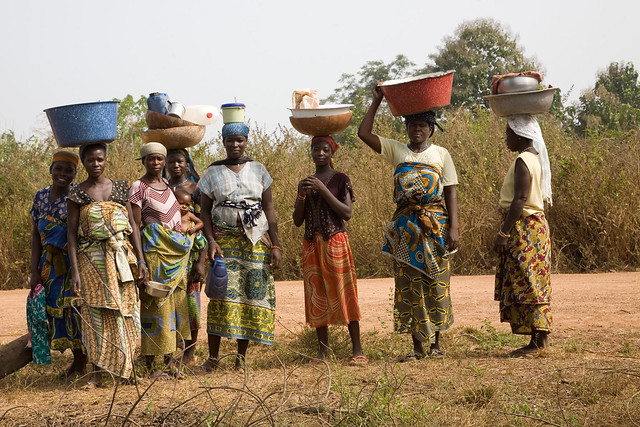
Food Security
Authors
Rosamond L. Naylor
News Type
News
Date
Paragraphs
Rosamond L. Naylor discussed the multiple challenges for achieving food security in this century‐‐ranging from economic volatility to climate change‐‐and highlighted ways in which the boundaries of analysis and action in the agricultural development community must change to address these challenges. She used a series of project and policy examples to illustrate the changes needed from international to local scales. The talk was part of a 2010 series sponsored by the SMEP Academy titled "Taking Sustainability Seriously: The Role of Knowledge Institutions".
Hero Image
rozsmallB
All News button
1
-

Kirk R. Smith will speak about his current research on health-damaging and climate-changing air pollution from household energy use in developing Asia, including field measurement and health-effects studies in India, China, and Nepal, compared to other countries such as Mexico and Guatemala. The work encompasses developing and deploying small, smart, and cheap microchip-based monitors as well as tools for international policy assessments.

Dr. Smith is Professor of Global Environmental Health and Director of the Global Health and Environment Program at the School of Public Health at the University of California, Berkeley.  Previously, he was founder and head of the Energy Program of the East-West Center in Honolulu, where he still holds appointment as Adjunct Senior Fellow in Environment and Health after moving to Berkeley in 1995. He serves on a number of national and international scientific advisory committees including the Global Energy Assessment, National Research Council's Board on Atmospheric Science and Climate, the Executive Committee for WHO Air Quality Guidelines, and the International Comparative Risk Assessment. He participated along with many other scientists in the IPCC's 3rd and 4th assessments and thus shared the 2007 Nobel Peace Prize. He holds visiting professorships in India and China and bachelors, masters, and doctoral degrees from UC Berkeley. In 1997, he was elected a member of the US National Academy of Sciences. In 2009, he received the Heinz Prize in Environment.

Daniel and Nancy Okimoto Conference Room

Kirk R. Smith Professor of Global Environmental Health and Director of the Global Health and Environment Program at the School of Public Health Speaker University of California, Berkeley
Seminars
Paragraphs

The recent upheavals in staple food prices, financial markets, and the global economy raise questions about the state of food insecurity, the nature of price variability, and the appropriate strategies for international agricultural development. For decades preceding this turmoil, agriculture had received waning attention from the global development community as real food prices declined on trend. Analysts who worried about food insecurity focused on the fate of poor producers. The dramatic upswing in prices in 2007-08 turned attention toward poor consumers as many countries struggled with food riots, mounting malnutrition, and the adoption of grain self-sufficiency policies. New debates have been spurred over whether real agricultural prices will resume their long downward decline or whether there has been a more general reversal in the real price of food.

All Publications button
1
Publication Type
Journal Articles
Publication Date
Journal Publisher
Population and Development Review
Authors
Rosamond L. Naylor
Authors
News Type
News
Date
Paragraphs

The Freeman Spogli Institute for International Studies (FSI) at Stanford University has awarded six seed grants in the first round of funding from the Global Underdevelopment Action Fund. The grants are intended to jumpstart early-stage multidisciplinary research projects that tackle persistent problems of global underdevelopment. The Action Fund, which is supported by expendable gifts from FSI donors, matching funds from the Office of the President, and FSI, grew out of the Institute's spring 2010 conference on Technology, Governance, and Global Development, which featured keynote speaker Bill Gates, together with leaders from business, government, and nonprofit organizations, the media, and the academic community, to examine novel integrative approaches to poverty alleviation and human development around the world. The Action Fund projects range across disciplines, focusing primarily on problems in developing and transitioning societies. The majority of the projects have a health dimension, reflecting the degree to which poor health outcomes mirror a country's development status.

"Stanford is uniquely placed among American universities to bring cutting edge research to bear on practical problems of development.  No other institution has lower barriers to multidisciplinary work.  The Action Fund award recipients are drawn from many different parts of the university but united in their concern for promoting development," said Stephen D. Krasner,  the Graham H. Stuart Professor of International Relations, Senior Associate Dean of the Social Sciences at H&S, and deputy director of FSI.

Six multidisciplinary research teams led by Stanford faculty from across the university will receive a total of $236,000 in seed grants. The projects were selected by a faculty committee chaired by Stephen Krasner, with a focus on early-stage, multidisciplinary, policy-relevant research. All, projects are required to have a training component for Stanford undergraduate or graduate students.

The award-winning projects and their principal investigators are:

  • Explaining and Improving U.S. Global Health Financing
    Eran Bendavid, assistant professor of medicine and affiliate in FSI’s Center for Health Policy. Co-investigator: Rajaie Batniji, postdoctoral fellow, Department of Medicine. With a sharp divergence between justifications for global health funding and the countries and diseases to which funding is disbursed, this study will conduct a quantitative analysis of the determinants of U.S. financing for the 171 countries receiving development assistance for health in 2009. The project seeks to identify the key drivers for U.S. global health financing by country and facilitate research on how to make global health financing work better. 
  • Peasants into Democrats: Evaluating the Impact of Information on Local Governance in Mali
    James D. Fearon, professor of political science. Co-investigator and trainee: Jessica Gottlieb, PhD student in political science. Recent research suggests that enhancing voter information holds promise for increasing government accountability in new democracies. This project will undertake a field experiment in Mali, a model of an underperforming new democracy, to test the theory that information that sufficiently raises citizen voter expectations of government performance can have an important effect on governance. It will examine the impact of an intervention that provides citizens with a civics course on voter and government behavior.
  • Effects of “Best Buy Health and Nutrition Toolkit” for Improving Educational Outcomes in Rural China
    Scott Rozelle, FSI Senior Fellow. Co-investigator and trainee: Paul H. Wise, professor of pediatrics, FSI senior fellow, and Patricia Foo, MD/PhD student, economics. Studies show high levels of anemia, nearsightedness, intestinal worms, and poor health and sanitation among children in China’s rural boarding schools. This project will measure initial health and nutrition levels of students in a randomized control setting, and deploy a set of affordable and sustainable interventions in treatment schools that includes multivitamins, eyeglasses, deworming medication, and nutrition and sanitation training. The project will then assess what works and what does not by comparing improvements in academic performance in treatment and control groups. The results of this experiment are intended to inform education and nutrition policy in China at the central and provincial levels.
  • Controlling Drug-Resistant Tuberculosis: A Cooperative Agenda for China and North Korea
    Gary K. Schoolnik, professor of medicine and microbiology and immunology, and FSI senior fellow. Co-investigator: Sharon Perry, senior research scientist, Department of Medicine and FSI/CISAC. Rates of tuberculosis, a disease that thrives on poverty, malnutrition, and interrupted medical care, are now among the highest in the world in the Democratic People’s Republic of Korea (DPRK, North Korea), elevating the risk of an epidemic of drug-resistant strains and a spread into China. This project represents a unique historical opportunity to examine the relationship between food security, malnutrition, and the epidemiology of tuberculosis in a present-day famine.

  • Political Causes of Russia’s Public Health Crisis
    Kathryn Stoner, FSI senior fellow. Co-investigator: Rajaie Batniji, postdoctoral fellow, Department of Medicine. In spite of the economic advances and increases in GDP since the collapse of communism, Russia suffers from a range of dismal public health outcomes reminiscent of a much poorer country. This study seeks to understand what role political factors play in the country’s high adult mortality rate and declining life expectancy by mining World Bank and World Health Organization data and examining how Russians access healthcare services and information

  • Factors Affecting Adoption and Ongoing Use of Improved Biomass Stoves in Karnataka and Maharashtra, India
    Frank Wolak, professor of economics and FSI senior fellow. Co-investigator: Mark C. Thurber, research scholar, FSI/Program on Energy and Sustainable Development. Burning of biomass in traditional stoves is associated with a host of ills among an estimated 2.5 billion people around the world, even though cleaner and more efficient technologies exist that could mitigate the problems. This study will examine what factors affect cooking mode choice and utilization, with the objective of developing an econometric model that is useful for efforts that encourage the adoption of improved biomass stoves. The project also seeks to offer insights on poorly understood processes of technology adoption among poor populations and to understand the magnitude of health, development, and environmental benefits that might be achievable.
Hero Image
FSI Sq
All News button
1
News Type
News
Date
Paragraphs
Lori McVay, associate director for finance and administration at the Freeman Spogli Institute for International Studies' Program on Food Security and the Environment (FSE), is one of two recipients of the Marsh O'Neill Award for outstanding contributions to Stanford's research mission.

This year, two staff members - one in the Freeman Spogli Institute for International Studies and another in the School of Medicine - will receive Marsh O'Neill Awards.

Now in its 20th year, the award honors staff members who have made outstanding contributions to Stanford's research mission.

This year's honorees are Lori McVay, associate director for finance and administration at the Program on Food Security and the Environment, a joint program of the Freeman Spogli Institute for International Studies and the Woods Institute for the Environment; and Kathleen Thompson, director of the Research Management Group in the School of Medicine.

The dean of research established the Marsh O'Neill Award in 1990. It was named for its first recipient, Marshall D. O'Neill, who retired that same year after nearly four decades as associate director of the W. W. Hansen Experimental Physics Laboratory. A faculty panel chooses the award winner.

McVay and Thompson will be the 30th and 31st staff members to receive the award.

The award presentation - which includes a check for $5,000 for each winner - will take place at 4 p.m. Monday at the Faculty Club. Anyone who knows either of the winners and would like to congratulate them is welcome to attend.

All News button
1

Y2E2 (Energy & Environment Building)
473 Via Ortega, room 349
Stanford, CA 94305-4205

0
Postdoctoral scholar
JustinM_head.jpg

Justin McGrath is a postdoctoral scholar in the Center on Food Security and the Environment. His research examines the impacts of environmental change on crop physiology, yield and quality. Recent projects have studied how water status alters crop response to elevated carbon dioxide concentrations, and how nutrient quality changes when crops are grown in elevated carbon dioxide. Ongoing studies will examine how these changes in crop quantity and quality will affect calorie and nutrient intake of populations in food-insecure regions of the world.

Justin received his degree from the University of Illinois, Urbana-Champaign in 2009 where he examined the molecular and physiological basis for changes in crop canopy structure when grown in elevated carbon dioxide, and he received a B.S. from Bradley University in 2004.

News Type
News
Date
Paragraphs

FSI's 2010 Fall Orientation welcomed faculty, staff, researchers, and friends of the institute to the new academic year and highlighted the institute's diverse research collaborations, educational programs, and policy engagement.  Presentations on display and in live video offered highlights of the current work of FSI centers and programs on many of the most challenging issues of the day. In his welcoming remarks, FSI Director Coit Blacker emphasized the interdisciplinary, cross-campus nature of FSI's work and thanked the FSI community for their many contributions to new knowledge and new approaches to many of the most pressing issues on today's global agenda.

This year's Orientation attracted the largest turnout to date. On continual display was a slide show capturing research of FSI centers and programs in the field and multi-disciplinary work here at the institute, along with highlights of FSI conferences, lectures, and policy endeavors compiled by FSI's Nora Sweeny.

Among the highlights were the following displays:

  • A presentation by the Center for International Security and Cooperation on the center's research, writing, policy influence, and Track II Diplomacy
  • A display of the many books published by the Walter Shorenstein Asia-Pacific Research Center showing the range of economic, political, and regional issues addressed by APARC scholars, and a photo slideshow of recent events and publications demonstrating the breadth of faculty work bridging the U.S. and Asia
  • A presentation by The Europe Center, newly launched and housed jointly in FSI and the Division of International and Comparative Area Studies, featuring major research areas, visiting scholars, publications, and notable events
  • A presentation by Stanford Health Policy capturing its multidisciplinary work in medicine, law, business, economics, engineering, and psychology
  •  A presentation by the Ford Dorsey Program in International Policy Studies, a two-year interdisciplinary Master's program, which captured the IPS practicum, scholarly concentrations, internships, and careers
  • A presentation by the Program on Energy and Sustainable Development featuring its work on environmental and policy research employing state of the art methodology to examine such issues as renewable energy, natural gas markets, national oil companies, low-income energy services, and climate change policy
  • A presentation by the Program on Food Security and the Environment which addresses hunger, poverty, and environmental degradation. FSE showcased its current research on topics such as solar electrification, food and nutrition security, climate change and conflicts, and evolving U.S. energy policy, as well as its upcoming series on Food Policy, Food Security, and the Environment
  • A presentation by the Stanford Program on International and Cross-Cultural Education, which develops multi-disciplinary curriculum materials on international themes reflecting FSI scholarship. Recent educational projects include a three-part series examining U.S.-South Korean relations, Uncovering North Korea, and Inter-Korean Relations; and a collaboration with TeachAIDS, which works to address and overcome the social and cultural challenges related to HIV/AIDS prevention education through materials offered via the internet and CDs in several languages, http://teachaids.org
  • A presentation featuring the Stanford Global Gateway, a comprehensive directory of Stanford in the world
  • A presentation previewing the vision and mission of the Stanford Center at Peking University, opening Fall 2011

Other highlights included the presentations prepared by Stanford students who worked in the field this past summer. One group worked in China, developing a survey on nutrition and anemia and their effect on learning, with FSI's Scott Rozelle, Director of the Rural Education Action Program. A second group helped Dr. Paul Wise, professor of pediatrics and Stanford Health Policy core faculty member, evaluate prenatal care in the rural highlands of Guatemala.


All News button
1
Subscribe to Food Security