
Health and Medicine

FSI’s researchers assess health and medicine through the lenses of economics, nutrition and politics. They’re studying and influencing public health policies of local and national governments and the roles that corporations and nongovernmental organizations play in providing health care around the world. Scholars look at how governance affects citizens’ health, how children’s health care access affects the aging process and how to improve children’s health in Guatemala and rural China. They want to know what it will take for people to cook more safely and breathe more easily in developing countries.

FSI professors investigate how lifestyles affect health. What good does gardening do for older Americans? What are the benefits of eating organic food or growing genetically modified rice in China? They study cost-effectiveness by examining programs like those aimed at preventing the spread of tuberculosis in Russian prisons. Policies that impact obesity and undernutrition are examined; as are the public health implications of limiting salt in processed foods and the role of smoking among men who work in Chinese factories. FSI health research looks at sweeping domestic policies like the Affordable Care Act and the role of foreign aid in affecting the price of HIV drugs in Africa.

Authors
News Type
News
Date
Paragraphs

Women are underrepresented in the economics profession, as recent research and the public spotlight have shown. But changes are afoot as both men and women in the field try to understand the scope of the gender gap.

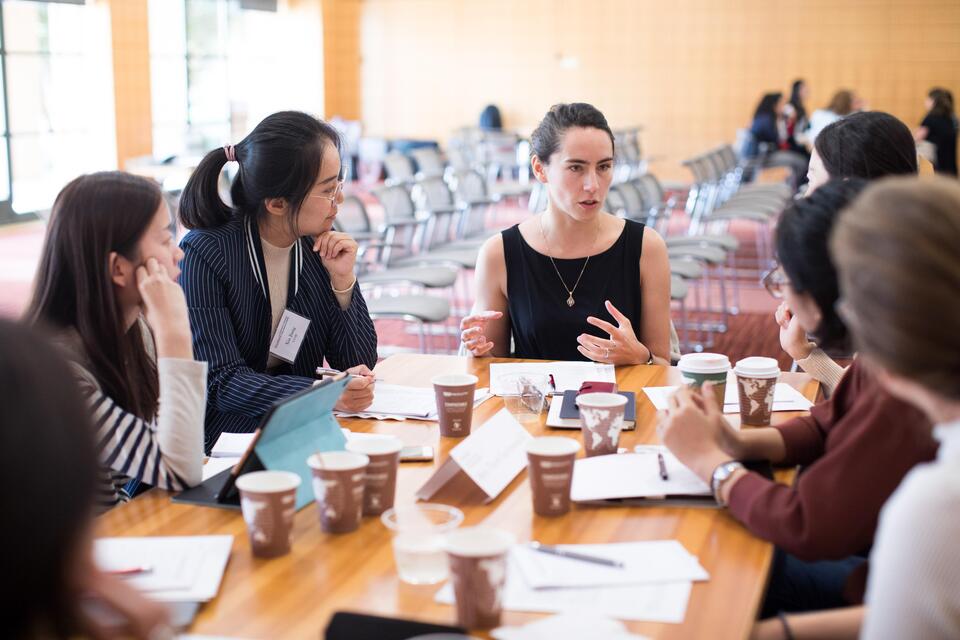
At the Stanford Institute for Economic Policy Research (SIEPR), Faculty Fellow Maya Rossin-Slater is taking steps to address underlying factors of the disparity. In September, the economist and assistant professor in the School of Medicine held a mentoring workshop to assist women who are third-year economics PhD students — a pivotal point for doctoral candidates as they transition from mostly structured classes to independent research. Rossin-Slater is also a core faculty member at Stanford Heatlh Policy.

Part boot camp and part networking event, the daylong workshop brought together 28 graduate students from across California. Twice that many students had applied for the opportunity to practice insider skills, discuss their research interests, and get paired with a mentor.

The need for such an assist is clear, Rossin-Slater says. In the United States, women now have grown to account for about 60 percent of those who hold bachelor’s degrees. But in the discipline of economics, they constitute a steady 30 percent of the students. Meanwhile, other majors, such as math, have risen to a 48 percent share of women in recent years.
Image

“Economics is about a lot of different aspects of human behavior in society,” Rossin-Slater told the workshop participants. “And you cannot think about all kinds of questions unless you have a diverse set of people doing the research.”

“You, here, are part of the next generation of female economists who can help change the profession.”

Females who are underrepresented in the economics arena — while getting their degrees or later, while working — face a variety of systemic barriers, Rossin-Slater said. And they may be at a particular disadvantage, lacking female peers, role models or mentors in their own departments and networks.

The mentoring workshop at Stanford sought to begin addressing that problem for graduate students and will hopefully catalyze similar initiatives elsewhere.

“You should continue to do the research that you are doing, and be excited about it. Be confident. Do economics,” Rossin-Slater told the participants. “As you see here today, women research every possible field.”

Mentors participating in the inaugural workshop included female economists working at think tanks and university professors — including SIEPR Faculty Fellow Maria Polyakova — focusing on applied economics, microeconomics and macroeconomics.

In organizing the workshop, Rossin-Slater said she had thought about challenges she herself had faced as a third-year PhD student, and she modeled it after a successful workshop that the American Economic Association’s Committee on the Status of Women in the Economics Profession hosts for female assistant professors. Rossin-Slater is slated to talk about the female PhD workshop at the annual AEA conference in January.

The September event at Stanford featured a mix of informative sessions — on topics, such as, “How do you ‘do research’?” — as well as practice exercises. Participants worked through hypothetical but common scenarios — What should you do, say, if you’re interrupted during your presentation at a seminar, and challenged about your research?

SIEPR, along with the National Science Foundation, funded Rossin-Slater’s workshop.

"With the mounting body of evidence that the economics culture can be unwelcoming to women and minorities, it is great to see our faculty taking concrete steps to counteract this environment and broaden the pipeline of candidates who can make important contributions to the field,” said SIEPR Deputy Director Gopi Shah Goda.

“SIEPR is proud to support such efforts, as they are perfectly aligned with our goal of cultivating the next generation of economic policy scholars.”

 
Hero Image
maya cropped
All News button
1
Authors
News Type
News
Date
Paragraphs

More than 820 million people around the world don’t have enough to eat and their hunger affects us all. “Without food security, you will have no other security,” said David Beasley, the executive director of the World Food Programme, to an audience of Stanford members and local residents on Oct. 1. 

Beasley along with predecessor Ertharin Cousin, a visiting scholar with Stanford’s Center of Food Security and the Environment, helped shape the United Nations’ anti-hunger program into the world’s largest hunger relief organization, feeding over 90 million people every year.

Beasley and Cousin spoke on the multifaceted challenges of 21st century humanitarian response at the Robert G. Wesson Lecture, organized by Stanford's Center on Food Security and the Environment.


View photos from the event


In March 2017, the Trump administration considered pulling U.S. funding, which provides 40 percent of the program’s support. But by arguing that food insecurity drives terrorist groups, like ISIS using food to recruit members, Beasley was able to keep US funding and raise money internationally.

“If you’re not going to do this out of the goodness of your heart, then you better do this out of your interest for national security,” said Beasley.

Though Cousin lauded the efficacy of Beasley’s efforts, she questioned whether promoting food security as a solution for global security could incite safety issues for World Food Programme workers. “How does that affect the building of awareness and does that create more problems for the people working on the ground?” she asked.

There are countries the World Food Programme has struggled to assist due to safety concerns. In June 2019, Beasley suspended aid from Yemen due to diversion of food from vulnerable people by Houthis. Safety was also a huge factor. “You can get shot and killed or stabbed in a heartbeat,” Beasley said.

The World Food Programme has encountered another complex situation in Venezuela, which is in the midst of its direst food crisis in history. Almost 90 percent of the country is living below the poverty line with a substantial cut in government assistance food programs.

Though Beasley could not provide detail due to the sensitive nature of negotiations, he believes a resolution will come soon. “We’re on the ground…in the middle of negotiations as we speak, and we’re making tremendous headway,”

Future efforts will focus on self-sustainability, which is crucial for long-term food security. The program has rehabilitated about 400,000 acres of otherwise unusable land because of flash floods or drought, allowing hundreds of thousands of people food and job security that would no longer need direct aid.

Both Beasley and Cousin agree that with the technology and wealth available, no child should go hungry and there should never be another famine on earth. “There are [people] who don’t know where their next meal is, and they’re marching towards death. That is absolutely inexcusable,” said Beasley.

When asked by Cousin what his takeaway from his experience as director has been, Beasley said, “Go love your neighbor, first and foremost. Please understand the suffering world out there, and don’t underestimate the power you have as an individual…I have so much hope for the future but at the same time, a great fear form what I see because of a lot of destabilization. The world is very fragile…Loving your neighbor is the most powerful weapon.”

By Gina Yu, Stanford Global Health Media Fellow

This story originally appeard on the Stanford Center for Innovation in Global Health's website.

Hero Image
David Beasley at Stanford Oct. 1, 2019
UN World Food Programme Executive Director David Beasley speaks with his predecessor Ertharin Cousin at Stanford Oct. 1.
Don Feria for StanfordFSE
All News button
1
News Type
News
Date
Paragraphs

Image
screen shot 2019 10 07 at 2 17 40 pm

Professor Luis de Lecea, Department of Psychiatry and Behavioral Sciences (Major Laboratories and Clinical and Translational Neurosciences Incubator), an SCPKU Faculty Fellow, organized a workshop on Sleep Regulation and Circadian Rhythms from Sept. 13-14 at SCPKU.

As many as 1/3 of adults experience serious sleep problems in their lifetime, yet the tools to treat sleep disorders have not increased significantly in the last 30 years. The last decade has seen unprecedented progress in basic science of sleep and China has generated an impressive number of publications at the forefront of this research area.  Prof. de Lecea and Dr. Wenjie Bian from Stanford convened a group of 13 researchers covering both basic and clinical aspects of sleep and circadian regulation.  Prof. Takeshi Sakurai from Tsukuba University and International Institute of Integrative Sleep Medicine delivered a keynote lecture on the neuronal circuitry of narcolepsy/cataplexy.  Dr. Zhian Hu from Chongqing Medical University showed evidence of a neuronal circuit controlling sleep and memory.  Dr. Zhili Huang from Fudan University showed recent data on the regulation of reward circuits by sleep. Dr. Xiao Bing Gao from Yale University provided evidence of the association between neuronal structures that regulate energy balance and sleep.  Dr. Wenjie Bian from Stanford presented his latest results on how sleep disruption during development affects social behavior in adults.  Dr. Qinhua Liu from NIBS in Beijing discussed his recent findings demonstrating a link between protein phosphorylation and sleep homeostasis.  Drs. Yun Kwok Wing from Hong Kong and Fang Han from the Peoples Hospital in Beijing and President of the Chinese Sleep Research Society presented clinical data on sleep disorders and narcolepsy.  The workshop was attended by ~20 students from PKU and other local institutions.  Participants concluded that this workshop was an innovative venue to discuss state of the art research and possible collaborations among researchers in the field of sleep neuroscience and medicine. 


Hero Image
screen shot 2019 10 07 at 2 17 40 pm
All News button
1
-

This seminar will present empirical evidence about policies to promote healthy lifestyles in China from a professor and a policymaker from the PRC.

As a result of economic growth, urbanization, lifestyle change, and population aging, Noncommunicable Diseases (NCDs) have become China’s leading cause of death, accounting for 86.6% of annual deaths. Almost two-thirds of NCDs can be prevented by reducing unhealthy lifestyle choices such as tobacco use, physical inactivity, harmful use of alcohol, and unhealthy diets. In particular, dietary risk factors and insufficient physical activity increasingly contribute to the surging burden of obesity in China and globally.

In 2016, President Xi Jinping announced the “Healthy China 2030” Blueprint. Three years later, a corresponding action plan was released and encompassed 15 goals, including reducing obesity, increasing overall physical activity, and preventing NCDs. The presenters will discuss results of research on the determinants of healthy diet, physical activity, obesity, and noncommunicable diseases, and provide evidence for implementation of Healthy China 2030. Their research includes aspects on (1) unhealthy food and beverage marketing to children; (2) the link between green space, physical activity, and health outcomes; (3) a strategy to involve government and non-health sectors in the prevention and control of NCDs in China; and (4) preventive vaccinations and primary care management for individuals living with NCDs like diabetes.

Image
bai di
Juan Zhang is Associate Professor at School of Public Health, Peking Union Medical College (PUMC) & China Academy of Medical Science (CAMS). She conducts research on risk factors of noncommunicable disease (NCD), such as obesity, hypertension, diabetes, nutrition, physical activity, using policy, socio-ecological, and behavioral approaches. She currently is principal investigators to (1) assessing mass media (mainly television) food advertisement, (2) investigate underlying family environment, school policy and environment of preschool children overweight and obesity, (3) evaluate the implementation and impact of government-led programs to prevent and control NCD. Prior to joining PUMC, Dr. Zhang has had diverse working experience over 10 years across national government agency, WHO, academic institutions, and multinational pharmaceutical company.

Dr. Juan ZHANG holds a Ph.D. in Health Behavior from the Indiana University Bloomington. She has published in the areas of chronic disease epidemiology, economic cost and behavioral determinants of obesity, and public health program evaluation. She serves as members of several professional societies, like Committee of Diabetes Prevention and Control of Chinese Preventive Medicine Association (CPMA), Committee of NCD Disease Prevention and Control of CPMA, Committee of Health Communication of China Health Education Association, and Committee of Student Nutrition and Health, Chinese Student Nutrition and Health Promotion Federation.

Image
photo of xiangyuchen 4x6
Xiangyu Chen is a working staff from Non-communicable Disease (NCDs) Control and Prevention Department in Zhejiang Provincial Center for Disease Control and Prevention. He is a public health physician and his ongoing areas of research include development of risk prediction models using health check-up data, and cost-effectiveness evaluation for flu shots among the diabetes. He completed his MS in Epidemiology and BA in Preventive Medicine at Soochow University.

Juan Zhang Associate Professor, School of Public Health, Peking Union Medical College (PUMC) & China Academy of Medical Science (CAMS)
Xiangyu Chen Non-communicable Disease (NCDs) Control and Prevention Department, Zhejiang Provincial Center for Disease Control and Prevention
Seminars
News Type
Q&As
Date
Paragraphs

After studying early childhood development in China for several years, Alexis Medina, assistant director of Stanford's Rural Education Action Program (REAP), and her colleagues were asked a question that opened up a whole new line of inquiry. 


Read the full Q&A with Jennifer Huber and Alexis Medina. 

Hero Image
ECD Kids at Center Rural Education Action Program
All News button
1

Twitter: @StacieVilendrer

0
stacie_vilendrer_md.png MD, MBA
Stacie grew up in Minnesota where she decided to become a physician after watching her grandfather survive metastatic cancer with the support of his medical team. She honored in Human Biology at Stanford, where her senior thesis investigated community beliefs around childhood malaria in rural Tanzania. She continued to pursue global health work with nonprofits in India and Tanzania prior to medical school that sought to scale the capacity of health worker training programs.   Stacie returned to Stanford School of Medicine to complete her medical degree where she focused on cost-effectiveness research for a genetic screening tool. Recognizing the increasing importance of market dynamics in healthcare delivery, Stacie also chose to pursue her MBA at the Graduate School of Business where she gained additional experience in the private sector with Medtronic and McKinsey & Company. Stacie completed her medical training at UCSF-affiliate Santa Rosa Family Medicine and is a practicing board-certified family physician. She is currently pursuing the Stanford-Intermountain Fellowship in Population Health Sciences.    Stacie’s current research seeks to bring rigorous methodologies to answer those questions most relevant to the hospital C-suite: How to effectively manage physicians and other healthcare workers? How to achieve the quadruple aim of improving patient outcomes, lowering cost, and improving the physician and patient experience? How to transition from a fee-for-service to a value-based health system? Her work is based in implementation science, using quantitative and qualitative methodologies to answer the above questions. Her ongoing projects relate to physician incentives, physician burnout, policy impacts on population health, corporate benefit management strategies, medical assistant turnover, and social determinants of health.
Stanford/Intermountain Fellow, PCPH

300 Pasteur Drive, G306
Palo Alto, CA 94305

0
_jillkrissberg.png MD

 I am a current Pediatric Nephrology Fellow at Stanford getting a Masters in Health Policy during my academic years of fellowship.

Tashia and John Morgridge Endowed Postdoctoral Fellow, Maternal and Child Health Research Institute
John E Lewy Fund Advocacy Scholar
1
PhD Student Alumni, Health Policy
matthew_kaufmann.jpeg MHS

Matt Kaufmann is a Health Policy PhD student in the Decision Sciences track. Prior to joining Stanford in 2019, he worked as an economist in the Public Health Economics Program at RTI International conducting economic evaluations in areas such as diabetes, pediatric asthma, family planning, and more. He holds a bachelor’s degree in Finance and Business Economics from the University of South Carolina and a master’s degree in Health Economics from the Johns Hopkins University Bloomberg School of Public Health.

0
sonyton.jpeg MD

3rd year clinical fellow in pediatric nephrology at Lucile Packard Children's Hospital--Stanford with research emphasis in clinical informatics, implementation science, and pediatric nephrology.

Marion and Jack Euphrat Pediatric Translational Medicine Fellow in Pediatric Nephrology
Authors
News Type
Q&As
Date
Paragraphs

On August 26, Judge Thad Balkman delivered a $572 million judgment against pharmaceutical giant Johnson & Johnson for the company’s role in fueling the opioid epidemic in Oklahoma. In the discussion that follows, Stanford Law Professors Michelle Mello and Nora Freeman Engstrom discuss the decision and how other cases tied to the national opioid crisis are developing.

The Oklahoma decision took many onlookers by surprise. How did the case unfold? And what did Judge Balkman find? On Monday, Cleveland County District Judge Thad Balkman of Oklahoma issued a judgment that capped off a long and closely-scrutinized trial wherein the Oklahoma Attorney General faced off against Johnson & Johnson (J&J), claiming that J&J contributed to the opioid epidemic that has devastated the state of Oklahoma.


Image
engstrom mello

Stanford Law Professors Michelle Mello and Nora Freeman Engstrom

To understand the verdict, a bit of background is helpful. When Oklahoma initially sued, it cast the net broadly, asserting claims against several defendants under several causes of action.  Certain defendants (namely, Purdue and Teva) chose to settle rather than roll the dice at trial. (Purdue, the maker of OxyContin, agreed to pay Oklahoma $270 million and Teva, one of the world’s leading providers of generic drugs, $85 million; neither admitted wrongdoing.)  Further, over time, Oklahoma’s various causes of action got winnowed down to the singular claim that J&J had created a public nuisance by aggressively and deceptively marketing opioid products to Oklahoma’s doctors and patients.  This posture meant that Oklahoma’s victory at trial was far from a foregone conclusion, as public nuisance claims can be very hard to prove, particularly in cases that relate to dangerous products.

With that table set, the trial began on May 28, 2019.  In a crowded courtroom in Cleveland County, it stretched on for nearly seven weeks and featured dozens of witnesses and more than 800 exhibits. The trial was a bench trial, meaning there was no jury, but there was a written opinion explaining the judge’s decision.  Judge Balkman’s 42-page opinion offers a cogent summary of the evidence and governing law and, broadly, vindicates Oklahoma’s litigation strategy. The opinion finds that J&J engaged in a deceptive marketing campaign designed to convince Oklahoma doctors and the public that opioids were safe and effective for the long-term treatment of chronic, non-malignant pain. Further, this “false, misleading, and dangerous marketing” caused “exponentially increasing rates of addiction [and] overdose death,” which ravaged the Sooner State. The picture Judge Balkman draws is stark and, for J&J, devastating.

Are individuals suing drug companies too? Are there class action cases that are relevant?

There are some suits by individuals, but we don’t believe that’s where the big money damages—and the real social impact of the litigation—will be.  More important is the pending federal multi-district litigation (MDL), which consolidates nearly 2,000 individual federal lawsuits brought by cities, counties, municipalities, and tribal governments in a single action before Judge Dan Polster in Cleveland, Ohio. Additionally, 48 states have initiated separate litigation, with a lineup of claims and defendants similar to the MDL.

Does this win for Oklahoma mean these other plaintiffs have an easy road ahead?

Not easy, but potentially easier. The Oklahoma case is what we call a bellwether. Like the ram that leads the other sheep this way or that, the bellwether trial doesn’t control the path of future litigation. But it does go first, and it helps to indicate trends.

As a bellwether, the big verdict here is very reassuring to the many states, counties, municipalities, and tribes suing opioid makers, distributors, and retailers, and it is, correspondingly, very disturbing for those who made and sold opioids to the American public.  The verdict suggests that this litigation has legs, and that judges and juries may be willing to pin blame not just on Purdue, the maker of OxyContin, but on others who played an arguably less central role in fueling this public health crisis.

What is striking is how damning Judge Balkman’s factual conclusions about J&J’s conduct are, and how similar they are to the allegations made against other opioid manufacturers in other cases.  All the things he objected to regarding J&J’s marketing practices are things that others, too, allegedly have done. Some of them are things that multiple companies banded together to do. Plaintiffs’ attorneys should be feeling pretty confident about their chances of persuading other courts that those practices are problematic.

Is Oklahoma free to use the award as it wishes? Will the state share some of the award with the people who died or suffered in the opioid crisis (if the decision is upheld on appeal)?

The damages, in this case, are intended to fund Oklahoma’s “nuisance abatement plan.”  That’s the remedy in a public nuisance case: The defendant has to pay to clean up the mess it made. In this case, Oklahoma provided a detailed plan laying out what would be needed to abate the opioid problem in the state. The costs added up to $572 million for the first year, and that’s what the judge awarded—not the $17 billion Oklahoma sought for a multi-year abatement effort.

The plan specifies that the money will be used for opioid use disorder screening, prevention and treatment ($292 million), housing and other services for those in recovery ($32 million), continuing medical education programs ($108 million), a pain management benefit program ($103 million), treatment of neonatal abstinence syndrome ($21 million), and other services.  Individuals won’t be direct recipients of the funds, though they may receive the services funded.

Legally, what happens next?

J&J has vowed to appeal the “flawed” Oklahoma judgment, and we expect that the judgment will be appealed, first to Oklahoma’s intermediate, and then, likely, to its supreme, court.  More immediately, though, attention will turn from Oklahoma to Ohio.  The first bellwether trial in the MDL, involving claims from Ohio’s Cuyahoga and Summit counties, is scheduled to begin on October 21.

Even as they prepare for trial, however, lawyers for both plaintiffs and defendants are also, no doubt, continuing to work toward reaching a broad and encompassing settlement.  When Judge Polster was first assigned the MDL back in January 2018, he made no bones about his desire to do “something meaningful to abate this crisis”—and to do it quickly.  It hasn’t been easy to execute on that, which isn’t surprising given the unprecedented magnitude and complexity of the litigation.

Still, we expect that, sooner or later, the opioid litigation will settle.  Indeed, even as we write, news is breaking that Purdue and the Sacklers may be in the midst of a negotiation whereby Purdue would declare bankruptcy and the Sacklers would contribute a cash payment of roughly $4.5 billion-plus relinquish ownership of the company, in return for peace with plaintiffs.

But even forging a settlement involving just those two entities is tricky—and forging a broader settlement will be exponentially harder for a number of reasons.  One is that any truly global agreement needs to pass muster with a range of defendants, some of whom have comparatively shallow pockets, and all of whom sold (or made or distributed) different products, at different times, in different quantities, in different states.  And, on the other side of the table, any settlement agreement needs to get buy-in from both those plaintiffs in the MDL and also state attorneys’ general, who have their own distinct set of priorities and interests relating to their separate lawsuits.  Further, because only a small proportion of eligible cities and counties have joined the MDL to date, any global settlement needs to somehow—equitably but firmly—close the courthouse door on those potential future plaintiffs.  None of this will be easy to accomplish.  But whenever new information reduces uncertainty about how courts would resolve a legal dispute, settlement becomes more likely—and, here, the Oklahoma verdict makes a significant contribution.


Nora Freeman Engstrom, Professor of Law and Deane F. Johnson Faculty Scholar, is a nationally-recognized expert in tort law, legal ethics, and complex litigation. Her work explores the day-to-day operation of the tort system—particularly its interaction with alternative compensation mechanisms. Michelle Mello, Professor of Law and Professor of Health Research and Policy (School of Medicine), is a leading empirical health scholar and the author of more than 150 book chapters and articles, including “Drug Companies’ Liability for the Opioid Epidemic,” recently published in the New England Journal of Medicine.  


Hero Image
gettyimages opioids Getty
All News button
1
Subscribe to Health and Medicine