Governance

FSI's research on the origins, character and consequences of government institutions spans continents and academic disciplines. The institute’s senior fellows and their colleagues across Stanford examine the principles of public administration and implementation. Their work focuses on how maternal health care is delivered in rural China, how public action can create wealth and eliminate poverty, and why U.S. immigration reform keeps stalling. 

FSI’s work includes comparative studies of how institutions help resolve policy and societal issues. Scholars aim to clearly define and make sense of the rule of law, examining how it is invoked and applied around the world. 

FSI researchers also investigate government services – trying to understand and measure how they work, whom they serve and how good they are. They assess energy services aimed at helping the poorest people around the world and explore public opinion on torture policies. The Children in Crisis project addresses how child health interventions interact with political reform. Specific research on governance, organizations and security capitalizes on FSI's longstanding interests and looks at how governance and organizational issues affect a nation’s ability to address security and international cooperation.

-

This is a virtual event. Please click here to register and generate a link to the talk. 
The link will be unique to you; please save it and do not share with others.


China’s role in the COVID-19 outbreak has elicited a growing global backlash, including dueling Republican and Democratic campaign ads, alongside praise for China’s success in curbing the coronavirus and sending medical assistance overseas. How will the pandemic reshape China’s domestic and international standing, and what lies ahead for U.S.-China relations? Weiss will discuss the Chinese government’s pandemic response and what it reveals about the CCP’s domestic and international intentions.

Image
Jessica Chen Weiss
Jessica Chen Weiss is an associate professor of Government at Cornell University, China/Asia political science editor at the Washington Post Monkey Cage blog and a nonresident Senior Associate at the Center for Strategic and International Studies.  She is the author of Powerful Patriots: Nationalist Protest in China’s Foreign Relations (Oxford University Press, 2014).  Her research appears in International Organization, China Quarterly, International Studies Quarterly, Journal of Conflict Resolution, Security Studies, Journal of Contemporary China, and Review of International Political Economy, as well as in the New York Times, Foreign Affairs, and Washington Quarterly.  She was previously an assistant professor at Yale University and founded FACES, the Forum for American/Chinese Exchange at Stanford, while an undergraduate at Stanford University.  Born and raised in Seattle, Washington, she received her Ph.D. from the University of California, San Diego in 2008, where her dissertation won the 2009 American Political Science Association Award for best dissertation in international relations, law and politics.  Weiss is a term member of the Council on Foreign Relations.


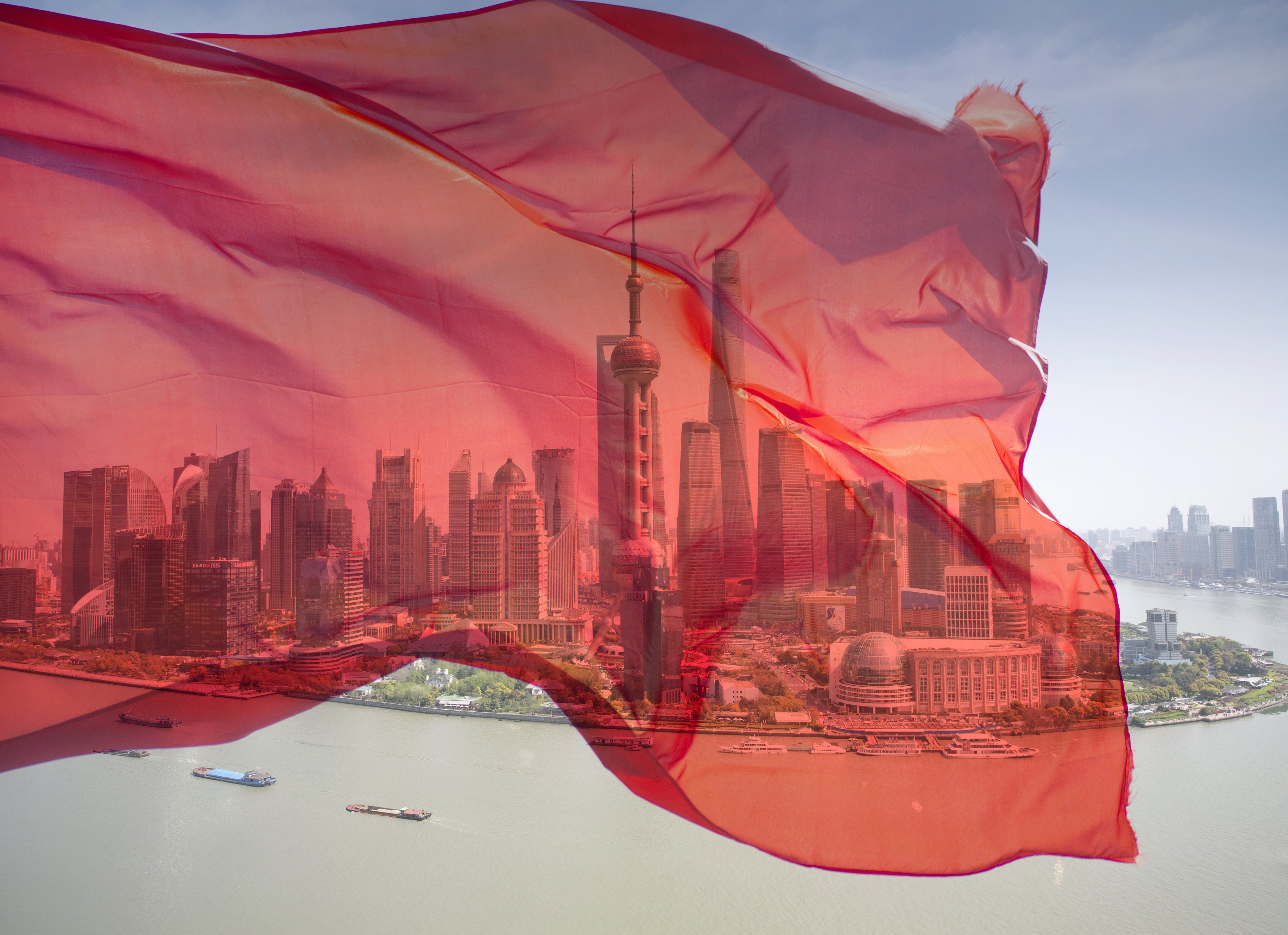
Image of red flag over the Shanghai BundThis event is part of the 2020 Winter/Spring Colloquia series, The PRC at 70: The Past, Present – and Future?, sponsored by APARC's China Program.


Via Zoom Webinar.
Register at: https://bit.ly/3erPfSn 

Jessica Chen Weiss Associate Professor of Government, Cornell University
Seminars
-

ABSTRACT

Democracy promotion has been a longstanding goal of US foreign policy in the Middle East and elsewhere. President George W. Bush championed democracy promotion as a way to counter the ideology and extremism that led to the September 11, 2001 terror attacks against the United States. After Bush’s attempts ended in abject failure, President Barack Obama sought to repair relations with the Muslim world but also withdraw the US footprint in the Middle East. But Obama was forced to take a far more hands-on approach with the outbreak of the 2010-2011 uprisings known as the Arab Spring. President Donald Trump, who has displayed an almost allergic aversion to Obama’s policies, has openly embraced the region’s autocrats with little regard for their abuse of human rights or absence of attention to political or economic freedom. How the United States approaches the region matters – both for aspiring democrats and for those who wish to silence them. Despite the rise of Russia and China, the United States remains the sole superpower, with the loudest voice on the world stage. Thus, the shift from democracy promoter – albeit reluctantly at times – to authoritarian enabler has made the task of democratic political reform far more challenging for people across the Middle East. This discussion will examine the recent democracy promotion efforts of the United States, with a focus on the Obama and Trump years.

SPEAKER BIO

Image
yerkes color large 2017
Sarah Yerkes is a fellow in the Carnegie Endowment for International Peace’s Middle East Program, where her research focuses on Tunisia’s political, economic, and security developments as well as state-society relations in the Middle East and North Africa.  She has been a visiting fellow at the Brookings Institution and a Council on Foreign Relations international affairs fellow and has taught in the Security Studies Program at Georgetown University and at the Elliott School of International Affairs at the George Washington University. Yerkes is a former member of the State Department’s policy planning staff, where she focused on North Africa. Previously, she was a foreign affairs officer in the State’s Department’s Office of Israel and Palestinian affairs. Yerkes also served as a geopolitical research analyst for the U.S. military’s Joint Staff Strategic Plans and Policy Directorate (J5) at the Pentagon, advising the Joint Staff leadership on foreign policy and national security issues.

Online, via Zoom: REGISTER

Sarah Yerkes Carnegie Endowment for International Peace
Seminars
Authors
Megan Palmer
News Type
Commentary
Date
Paragraphs

As biological research and its applications rapidly evolve, new attempts at the governance of biology are emerging, challenging traditional assumptions about how science works and who is responsible for governing. However, these governance approaches often are not evaluated, analyzed, or compared. This hinders the building of a cumulative base of experience and opportunities for learning. Consider “biosecurity governance,” a term with no internationally agreed definition, here defined as the processes that influence behavior to prevent or deter misuse of biological science and technology. Changes in technical, social, and political environments, coupled with the emergence of natural diseases such as coronavirus disease 2019 (COVID-19), are testing existing governance processes. This has led some communities to look beyond existing biosecurity models, policies, and procedures. But without systematic analysis and learning across them, it is hard to know what works. We suggest that activities focused on rethinking biosecurity governance present opportunities to “experiment” with new sets of assumptions about the relationship among biology, security, and society, leading to the development, assessment, and iteration of governance hypotheses.

Read the rest at Science


Hero Image
megan palmer 1
All News button
1
Authors
Colin H. Kahl
News Type
Commentary
Date
Paragraphs

The novel coronavirus (COVID-19) is a global public health disaster of almost biblical proportions. It is a once-in-a-century occurrence that threatens to destroy countless lives, ruin economies, and stress national and international institutions to their breaking point. And, even after the virus recedes, the geopolitical wreckage it leaves in its wake could be profound.

Many have understandably drawn comparisons to the influenza pandemic of 1918 and 1919. That pandemic, which began in the final months of World War I, may have infected 500 million people and killed 50 million people around the globe. As the grim toll of COVID-19 mounts, it remains to be seen if that comparison will prove apt in terms of the human cost.

But, if we want to understand the even darker direction in which the world may be headed, leaders and policymakers ought to pay more attention to the two decades after the influenza pandemic swept the globe. This period, often referred to as the interwar years, was characterized by rising nationalism and xenophobia, the grinding halt of globalization in favor of beggar-thy-neighbor policies, and the collapse of the world economy in the Great Depression. Revolution, civil war, and political instability rocked important nations. The world’s reigning liberal hegemon — Great Britain — struggled and other democracies buckled while rising authoritarian states sought to aggressively reshape the international order in accordance with their interests and values. Arms races, imperial competition, and territorial aggression ensued, culminating in World War II — the greatest calamity in modern times.

In the United States, the interwar years also saw the emergence of the “America First” movement. Hundreds of thousands rallied to the cause of the America First Committee, pressing U.S. leaders to seek the false security of isolationism as the world burned around them. President Franklin Delano Roosevelt pushed back, arguing that rising global interdependence meant no nation — not even one as powerful and geographically distant as the United States — could wall itself off from growing dangers overseas. His warning proved prescient. The war eventually came to America’s shores in the form of the attack on Pearl Harbor.

Even before COVID-19, shadows of the interwar years were beginning to re-emerge. The virus, however, has brought these dynamics into sharper relief. And the pandemic seems likely to greatly amplify them as economic and political upheaval follows, great-power rivalry deepens, institutions meant to encourage international cooperation fail, and American leadership falters. In this respect, as Richard Haas notes, the COVID-19 pandemic and the aftershocks it will produce seem poised to “accelerate history,” returning the world to a much more dangerous time.

However, history is not destiny. While COVID-19 worsens or sets in motion events that may increasingly resemble this harrowing past, we are not fated to repeat it. Humans have agency. Our leaders have real choices. The United States remains the world’s most powerful democracy. It has a proud legacy of transformational leaps in human progress, including advances that have eradicated infectious diseases. It is still capable of taking urgent steps to ensure the health, prosperity, and security of millions of Americans while also leading the world to navigate this crisis and build something better in its aftermath. America can fight for a better future. Doing so effectively, however, requires understanding the full scope of the challenges it is likely to face.

Read the rest at War on the Rocks

Hero Image
covid 19 radoslav zilinsky Radoslav Zilinsky - Getty Images
All News button
1
Subtitle

The novel coronavirus (COVID-19) is a global public health disaster of almost biblical proportions. It is a once-in-a-century occurrence that threatens to destroy countless lives, ruin economies, and stress national and international institutions to their breaking point. And, even after the virus recedes, the geopolitical wreckage it leaves in its wake could be profound.

Authors
News Type
News
Date
Paragraphs
Hero Image
Photograph of Professor Anna Grzymala-Busse Courtesy of Department of Political Science
All News button
1
Authors
Noa Ronkin
News Type
News
Date
Paragraphs

STANFORD, CA, April 8, 2020  — Stanford University’s Walter H. Shorenstein Asia-Pacific Research Center (APARC) is pleased to announce that journalist and author Tom Wright is the recipient of the 2020 Shorenstein Journalism Award for excellence in coverage of the Asia-Pacific region. Wright, who over the past twenty-five years has worked mainly in South and Southeast Asia, is the coauthor of the New York Times bestseller Billion Dollar Whale, which unravels the story of one of the world's greatest financial scandals involving the multibillion-dollar looting of the Malaysian sovereign wealth fund 1Malaysia Development Bhd (1MDB). The book builds on Wright’s multiyear investigative reporting for the Wall Street Journal, where he most recently served as Asia economics editor. In the coming fall quarter, Wright will receive the award at a ceremony and headline a panel discussion at Stanford.

Wright started his career with Reuters in Indonesia in the 1990s at a time when Gen. Suharto’s military dictatorship was crumbling. During the Asian financial crisis of 1997-98, he joined Dow Jones Newswires in Bangkok, later moving to the Wall Street Journal. He has investigated corruption in Indian companies, the failure of the U.S.’s civilian aid program for Pakistan, and was one of the first journalists to arrive at the scene of the raid in which Navy SEALs killed Osama bin Laden. His 2013 award-winning series on the Rana Plaza factory disaster in Bangladesh, which killed over 1,000 people, exposed how international garment manufacturers turned a blind eye to safety violations to reduce costs.

In 2015, he began investigations into the 1MDB scandal, one of the largest financial frauds of all time in which bankers at Goldman Sachs helped a young Malaysian financier steal at least $4 billion from Malaysian state fund 1MDB. The three-year investigation revealed the degree to which Western institutions, from Wall Street banks, law firms, auditors, and even Hollywood film companies, ignore malfeasance in the pursuit of profits. Wright’s work sparked investigations by law enforcement and regulators in multiple countries and outrage in Malaysia, where the ruling coalition, after 61 years in power, suffered a landslide defeat in a shocking 2018 election.

“Throughout his career, Tom Wright’s consummate reporting and persistent investigations have repeatedly shone a light on major Asian affairs and the complicity of Western institutions in the affliction of corruption in Asia,” said Gi-Wook Shin, Shorenstein APARC director. “His work embodies an unwavering commitment to the pursuit of truth and to advancing a critical consideration of both Asian and Western societies. We are delighted to recognize him with the Shorenstein Journalism Award.”

Presented annually by APARC, the Shorenstein award, which carries a $10,000 cash prize, honors the legacy of APARC’s benefactor, Mr. Walter H. Shorenstein, and his twin passions for promoting excellence in journalism and understanding of Asia. “We are grateful to the Shorenstein family for its support of our Center and its mission and to the members of the award selection committee for their expertise and service,” noted Shin.

The selection committee for the Shorenstein Journalism Award, which unanimously chose Wright as the 2020 honoree, includes Wendy Cutler, vice president and managing director, Washington, D.C. Office, Asia Society Policy Institute; James Hamilton, Hearst Professor of Communication, chair of the Department of Communication, and director of the Stanford Journalism Program, Stanford University; Raju Narisetti, global publishing director-elect, McKinsey & Company; Philip Pan, weekend editor, former Asia editor, the New York Times; and Prashanth Parameswaran, senior editor, the Diplomat

Eighteen journalists have previously received the Shorenstein award, including most recently Maria Ressa, CEO and executive editor of Rappler; Anna Fifield, the Washington Post’s Beijing bureau chief and long-time North Korea watcher; Siddharth Varadarajan, founding editor of the Wire; Ian Johnson, a veteran journalist with a focus on Chinese society, religion, and history; and Yoichi Funabashi, former editor-in-chief of the Asahi Shimbun.

Information about the 2020 Shorenstein Journalism Award ceremony and panel discussion featuring Wright will be forthcoming in the fall quarter.

Find out more at aparc.fsi.stanford.edu/events/shorenstein-journalism-award.


Media Contact:

Noa Ronkin
Associate Director for Communications and External Relations
Shorenstein APARC
noa.ronkin@stanford.edu


Hero Image
Portrait of Tom Wright
All News button
1
Authors
News Type
Commentary
Date
Paragraphs

In the midst of the damage to public health and the global economy, the COVID-19 crisis could present an unexpected opportunity both to resolve the only hot war in Europe and to address Russian President Vladimir Putin's assault on international norms of behavior.

As the spreading coronavirus and collapsing oil prices weigh increasingly on the Kremlin, the United States and its allies should offer to lift international sanctions against Russia if Putin will end his military incursions into Ukraine. President Trump and Congress can advance America's interests, and the world's, with a bold step to encourage an end to this war. The Trump administration and Congress should seize this opening.


Read the rest at NPR.org.


Hero Image
gettyimages 1207345844 84cccea5ecfe878d8232389bc526d68286b249d8 s800 c85
All News button
1
-

In keeping with the State of California's shelter-in-place orders, this event is available through livestream only. Please register in advance for the webinar by using the link below.

REGISTRATION LINKhttps://bit.ly/3e1r7FZ

The time of this event has changed to 4:30pm-5:30pm PDT.


As the COVID-19 pandemic continues to spread throughout the world, Japan is experiencing its second wave of coronavirus outbreak, following a first wave early on, just as it had become clear that the virus was spreading rapidly from Wuhan. In late February, travel restrictions were followed by Prime Minister Abe’s call for school closures. But as the pandemic raged through parts of Europe and then the United States, and as a growing number of countries issued shelter-in-place orders and lockdowns, Japan seemed relatively unscathed. Concerns then escalated and calls for voluntarily restricting peoples’ movement started in earnest following the decision to postpone the 2020 Olympics. On April 6, Prime Minister Abe declared a state of emergency for seven prefectures.

This panel brings together expertise on Japan’s political leadership with experience in Japan’s crisis management. Professor Harukata Takenaka has long studied how Japan’s political leadership has evolved, while Mr. Akihisa Shiozaki, an expert on crisis management, was a core member of Japan’s first private-sector investigative report after the Fukushima nuclear crisis.

This is the first in an APARC-wide series of virtual seminars that explore Asian countries’ responses to the COVID-19 pandemic. Held throughout the spring quarter, each event is led by one of APARC’s programs.

PANELISTS

Image
Aki Shiozaki Headshot

Akihisa Shiozaki, Partner, Nagashima Ohno & Tsunematsu

Akihisa Shiozaki is widely recognized for his expertise in corporate crisis management, including regulatory investigations, white collar defense, product recall, labor/employment disputes, import/export control, cyber security, media interaction and various corporate governance issues, especially those with multi-jurisdictional or parallel civil and criminal components. In recent years, he has advised both domestic and foreign clients in resolving a number of the most high profile corporate crises cases relating to Japan, including the LIBOR/TIBOR manipulation investigation, FX manipulation investigation, global product recall by a Japan auto-parts manufacturer, international trade secret theft in the semiconductor industry, government investigations against a global pharmaceutical corporation operating in Japan, and his representation of the former CEO of Olympus Corporation who brought light to the company's recent accounting scandal. He is recognized by Legal 500 as a Leading Individual in the field of Risk Management and Investigations. In 2017, Akihisa was awarded the Compliance / Investigations Lawyer of the Year at the Asian Legal Awards hosted by The American Lawyer, in association with The Asian Lawyer, China Law & Practice and Legal Week.

Akihisa worked in the Prime Minister’s office as senior policy advisor from 2006 to 2007 and is knowledgeable in Japanese regulations /rules and governmental procedures, as well as having rich experience dealing with the media. He also serves as the vice-chairman of the Anti-Yakuza Committee at the Daiichi Tokyo Bar Association and has authored many related publications. He graduated from the University of Tokyo (LL.B.), holds an M.A. in international policy from Stanford University, and completed his MBA at the Wharton School of the University of Pennsylvania where he served as class president.

Image
Harukata Takenaka Headshot

Harukata Takenka, Professor of Political Science, National Graduate Institute for Policy Studies (GRIPS)

Harukata Takenaka is a professor of political science at the National Graduate Institute for Policy Studies in Tokyo.  He specializes in comparative politics and international political economy, with a particular focus on Japanese political economy. His research interests include democracy in Japan, and Japan's political and economic stagnation since the 1990s.  He received a B.A. from the Faculty of Law of the University of Tokyo and an M.A. and Ph.D. in political science from Stanford University.  He is the author of Failed Democratization in Prewar Japan: Breakdown of a Hybrid Regime, (Stanford University Press, 2014), and Sangiin to ha [What is House of Councillors], (Chuokoron Shinsha, 2010).

Image
Portrait of Kenji Kushida

Kenji Kushida, Research Scholar, Shorenstein APARC Japan Program (Moderator)

Kenji E. Kushida is a Japan Program Research Scholar at the Walter H. Shorenstein Asia-Pacific Research Center and an affiliated researcher at the Berkeley Roundtable on the International Economy. Kushida’s research interests are in the fields of comparative politics, political economy, and information technology. He has four streams of academic research and publication: political economy issues surrounding information technology such as Cloud Computing; institutional and governance structures of Japan’s Fukushima nuclear disaster; political strategies of foreign multinational corporations in Japan; and Japan’s political economic transformation since the 1990s. Kushida has written two general audience books in Japanese, entitled Biculturalism and the Japanese: Beyond English Linguistic Capabilities (Chuko Shinsho, 2006) and International Schools, an Introduction (Fusosha, 2008). Kushida holds a PhD in political science from the University of California, Berkeley. He received his MA in East Asian studies and BAs in economics and East Asian studies, all from Stanford University.

Via Zoom Webinar. Register at https://bit.ly/3e1r7FZ

Akihisa Shiozaki, Nagashima Ohno & Tsunematsu
Harukata Takenka, National Graduate Institute for Policy Studies
Kenji Kushida, Shorenstein APARC Japan Program
Panel Discussions
Authors
News Type
Commentary
Date
Paragraphs

Ukrainians rode a wild roller coaster in March.  President Volodymyr Zelensky began the month by firing the prime minister and reshuffling the cabinet, prompting concern that oligarchs were reasserting their influence.  COVID-19 and its dire economic implications, however, refocused attention.  At the end of the month, the Rada (Ukraine’s parliament) passed on first reading legislation key to securing low-interest credits from the International Monetary Fund.


Meanwhile, controversy flared over the Donbas.  A March 11 agreement reached by Zelensky’s chief of staff broke a long-standing Ukrainian position by giving status to the so-called Donetsk and Luhansk “people’s republics”—the parts of Ukraine’s eastern region of Donbas occupied by Russian and Russian proxy forces.  It is unclear if Kyiv will go forward with the agreement.


Cabinet Reshuffle


On March 4, Prime Minister Oleksiy Honcharuk resigned at Zelensky’s request.  Honcharuk and his cabinet were widely viewed as inexperienced but honest and pro-reform.  Only in office for six months, Honcharuk’s team did not have time to achieve much of its ambitious agenda.


The new prime minister, Denys Shmyhal, brought little in the way of a national reputation, and the new cabinet lacks the reformist sheen of its predecessor.  Few took Zelensky’s reason for the reshuffle—the cabinet’s supposed ineffectiveness—at face value.  Some speculated that falling approval ratings provided the real motive.  Others wondered whether this signified Zelensky’s shedding the pro-reform, anti-corruption persona that won him the top job in 2019 and feared a return to the country’s unfortunate tradition of quiet government dealings with oligarchs.


Reformers became more depressed on March 5 when Prosecutor General Ruslan Riaboshapka was fired for refusing to investigate Petro Poroshenko, Zelensky’s predecessor.  Riaboshapka had a sterling reputation.  His replacement has never served as a prosecutor, is personally close to Zelensky, and ran on his party’s parliamentary ticket.  Her appointment raises doubts about the independence of the Prosecutor General’s Office.


The timing of the reshuffle—just as Kyiv sought to secure a new $5.5 billion agreement with the IMF—puzzled many.  Departing Finance Minister Oksana Makarova had made significant progress in negotiations with the IMF, but her immediate successor, Ihor Umanskiy, questioned the value of working with the Fund.


Back on Track, at least with IMF?


The newly appointed prime minister spent the month stressing the importance of securing the IMF program.  While he expressed his readiness to travel to Washington to meet the Fund’s leadership, the IMF told Kyiv to first complete two key preconditions.


One was Rada passage of a banking law that would prevent former owners whose banks had been nationalized from regaining ownership.  This targeted oligarch Ihor Kolomoisky, a former owner of PrivatBank.  After a 2016 audit revealed PrivatBank’s accounts were short $5 billion, the government nationalized it and made good the missing funds.  However, Kolomoisky recently suggested legal action to regain ownership or compensation, a deal-breaker for the IMF.


Kolomoisky has a link to the president, as he owns the television network that broadcast the comedy show in which Zelensky played a common man suddenly thrust into the presidency.  How the government handles the ownership of PrivatBank has become a litmus test for Zelensky.


The second issue was Rada passage of an agricultural reform bill that would lift a moratorium on the sale of agricultural land.  Ukraine has 30 percent of the world’s black earth, and the agricultural sector represents a bright spot in the economy.  But the prohibition on land sales denied private farmers the ability to use their land as collateral to secure loans to buy better seed, fertilizer and equipment.


While the Rada debated these measures in March, the rising number of COVID-19 cases and looming economic downturn focused attention on the need for the IMF program.  On March 30, the Rada sacked Umanskiy, replacing him with a new minister with established reform credentials, and replaced the minister of health as well.  It then approved, on first reading, the banking and agricultural land reform laws. 


The Rada has not satisfied the IMF completely, but March closed with Ukraine seemingly on track to secure its IMF program and suggestions that the Fund might make available more than $5.5 billion.  The vote on the banking law suggests a major break between the president and Kolomoisky, although doubts persist about Zelensky’s commitment to reform.  In any case, Kyiv will be swamped by the challenges of managing simultaneous health and economic crises.


Donbas Controversy


Domestic developments did not grab all of the March headlines.  A March 11 agreement regarding the Minsk Trilateral Contract Group (TCG) became a major point of contention in Kyiv.  The TGC consists of officials of Ukraine, Russia and the Organization for Security and Cooperation in Europe, with representatives of the so-called Donetsk and Luhansk “people’s republics” attending as unofficial “invitees.”  It has met for five years but has registered little progress toward implementing the objectives of the 2015 Minsk II agreement:  ending the fighting and restoring Ukrainian sovereignty over all of Donbas.


Andriy Yermak, the president’s chief of staff, sought to shake up the chessboard and tentatively agreed to a subgroup reporting to the TCG that would include equal numbers of representatives from Ukraine and of the occupied territory, with German, French, OSCE and Russian officials sitting in as observers.  The details leaked and provoked an immediate furor.


First, the subgroup was seen to give status to the two “people’s republics,” something Kyiv has carefully avoided over the course of the six-year-long conflict.  Second, by putting Russia on par with Germany, France and the OSCE, the agreement seemed to accept Moscow’s narrative that Russia is not a party to the conflict and that it is a civil war—despite the fact that Russian and Russian proxy forces occupy parts of Donetsk and Luhansk.


More broadly, critics saw no sign that the Kremlin, which still pulls the strings in occupied Donbas, had decided to end the conflict.


Officials close to the president asserted that the new subgroup would be consultative in nature.  They said the Ukrainian government would select ten members for the subgroup.  Of the ten to speak for the occupied territories, five would come from the ranks of internally-displaced persons who have left occupied Donbas—and Kyiv would influence who was chosen.  Ukrainian officials argued that this would be a favorable make-up (Kyiv picking fifteen of the twenty Ukrainian participants) and, in any case, the subgroup would only make recommendations to the TCG, not take decisions.


The new format poses risks, which officials acknowledge.  By the end of March, Kyiv seemed to have second thoughts, and the agreement was not signed on March 25, as had been planned. 


March was tough for Zelensky, and April may prove even more challenging.  The month began with the president and his government trying to come to grips with COVID-19 and an economy tipping toward recession, tempered by hope that Ukraine can manage the final steps necessary to secure an IMF program.  Battered over the TGC gambit, it is possible Kyiv will let the idea for a new subgroup die quietly.  As he nears the end of his first year as president, Zelensky, who came to the office a political neophyte, is finding just how difficult governing—for real, not in a television comedy show—can be.


* * * * *

Hero Image
gettyimages 1156702170
All News button
1
Subscribe to Governance