
Governance

FSI's research on the origins, character and consequences of government institutions spans continents and academic disciplines. The institute’s senior fellows and their colleagues across Stanford examine the principles of public administration and implementation. Their work focuses on how maternal health care is delivered in rural China, how public action can create wealth and eliminate poverty, and why U.S. immigration reform keeps stalling. 

FSI’s work includes comparative studies of how institutions help resolve policy and societal issues. Scholars aim to clearly define and make sense of the rule of law, examining how it is invoked and applied around the world. 

FSI researchers also investigate government services – trying to understand and measure how they work, whom they serve and how good they are. They assess energy services aimed at helping the poorest people around the world and explore public opinion on torture policies. The Children in Crisis project addresses how child health interventions interact with political reform. Specific research on governance, organizations and security capitalizes on FSI's longstanding interests and looks at how governance and organizational issues affect a nation’s ability to address security and international cooperation.

-

This event is available through livestream only. Please register in advance for the webinar by using the link below.

REGISTRATION LINKhttps://bit.ly/2WSJxRx


As the complex and multi-layered US-China relationship has become increasingly strained with the global pandemic led by the US political leadership, Japan-China relations appears to have taken a different path. Despite continued security tensions in the East China Sea, Japan and China seem to have moved closer in crucial ways, according to some important popular opinion surveys and diplomatic cooperation. At the same time, the relationship is complex with Japanese manufacturers rushing to diversify production networks and supply chains to other parts of Asia and with security issues in the oceans surrounding China continuing. 

This panel brings together deep, balanced expertise on Japan-China relations and will examine an array of areas with a focus on moving forward constructively. Panelists will cover diplomatic, security, and public opinion dimensions as well as introducing China's advanced digital technology used for medical care, education, e-commence and the rapid recovery of Japanese companies supported by China's central and local governments.

PANELISTS

Image
tiberghien headshot

Yves Tiberghien, Professor, Political Science and Co-Director, Center for Japanese Research, University of British Columbia

Yves Tiberghien (Ph.D. Stanford University, 2002 and Harvard Academy Scholar 2006) is a Professor of Political Science, Faculty Associate in the School of Public Policy and Global Affairs, Director Emeritus of the Institute of Asian Research, Co-Director of the Center for Japanese Research, and Executive Director of the China Council at the University of British Columbia (UBC). Yves is currently a visiting professor at Tokyo University and at Sciences Po Paris.

Yves is also a Distinguished Fellow at the Asia-Pacific Foundation of Canada. He serves as the International Steering Committee Member representing Canada at Pacific Trade and Development Conference (PAFTAD). In November 2017, he was made a Chevalier de l’ordre national du mérite by the French President.

Yves' research specializes in East Asian comparative political economy, international political economy, and global economic and environmental governance, with an empirical focus on Japan, as well as China and Korea. His published books include Entrepreneurial States: Reforming Corporate Governance in France, Japan, and Korea. 2007. Cornell University Press in the Political Economy Series directed by Peter Katzenstein and Leadership in Global Institution-Building: Minerva’s Rule, edited volume, Palgrave McMillan, 2013. He is currently working on articles related to Japan’s role in the Liberal and International Order and a book, titled Up for Grabs: Disruption, Competition and the Remaking of the Global Economic Order."

Image
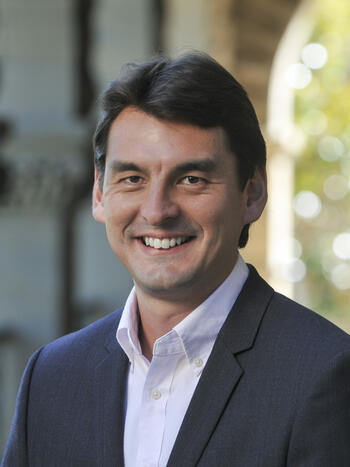
seguchi headshot updated

Kiyoyuki Seguchi, Research Director, Canon Institute for Global Studies
 
Kiyoyuki Seguchi is the Research Director at the Canon Institute for Global Studies. His research focuses on the Chinese economy and the U.S.-China-Japan trilateral relationship. Mr. Seguchi worked for the Bank of Japan from 1982 to 2009. During this time, he was Chief Representative of the Representative Office at BOJ in Beijing from 2006 to 2008. Mr. Seguchi was also the international visiting Fellow at RAND Corporation (Los Angeles, CA) from 2004 to 2005. Mr. Seguchi received his bachelor’s degree in economics from the University of Tokyo.

Image
Portrait of Kenji Kushida

Kenji Kushida, Research Scholar, Shorenstein APARC Japan Program (Moderator)

Kenji E. Kushida is a Japan Program Research Scholar at the Walter H. Shorenstein Asia-Pacific Research Center and an affiliated researcher at the Berkeley Roundtable on the International Economy. Kushida’s research interests are in the fields of comparative politics, political economy, and information technology. He has four streams of academic research and publication: political economy issues surrounding information technology such as Cloud Computing; institutional and governance structures of Japan’s Fukushima nuclear disaster; political strategies of foreign multinational corporations in Japan; and Japan’s political economic transformation since the 1990s. Kushida has written two general audience books in Japanese, entitled Biculturalism and the Japanese: Beyond English Linguistic Capabilities (Chuko Shinsho, 2006) and International Schools, an Introduction (Fusosha, 2008). Kushida holds a PhD in political science from the University of California, Berkeley. He received his MA in East Asian studies and BAs in economics and East Asian studies, all from Stanford University.

Virtually via Zoom.

Registration Link: https://bit.ly/2WSJxRx

Yves Tiberghien, University of British Columbia
Kiyoyuki Seguchi, Canon Institute for Global Studies
Kenji Kushida, Stanford University
Seminars
Authors
News Type
Commentary
Date
Paragraphs

[The following article originally appeared in French in Le Soir]

Over the past 20 years of exile, I returned to Morocco sporadically to visit family and friends. Now, I am here indefinitely until the coronavirus pandemic passes. I have observed its effects upon my homeland as not just a proud Moroccan, but also a trained social scientist assessing how the Moroccan state has responded – and how new social dynamics can emerge from it. 

Officially, Moroccan containment and mitigation measures have been described as a model of responsiveness. Notwithstanding testing shortages, and the failure to repatriate Moroccans abroad, new resources like personal protective equipment have been supplied to hospitals. Emergency funds are supporting the economy. The military and security forces have enforced strict quarantine and sheltering policies. Despite that infectious rates are among the highest in Africa, deaths from COVID-19 still remain comparatively low, a reality for which all Moroccans are grateful. 

However, the aggressiveness of these responses stems from a troubling reality. The state moved quickly to contain the pandemic because it could not afford to do otherwise. It already lagged behind in providing basic goods like education and jobs, due to the unbridled neoliberal economic model espoused by national planners for two decades at the expense of social development. The healthcare sector could not absorb even a modest surge in hospitalizations and deaths. In sum, Morocco’s response was optimal given its resources, but suboptimal given its potential. 

Why is this troubling? Not only do medical projections suggest a second wave of the pandemic looms this winter, but there will be more existential threats to come of this type. Climate change will further accentuate these dangers. Further, entire swathes of the Moroccan economy will remain in crisis for the foreseeable future. Vast numbers of the labor force work in the informal sector, the product of unfettered neoliberalism that did not produce any trickle-down effects due to weak rule of law. Grinding inequality means that successful treatments for COVID-19 will not reach most of the population. As Moroccans, we need only to consider the Rif to acknowledge the dangers that lie ahead. 

In the context of this crisis, many Moroccans have put aside standing grievances and put faith in their state. Politically, Moroccans do not labor under the extreme polarization often seen in other Arab countries. True, Morocco does not have the democratic system of Tunisia, where electoral institutions keep things in place. But, neither does it feature the deep schisms of Algeria, where the Hirak protest movement last year exposed the eroding legitimacy of the military and its civilian façade. If anything, Algerian politics will become even more fractured after the pandemic. 

Morocco stands in the middle. Unlike Tunisia, where democratic institutions absorb and mediate this crisis, here the state can only deflect and postpone it. However, neither has Moroccan politics splintered across irreconcilable rifts, partly due to the unifying presence of the monarchy. This gives Moroccans the chance to envision a future of improved governance that compensates for past deficiencies, and leaves us better prepared for future threats. This is not a substitute for genuine pluralism, but it can facilitate its onset. 

Recently, King Mohamed pronounced the prevailing paradigm of economic development to have floundered. As the Chinese proverb holds that with every crisis comes opportunity, we now have an opening to realign it, despite that more hardships will likely ensue as the pandemic continues to have long-lasting consequences. For instance, remittances, long a vital source of economic funding, will decline, as Moroccans abroad will more likely keep their cash close. The tourism sector will take many years to recover. But Morocco can also take advantage of global supply chain disruptions to secure new modes of production. Self-sufficiency and social spending must be priorities. 

Crucially, we cannot merely tweak the neoliberal model in favor of a master turn-key monarchical plan. The focus here falls upon not just the ideas behind national development, but the process through which those ideas come to fruition. Major ruptures that allow such soul- searching are rare in Morocco. One came after the passing of my uncle, King Hassan II, in 1999. A second came with the Arab Spring in 2011. Today marks another such inflection point, which allows all of society sharing common trauma and frustration to step back from the brink. 

That process will not be easy. Many Moroccans have lost faith in political engagement after too many failed reform promises. The Arab Spring’s impetus to demand voice and dignity will become more omnipresent. New social and economic initiatives must be formulated in close concertation with society, through inclusive dialogues that favor participation over top-down imposition. 

The state must avoid succumbing to the huge temptation of stoking false patriotism, or aggrandizing its authoritarian impulse by securitizing the pandemic. For instance, surveillance technologies utilized to ensure social distancing cannot be retooled to suppress political mobilization, as is happening in Russia and China. Indeed, many have wrongly assumed that autocracies are better equipped for the current crisis by comparing China with the US. However, this is a false dichotomy. For every China, there are successful democracies like South Korea and Taiwan where close state-society coordination is mediated not by the army or police, but rather by trust, transparency, and citizen engagement. 

In short, an historical opportunity now presents itself for Morocco; let us not squander it.

Hero Image
hicham alaoui ls
All News button
1
-

Speaker Bio:

Image
alberto diaz
Alberto Diaz-Cayeros joined the FSI faculty in 2013 after serving for five years as the director of the Center for US-Mexico studies at the University of California, San Diego. He earned his Ph.D at Duke University in 1997. He was an assistant professor of political science at Stanford from 2001-2008, before which he served as an assistant professor of political science at the University of California, Los Angeles. Diaz-Cayeros has also served as a researcher at Centro de Investigacion Para el Desarrollo, A.C. in Mexico from 1997-1999. His work has focused on federalism, poverty and violence in Latin America, and Mexico in particular. He has published widely in Spanish and English. His book Federalism, Fiscal Authority and Centralization in Latin America was published by Cambridge University Press in 2007 (reprinted 2016). His latest book (with Federico Estevez and Beatriz Magaloni) is: The Political Logic of Poverty Relief Electoral Strategies and Social Policy in Mexico. His work has primarily focused on federalism, poverty and economic reform in Latin America, and Mexico in particular, with more recent work addressing crime and violence, youth-at-risk, and police professionalization. 

Online, via Zoom: REGISTER

Encina Hall, C149
616 Jane Stanford Way
Stanford, CA 94305

(650) 725-0500
0
Senior Fellow, Freeman Spogli Institute for International Studies
Professor, by courtesy, of Political Science
alberto_diaz-cayeros_2024.jpg MA, PhD

Alberto Díaz-Cayeros is a Senior Fellow at Stanford University's Freeman Spogli Institute for International Studies (FSI), and co-director of the Democracy Action Lab (DAL), based at FSI's Center on Democracy, Development and Rule of Law (CDDRL). His research interests include federalism, poverty relief, indigenous governance, political economy of health, violence, and citizen security in Mexico and Latin America.

He is the author of Federalism, Fiscal Authority and Centralization in Latin America (Cambridge, reedited 2016), coauthored with Federico Estévez and Beatriz Magaloni, of The Political Logic of Poverty Relief (Cambridge, 2016), and of numerous journal articles and book chapters.

He is currently working on a project on cartography and the developmental legacies of colonial rule and governance in indigenous communities in Mexico.

From 2016 to 2023, he was the Director of the Center for Latin American Studies at Stanford University, and from 2009 to 2013, Director of the Center for US-Mexican Studies at UCSD, the University of California, San Diego.

Affiliated faculty at the Center on Democracy, Development and the Rule of Law
Co-director, Democracy Action Lab
Director of the Center for Latin American Studies (2016 - 2023)
CV
Date Label
Senior Fellow at CDDRL and Director for Latin American Studies
Seminars
-

Do middle-class citizens in East Asia support democracy? Do they prefer democracy to other regime types, as modernization theory contends? In this talk, Hannah Kim, a Shorenstein Postdoctoral Fellow in Contemporary Asia at the Shorenstein Asia-Pacific Research Center, examines democratic attitudes among middle-class citizens in East Asia. She argues that the classic relationship between modernization and democratization may not be applicable in East Asia due to low democratic commitment among middle-class citizens. She demonstrates this through the notion of democratic citizenship, which observes the cognitive, affective, and behavioral patterns of democratic support. Using data from the Asia Barometer Survey, Kim finds low democratic citizenship among middle-class respondents in three democracies and three nondemocracies. Moreover, she finds that middle-class respondents with higher government dependency are less likely to view democracy favorably. These results indicate that the classic causality between modernization and democratization is unlikely to be universally applicable to different cultural contexts.

Image
Hannah Kim
Hannah Kim completed her doctorate in the department of political science at the University of California, Irvine, in 2019. She received an MA in international studies from Korea University and a BA from UCLA.

Via Zoom. Register at https://bit.ly/2W9cmKv

Hannah Kim Shorenstein Postdoctoral Fellow in Contemporary Asia <i>Shorenstein Postdoctoral Fellow in Contemporary Asia</i>, Stanford University
Seminars
-

This is a virtual event. Please click here to register and generate a link to the talk. 
The link will be unique to you; please save it and do not share with others.


To celebrate its May release, contributors Karen Eggleston, Barry Naughton, and Andrew Walder will join editors Thomas Fingar and Jean Oi for a panel discussion of their volume Fateful Decisions: Choices That Will Shape China’s Future (Stanford University Press).  China has enjoyed an extraordinary run of rapid growth and development over the last 40 years.  Yet, as Fingar and Oi point out, China’s future is hardly set in stone.  Sustained economic growth, social welfare and stability will depend upon tough policy decisions confronting Beijing’s leaders today in what is a watershed moment.  Casting doubt on Beijing’s aversion to major reforms and its return to certain Mao-era policy tools, Oi and Fingar argue that China’s challenges are not only complex, but high-stakes – challenges that have become even more daunting in the aftermath of COVID-19.  As China battles the difficulties caused by an aging population, the loss of comparative economic advantage, a politically entrenched elite, and a population with rising expectations, today’s policy decisions will weigh heavily on its future. Topics explored in the volume include China's healthcare challenges in a slowing economy, its global ambitions and track record, economic aims and realities, the country’s mounting governance pressures, and more. 


Fateful Decisions is available for purchase here.


Fore more information on Fateful Decisions, check out these articles:

Karen Eggleston Examines China’s Looming Demographic Crisis, in Fateful Decisions

Now It Gets Much Harder: Thomas Fingar and Jean Oi Discuss China’s Challenges in The Washington Quarterly

China’s Challenges: Now It Gets Much Harder


Portrait of Karen EgglestonKaren Eggleston is a senior fellow at the Freeman Spogli Institute for International Studies (FSI) at Stanford University, director of the Stanford Asia Health Policy Program, and deputy director of the Walter H. Shorenstein Asia-Pacific Research Center at FSI. She is also a fellow with the Stanford Center for Innovation in Global Health and a faculty research fellow of the National Bureau of Economic Research (NBER). Eggleston earned her PhD in public policy from Harvard University, studied in China for two years, and was a Fulbright scholar in South Korea. Her research focuses on comparative health systems and health reform in Asia, especially China; government and market roles in the health sector; supply-side incentives; healthcare productivity; and economic aspects of demographic change.


Portrait of Thomas FingarThomas Fingar is a Shorenstein Distinguished Fellow in the Shorenstein Asia-Pacific Research Center at Stanford University. From May 2005 through December 2008, he served as the first deputy director of national intelligence for analysis and, concurrently, as chairman of the National Intelligence Council. Previous positions include assistant secretary of state for Intelligence and Research (2000-2001, 2004–2005), principal deputy assistant secretary (2001–2003), deputy assistant secretary for analysis (1994–2000), director of the Office of Analysis for East Asia and the Pacific, and chief of the China Division. Fingar is a graduate of Cornell University (AB in government and history) and Stanford University (MA and PhD, both in political science). His most recent books are Uneasy Partnerships: China’s Engagement with Japan, the Koreas, and Russia in the Era of Reform (editor) (Stanford University Press, 2017); The New Great Game: China’s Relations with South and Central Asia in the Era of Reform (editor) (Stanford University Press, 2016); and Reducing Uncertainty: Intelligence Analysis and National Security (Stanford University Press, 2011).
 

Image
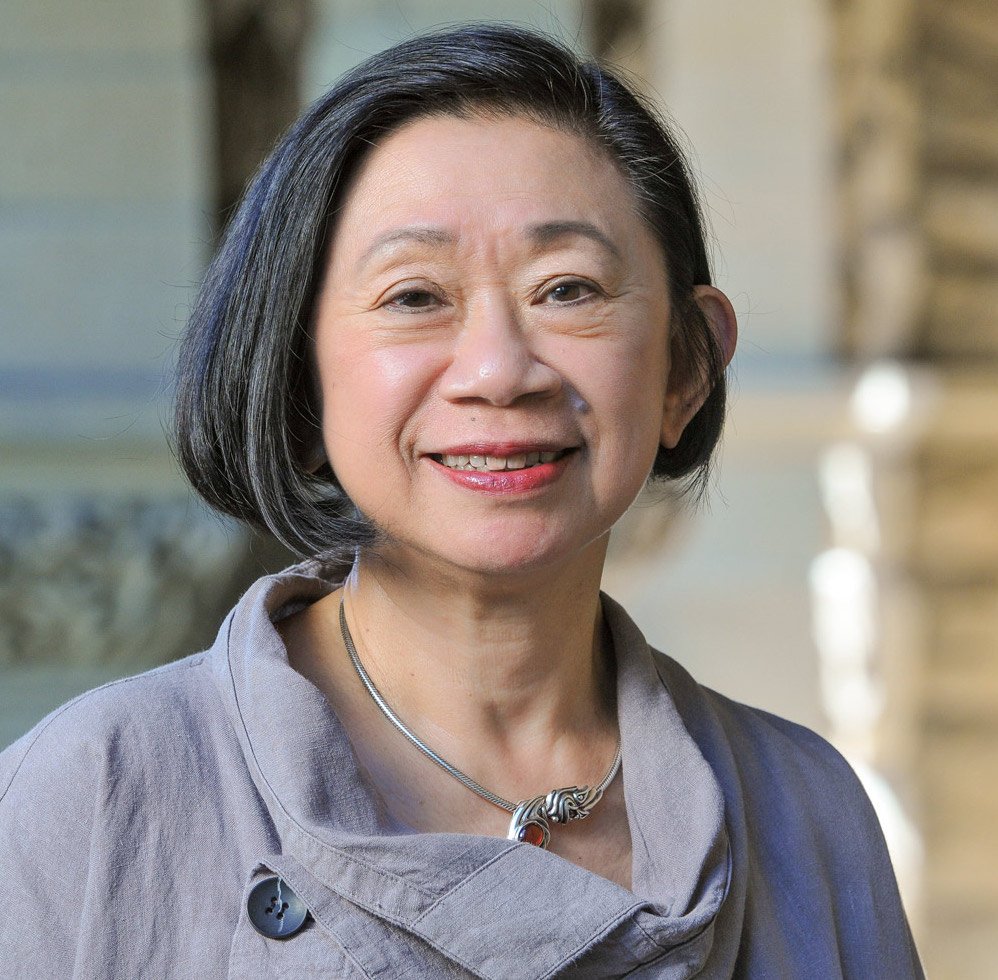
Photo of Barry Naughton
Barry Naughton is the So Kwanlok Professor at the School of Global Policy and Strategy, University of California–San Diego. Naughton’s work on the Chinese economy focuses on market transition; industry and technology; foreign trade; and political economy. His first book, Growing Out of the Plan, won the Ohira Prize in 1996, and a new edition of his popular survey and textbook, The Chinese Economy: Adaptation and Growth, appeared in 2018. Naughton did his dissertation research in China in 1982 and received his PhD in economics from Yale University.


Jean C. OiJean C. Oi is the William Haas Professor of Chinese Politics in the Department of Political Science and a senior fellow in the Freeman Spogli Institute for International Studies at Stanford University. She directs the China Program at the Walter H. Shorenstein Asia-Pacific Research Center and is the Lee Shau Kee Director of the Stanford Center at Peking University. Oi has published extensively on China’s reforms. Recent books include Zouping Revisited: Adaptive Governance in a Chinese County, coedited with Steven Goldstein (Stanford University Press, 2018), and Challenges in the Process of China’s Urbanization, coedited with Karen Eggleston and Yiming Wang (2017). Current research is on fiscal reform and local government debt, continuing SOE reforms, and the Belt and Road Initiative.


Portrait of Andrew WalderAndrew G. Walder is the Denise O’Leary and Kent Thiry Professor of Sociology in the School of Humanities and Sciences, and a senior fellow in the Freeman Spogli Institute for International Studies at Stanford University. A political sociologist, Walder has long specialized in the study of contemporary Chinese society and political economy. After receiving his PhD at the University of Michigan, he taught at Columbia, Harvard, and the Hong Kong University of Science and Technology. At Stanford he has served as chair of the Department of Sociology, director of the Asia-Pacific Research Center, and director of the Division of International, Comparative, and Area Studies in the School of Humanities and Sciences. His most recent books are Fractured Rebellion: The Beijing Red Guard Movement (2009), China under Mao: A Revolution Derailed (2015), and Agents of Disorder: Inside China’s Cultural Revolution (2019).

Via Zoom Webinar.
Register at: https://bit.ly/2WiwPvm

Karen Eggleston <br> Senior Fellow at FSI; Director of the Asia Health Policy Program, Shorenstein APARC, Stanford University <br><br>
Thomas Fingar <br> Shorenstein APARC Fellow, Stanford University <br><br>
Barry Naughton <br> Sokwanlok Chair of Chinese International Affairs, School of Global Policy and Strategy, UC San Diego <br><br>
Jean C. Oi <br> Director, Stanford China Program; William Haas Professor of Chinese Politics, Stanford University <br><br>
Andrew Walder <br> Senior Fellow at FSI; Denise O'Leary and Kent Thiry Professor, Stanford University <br><br>
Panel Discussions
-
Image
event advertisement graphic

COVID-19 is having a profound impact on our online systems - exposing both the essential role they can and do play in our modern society, and the risks and vulnerabilities they represent. Substantial research is emerging on this topic, and the implications of that research  will have important consequences for both medium (e.g., 2020 elections) and long-term cyber policies. 

Welcome Remarks: Mike McFaul

  • Introduction to CPC and the center’s work on COVID from moderator Kelly Born
  • Alex Stamos of the Internet Observatory will discuss their work examining shifting narratives about coronavirus from Chinese and Russian State Media, early insights into covid misinformation in other countries (e.g., Nigeria), and how tech companies are responding; as well as how Zoom and other platforms have been working to adapt policies and practices to meet growing demands, and risks.
  • Nate Persily at PDI will discuss the challenges of running the elections in the current environment, including implications for state necessary changes to state policies and practices.
  • Eileen Donahoe at GDPI will discuss geopolitical threats to the international human rights law framework due to ineffective response to COVID by democratic govs; cite risks to 5 specific substantive civil/political rights; and recommend that democratic govs apply international human rights process principles in COVID-19 context.  [I will use ~2 slides  -only  if others use slides]
  • Marietje Schaake will discuss human-rights challenges (to privacy, freedom of association, and freedom of expression) that have arisen with various applications of AI in COVID-19 context - e.g.,contact tracking and content moderation; as well as emerging criteria for policymakers to consider when deploying tracing and related technologies. 
  • Andy Grotto from GTG will discuss recent work on How to Report Responsibly on Hacks and Disinformation, and the implications for mainstream media’s coverage of COVID.
  • 30 min for Q&A
Seminars
News Type
News
Date
Paragraphs

APARC's China Program recently hosted Center Fellow Thomas Fingar for the webinar "Was America’s China Policy a Foolish Failure? The Logic and Achievements of Engagement." In this talk, Fingar examines the longtime U.S. strategy of engagement with China as well as the potential shift toward a strategy of decoupling. "Much recent commentary on U.S. relations with China claims that the policy of 'Engagement' was a foolish and failed attempt to transform the People’s Republic into an American style democracy that instead created an authoritarian rival," he says. "This narrative mocks the policies of eight U.S. administrations to justify calls for 'Decoupling' and 'Containment 2.0.'” Fingar argues that the policy of Engagement has been fruitful and that Decoupling is not only inadvisable but also unattainable. Watch:

Read More

An empty Pennsylvania Avenue in Washington, D.C. seen with the United States Capitol  in the background.
News

APARC Fellow Thomas Fingar on the U.S. Intelligence Report that Warned of a Coronavirus Pandemic

In our online conversation, Fingar discusses the 2008 National Intelligence Council report he oversaw and that urged action on coronavirus pandemic preparedness, explains the U.S. initial failed response to the COVID-19 outbreak, and considers the implications of the current crisis for U.S.-China relations.
APARC Fellow Thomas Fingar on the U.S. Intelligence Report that Warned of a Coronavirus Pandemic
Quote from Thomas Fingar and Jean Oi from, "China's Challeges: Now It Gets Much Harder"
Commentary

Now It Gets Much Harder: Thomas Fingar and Jean Oi Discuss China’s Challenges in The Washington Quarterly

Now It Gets Much Harder: Thomas Fingar and Jean Oi Discuss China’s Challenges in The Washington Quarterly
BEIJING, CHINA - Workers sit near a CRH (China Railway High-speed) "bullet train" at the Beijing South Railway Station under reconstruction.
News

High-Speed Rail Holds Promise and Problems for China, Explains David M. Lampton

In a new audio interview, Lampton discusses some of the challenges, uncertainties, and decisions that loom ahead of China's Belt and Road Initiative.
High-Speed Rail Holds Promise and Problems for China, Explains David M. Lampton
All News button
1
Subtitle

Decoupling, according to Fingar, is not only inadvisable but also unattainable. 

-

Livestream: Please click here to join the livestream webinar via Zoom or log-in with webinar ID 944 5730 9104.


About this Event: Why do some governments give foreign militants missiles that can destroy aircraft while giving others only bullets and AK-47s? Why do some governments deploy special operations forces to carry out joint attacks with some insurgent groups, while only giving others basic training on weapons handling? Despite the fact that governments often provide costly - and controversial - forms of support to foreign militant groups, we know little about why some groups receive advanced weapons technology and boots on the ground while others do not. In this presentation, I unpack trends in third-party provision of support through an in-depth examination of the CIA's provision of anti-tank missiles and the Pentagon's deployment of Special Operations Forces to support specific militant groups in the recent Syrian conflict. Drawing from an original dataset of the over 150 Syrian militant brigades that received some form of US support and over 60 interviews with Syrian militants and US and Jordanian government officials, I find that, when militant groups have similar organizational characteristics as the armed forces of their government partners, they are more likely to receive and accept costly forms of support. 


About the Speaker: Melissa Carlson is a PhD candidate in the Department of Political Science at U.C. Berkeley, specializing in international relations, comparative politics, and methodology. She will join CISAC in 2019-2020 as a Middle East Initiative Pre-doctoral Fellow. Broadly, her research examines the dynamics of military partnerships between state governments and foreign militant groups. Melissa's dissertation develops an organizational theory of third-party provision of support: when foreign militant groups and state armed forces share similar organizational characteristics, they are more likely to form joint commands, carry out joint attacks, and provide each other with advanced weapons systems.  Melissa's other research interests focus on factors that influence informal cooperation between states, and on how refugee perceptions of host communities, host governments, and aid organizations influence refugee decision-making. Prior to beginning her PhD at U.C. Berkeley, Melissa worked as Public Information consultant for the International Organization for Migration, Iraq Mission in Jordan and Iraqi Kurdistan. Melissa has a M.A. in Political Science from U.C. Berkeley, and a B.A. in International Relations and Politics, Philosophy, and Economics from Claremont McKenna College.

Virtual Seminar

0
rsd19_072_0235a.jpg

Dr. Melissa Carlson is currently working with the Defense Security Cooperation Agency's Assessment, Monitoring, and Evaluation unit, where she promotes rigorous standards of measuring the effectiveness of the U.S.'s security cooperation and assistance programming. During her tenure at CISAC, she was a postdoctoral research and teaching fellow. She received her PhD in Political Science from the University of California, Berkeley, specializing in international relations, comparative politics, and methodology. Dr. Carlson's primary research examines the factors that influence the variation and intensity of partnerships between governments and foreign militant groups with a focus on the recent conflicts in Iraq and Syria. Her book-style dissertation project finds that, when foreign militant groups and state armed forces share similar organizational characteristics, they are more likely to deploy forces to conduct joint combat operations and provide each other with advanced weapons systems. In other research, Dr. Carlson examines the factors that influence informal and secret security cooperation between states and how misinformation and rumors influence refugees' relationships with host governments, service providers, and smugglers. Her research has been published in the American Political Science Review, the Review of International Organizations, and International Studies Quarterly, among other outlets. Outside of academia, Dr. Carlson has worked as a consultant for the International Organization for Migration's Iraq and Jordan Missions.

Affiliate
Melissa Carlson Predoctoral Fellow at CISAC
Seminars
-

ABSTRACT

The absence of an internationally mandated or internally negotiated peace process has allowed the Syrian regime to craft an illiberal peace as an outcome to the nearly decade-long conflict. This illiberal peace is shaped through a politics of exclusion in which Syrian society is bifurcated into the loyal and disloyal through processes of reconciliation, settlement, and new legal regimes of citizenship. These forms of ‘peace’ are productive of new forms of post-conflict citizenship in Syria structured around loyalty to the regime that also serve to punish anyone suspected of betraying ‘the homeland’. The division of society into the loyal and disloyal is being consecrated in new laws and practices that are shaping Syria’s post-conflict trajectory. The prospect of a progressive Syrian future that motivated many of the early protestors has been quelled by the circumscription of political space and the reinvigoration of pre-conflict forms of governance underpinned by violence and exclusion. The emergence of new forms of citizenship shaped by illiberal peace is determining the terrain of politics in Syria today.  


SPEAKER BIO

Image
samer abboud headshot web
Samer Abboud is Associate Professor of Global Interdisciplinary Studies at Villanova University. He is the author of Syria (Polity 2018) as well as a number of journal articles and book chapters on Syria. He has published in journals such as Security DialogueCitizenship StudiesMiddle East Policy, and New Political Science and is a Senior Fellow at the Center for Syrian Studies at St. Andrew’s University, Scotland.  

Online, via Zoom: REGISTER

Samer Abboud Villanova University
Seminars
-

This event is via Zoom Webinar. Please register in advance for the webinar by using the link below.

REGISTRATION LINKhttps://bit.ly/3cCbcfU

Since March, a series of escalations have heightened tensions in the South China Sea. From the sinking of a Vietnamese fishing boat to an ongoing standoff with the Malaysian navy, China has been accused of taking advantage of the COVID-19 pandemic to further its control of the South China Sea. Beijing’s actions on the water are not all that different than what it was doing just a few months ago. But having them continue amid a global health crisis has sparked a new level of outrage. And the nationalistic response from Chinese authorities has only added fuel to the fire. These developments highlight the new normal in the South China Sea, which will continue long after COVID-19 fades.

Image
poling headshot


Gregory B. Poling is Senior Fellow for Southeast Asia and Director of the Asia Maritime Transparency Initiative at CSIS. His research interests include the South China Sea disputes, democratization in Southeast Asia, and Asian multilateralism. Mr. Poling’s writings have been featured in Foreign Affairs, the Wall Street JournalNikkei Asian Review, and Foreign Policy, among others. He has authored or coauthored multiple works including The Thickening Web of Asian Security Cooperation (RAND Corporation, 2019), Building a More Robust U.S.-Philippines Alliance (CSIS, August 2015), and A New Era in U.S.-Vietnam Relations (CSIS, June 2014). Mr. Poling received an M.A. in international affairs from American University and a B.A. in history and philosophy from St. Mary’s College of Maryland.

Via Zoom Webinar

Register at https://bit.ly/3cCbcfU

Gregory B. Poling Senior Fellow for Southeast Asia and Director, Asia Maritime Transparency Initiative, Center for Strategic and International Studies
Panel Discussions
Subscribe to Governance