
Governance

FSI's research on the origins, character and consequences of government institutions spans continents and academic disciplines. The institute’s senior fellows and their colleagues across Stanford examine the principles of public administration and implementation. Their work focuses on how maternal health care is delivered in rural China, how public action can create wealth and eliminate poverty, and why U.S. immigration reform keeps stalling. 

FSI’s work includes comparative studies of how institutions help resolve policy and societal issues. Scholars aim to clearly define and make sense of the rule of law, examining how it is invoked and applied around the world. 

FSI researchers also investigate government services – trying to understand and measure how they work, whom they serve and how good they are. They assess energy services aimed at helping the poorest people around the world and explore public opinion on torture policies. The Children in Crisis project addresses how child health interventions interact with political reform. Specific research on governance, organizations and security capitalizes on FSI's longstanding interests and looks at how governance and organizational issues affect a nation’s ability to address security and international cooperation.

-

Patrick Johnston is a PhD candidate in the Department of Political Science at Northwestern University and a CISAC predoctoral fellow. His dissertation, "Humanitarian Intervention and the Strategic Logic of Mass Atrocities in Civil Wars," asks why ethnic cleansing and genocidal violence frequently increase dramatically after international actors threaten to intervene militarily or deploy significant numbers of troops in coercive interventions. Johnston received a BA in history and a BA in political science, both with distinction, from the University of Minnesota, Morris and an MA in political science from Northwestern University.

Stephen J. Stedman joined CISAC in 1997 as a senior research scholar, and was named a senior fellow at FSI and CISAC and professor of political science (by courtesy) in 2002. He served as the center's acting co-director for the 2002-2003 academic year. Currently he directs the Ford Dorsey Program in International Policy Studies at Stanford and CISAC's Interschool Honors Program in International Security Studies. His current research addresses the future of international organizations and institutions, an area of study inspired by his recent work at the United Nations. In the fall of 2003 he was recruited to serve as the research director of the U.N. High-Level Panel on Threats, Challenges and Change. Upon completion of the panel's report, A More Secure World: Our Shared Responsibility, Annan asked Stedman to stay on at the U.N. as a special advisor with the rank of assistant secretary-general, to help gain worldwide support in implementing the panel's recommendations. Following the U.N. world leaders' summit in September 2005, during which more than 175 heads of state agreed upon a global security agenda developed from the panel's work, Stedman returned to CISAC. Before coming to Stanford, Stedman was an associate professor of African studies at the Johns Hopkins University School of Advanced International Studies in Washington, D.C. He has served as a consultant to the United Nations on issues of peacekeeping in civil war, light weapons proliferation and conflict in Africa, and preventive diplomacy. In 2000 Scott Sagan and he founded the CISAC Interschool Honors Program in International Security Studies. Stedman received his PhD in political science from Stanford University in 1988.

Reuben W. Hills Conference Room

Patrick Johnston Predoctoral Fellow Speaker CISAC

CDDRL
Encina Hall, C152
616 Jane Stanford Way
Stanford, CA 94305-6055

(650) 725-2705 (650) 724-2996
0
Senior Fellow at the Freeman Spogli Institute for International Studies
Professor, by courtesy, of Political Science
Stedman_Steve.jpg PhD

Stephen Stedman is a Senior Fellow at the Freeman Spogli Institute for International Studies (FSI) and the Center on Democracy, Development and the Rule of Law (CDDRL), an affiliated faculty member at CISAC, and professor of political science (by courtesy) at Stanford University. He is director of CDDRL's Fisher Family Honors Program in Democracy, Development and Rule of Law, and will be faculty director of the Program on International Relations in the School of Humanities and Sciences effective Fall 2025.

In 2011-12 Professor Stedman served as the Director for the Global Commission on Elections, Democracy, and Security, a body of eminent persons tasked with developing recommendations on promoting and protecting the integrity of elections and international electoral assistance. The Commission is a joint project of the Kofi Annan Foundation and International IDEA, an intergovernmental organization that works on international democracy and electoral assistance.

In 2003-04 Professor Stedman was Research Director of the United Nations High-level Panel on Threats, Challenges and Change and was a principal drafter of the Panel’s report, A More Secure World: Our Shared Responsibility.

In 2005 he served as Assistant Secretary-General and Special Advisor to the Secretary- General of the United Nations, with responsibility for working with governments to adopt the Panel’s recommendations for strengthening collective security and for implementing changes within the United Nations Secretariat, including the creation of a Peacebuilding Support Office, a Counter Terrorism Task Force, and a Policy Committee to act as a cabinet to the Secretary-General.

His most recent book, with Bruce Jones and Carlos Pascual, is Power and Responsibility: Creating International Order in an Era of Transnational Threats (Washington DC: Brookings Institution, 2009).
Director, Fisher Family Honors Program in Democracy, Development and Rule of Law
Director, Program in International Relations
Affiliated faculty at the Center for International Security and Cooperation
Date Label
Stephen J. Stedman Professor of Political Science (by courtesy) and Senior Fellow Commentator CISAC and FSI
Seminars
-

Edward Miguel received his PhD at Harvard in 2000, the same year he joined UC Berkeley as an assistant professor. He was promoted to associate professor in 2005. He recently received the Kenneth J. Arrow Award for Best Paper in Health Economics for "Worms: Identifying Impacts on Education and Health in the Presence of Treatment Externalities" (with Michael Kremer), which appeared in Econometrica. He also was the recipient of the 2005 Sloan Fellowship. At Berkeley he has received the Best Graduate Adviser Award and the Distinguished Teaching Award.

Professor Miguel is co-editor of the Journal of Human Resources, associate editor of the Journal of Development Economics and Review of Economics and Statistics, director of the U.C. Berkeley Scientific Evaluation for Global Action program, co-organizer for Working Group in African Political Economy, associate director at CIDER, an NBER faculty research associate, a CEPR research fellow, a senior fellow at the Bureau for Research and Economic Analysis of Development, and a research affiliate at the MIT Poverty Action Lab. He also has worked as a consultant for non-governmental organizations on projects in Delhi, Kenya, Tanzania, and Sierra Leone.

Reuben W. Hills Conference Room

Edward Miguel Associate Professor of Economics Speaker University of California, Berkeley
Seminars
-

Teresa Whitfield (speaker) joined the Social Science Research Council in early March 2005 to direct the Conflict Prevention and Peace Forum (CPPF). Her latest book, Friends Indeed: the United Nations, Groups of Friends and the Resolution of Conflict, was researched and written while a visiting fellow at New York University’s Center on International Cooperation. From 1995-2000 Teresa worked as an official within the UN’s Department of Political Affairs, latterly in the Office of the Under-Secretary-General of Political Affairs. She has also worked as a consultant with the Ford Foundation and the Centre for Humanitarian Dialogue and has a long association with CPPF, serving as regional advisor on Latin America from 2001-2003 and as acting director from 2001-2002. Her research interests include the United Nations, peace operations and the mediation of internal conflict. She has published on peace processes in Central America and Colombia, as well as on the role played by informal groups of states, or “Friends” in the resolution of conflict. A journalist and filmmaker in her early career, Teresa’s publications include Paying the Price: Ignacio Ellacuría and the Murdered Jesuits of El Salvador (Temple University Press, 1994), written while living in El Salvador from 1990-1992, and, most recently, a chapter on Colombia co-authored with Cynthia J. Arnson in Grasping the Nettle: Analyzing Cases of Intractable Conflict (ed. Chester A. Crocker, Fen Osler Hampson and Pamela Aall, United States Institute of Peace Press, 2005). She holds an MA in Latin American studies from the University of London and a BA in English literature from Cambridge University.

Patrick Johnston (discussant) is a PhD candidate in the Department of Political Science at Northwestern University and a CISAC predoctoral fellow. His dissertation, "Humanitarian Intervention and the Strategic Logic of Mass Atrocities in Civil Wars," asks why ethnic cleansing and genocidal violence frequently increase dramatically after international actors threaten to intervene militarily or deploy significant numbers of troops in coercive interventions. Johnston received a BA in history and a BA in political science, both with distinction, from the University of Minnesota, Morris and an MA in political science from Northwestern University.

Reuben W. Hills Conference Room

Teresa Whitfield Director, Conflict Prevention and Peace Forum Speaker Social Science Research Council
Patrick Johnston Predoctoral Fellow Speaker CISAC


Speaker
Speaker
Seminars
-
Charles Thorpe is currently an Associate Professor of Sociology at the University of California, San Diego. Previously he taught at the School of Social Sciences at Cardiff University in Wales, followed by time at the Department of Science and Technology Studies at University College London. Dr. Thorpe received his PhD in Sociology and Science Studies from the University of California, San Diego in 2001. He is the author of Oppenheimer: The Tragic Intellect, published by University of Chicago Press in 2006.

Reuben W. Hills Conference Room

Charles Thorpe Associate Professor of Sociology Speaker University of California, San Diego
Seminars
-
Frank Smith (speaker) is a PhD candidate in political science at the University of Chicago and a predoctoral fellow at CISAC. His research examines military and civilian decisions about biological warfare and tests different theories about the sources of military research, development, and doctrine, as well as the rise of civilian biodefense. In addition, he has worked on a variety of projects that address technology and national security at the RAND Corporation, Argonne National Laboratory, and the Defense Intelligence Agency. He earned his BS in biological chemistry from the University of Chicago in 2000.

Rebecca Slayton (discussant) is a lecturer in the Science, Technology and Society Program at Stanford University and a CISAC affiliate. In 2004-2005 she was a CISAC science fellow. Her research examines how technical judgments are generated, taken up, and given significance in international security contexts. She is currently working on a book which uses the history of the U.S. ballistic missile defense program to study the relationships between and among technology, expertise, and the media. Portions of this work have been published in journals such as History and Technology and have been presented at academic conferences. As a postdoctoral fellow in the Science, Technology, and Society Program at the Massachusetts Institute of Technology, she recently completed an NSF-funded project entitled Public Science: Discourse about the Strategic Defense Initiative, 1983-1988. 

As a physical chemist, she developed ultrafast laser experiments in condensed matter systems and published several articles in physics journals. She also received the AAAS Mass Media Science and Engineering Fellowship in 2000, and has worked as a science journalist for a daily paper and for Physical Review Focus. She earned her doctorate in chemistry from Harvard University in 2002.

Reuben W. Hills Conference Room

Frank Smith Speaker
Rebecca Slayton Speaker
Seminars
-
Dr. Chiozza investigates the popular basis of support for suicide terrorism carried out against Americans and other Western targets in Iraq. Using survey data from six countries in the Middle East and South Asia, he investigates how demographic factors, such as gender, education, and age, interact with specific predispositions and attitudes, including fear of the United States, anti-Semitism, and personal anomie, to explain who would consider suicide terrorism against American and Western targets in Iraq justifiable. Methodologically, he employs Classification and Regression Tree (CART) models, a novel methodology that allows for a parsimonious identification of interactive and non-linear effects in the data. Dr. Chiozza shows that fear of the U.S. trumps other motivations in the countries that are geographically closer to Iraq.

Giacomo Chiozza (speaker) is an Assistant Professor of Political Science in the Travers Department of Political Science at the University of California, Berkeley. He holds a PhD from Duke University and a BA from the Università degli Studi di Milano. Before joining the Berkeley Political Science department, he was a post-doctoral fellow in national security at the Olin Institute for Strategic Studies at Harvard University. His research interests include the study of foreign perceptions of the United States in the American World Order and the quantitative analysis of conflict processes. He is the author of "A Crisis like No Other? Anti-Americanism at the Time of the Iraq War" (European Journal of International Relations, forthcoming); "Disaggregating Anti-Americanism: An Analysis of Individual Attitudes Towards the United States" (In Keohane and Katzenstein, Anti-Americanisms in World Politics, 2007), as well as of articles on leaders and conflict processes that were published in the American Journal of Political Science, the Journal of Conflict Resolution, and the Journal of Peace Research.

Aila Matanock (discussant) is a doctoral student in political science at Stanford.  She received an undergraduate degree magna cum laude in Social Studies from Harvard University, while working with the Belfer Center’s Managing the Atom Project and with the Los Alamos National Laboratory.  After graduation, she took a job at the RAND Corporation as a research assistant where she analyzed projects on terrorism and nuclear weapons.  Her current research is on social support for terrorism, the effect of nuclear weapons on conventional conflict, and the reasons for varying levels of shared sovereignty in international agreements.

Reuben W. Hills Conference Room

Giacomo Chiozza Assistant Professor of Political Science Speaker University of California, Berkeley
Seminars
-

Economic security, sustainable development, clean energy and energy security, better regulations, greater innovativeness and the growing share of Polish economy in the international market; these are the main priorities of the Polish government and Ministry of Economy. How is Poland going to handle the 21st Century challenges? How will Poland find its niche in the globalized economy? These are the questions that will be discussed by the Polish Deputy Prime Minister and Minister of Economy, Mr. Waldemar Pawlak.

Born in 1959, Mr. Waldemar Pawlak graduated from the Warsaw University of Technology with an engineering degree in automotive and construction machinery. He has served as a member of the Polish Parliament since 1989; as President of the board of the Warsaw Commodities Exchange from 2001 to 2005; as Prime Minister of Poland in 1992 and again in 1993 to 1995; and as Deputy Prime Minister and Minister of Economy of Poland since November 2007.


This seminar is jointly sponsored by the Forum on Contemporary Europe, the Center for Democracy, Development and the Rule of Law, the U.S.-Polish Trade Council, and the Consulate General of the Republic of Poland in Los Angeles.

Oksenberg Conference Room

Waldemar Pawlak Deputy Prime Minister and Minister of Economy, Poland Speaker
Seminars
-

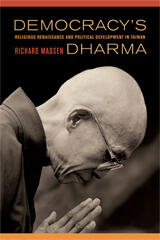
This is a CDDRL's Special Event within our Democracy in Taiwan Program. It is also co-sponsored by the Public Diplomacy/Emerging Publics Project of the Center for the Pacific Rim at University of San Francisco. In this seminar, Dr. Richard Madsen will talk about his new book that explores the religious renaissance that has reformed, revitalized, and renewed the practices of Buddhism and Daoism in Taiwan and how this religious renaissance embraces democracy modernity.  

Image
10896
Richard Madsen is distinguished professor and chair of the sociology department at the University of California, San Diego and a co-author (with Robert Bellah et al.) of The Good Society and Habits of the Heart which received the Los Angeles Times Book Award and was jury nominated for the Pulitzer Prize. He has authored or co-authored five books on China, including Morality and Power in a Chinese Village for which he received the C. Wright Mills Award; China's Catholics: Tragedy and Hope in an Emerging Civil Society; and China and the American Dream.  He also co-edited (with Tracy B. Strong) The Many and the One: Religious and Secular Perspectives on Ethical Pluralism in the Modern World. His latest book is Democracy’s Dharma: Religious Renaissance and Political Development in Taiwan.

Richard Madsen received an MA in Asian studies and a Ph.D. in sociology from Harvard.

"Madsen is a genial and well-informed guide, both to social-political change in Taiwan and to the ins and outs of religious movements. His engaging writing skillfully interweaves profound insights and themes into the descriptive analytical narrative. Democracy's Dharma presents new material based on recent research while offering a fresh spin on thinking about Asian religions."–Thomas Gold, editor of Social Connections in China: Institutions, Culture, and the Changing Nature of Guanxi

Philippines Conference Room

Richard Madsen Distinguished Professor Speaker Department of Sociology at the University of California, San Diego
Conferences
-
Mr. Melia has been Deputy Executive Director since May 2005.  He was previously Director of Research at the Institute for the Study of Diplomacy, and Adjunct Professor in the School of Foreign Service, at Georgetown University in Washington, DC where he continues to teach graduate courses about democracy promotion. For more than a dozen years, Melia held senior posts at the National Democratic Institute for International Affairs (NDI), a leading non-governmental organization engaged in the promotion of democracy worldwide. From 1998 to 2001, he was the Institute's Vice President for Programs. Earlier, he managed the Institute's programs in Central and Eastern Europe (1988 to 1993), in the Middle East (1993 to 1996), and directed programs in more than a dozen African countries. 

Mr. Melia was Associate Director of the Free Trade Union Institute of the AFL-CIO (1986 to 1988). Prior to that he served for six years as Legislative Assistant for foreign and defense policy to U.S. Senator Daniel Patrick Moynihan (D-NY).  Thomas Melia received his M.A. in Africa Studies from the Johns Hopkins University School of Advanced International Studies.

CISAC Conference Room

Thomas O. Melia Deputy Executive Director Speaker Freedom House
Seminars
Paragraphs

With the inauguration in February 2008 of South Korean President Lee Myung-bak, The Korea Society and Stanford University’s Walter H. Shorenstein Asia-Pacific Research Center launched a nonpartisan group of former senior U.S. government officials, scholars, and other American experts on Korea to explore how to revitalize the U.S. alliance with the Republic of Korea (ROK) after nearly a decade of strains and tensions.

New Beginnings group members believe that the United States cannot afford to lose the opportunity presented by President Lee’s desire to build a global partnership. The group has identified several steps that the United States, in cooperation with the ROK, could take to move the alliance into a new era.

All Publications button
1
Publication Type
Policy Briefs
Publication Date
Journal Publisher
Shorenstein APARC
Authors
Robert Carlin
Gi-Wook Shin
Daniel C. Sneider
David Straub
Subscribe to Governance