Governance

FSI's research on the origins, character and consequences of government institutions spans continents and academic disciplines. The institute’s senior fellows and their colleagues across Stanford examine the principles of public administration and implementation. Their work focuses on how maternal health care is delivered in rural China, how public action can create wealth and eliminate poverty, and why U.S. immigration reform keeps stalling. 

FSI’s work includes comparative studies of how institutions help resolve policy and societal issues. Scholars aim to clearly define and make sense of the rule of law, examining how it is invoked and applied around the world. 

FSI researchers also investigate government services – trying to understand and measure how they work, whom they serve and how good they are. They assess energy services aimed at helping the poorest people around the world and explore public opinion on torture policies. The Children in Crisis project addresses how child health interventions interact with political reform. Specific research on governance, organizations and security capitalizes on FSI's longstanding interests and looks at how governance and organizational issues affect a nation’s ability to address security and international cooperation.

Authors
News Type
Q&As
Date
Paragraphs

A major bill with bipartisan support in Congress would reward farmers for an unusual harvest. The Growing Climate Solutions Act(link is external) promises billions of dollars for climate-smart agriculture practices, such as planting cover crops to reduce erosion and sequester carbon. The bill highlights farming’s potential as a climate change solution, as well as the challenge of controlling the sector’s growing greenhouse gas emissions. Below, Stanford Earth scientists Inês AzevedoDavid Lobell and Rob Jackson discuss the surprising amount of greenhouse gases emitted by farming, how farmland conservation programs can help reverse the trend and what the federal government can do to promote more climate-friendly agriculture, among other issues.

Azevedo is an associate professor in the Department of Energy Resources Engineering at Stanford’s School of Earth, Energy & Environmental Sciences (Stanford Earth). Her research examines the role of food systems in reaching de-carbonized economies. Lobell is the Gloria and Richard Kushel Director of the Center on Food Security and the Environment. He uses unique datasets to study rural areas; his research has shown how reduced soil tillage can increase yields while nurturing healthier soils and lowering production costs. Jackson is the Michelle and Kevin Douglas Provostial Professor of Energy and Environment in Stanford Earth. His work has shown that global emissions of nitrous oxide increased by 30 percent over the past four decades due mostly to large-scale farming with synthetic fertilizers and cattle ranching, and that well-managed soil’s ability to trap carbon dioxide is potentially much greater than previously estimated.

What might the average person be surprised to learn about greenhouse gas emissions from America’s agricultural lands?

Lobell: First, I think people are surprised that the food system actually uses a very small share of fossil fuels, even when you include all the fertilizer production. Second, people are surprised by how many things they think are good, like eating organic or local foods, have very little effect on emissions and can even be worse than conventional alternatives.

Jackson: Many people are aware that fossil fuel use drives most carbon dioxide emissions, but they might not know that more than half of methane and nitrous oxide emissions attributable to human activities come from agriculture.

Azevedo: I think the average person would be surprised to learn agriculture – including livestock, agricultural soils and agricultural production – accounts for about 10 percent of total U.S. greenhouse gas emissions and, in contrast to some other sectors of the economy, they have increased over time.

Does the Growing Climate Solutions Act go far enough to mitigate and reduce emissions? How could it be stronger?

Lobell: I worry that there isn’t enough emphasis on the main greenhouse gases that agriculture contributes to – nitrous oxide and methane – where progress could probably be made a lot faster than for carbon dioxide. Soil carbon is like motherhood and apple pie – nobody is against it – but I wish that half the energy I see going into how to get more carbon into soil was going into how to reduce emissions of the other gases.

How can programs that reward farmers for certain conservation practices help? 

Jackson: The world’s soils contain far more carbon than the atmosphere, but agricultural activities such as plowing have released two hundred billion tons of carbon dioxide to the atmosphere from soils. Conservation programs can help us put some of that carbon back where it belongs, making our soils more fertile and better at retaining water.

Lobell: On one level, these programs can help start the process of making agriculture carbon neutral or even carbon negative. This is important if we want to meet aggressive climate goals. On another level, they can help build a broader political coalition devoted to solving climate change. This might be even more important for climate goals, especially given the disproportionate role of rural states in our federal government.

How should such programs be designed for maximum efficiency and cost-effectiveness?

Lobell: I’m concerned there is a lot of hype out there now on what specific practices can deliver, for example by companies trying to raise large funding rounds on the idea of selling carbon credits. I think it’s important that the programs have a strong system of verification and ability to adjust over time as we learn about what is truly effective.

Jackson: Rather than focusing primarily on carbon dioxide, agricultural incentives would be well served to reduce emissions of methane and nitrous oxide through practices such as better fertilizer and manure management. Methane’s warming potential is 30 times higher than carbon dioxide’s over a century, and nitrous oxide’s warming potential is nearly 300 times higher. Reducing them is a great bang for our climate buck.

From a global perspective, how important is agriculture’s role as a potential climate change solution, and how can policymakers better quantify and track it?

Azevedo: One of the recent things our recent research has shown is that although reducing emissions from fossil fuels is essential for meeting the Paris Agreement goals, other sources of emissions may also preclude its attainment. Specifically, even if all fossil fuel emissions were immediately halted, the achievement of the agreement’s 1.5 degree Celsius maximum temperature increase target would likely not be feasible if global food systems continue along their current trends.

Lobell: I think accelerating public research in this area will be critical, particularly for ways to accurately measure carbon accumulation or emissions reductions on individual farms. If this had been a well-funded area, we might be in a much better position in terms of leveraging all of the private sector enthusiasm for it. Since food is a traded commodity, it will also be important to monitor global land-use change and the extent to which our domestic policies might be having unintended consequences elsewhere.


Azevedo and Jackson are also senior fellows at the Stanford Woods Institute for the Environment and the Precourt Institute for Energy. Lobell is also a professor of Earth system science in Stanford’s School of Earth, Energy & Environmental Sciences, the William Wrigley Senior Fellow at the Stanford Woods Institute for the Environment and a senior fellow at the Freeman Spogli Institute for International Studies and the Stanford Institute for Economic Policy Research.

Hero Image
grain field
All News button
1
Subtitle

Stanford scientists discuss climate-smart agriculture

-

The Center on Democracy, Development, and the Rule of Law (CDDRL) will be accepting applications from eligible juniors on who are interested in writing their senior thesis on a subject touching upon democracy, economic development, and rule of law (DDRL) from any university department.  The application period opens on January 10, 2022 and runs through February 11, 2022.   For more information on the Fisher Family CDDRL Honors Program, please click here.

Join us online via Zoom on Friday, January 21st at 12:00pm (PST) to learn more! 

REGISTER NOW

CDDRL faculty and current honors students will be present to discuss the program and answer any questions.


Online via zoom. REGISTER HERE.

CDDRL
Encina Hall, C152
616 Jane Stanford Way
Stanford, CA 94305-6055

(650) 725-2705 (650) 724-2996
0
Senior Fellow at the Freeman Spogli Institute for International Studies
Professor, by courtesy, of Political Science
Stedman_Steve.jpg PhD

Stephen Stedman is a Senior Fellow at the Freeman Spogli Institute for International Studies (FSI) and the Center on Democracy, Development and the Rule of Law (CDDRL), an affiliated faculty member at CISAC, and professor of political science (by courtesy) at Stanford University. He is director of CDDRL's Fisher Family Honors Program in Democracy, Development and Rule of Law, and will be faculty director of the Program on International Relations in the School of Humanities and Sciences effective Fall 2025.

In 2011-12 Professor Stedman served as the Director for the Global Commission on Elections, Democracy, and Security, a body of eminent persons tasked with developing recommendations on promoting and protecting the integrity of elections and international electoral assistance. The Commission is a joint project of the Kofi Annan Foundation and International IDEA, an intergovernmental organization that works on international democracy and electoral assistance.

In 2003-04 Professor Stedman was Research Director of the United Nations High-level Panel on Threats, Challenges and Change and was a principal drafter of the Panel’s report, A More Secure World: Our Shared Responsibility.

In 2005 he served as Assistant Secretary-General and Special Advisor to the Secretary- General of the United Nations, with responsibility for working with governments to adopt the Panel’s recommendations for strengthening collective security and for implementing changes within the United Nations Secretariat, including the creation of a Peacebuilding Support Office, a Counter Terrorism Task Force, and a Policy Committee to act as a cabinet to the Secretary-General.

His most recent book, with Bruce Jones and Carlos Pascual, is Power and Responsibility: Creating International Order in an Era of Transnational Threats (Washington DC: Brookings Institution, 2009).

Director, Fisher Family Honors Program in Democracy, Development and Rule of Law
Director, Program in International Relations
Affiliated faculty at the Center for International Security and Cooperation
Date Label

Encina Hall, C150
616 Jane Stanford Way
Stanford, CA 94305

0
Center Fellow, Freeman Spogli Institute for International Studies
didi_kuo_2023.jpg

Didi Kuo is a Center Fellow at the Freeman Spogli Institute for International Studies (FSI) at Stanford University. She is a scholar of comparative politics with a focus on democratization, corruption and clientelism, political parties and institutions, and political reform. She is the author of The Great Retreat: How Political Parties Should Behave and Why They Don’t (Oxford University Press) and Clientelism, Capitalism, and Democracy: the rise of programmatic politics in the United States and Britain (Cambridge University Press, 2018).

She has been at Stanford since 2013 as the manager of the Program on American Democracy in Comparative Perspective and is co-director of the Fisher Family Honors Program at CDDRL. She was an Eric and Wendy Schmidt Fellow at New America and is a non-resident fellow with the Carnegie Endowment for International Peace. She received a PhD in political science from Harvard University, an MSc in Economic and Social History from Oxford University, where she studied as a Marshall Scholar, and a BA from Emory University.

Date Label
Authors
News Type
Commentary
Date
Paragraphs

Editor’s note: In late September, the National Interest organized a symposium on nuclear policy, nonproliferation, and arms control under the Biden administrationA variety of scholars were asked the following question: “Should Joe Biden seize the opportunity of his administration’s Nuclear Posture Review to redefine the role of nuclear weapons in U.S. security planning? How should U.S. policy change to address the proliferation threats that the United States is facing?” The following article is one of their responses:

President Joe Biden should use the opportunity of the Nuclear Posture Review (NPR) to reduce the role of nuclear weapons in the United States’ security policy and support a forward-looking arms control approach while maintaining a safe, secure, and effective nuclear deterrent. He will have to make his views known if he wants the process to produce bold options for his consideration.

First, the NPR is the ideal place to consider the planned strategic modernization program. The Congressional Budget Office estimates the program’s cost over the next ten years at $634 billion.  Maintaining a safe, secure, and effective deterrent requires that certain programs proceed, including command and control updates, the Columbia-class ballistic missile submarine, the B-21 bomber, and the B61-12 bomb. However, some programs should be reconsidered. For example, while the United States should maintain a triad that includes an intercontinental ballistic missile (ICBM) leg, the NPR should assess whether it is necessary to deploy four hundred ICBMs. It should also take an unbiased look at whether some portion of the Minuteman III force could be life-extended, allowing the Defense Department to push out to the future the question of building an expensive new ICBM

Pursuing all of these strategic programs would entail significant opportunity costs as less money would be available for conventional forces such as Virginia-class attack submarines, conventionally-armed missiles, and fighter aircraft. That matters. The most likely path to a nuclear exchange between the United States and Russia or the United States and China is a conventional conflict that escalates into a nuclear conflict. American conventional military power that can deter conventional conflict with peer competitors in the first place will also greatly reduce the likelihood of nuclear conflict.  

Second, the NPR will provide the basis for Washington’s approach in possible negotiations with Russia regarding further reductions and limitations on nuclear arms. American officials have said that the Biden administration would seek a limit covering all American and Russian nuclear arms. The NPR should set a level for American negotiators. How about 2,500 total nuclear warheads, with a sub-limit of 1,000 deployed strategic warheads? That would require significant cuts by the United States and Russia but would still leave both with many more nuclear weapons than any other country. Such a reduction would position Washington and Moscow to effectively press China to moderate its nuclear plans. 

Moscow will likely not agree to any nuclear reduction, let alone a limit of 2,500, unless Washington addresses issues such as missile defense. With this in mind, decisions in the NPR should account for decisions regarding other non-nuclear weapon programs, and vice versa. 

Third, Biden has endorsed moving to a declaratory policy in which the sole purpose of the United States’ nuclear weapons would be to deter a nuclear attack on the United States or an ally or partner and, if necessary, retaliate for such an attack. Both Washington and Moscow now appear to believe the other is lowering the threshold for nuclear use. That should leave no one comfortable. Adopting a sole-purpose policy would signal a different approach from the United States. 

Critics of a sole-purpose policy argue that the ambiguity in America’s current declaratory policy means that the implicit threat of the first use of nuclear weapons can help deter a conventional attack. That is a serious point, but it is almost impossible to conceive of circumstances in which an American president would authorize first use, particularly against a nuclear-armed adversary that could strike back with its own nuclear arms. Moreover, given the effort that China and Russia are devoting to developing their conventional forces, Beijing and Moscow certainly seem to believe in the possibility of great power conventional conflict, regardless of the United States’ nuclear deterrent. 

The adoption of a sole-purpose policy will require consultation with allies who depend on the United States’ extended nuclear deterrent. Those consultations may prove difficult, but there are offsets (for example, American boots on the ground) that could replace a dubious threat of first use. 

Right-sizing the United States’ nuclear forces (in part to free up funds for conventional forces), shaping a proposal for significant reductions with Russia, and adopting a sole purpose policy offer outcomes that a forward-looking NPR could advance. The review should offer these as options for the president’s consideration. He can then decide how bold he wishes to be. 

Steven Pifer is a William J. Perry Fellow at Stanford’s Center for International Security and Cooperation.

Originally for The National Interest

Hero Image
Joseph Biden Chip Somodevilla/Getty Images
All News button
1
Subtitle

The NPR must position President Biden to right-size America's nuclear forces and pursue arms control negotiations.

Shorenstein APARC

Encina Hall

Stanford University

0
APARC Predoctoral Fellow, 2021-2022
Stanford Internet Observatory Postdoctoral Fellow, 2022-2023
tongtong_zhang.jpg

Tongtong Zhang joins the Walter H. Shorenstein Asia-Pacific Research Center (APARC) as APARC Predoctoral Fellow for the 2021-2022 academic year. She is a Ph.D candidate at the department of Political Science at Stanford University. Her research focuses on authoritarian deliberation and responsiveness in China.

Date Label
-

For Fall Quarter 2021, FSI will be hosting hybrid events. Many events will be open to the public online via Zoom, and limited-capacity in-person attendance for Stanford affiliates may be available in accordance with Stanford’s health and safety guidelines.

Register for Zoom
(Open to the public)
Register for In-person
(Stanford affiliates only)

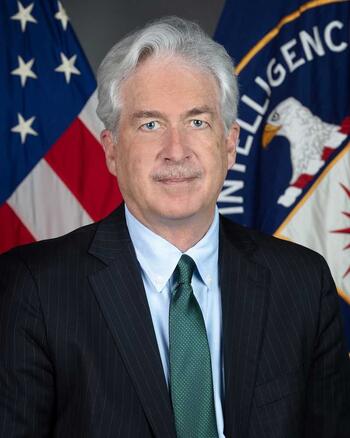
The Freeman Spogli Institute for International Studies (FSI) is honored to host the Director of the Central Intelligence Agency, William J. Burns, for a discussion on the national security challenges and opportunities facing the United States, and his experiences and lessons learned during his career in the Foreign Service. FSI Director Michael McFaul will moderate the discussion and questions from the audience.

Image
William Burns, Director of the CIA

Director Burns was officially sworn in as C.I.A. Director on March 19, 2021, making him the first career diplomat to serve as Director. Director Burns holds the highest rank in the Foreign Service—Career Ambassador—and is only the second serving career diplomat in history to become Deputy Secretary of State.

Director Burns retired from the State Department U.S. Foreign Service in 2014 before becoming president of the Carnegie Endowment for International Peace.

Director Burns is a crisis-tested public servant who spent his 33-year diplomatic career working to keep Americans safe and secure. Prior to his tenure as Deputy Secretary of State, he served as Under Secretary of State for Political Affairs from 2008 to 2011; U.S. Ambassador to Russia from 2005 to 2008; Assistant Secretary of State for Near Eastern Affairs from 2001 to 2005; and U.S. Ambassador to Jordan from 1998 to 2001. He was also Executive Secretary of the State Department and Special Assistant to former Secretaries of State Warren Christopher and Madeleine Albright; Minister-Counselor for Political Affairs at the U.S. Embassy in Moscow; Acting Director and Principal Deputy Director of the State Department’s Policy Planning Staff; and Special Assistant to the President and Senior Director for Near East and South Asian Affairs at the National Security Council.

Director Burns received three Presidential Distinguished Service Awards and the highest civilian honors from the Pentagon and the U.S. Intelligence Community. He is the author of the best-selling book, The Back Channel: A Memoir of American Diplomacy and the Case for Its Renewal (2019). He earned a bachelor’s degree in history from LaSalle University and master’s and doctoral degrees in international relations from Oxford University, where he studied as a Marshall Scholar.

William Burns | Director of the CIA
Lectures
Paragraphs
Cover of North Korean Conundrum, showing a knotted ball of string.

Read our news story about the book >> 

North Korea is consistently identified as one of the world’s worst human rights abusers. However, the issue of human rights in North Korea is a complex one, intertwined with issues like life in the North Korean police state, inter-Korean relations, denuclearization, access to information in the North, and international cooperation, to name a few. There are likewise multiple actors involved, including the two Korean governments, the United States, the United Nations, South Korea NGOs, and global human rights organizations. While North Korea’s nuclear weapons and the security threat it poses have occupied the center stage and eclipsed other issues in recent years, human rights remain important to U.S. policy. 

The contributors to The North Korean Conundrum explore how dealing with the issue of human rights is shaped and affected by the political issues with which it is so entwined. Sections discuss the role of the United Nations; how North Koreans’ limited access to information is part of the problem, and how this is changing; the relationship between human rights and denuclearization; and North Korean human rights in comparative perspective.

Contents

  1. North Korea: Human Rights and Nuclear Security Robert R. King and Gi-Wook Shin
  2. The COI Report on Human Rights in North Korea: Origins, Necessities, Obstacles, and Prospects Michael Kirby
  3. Encouraging Progress on Human Rights in North Korea: The Role of the United Nations and South Korea Joon Oh 
  4. DPRK Human Rights on the UN Stage: U.S. Leadership Is Essential Peter Yeo and Ryan Kaminski
  5. Efforts to Reach North Koreans by South Korean NGOs: Then, Now, and Challenges Minjung Kim
  6. The Changing Information Environment in North Korea Nat Kretchun
  7. North Korea’s Response to Foreign Information Martyn Williams
  8. Human Rights Advocacy in the Time of Nuclear Stalemate: The Interrelationship Between Pressuring North Korea on Human Rights and Denuclearization  Tae-Ung Baik
  9. The Error of Zero-Sum Thinking about Human Rights and U.S. Denuclearization Policy Victor Cha
  10. Germany’s Lessons for Korea Sean King
  11. Human Rights and Foreign Policy: Puzzles, Priorities, and Political Power Thomas Fingar

Desk, examination, or review copies can be requested through Stanford University Press.

June 2022 Update

The Korean version of The North Korean Conundrum is now available, published by the Database Center for North Korean Human Rights (NKDB). Purchase the Korean version via NKDB's website >>

To mark the release of the Korean version of the book, APARC hosted a book talk in Seoul jointly with the Database Center for North Korean Human Rights, on June 9, 2022.
Watch NTD Korea's report of the event:

View news coverage of the event by Korean Media:

All Publications button
1
Publication Type
Books
Publication Date
Subtitle

Balancing Human Rights and Nuclear Security

Authors
Robert R. King
Gi-Wook Shin
Book Publisher
Shorenstein APARC
-

For Fall Quarter 2021, CDDRL will be hosting hybrid events. Many events will be open to the public online via Zoom, and limited-capacity in-person attendance for Stanford affiliates may be available in accordance with Stanford’s health and safety guidelines.

Register for Zoom

Open to all

Register for In-Person

Stanford affiliates only

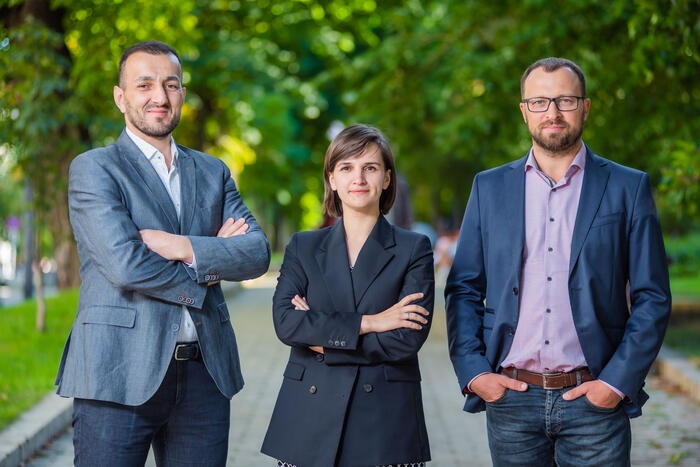
Stanford's Center on Democracy, Development and the Rule of Law invites you to a special event on October 26 to celebrate the arrival of our third cohort of Ukrainian Emerging Leaders at Stanford – Yulia Bezvershenko, Denis Gutenko, and Nariman Ustaiev – who will join us for a conversation about their work and Ukraine's political development. 

The three fellows were selected for their outstanding contributions to Ukraine's political, economic and social development. They have arrived at Stanford this September to start the fellowship program, which combines academic and project-based work. The event will be followed by a light outdoor reception.

The Ukrainian Emerging Leaders Program and this event are possible thanks to the generous support of our donors, which include: the Astem Foundation, Tomas Fiala, Victor and Iryna Ivanchyk, MacPaw, Omidyar Network, Parimatch, Slava Vakarchuk and Western NIS Enterprise Fund (WNISEF). The program was founded in 2016 by the Center on Democracy, Development, and the Rule of Law at Stanford’s Freeman Spogli Institute together with Oleksandr Akymenko and Kateryna Akymenko (Stanford John S. Knight fellows) as an initiative to address development challenges in Ukraine and across the broader region.

Image
Photo of Nariman Ustaiev, Yulia Bezvershenko, and Denis Gutenko

ABOUT THE FELLOWS

Yulia Bezvershenko is Director General of Directorate for Science and Innovation at the Ministry of Education and Science. The Directorate was created for policy development and implementation in the research, development and innovation sector.

Denis Gutenko joins CDDRL after most recently serving as the head of the State Fiscal Service of Ukraine. Holding this position from 2019-20 he was responsible for dismantling the large-scale State Fiscal Service into three accountable units: Tax Administration, Customs and Tax police.

Nariman Ustaiev is co-founder and Director at Gasprinski Institute for Geostrategy. He is also an external advisor for the Committee on Human Rights, Deoccupation and Reintegration of Temporarily Occupied Territories in Donetsk, Luhansk Regions and the Autonomous Republic of Crimea, National Minorities and Interethnic Relations of the Verkhovna Rada of Ukraine. 

This event has both an in-person and Zoom component.

0
CDDRL Visiting UELP Scholar, 2021-22
yulia_bezvershenko_2022.jpg

Yulia Bezvershenko is the former Director General of Directorate for Science and Innovation at the Ministry of Education and Science. The Directorate was created for policy development and implementation in the research, development and innovation sector.

Since the Revolution of Dignity, Bezvershenko has been deeply involved in the reform of science development and implementation process. Her mission is to build knowledge-based Ukraine as economy and society based on knowledge, science and innovation. She has contributed to the Law on Science, which was adopted by Parliament in 2015. In cooperation with scientists and reformers she developed and actively participated in the creation of two new institutions, the National Council on Science and Technology and the National Science Fund. Bezvershenko currently works both on implementation of the aforementioned law and on its future iterations.

Bezvershenko holds a PhD in Theoretical Physics from the Bogolyubov Institute for Theoretical Physics (National Academy of Science of Ukraine) and a Master’s degree in Public Policy and Governance from the Kyiv School of Economics. She has diverse experience in the research and development sector, having worked as a researcher at the Bogolyubov Institute as well as a senior lecturer on quantum theory at Kyiv-Mohyla Academy. Until 2019, Yulia was a Deputy Head of Young Scientists Council of National Academy of Science of Ukraine and Vice-President of NGO "Unia Scientifica" aimed to promote science and to advocate reform of science in Ukraine.


Lectures
-

This panel will examine the evolving political conflicts in Tunisia since the July 25 power grab executed by President Kais Saied that has been widely characterized as a step toward cementing authoritarian rule. Our panelists will examine the challenges recent developments have posed to Tunisia’s struggling democracy and the prospects for building consensus around an inclusive process of political reform.
 

Register Now

SPEAKER BIOS
 

Image
Achraf Aouadi
Achraf Aouadi is a Tunisian activist and academic that founded the watchdog organization I WATCH after the Tunisian Revolution in 2011. The organization is committed to fighting corruption and enhancing transparency. Aouadi is a holder of a master’s degree in international relations from the University of Birmingham. He is a former CDDRL Draper Hills fellow.

Image
Saida Ounissi
Saida Ounissi is a member of the Tunisian Assembly of People’s Representatives and previously served as Minister for Employment and Vocational Training. She represents Tunisians living in the North of France for the Ennahdha Party and was first elected in October 2014 and reelected in October 2019. In 1993, her family fled the dictatorship of Ben-Ali for France where she completed all her schooling. In 2005, she joined the University of Paris 1 Panthéon Sorbonne for a double degree in History and Political Science. She obtained her master’s degree at the Institute for the Study of Economic and Social Development and completed her studies with an internship at the African Development Bank in Tunis. In 2016, she was recruited by Prime Minister Youssef Chahed to join his Cabinet as Secretary of State in the Ministry of Employment and Vocational Training, charged with vocational training and private initiative. In 2018, she was promoted as the Minister for Employment and Vocational Training, becoming the youngest minister in Tunisia.

This event is co-sponsored by the Program on Arab Reform and Democracy at CDDRL, Stanford University's Center for African Studies, and the Abbasi Program in Islamic Studies.

Online, via Zoom: REGISTER

Achraf Aouadi
Saida Ounissi
Seminars
-

Image
Soojong Kim event flyer for October 12th showing his face and name of event

PART OF THE FALL SEMINAR SERIES

Join us at the weekly Cyber Policy Center (CPC) seminar on Tue, October 12th from 12 PM - 1 PM PST featuring Soojong Kim, postdoctoral fellow at the Program on Democracy and the Internet. This session will be moderated by Co-Director of the CPC, Nate Persily. This is part of the fall seminar series organized by the Program on Democracy and the Internet, and the William and Flora Hewlett Foundation’s Cyber Initiative.

There has been growing concern about online misinformation and falsehood. It has been suspected that the proliferation of misleading narratives is especially severe on Facebook, the world’s largest social media site, but there has been a lack of large-scale systematic investigations on these issues. This talk will introduce a series of ongoing research projects investigating online groups promoting misleading narratives on Facebook, including anti-vaccine groups, climate change denialists, countermovements against racial justice movements, and conspiracy theorists. The presentation will discuss the prevalence, characteristics, ecosystem of misleading narratives on Facebook, and implications for potential interventions.


REGISTER


Speaker Profile:

Soojong Kim is a postdoctoral fellow, jointly affiliated with the Program on Democracy and the Internet (PDI) and the Digital Civil Society Lab (DCSL) at Stanford University. He received his Ph.D. at the Annenberg School for Communication, University of Pennsylvania. His research centers around digital media, social networks, and information propagation. As a former computer scientist, he is also interested in developing and applying computational methods, including online experiments, large-scale data analysis, and computational modeling.


Seminars
-

There is an ongoing war between Ukraine and Russia. It is not a war solely for territories, resources, or people — it's an ideological war, indicative of the battle between authoritarianism and democracy. What is the real nature of this conflict and who are the parties involved? What tools does the Kremlin use to control the narrative and what can be done to stop it? And why is Ukraine the cornerstone of democracy in the region? Join former Prime Minister of Ukraine Oleksiy Honcharuk, the Bernard and Susan Liautaud Visiting Fellow at FSI, to discuss.


The Liautaud Fellowship was established to bring former heads of state or senior policymakers to Stanford, with the goal of promoting meaningful dialogue on the challenges world leaders face in crafting policy solutions for pressing global problems. Toomas Hendrik Ilves, the former President of Estonia, was the inaugural Liautaud Fellow in 2017, followed by H.R. McMaster in 2018.

ABOUT THE SPEAKER

Image
Oleksiy Honchaurk

Oleksiy Honchaurk was Ukraine’s 17th Prime Minister (August 2019 – March 2020). In just 5 months Mr. Honcharuk initiated important changes that other Ukrainian politicians had not dared to do for years (launched of large and small privatization processes, started of land market implementation, conducted Naftogaz unbundling, started combating shade markets – illegal gambling houses and petrol stations were closed, launched of Anti-Raider (illegal seizure of business or property) Office that would react within just 24 hours to any cases of such illegal seizure, etc).

Before he served as a Deputy Head of the Presidential Office of Ukraine and was a member of the National Reforms Council under the President of Ukraine. Previously for more than ten years, Mr. Honcharuk has been working in the legal sphere. He has established a reputation as a strong professional and qualified specialist. Mr. Honcharuk is also known as a strong fighter for business community rights. 2005-2008, he worked as a lawyer at PRIOR-Invest investment company and later on headed its legal department. 2008-2015, he worked as an arbitration manager and managing partner at Constructive Lawyers, a law firm he had founded, which provided legal services in the field of investment and financing real estate construction.

From 2015-2019, Oleksiy Honcharuk headed Better Regulation Delivery Office non-governmental organization (BRDO). Among his achievements as the head of the BRDO was the cancellation of around 1000 Government acts and adoption of more than 50 decisions, facilitating activity of business in Ukraine. Oleksiy Honcharuk also served as an external advisor to the First Deputy Prime Minister - Minister of Economic Development and Trade of Ukraine. He has a degree in law from Interregional Academy of Personal Management and in Public Administration from National Academy for Public Administration under the President of Ukraine. He was born on July 7, 1984, in Zhmerynka, Vinnytsia region.

Hybrid event: Online via Zoom, and in-person in Bechtel Conference Center

616 Jane Stanford Way,

Encina Hall,

Stanford, CA 94305-6055

0
Bernard and Susan Liautaud Visiting Fellow, 2021
rsd21_038_1181a.jpg

Ukraine’s 17th Prime Minister (August 2019 – March 2020). In just 5 months Mr. Honcharuk initiated important changes that other Ukrainian politicians had not dared to do for years (launched of large and small privatization processes, started of land market implementation, conducted Naftogaz unbundling, started combating shade markets –– illegal gambling houses and petrol stations were closed, launched of Anti-Raider (illegal seizure of business or property) Office that would react within just 24 hours to any cases of such illegal seizure, etc).

Before he served as a Deputy Head of the Presidential Office of Ukraine and was a member of the National Reforms Council under the President of Ukraine. Previously for more than ten years, Mr. Honcharuk has been working in the legal sphere. He has established a reputation as a strong professional and qualified specialist. Mr. Honcharuk is also known as a strong fighter for business community rights. 2005-2008, he worked as a lawyer at PRIOR-Invest investment company and later on headed its legal department. During 2008-2015, he worked as an arbitration manager and managing partner at Constructive Lawyers, a law firm he had founded, which provided legal services in the field of investment and financing real estate construction.

From 2015-2019, Oleksiy Honcharuk headed Better Regulation Delivery Office non-governmental organization (BRDO). Among his achievements as the head of the BRDO was the cancellation of around 1000 Government acts and adoption of more than 50 decisions, facilitating activity of business in Ukraine. Oleksiy Honcharuk also served as an external advisor to the First Deputy Prime Minister - Minister of Economic Development and Trade of Ukraine.

Oleksiy Honcharuk has a degree in law from Interregional Academy of Personal Management and in Public Administration from National Academy for Public Administration under the President of Ukraine. He was born on July 7, 1984, in Zhmerynka, Vinnytsia region.

CV
Former Prime Minister of Ukraine, Bernard and Susan Liautaud Visiting Fellow at FSI

FSI
Stanford University
Encina Hall C140
Stanford, CA 94305-6055

(650) 736-1820 (650) 724-2996
0
Satre Family Senior Fellow, Freeman Spogli Institute for International Studies
kathryn_stoner_1_2022_v2.jpg MA, PhD

Kathryn Stoner is the Mosbacher Director of the Center on Democracy, Development and the Rule of Law (CDDRL) and the Satre Family Senior Fellow at the Freeman Spogli Institute for International Studies (FSI). From 2017 to 2021, she served as FSI's Deputy Director. She is Professor of Political Science (by courtesy) at Stanford and teaches in the Department of Political Science, the Program on International Relations, and the Ford Dorsey Master's in International Policy Program. She is also a Senior Fellow (by courtesy) at the Hoover Institution.

Prior to coming to Stanford in 2004, she was on the faculty at Princeton University for nine years, jointly appointed to the Department of Politics and the Princeton School for International and Public Affairs (formerly the Woodrow Wilson School). At Princeton, she received the Ralph O. Glendinning Preceptorship, awarded to outstanding junior faculty. She also served as a Visiting Associate Professor of Political Science at Columbia University and an Assistant Professor of Political Science at McGill University. She has held fellowships at Harvard University as well as the Woodrow Wilson Center in Washington, D.C. 

In addition to many articles and book chapters on contemporary Russia, she is the author or co-editor of six books: Transitions to Democracy: A Comparative Perspective, written and edited with Michael A. McFaul (Johns Hopkins 2013);  Autocracy and Democracy in the Post-Communist World, co-edited with Valerie Bunce and Michael A. McFaul (Cambridge, 2010);  Resisting the State: Reform and Retrenchment in Post-Soviet Russia (Cambridge, 2006); After the Collapse of Communism: Comparative Lessons of Transitions (Cambridge, 2004), coedited with Michael McFaul; and Local Heroes: The Political Economy of Russian Regional Governance (Princeton, 1997); and Russia Resurrected: Its Power and Purpose in a New Global Order (Oxford University Press, 2021).

She received a BA (1988) and MA (1989) in Political Science from the University of Toronto, and a PhD in Government from Harvard University (1995). In 2016, she was awarded an honorary doctorate from Ilia State University in Tbilisi, the Republic of Georgia.

Download full-resolution headshot; photo credit: Rod Searcey.

Mosbacher Director, Center on Democracy, Development and the Rule of Law
Professor of Political Science (by courtesy), Stanford University
Senior Fellow (by courtesy), Hoover Institution
CV
Date Label
Mosbacher Director of CDDRL
Lectures
Subscribe to Governance